Introduction
Java continues evolving through its new six-month release cadence, enabling the platform to introduce focused improvements more frequently while reducing the scope of individual releases. Rather than waiting years for major language changes, enterprise developers now receive incremental enhancements that can be evaluated independently before broader adoption.
Java 12 exemplifies this philosophy. Although it is not a Long-Term Support (LTS) release, it introduces several language and platform improvements that preview future directions for the Java ecosystem. The most visible language enhancement is the introduction of Switch Expressions as a preview feature, designed to modernize one of Java's oldest control-flow constructs while improving readability and reducing accidental programming errors.
In addition to language improvements, Java 12 introduces Compact Number Formatting for internationalized applications, continued JVM optimization, and experimental work on the Shenandoah Garbage Collector. Together, these enhancements demonstrate Oracle and the OpenJDK community's continued focus on improving developer productivity, runtime performance, and enterprise maintainability.
As of March 2019, Java 12 should primarily be viewed as an opportunity for development teams to evaluate upcoming language capabilities while preparing for future platform evolution.
Industry Background
Enterprise Java development increasingly emphasizes:
- ◆Cloud-native deployment
- ◆Microservices
- ◆Continuous Delivery
- ◆Frequent platform upgrades
- ◆Modular application architecture
- ◆Internationalization
- ◆Improved developer productivity
Organizations increasingly prefer smaller, incremental language improvements that minimize migration complexity while continuously modernizing large codebases.
The Business Problem
Large enterprise Java applications commonly encounter:
- ◆Verbose switch statements
- ◆Accidental fall-through logic
- ◆Duplicate assignment code
- ◆Internationalized user interfaces requiring abbreviated numeric formatting
- ◆Long-lived applications requiring maintainable control flow
Language refinements that simplify these common implementation patterns improve code readability while reducing maintenance costs.
Understanding Java 12
Java 12 builds upon previous platform releases while introducing:
- ◆Switch Expressions (Preview)
- ◆Compact Number Formatting
- ◆Continued JVM optimization
- ◆Experimental Shenandoah Garbage Collector
- ◆Compiler improvements
Unlike previous feature-heavy releases, Java 12 primarily focuses on refining developer experience and preparing future language evolution.
Core Architecture
| Component | Responsibility |
|---|---|
| Java Compiler | Compiles Java source code |
| Switch Expressions | Modernized conditional branching |
| NumberFormat API | Localized number formatting |
| JVM | Executes compiled bytecode |
| Garbage Collector | Automatic memory management |
| Standard Library | Provides core runtime APIs |
Together these platform components continue improving enterprise application development while preserving Java's backward compatibility.
Switch Expressions
The most significant language enhancement in Java 12 is the preview introduction of Switch Expressions.
Traditional switch statements have long required explicit break statements to prevent unintended execution of subsequent cases. Although experienced Java developers understand this behavior, accidental fall-through remains a common source of defects in large applications.
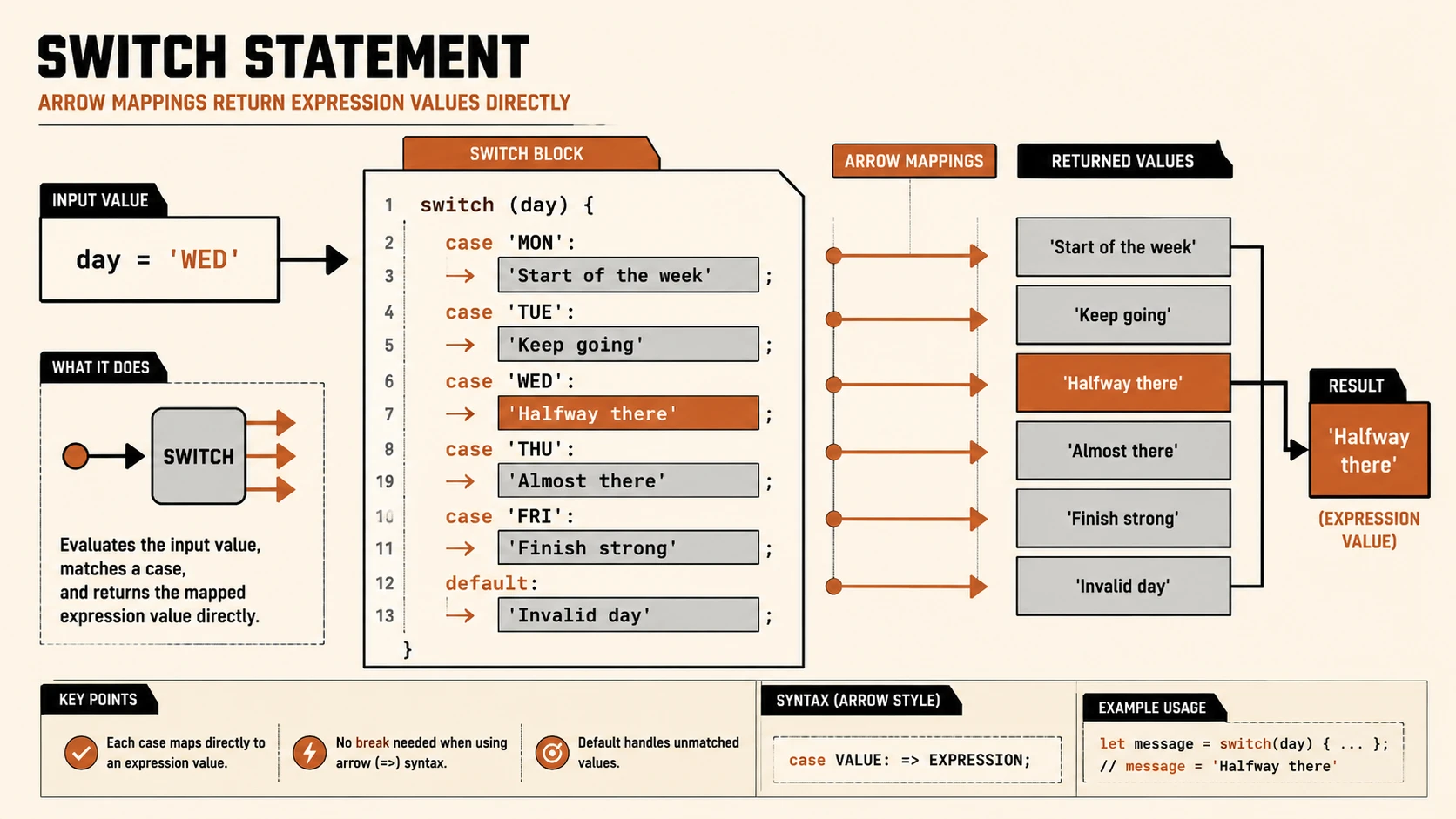
Switch Expressions modernize this programming model by allowing switch constructs to directly produce values.
Benefits include:
- ◆Reduced boilerplate
- ◆Improved readability
- ◆Clearer intent
- ◆Elimination of many accidental fall-through scenarios
- ◆More expressive conditional logic
Rather than treating switch solely as a statement, Java now allows it to participate naturally within expressions.
Modern Control Flow
Traditional switch implementations often require repeated assignment patterns.
Switch Expressions encourage a more declarative style.
Typical workflow includes:
- 1.Evaluate the input expression.
- 2.Match the appropriate case.
- 3.Produce a result.
- 4.Continue execution using the returned value.
This approach simplifies business rules while making conditional logic easier to understand during code reviews.
Preview Feature Considerations
Switch Expressions are introduced as a preview feature.
Preview features allow developers to:
- ◆Experiment with language evolution.
- ◆Provide community feedback.
- ◆Evaluate migration strategies.
- ◆Test tooling compatibility.
Enterprise production systems should evaluate preview features carefully before broad adoption, particularly where long-term platform stability is a primary objective.
Compact Number Formatting
Java 12 introduces Compact Number Formatting through the NumberFormat API.
Many modern applications present large numerical values in abbreviated forms such as:
- ◆Thousands
- ◆Millions
- ◆Billions
Previously, developers often implemented these formatting rules manually or relied on third-party utilities.
The standardized API improves:
- ◆Internationalization
- ◆Localization
- ◆Consistency
- ◆User interface presentation
Applications serving global audiences benefit from standardized locale-aware formatting.
Internationalization
Enterprise software frequently supports users across multiple geographic regions.
Compact Number Formatting integrates naturally with Java's internationalization infrastructure.
Potential enterprise scenarios include:
- ◆Financial dashboards
- ◆Sales reporting
- ◆Business analytics
- ◆Administrative portals
- ◆Executive reporting
Standardized formatting reduces duplicate implementation effort while improving consistency across applications.
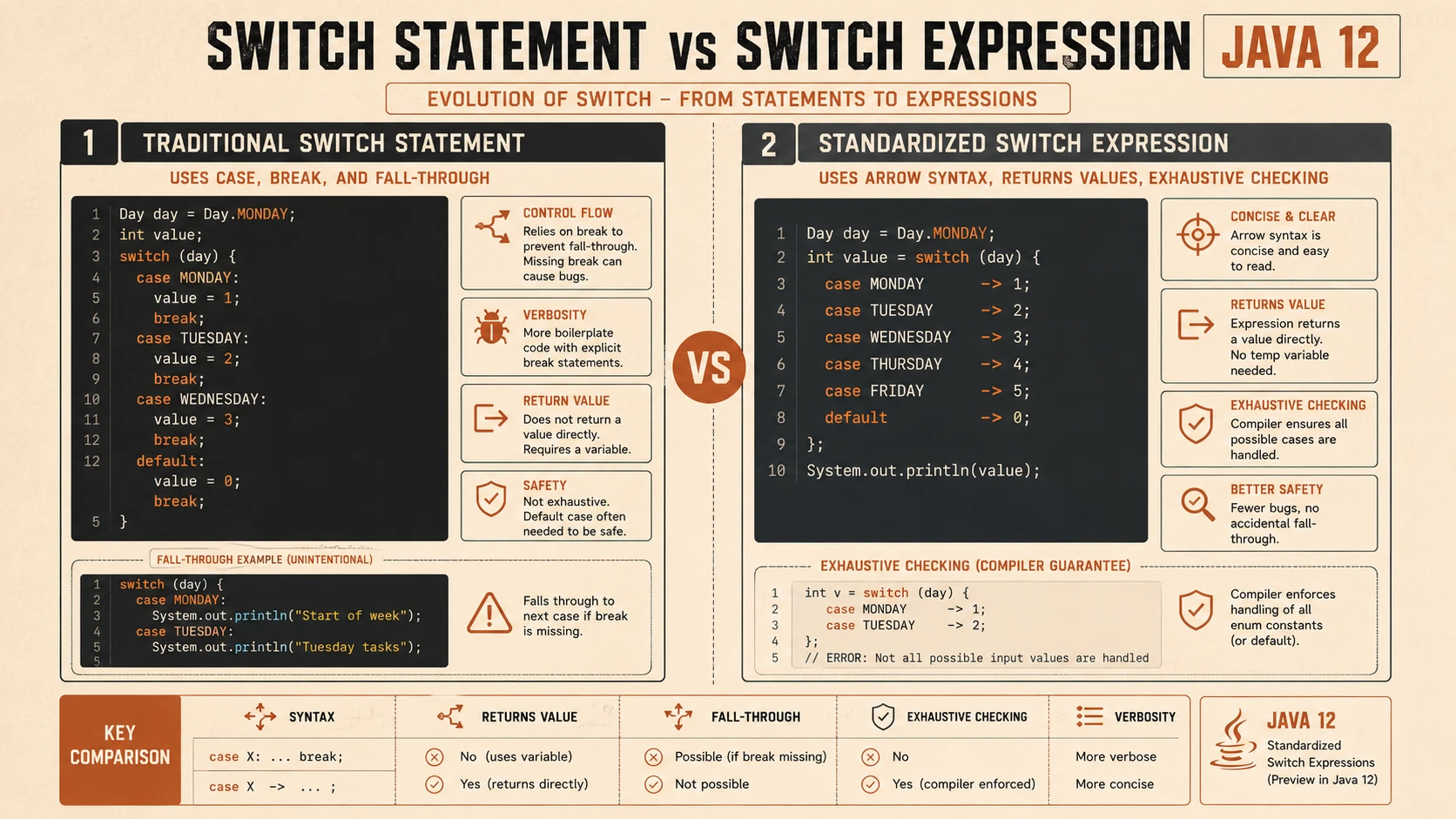
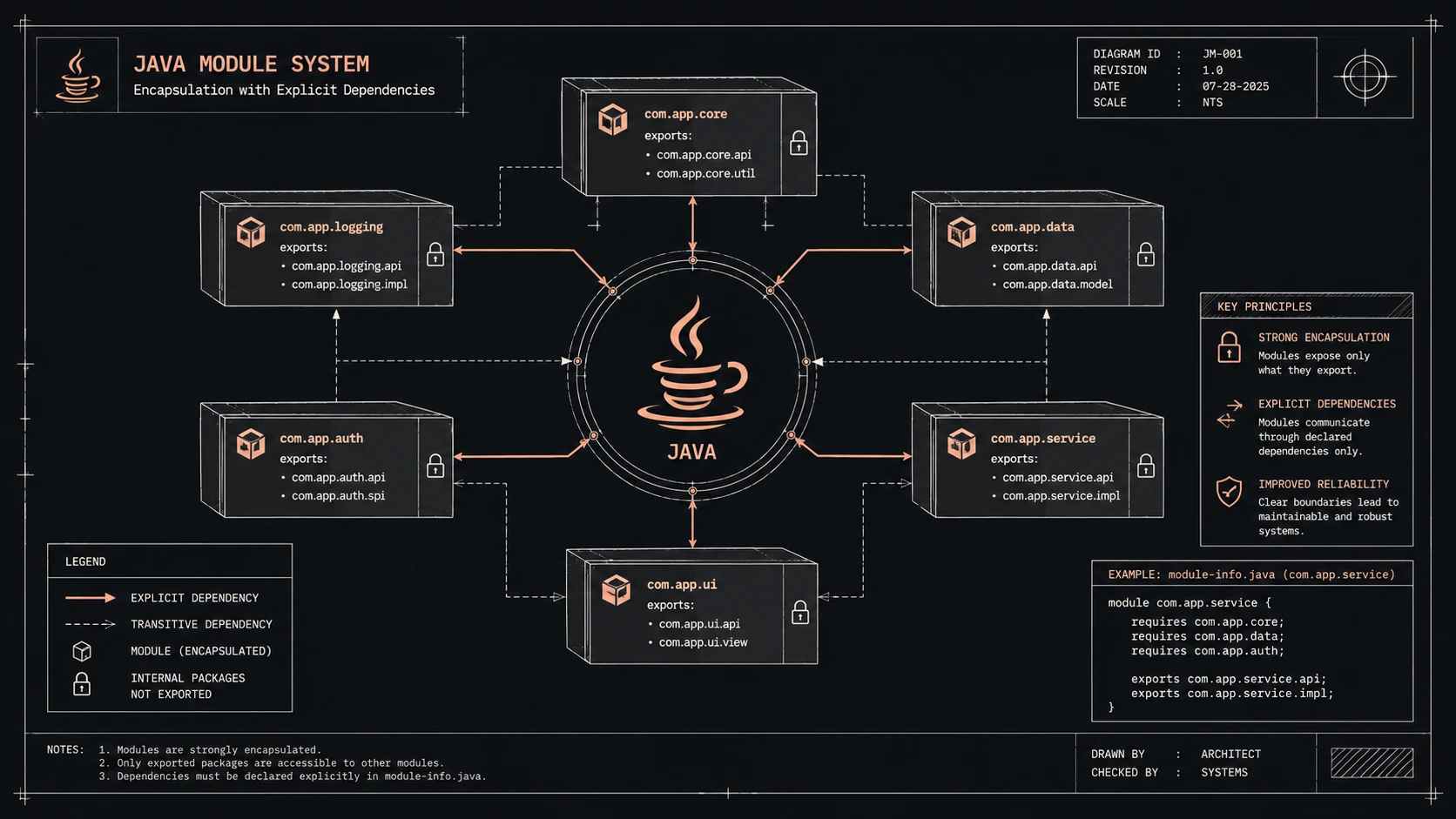
System architecture diagram and conceptual workflow layout for Java 12: Standardizing Switch Expressions and Compact Number Formatting.
JVM Improvements
Java 12 continues refining the Java Virtual Machine.
Areas of ongoing optimization include:
- ◆Runtime performance
- ◆Compiler efficiency
- ◆Memory management
- ◆Platform stability
These improvements reinforce Java's long-standing focus on reliable enterprise execution.
Shenandoah Garbage Collector
Java 12 includes the Shenandoah Garbage Collector as an experimental feature.
Shenandoah focuses on reducing garbage collection pause times by performing more work concurrently with application execution.
Potential enterprise benefits include:
- ◆Improved responsiveness
- ◆Reduced pause times
- ◆Better scalability for large heap applications
Because Shenandoah remains experimental as of March 2019, organizations should evaluate it only within controlled testing environments.
Enterprise Use Cases
| Scenario | Benefit |
|---|---|
| Financial Platforms | Readable business rules with Switch Expressions |
| Reporting Dashboards | Compact number formatting |
| Cloud Services | Continued JVM improvements |
| Administrative Applications | Simplified conditional logic |
| International Applications | Locale-aware numeric presentation |
| Enterprise Portals | Cleaner application code |
Organizations maintaining large Java codebases benefit from language improvements that reduce complexity while preserving compatibility.
Performance Considerations
Most Java 12 language enhancements target developer productivity rather than raw execution performance.
Development teams should evaluate:
- ◆Application startup
- ◆Heap utilization
- ◆Garbage collection behavior
- ◆Number formatting overhead
- ◆Compiler optimizations
Performance decisions should continue relying on representative production benchmarks rather than isolated language features.
Security Considerations
Java 12 does not fundamentally alter the platform's security model.
Organizations should continue implementing:
- ◆Authentication
- ◆Authorization
- ◆Input validation
- ◆TLS communication
- ◆Dependency governance
- ◆Secure coding practices
Language improvements complement, but do not replace, established enterprise security standards.
Scalability
Java 12 contributes to scalable enterprise development by:
- ◆Simplifying conditional logic
- ◆Improving code maintainability
- ◆Supporting internationalized applications
- ◆Continuing JVM optimization
- ◆Expanding garbage collection research
These improvements assist organizations managing large software portfolios over extended development cycles.
Best Practices
Organizations evaluating Java 12 should:
- ◆Experiment with Switch Expressions in development environments.
- ◆Continue using explicit switch statements where production policies prohibit preview features.
- ◆Adopt Compact Number Formatting for localized applications.
- ◆Benchmark JVM behavior using representative workloads.
- ◆Maintain coding standards covering preview feature usage.
- ◆Validate IDE and build tool compatibility.
- ◆Update automated testing during migration.
- ◆Monitor OpenJDK feature evolution.
Incremental evaluation allows teams to gain experience while maintaining production stability.
Common Mistakes
Development teams should avoid:
- ◆Treating preview features as permanent language contracts.
- ◆Rewriting stable code without measurable benefit.
- ◆Ignoring locale considerations when formatting numbers.
- ◆Assuming language improvements automatically improve application performance.
- ◆Migrating production systems without compatibility testing.
- ◆Mixing inconsistent coding styles across projects.
Successful modernization depends on disciplined engineering practices rather than adopting every new language feature immediately.
Technology Comparison
| Capability | Java 11 | Java 12 |
|---|---|---|
| Traditional Switch Statement | Yes | Yes |
| Switch Expressions | No | Preview |
| Compact Number Formatting | No | Yes |
| G1 Garbage Collector | Continued default improvements | Continued improvements |
| Shenandoah Garbage Collector | Not available in the standard release | Experimental |
| Six-Month Release Cadence | Continued | Continued |
Java 12 continues the incremental modernization of the Java platform while maintaining compatibility with established enterprise development practices.
Adoption Strategy
Organizations should approach Java 12 selectively.
A practical strategy includes:
- 1.Upgrade development environments.
- 2.Evaluate Switch Expressions within pilot projects.
- 3.Introduce Compact Number Formatting into internationalized applications.
- 4.Benchmark JVM performance.
- 5.Validate third-party library compatibility.
- 6.Review build automation.
- 7.Continue production deployments on organizationally approved Java versions while monitoring future platform evolution.
This measured approach allows teams to explore new capabilities without introducing unnecessary operational risk.
Limitations
As of March 2019, several considerations remain.
Current observations include:
- ◆Switch Expressions remain a preview feature.
- ◆Java 12 is not a Long-Term Support release.
- ◆Experimental runtime features require careful evaluation.
- ◆Enterprise organizations should prioritize compatibility testing before adopting new platform capabilities.
Java 12 should therefore be viewed primarily as an innovation release that prepares the ecosystem for future long-term platform evolution.
Looking Ahead
Java 12 continues the platform's steady modernization through practical language refinements and runtime improvements. Switch Expressions demonstrate a clear direction toward more expressive and maintainable Java code, while Compact Number Formatting improves internationalized application development through standardized APIs. Continued JVM enhancements and experimental garbage collection research reinforce Java's commitment to scalable enterprise computing.
As of March 2019, enterprise architects should evaluate Java 12 as an opportunity to familiarize development teams with emerging language capabilities while maintaining disciplined production upgrade strategies. Organizations that adopt new features incrementally, benchmark performance carefully, and continue following established engineering practices will be well positioned for future Java platform evolution.