Introduction
The rapid release cadence adopted by OpenJDK has fundamentally changed how enterprise Java evolves. Instead of waiting several years for major platform releases, organizations now receive incremental improvements every six months, allowing language enhancements, JVM optimizations, and developer tooling improvements to mature more quickly.
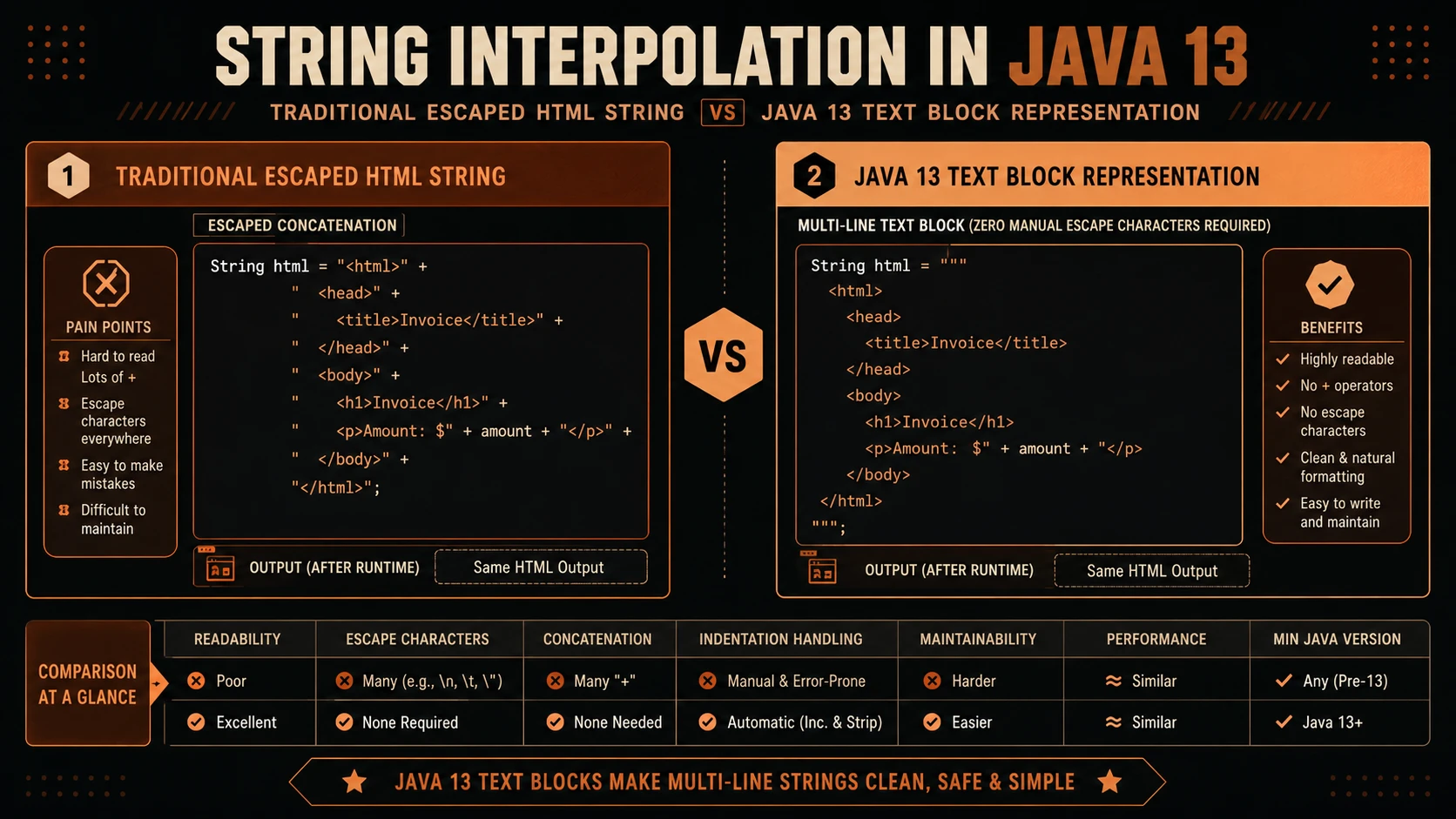
Following Java 12, Java 13 continues this evolution with a collection of carefully targeted improvements rather than sweeping platform redesigns. The most visible enhancement is the introduction of Text Blocks as a preview language feature, designed to simplify the creation of multiline string literals commonly used for SQL queries, HTML templates, JSON payloads, XML documents, configuration files, and embedded scripts.
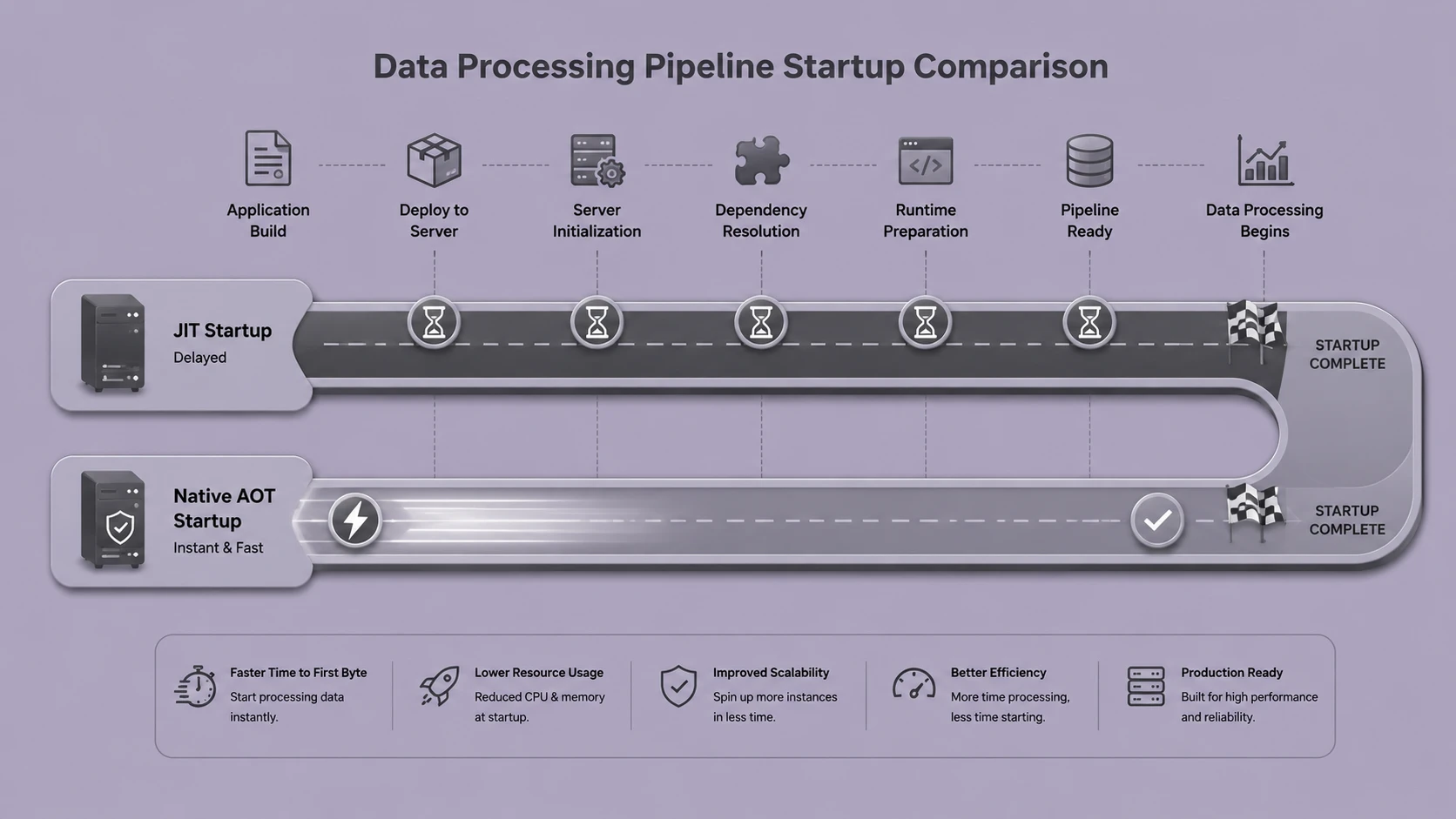
Alongside language improvements, Java 13 expands Class Data Sharing (CDS) through Dynamic CDS Archive generation, enabling applications to improve startup behavior without requiring complex manual archive preparation. Additional refinements to Switch Expressions and numerous HotSpot Virtual Machine improvements further reinforce Java's continued focus on developer productivity and runtime efficiency.
As of September 2019, Java 13 should be viewed as an innovation release that enables development teams to evaluate future platform capabilities while continuing to prepare for subsequent enterprise platform upgrades.
Industry Background
Modern enterprise Java development increasingly emphasizes:
- ◆Cloud-native deployment
- ◆Containerized applications
- ◆Microservices
- ◆Continuous Delivery
- ◆Faster application startup
- ◆Reduced operational overhead
- ◆Improved code readability
Organizations also increasingly embed structured documents such as JSON, XML, SQL, GraphQL queries, and HTML within Java applications, making readable multiline string handling an important developer productivity concern.
The Business Problem
Large enterprise Java applications frequently encounter:
- ◆Verbose multiline string concatenation
- ◆Escaped quotation marks throughout embedded templates
- ◆Difficult-to-maintain SQL statements
- ◆Configuration readability challenges
- ◆Slow application startup for large deployments
- ◆Manual Class Data Sharing configuration
Reducing implementation complexity while improving runtime efficiency remains a key objective for enterprise platform modernization.
Understanding Java 13
Java 13 introduces several notable platform enhancements:
- ◆Text Blocks (Preview)
- ◆Dynamic CDS Archive support
- ◆Switch Expression refinements
- ◆HotSpot JVM improvements
- ◆Continued garbage collection enhancements
- ◆Runtime optimization
The release continues Java's philosophy of incremental modernization while preserving backward compatibility.
Core Architecture
| Component | Responsibility |
|---|---|
| Java Compiler | Compiles Java source code |
| Text Blocks | Simplifies multiline string literals |
| Dynamic CDS | Improves application startup through archived class metadata |
| HotSpot JVM | Executes compiled bytecode |
| Garbage Collector | Automatic memory management |
| Standard Library | Provides core platform APIs |
These components work together to improve both developer productivity and runtime efficiency.
Text Blocks Preview
One of Java 13's most anticipated additions is the preview introduction of Text Blocks.
Traditional Java string literals require explicit newline characters, quotation escaping, and concatenation for multiline content.
Enterprise developers frequently work with:
- ◆SQL statements
- ◆HTML fragments
- ◆XML documents
- ◆JSON payloads
- ◆Configuration templates
- ◆Embedded documentation
Representing these structures as conventional string literals often reduces readability and increases maintenance effort.
Text Blocks provide a cleaner syntax for expressing multiline textual content while preserving Java's compile-time type safety.
Benefits of Text Blocks
Potential enterprise advantages include:
- ◆Improved source code readability
- ◆Reduced escape sequences
- ◆Easier maintenance
- ◆Cleaner embedded templates
- ◆More readable SQL statements
- ◆Better alignment between source code and generated output
Applications that frequently embed structured documents may experience significant improvements in code clarity.
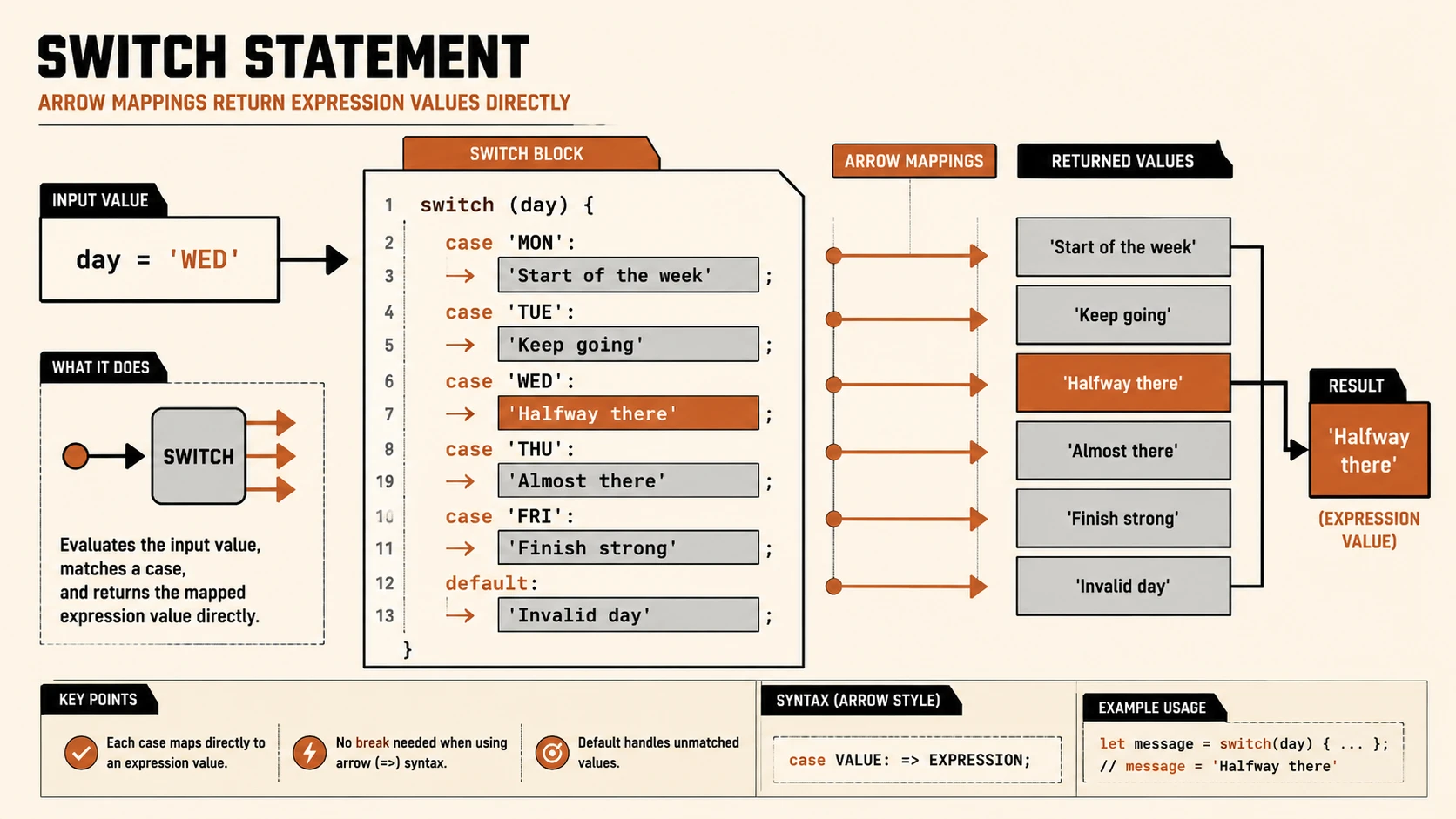
Switch Expression Refinements
Java 13 continues refining the Switch Expression preview introduced in Java 12.
The feature continues evolving through community feedback before final standardization.
Benefits include:
- ◆Cleaner conditional logic
- ◆Reduced accidental fall-through
- ◆More expressive control flow
- ◆Simplified value computation
Enterprise teams evaluating the preview should continue validating compiler behavior while monitoring future language evolution.
Dynamic Class Data Sharing
Class Data Sharing (CDS) enables the JVM to archive class metadata for reuse across application launches.
Java 13 expands this capability through Dynamic CDS Archive generation.
Rather than requiring extensive manual preparation, applications can generate archives dynamically after execution.
Potential benefits include:
- ◆Faster application startup
- ◆Reduced startup overhead
- ◆Improved runtime efficiency
- ◆Better deployment flexibility
Organizations operating large numbers of Java processes may benefit from reduced initialization costs.
Startup Workflow
A typical Dynamic CDS workflow includes:
- 1.Launch the Java application.
- 2.Execute normal application initialization.
- 3.Generate a dynamic CDS archive.
- 4.Restart the application.
- 5.Load archived class metadata.
- 6.Continue normal execution.
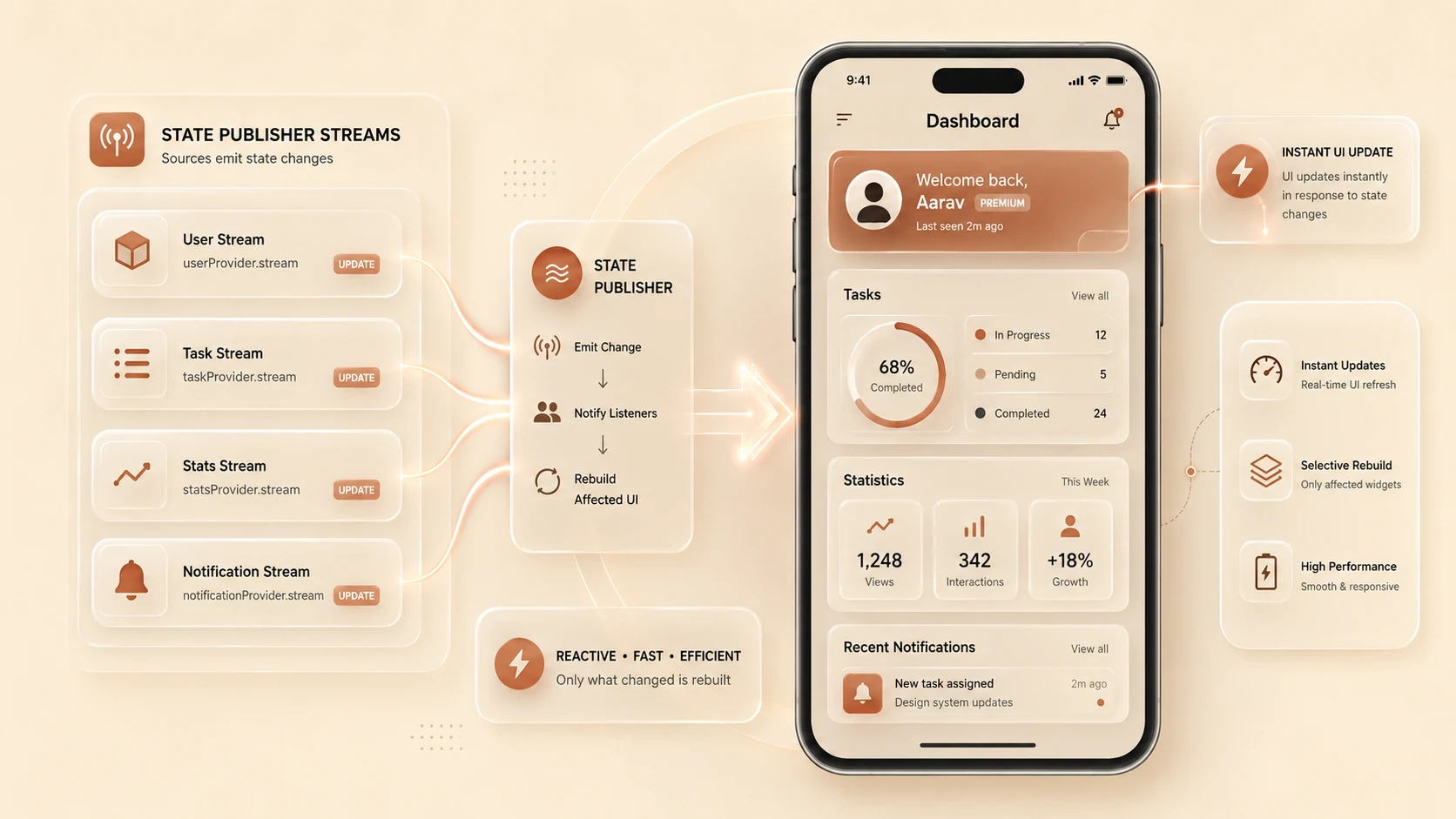
System architecture diagram and conceptual workflow layout for Java 13: Text Blocks Preview and Dynamic CDS Archive Configurations.
This process enables future application launches to reuse archived runtime information.
JVM Improvements
Java 13 also continues refining the HotSpot Virtual Machine.
Areas of ongoing optimization include:
- ◆Startup behavior
- ◆Runtime efficiency
- ◆Compiler optimization
- ◆Garbage collection
- ◆Memory management
These incremental improvements contribute to Java's continued suitability for enterprise workloads.
Enterprise Use Cases
| Scenario | Benefit |
|---|---|
| REST APIs | Cleaner embedded JSON templates |
| Database Applications | Readable SQL statements |
| Configuration Services | Better multiline configuration handling |
| Enterprise Middleware | Faster application startup |
| Cloud Deployments | Improved startup characteristics |
| Administrative Systems | Cleaner source code maintenance |
Organizations maintaining large Java codebases benefit from language improvements that reduce boilerplate while preserving maintainability.
Performance Considerations
Text Blocks primarily improve developer productivity rather than execution performance.
Dynamic CDS, however, targets runtime startup behavior.
Development teams should benchmark:
- ◆Application startup time
- ◆Memory usage
- ◆Class loading performance
- ◆Container startup
- ◆Build duration
- ◆Runtime consistency
Performance decisions should always be based on representative production workloads.
Security Considerations
Java 13 does not introduce fundamental changes to the platform security model.
Organizations should continue implementing:
- ◆Authentication
- ◆Authorization
- ◆TLS communication
- ◆Secure dependency management
- ◆Input validation
- ◆Secure coding practices
Language improvements complement secure development practices without replacing them.
Scalability
Java 13 supports enterprise scalability by:
- ◆Simplifying source code maintenance
- ◆Improving startup optimization
- ◆Continuing JVM refinement
- ◆Supporting modern deployment practices
These improvements become increasingly valuable in cloud-native and containerized environments where startup behavior directly affects operational efficiency.
Best Practices
Organizations evaluating Java 13 should:
- ◆Use Text Blocks for complex multiline content.
- ◆Continue evaluating preview language features within development environments.
- ◆Benchmark Dynamic CDS using production-like workloads.
- ◆Update coding standards for multiline string usage.
- ◆Validate build tool compatibility.
- ◆Continue automated regression testing.
- ◆Monitor JVM startup metrics.
- ◆Review OpenJDK documentation for preview feature guidance.
Incremental adoption allows engineering teams to gain practical experience while minimizing production risk.
Common Mistakes
Development teams should avoid:
- ◆Deploying preview language features into production environments without organizational approval.
- ◆Rewriting stable code solely to adopt new syntax.
- ◆Assuming Text Blocks improve runtime performance.
- ◆Ignoring whitespace formatting within multiline content.
- ◆Benchmarking startup improvements without representative workloads.
- ◆Skipping compatibility testing during platform upgrades.
Successful platform modernization depends on disciplined engineering practices rather than adopting every new language feature immediately.
Technology Comparison
| Capability | Java 12 | Java 13 |
|---|---|---|
| Text Blocks | No | Preview |
| Switch Expressions | Preview | Refined Preview |
| Dynamic CDS Archives | No | Yes |
| JVM Startup Optimization | Good | Improved |
| Compiler Enhancements | Yes | Continued |
| Six-Month Release Cadence | Yes | Yes |
Java 13 builds upon Java 12 by expanding language expressiveness and improving JVM startup optimization.
Adoption Strategy
Organizations should evaluate Java 13 through controlled pilot projects.
A recommended migration approach includes:
- 1.Upgrade development environments.
- 2.Evaluate Text Blocks in non-production code.
- 3.Benchmark Dynamic CDS with representative applications.
- 4.Review build automation compatibility.
- 5.Validate third-party library support.
- 6.Train development teams on new language capabilities.
- 7.Continue monitoring future OpenJDK releases before large-scale production migration.
This measured strategy enables organizations to gain familiarity with evolving platform features while maintaining production stability.
Limitations
As of September 2019, several considerations remain.
Current observations include:
- ◆Text Blocks remain a preview language feature.
- ◆Switch Expressions continue evolving.
- ◆Java 13 is not a Long-Term Support release.
- ◆Dynamic CDS benefits vary according to application architecture and deployment characteristics.
Organizations should therefore evaluate these capabilities within development and testing environments while continuing to follow established enterprise upgrade policies.
Looking Ahead
Java 13 continues the OpenJDK platform's incremental modernization strategy by introducing cleaner language constructs and practical runtime improvements. Text Blocks simplify one of the most common sources of boilerplate in enterprise Java development, while Dynamic CDS Archive generation improves startup efficiency through more accessible class metadata sharing. Continued refinement of Switch Expressions demonstrates the platform's commitment to evolving language features through community feedback before standardization.
As of September 2019, enterprise architects should regard Java 13 as an important evaluation release that previews future language capabilities and JVM optimizations. Organizations that combine disciplined experimentation, performance benchmarking, and incremental adoption will be well prepared for future Long-Term Support platform releases while continuing to modernize enterprise Java development practices.