Why Startup Performance Matters for AI Gateways
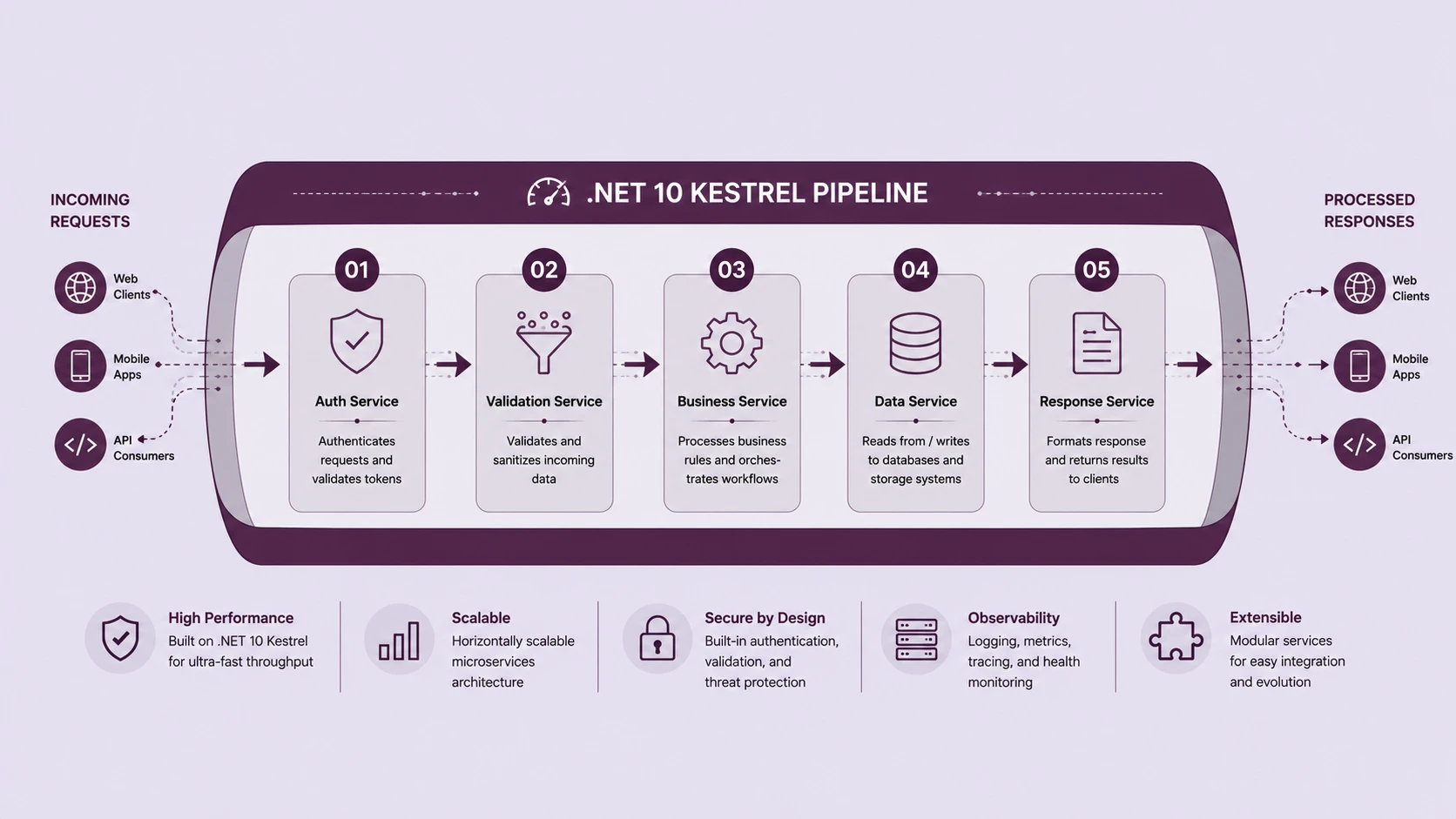
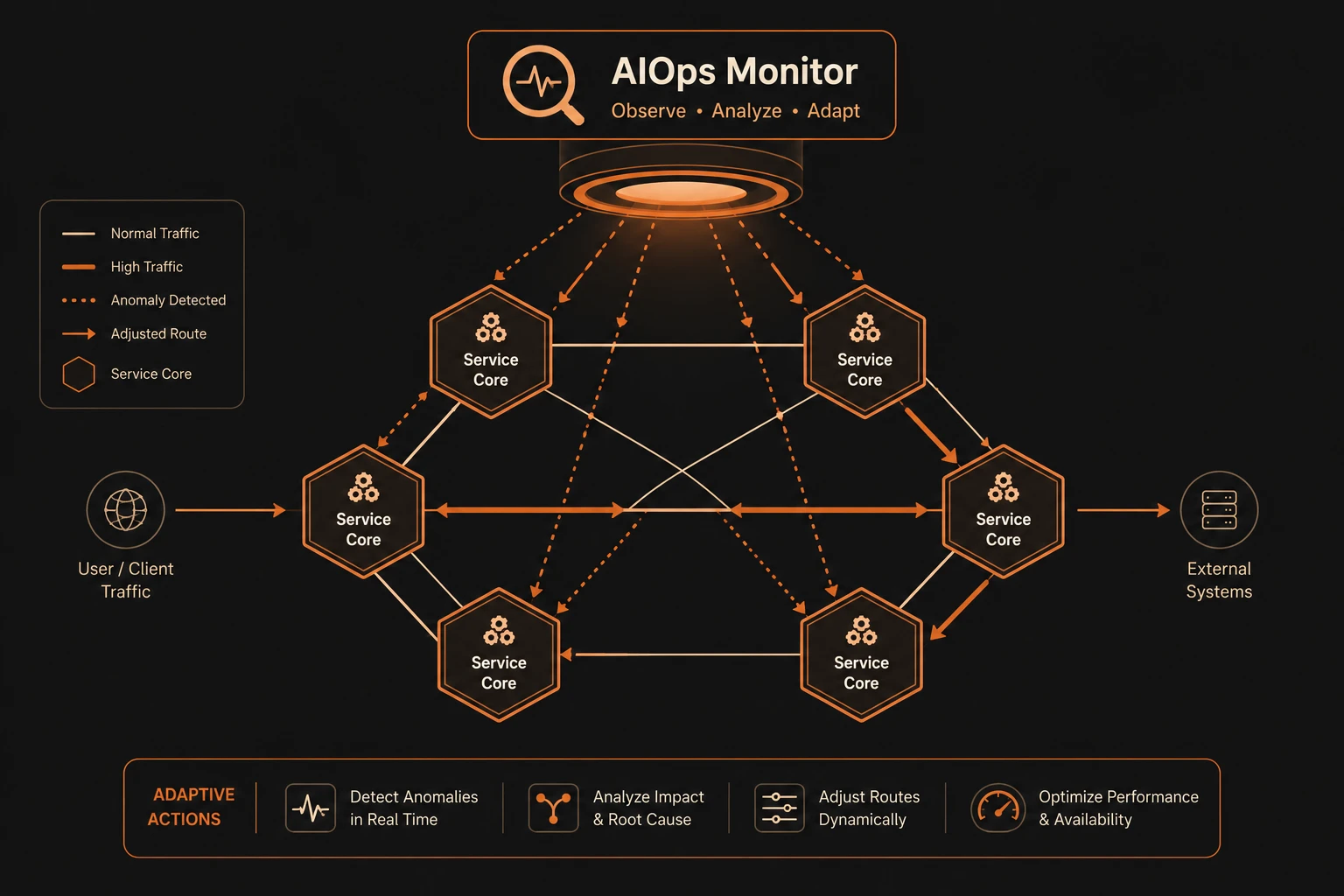
Modern AI gateways process thousands of requests every second while orchestrating language models, retrieval pipelines, authentication, monitoring, and business services. In cloud-native environments, applications frequently scale up and down based on demand, making startup performance a critical factor.
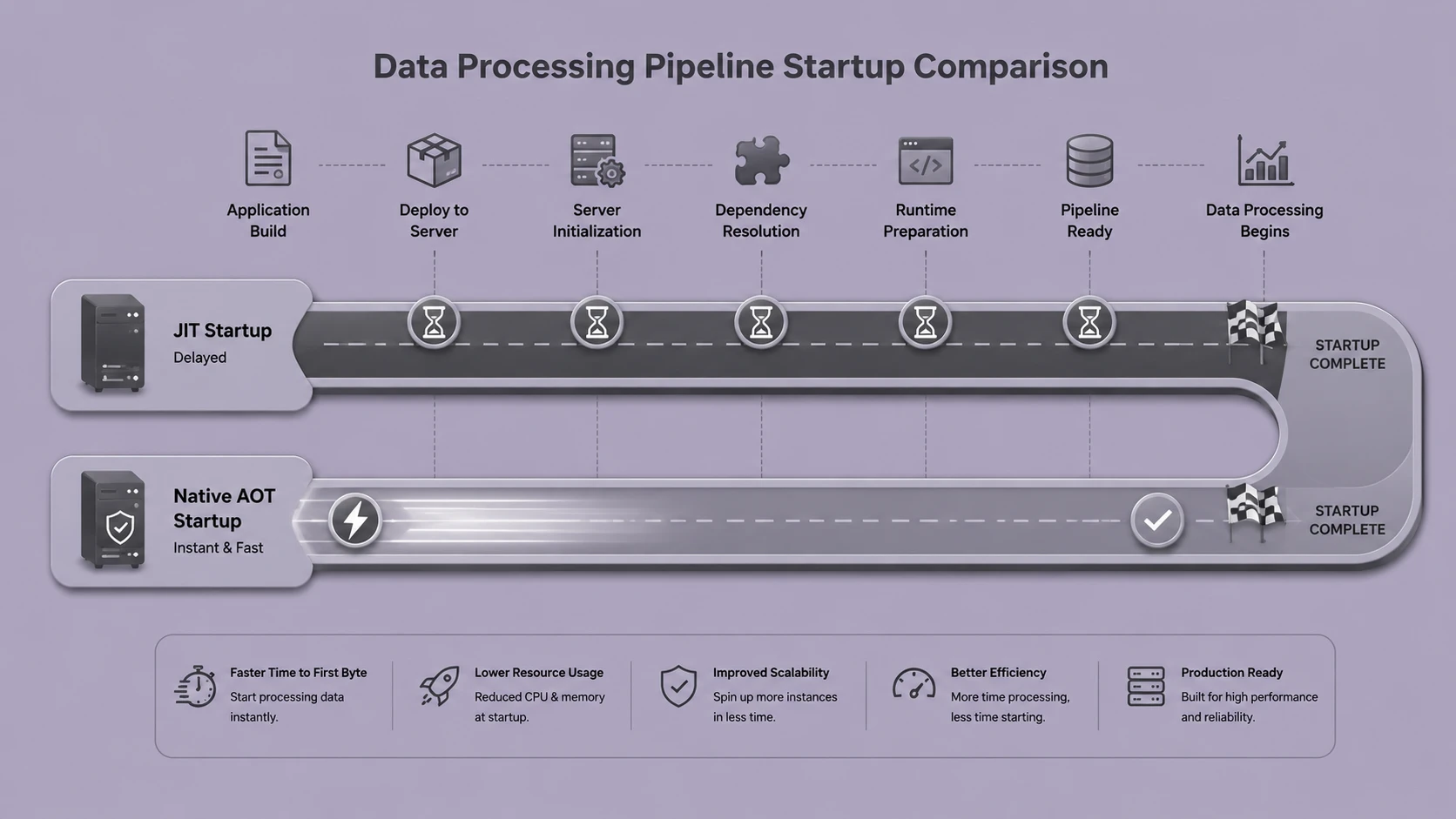
Traditional managed applications require the .NET runtime and Just-in-Time (JIT) compilation before processing requests. While this provides flexibility, it can introduce cold-start latency and increase memory usage in serverless platforms and Kubernetes clusters.
Native AOT (Ahead-of-Time) compilation in .NET 10 addresses these challenges by compiling applications directly into native machine code before deployment, allowing services to start significantly faster while consuming fewer resources.
Architecture Principle: Optimize startup time and memory efficiency at build time rather than paying runtime compilation costs for every new service instance.
---
What is Native AOT?
Native AOT compiles .NET applications into platform-specific native executables.
Unlike traditional deployments that rely on runtime JIT compilation, Native AOT performs compilation during the build process, producing a lightweight executable that starts immediately.
Benefits include:
- ◆Faster startup
- ◆Lower memory usage
- ◆Reduced container size
- ◆Smaller attack surface
- ◆Better serverless performance
- ◆Improved scaling efficiency
These advantages make Native AOT especially valuable for AI gateways that frequently scale under variable workloads.
---
Traditional vs Native AOT Execution
Traditional .NET execution follows this process:
Application
      │
      ▼
CLR Startup
      │
JIT Compilation
      │
Application Execution
With Native AOT:
Application
      │
      ▼
Native Executable
      │
Immediate Execution
By eliminating runtime compilation, applications become more responsive from the first request.
---
Why AI Gateways Benefit
AI gateways typically perform tasks such as:
- ◆Authentication
- ◆Rate limiting
- ◆Prompt routing
- ◆Model selection
- ◆Retrieval orchestration
- ◆API aggregation
- ◆Response streaming
- ◆Monitoring
These services must respond quickly while handling high concurrency. Faster startup times allow infrastructure to scale more efficiently during sudden traffic spikes.
---
Memory Optimization
Memory efficiency is essential for containerized deployments.

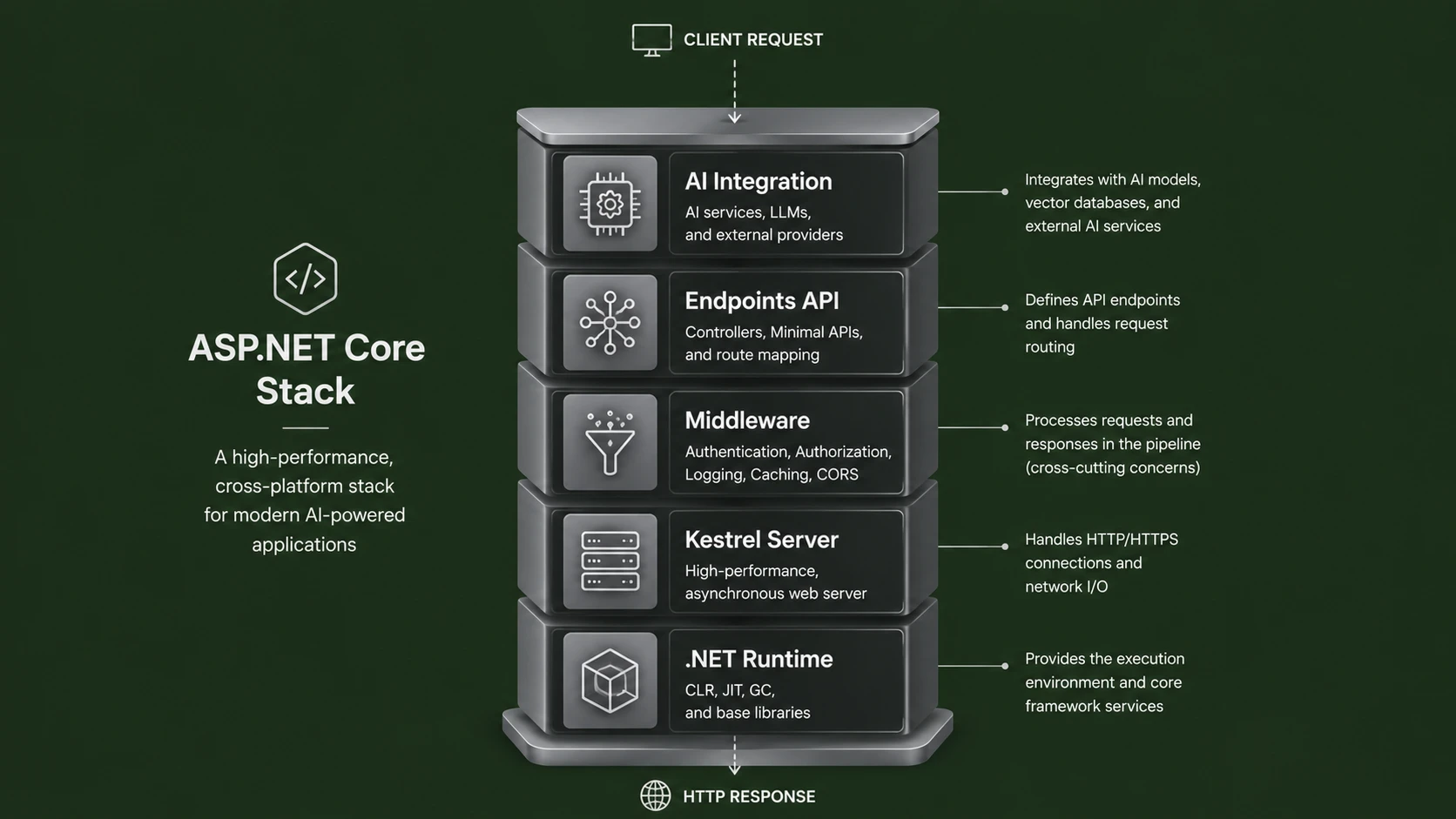
System architecture diagram and conceptual workflow layout for Native AOT in .NET 10.
Native AOT helps reduce:
- ◆Runtime overhead
- ◆Metadata loading
- ◆JIT compiler memory
- ◆Reflection dependencies
- ◆Startup allocations
Lower memory consumption enables higher container density, reducing infrastructure costs while improving scalability.
---
Cloud-Native Deployment
Native AOT integrates naturally with modern cloud platforms.
Typical deployment environments include:
- ◆Kubernetes
- ◆Azure Container Apps
- ◆AWS ECS
- ◆Google Cloud Run
- ◆Azure Functions
- ◆Serverless AI APIs
- ◆Edge Computing
Smaller executables reduce deployment time and improve autoscaling responsiveness.
---
AI Gateway Architecture
A production AI gateway may include:
Client
    │
    ▼
API Gateway
    │
Authentication
    │
Native AOT Service
    │
AI Routing Engine
    │
Model Providers
    │
Monitoring & Logging
Native AOT ensures the gateway becomes available almost immediately after deployment or scaling events.
---
Best Practices
When adopting Native AOT for enterprise workloads:
- ◆Minimize reflection
- ◆Prefer source generators
- ◆Reduce unnecessary dependencies
- ◆Optimize container images
- ◆Benchmark startup performance
- ◆Monitor memory usage
- ◆Validate trimming compatibility
- ◆Automate performance testing
These practices maximize the benefits of ahead-of-time compilation.
---
Production Considerations
Although Native AOT offers impressive performance improvements, teams should verify library compatibility and avoid runtime features that depend heavily on dynamic code generation.
Careful testing ensures applications remain reliable while taking advantage of faster startup and lower memory usage.
---
Looking Ahead
As AI platforms continue to expand across cloud-native and serverless environments, startup performance becomes increasingly important. Native AOT in .NET 10 provides a practical way to reduce cold starts, lower memory consumption, and improve infrastructure efficiency.
For organizations building high-performance AI gateways, adopting Native AOT is more than a performance optimization—it is a strategic architectural decision that enables faster scaling, lower operational costs, and a more responsive user experience.