Introduction
Enterprise AI adoption has moved beyond isolated chatbots and single-model applications. Organizations are increasingly building systems that require planning, reasoning, execution, validation, retrieval, monitoring, and integration with enterprise software.
As these requirements grow, a single large language model often becomes difficult to manage, expensive to scale, and challenging to govern.
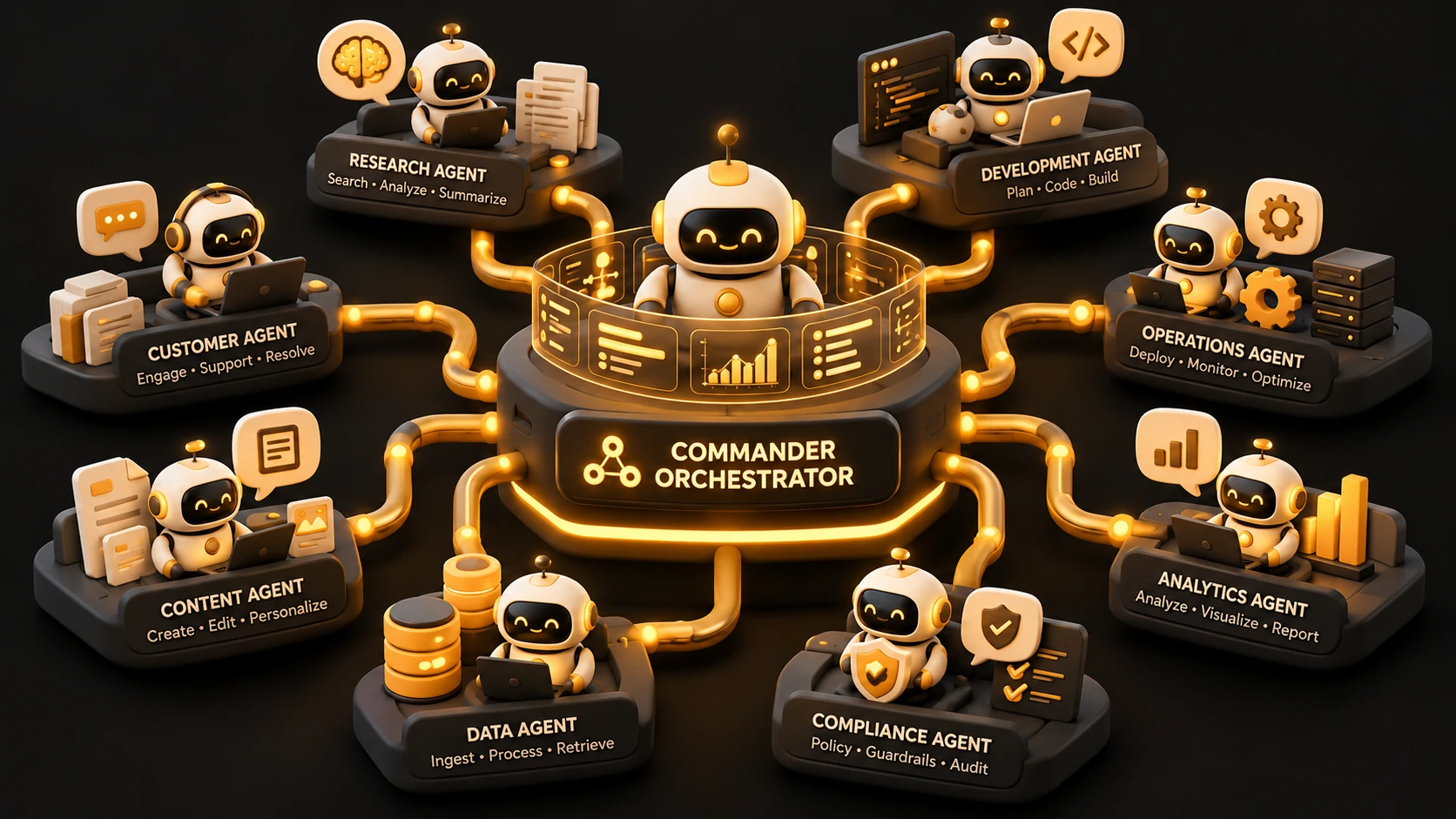
This has led to growing interest in multi-agent orchestration, an architectural approach where multiple specialized AI agents collaborate to achieve business objectives.
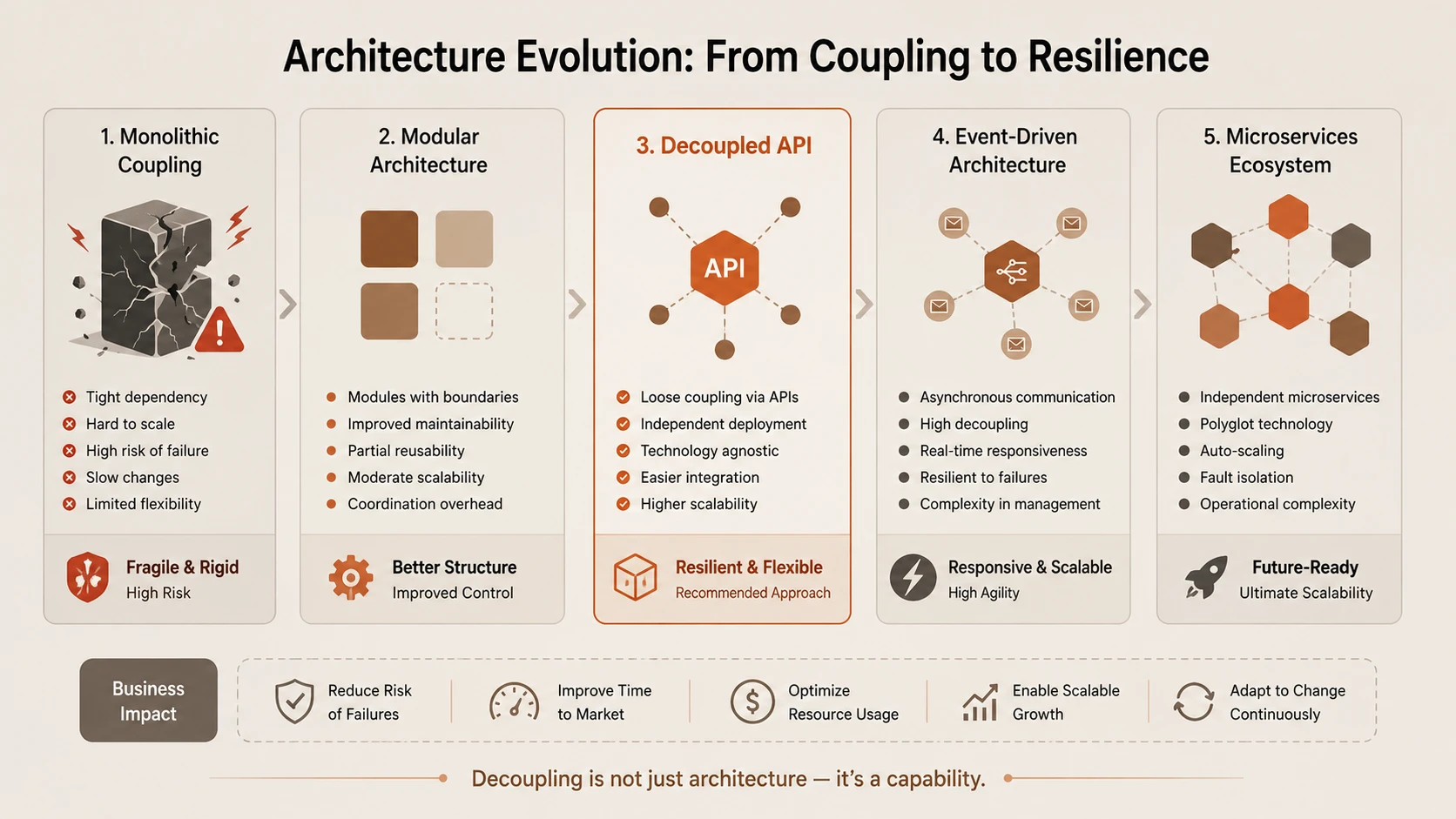
Many technology leaders compare this transition to the evolution from monolithic applications to microservices. Just as microservices separated business capabilities into independently deployable services, multi-agent architectures separate AI responsibilities into specialized agents coordinated through orchestration layers.
For enterprise architects in 2026, understanding multi-agent orchestration is becoming increasingly important when designing next-generation AI platforms.
Industry Background
The first wave of enterprise generative AI primarily focused on conversational interfaces powered by a single foundation model.
These solutions demonstrated significant value but exposed several challenges:
- ◆Context window limitations
- ◆Increasing inference costs
- ◆Complex business workflows
- ◆Limited specialization
- ◆Difficulty validating outputs
- ◆Challenges integrating with enterprise systems
Organizations began experimenting with specialized AI components responsible for discrete tasks.
Examples include:
- ◆Research agents
- ◆Retrieval agents
- ◆Planning agents
- ◆Coding agents
- ◆Compliance agents
- ◆Validation agents
- ◆Reporting agents
Rather than relying on one model to perform every task, enterprises started distributing responsibilities across multiple cooperating agents.
This approach mirrors principles that transformed enterprise software architectures over the past two decades.
The Business Problem
Large enterprises rarely operate through simple workflows.
A customer support process may involve:
- ◆CRM systems
- ◆Knowledge repositories
- ◆Policy engines
- ◆Ticketing systems
- ◆Workflow automation platforms
- ◆Human approvals
Similarly, software delivery workflows may require:
- ◆Requirements analysis
- ◆Code generation
- ◆Security scanning
- ◆Testing
- ◆Documentation
- ◆Deployment validation
Attempting to handle all responsibilities through a single AI model often creates bottlenecks.
Common enterprise concerns include:
| Challenge | Impact |
|---|---|
| Large prompts | Increased cost and latency |
| Mixed responsibilities | Reduced output quality |
| Limited governance | Compliance risks |
| Single point of failure | Reliability concerns |
| Difficult debugging | Operational complexity |
Multi-agent orchestration addresses these issues by distributing work among specialized components.
Understanding the Technology
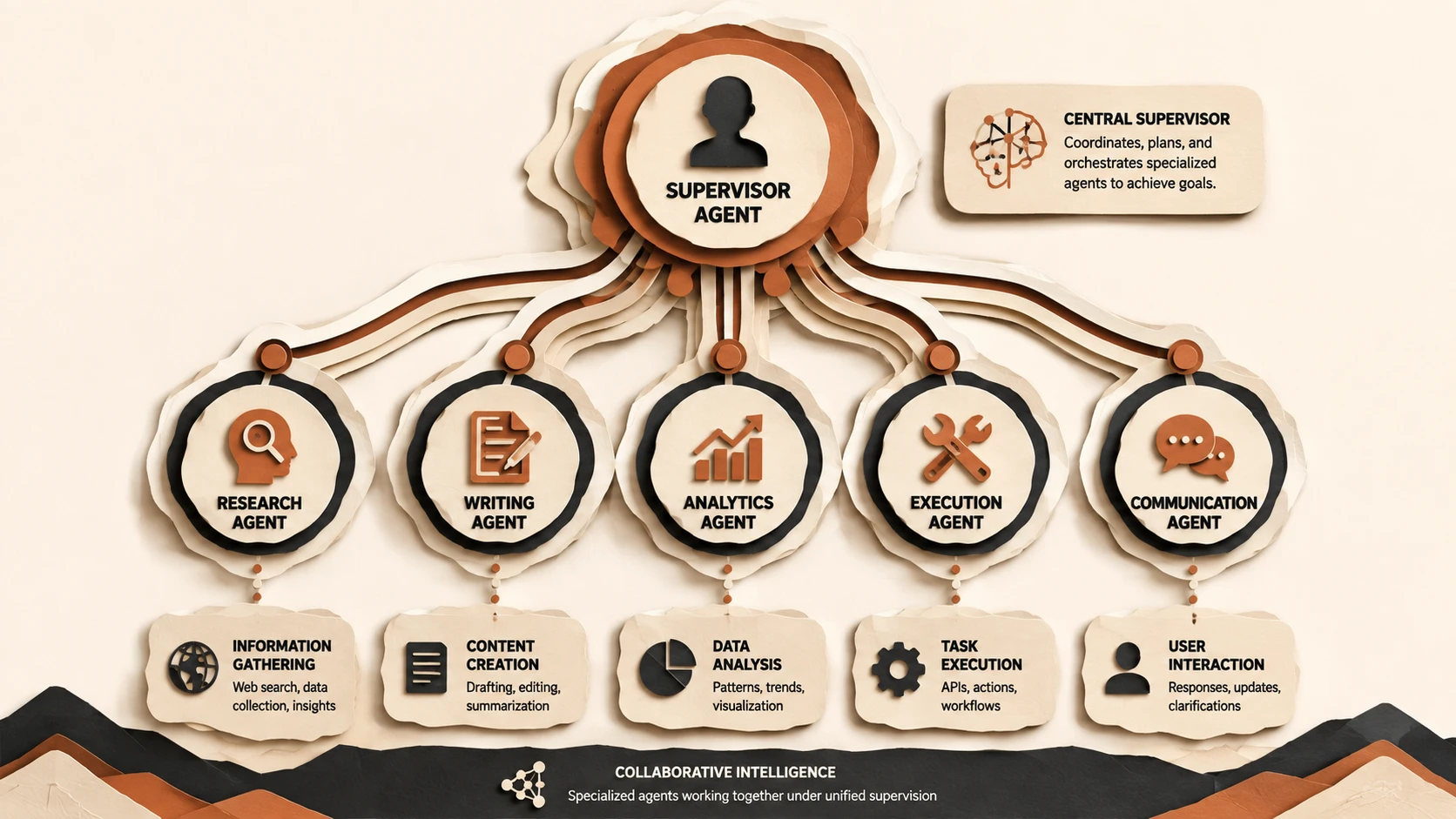
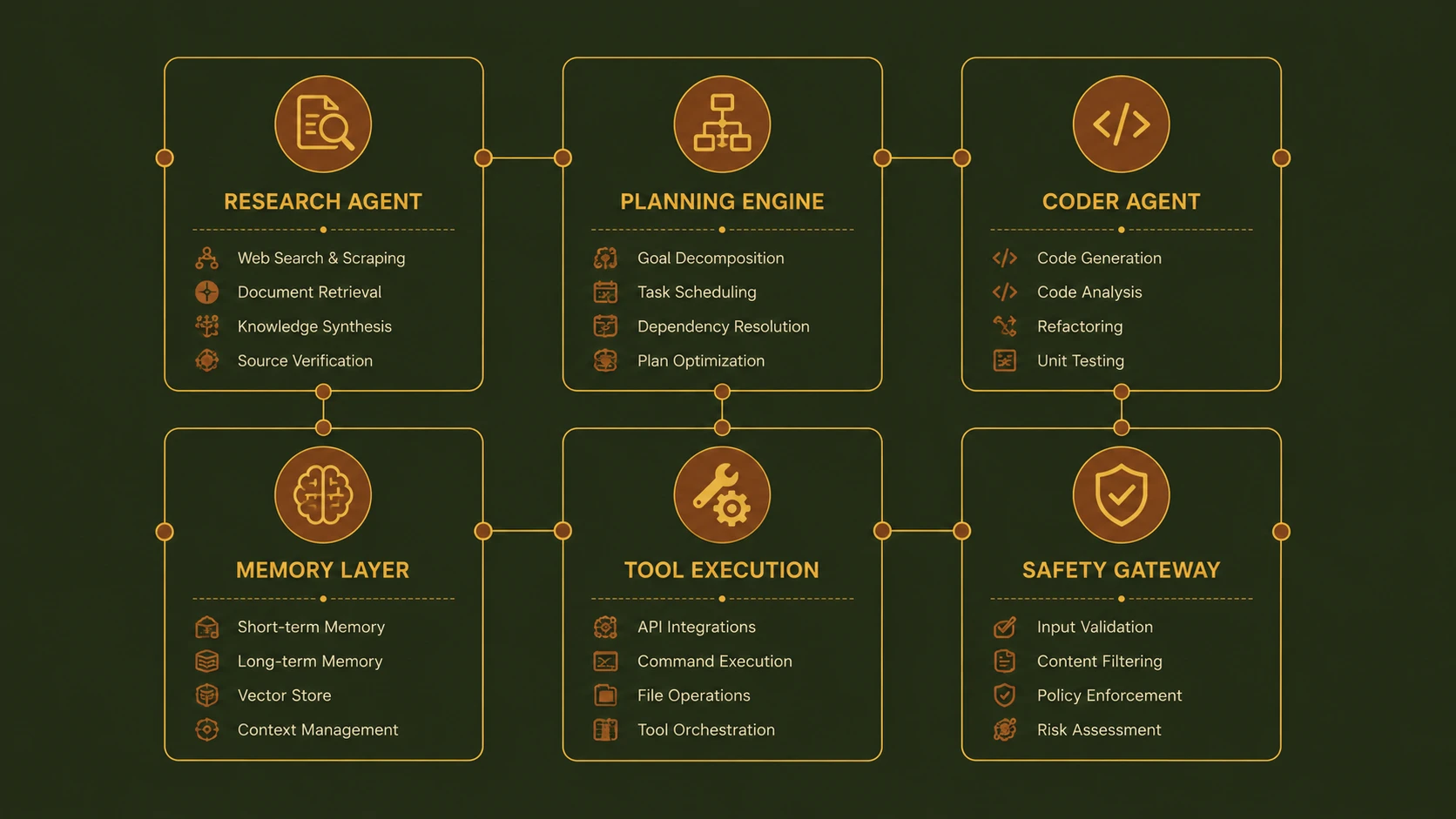
Multi-agent orchestration refers to the coordination of multiple AI agents that collaborate to accomplish a broader objective.
Each agent typically owns a specific responsibility.
Examples include:
| Agent Type | Primary Responsibility |
|---|---|
| Planner Agent | Break tasks into steps |
| Research Agent | Gather information |
| Retrieval Agent | Access enterprise knowledge |
| Execution Agent | Perform actions through tools |
| Compliance Agent | Check policies and regulations |
| Validation Agent | Verify outputs |
| Reporting Agent | Generate summaries |
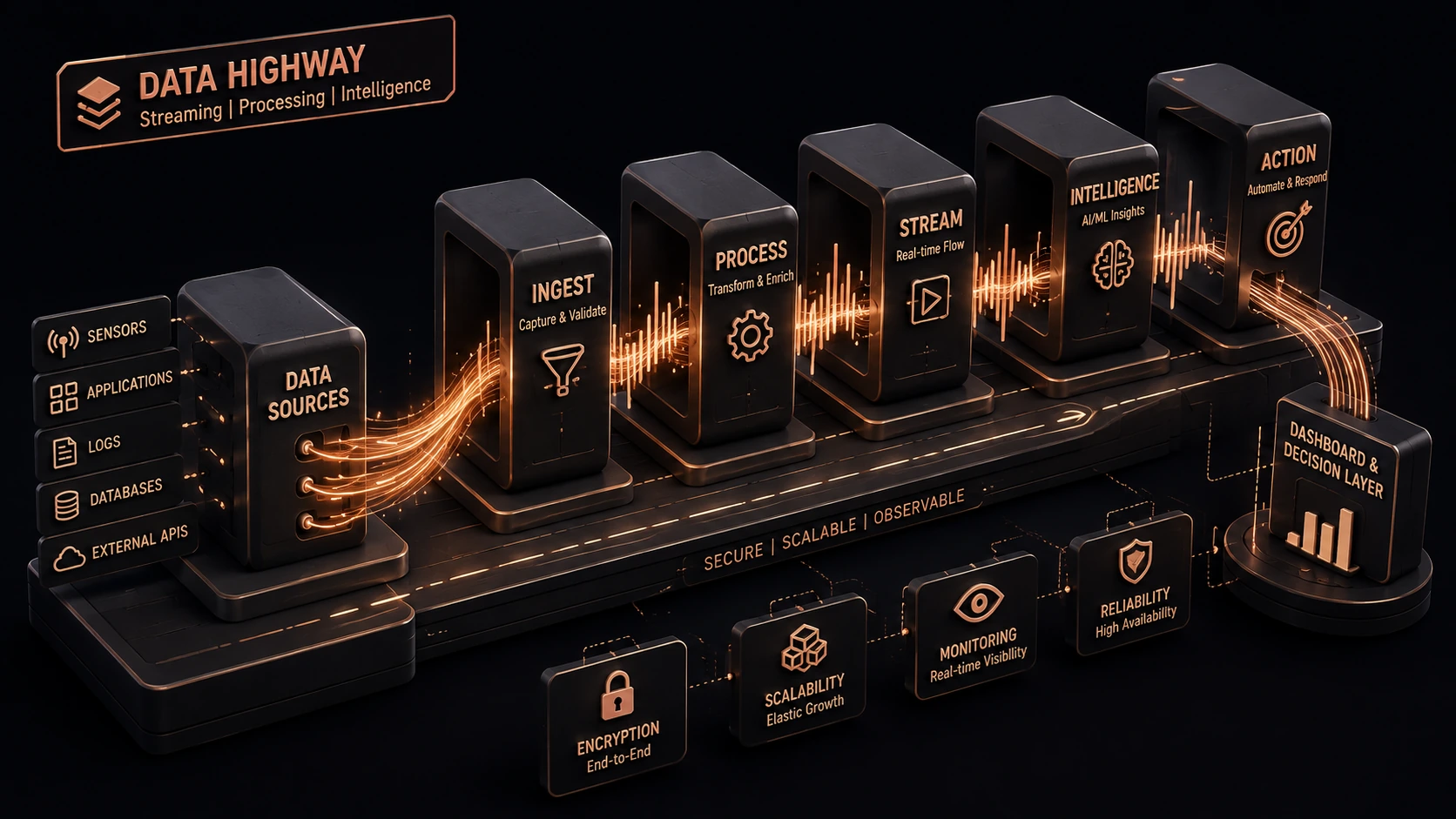
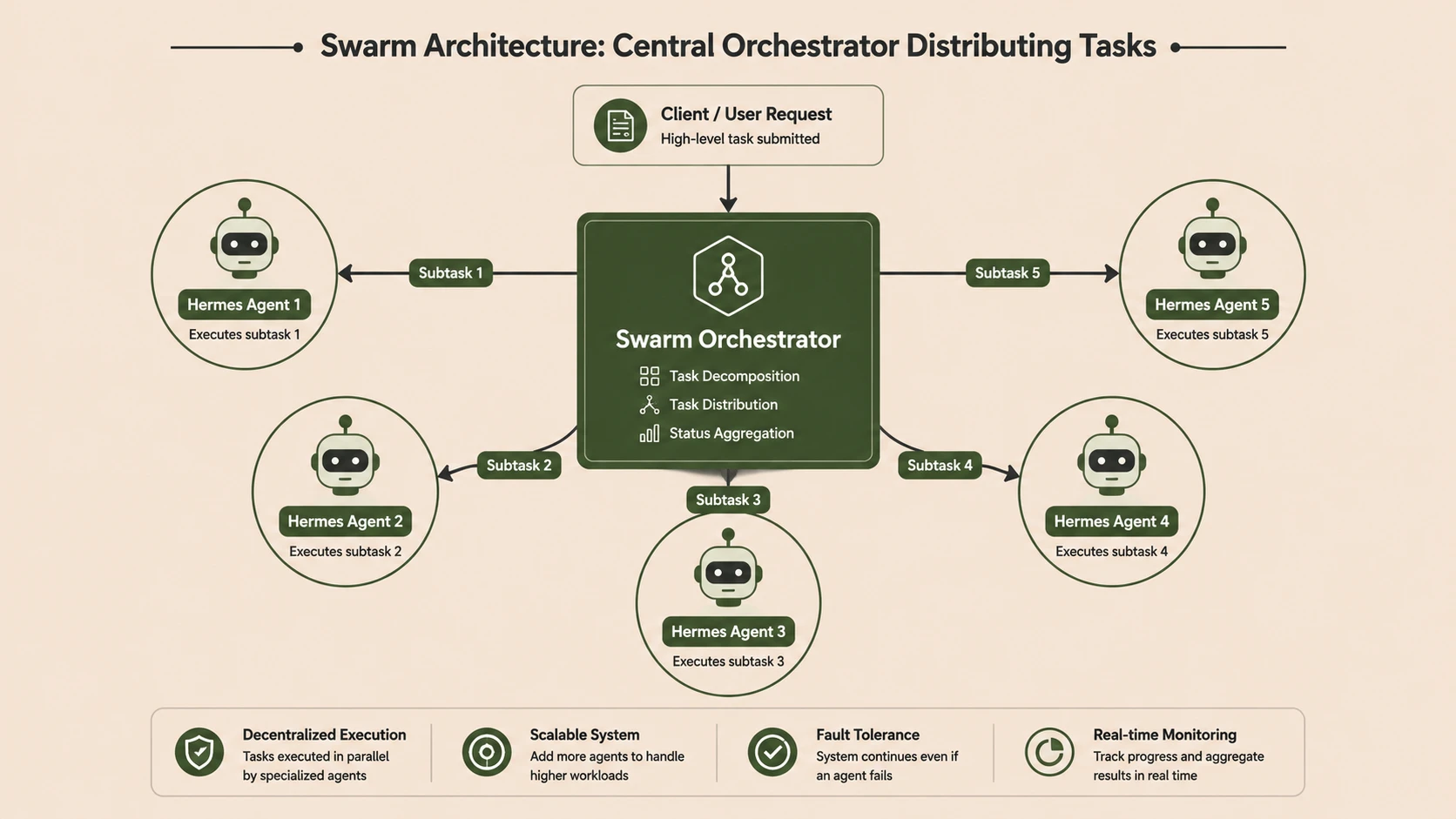
An orchestration layer manages:
- ◆Agent communication
- ◆Task routing
- ◆Context sharing
- ◆State management
- ◆Workflow execution
- ◆Failure handling
The objective is not simply to run multiple models.
The objective is to create a coordinated system where specialized agents contribute expertise while operating within defined governance controls.
Core Architecture
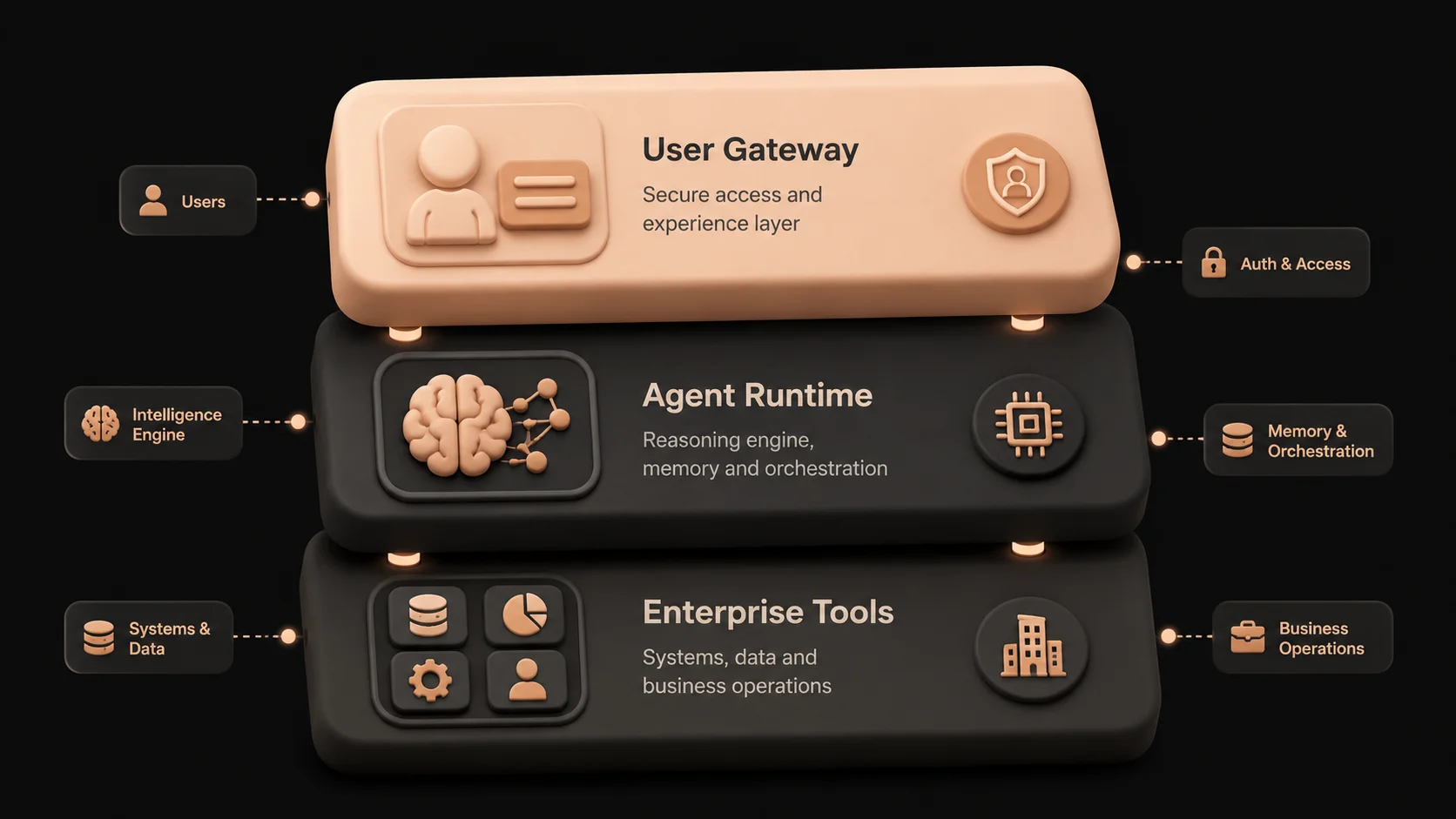
A typical enterprise multi-agent architecture contains several layers.
User Interaction Layer
Receives requests through:
- ◆Web applications
- ◆Mobile applications
- ◆Internal portals
- ◆APIs
- ◆Chat interfaces
Orchestration Layer
Acts as the central coordinator.
Responsibilities include:
- ◆Agent selection
- ◆Workflow planning
- ◆State management
- ◆Context routing
- ◆Dependency management
- ◆Retry handling
Agent Layer
Contains specialized agents.
Each agent focuses on a narrow responsibility.
Knowledge Layer
Provides access to:
- ◆Vector databases
- ◆Document repositories
- ◆Enterprise knowledge bases
- ◆Structured databases
- ◆Business systems
Integration Layer
Connects to:
- ◆ERP platforms
- ◆CRM systems
- ◆Identity providers
- ◆Workflow engines
- ◆Internal APIs
Governance Layer
Enforces:
- ◆Security policies
- ◆Compliance controls
- ◆Audit logging
- ◆Access management
- ◆Monitoring
Key Features
Multi-agent orchestration introduces capabilities that are difficult to achieve with a single-agent design.
Specialization
Each agent focuses on a defined domain.
This often improves consistency and maintainability.
Parallel Execution
Independent tasks can execute simultaneously.
Benefits include:
- ◆Reduced latency
- ◆Faster decision-making
- ◆Improved throughput
Separation of Concerns
Business logic becomes easier to manage.
Architects can modify one agent without redesigning the entire system.
Governance Controls
Validation and compliance agents can independently review outputs before actions occur.
Tool Integration
Agents can interact with:
- ◆APIs
- ◆Databases
- ◆Search systems
- ◆Internal applications
without exposing unnecessary privileges across the entire platform.
How It Works
Consider an enterprise procurement workflow.
A user submits a request:
"Analyze vendor proposals and recommend a supplier."
The orchestration process may execute as follows:
- 1.Planner agent creates workflow steps.
- 2.Retrieval agent gathers historical procurement data.
- 3.Research agent analyzes vendor information.
- 4.Compliance agent evaluates policy requirements.
- 5.Financial analysis agent reviews cost factors.
- 6.Validation agent checks consistency.
- 7.Reporting agent prepares recommendations.
- 8.Human approver reviews results.
Rather than one AI component attempting every responsibility, the workload is distributed across specialized agents.
Enterprise Use Cases
Software Development
Multi-agent systems can support:
- ◆Requirements analysis
- ◆Architecture review
- ◆Code generation
- ◆Security validation
- ◆Documentation creation
Customer Support
Agents can collaborate to:
- ◆Retrieve customer history
- ◆Search knowledge bases
- ◆Recommend resolutions
- ◆Escalate complex cases
Financial Operations
Organizations can orchestrate agents for:
- ◆Invoice processing
- ◆Risk assessment
- ◆Fraud detection
- ◆Reporting workflows
Healthcare Administration
Potential use cases include:
- ◆Documentation processing
- ◆Claims validation
- ◆Workflow automation
- ◆Policy verification
Manufacturing
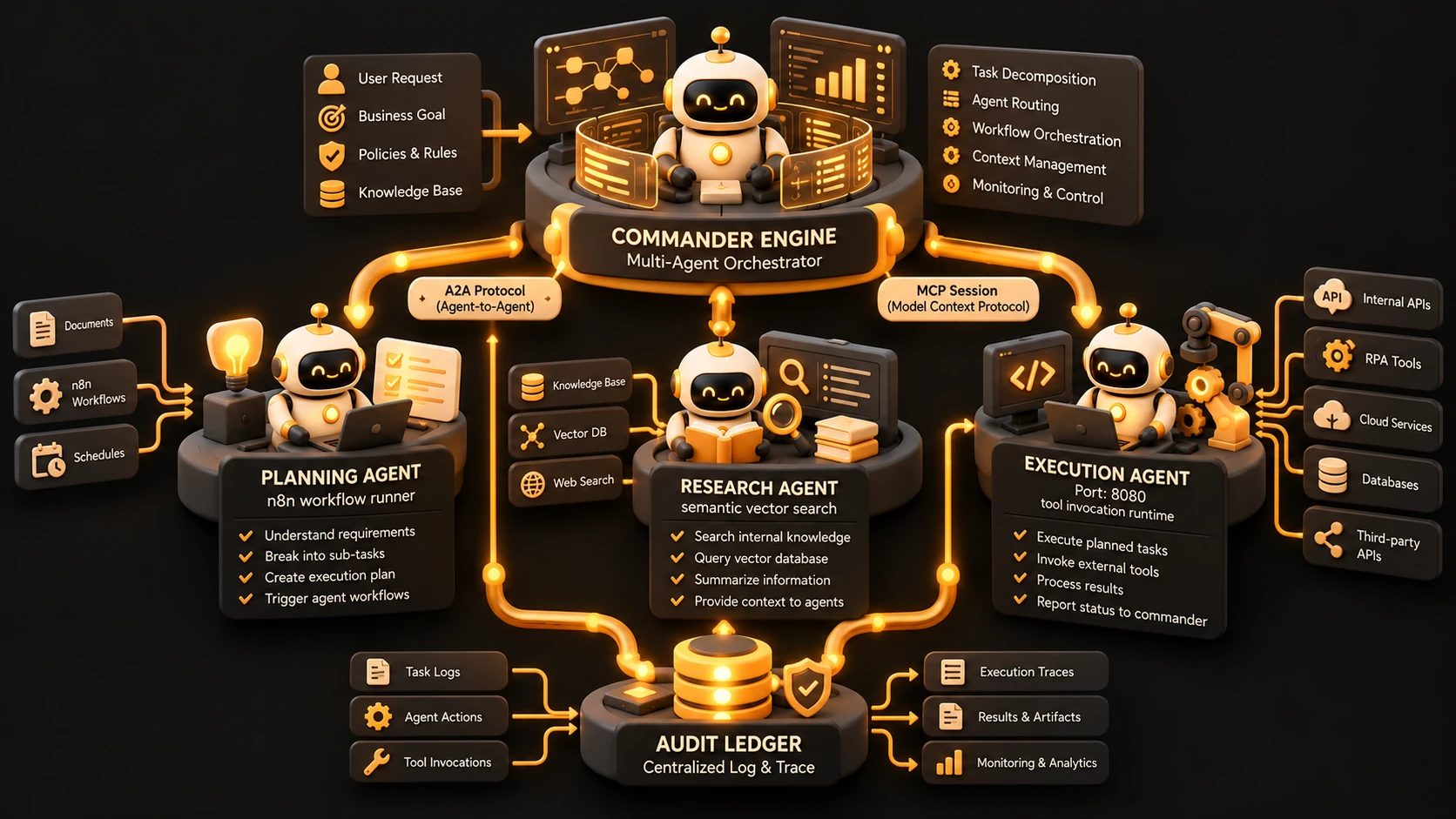
Multi-agent Commander Architecture showing task delegation across specialized agents using A2A and MCP protocols.
Applications include:
- ◆Predictive maintenance
- ◆Supply chain analysis
- ◆Quality assurance
- ◆Production planning
Performance Considerations
Performance is a primary design concern in multi-agent environments.
Although specialization can improve quality, poorly designed orchestration can increase latency.
Important considerations include:
Agent Granularity
Creating too many agents can increase communication overhead.
Context Transfer
Large context exchanges may increase token consumption.
Workflow Complexity
Deep orchestration chains may introduce delays.
Parallel Processing
Independent tasks should execute concurrently whenever possible.
Caching
Frequently accessed information should be cached to reduce retrieval costs.
Security Considerations
Enterprise AI systems require robust security controls.
Multi-agent architectures expand the number of components that must be governed.
Key practices include:
Identity Management
Every agent should operate under controlled identities.
Least Privilege Access
Agents should only access systems required for their responsibilities.
Audit Logging
Organizations should track:
- ◆Decisions
- ◆Tool usage
- ◆Data access
- ◆Workflow execution
Human Oversight
High-risk actions should require human approval.
Data Protection
Sensitive information should be protected through:
- ◆Encryption
- ◆Access controls
- ◆Data classification
- ◆Retention policies
Scalability
One reason enterprises are exploring multi-agent orchestration is scalability.
Specialized agents can scale independently based on demand.
For example:
| Agent | Scaling Pattern |
|---|---|
| Retrieval Agent | Scale for query volume |
| Research Agent | Scale for analysis workloads |
| Validation Agent | Scale for review throughput |
| Reporting Agent | Scale for document generation |
This model resembles microservice scaling strategies commonly used in cloud-native environments.
Architectures built on Kubernetes, container orchestration platforms, and distributed infrastructure can align naturally with this approach.
Best Practices
Start with Business Processes
Focus on workflow requirements rather than agent count.
Design for Observability
Implement:
- ◆Tracing
- ◆Metrics
- ◆Logging
- ◆Performance monitoring
Define Agent Boundaries
Responsibilities should remain clear and narrowly scoped.
Introduce Validation Layers
Independent review agents can improve reliability.
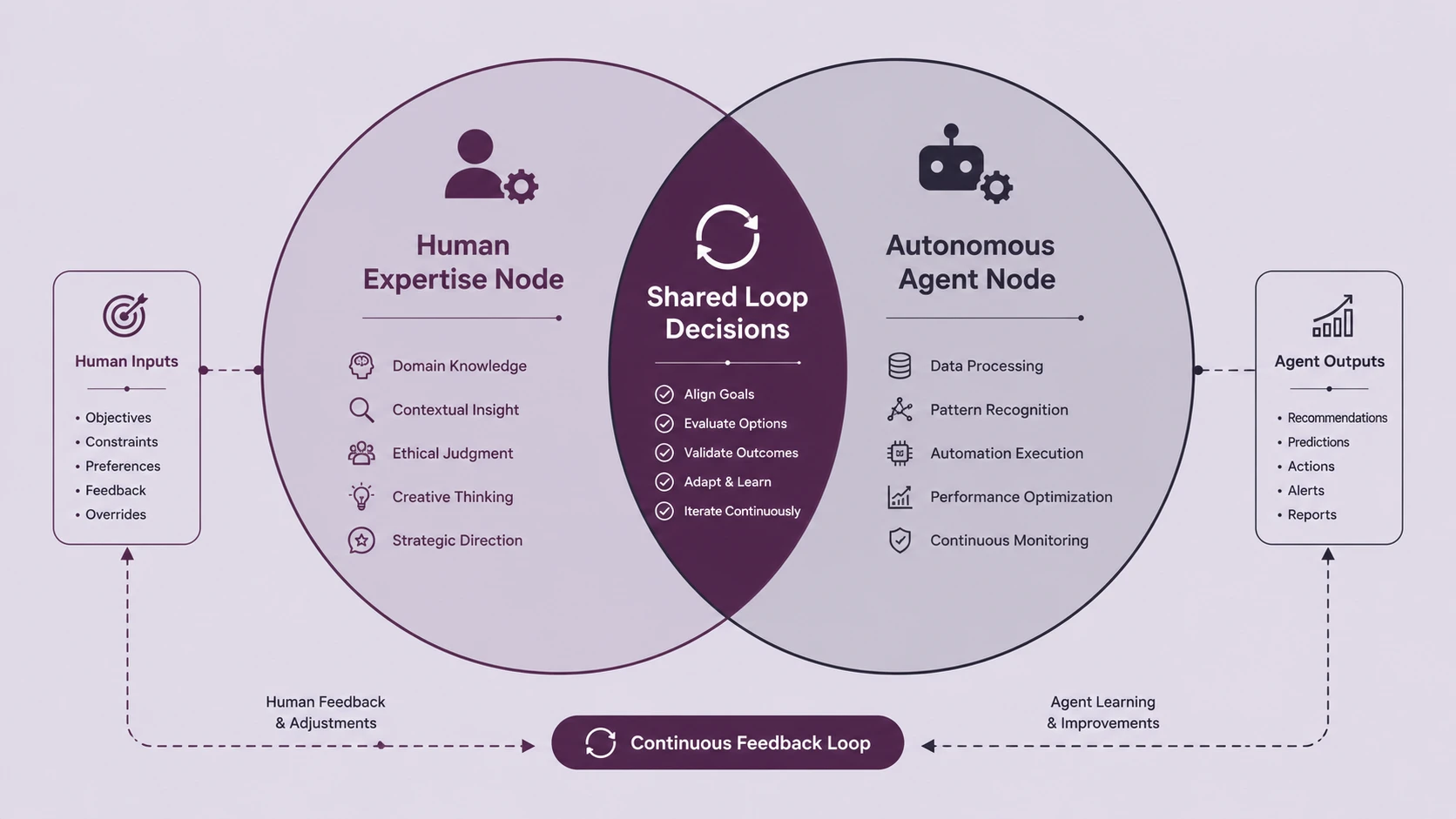
Maintain Human Governance
Critical business decisions should remain reviewable.
Standardize Communication
Agent interactions should use consistent protocols and message formats.
Common Mistakes
Creating Too Many Agents
Excessive fragmentation increases operational complexity.
Ignoring Governance
AI systems handling enterprise data require strong controls.
Sharing Excessive Context
Large context exchanges increase cost and latency.
Lack of Monitoring
Without observability, troubleshooting becomes difficult.
Over-Automation
Not every decision should be delegated to autonomous agents.
Technology Comparison
Single-Agent vs Multi-Agent Systems
| Capability | Single-Agent | Multi-Agent |
|---|---|---|
| Simplicity | High | Moderate |
| Specialization | Limited | High |
| Scalability | Moderate | High |
| Governance | Moderate | High |
| Flexibility | Moderate | High |
| Operational Complexity | Low | Higher |
| Enterprise Suitability | Moderate | High |
Monolithic AI vs Orchestrated AI
| Factor | Monolithic Approach | Orchestrated Approach |
|---|---|---|
| Task Ownership | Centralized | Distributed |
| Maintenance | Difficult at scale | Modular |
| Failure Isolation | Limited | Improved |
| Extensibility | Lower | Higher |
| Enterprise Alignment | Moderate | Strong |
Adoption Strategy
Organizations considering multi-agent orchestration should adopt a phased approach.
Phase 1: Pilot
Implement orchestration for a narrowly defined workflow.
Phase 2: Integration
Connect enterprise systems and knowledge repositories.
Phase 3: Governance
Introduce monitoring, auditing, and compliance controls.
Phase 4: Expansion
Extend orchestration to additional business domains.
Phase 5: Optimization
Continuously improve:
- ◆Cost efficiency
- ◆Performance
- ◆Reliability
- ◆Security
This incremental approach reduces operational risk while building organizational expertise.
Limitations
Despite its advantages, multi-agent orchestration is not a universal solution.
Challenges include:
- ◆Increased architectural complexity
- ◆More operational overhead
- ◆Additional monitoring requirements
- ◆Agent coordination failures
- ◆Higher governance demands
- ◆State management complexity
Organizations should evaluate whether workflow complexity justifies the architectural investment.
Simple use cases may still benefit from single-agent implementations.
Looking Ahead
As enterprise AI programs mature throughout 2026, multi-agent orchestration is increasingly being evaluated as a foundational design pattern for complex AI systems.
Organizations are exploring ways to combine reasoning, retrieval, execution, validation, and governance through coordinated agent ecosystems rather than relying exclusively on individual AI models.
While architectural standards continue to evolve, the underlying principle is becoming clearer: enterprise AI systems benefit from specialization, controlled collaboration, and strong orchestration.
For technology leaders, the key challenge is not determining whether multiple agents can work together. The more important challenge is designing orchestration frameworks that deliver reliability, security, observability, and business value at enterprise scale.
Much like the rise of microservices transformed application architecture, multi-agent orchestration is shaping discussions around how sophisticated AI systems may be designed, governed, and operated across modern enterprises.