Introduction
The first wave of enterprise generative AI focused primarily on conversational experiences. Organizations integrated large language models into chatbots, knowledge assistants, customer support systems, document summarization tools, and developer copilots. While these applications significantly improved productivity, they generally relied on users to guide every interaction.
The next stage of enterprise AI is centered on autonomous execution. Rather than responding to a single prompt, intelligent systems are increasingly capable of interpreting objectives, planning execution strategies, selecting appropriate tools, coordinating multiple AI models, retrieving enterprise knowledge, evaluating intermediate results, and adapting workflows based on changing conditions.
This evolution has given rise to Agentic AI. Unlike traditional AI assistants that generate responses, agentic systems actively perform work by interacting with enterprise applications, APIs, databases, workflows, and external services while maintaining human oversight for sensitive operations.
By early 2025, Agentic AI has become one of the most influential architectural trends in enterprise software. Organizations are moving beyond isolated AI features toward intelligent systems capable of orchestrating complex business operations across distributed environments.
However, scaling autonomous systems requires more than deploying increasingly capable language models. Successful enterprise implementations depend on structured orchestration, governance, memory, observability, security, evaluation, and human-centered control mechanisms.
Industry Background
Several technology trends are accelerating enterprise adoption of Agentic AI:
- ◆Large Language Models (LLMs)
- ◆Retrieval-Augmented Generation (RAG)
- ◆AI orchestration frameworks
- ◆Multi-agent collaboration
- ◆Enterprise automation
- ◆Cloud-native platforms
- ◆Platform Engineering
- ◆AI governance and observability
Organizations increasingly view AI as an operational capability embedded throughout enterprise workflows rather than as a standalone application.
The Business Problem
Traditional automation solutions often struggle with:
- ◆Dynamic decision making
- ◆Unstructured information
- ◆Multi-step reasoning
- ◆Cross-platform orchestration
- ◆Context switching
- ◆Knowledge-intensive workflows
- ◆Human-like planning
Businesses require systems capable of adapting to changing inputs while coordinating multiple enterprise capabilities.
Understanding Agentic AI
Agentic AI refers to intelligent systems capable of pursuing objectives through planning, reasoning, memory, tool usage, and iterative execution.
Rather than simply producing responses, autonomous agents can:
- ◆Interpret goals
- ◆Generate execution plans
- ◆Select tools
- ◆Access enterprise knowledge
- ◆Perform actions
- ◆Evaluate outcomes
- ◆Adjust strategies
- ◆Collaborate with humans
Enterprise Agentic AI emphasizes controlled autonomy rather than unrestricted decision-making.
Core Architecture
| Component | Responsibility |
|---|---|
| User Interface | Receives objectives and approvals |
| Orchestration Engine | Coordinates planning and execution |
| Planning Module | Breaks objectives into executable tasks |
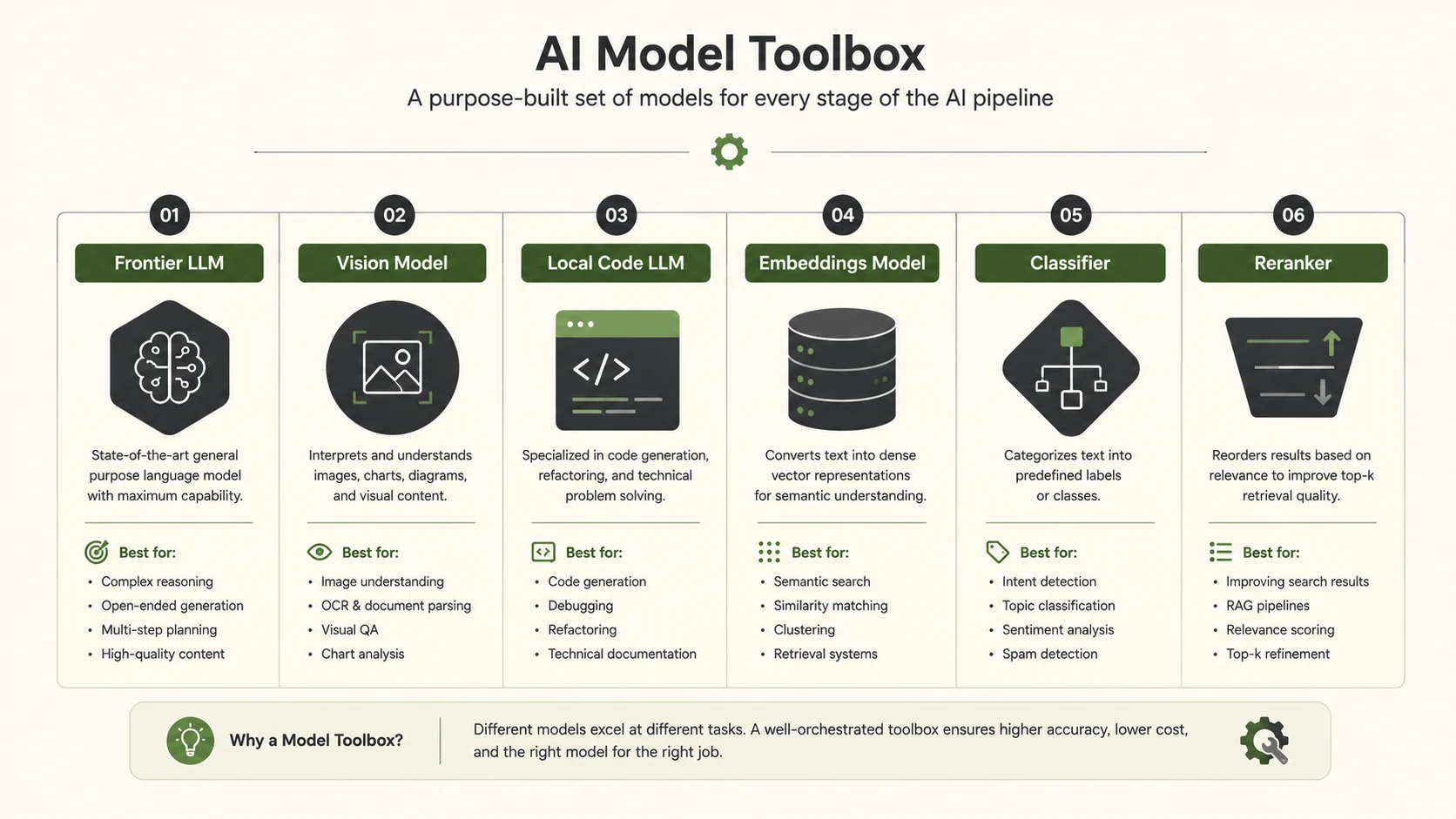
| Large Language Models | Reasoning and natural language understanding |
| Memory Layer | Maintains short-term and long-term context |
| Retrieval Platform | Provides grounded enterprise knowledge |
| Tool Execution Layer | Interacts with APIs and enterprise systems |
| Governance Engine | Applies policies and authorization |
| Observability Platform | Tracks agent behavior and execution |
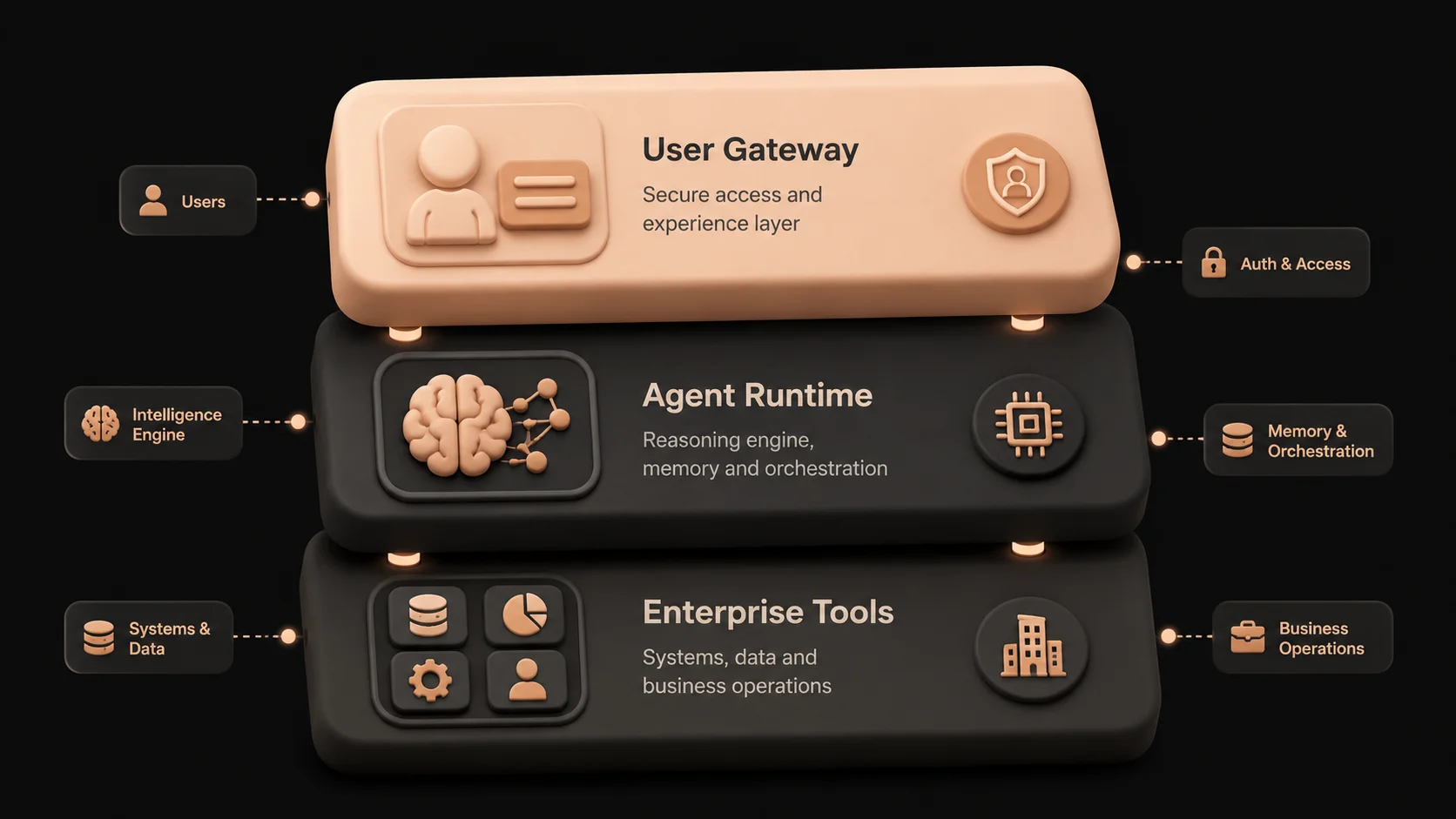
This modular architecture separates reasoning, execution, governance, and enterprise integrations while improving scalability and maintainability.
Autonomous Planning
One defining characteristic of Agentic AI is the ability to plan before execution.
Instead of responding immediately, agents may:
- 1.Interpret objectives.
- 2.Identify required information.
- 3.Determine execution order.
- 4.Select available tools.
- 5.Estimate dependencies.
- 6.Execute incrementally.
- 7.Validate outcomes.
Structured planning improves reliability while reducing unnecessary actions.
Tool Use and Enterprise Integration
Enterprise agents derive much of their value from interacting with existing business systems.
Typical integrations include:
- ◆CRM platforms
- ◆ERP systems
- ◆Knowledge bases
- ◆Document repositories
- ◆Databases
- ◆Email systems
- ◆Collaboration platforms
- ◆Internal APIs
Rather than replacing enterprise software, Agentic AI coordinates these systems through controlled execution.
Memory and Context
Enterprise workflows often span multiple interactions.
Agent memory enables systems to maintain:
- ◆Session context
- ◆User preferences
- ◆Organizational knowledge
- ◆Workflow state
- ◆Historical decisions
- ◆Previous tool outputs
Memory improves continuity while reducing repetitive interactions.
Organizations should define retention policies that align with security, privacy, and regulatory requirements.
Multi-Agent Collaboration
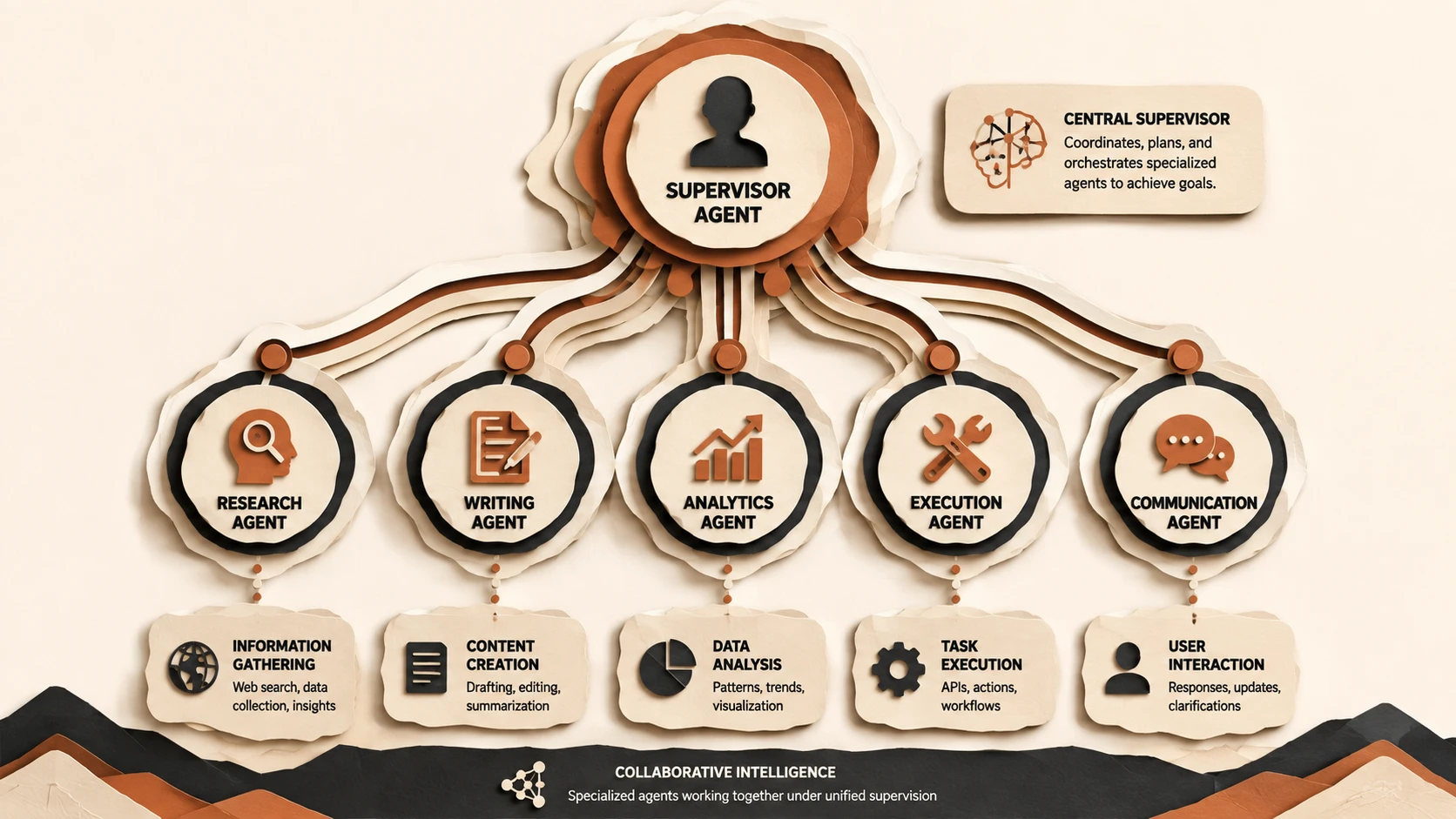
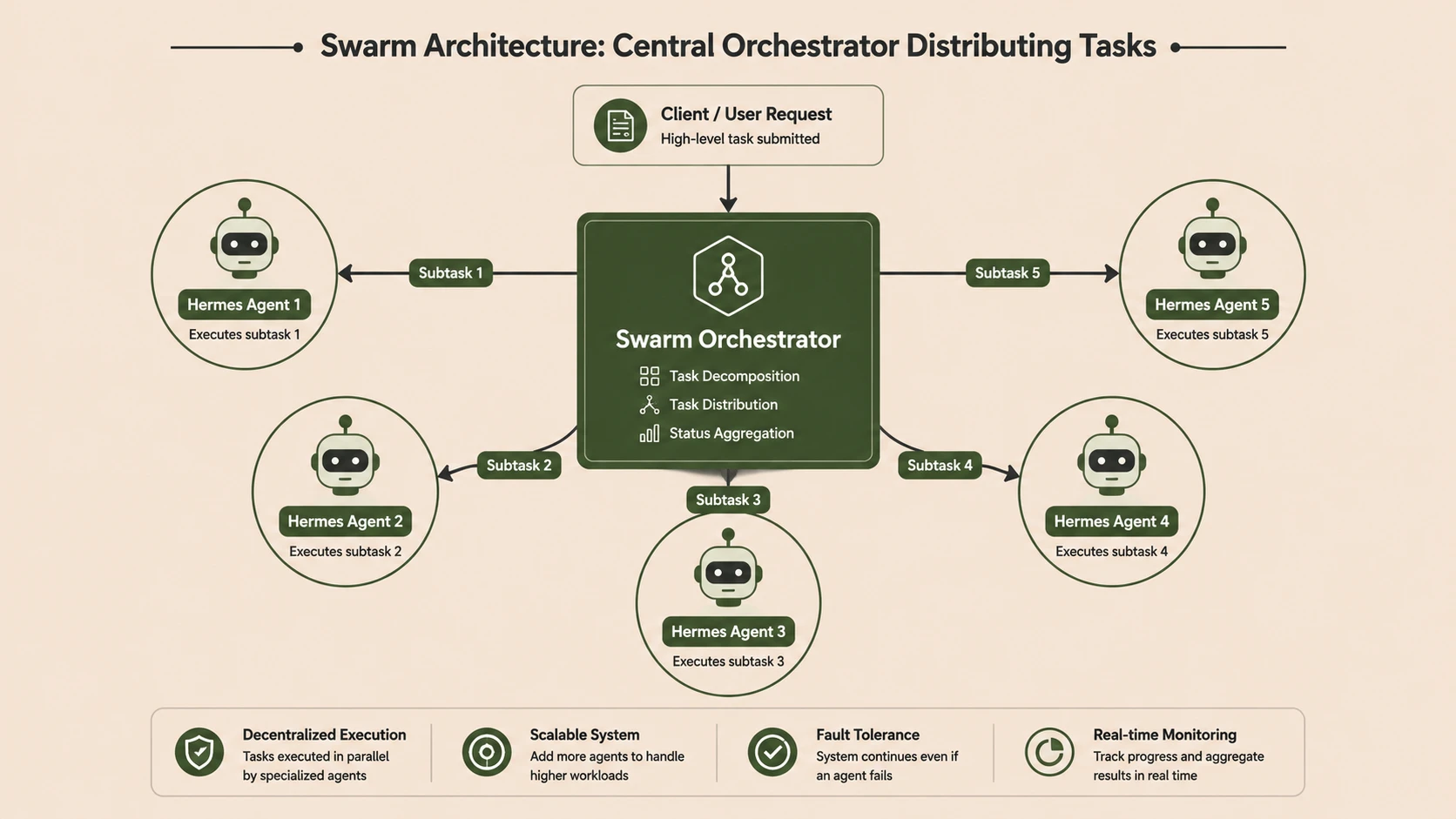
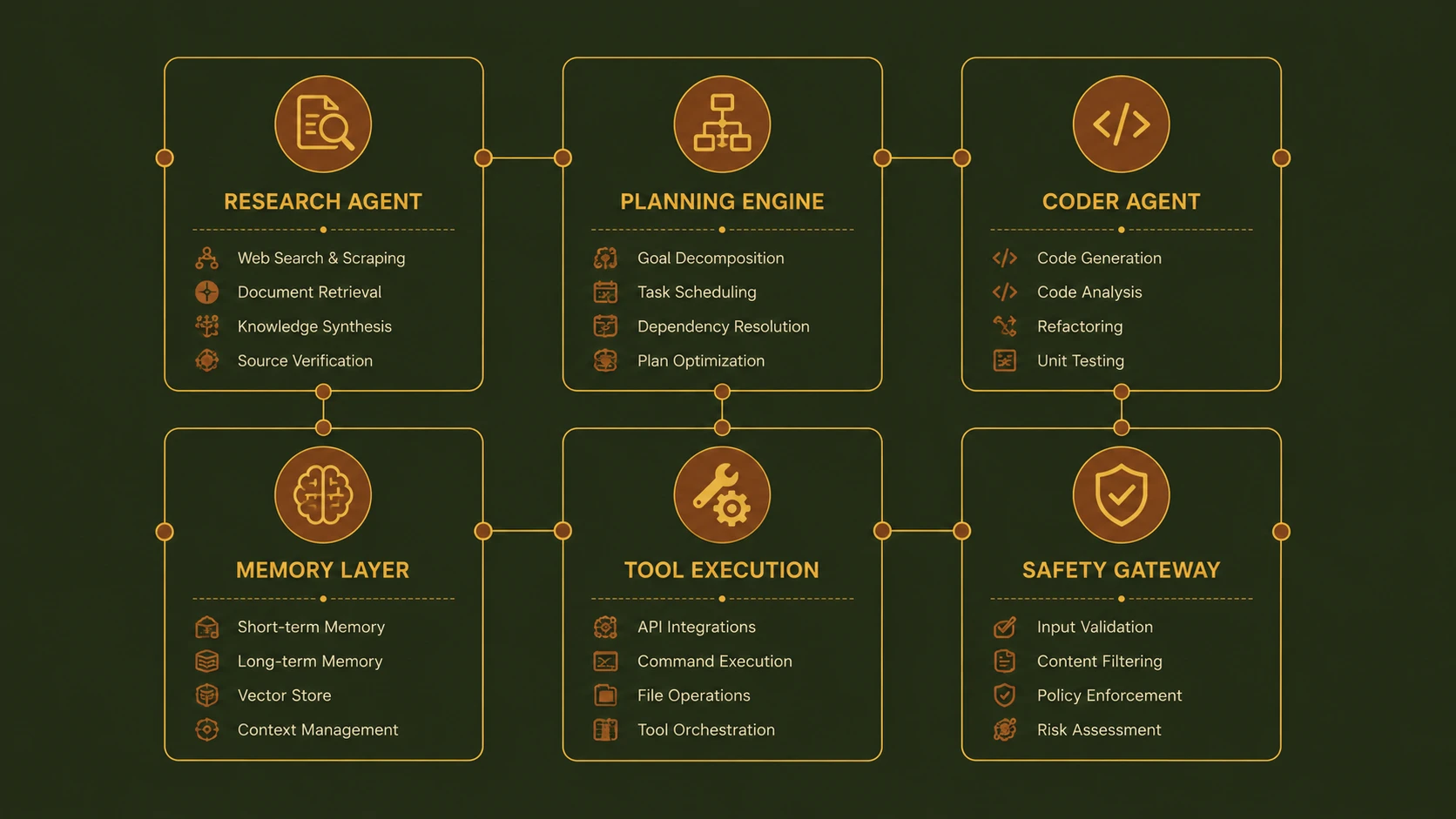
Complex business operations increasingly involve specialized agents rather than one general-purpose system.
Examples include:
- ◆Research agent
- ◆Planning agent
- ◆Coding agent
- ◆Testing agent
- ◆Documentation agent
- ◆Compliance agent
- ◆Deployment agent
A coordinating orchestrator manages communication while preventing conflicting actions and ensuring task completion.
Retrieval-Augmented Decision Making
Autonomous agents should ground decisions using authoritative enterprise information whenever possible.
Retrieval systems may provide:
- ◆Policies
- ◆Technical documentation
- ◆Product catalogs
- ◆Customer records
- ◆Operational procedures
- ◆Regulatory guidance
Grounding improves factual consistency while reducing unsupported outputs.
Human-in-the-Loop Governance
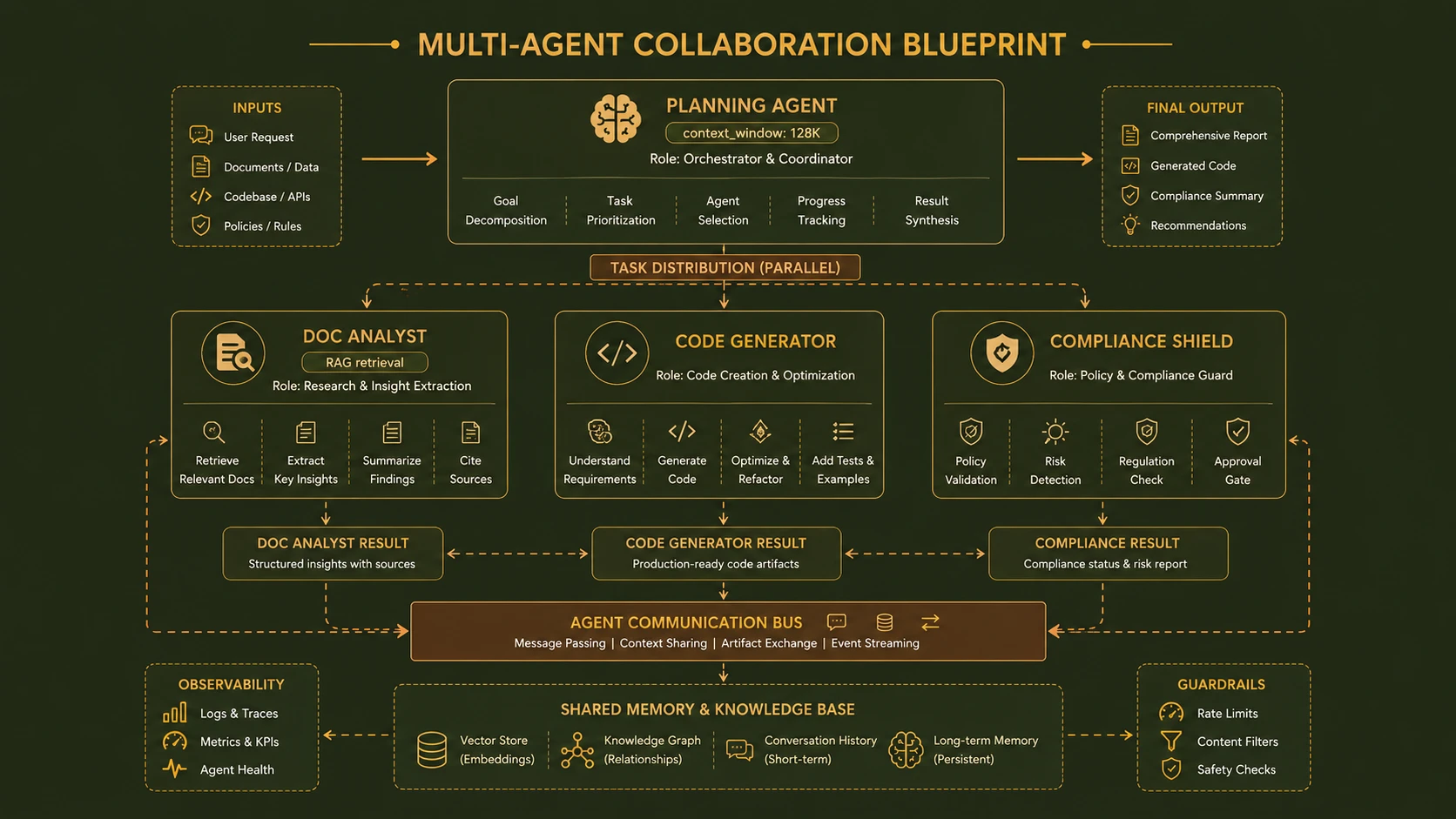
System architecture diagram and conceptual workflow layout for Agentic AI at Scale.
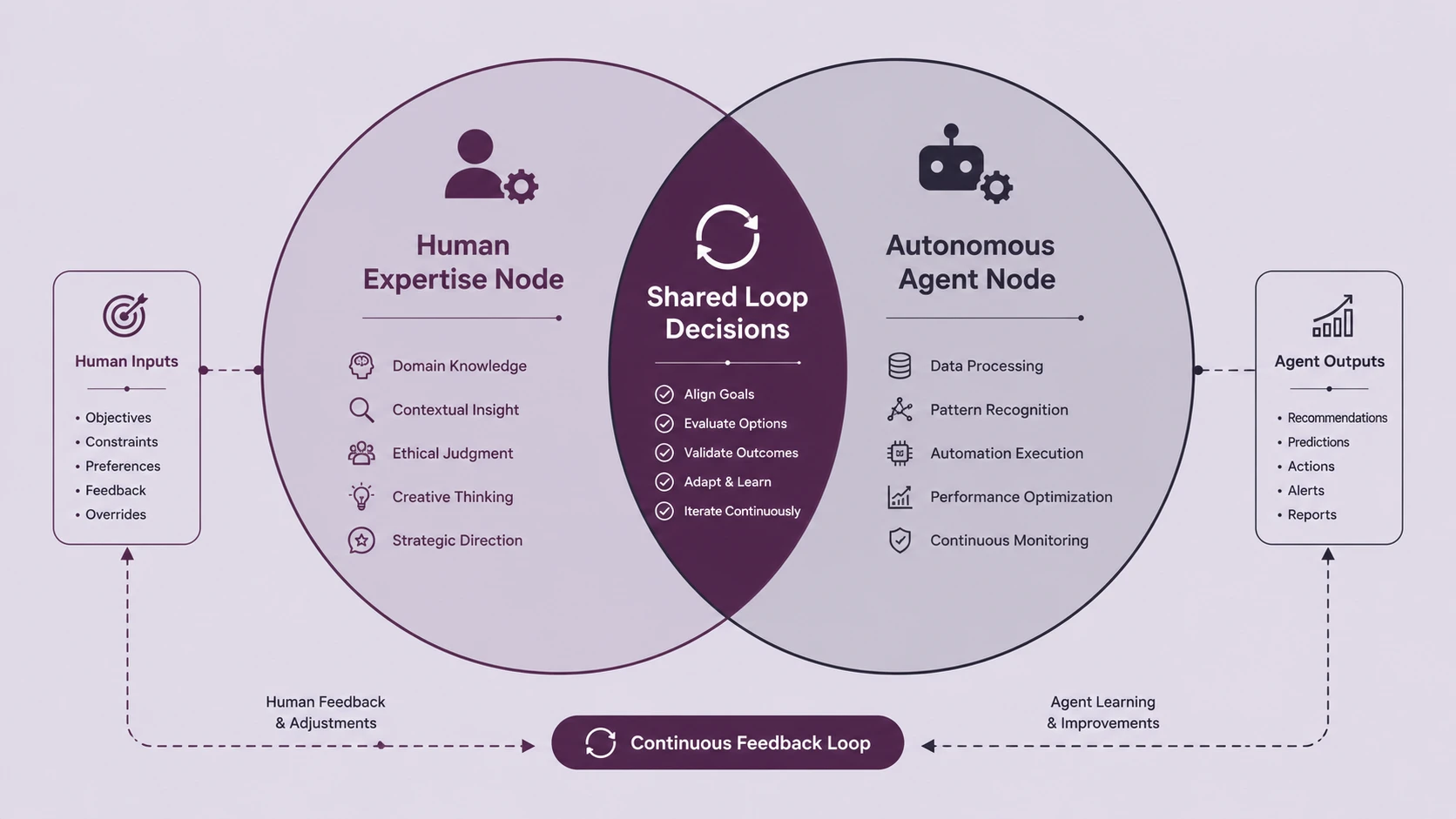
Enterprise autonomy should not eliminate human oversight.
Organizations increasingly require approval workflows for:
- ◆Financial transactions
- ◆Infrastructure changes
- ◆Security operations
- ◆Customer communications
- ◆Regulatory actions
Human review preserves accountability while allowing automation of lower-risk activities.
Observability for AI Systems
Operating autonomous systems requires visibility beyond traditional application monitoring.
Important operational signals include:
- ◆Planning quality
- ◆Tool invocation history
- ◆Prompt execution
- ◆Retrieval performance
- ◆Token utilization
- ◆Decision paths
- ◆Failure analysis
AI observability enables continuous improvement while supporting governance and auditing.
Enterprise Use Cases
| Scenario | Benefit |
|---|---|
| IT Operations | Automated incident investigation and remediation |
| Customer Support | Multi-step case resolution |
| Software Engineering | AI-assisted development workflows |
| Finance | Intelligent reporting and reconciliation |
| Healthcare | Administrative workflow automation |
| Enterprise Knowledge Management | Intelligent research and document synthesis |
Organizations increasingly combine autonomous execution with human expertise to improve operational efficiency.
Performance Considerations
Engineering teams should evaluate:
- ◆Planning latency
- ◆Task completion time
- ◆Tool execution performance
- ◆Retrieval accuracy
- ◆Memory efficiency
- ◆Token utilization
- ◆Workflow success rate
Performance optimization should balance reasoning quality, execution speed, and operational cost.
Security Considerations
Agentic AI introduces additional governance responsibilities.
Organizations should continue implementing:
- ◆Identity and access management
- ◆Least privilege permissions
- ◆Secure API authentication
- ◆Human approval for sensitive actions
- ◆Prompt injection defenses
- ◆Data access controls
- ◆Audit logging
- ◆Policy enforcement
Autonomous agents should operate within clearly defined organizational boundaries.
Scalability
Agentic AI platforms support enterprise growth through:
- ◆Distributed orchestration
- ◆Modular agent specialization
- ◆Cloud-native execution
- ◆Horizontal scaling
- ◆Shared memory services
- ◆Centralized governance
These capabilities enable organizations to coordinate large numbers of autonomous workflows while maintaining operational consistency.
Best Practices
Organizations implementing Agentic AI should:
- ◆Design agents around clearly defined business objectives.
- ◆Separate planning, execution, and governance responsibilities.
- ◆Ground responses using trusted enterprise knowledge.
- ◆Implement approval workflows for high-impact actions.
- ◆Maintain comprehensive execution logs.
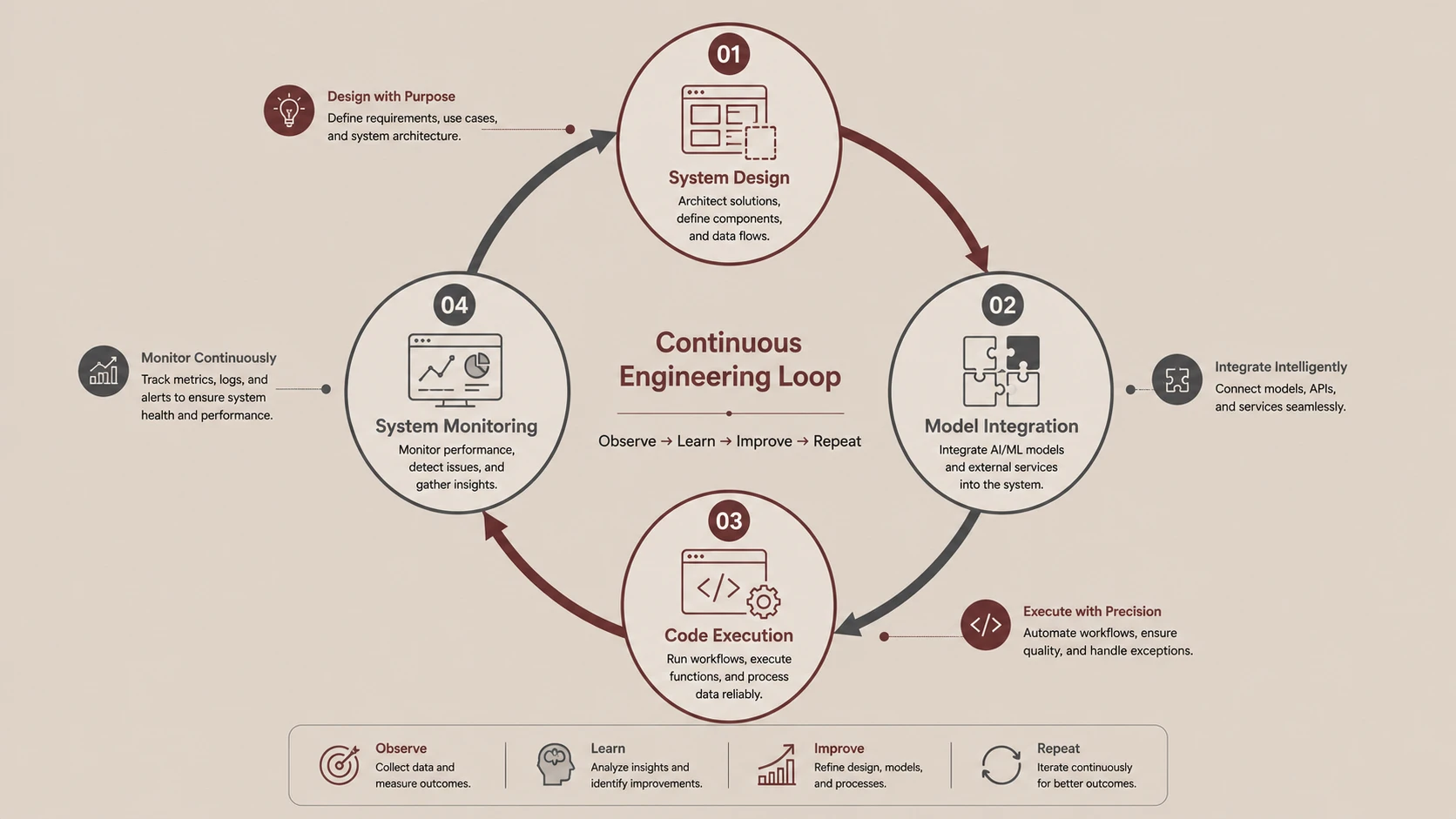
- ◆Continuously evaluate agent performance using measurable metrics.
- ◆Apply least privilege to tool access.
- ◆Treat AI governance as an integral architectural capability.
Well-governed autonomy improves both productivity and organizational trust.
Common Mistakes
Organizations should avoid:
- ◆Granting unrestricted access to enterprise systems.
- ◆Treating autonomous agents as replacements for business governance.
- ◆Ignoring observability and evaluation.
- ◆Building overly general agents for highly specialized workflows.
- ◆Allowing long-running autonomous execution without monitoring.
- ◆Measuring success solely by model capability rather than business outcomes.
Successful Agentic AI implementations balance autonomy with accountability.
Technology Comparison
| Capability | Conversational AI Assistant | Agentic AI System |
|---|---|---|
| Primary Role | Responds to prompts | Pursues objectives and executes tasks |
| Planning | User directed | Autonomous planning |
| Tool Usage | Limited | Extensive enterprise integrations |
| Memory | Conversation focused | Persistent workflow context |
| Workflow Execution | Single interaction | Multi-step orchestration |
| Governance | Basic | Enterprise policy enforcement |
Agentic AI extends conversational AI by combining reasoning, planning, execution, and governance into a unified enterprise platform.
Adoption Strategy
Organizations should adopt Agentic AI incrementally.
A recommended roadmap includes:
- 1.Identify repetitive, knowledge-intensive workflows.
- 2.Introduce retrieval-augmented assistants.
- 3.Add controlled tool integrations.
- 4.Implement planning and orchestration capabilities.
- 5.Establish governance, observability, and evaluation frameworks.
- 6.Expand multi-agent collaboration for complex business processes.
- 7.Continuously measure business outcomes, reliability, and operational risk.
Incremental adoption enables organizations to build confidence in autonomous execution while maintaining governance and user trust.
Limitations
As of January 2025, organizations should recognize several considerations.
Current observations include:
- ◆Autonomous systems require comprehensive governance and operational oversight.
- ◆Large language models remain probabilistic and may produce incorrect reasoning or tool selections.
- ◆Enterprise success depends on architecture, retrieval quality, workflow design, evaluation, and security rather than model capability alone.
- ◆Human oversight remains important for high-impact business decisions and regulated workflows.
Organizations should therefore approach Agentic AI as an enterprise architecture capability that combines AI, software engineering, governance, and operational excellence.
Looking Ahead
As of January 2025, Agentic AI represents a major evolution in enterprise computing. Intelligent systems are increasingly capable of planning, coordinating, reasoning, and executing complex workflows while integrating seamlessly with enterprise platforms, cloud infrastructure, APIs, and organizational knowledge.
For enterprise architects, CTOs, AI platform teams, and engineering leaders, the strategic opportunity lies in building autonomous systems that amplify human expertise rather than replace it. Organizations that invest in modular agent architectures, secure tool execution, retrieval-grounded reasoning, observability, governance, and responsible automation will be best positioned to scale Agentic AI safely and effectively across the enterprise.