Introduction
As organizations deploy AI across customer support, software development, business operations, research, and enterprise automation, API costs become one of the most important operational metrics. Many teams discover that while prototype applications are inexpensive, production-scale deployments can generate substantial monthly inference costs.
A common misconception is that reducing AI expenses requires switching to smaller or less capable models. In reality, most enterprise AI applications waste tokens, repeatedly process identical information, send unnecessary context, and execute inefficient workflows. The result is higher API costs without corresponding improvements in response quality.
The good news is that significant savings are often possible without changing the underlying model. By redesigning prompt architecture, improving context management, introducing intelligent caching, optimizing retrieval strategies, and restructuring AI workflows, organizations can dramatically reduce inference costs while maintaining or even improving application performance.
This guide explores the architectural patterns and engineering practices enterprise teams use to reduce OpenAI API costs without sacrificing response quality or user experience.
Understanding OpenAI API Costs
Every API request consumes computational resources based primarily on the number of tokens processed.
A typical request includes:
- ◆System instructions
- ◆User prompt
- ◆Conversation history
- ◆Retrieved documents
- ◆Tool outputs
- ◆Model response
Each additional token increases the overall processing cost.
As AI applications scale from hundreds to millions of requests, inefficient token usage becomes one of the largest contributors to operational expenses.
Reducing costs therefore begins with understanding where tokens are being consumed rather than immediately changing models.
Where Most AI Applications Waste Money
Many production AI systems spend far more than necessary because of architectural decisions rather than model pricing.
Common sources of waste include:
- ◆Repeating long system prompts
- ◆Sending full conversation history
- ◆Retrieving excessive documents
- ◆Calling the model unnecessarily
- ◆Duplicate requests
- ◆Overly verbose responses
- ◆Poor workflow design
- ◆Missing response caching
- ◆Inefficient agent coordination
Organizations often discover that improving architecture produces larger savings than switching to a smaller model.
Cost Optimization Principles
Enterprise AI cost optimization should focus on improving efficiency rather than reducing capability.
Several guiding principles consistently produce measurable savings.
Optimize Tokens Before Models
The cheapest token is the one that is never sent.
Before evaluating alternative models, reduce unnecessary input and output tokens.
Eliminate Duplicate Work
Repeated prompts, repeated retrievals, and repeated reasoning create avoidable costs.
Applications should reuse previous work whenever possible.
Separate Reasoning from Retrieval
Large language models should reason over relevant information rather than search entire knowledge bases.
Efficient retrieval significantly reduces prompt size.
Measure Everything
Organizations should continuously monitor:
- ◆Tokens per request
- ◆Cost per workflow
- ◆Cost per user
- ◆Cost per feature
- ◆Cache hit rate
- ◆Retrieval efficiency
Visibility enables continuous optimization.
Analyze Your Token Consumption
Before making architectural changes, identify where tokens are spent.
A typical enterprise request might contain:
| Component | Typical Token Usage |
|---|---|
| System Prompt | High |
| User Prompt | Moderate |
| Retrieved Documents | Very High |
| Conversation History | High |
| Tool Results | Moderate |
| Model Response | Moderate |
In many applications, retrieved knowledge and conversation history consume more tokens than the actual user request.
This makes context optimization one of the highest-impact cost reduction strategies.
Strategy 1: Reduce Prompt Size
Large prompts are among the most common causes of excessive API costs.
Instead of embedding extensive instructions into every request, organizations should design concise, reusable prompts.
Rather than this:
- ◆Multiple pages of formatting rules
- ◆Complete business documentation
- ◆Repeated examples
- ◆Large policy documents
Use:
- ◆Compact instructions
- ◆Targeted examples
- ◆Retrieved knowledge only when required
- ◆External business rules referenced through retrieval
Smaller prompts reduce both latency and inference cost.
Strategy 2: Optimize Context Windows
Many conversational AI systems transmit the entire conversation during every request.
As conversations become longer, token usage increases dramatically.
Instead, organizations should:
- ◆Keep only recent interactions
- ◆Summarize older conversations
- ◆Store historical context separately
- ◆Retrieve only relevant information
This allows long-running conversations without continuously increasing inference costs.
Strategy 3: Intelligent Knowledge Retrieval
One common mistake is retrieving too many documents.
For example, instead of sending:
- ◆Ten documentation pages
- ◆Five support articles
- ◆Entire policy manuals
Retrieve only the few documents directly relevant to the current request.
Effective retrieval systems prioritize:
- ◆Relevance
- ◆Freshness
- ◆Business importance
- ◆Context similarity
Reducing unnecessary context often provides significant savings while improving response quality.
Strategy 4: Prompt Caching
Many enterprise requests are highly repetitive.
Examples include:
- ◆Product information
- ◆Pricing explanations
- ◆Company policies
- ◆Technical documentation
- ◆Frequently asked questions
Instead of regenerating identical responses repeatedly, organizations can cache reusable outputs.
Prompt caching reduces:
- ◆API requests
- ◆Latency
- ◆Infrastructure load
- ◆Overall operational cost
Caching becomes increasingly valuable as request volume grows.
Strategy 5: Semantic Caching
Traditional caches depend on exact request matching.
Semantic caching expands this concept by identifying requests that are meaningfully similar.
Examples include:
"What is your refund policy?"
and
"Can customers receive refunds?"
Although the wording differs, both questions require essentially the same answer.
Semantic caching allows organizations to reuse previous responses without invoking the model unnecessarily.
This technique is particularly valuable for customer support, internal documentation, and knowledge assistants.
Strategy 6: Optimize Retrieval-Augmented Generation (RAG)
Retrieval-Augmented Generation (RAG) improves factual accuracy, but inefficient implementations can become expensive.
Best practices include:
- ◆Retrieve fewer documents.
- ◆Rank documents by relevance.
- ◆Remove duplicate content.
- ◆Chunk documents intelligently.
- ◆Eliminate irrelevant metadata.
- ◆Compress retrieved context where appropriate.
The objective is to provide the model with enough information to answer accurately without overwhelming it with unnecessary tokens.
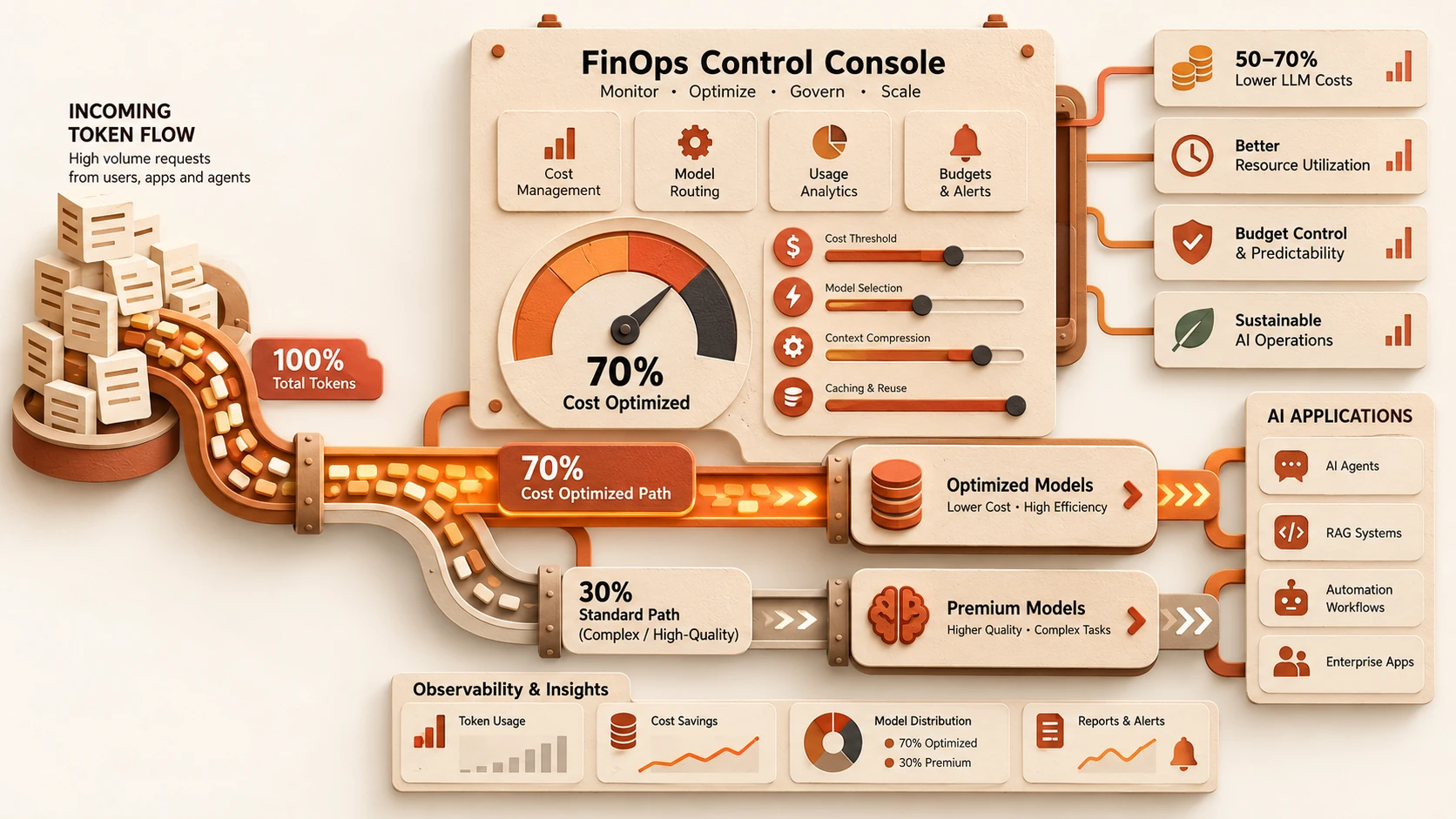
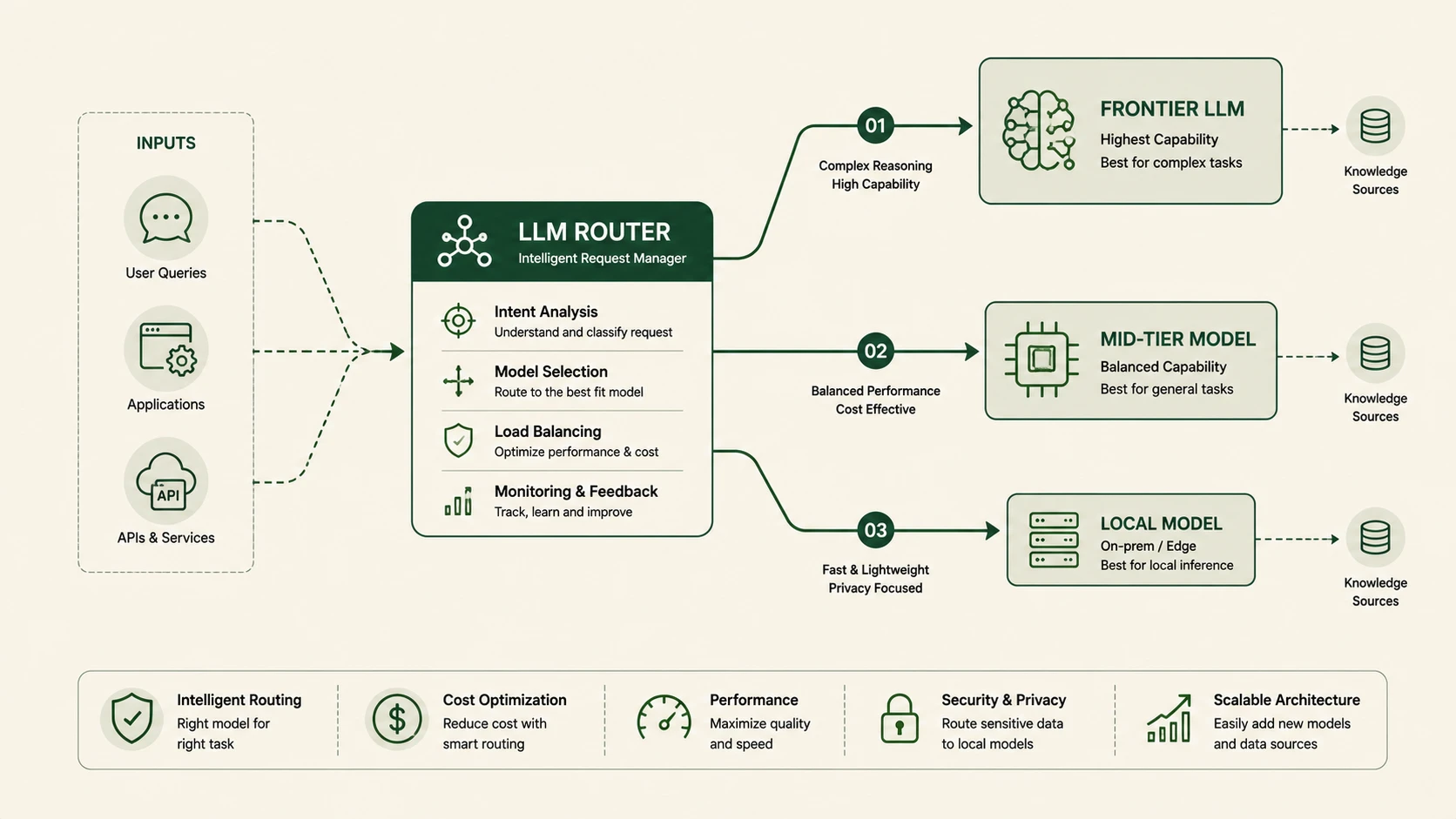
Strategy 7: Model Routing
Not every request requires the most capable model.
Many enterprise applications classify requests before selecting an appropriate model.
Examples include:
- ◆Simple FAQs
- ◆Document classification
- ◆Sentiment analysis
- ◆Data extraction
- ◆Translation
- ◆Summarization
More sophisticated reasoning models can then be reserved for:
- ◆Strategic analysis
- ◆Complex planning
- ◆Multi-step reasoning
- ◆Software architecture
- ◆Legal review
- ◆Financial analysis
This routing strategy maintains overall quality while reducing average inference cost.
Strategy 8: Batch Similar Requests
Organizations frequently process large collections of related work.
Examples include:
- ◆Product descriptions
- ◆Customer feedback
- ◆Support tickets
- ◆Document summaries
- ◆Data categorization
Instead of making hundreds of independent requests, batching similar work reduces repeated overhead and improves infrastructure efficiency.
Batch processing is particularly effective for offline workflows and scheduled automation.
Strategy 9: Optimize AI Agent Workflows
Agent-based systems can unintentionally multiply API costs.
Common inefficiencies include:
- ◆Multiple agents repeating identical retrievals
- ◆Duplicate planning steps
- ◆Unnecessary inter-agent communication
- ◆Excessive verification loops
- ◆Independent reasoning over identical data
Organizations should share:
- ◆Retrieved knowledge
- ◆Session context
- ◆Intermediate results
- ◆Cached tool outputs
This reduces redundant inference while improving collaboration across agents.
Strategy 10: Control Response Length
Longer responses consume more output tokens.
Not every interaction requires extensive explanations.
Organizations should define response policies based on business requirements.
Examples include:
- ◆One sentence
- ◆Executive summary
- ◆Bullet list
- ◆Detailed report
- ◆Technical explanation

Cost-optimized API routing workflow showing Semantic Cache checking and asymmetric routing between local and cloud models.
Generating only the required amount of content reduces both latency and cost while improving user experience.
Architecture for Cost-Efficient AI Applications
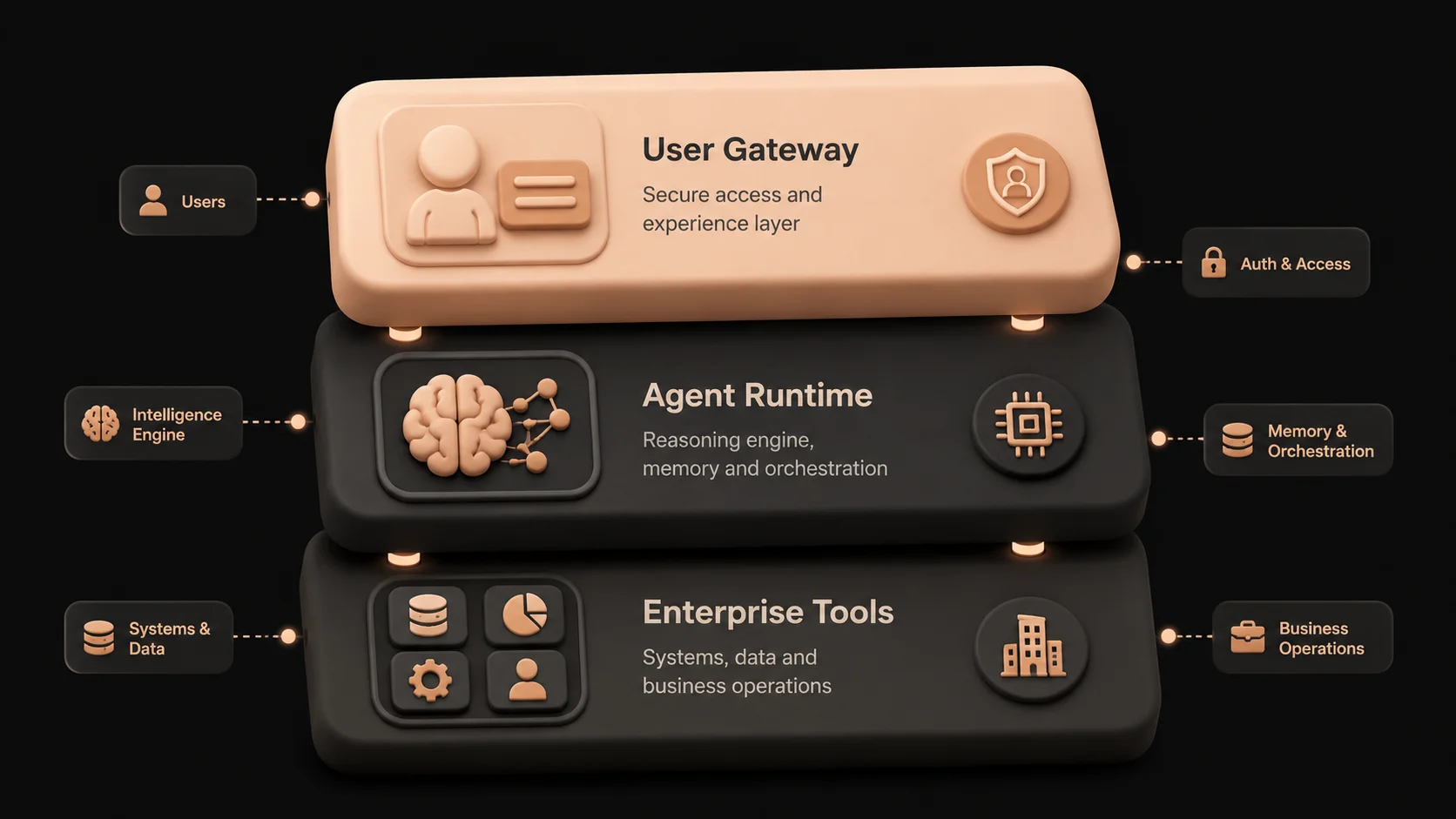
An optimized enterprise AI architecture typically separates responsibilities across multiple components.
| Layer | Cost Optimization Role |
|---|---|
| API Gateway | Request validation and routing |
| Cache Layer | Reuse previous responses |
| Retrieval Layer | Deliver only relevant knowledge |
| Context Manager | Minimize prompt size |
| Model Router | Select the appropriate model |
| Tool Layer | Execute deterministic operations |
| Observability Layer | Monitor token usage and costs |
By treating cost optimization as an architectural concern rather than a model configuration issue, organizations can build AI systems that remain economically sustainable as usage grows.
Performance Considerations
Reducing API costs should never come at the expense of application quality. Enterprise AI systems must balance cost, latency, accuracy, and scalability.
Several performance metrics should be monitored continuously:
- ◆Average tokens per request
- ◆Time to first token
- ◆Total response latency
- ◆Cache hit rate
- ◆Retrieval latency
- ◆Tool execution time
- ◆Cost per workflow
- ◆Cost per active user
Monitoring these metrics together provides a clearer understanding of overall AI efficiency than tracking API spend alone.
AI Observability
Cost optimization begins with visibility.
Organizations should implement observability dashboards that measure:
| Metric | Why It Matters |
|---|---|
| Input Tokens | Largest cost contributor |
| Output Tokens | Controls response expense |
| Cached Responses | Measures cache effectiveness |
| Retrieval Size | Indicates context efficiency |
| API Requests | Tracks inference volume |
| Cost per Feature | Identifies expensive workflows |
| Cost per Customer | Supports business planning |
| Cost per Agent | Optimizes multi-agent systems |
Observability allows engineering teams to identify cost regressions before they become significant operational issues.
Streaming Responses
Many applications wait until an entire response has been generated before displaying output.
Streaming responses improve user experience by delivering content incrementally while generation continues in the background.
Benefits include:
- ◆Faster perceived performance
- ◆Better user engagement
- ◆Reduced timeout risk
- ◆Improved interactive experiences
Although streaming does not directly reduce token costs, it often reduces unnecessary retries caused by impatient users refreshing requests.
Optimize Tool Calling
Language models should focus on reasoning rather than deterministic computation.
Instead of asking the model to calculate, search databases, or process structured business logic, delegate those tasks to application services.
Examples include:
- ◆Currency calculations
- ◆Inventory lookup
- ◆Database queries
- ◆Authentication
- ◆Report generation
- ◆Business rule validation
Tool calling minimizes unnecessary reasoning while improving reliability.
Reduce Conversation History
Long-running conversations frequently become expensive because every previous message is included in subsequent requests.
A more efficient strategy includes:
- ◆Retaining only recent exchanges
- ◆Summarizing completed discussions
- ◆Storing historical conversations separately
- ◆Retrieving relevant context only when required
This approach allows applications to support extended interactions without continuously increasing token usage.
Optimize System Prompts
System prompts often remain unchanged across thousands of requests.
Instead of writing lengthy instructions, organizations should:
- ◆Keep system prompts concise
- ◆Remove duplicated guidance
- ◆Store detailed policies externally
- ◆Retrieve specialized instructions only when necessary
Smaller system prompts reduce every request's token consumption.
Intelligent Workflow Design
Many AI workflows invoke models more frequently than necessary.
Consider an inefficient process:
- 1.Generate draft
- 2.Rewrite draft
- 3.Improve grammar
- 4.Improve formatting
- 5.Validate content
- 6.Generate summary
This may require six separate API calls.
A better workflow combines compatible tasks into fewer, higher-value requests while delegating deterministic operations to application code whenever possible.
Efficient workflow design often delivers substantial cost savings.
Embeddings and Knowledge Retrieval
Embedding models are generally less expensive than repeatedly asking large language models to search extensive documentation.
Enterprise knowledge systems should:
- ◆Generate embeddings once
- ◆Store vector representations
- ◆Retrieve relevant documents
- ◆Send only retrieved context to reasoning models
This architecture significantly reduces prompt size while improving factual accuracy.
Multi-Agent Cost Optimization
Multi-agent systems can unintentionally multiply API costs.
Without coordination, several agents may:
- ◆Retrieve identical documents
- ◆Repeat reasoning
- ◆Generate duplicate summaries
- ◆Perform redundant validation
- ◆Invoke the same enterprise tools
To reduce unnecessary inference:
- ◆Share retrieved knowledge
- ◆Share execution state
- ◆Share intermediate outputs
- ◆Reuse cached planning results
- ◆Avoid duplicate agent responsibilities
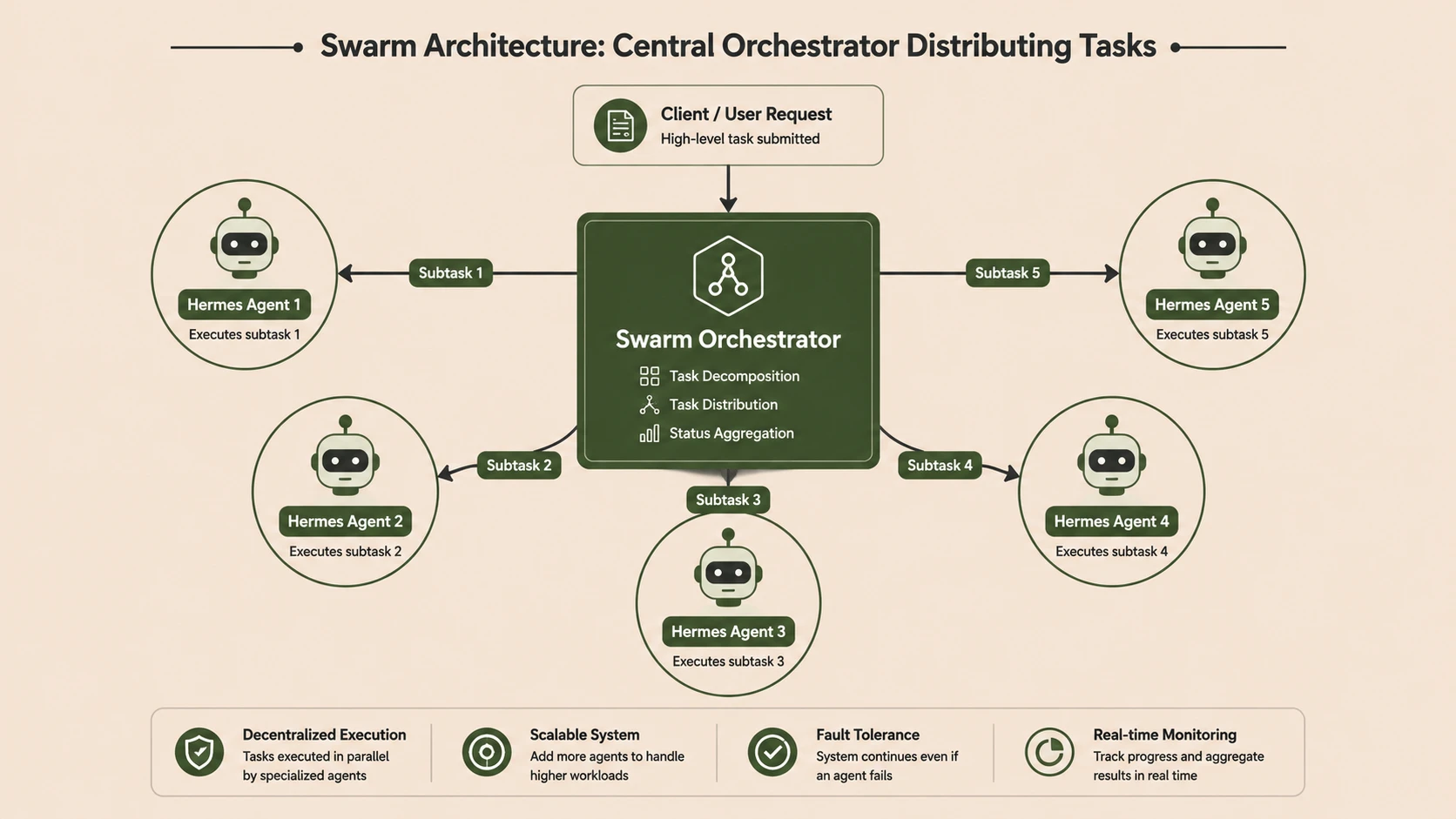
An orchestration layer should coordinate information sharing across all participating agents.
Security Considerations
Cost optimization should never compromise enterprise security.
Organizations should ensure:
Access Control
Only authorized users and services can invoke AI capabilities.
API Key Protection
Keys should remain securely managed through enterprise secret management systems.
Rate Limiting
Prevent excessive or unintended API consumption.
Sensitive Data Protection
Avoid transmitting confidential information unless required and appropriately governed.
Audit Logging
Maintain records of:
- ◆API requests
- ◆Model selection
- ◆Token consumption
- ◆Tool invocations
- ◆User identity
- ◆Workflow execution
Security and financial governance often depend on the same operational data.
Scalability
As AI adoption expands across an organization, cost optimization becomes increasingly important.
Scalable AI architectures typically include:
- ◆API gateways
- ◆Request routing
- ◆Semantic caching
- ◆Shared retrieval services
- ◆Distributed vector databases
- ◆Centralized observability
- ◆Cost monitoring dashboards
- ◆Workflow orchestration
Centralized optimization prevents each application team from independently solving the same infrastructure challenges.
Best Practices
Organizations seeking long-term AI cost efficiency should follow these practices:
- ◆Measure token usage before optimizing.
- ◆Minimize unnecessary prompt content.
- ◆Retrieve only relevant enterprise knowledge.
- ◆Cache repetitive responses.
- ◆Implement semantic caching.
- ◆Route requests intelligently.
- ◆Keep conversation history concise.
- ◆Share context across agents.
- ◆Monitor costs continuously.
- ◆Review optimization metrics during every production release.
Treat cost optimization as an ongoing engineering discipline rather than a one-time exercise.
Common Mistakes
Many organizations overspend because of avoidable architectural decisions.
| Mistake | Business Impact |
|---|---|
| Sending full conversation history | Excessive token usage |
| Retrieving unnecessary documents | Larger prompts |
| Missing response caching | Duplicate API requests |
| Using one model for every workload | Higher average cost |
| Duplicate agent reasoning | Increased inference expense |
| Verbose system prompts | Continuous token waste |
| Ignoring observability | Difficult optimization |
| Optimizing too early | Misplaced engineering effort |
Avoiding these patterns can significantly reduce operational expenses.
Cost Optimization Comparison
| Strategy | Cost Reduction Potential | Implementation Complexity |
|---|---|---|
| Prompt Optimization | High | Low |
| Context Reduction | High | Medium |
| Prompt Caching | High | Medium |
| Semantic Caching | Very High | Medium |
| RAG Optimization | High | Medium |
| Model Routing | High | Medium |
| Batch Processing | Medium | Low |
| Workflow Redesign | Very High | High |
| Shared Agent Memory | Medium | Medium |
| Tool Calling | Medium | Low |
Organizations typically achieve the greatest savings by combining several optimization techniques rather than relying on a single strategy.
Enterprise Adoption Strategy
A structured rollout minimizes both operational risk and engineering effort.
Phase 1 — Measure Current Costs
Collect baseline metrics including:
- ◆Token consumption
- ◆Monthly API spend
- ◆Request volume
- ◆Cost per workflow
Phase 2 — Eliminate Obvious Waste
Implement:
- ◆Prompt optimization
- ◆Context reduction
- ◆Response caching
Phase 3 — Optimize Retrieval
Improve knowledge retrieval efficiency and reduce unnecessary context.
Phase 4 — Introduce Model Routing
Classify requests and route them to the most appropriate model for the workload.
Phase 5 — Optimize Workflows
Redesign AI workflows to minimize duplicate reasoning and redundant API calls.
Phase 6 — Continuous Monitoring
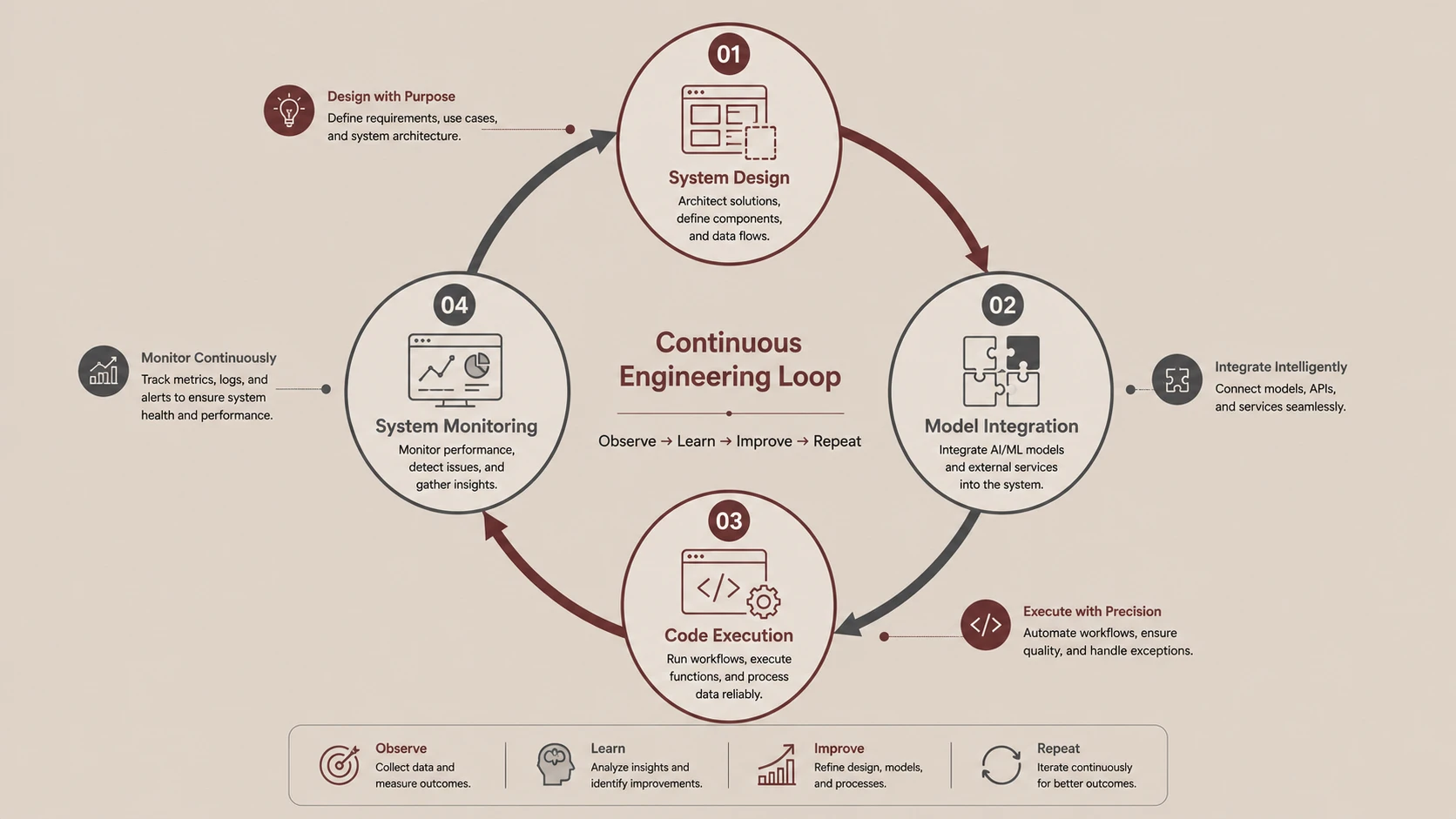
Track cost trends, evaluate new optimization opportunities, and review architectural decisions regularly.
This incremental approach allows organizations to reduce expenses while maintaining application quality and reliability.
Limitations
Although these optimization strategies can substantially reduce API costs, organizations should recognize their trade-offs.
Potential limitations include:
- ◆Additional architectural complexity
- ◆Cache invalidation challenges
- ◆Retrieval tuning effort
- ◆Workflow redesign costs
- ◆Increased observability requirements
- ◆Ongoing optimization maintenance
Successful implementations balance operational efficiency with maintainability and user experience.
Looking Ahead
As enterprise AI adoption accelerates, cost optimization is becoming a core architectural discipline rather than a purely financial concern. Modern AI platforms are expected to incorporate intelligent routing, semantic caching, efficient retrieval, workflow orchestration, and comprehensive observability as standard capabilities rather than optional enhancements.
Organizations that build cost-aware AI architectures from the beginning will be better positioned to scale AI across customer service, software engineering, business operations, and knowledge management without proportional increases in infrastructure spending. By focusing on efficient token usage, intelligent workflow design, and continuous operational measurement, enterprise teams can significantly reduce OpenAI API costs while maintaining the quality, reliability, and performance expected from production-grade AI systems.