Introduction
As AI agents become increasingly capable of reasoning, planning, and executing complex business tasks, one challenge continues to limit enterprise adoption: integration.
Modern enterprises rely on hundreds of applications including customer relationship management platforms, enterprise resource planning systems, databases, document repositories, cloud infrastructure, collaboration tools, developer platforms, and internal APIs. Traditionally, every AI application has required custom integrations with each of these systems, resulting in duplicated engineering effort, inconsistent security controls, and difficult maintenance.
The Model Context Protocol (MCP) addresses this challenge by introducing a standardized protocol for connecting AI models and agents with external tools, enterprise applications, and knowledge sources.
Instead of building a unique integration for every AI application, organizations can expose business capabilities through MCP-compatible servers that any compliant AI client can discover and use securely.
As of 2026, MCP is rapidly emerging as a foundational interoperability standard for agent-native software, enabling organizations to build reusable AI infrastructure rather than isolated integrations.
What Is the Model Context Protocol (MCP)?
The Model Context Protocol (MCP) is an open protocol that standardizes how AI models and intelligent agents discover, access, and interact with external tools, data sources, APIs, documents, and enterprise services through a consistent communication interface.
Rather than embedding every integration directly into an AI application, MCP separates business capabilities from AI reasoning.
This allows agents to dynamically discover available tools and invoke them without requiring custom integration logic for every application.
In practical terms, MCP functions similarly to how standardized web protocols enabled browsers to access websites regardless of who built them.
For AI systems, MCP provides a common language for interacting with enterprise resources.
Why Enterprises Need MCP
Enterprise AI rarely operates in isolation.
A typical intelligent assistant may need to:
- ◆Retrieve customer information
- ◆Query internal databases
- ◆Read technical documentation
- ◆Execute cloud management operations
- ◆Access project management systems
- ◆Search enterprise knowledge
- ◆Update support tickets
- ◆Generate reports
- ◆Interact with developer platforms
Without a common protocol, every AI application must implement and maintain its own integrations.
This creates several challenges:
- ◆Duplicate engineering effort
- ◆Inconsistent authentication
- ◆Different security models
- ◆Difficult maintenance
- ◆Vendor-specific integrations
- ◆Poor interoperability
- ◆Slower enterprise adoption
MCP standardizes this interaction layer, allowing organizations to expose capabilities once and reuse them across multiple AI applications.
Evolution of AI Integration
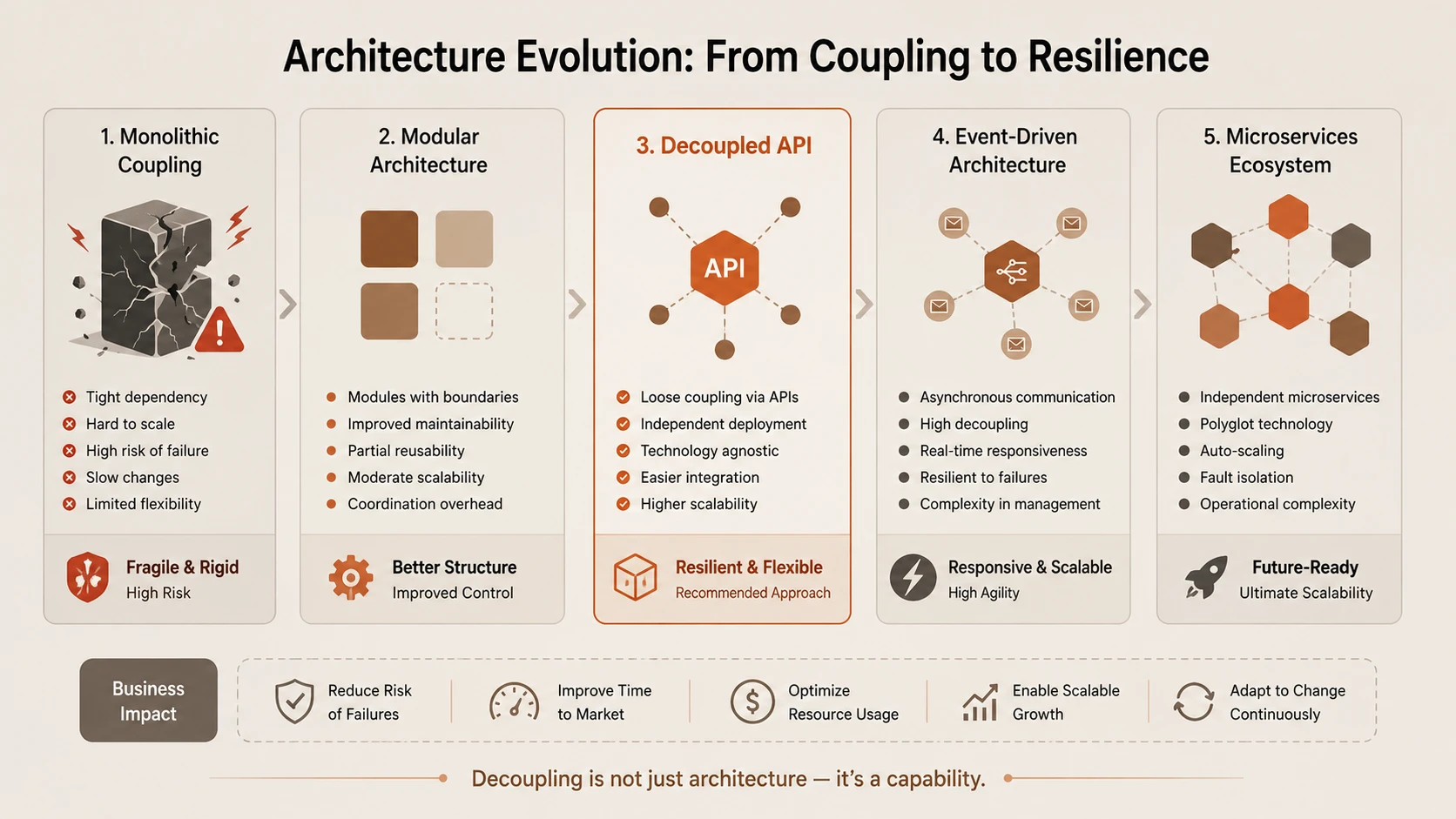
Enterprise software integration has continuously evolved.
| Generation | Primary Focus | Characteristics |
|---|---|---|
| Direct API Integrations | Application connectivity | Custom development for each integration |
| Service-Oriented Architecture | Reusable services | Shared enterprise capabilities |
| REST APIs | Standardized web communication | Platform-independent integration |
| Cloud APIs | Elastic service integration | Cloud-native connectivity |
| Model Context Protocol | AI interoperability | Standardized communication between AI agents and enterprise tools |
Each generation reduced integration complexity.
MCP extends this evolution by focusing specifically on AI-powered applications.
Core Design Principles
Several architectural principles define the protocol.
Standardization
Every compatible client communicates using a consistent interface regardless of the underlying enterprise system.
Tool Discovery
Agents can identify available tools dynamically instead of relying on hardcoded integrations.
Loose Coupling
AI models remain independent from business applications.
This separation allows enterprise systems to evolve without requiring changes to AI models.
Security
Authentication and authorization remain under enterprise control.
The protocol facilitates secure communication rather than replacing organizational security policies.
Extensibility
Organizations can introduce new business capabilities without redesigning existing AI applications.
Core Architecture
Although implementations vary, most MCP environments include several architectural components.
| Component | Responsibility |
|---|---|
| AI Client | Sends requests and consumes capabilities |
| MCP Client | Implements protocol communication |
| MCP Server | Exposes tools and enterprise resources |
| Tool Layer | Business operations and APIs |
| Enterprise Systems | CRM, ERP, databases, cloud services |
| Governance Layer | Authentication, authorization, auditing |
| Infrastructure Layer | Compute, networking, storage |
Each component remains independently maintainable while contributing to a unified AI ecosystem.
Understanding MCP Clients
An MCP Client enables AI applications to communicate with one or more MCP servers.
Typical responsibilities include:
- ◆Discovering available tools
- ◆Negotiating protocol capabilities
- ◆Sending structured requests
- ◆Receiving responses
- ◆Managing sessions
- ◆Handling authentication
- ◆Reporting errors
The client abstracts communication details from the reasoning model, allowing developers to focus on business logic rather than integration mechanics.
Understanding MCP Servers
An MCP Server exposes enterprise capabilities through standardized protocol interfaces.
Rather than implementing AI logic, servers publish business functionality that authorized clients can access.
Examples include:
- ◆Customer database access
- ◆Internal documentation search
- ◆Source code repositories
- ◆Project management systems
- ◆Cloud infrastructure operations
- ◆File management
- ◆Enterprise search
- ◆Analytics platforms
A single organization may operate dozens or even hundreds of MCP servers, each representing a specific business domain.
Tool Discovery
One of MCP's defining capabilities is dynamic tool discovery.
Instead of embedding available tools directly inside prompts, AI applications request information about supported capabilities from connected servers.
For example, an agent may discover tools capable of:
- ◆Searching documentation
- ◆Querying databases
- ◆Creating tickets
- ◆Deploying applications
- ◆Reading source code
- ◆Managing cloud resources
- ◆Generating reports
This dynamic approach allows enterprise capabilities to expand without modifying AI applications.
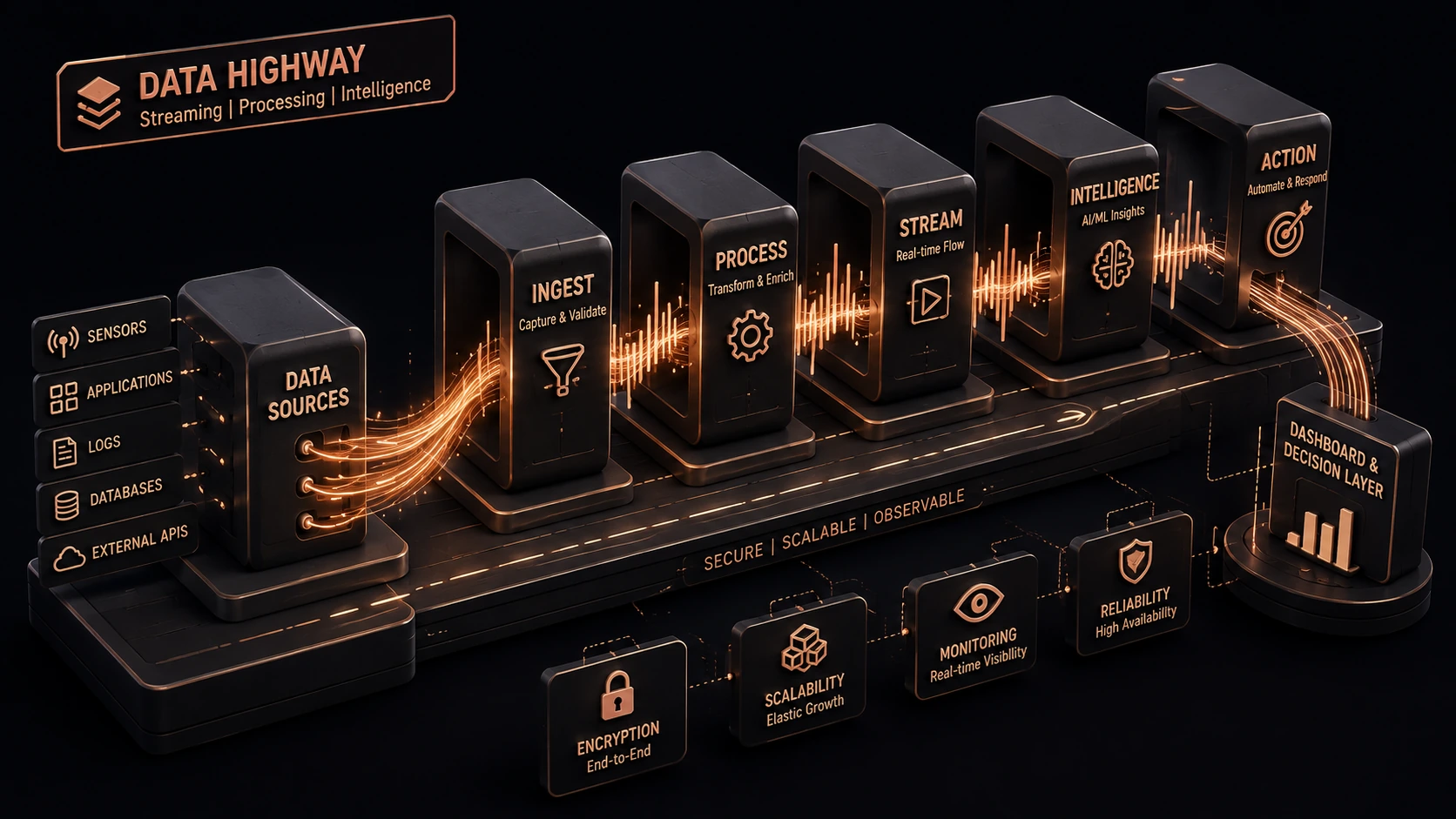
How MCP Works
A typical interaction follows several stages.
Step 1
An AI application receives a business objective.
Example:
"Generate a cloud infrastructure utilization report."
Step 2
The MCP client identifies connected servers capable of supporting the request.
Step 3
Available tools are discovered dynamically.
Step 4
The reasoning model selects the appropriate tool.
Step 5
The MCP client invokes the selected server.
Step 6
The server communicates with enterprise systems.
Step 7
Results are returned through the protocol.
Step 8
The AI model combines retrieved information into a final response.
This separation enables AI models to focus on reasoning while enterprise systems remain responsible for deterministic operations.
MCP and Tool Calling
Tool calling allows language models to execute external functions.
MCP standardizes how those tools are described, discovered, and invoked.
Rather than maintaining proprietary integrations for every platform, organizations can expose reusable capabilities through MCP.
Examples include:
- ◆Database queries
- ◆Customer lookup
- ◆Source code search
- ◆File management
- ◆Calendar operations
- ◆Cloud administration
- ◆Ticket management
- ◆Business analytics
Standardization simplifies development while improving interoperability across AI applications.
MCP in Agent-Native Architecture
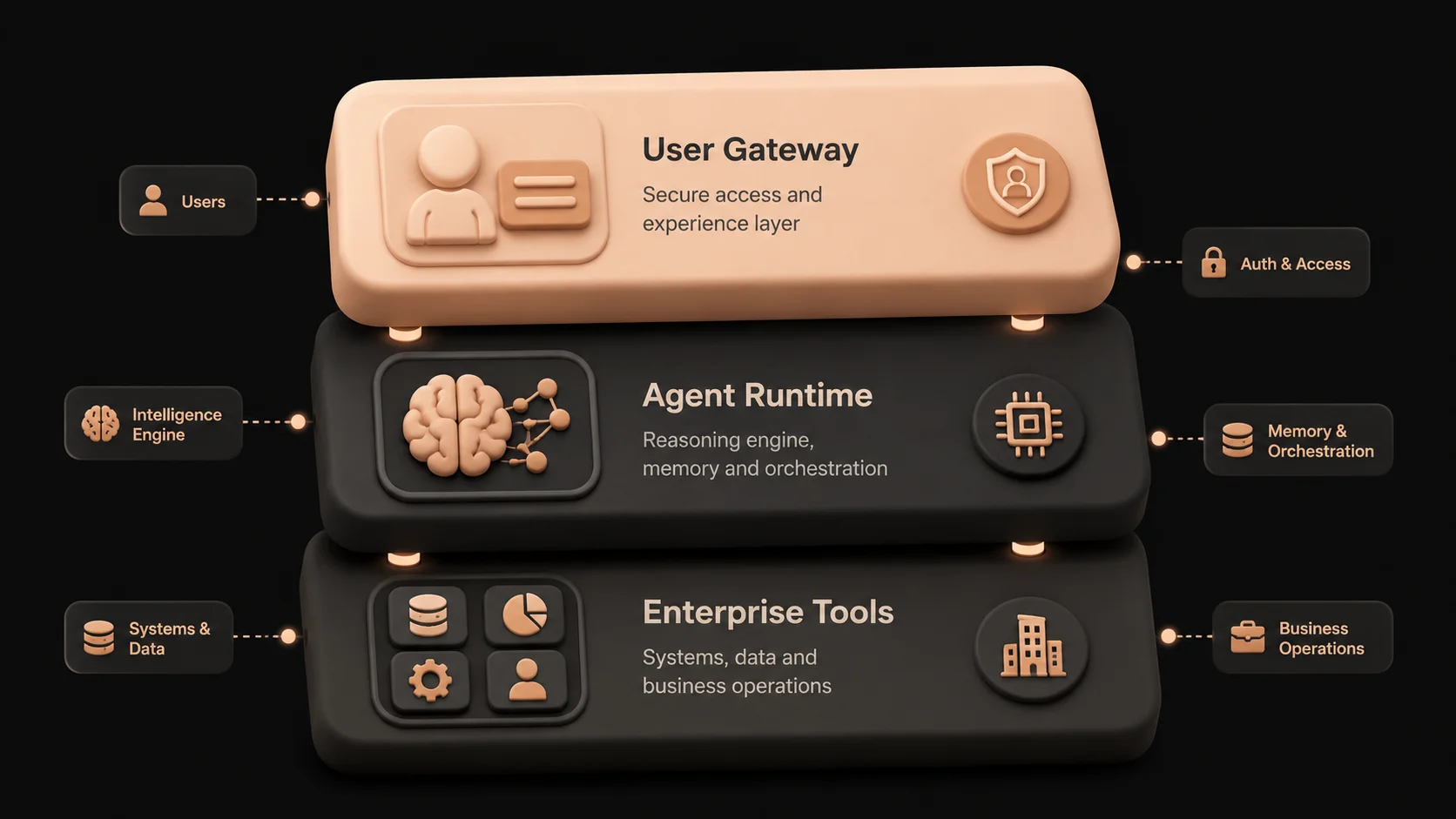
Agent-native software architecture treats AI agents as primary architectural components.
MCP complements this approach by providing a consistent mechanism through which agents interact with enterprise resources.
Instead of embedding custom connectors inside every agent, organizations expose reusable services through MCP servers.
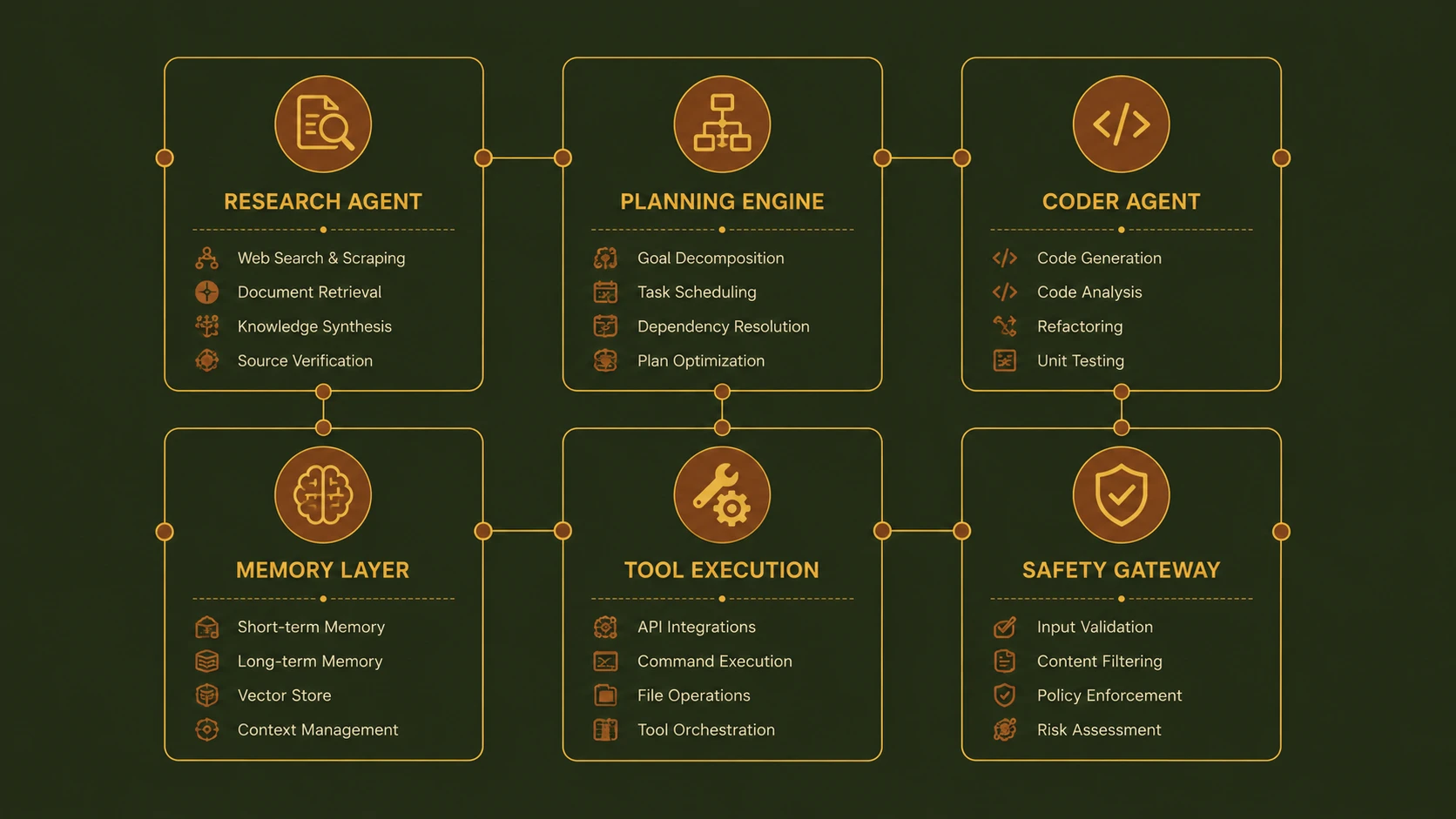
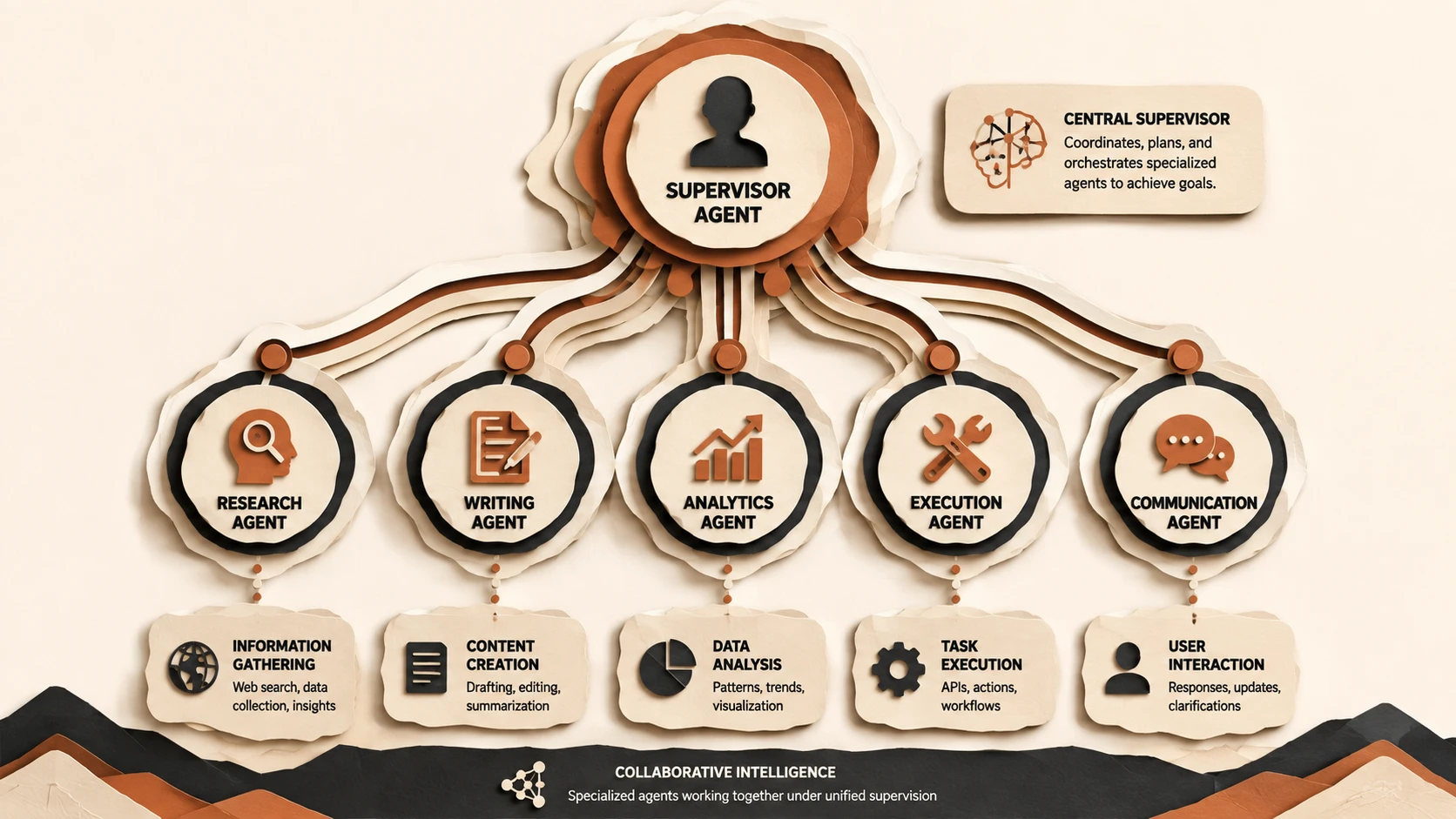
This enables multiple agents—including planning agents, research agents, execution agents, and review agents—to access shared enterprise capabilities while remaining independently deployable and easier to maintain.
Enterprise Integration Patterns
Organizations typically deploy MCP alongside existing enterprise infrastructure.
Common integration targets include:
- ◆Customer relationship management systems
- ◆Enterprise resource planning platforms
- ◆Internal APIs
- ◆Document repositories
- ◆Knowledge bases
- ◆Business intelligence platforms
- ◆Cloud infrastructure
- ◆Software development platforms
- ◆Collaboration tools

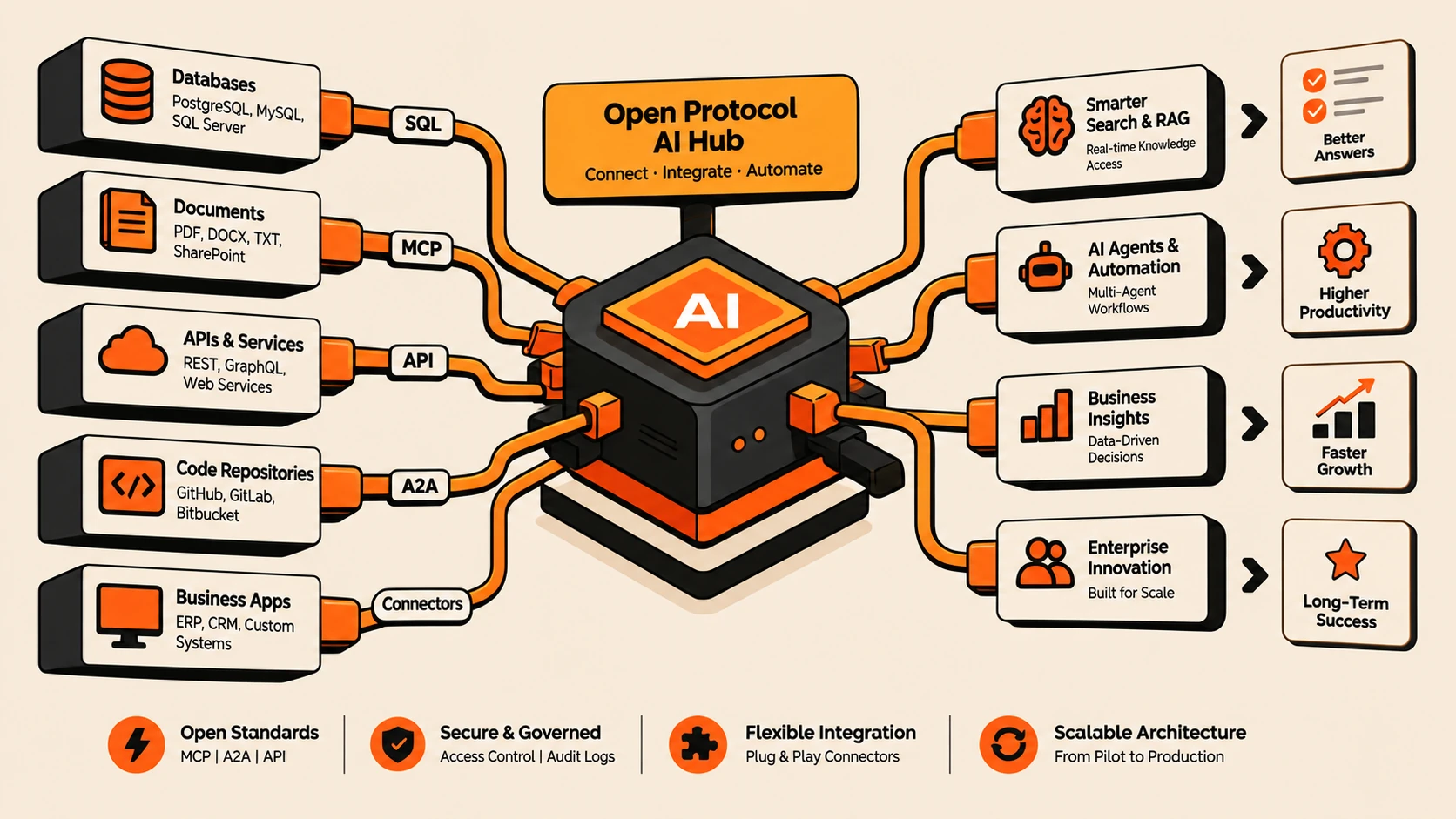
Model Context Protocol (MCP) relationship diagram connecting AI clients and enterprise databases through MCP servers.
Because MCP separates AI reasoning from enterprise connectivity, integration logic becomes reusable across multiple applications, reducing long-term maintenance while improving consistency across the organization's AI ecosystem.
Security Considerations
Enterprise adoption of MCP requires security to be treated as an architectural foundation rather than an afterthought. Since MCP servers expose business capabilities to AI applications, every interaction should operate within existing organizational security policies.
Critical security capabilities include:
Authentication
Every MCP client should authenticate before accessing enterprise resources.
Authentication may integrate with:
- ◆Enterprise Identity Providers (IdPs)
- ◆Single Sign-On (SSO)
- ◆OAuth-based authorization
- ◆API gateways
- ◆Service identities
Authentication should identify both the requesting application and, where appropriate, the end user.
Authorization
Authentication alone is insufficient.
Organizations should implement fine-grained authorization that determines:
- ◆Which tools an AI client may access
- ◆Which operations may be performed
- ◆Which business data may be retrieved
- ◆Which actions require additional approval
Applying the principle of least privilege minimizes operational risk.
Secure Communication
Communication between MCP clients and servers should be encrypted during transit to protect sensitive enterprise information.
Secure transport helps prevent interception, tampering, and unauthorized access.
Audit Logging
Every protocol interaction should be traceable.
Audit records should capture:
- ◆Client identity
- ◆User identity (when applicable)
- ◆Requested tool
- ◆Timestamp
- ◆Parameters
- ◆Response status
- ◆Execution duration
Comprehensive logging supports compliance, troubleshooting, and operational governance.
Governance
As organizations deploy more AI agents, governance becomes increasingly important.
A mature MCP governance strategy should define:
- ◆Approved MCP servers
- ◆Tool ownership
- ◆Security classifications
- ◆Access approval workflows
- ◆Change management
- ◆Version management
- ◆Compliance requirements
- ◆Operational responsibilities
Governance should evolve independently from AI models, allowing organizations to strengthen security policies without modifying application logic.
Performance Considerations
An effective MCP deployment should optimize both performance and operational efficiency.
Key metrics include:
- ◆Tool discovery latency
- ◆Tool invocation time
- ◆Server response time
- ◆Request throughput
- ◆Connection reliability
- ◆Session duration
- ◆Error rate
- ◆Concurrent client capacity
Because enterprise AI often coordinates multiple tools within a single workflow, minimizing communication overhead has a direct impact on user experience.
Scalability
One of MCP's greatest advantages is its ability to scale enterprise integrations.
Rather than embedding connectors inside every AI application, organizations expose reusable MCP servers that support multiple clients simultaneously.
Examples include:
- ◆CRM MCP Server
- ◆ERP MCP Server
- ◆Documentation MCP Server
- ◆Cloud Operations MCP Server
- ◆Developer Platform MCP Server
- ◆Analytics MCP Server
New AI applications can immediately leverage existing enterprise integrations without creating additional connector implementations.
This approach significantly reduces engineering effort as AI adoption expands.
Multi-Agent Systems and MCP
Multi-agent architectures frequently involve specialized agents performing different responsibilities.
Examples include:
- ◆Planning Agent
- ◆Research Agent
- ◆Coding Agent
- ◆Security Agent
- ◆Documentation Agent
- ◆Deployment Agent
Instead of each agent maintaining independent integrations, all agents communicate through shared MCP servers.
Benefits include:
- ◆Consistent authentication
- ◆Centralized governance
- ◆Reduced duplication
- ◆Shared enterprise capabilities
- ◆Easier maintenance
- ◆Simplified onboarding of new agents
MCP becomes the common integration layer connecting intelligent agents with enterprise infrastructure.
Enterprise Deployment Models
Organizations may adopt different deployment strategies depending on operational requirements.
Centralized Deployment
A shared MCP platform serves the entire organization.
Advantages include:
- ◆Central governance
- ◆Simplified maintenance
- ◆Standardized security
- ◆Shared infrastructure
Departmental Deployment
Business units operate independent MCP servers for specialized domains.
Advantages include:
- ◆Greater autonomy
- ◆Faster iteration
- ◆Domain-specific optimization
Hybrid Deployment
Most large enterprises combine centralized governance with decentralized business capabilities.
Shared security standards remain centralized while individual teams manage their own enterprise integrations.
This approach balances consistency with organizational flexibility.
MCP vs Traditional API Integration
| Characteristic | Traditional APIs | Model Context Protocol |
|---|---|---|
| Purpose | Application-to-application communication | AI-to-tool communication |
| Tool Discovery | Manual | Dynamic |
| AI Awareness | None | Native |
| Reusability | Limited by implementation | High across AI applications |
| Standardization | API-specific | Protocol-driven |
| Enterprise Scalability | Moderate | High |
| Agent Compatibility | Custom development | Built-in protocol support |
Traditional APIs remain essential for enterprise systems.
MCP complements existing APIs by providing a standardized interface specifically designed for AI clients and intelligent agents.
Best Practices
Organizations implementing MCP should consider the following recommendations:
- ◆Build modular MCP servers focused on specific business domains.
- ◆Apply least-privilege authorization.
- ◆Separate business logic from protocol implementation.
- ◆Maintain comprehensive audit logs.
- ◆Standardize tool descriptions and documentation.
- ◆Reuse MCP servers across multiple AI applications.
- ◆Monitor performance continuously.
- ◆Version server capabilities carefully.
- ◆Validate tool inputs before execution.
- ◆Test protocol compatibility before production deployment.
These practices improve maintainability while supporting long-term enterprise adoption.
Common Mistakes
Early MCP implementations often encounter similar challenges.
| Mistake | Enterprise Impact |
|---|---|
| Exposing overly broad tool access | Increased security risk |
| Weak authorization controls | Unauthorized operations |
| Treating MCP as an API replacement | Architectural confusion |
| Poor server documentation | Reduced developer productivity |
| Tight coupling between AI models and tools | Lower maintainability |
| Missing audit logging | Compliance challenges |
| Ignoring version management | Compatibility issues |
| Duplicating MCP servers across teams | Operational inefficiency |
Recognizing these patterns early helps organizations build more resilient AI platforms.
Enterprise Adoption Strategy
A phased rollout minimizes risk while maximizing long-term value.
Phase 1 — Identify Integration Requirements
Inventory enterprise systems that AI applications need to access.
Phase 2 — Build Foundational MCP Servers
Expose core business capabilities through standardized protocol interfaces.
Phase 3 — Secure the Platform
Implement authentication, authorization, encryption, and audit logging.
Phase 4 — Connect AI Applications
Integrate internal assistants, AI agents, and enterprise copilots with MCP servers.
Phase 5 — Expand the Ecosystem
Introduce additional business domains and reusable enterprise capabilities.
Phase 6 — Standardize Across the Organization
Establish governance, operational monitoring, lifecycle management, and protocol standards for all MCP deployments.
This incremental strategy allows organizations to scale AI integrations without introducing unnecessary architectural complexity.
Limitations
Although MCP offers significant architectural advantages, organizations should understand its current limitations.
Common considerations include:
- ◆Initial implementation effort
- ◆Governance complexity in large environments
- ◆Operational overhead for managing multiple servers
- ◆Integration with legacy systems
- ◆Version compatibility across clients and servers
- ◆Ongoing monitoring and maintenance requirements
These challenges should be addressed through strong architectural planning rather than ad hoc implementations.
Looking Ahead
As of 2026, the Model Context Protocol is rapidly emerging as a foundational interoperability layer for enterprise AI. Organizations are moving beyond isolated AI assistants toward connected ecosystems where intelligent agents securely interact with business systems through standardized interfaces.
Rather than replacing existing APIs or enterprise applications, MCP builds upon them by providing a consistent communication layer optimized for AI clients. This approach enables reusable integrations, stronger governance, simplified maintenance, and greater interoperability across an expanding ecosystem of intelligent applications.
Technology leaders who invest in standardized connectivity, modular MCP servers, robust security, and enterprise governance today will be well positioned to build scalable agent-native platforms capable of supporting the next generation of AI-powered business applications while maintaining the reliability, security, and operational discipline expected of modern enterprise software.