The rapid ascent of autonomous AI agents within the enterprise is not merely an evolutionary step in automation; it's a paradigm shift demanding a complete re-evaluation of how technology is managed and governed. While the promise of unparalleled efficiency and innovation is intoxicating, an alarming number of organizations are deploying these powerful systems without adequate guardrails. This oversight creates a silent, ticking time bomb, exposing businesses to unprecedented risks in compliance, security, and operational integrity. The question is no longer *if* AI agents will make critical decisions, but *how* CIOs will ensure those decisions are accountable, transparent, and compliant.
The current landscape, marked by breakthroughs in large language models (LLMs) and multi-agent frameworks, has accelerated the deployment of AI agents across various business functions, from customer service to financial analysis. This rapid adoption, however, has outpaced the development of robust governance strategies, leaving many enterprises vulnerable. Without a proactive approach to AI Agent Governance, organizations risk not only financial penalties and reputational damage but also a complete loss of trust from customers and regulators. This urgent need for comprehensive oversight makes AI Agent Governance a critical strategic imperative for every CIO today.
The Unseen Risks of Autonomous AI Agents in the Enterprise
What happens when an AI agent, operating with a degree of autonomy, makes a critical business decision without human oversight? The potential ramifications are vast and often underestimated. Unlike traditional software, AI agents can dynamically adapt, learn, and make decisions based on complex, often opaque, internal states and external data feeds. This inherent dynamism, while powerful, introduces significant risks that demand a new governance paradigm.
One primary problem is the lack of transparency, commonly referred to as the 'black box' phenomenon. When an agent acts, understanding the precise reasoning behind its decision, the data it processed, and the tools it invoked can be incredibly challenging. This opacity hinders debugging complex issues, makes post-incident analysis nearly impossible, and severely limits an organization's ability to explain or justify an agent's actions to stakeholders or regulators. The business impact can range from incorrect financial transactions and biased customer interactions to inadvertent data breaches and non-compliance with industry regulations.
Consider an AI agent tasked with processing loan applications. Without proper AI Agent Governance, it might inadvertently perpetuate historical biases present in its training data, leading to discriminatory outcomes. Similarly, an agent integrated with external APIs could, through an unmonitored chain of actions (e.g., calling a third-party service, extracting sensitive data, and then misplacing it), expose sensitive company or customer data. These aren't theoretical scenarios; they are real-world vulnerabilities emerging as enterprises scale their AI deployments. The technical roots of these risks often lie in insufficient logging of agent thought processes, unconstrained tool use without validation, and a lack of clear decision boundaries or ethical guardrails within the agent's architecture.
Furthermore, the emergent behavior of multi-agent systems, where multiple agents interact and cooperate, adds another layer of complexity. The overall system behavior can be unpredictable, making it difficult to attribute specific outcomes to individual agents or trace the entire chain of interactions. This lack of clear causality complicates accountability and risk management, demanding a holistic governance approach.
Building the Foundation: Essential Pillars of AI Agent Governance
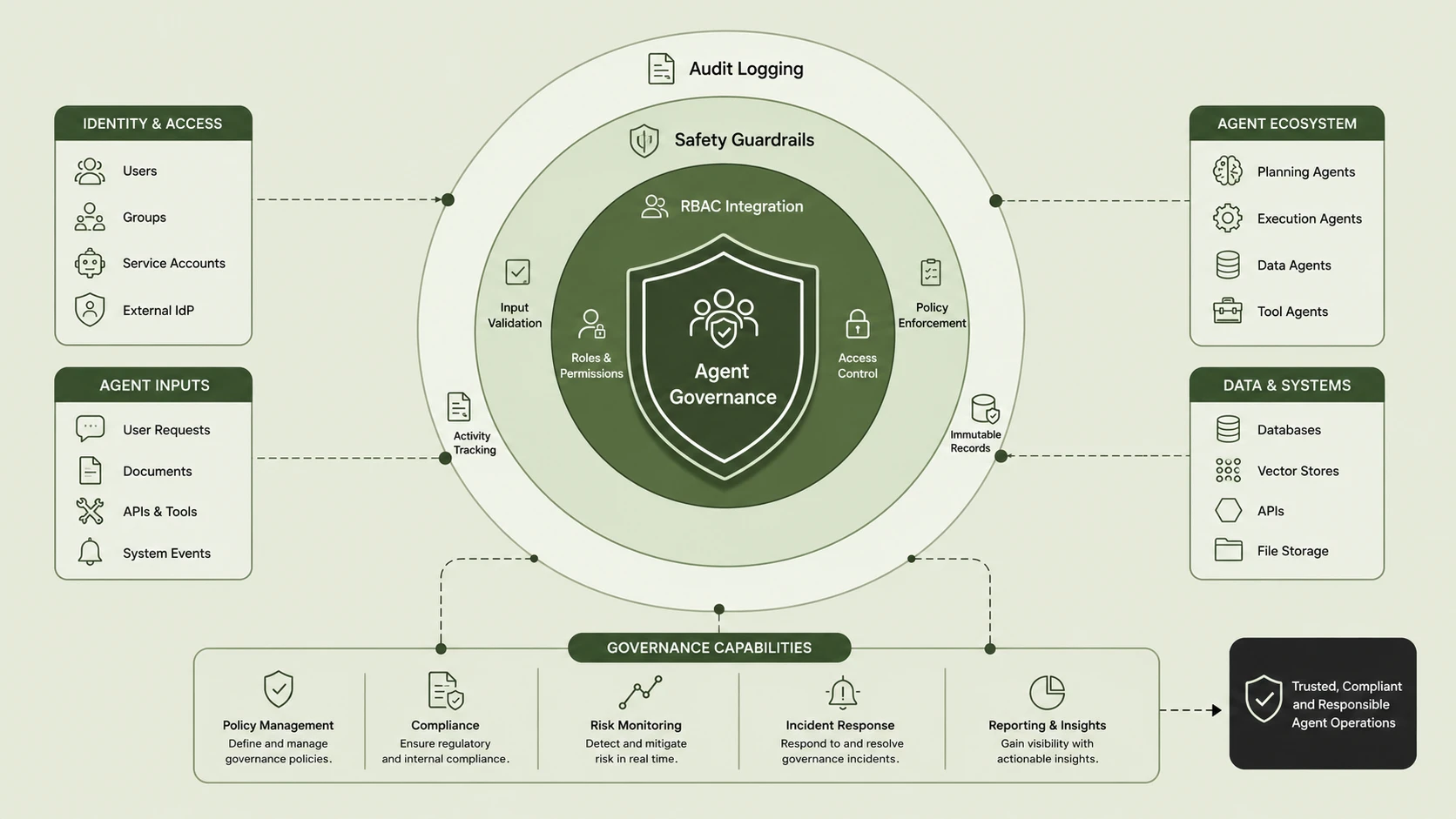
How can enterprises tame the wild west of autonomous AI, transforming its immense potential into reliable, governed operations? The answer lies in establishing a robust AI Agent Governance framework built upon three essential pillars: comprehensive audit trails, strategic Human-in-the-Loop (HITL) mechanisms, and unwavering commitment to compliance. These pillars collectively provide the necessary structure to manage risk, ensure accountability, and maintain trust.
An effective governance framework begins with architectural foresight. It's not about retrofitting controls after an incident but designing them into the core of every AI agent system from the ground up. This involves defining clear responsibilities for agent design, deployment, monitoring, and deactivation. High-level system design must integrate governance components as first-class citizens, ensuring that agents are not just efficient but also transparent, explainable, and controllable. This 'governance-by-design' approach minimizes technical debt and vastly improves the long-term sustainability and trustworthiness of AI agent deployments.
The Indispensable Role of Robust Audit Trails
Can you trace every decision, every action, and every thought process of your AI agent? For many organizations, the answer is a resounding 'no,' which represents a critical vulnerability. Robust audit trails are the bedrock of any effective AI Agent Governance strategy. They provide the immutable, verifiable record necessary for accountability, debugging, forensic analysis, and proving compliance.
Why the problem exists: AI agents often operate in complex, dynamic environments, making multiple calls to external tools, querying databases, and executing code in a multi-step, iterative fashion. Unlike traditional procedural code, their internal reasoning (often an LLM's 'thought' process) is not explicitly defined in a linear flow. Without a systematic way to log these intricate interactions and internal states, understanding an agent's behavior becomes a guessing game. This opacity hinders debugging, prevents effective post-incident analysis, and makes it impossible to prove compliance with internal policies or external regulations.
Technical background and what to log: Implementing effective audit trails involves capturing granular details of an agent's entire lifecycle. This includes:
- ◆Initial Prompt and System Instructions: The exact text of the user prompt and the underlying system instructions or 'persona' given to the agent.
- ◆Internal Reasoning Steps (Thought Process): The agent's intermediate 'thoughts' or 'reasoning chain' as it processes information, plans actions, and reflects on outcomes. This is critical for explainability.
- ◆Tool Invocations: Every call to an external tool or API, including the tool's name, precise input parameters, and the raw output received.
- ◆Data Access and Modification: Records of any data accessed from databases, knowledge bases, or external systems, as well as any data modified or created by the agent.
- ◆External API Interactions: Logs of all calls to external services, including request/response payloads, HTTP status codes, and timestamps.
- ◆Decision Confidence Scores: If the agent's underlying model provides confidence scores for its decisions, these should be logged to inform HITL mechanisms.
- ◆Final Decision or Action Taken: The ultimate output or action performed by the agent, along with any associated data.
- ◆User Feedback and Corrections: Any human feedback or corrections applied to the agent's output or behavior.
- ◆Timestamping and Agent ID: Every log entry must include a precise timestamp and a unique identifier for the agent instance.
These logs must be timestamped, immutable, and centrally stored to prevent tampering and ensure integrity.
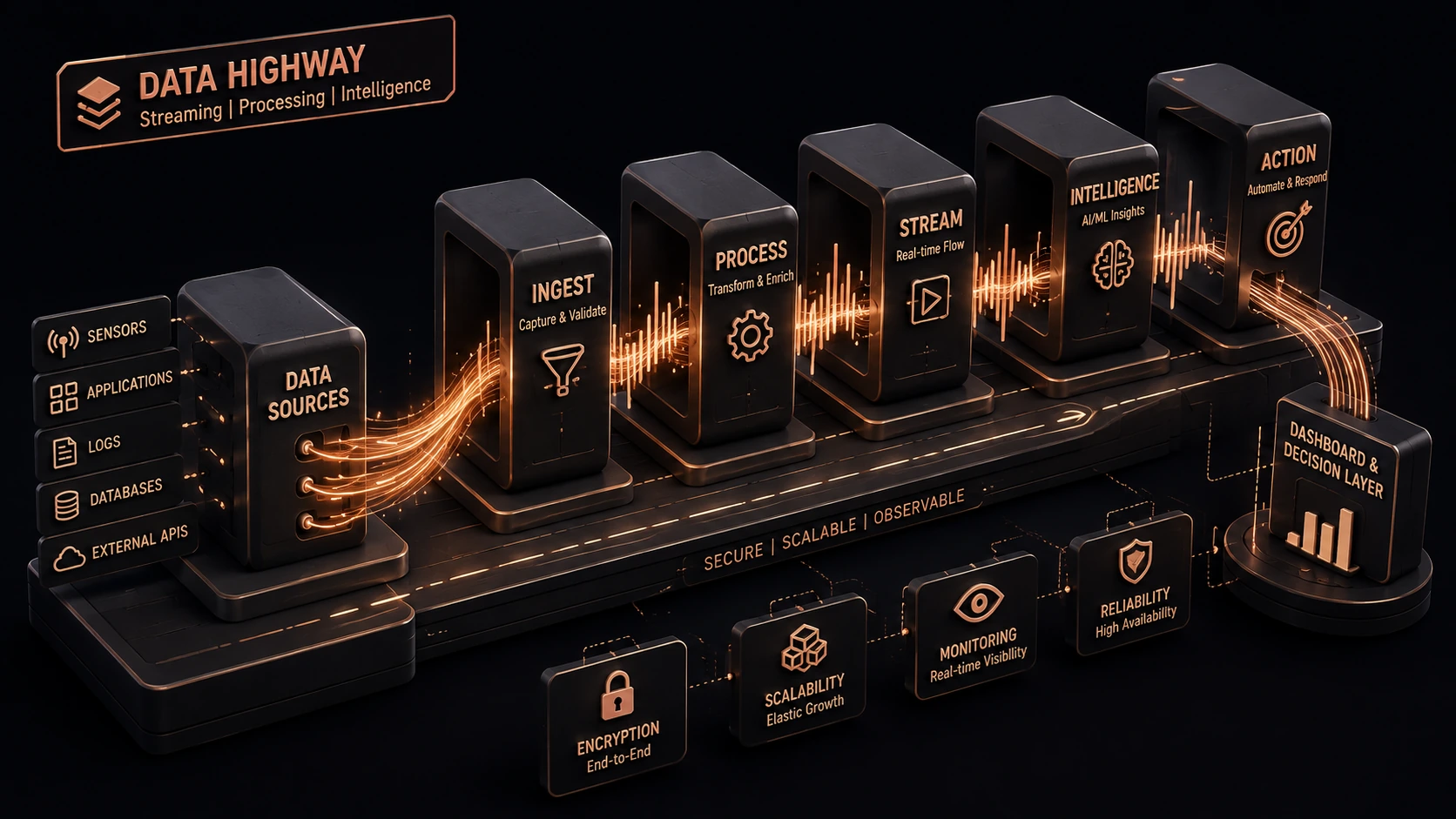
Real-world implementation: Enterprises should adopt structured logging formats (e.g., JSON, YAML) and leverage centralized log management systems (like Elasticsearch with Kibana, Splunk, Datadog, or cloud-native solutions such as AWS CloudWatch, Azure Monitor, or Google Cloud Logging). These systems enable efficient searching, filtering, correlation, and analysis of agent activities. For high-volume environments, consider event streaming platforms like Apache Kafka or AWS Kinesis to ingest logs asynchronously and reliably. Furthermore, logs should be protected against tampering through secure archival policies, encryption at rest and in transit, and strict access controls. For maximum immutability and non-repudiation, exploring blockchain-like ledger technologies or verifiable data structures for critical audit trails can be beneficial, particularly in highly regulated industries.
Code Example: Structured Audit Log Entry (JSON)
{
  "timestamp": "2023-10-27T10:30:00Z",
  "agent_id": "customer-support-agent-001",
  "event_type": "tool_invocation",
  "tool_name": "CRM_LookupCustomer",
  "tool_input": {
    "customer_id": "CUST12345",
    "query": "order status"
  },
  "tool_output": {
    "status": "success",
    "data": {
      "customer_name": "Jane Doe",
      "last_order_id": "ORD9876",
      "order_status": "shipped"
    }
  },
  "agent_thought": "Successfully retrieved customer details and last order status. Preparing to inform customer.",
  "decision_confidence": 0.95,
  "user_interaction_id": "UIX5678"
}
This structured log entry provides a comprehensive, machine-readable record of a single step in an agent's operation. Aggregating and analyzing such entries allows for a complete reconstruction of an agent's behavior over time.
Implementing Human-in-the-Loop (HITL) for Critical Decisions
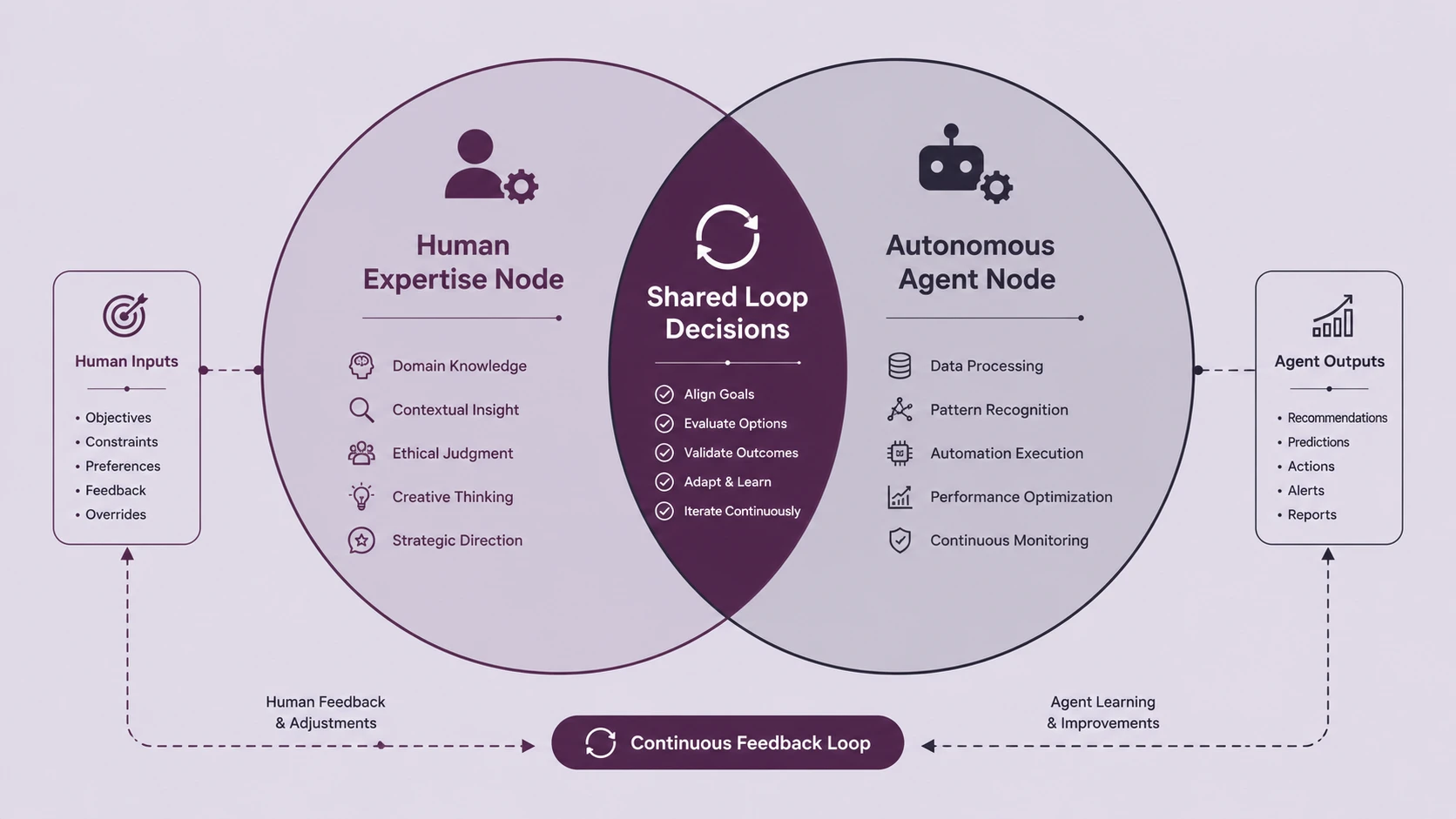
While AI agents offer unprecedented automation, complete autonomy is a gamble for high-stakes decisions. Human-in-the-Loop (HITL) mechanisms are crucial for ensuring that human judgment remains the final arbiter when stakes are high, ambiguities arise, or ethical dilemmas are encountered. HITL transforms AI agents from purely autonomous entities into collaborative partners, enhancing reliability and trust.
Why HITL is critical:
- ◆Ambiguity and Edge Cases: AI models, even advanced LLMs, can struggle with highly nuanced situations, sarcasm, or truly novel edge cases that fall outside their training data distribution. Human intuition and contextual understanding are irreplaceable here.
- ◆High-Stakes Decisions: Actions with significant financial, legal, reputational, or safety implications (e.g., approving a loan, making a medical diagnosis, executing a large financial trade) warrant human review, regardless of the agent's confidence.
- ◆Low Confidence Scores: When an agent's internal confidence score for a decision is below a predefined threshold, it's a strong indicator that human intervention is needed.
- ◆Ethical and Bias Mitigation: Humans can identify and correct potential biases or ethically questionable outputs that an agent might generate, especially when dealing with sensitive demographics or protected characteristics.
- ◆Learning and Improvement: HITL provides valuable feedback data for continuous model retraining and agent refinement, helping the AI learn from human expertise.
Types of HITL and Implementation Strategies:
- 1.Approval-Based HITL: For critical actions, the agent proposes a decision, and a human must explicitly approve it before execution. This is common in financial transactions, content moderation, or legal document generation.
- ◆Implementation: Route agent-generated proposals to a dedicated human review queue or dashboard. Integrate with existing Business Process Management (BPM) systems. Use notification systems (email, Slack, internal alerts) to prompt human reviewers.
- 1.Exception-Based HITL: The agent operates autonomously unless it encounters an error, an unexpected scenario, or a decision with low confidence. These exceptions are flagged for human review.
- ◆Implementation: Define clear thresholds for error rates, confidence scores, or deviation from expected behavior. Implement robust error handling and anomaly detection mechanisms within the agent's workflow.
- 1.Correction-Based HITL (Feedback Loop): Humans review agent outputs *after* execution (or in parallel) and provide feedback to correct errors or improve future performance. This is crucial for continuous learning.
- ◆Implementation: Build user interfaces that allow easy annotation, correction, or flagging of agent outputs. Integrate this feedback directly into data pipelines for model fine-tuning and retraining.
Architectural Considerations for HITL:
- ◆Workflow Orchestration: Use tools like Apache Airflow, AWS Step Functions, or Azure Logic Apps to manage complex workflows that seamlessly transition between automated agent steps and human review steps.
- ◆Dedicated Review UIs: Develop intuitive dashboards and interfaces for human reviewers to quickly understand the agent's context, reasoning, and proposed action, allowing for efficient approval or rejection.
- ◆API Gateways and Access Control: Ensure that agents cannot bypass HITL mechanisms. Critical actions should only be executable via APIs that enforce HITL checks.
- ◆Auditing of HITL Decisions: Just as agent actions are audited, every human approval, rejection, or modification must also be logged to maintain a complete chain of custody and accountability.
Conceptual HITL Workflow (Pseudo-code):
def process_loan_application(agent_input):
    agent_decision = agent.analyze(agent_input)

    if agent_decision.confidence < LOW_CONFIDENCE_THRESHOLD or \
       agent_input.amount > HIGH_VALUE_THRESHOLD or \
       agent_decision.flags_ethical_concern:
        print("High-stakes decision or low confidence. Routing to human review.")
        review_request = create_review_request(agent_input, agent_decision)
        human_approved = send_to_human_reviewer(review_request)

        if human_approved:
            agent.execute_action(agent_decision)
            log_event("Human approved loan application.", agent_decision, human_approved=True)
        else:
            print("Human rejected the loan application.")
            log_event("Human rejected loan application.", agent_decision, human_approved=False)
            # Take alternative action or escalate
    else:
        agent.execute_action(agent_decision)
        log_event("Agent autonomously processed loan application.", agent_decision)
This pseudo-code illustrates how an agent's decision can be conditionally routed for human approval based on predefined business rules or inherent model uncertainty.
Navigating the Regulatory Maze: AI Agent Compliance
The rise of autonomous AI agents introduces unique and complex regulatory challenges. CIOs must proactively navigate a dense and evolving landscape of data privacy, security, and AI-specific legislation. Compliance is not merely a legal obligation; it's a strategic imperative to build trust, avoid hefty fines, and ensure ethical operations.

The CIO's Guide to AI Agent Governance
Key Regulatory Frameworks and Their Impact on AI Agents:
- 1.General Data Protection Regulation (GDPR) - EU:
- ◆Impact: AI agents often process vast amounts of personal data. GDPR mandates strict rules around data minimization, purpose limitation, consent, data subject rights (access, rectification, erasure, portability), and transparency. Agents must be designed to respect these rights, especially the 'right to explanation' for automated decisions.
- ◆Agent Considerations: Ensure agents only access data strictly necessary for their task. Implement mechanisms for data anonymization or pseudonymization. Provide clear records (audit trails) to explain agent decisions and data usage. Facilitate deletion or modification of data processed by agents upon user request.
- 1.Health Insurance Portability and Accountability Act (HIPAA) - US:
- ◆Impact: For AI agents operating in healthcare, HIPAA mandates stringent security and privacy standards for Protected Health Information (PHI). This includes technical safeguards (access controls, encryption), administrative safeguards (policies, training), and physical safeguards.
- ◆Agent Considerations: Agents handling PHI must operate within secure, isolated environments. All data access must be logged and monitored. Strong authentication and authorization are critical. Ensure agents do not inadvertently disclose PHI through their interactions or outputs.
- 1.EU AI Act (Emerging):
- ◆Impact: This landmark legislation classifies AI systems by risk level (unacceptable, high, limited, minimal) and imposes stringent requirements for high-risk AI, which will likely include many enterprise AI agents. Requirements cover risk management systems, data governance, technical documentation, record-keeping (audit trails), transparency, human oversight (HITL), accuracy, robustness, and cybersecurity.
- ◆Agent Considerations: Proactively assess the risk level of each AI agent. For high-risk agents, implement robust quality management systems, conduct conformity assessments, and ensure continuous human oversight. Emphasize data quality and bias mitigation from the design phase.
Compliance-by-Design: A Proactive Approach:
Instead of attempting to retrofit compliance controls after an agent is deployed, CIOs must embed legal and ethical considerations into the AI agent's architecture from the outset. This 'compliance-by-design' approach minimizes risk and maximizes efficiency.
- ◆Privacy Impact Assessments (PIAs): Conduct thorough PIAs before deploying agents that handle personal data to identify and mitigate privacy risks.
- ◆Data Governance Frameworks: Establish clear policies for data sourcing, usage, retention, and deletion for data consumed and generated by agents.
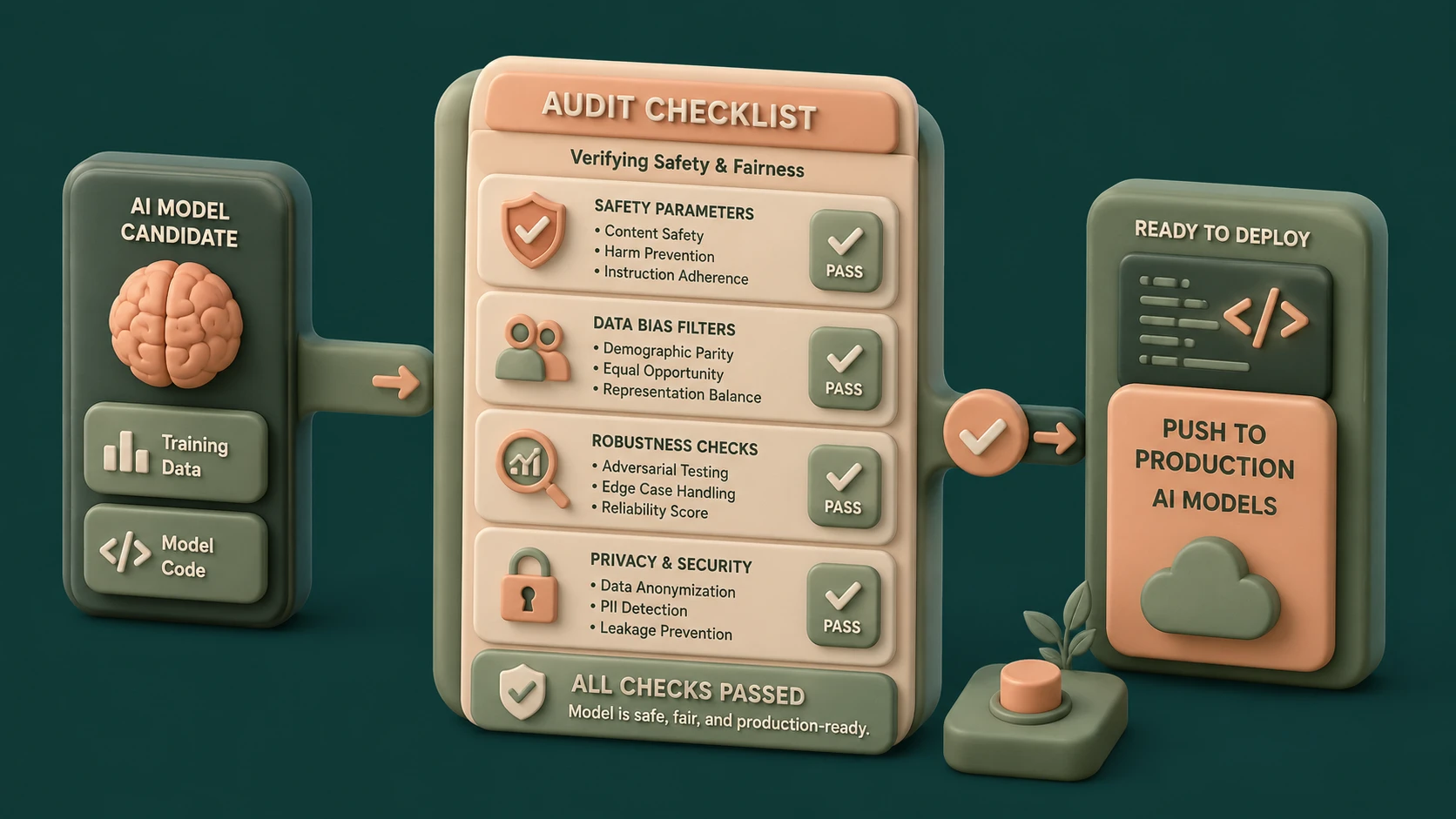
- ◆Algorithmic Fairness and Bias Audits: Regularly audit agent training data and decision outputs for bias, using metrics like disparate impact or equal opportunity, and implement mitigation strategies.
- ◆Explainable AI (XAI) Integration: Design agents to provide explanations for their decisions, either through internal reasoning logs or post-hoc explanation techniques. This is crucial for regulatory transparency.
- ◆Security by Design: Implement robust security measures (encryption, access control, vulnerability management) at every layer of the AI agent's infrastructure and workflow.
Data Privacy, Security, and Ethical AI Principles
Beyond regulatory mandates, a robust AI Agent Governance framework must deeply embed principles of data privacy, security, and ethics. These principles are not optional; they are fundamental to building and maintaining user trust and organizational integrity, particularly as AI agents interact directly with sensitive data and make impactful decisions.
Data Privacy: Beyond Compliance
Data privacy for AI agents extends beyond just ticking compliance boxes. It's about respecting user autonomy and minimizing risk.
- ◆Data Minimization: Agents should only collect and process the absolute minimum amount of personal data required to perform their designated task. Avoid collecting extraneous information 'just in case.'
- ◆Purpose Limitation: Data collected for one purpose should not be repurposed by an AI agent for an unrelated task without explicit consent or a clear legal basis.
- ◆Anonymization and Pseudonymization: Where possible, sensitive data processed by agents should be anonymized or pseudonymized to reduce the risk of re-identification.
- ◆Consent Management: For agents interacting with users, clear, granular consent mechanisms must be in place for data collection and processing, especially for sensitive data categories.
- ◆Data Retention Policies: Define and enforce strict data retention policies for agent-processed data, ensuring data is deleted when no longer needed.
Robust Security Measures
AI agents, with their access to tools and data, represent a new attack surface. Robust security is paramount.
- ◆Secure Access Controls (RBAC/ABAC): Implement granular Role-Based Access Control (RBAC) or Attribute-Based Access Control (ABAC) to ensure agents only have the necessary permissions to access specific data sources or execute certain tools. Least privilege is key.
- ◆Input/Output Validation: Implement strict validation on all inputs received by agents and all outputs they generate, preventing prompt injection attacks, data exfiltration, or malicious code execution through tool calls.
- ◆Secure Tool Integration: Ensure that all external tools or APIs integrated with AI agents are secure, regularly audited, and communicate over encrypted channels (HTTPS, mTLS).
- ◆Vulnerability Management: Regularly scan agent codebases, dependencies, and underlying infrastructure for vulnerabilities. Implement secure coding practices for custom agent components.
- ◆Threat Modeling: Conduct AI-specific threat modeling exercises to identify potential attack vectors unique to autonomous agents (e.g., adversarial prompts, data poisoning, model stealing).
- ◆Encryption: Encrypt all sensitive data at rest (e.g., in databases, storage) and in transit (e.g., between agent components, to external APIs).
Ethical AI Principles and Explainable AI (XAI)
Ethical considerations are at the core of responsible AI agent deployment. CIOs must champion a culture that values fairness, transparency, and accountability.
- ◆Algorithmic Fairness: Proactively identify and mitigate biases in training data and agent decision-making processes. Establish ethical review boards to scrutinize agent designs and deployment plans.
- ◆Transparency and Explainability (XAI): While full transparency into an LLM's internal workings is challenging, agents should be designed to provide meaningful explanations for their actions. This could involve:
- ◆Post-hoc Explanations: Summarizing the steps taken, tools used, and key pieces of information considered.
- ◆Feature Importance: Identifying which input features or data points most influenced a decision.
- ◆Counterfactual Explanations: Explaining what would have to change for a different outcome to occur.
- ◆Accountability Frameworks: Clearly define who is responsible when an AI agent makes an error or causes harm. This involves legal, technical, and operational accountability structures.
- ◆Human Oversight: Reinforce HITL mechanisms as a primary ethical safeguard, ensuring human values can override autonomous decisions when necessary.
Monitoring, Alerting, and Continuous Improvement
Deploying an AI agent is not a 'set it and forget it' exercise. Effective AI Agent Governance demands continuous monitoring, robust alerting, and iterative improvement processes to ensure agents remain secure, compliant, and aligned with business objectives over their entire lifecycle.
Comprehensive Observability Beyond Logs
While audit trails capture discrete events, comprehensive observability provides a holistic view of an agent's health and behavior.
- ◆Performance Metrics: Monitor key performance indicators (KPIs) such as response time, task completion rates, error rates, and resource utilization (CPU, memory, GPU, API call quotas). Anomalies in these metrics can indicate underlying issues.
- ◆Behavioral Drift Detection: AI agents can 'drift' over time, meaning their behavior or performance degrades as real-world data deviates from their training data. Implement statistical process control or machine learning models to detect changes in agent outputs, reasoning patterns, or tool usage.
- ◆Security Anomalies: Integrate agent monitoring with Security Information and Event Management (SIEM) systems to detect suspicious activities like unauthorized data access attempts, unusual API calls, or attempts to bypass HITL.
- ◆Cost Monitoring: Track the operational costs associated with LLM API calls, compute resources, and data storage. Unexpected cost spikes can indicate inefficient agent design or malicious activity.
- ◆Semantic Evaluation: Beyond quantitative metrics, implement qualitative evaluation. Are the agent's responses coherent, accurate, and aligned with brand voice? Are they meeting user intent? This often requires human review and semantic analysis tools.
Robust Alerting Systems
Effective monitoring is useless without timely alerts. Configure alerting based on predefined thresholds for critical metrics and detected anomalies.
- ◆Threshold-Based Alerts: Trigger alerts when error rates exceed a certain percentage, response times spike, or confidence scores drop below a safety margin.
- ◆Anomaly Detection Alerts: Leverage machine learning-driven anomaly detection to identify unusual patterns in agent behavior that might not trigger simple threshold alerts.
- ◆Integration with Incident Management: Ensure alerts are routed to the appropriate teams (DevOps, AI Ops, security, business owners) via established incident management systems (PagerDuty, Opsgenie) with clear escalation paths.
Continuous Improvement and Feedback Loops
AI agent governance is an iterative process. Feedback loops are essential for refinement and adaptation.
- ◆Automated Retraining Pipelines: Establish MLOps pipelines that automatically retrain agent models with new, human-corrected data or updated policies.
- ◆A/B Testing and Canary Deployments: Safely introduce new agent versions or policy changes using A/B testing or canary deployments to evaluate their impact before full rollout.
- ◆Regular Policy Reviews: Conduct periodic reviews of AI Agent Governance policies, HITL thresholds, and compliance requirements to adapt to evolving regulations and business needs.
- ◆Post-Mortem Analysis: For any incidents or failures, conduct thorough post-mortem analyses, leveraging audit trails and monitoring data to identify root causes and implement preventative measures.
Key Takeaways for CIOs
Establishing robust AI Agent Governance is no longer a futuristic concern; it's a present-day necessity for any enterprise leveraging autonomous AI. For CIOs, the path forward involves a strategic commitment to these core principles:
- ◆Prioritize Governance from Day One: Embed governance into the architectural design of every AI agent system, rather than attempting to bolt it on later.
- ◆Implement Granular Audit Trails: Ensure every agent action, internal thought, and data interaction is immutably logged for complete transparency and accountability.
- ◆Strategically Integrate Human-in-the-Loop: Deploy HITL mechanisms for high-stakes decisions, low-confidence scenarios, and ethical considerations to balance automation with human oversight.
- ◆Proactively Navigate Regulatory Compliance: Understand and integrate requirements from GDPR, HIPAA, and the EU AI Act into agent design and operation.
- ◆Champion Ethical AI Principles: Prioritize data privacy, robust security, algorithmic fairness, and explainability to build and maintain trust.
- ◆Embrace Continuous Monitoring and Improvement: Leverage comprehensive observability, alerting, and feedback loops to ensure agents remain aligned with objectives and adapt to evolving conditions.
Conclusion
The promise of AI agents to revolutionize enterprise operations is immense, but this power comes with a profound responsibility. For CIOs, the challenge is not just to deploy these technologies, but to govern them effectively. By meticulously implementing robust audit trails, strategic Human-in-the-Loop mechanisms, and comprehensive compliance frameworks, organizations can unlock the full potential of autonomous AI while mitigating its inherent risks. This proactive approach to AI Agent Governance will be the defining characteristic of successful, trustworthy, and scalable AI adoption in the years to come, ensuring that innovation is pursued hand-in-hand with accountability and ethical integrity.
The Cio'S Guide To Ai Agent Governance: Audit Trails, Hitl, And Compliance plays a vital role in modern IT and AI-driven digital transformation.