Why Hybrid Intelligence Matters
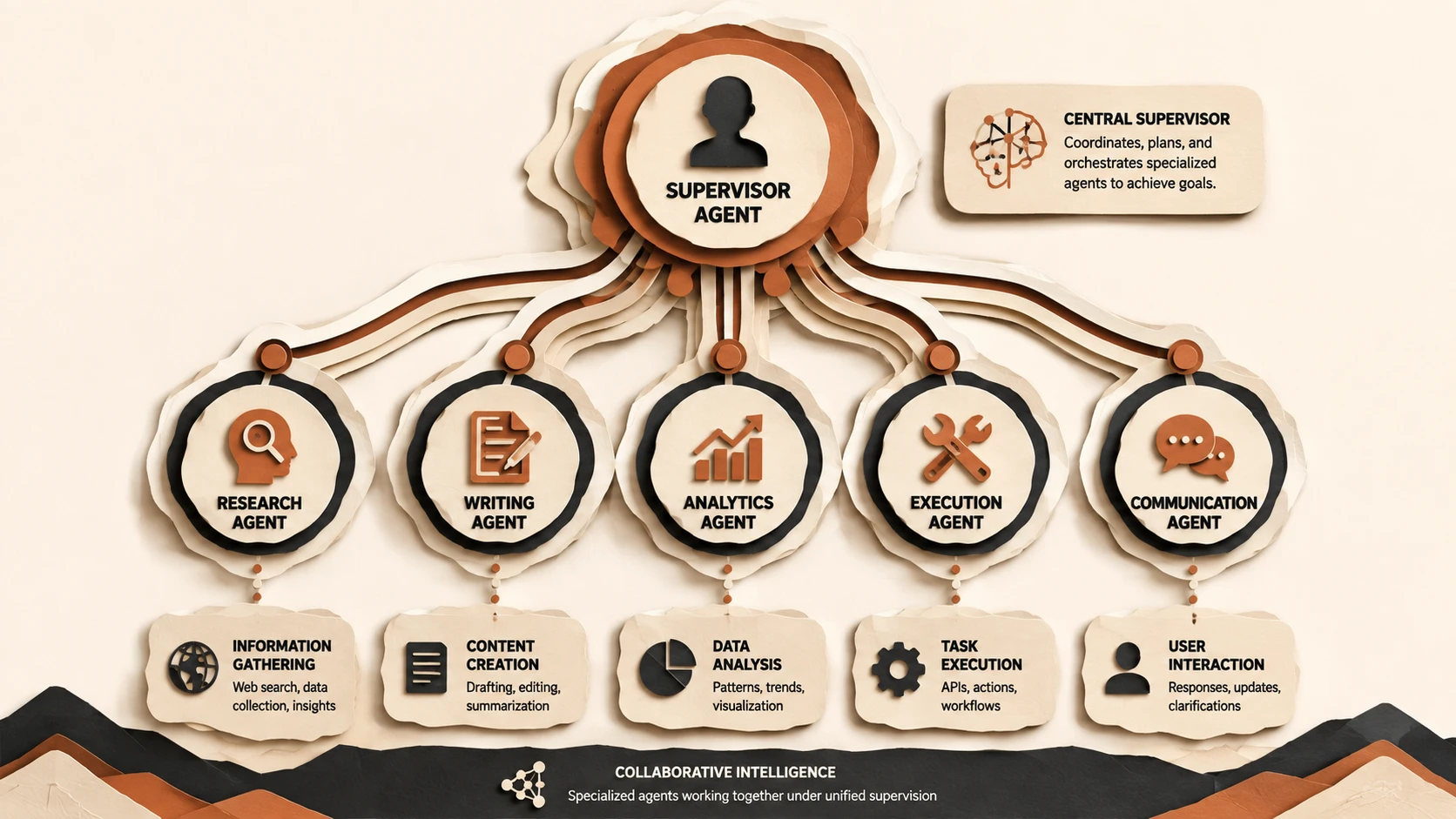
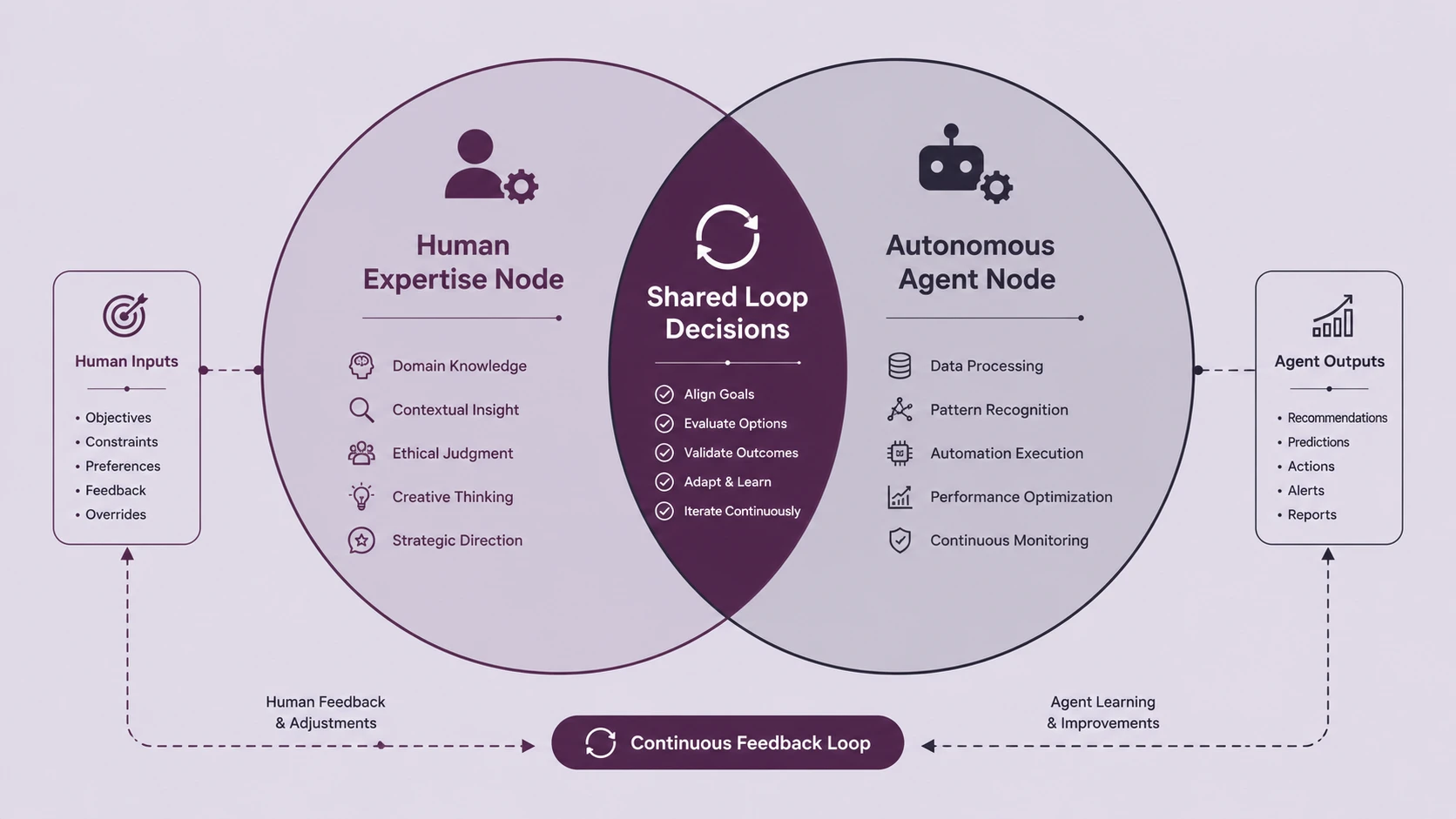
The future of enterprise AI is not about replacing people with autonomous systems—it is about combining the complementary strengths of humans and intelligent agents. While AI excels at processing massive datasets, identifying patterns, generating recommendations, and executing repetitive tasks, humans contribute strategic thinking, ethical judgment, creativity, and business context.
Hybrid Intelligence is the architectural model that brings these capabilities together into a collaborative decision-making framework.
Architecture Principle: The most effective enterprise AI systems amplify human intelligence rather than replace it.
---
What Is Hybrid Intelligence?
Hybrid Intelligence is an enterprise AI architecture where humans and autonomous AI agents continuously collaborate throughout the execution of business workflows.
Instead of AI operating independently or humans manually controlling every process, responsibilities are distributed according to strengths.
Typical AI responsibilities include:
- ◆Data analysis
- ◆Pattern recognition
- ◆Knowledge retrieval
- ◆Workflow automation
- ◆Recommendation generation
- ◆Risk prediction
- ◆Simulation
- ◆Continuous monitoring
Human experts remain responsible for:
- ◆Strategic decisions
- ◆Ethical judgment
- ◆Regulatory compliance
- ◆Exception handling
- ◆Business prioritization
- ◆Customer relationships
- ◆Final approvals
- ◆Organizational governance
This balanced approach creates faster and more trustworthy enterprise systems.
---
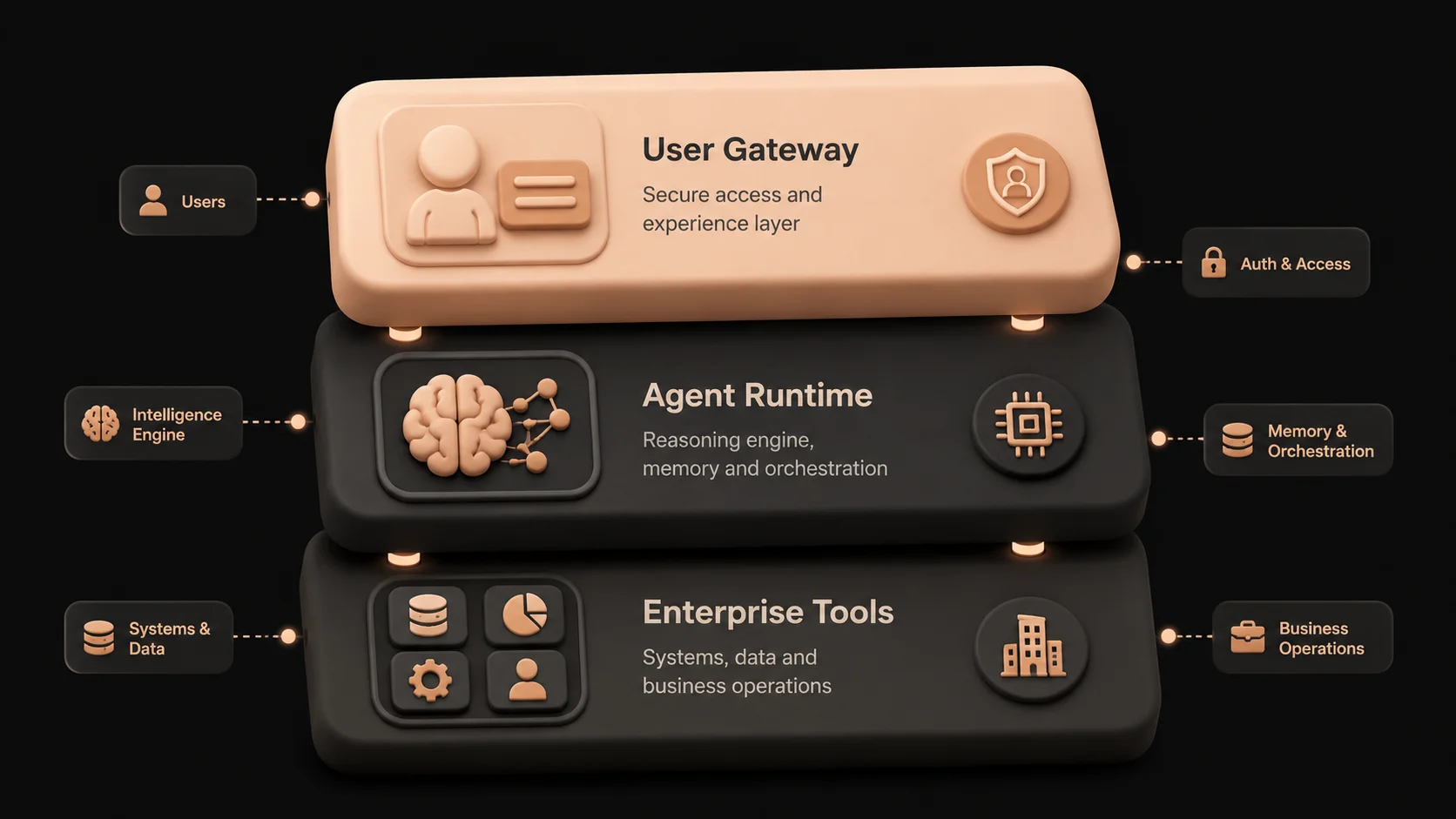
Enterprise Reference Architecture
Enterprise Data Sources
          │
          ▼
Perception Layer
          │
Multi-Agent Intelligence
          │
Recommendation Engine
          │
────────────────────────────
│ Human Review & Approval │
────────────────────────────
          │
Policy Engine
          │
Tool Execution
          │
Shared Memory
          │
Enterprise Applications
Every critical business decision passes through governance while maintaining efficient automation.
---
Human-in-the-Loop Decision Making
Not every workflow requires the same level of human involvement.
Organizations typically define three operational modes:
Human-In-The-Loop
AI generates recommendations while humans approve every important action.
Ideal for:
- ◆Healthcare
- ◆Finance
- ◆Legal
- ◆Government
- ◆Compliance
---
Human-On-The-Loop
AI executes routine operations autonomously while humans supervise overall system behavior and intervene only when required.
Common examples include:
- ◆Customer service
- ◆IT operations
- ◆Manufacturing
- ◆Logistics
---
Human-Out-Of-The-Loop
AI operates independently for repetitive, low-risk activities.
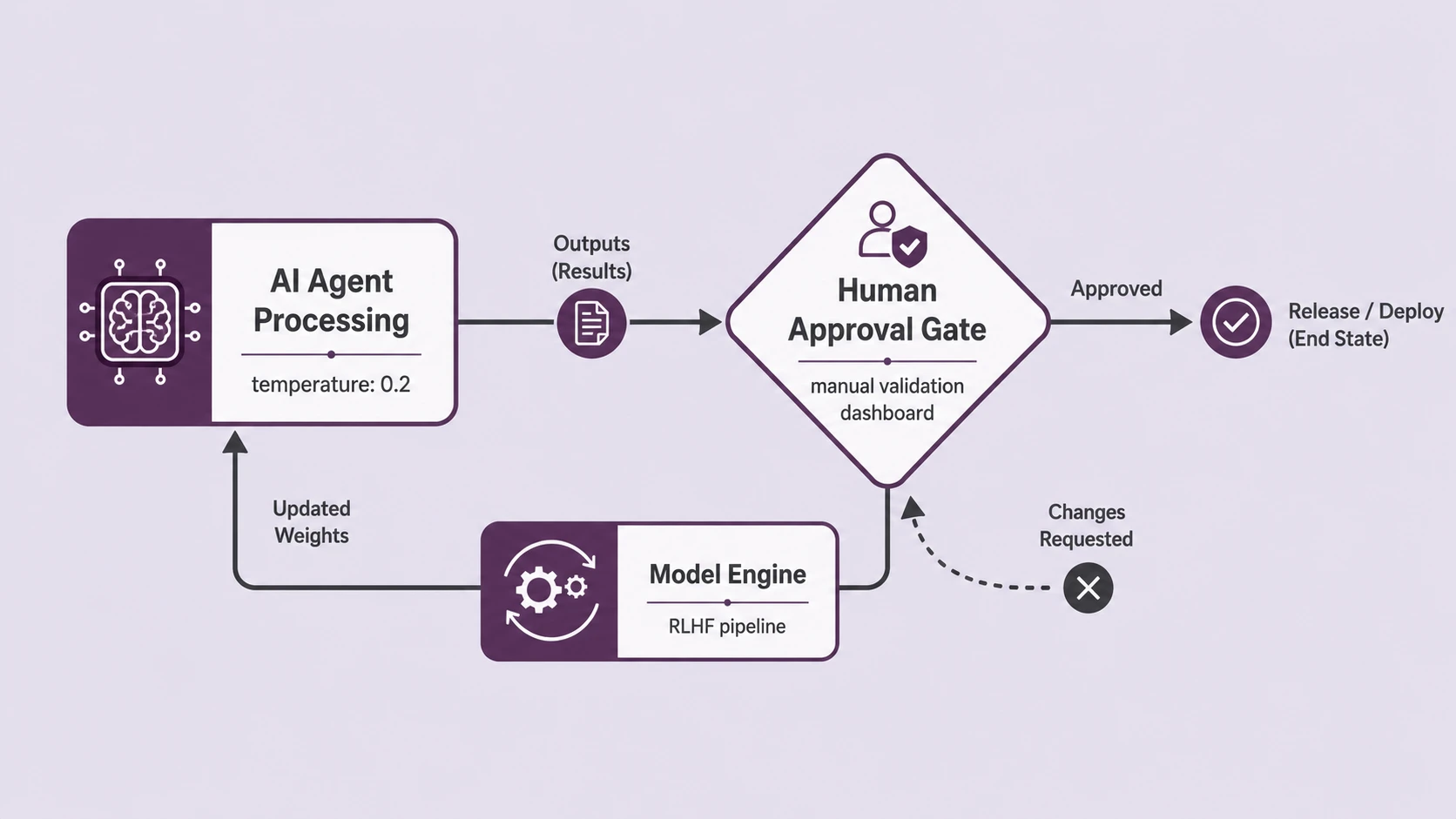
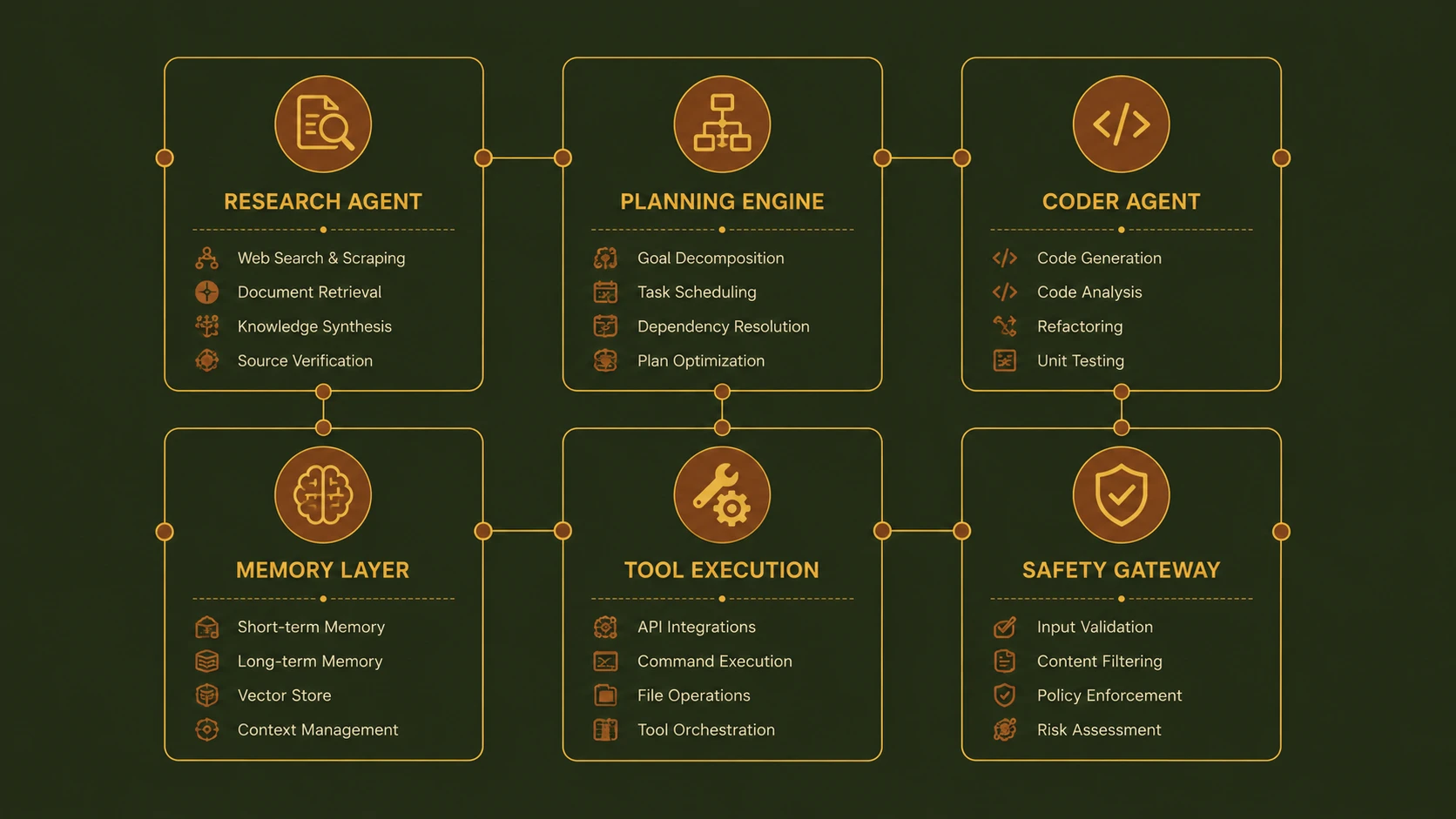
System architecture diagram and conceptual workflow layout for Hybrid Intelligence.
Examples include:
- ◆Infrastructure scaling
- ◆Log classification
- ◆Data synchronization
- ◆Automated testing
Choosing the correct operating model depends on business risk and regulatory requirements.
---
Building Trust Through Explainability
Trust is one of the most important requirements for Hybrid Intelligence.
Enterprise AI should provide:
- ◆Decision explanations
- ◆Confidence scores
- ◆Evidence references
- ◆Alternative recommendations
- ◆Policy validation
- ◆Risk assessments
- ◆Audit trails
- ◆Execution history
Transparent reasoning helps users understand why an AI agent reached a particular conclusion.
---
Continuous Learning Through Feedback
Hybrid systems continuously improve by learning from both AI outcomes and human expertise.
Typical feedback signals include:
- ◆User corrections
- ◆Approval decisions
- ◆Business outcomes
- ◆Policy violations
- ◆Customer satisfaction
- ◆Expert annotations
- ◆Model evaluation
- ◆Workflow performance
These signals refine future recommendations and improve long-term system accuracy.
---
Governance and Responsible AI
Hybrid Intelligence requires governance at every stage.
Recommended controls include:
- ◆Role-based approvals
- ◆Policy-driven execution
- ◆Human override mechanisms
- ◆Explainability requirements
- ◆Audit logging
- ◆Model monitoring
- ◆Bias evaluation
- ◆Compliance validation
Governance ensures automation remains aligned with business objectives and regulatory standards.
---
Enterprise Use Cases
Hybrid Intelligence is transforming many industries.
Examples include:
- ◆Clinical decision support
- ◆Financial risk assessment
- ◆Insurance claims processing
- ◆Manufacturing quality control
- ◆Cybersecurity investigations
- ◆Customer service escalation
- ◆Supply chain planning
- ◆Executive business intelligence
In each scenario, AI accelerates analysis while humans provide expertise and accountability.
---
Best Practices
| Area | Best Practice |
|---|---|
| Decision Making | Human-in-the-Loop |
| Governance | Policy-Based Approval |
| AI Collaboration | Specialized Multi-Agent Systems |
| Explainability | Confidence & Evidence |
| Memory | Shared Context Layer |
| Security | Zero Trust AI |
| Learning | Continuous Feedback |
| Operations | Human-AI Collaboration |
---
The Future of Hybrid Intelligence
The next generation of enterprise software will not be fully autonomous or entirely human-driven. Instead, organizations will build collaborative ecosystems where AI agents perform large-scale analysis, automation, and reasoning while humans contribute judgment, creativity, ethics, and strategic direction.
By embracing Hybrid Intelligence, enterprises can achieve higher productivity, stronger governance, improved trust, and more resilient decision-making—creating systems that combine the best qualities of both human expertise and artificial intelligence.