The Silent Killer of Innovation: Legacy .NET Technical Debt
Imagine a critical enterprise application, the very backbone of your daily operations, humming along on a decades-old .NET Framework, perhaps still serving ASP.NET Web Forms pages or orchestrating communication through Windows Communication Foundation (WCF) services. It's stable, functional, and deeply entrenched, yet its very existence silently stifles innovation, drains valuable resources, and exposes your organization to escalating security risks. This isn't a hypothetical thought experiment; it's the stark reality for countless organizations grappling with the immense technical debt of legacy .NET applications, often spanning millions of lines of C# code.
The traditional solution—a complete rewrite—often feels like an insurmountable mountain. It's fraught with prohibitive costs, prolonged timelines stretching into years, and an unacceptably high risk of project failure, often due to a loss of critical business logic or an inability to match existing functionality. Businesses simply cannot afford to halt operations for a multi-year rebuild.
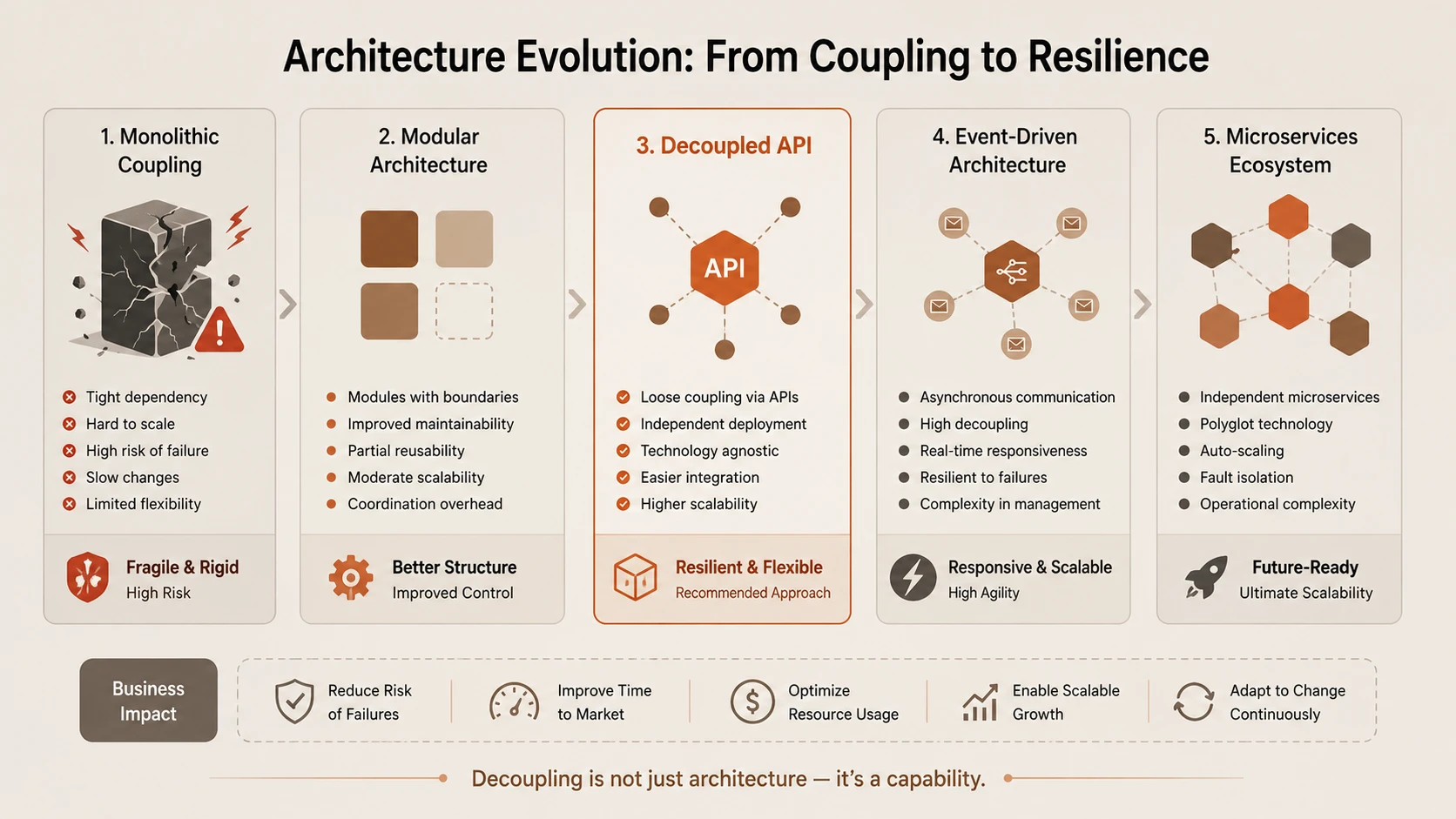
But what if there was a profoundly different path? A revolutionary approach that promises significant modernization without the existential dread of a 'rip and replace' strategy? The convergence of advanced Artificial Intelligence, specifically Agentic AI, with sophisticated, deep code analysis techniques is now offering a compelling 'zero-rewrite' blueprint. This strategy enables enterprises to breathe new life into their critical software assets while mitigating the colossal risks and costs associated with traditional modernization efforts. This article will deconstruct how to Modernize Legacy .NET Applications with Agentic AI, transforming technical debt into a competitive advantage.
The Promise of Agentic AI: A Zero-Rewrite Revolution for .NET
What if your complex .NET codebase could not only explain its intricate workings but also identify its own technical debt, and then autonomously refactor and update itself? This is the core, audacious promise of Agentic AI in the context of legacy system modernization. Unlike simple code generation tools that require explicit, detailed prompts for every single task, Agentic AI systems are designed to operate with a higher degree of autonomy, planning, and self-correction, much like a seasoned team of human developers.
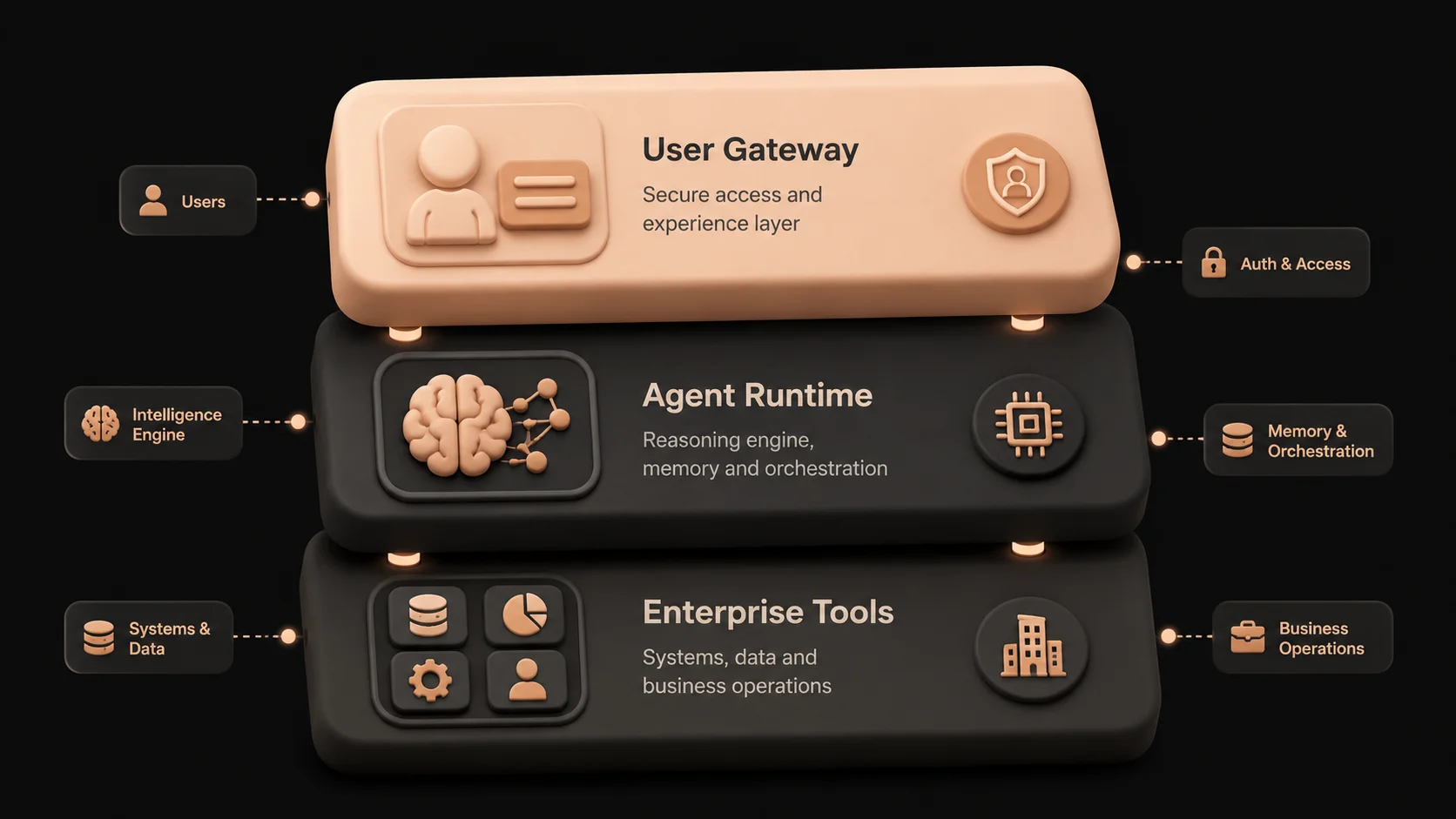
An Agentic AI system for code modernization is far more than a fancy IDE plugin or a glorified search-and-replace utility. It's an intelligent, multi-faceted system composed of several specialized agents. Each agent plays a distinct role: a planning agent maps out the modernization journey, a code analysis agent deeply understands the existing C# and .NET constructs, a refactoring agent performs the actual transformations, and a testing agent rigorously validates the changes. These agents collaboratively work towards a defined modernization goal, understanding the intricate context, managing state across iterations, and making informed decisions based on a deep comprehension of the existing .NET codebase, its architectural patterns (e.g., MVP, MVVM in WinForms, Web Forms lifecycle), and the target modernization objectives (e.g., .NET Core, microservices, cloud-native).
This multi-agent orchestration is precisely what enables a genuine zero-rewrite strategy. Here, significant architectural and code transformation occurs through iterative, automated refactoring and targeted code generation that incrementally evolves the existing system rather than discarding it entirely. For legacy .NET applications, this means agents can analyze old C# code, identify tightly coupled components (e.g., static classes, global state in HttpContext.Current), understand complex business rules often embedded in antiquated patterns, and then systematically transform them into modern, modular, and cloud-ready equivalents. This dramatically reduces the manual human effort required, accelerates the modernization timeline, and critically, minimizes the risk of introducing regressions, as the agents are also capable of generating and validating comprehensive tests for the transformed code.
Why Now? The Convergence of AI and Legacy Challenges in .NET
Why is this innovative approach to Modernize Legacy .NET Applications with Agentic AI gaining such significant traction specifically now? Several converging factors make this an exceptionally opportune moment for AI-driven modernization, particularly within the vast .NET ecosystem.
Firstly, the exponential advancements in Large Language Models (LLMs) have provided the foundational 'intelligence' required for deep code understanding, reasoning, and generation. Models like GPT-4, Claude 3, and a growing array of powerful open-source alternatives possess unprecedented capabilities in comprehending programming languages, identifying intricate patterns within C# and XML configurations, and even suggesting sophisticated architectural improvements. These models are trained on vast datasets of code, allowing them to grasp the nuances of .NET Framework APIs, common anti-patterns, and modern .NET Core best practices.
Secondly, the current economic climate and increasing competitive pressures demand greater agility and cost efficiency from IT departments. Legacy .NET systems are notorious for their high maintenance costs, their inherent inability to scale efficiently in modern cloud environments, and their slow pace of feature delivery. Organizations can no longer afford to defer modernization, but they also cannot absorb the immense disruptions and financial outlays of multi-year, manual rewrites. Agentic AI offers a compelling middle ground, delivering speed and efficiency.
Thirdly, the ongoing, acute shortage of senior software engineers, particularly those with a rare blend of expertise in both legacy .NET Framework (e.g., ASP.NET Web Forms, WCF, WinForms) and modern cloud-native .NET Core architectures, makes manual modernization efforts incredibly challenging and expensive. Agentic AI acts as a powerful force multiplier, allowing existing, often smaller, teams to achieve significantly more with less, by automating the tedious, repetitive, and error-prone aspects of refactoring and migration, freeing human engineers for higher-value tasks.
Finally, the maturation of major cloud platforms (AWS, Azure, GCP) and containerization technologies (Docker, Kubernetes) provides a clear, well-defined target state for modernized applications. Agentic AI can effectively bridge the often-vast gap from on-premises, monolithic .NET Framework applications to scalable, resilient cloud-native .NET Core microservices, making the journey faster, more predictable, and significantly less risky.
Deconstructing the Agentic AI Architecture for .NET Modernization
How do these intelligent agents actually work to Modernize Legacy .NET Applications with Agentic AI? The underlying architecture is highly sophisticated, typically involving several specialized components working in concert, much like a highly intelligent, automated software architect and development team collaborating on a complex project.
Core Components of an Agentic AI Modernization System
- 1.Code Analysis Agent: This agent is the initial explorer. It utilizes powerful static analysis tools, Abstract Syntax Tree (AST) parsers (like Microsoft's Roslyn compiler platform for C#), and advanced semantic analysis to build a comprehensive, deep understanding of the legacy .NET codebase. It meticulously maps dependencies between classes, projects, and external libraries, identifies architectural 'smells' (e.g., God Objects, tight coupling, inappropriate static usage), and extracts core business logic embedded within application layers. For .NET, this involves parsing C# source code, analyzing MSBuild project files, understanding complex configuration files (e.g.,
web.config,app.config, WCF service configurations), and even decompiling assemblies where source code is unavailable.
- 1.Planning & Orchestration Agent: This is the 'brain' and project manager of the operation. It takes the detailed insights from the Code Analysis Agent and the high-level modernization goals (e.g., "migrate all WCF services to REST APIs," "extract the customer management module into a dedicated microservice," "replace legacy ADO.NET with Entity Framework Core") and intelligently breaks them down into actionable, incremental, and manageable steps. It orchestrates the activities of all other agents, managing the overall workflow, prioritizing tasks, handling dependencies, and making critical decisions about the sequence and scope of transformations.
- 1.Refactoring & Code Generation Agents: These are the hands-on developers. They perform the actual code transformations based on the plan. Leveraging LLMs and predefined transformation rules, they can:
- ◆Rewrite specific code blocks to adhere to modern C# idioms (e.g., using
async/awaitfor I/O operations, LINQ for data manipulation, pattern matching). - ◆Generate boilerplate code for new services (e.g., ASP.NET Core controllers, Data Transfer Objects (DTOs), repository interfaces).
- ◆Convert configuration formats (e.g.,
web.configapp settings toappsettings.json, WCF service model to ASP.NET Core endpoint routing). - ◆Introduce dependency injection where absent, transforming tightly coupled code into more modular and testable components.
- ◆Automate the creation of Dockerfiles for containerization, optimizing for .NET Core or even .NET Framework on Windows containers.
- ◆Migrate data access layers from older ADO.NET or Entity Framework versions to modern Entity Framework Core.
- 1.Memory & Context Management: This is critical for maintaining state and understanding the evolving codebase across multiple agent interactions. It often involves using vector databases to store embeddings of code snippets, architectural patterns, business rules, and previous refactoring decisions. This enables Retrieval-Augmented Generation (RAG), allowing agents to retrieve highly relevant context from the codebase and documentation to make more accurate and context-aware code modifications, preventing 'hallucinations' and ensuring consistency.
- 1.Validation & Testing Agent: This agent is paramount for ensuring the 'zero-rewrite' strategy truly maintains functional equivalence. It generates new unit and integration tests based on the original code's behavior, executes existing test suites (e.g., NUnit, xUnit), and can perform semantic validation to confirm that the transformed code behaves identically to the legacy version. It integrates seamlessly with CI/CD pipelines to provide continuous feedback, flagging any discrepancies for human review or agent self-correction. This agent can even generate property-based tests or contract tests for new APIs.
- 1.Tooling & API Integration: The agents are not isolated. They interact extensively with external tools and APIs. This includes Roslyn for deep .NET code analysis and manipulation, Git for robust version control, and potentially cloud APIs for deployment, resource provisioning (e.g., creating Azure App Services, AWS EC2 instances), or orchestrating Kubernetes deployments. The function calling capabilities of LLMs are vital here, allowing agents to invoke specific tools and interpret their outputs.
graph TD
    A[Legacy .NET Codebase] --> B(Code Analysis Agent)
    B --> C{Vector Database / Knowledge Graph}
    B --> D(Planning & Orchestration Agent)
    C --> D
    D --> E(Refactoring & Code Generation Agents)
    E --> F[Transformed Codebase]
    D --> G(Validation & Testing Agent)
    F --> G
    G --> H[CI/CD Pipeline]
    H --> I(Deployment to Modern Cloud)
    E -- API Calls --> J(Roslyn, Git, Cloud APIs, Cloud SDKs)
    G -- Test Results --> D
This sophisticated architecture ensures that the modernization process is not a black box, but a controlled, verifiable, iterative, and highly transparent journey, where AI augments human expertise at every critical juncture.
Implementing the Zero-Rewrite Strategy: Practical Steps for .NET Evolution
Implementing a zero-rewrite strategy to Modernize Legacy .NET Applications with Agentic AI requires a structured, phased approach. This is not about letting AI run wild, but about intelligent guidance, continuous validation, and a human-in-the-loop methodology.
Step-by-Step Implementation Guide
- 1.Define Clear Modernization Goals: Before any code is touched, articulate precisely what success looks like. Is it migrating from .NET Framework to .NET Core/.NET 8, extracting specific business domains into microservices, improving cloud readiness, enhancing API security, or reducing technical debt by adopting modern C# patterns? Specific, measurable, and achievable goals will provide the necessary guidance for the Agentic AI system and its agents.
- 1.Initial Codebase Analysis & Baseline: The Code Analysis Agent performs a deep, exhaustive dive into the legacy .NET application. This baseline assessment identifies architectural hot spots (e.g., large, complex classes, tightly coupled modules, high cyclomatic complexity), complex business logic, and potential refactoring candidates. Tools like NDepend, SonarQube, or custom Roslyn analyzers, integrated with the AI agents, can provide richer, actionable insights into the current state of the C# code, project structure, and dependencies.
- 1.Agent Configuration & Training: Configure the Agentic AI system with the specific modernization patterns, coding standards, security policies, and target architecture that your organization adheres to. For highly specialized or undocumented business logic, providing extensive RAG context (e.g., design documents, architectural diagrams, domain expert interviews converted to text) or even fine-tuning smaller, specialized LLMs can be crucial to ensure accurate transformations. This might involve defining rules for converting old
System.Configurationusage toIConfigurationin .NET Core or transformingDataTableoperations to modern object-oriented collections.
- 1.Incremental Transformation & Iteration: Begin with small, isolated modules or features that have well-defined boundaries and minimal external dependencies. The Planning Agent identifies a suitable candidate (e.g., a specific WCF service endpoint, a single ASP.NET Web Forms page's code-behind logic, or a data access layer for a non-critical entity). The Refactoring Agent then proposes and executes the transformation (e.g., generating an ASP.NET Core Web API controller and DTOs, or refactoring an old WinForms event handler to a command pattern). This is a highly iterative process, with each step building upon the last.
Consider a legacy WCF service:
    // Example: Legacy WCF Service Interface
    [ServiceContract]
    public interface ILegacyProductService
    {
        [OperationContract]
        ProductDto GetProductById(int productId);

        [OperationContract]
        void UpdateProduct(ProductDto product);
    }

    // Example: Legacy WCF Service Implementation (simplified)
    public class LegacyProductService : ILegacyProductService
    {
        public ProductDto GetProductById(int productId)
        {
            // Complex ADO.NET or old EF logic here
            Console.WriteLine($"Retrieving product {productId} from legacy DB.");
            return new ProductDto { Id = productId, Name = "Legacy Product", Price = 99.99m };
        }

        public void UpdateProduct(ProductDto product)
        {
            // More complex legacy update logic
            Console.WriteLine($"Updating product {product.Id} in legacy DB.");
            // ...
        }
    }
The Agentic AI would analyze this, identify the data contracts and operation contracts, understand the implicit business logic, and generate a modern ASP.NET Core equivalent:
    // Agentic AI generates new ASP.NET Core Controller
    // This is a simplified representation; actual generation involves more context,
    // potentially new DTOs, dependency injection setup, error handling, etc.
    [ApiController]
    [Route("api/[controller]")]
    public class ProductsController : ControllerBase
    {
        private readonly IProductRepository _productRepository; // Injected by DI
        private readonly ILogger<ProductsController> _logger;

        public ProductsController(IProductRepository productRepository, ILogger<ProductsController> logger)
        {
            _productRepository = productRepository;
            _logger = logger;
        }

        [HttpGet("{id}")]
        [ProducesResponseType(StatusCodes.Status200OK, Type = typeof(ProductDto))]
        [ProducesResponseType(StatusCodes.Status404NotFound)]
        public async Task<ActionResult<ProductDto>> GetProduct(int id)
        {
            _logger.LogInformation("Attempting to retrieve product with ID: {ProductId}", id);
            var product = await _productRepository.GetByIdAsync(id);
            if (product == null)
            {
                _logger.LogWarning("Product with ID {ProductId} not found.", id);
                return NotFound();
            }
            return Ok(product);
        }

        [HttpPut("{id}")]
        [ProducesResponseType(StatusCodes.Status204NoContent)]
        [ProducesResponseType(StatusCodes.Status400BadRequest)]
        public async Task<IActionResult> UpdateProduct(int id, ProductDto product)
        {
            if (id != product.Id)
            {
                _logger.LogWarning("Mismatched product ID in URL and body. URL ID: {UrlId}, Body ID: {BodyId}", id, product.Id);
                return BadRequest("Product ID mismatch.");
            }
            await _productRepository.UpdateAsync(product);
            _logger.LogInformation("Product with ID {ProductId} updated successfully.", id);
            return NoContent();
        }
    }

    // Example of AI-generated ProductDto (simplified)
    public class ProductDto
    {
        public int Id { get; set; }
        public string Name { get; set; }
        public decimal Price { get; set; }
        // Additional properties as needed
    }
Modernize Legacy .NET Applications with Agentic AI: Zero-Rewrite
- 1.Automated Testing & Validation: After each transformation, the Validation & Testing Agent springs into action. It generates new tests (e.g., xUnit tests for the new controller, ensuring correct HTTP responses and data mapping) or executes existing ones to ensure functional parity. This includes unit tests, integration tests, and potentially contract tests for new APIs to ensure backward compatibility. Any discrepancies or test failures are immediately flagged for human review or agent self-correction, closing the feedback loop rapidly.
- 1.Human Oversight & Review: While agents perform the heavy lifting, human architects and developers remain critically in the loop. They review agent-generated code, validate architectural decisions (e.g., the correctness of microservice boundaries), scrutinize security implications, and provide feedback for agent refinement. This blended approach combines the unparalleled efficiency and speed of AI with the irreplaceable expertise, intuition, and strategic thinking of human engineers.
- 1.Deployment & Monitoring: Deploy the modernized components incrementally to a modern cloud environment (e.g., Azure App Service, Kubernetes on AWS EKS). Establish robust monitoring and observability (e.g., Prometheus, Grafana, Azure Application Insights, New Relic) to track performance, resource utilization, and identify any post-deployment issues. The agents can even assist in generating necessary telemetry code and configuring monitoring agents.
Real-World Scenarios: Transforming .NET Monoliths to Modular Systems
To truly understand how to Modernize Legacy .NET Applications with Agentic AI, consider these practical, high-impact scenarios where a zero-rewrite strategy excels:
1. Migrating ASP.NET Web Forms to Modern ASP.NET Core / Blazor
ASP.NET Web Forms applications, often characterized by their page lifecycle, view state, and code-behind files, present significant modernization challenges. Agentic AI can analyze complex Web Forms pages, meticulously identify the underlying business logic embedded in code-behind files, and propose breaking them into separate, concerns-based API endpoints and modern frontend components (e.g., React, Angular, or even Blazor). The agents can generate new ASP.NET Core controllers, DTOs, and even basic Blazor components or API clients, while carefully preserving the original data access logic and business rules. They can help untangle UI logic from business logic, a common anti-pattern in older Web Forms applications.
2. Decomposing WCF Services to RESTful APIs
Many enterprises rely heavily on WCF services for inter-application communication, often with complex service contracts, data contracts, and various bindings (e.g., BasicHttpBinding, NetTcpBinding). Agentic AI can parse WCF service contracts (often defined in XML or via attributes), understand data contracts, and automatically generate equivalent ASP.NET Core Web API endpoints. They can handle complex schema transformations, adapt authentication mechanisms (e.g., migrating from Windows Authentication or custom UserNameToken security to modern JWT-based authentication), and even facilitate the creation of OpenAPI/Swagger documentation for the newly exposed RESTful APIs, ensuring discoverability and ease of integration for consumers.
3. Extracting Microservices from a .NET Monolith
This is one of the most challenging and high-value modernization tasks. Agentic AI, using its deep code analysis capabilities, can identify logical boundaries and potential domain contexts within a monolithic .NET application. It can propose candidate microservices based on dependency analysis, call graphs, and business logic cohesion. Once boundaries are identified, the agents assist in the extraction process, which includes: identifying and isolating shared libraries, creating new project structures for the microservice, generating communication mechanisms (e.g., message queues like Kafka or RabbitMQ, gRPC), and ensuring data consistency across the newly decoupled services. This iterative process allows for a controlled, risk-mitigated decomposition.
4. Containerization and Cloud Optimization for .NET Applications
Even if a full architectural shift to microservices isn't immediately feasible, agents can significantly prepare existing .NET Framework or .NET Core applications for containerization and cloud deployment. They can analyze application dependencies, identify required runtime components, suggest optimal Dockerfile configurations (e.g., multi-stage builds, specific .NET SDK versions), and identify environment variables for seamless cloud deployment (e.g., Azure App Service, AWS Elastic Beanstalk, Kubernetes). This alone can dramatically improve deployment flexibility, scalability, and resource utilization, laying the groundwork for further modernization.
Best Practices, Pitfalls, and Performance Considerations for AI-Driven .NET Modernization
While Agentic AI offers immense potential to Modernize Legacy .NET Applications, successful implementation requires strict adherence to best practices and a keen awareness of potential pitfalls. This is a powerful tool, not a magic bullet.
Best Practices
- ◆Start Small and Iterate: Begin with less critical, well-defined modules or features to build confidence, validate the AI's capabilities, and refine agent behavior. This minimizes risk and provides valuable feedback for the system.
- ◆Robust Testing Strategy: AI-generated code, like any code, must be rigorously tested. Leverage AI-generated tests, alongside existing test suites, to ensure functional correctness and prevent regressions. Implement unit, integration, and end-to-end tests, and consider property-based testing for complex logic.
- ◆Human-in-the-Loop (HITL): Maintain strong human oversight, especially for critical business logic, security-sensitive areas, and complex architectural decisions. Agents should augment, not replace, human expertise. The human role shifts from writing boilerplate to reviewing, guiding, and validating the AI's output.
- ◆Version Control Integration: Integrate agents seamlessly with your existing Git-based version control system (e.g., Azure DevOps, GitHub). This tracks changes, enables easy rollbacks, facilitates human code reviews (e.g., pull requests for AI-generated code), and maintains a clear audit trail.
- ◆Comprehensive Observability: Implement comprehensive logging, monitoring, and tracing for both the agents' operations (e.g., tracking token usage, agent decisions, transformation steps) and the resulting modernized application components. Tools like Application Insights, Prometheus, Grafana, or OpenTelemetry can provide critical insights into performance and behavior.
- ◆Security by Design: Ensure that the AI agents themselves are secure (e.g., protecting prompts, model weights, access to sensitive code) and that they do not inadvertently introduce new vulnerabilities into the transformed code. Agents should be configured to adhere to security coding standards (e.g., OWASP top 10).
Common Pitfalls
- ◆Over-reliance without Validation: Blindly trusting AI-generated code without sufficient human review and rigorous testing is a recipe for disaster. The AI is a tool; human accountability remains paramount.
- ◆Lack of Context: Agents may struggle with highly specialized, undocumented business rules, implicit domain knowledge, or complex external system integrations without proper context injection (e.g., through RAG from internal documentation, or human-provided examples). Older .NET applications often have deeply embedded, undocumented logic.
- ◆Cost Overruns for LLM Usage: Frequent, complex LLM calls, especially with large context windows, can be expensive. Optimize token usage, leverage smaller, specialized models for specific tasks where appropriate, and implement caching strategies to manage costs effectively.
- ◆Managing Technical Debt from AI: AI-generated code, if not properly reviewed and refined, can introduce its own form of technical debt (e.g., suboptimal patterns, verbose code, or subtle bugs). Human oversight is essential to maintain code quality.
- ◆Dependency Hell in Legacy .NET: Agents might struggle with conflicting or outdated NuGet packages and GAC assemblies in deeply legacy .NET Framework applications. Strategic human intervention may be required to resolve these complex dependency issues before or during AI-driven modernization.
Performance Considerations
The performance of the AI modernization process itself (e.g., how long it takes agents to analyze and transform code) is important for development velocity but secondary to the performance of the *resulting* modernized application. The ultimate goal is to significantly improve the runtime performance, scalability, and resource efficiency of the legacy .NET application. Agents should be configured to prioritize performance optimizations, such as:
- ◆Adopting Asynchronous Programming: Transforming synchronous I/O operations (common in older .NET) to
async/awaitpatterns for better responsiveness and scalability. - ◆Optimizing Database Queries: Identifying and refactoring inefficient ADO.NET or LINQ queries.
- ◆Leveraging Cloud-Native Services: Recommending and integrating with high-performance cloud services (e.g., managed databases, caching services like Redis, message queues).
- ◆Efficient Resource Management: Ensuring proper disposal of resources and reducing memory footprint. Monitoring tools are absolutely essential to validate these improvements post-modernization.
The SHIVAMITCS Approach: Strategic Modernization with AI
At SHIVAMITCS, we understand that modernizing legacy .NET applications is not just a technical challenge but a strategic business imperative. Our approach combines deep expertise in enterprise software architecture and .NET development with cutting-edge AI engineering to deliver tailored, zero-rewrite modernization solutions.
We don't just apply generic AI tools; we design and implement custom Agentic AI frameworks that are deeply integrated with your specific codebase, business context, and compliance requirements. Our senior architects work closely with your teams to define precise modernization goals, configure intelligent agents for optimal performance and security, and establish robust validation processes. This ensures that the transformed applications are not only modern, scalable, and secure but also perfectly aligned with your enterprise's unique requirements and long-term strategic vision.
From initial architectural assessment to iterative AI-driven refactoring, rigorous testing, and seamless cloud deployment, SHIVAMITCS provides end-to-end support. We empower organizations to unlock innovation, significantly reduce operational costs, and future-proof their critical .NET applications, transforming legacy burden into a powerful competitive advantage.
Key Takeaways: Your Blueprint for AI-Driven .NET Evolution
The journey to Modernize Legacy .NET Applications with Agentic AI represents a pivotal, paradigm-shifting change in how enterprises tackle decades of accumulated technical debt. The zero-rewrite strategy, once a distant and often unattainable dream, is now a tangible reality, offering a practical and cost-effective path to significant modernization without the crippling costs, risks, and disruptions of complete rebuilds.
Embrace Agentic AI not as a replacement for your invaluable engineering talent, but as an incredibly powerful co-pilot and force multiplier. It offers unparalleled capabilities in understanding, refactoring, and transforming complex .NET codebases, accelerating your migration to modern architectures like .NET Core, microservices, and cloud-native deployments. By adopting a phased, test-driven approach with robust human oversight and continuous validation, enterprises can unlock new levels of agility, enhanced security, and sustained innovation, ensuring their critical applications remain relevant, performant, and future-ready for years to come.
The future of enterprise software modernization is intelligent, iterative, and agent-driven. It's time to leverage AI to evolve your .NET legacy.
Frequently Asked Questions
What specifically does a 'zero-rewrite strategy' mean when using Agentic AI for .NET modernization?
A 'zero-rewrite strategy' in this context means avoiding a complete, ground-up rebuild of a legacy .NET application. Instead, Agentic AI is employed to perform incremental, targeted transformations and refactorings on the existing codebase. This involves agents analyzing components, identifying modernization opportunities (e.g., converting WCF services to REST, extracting business logic into new microservices, updating .NET Framework code to .NET Core), and then generating or modifying code to achieve these modernizations. The core business logic and established functionality are preserved and enhanced, rather than being discarded and re-implemented from scratch. This significantly reduces risk, cost, and time compared to traditional rewrite approaches.
What kind of .NET legacy applications are best suited for Agentic AI modernization?
Agentic AI is particularly effective for large, complex .NET Framework applications with extensive business logic, such as those built with ASP.NET Web Forms, WinForms, or WCF services. These applications often have deep dependencies, tightly coupled components, and are difficult for human developers to refactor manually without introducing regressions. Applications with well-defined (even if complex) domain models, or those where extracting distinct functional boundaries is feasible, are excellent candidates. Monolithic applications that are candidates for microservices extraction also benefit greatly, as agents can assist in identifying and isolating these service boundaries programmatically. The key is a codebase that is large enough to warrant automation but still sufficiently structured for AI to parse and understand.
What are the primary challenges and security considerations when implementing Agentic AI for code modernization?
Primary challenges include ensuring the AI's understanding of complex, domain-specific business logic, managing the quality and correctness of AI-generated code, and integrating AI workflows seamlessly into existing DevOps pipelines. Over-reliance on AI without robust human oversight and validation can lead to subtle bugs or performance regressions. From a security perspective, the main concerns are prompt injection attacks against the LLM, ensuring the AI does not introduce new vulnerabilities during code transformation, and protecting sensitive intellectual property within the codebase that the AI processes. Secure AI development practices (DevSecOps for AI), rigorous testing (including security testing of AI-generated code), and careful access controls for the AI agents and their underlying models are crucial. Additionally, managing the cost and latency of frequent LLM interactions for large-scale code analysis and generation is a practical consideration.