Introduction
For more than two decades, enterprise .NET applications have largely revolved around graphical user interfaces. Whether built using Windows Forms, WPF, UWP, ASP.NET, or more recently Blazor, the user interface has traditionally been the center of the application. Business logic, workflows, integrations, and data access have all been designed with the assumption that a human operator is actively driving every transaction.
That assumption is rapidly changing.
Organizations are increasingly adopting AI-powered systems capable of reasoning, planning, orchestrating workflows, interacting with enterprise software, and collaborating with human users. These systems are no longer simple chatbots or scripted automations. They are evolving into software agents capable of understanding objectives and independently executing complex tasks within well-defined governance boundaries.
This shift introduces a new architectural pattern: the thick agent.
Just as the industry once transitioned from terminal computing to rich desktop clients, enterprise software is now progressing toward intelligent agents that encapsulate business knowledge, domain reasoning, and workflow execution. Rather than simply presenting data to users, these agents actively participate in accomplishing business objectives.
For organizations with extensive investments in the Microsoft ecosystem, the challenge is not whether to adopt AI agents, but how to evolve existing .NET applications without disrupting mission-critical operations.
This playbook examines practical migration strategies, architectural considerations, and enterprise design patterns that enable organizations to modernize incrementally while protecting existing investments.
Industry Background
Enterprise software architecture has continuously evolved alongside advances in computing platforms.
A simplified progression illustrates this transformation:
| Era | Primary Computing Model | Typical .NET Technologies | Primary User |
|---|---|---|---|
| Client/Server | Rich desktop applications | Windows Forms | Human operator |
| Web Applications | Browser-centric systems | ASP.NET MVC, ASP.NET Core | Human user |
| Cloud Services | Distributed APIs and microservices | ASP.NET Core, Azure | Applications |
| AI-Assisted Systems | Copilots and assistants | Semantic Kernel, Microsoft.Extensions.AI | Human + AI |
| Agentic Systems | Autonomous enterprise agents | .NET, AI orchestration frameworks, MCP, enterprise tools | Human + Intelligent Agent |
The introduction of large language models has accelerated this evolution. Rather than building increasingly complex user interfaces, organizations are beginning to expose business capabilities through AI-accessible services that intelligent agents can reason about and orchestrate.
Importantly, this transition does not eliminate traditional applications. Instead, it changes their role. Existing systems become providers of business capabilities, while intelligent agents become consumers and coordinators of those capabilities.
The Business Problem
Many enterprise organizations operate software portfolios that have evolved over ten to twenty years. These applications often represent millions of lines of production-tested .NET code containing invaluable institutional knowledge.
Common characteristics include:
- ◆Large Windows desktop applications
- ◆Extensive business rule implementations
- ◆Multiple integration points
- ◆Legacy authentication mechanisms
- ◆Custom workflow engines
- ◆Domain-specific validation logic
- ◆Rich reporting capabilities
Replacing these systems entirely is rarely practical.
Complete rewrites introduce significant risk:
- ◆Business rule regression
- ◆User retraining costs
- ◆Extended project timelines
- ◆Operational disruption
- ◆Increased compliance effort
- ◆Budget overruns
At the same time, organizations face growing expectations for AI-enabled productivity. Business users increasingly expect systems that can summarize information, automate repetitive work, generate documentation, analyze large datasets, and coordinate multi-step business processes.
The central architectural question therefore becomes:
How can enterprises introduce intelligent agents without discarding decades of proven .NET investments?
The answer is migration rather than replacement.
Understanding the Technology
The distinction between a thick client and a thick agent is subtle but significant.
A thick client primarily exists to facilitate interactions between users and business systems. Most of its complexity is focused on user interface behavior, navigation, validation, and presentation.
A thick agent, by contrast, focuses on accomplishing business objectives. User interfaces become only one interaction channel among many. The agent is capable of reasoning about tasks, invoking enterprise services, coordinating workflows, and collaborating with both humans and software systems.
The comparison below highlights the architectural shift.
| Thick Client | Thick Agent |
|---|---|
| User initiates every operation | Agent can proactively execute approved tasks |
| UI-centric architecture | Capability-centric architecture |
| Screens drive workflows | Objectives drive workflows |
| Human navigation | Autonomous orchestration |
| Static business processes | Adaptive task planning |
| Traditional automation | AI-assisted decision support |
| Application state | Context and memory |
| User commands | Goal-oriented execution |
This does not imply removing users from the process. Enterprise governance remains essential. Human approvals, audit trails, compliance controls, and authorization boundaries continue to play a central role.
Instead, intelligent agents become another enterprise actor alongside employees, services, APIs, and automated workflows.
Core Architecture
// Initializing Semantic Kernel and registering native core capabilities
using Microsoft.SemanticKernel;
using Microsoft.SemanticKernel.ChatCompletion;

var builder = Kernel.CreateBuilder();
builder.AddOpenAIChatCompletion("gpt-4o", "your-api-key");
builder.Plugins.AddFromType<LegacySystemAdapterPlugin>("LegacyAdapter");

Kernel kernel = builder.Build();
var chat = kernel.GetRequiredService<IChatCompletionService>();
var history = new ChatHistory("You are a migration agent translating WPF views into semantic data operations.");
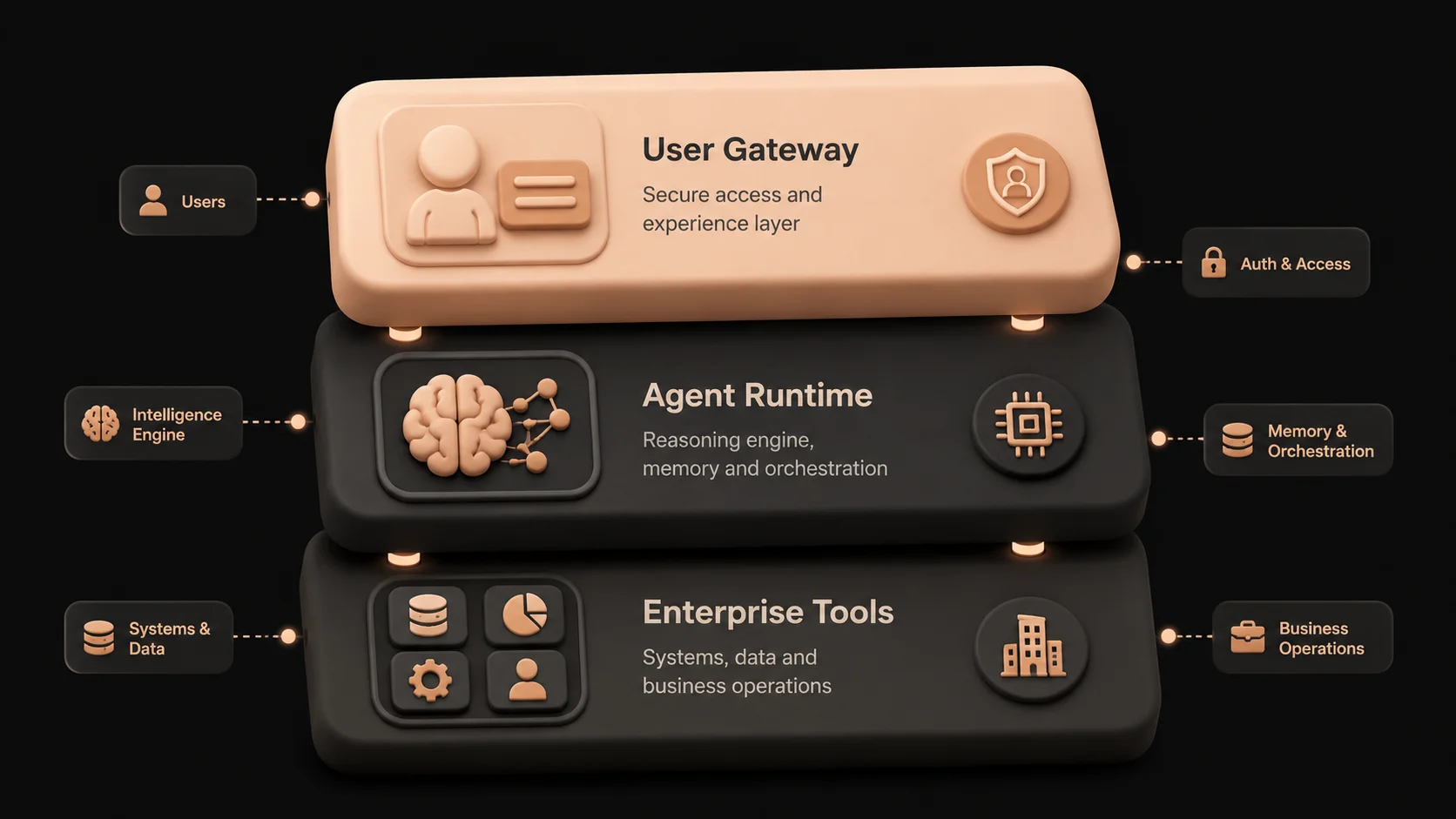
Organizations should avoid embedding AI directly into existing desktop applications wherever possible. Instead, AI capabilities should be introduced through modular architectural layers that preserve separation of concerns.
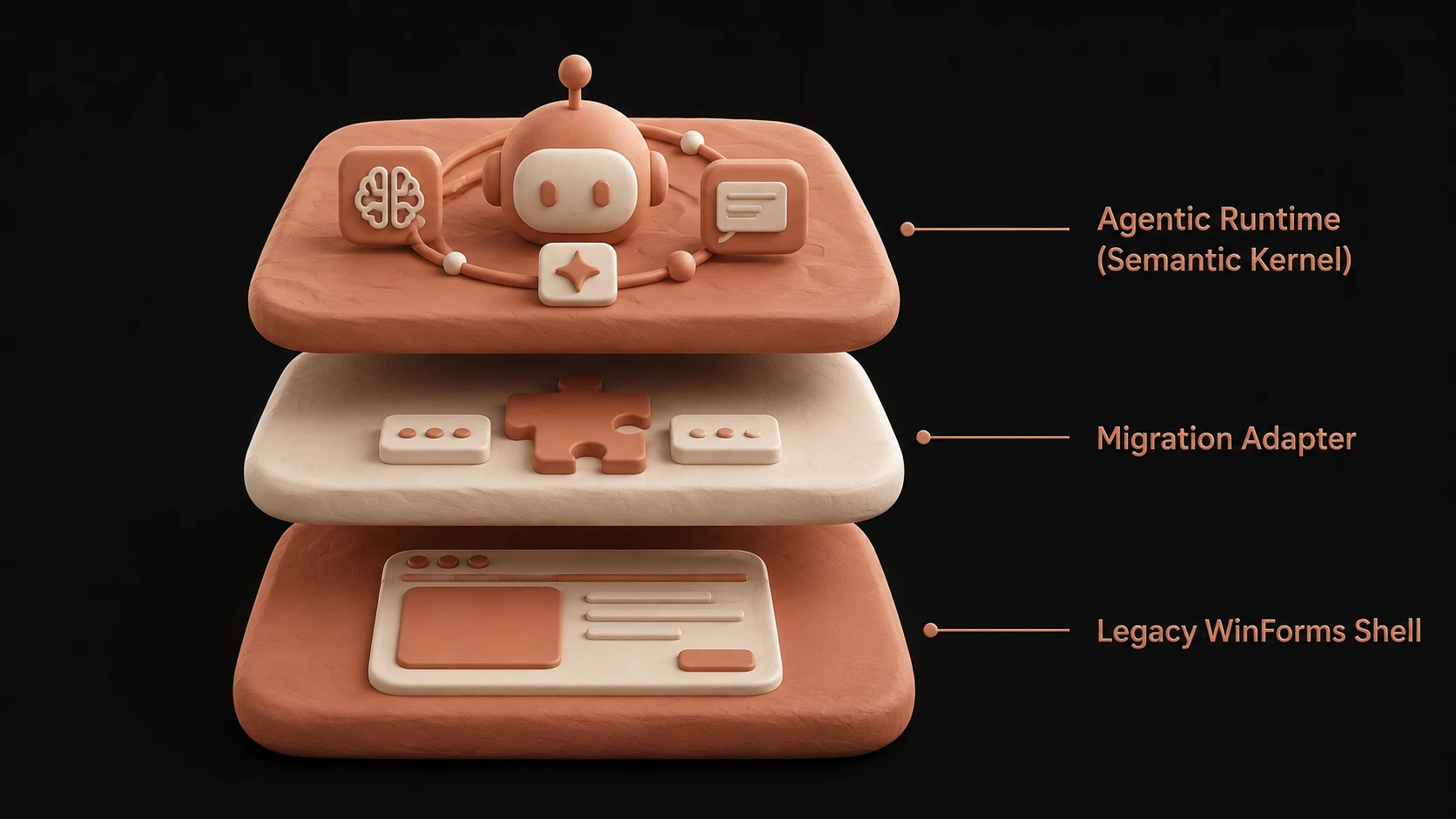
A reference migration architecture includes several logical components:
| Layer | Responsibility |
|---|---|
| User Experience | Desktop, web, mobile, or conversational interfaces |
| Agent Layer | Planning, reasoning, orchestration, memory, and policy enforcement |
| Business Services | Existing .NET business logic exposed as reusable capabilities |
| Integration Layer | Enterprise APIs, messaging, ERP, CRM, document systems |
| Data Layer | SQL Server, Cosmos DB, vector stores, enterprise repositories |
| Governance Layer | Authentication, authorization, auditing, observability, compliance |
One of the most valuable characteristics of mature .NET systems is that business logic is often already organized into service classes, repositories, domain models, or application services. These components can frequently be exposed as reusable capabilities without significant redesign.
Instead of allowing an agent to manipulate databases directly, the preferred approach is to expose carefully governed business operations such as:
- ◆Create customer
- ◆Generate invoice
- ◆Validate purchase order
- ◆Calculate pricing
- ◆Submit approval request
- ◆Retrieve compliance documentation
- ◆Schedule maintenance activity
This approach enables agents to operate using the same business rules that human users rely upon, ensuring consistency across interaction channels.
Migration Principles
Successful migrations are guided by architectural discipline rather than wholesale replacement.
Several principles consistently reduce implementation risk:
Preserve Business Logic
The greatest long-term asset of most enterprise applications is not the user interface but the accumulated business knowledge embedded in the codebase. Validation rules, pricing engines, approval logic, scheduling algorithms, compliance checks, and domain calculations should remain authoritative.
Rather than rewriting these capabilities for AI systems, organizations should expose them as reusable services that both traditional applications and intelligent agents can invoke.
Separate Reasoning from Execution
Large language models excel at interpreting intent, generating plans, and selecting appropriate actions. They should not become the system of record for enterprise business logic.
A sound architecture separates:
- ◆AI reasoning and task decomposition
- ◆Enterprise business execution
- ◆Data persistence
- ◆Policy enforcement
- ◆Security validation
This separation improves maintainability, reduces operational risk, and simplifies compliance reviews.
Build Capability-Oriented Services
Historically, many enterprise APIs mirrored user interface workflows. Agentic systems benefit from APIs designed around business capabilities instead of screens.
For example, rather than exposing operations that represent individual button clicks or page transitions, services should encapsulate complete business actions such as approving a purchase request, generating a financial report, or initiating an onboarding workflow.
Capability-oriented services are easier for both developers and intelligent agents to discover, understand, and compose into larger business processes.
Key Features of a Thick Agent Platform
An enterprise-grade thick agent extends beyond conversational interaction. Core capabilities typically include:
- ◆Goal interpretation and planning
- ◆Enterprise tool invocation
- ◆Workflow orchestration
- ◆Long-running task management
- ◆Business context awareness
- ◆Organizational policy enforcement
- ◆Human approval checkpoints
- ◆Secure credential delegation
- ◆Structured memory for ongoing work
- ◆Comprehensive logging and auditability
These features transform the agent from a simple assistant into a governed execution layer capable of participating in real enterprise operations.
How It Works
A typical request begins with a business objective rather than a sequence of manual actions.
For example, a sales manager may request that all pending enterprise renewal opportunities be reviewed, prioritized, summarized, and prepared for executive approval.
Rather than navigating multiple application screens manually, the intelligent agent interprets the objective, identifies the required business capabilities, invokes the appropriate .NET services, gathers supporting information, applies organizational policies, and prepares the necessary outputs for human review.
Throughout this process, every business operation continues to flow through established enterprise services, ensuring that existing validation rules, authorization checks, and audit mechanisms remain fully enforced.
Enterprise Use Cases
Enterprise adoption should begin with high-value scenarios where intelligent agents complement existing workflows without replacing critical governance processes.
Examples include:
- ◆Automated customer onboarding coordination
- ◆Intelligent incident triage and routing
- ◆Financial document preparation
- ◆Internal knowledge discovery
- ◆IT service request orchestration
- ◆Procurement assistance
- ◆Compliance evidence collection
- ◆Contract lifecycle coordination
- ◆Sales opportunity preparation
- ◆Executive reporting automation
Each of these scenarios benefits from combining AI-driven reasoning with established .NET business services, allowing organizations to increase productivity while maintaining operational control.
Performance Considerations
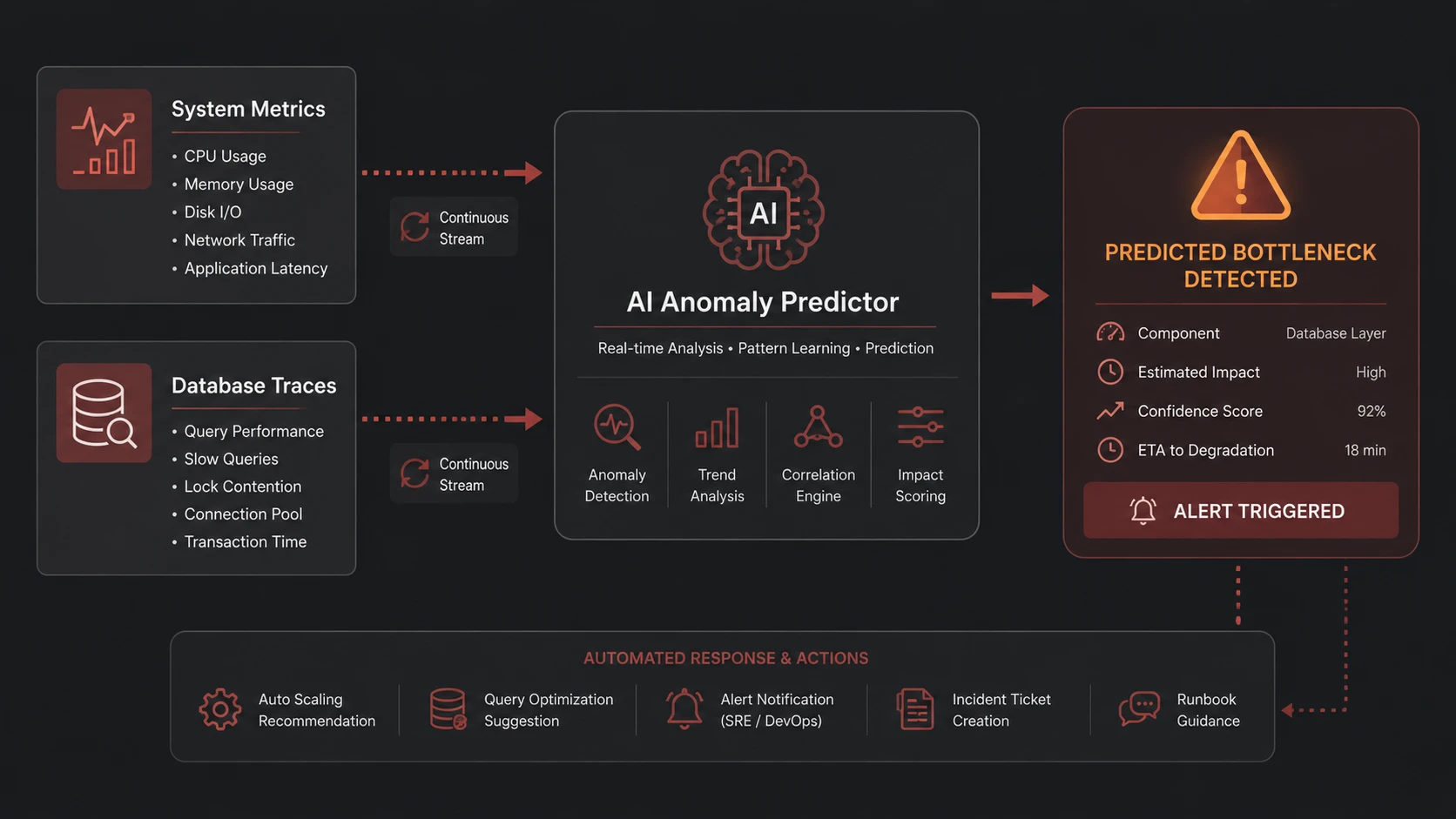
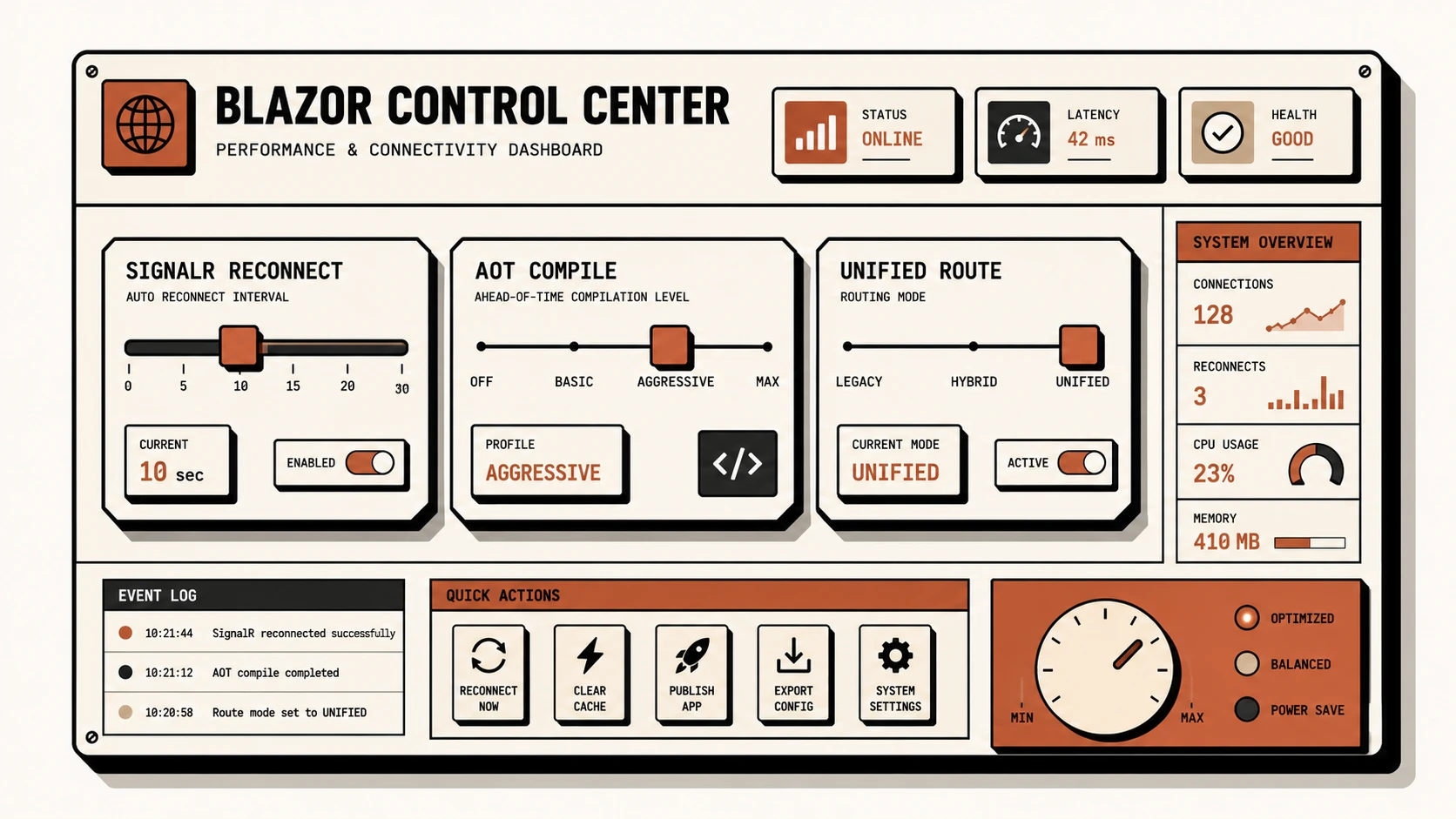
As organizations transition from thick clients to thick agents, performance characteristics evolve significantly. Traditional desktop applications optimize for responsive user interfaces and localized processing, whereas agentic platforms prioritize orchestration efficiency, service responsiveness, and database query latency.
Enterprise architects should evaluate performance across several dimensions:
| Component | Traditional Focus | Agent-Oriented Focus |
|---|---|---|
| UI | Rendering speed | Minimal dependency |
| Business Services | Transaction latency | Concurrent execution |
| APIs | Request throughput | Tool invocation efficiency |
| AI Models | Not applicable | Response quality vs. latency |
| Data Access | Query optimization | Context retrieval efficiency |
| Messaging | Optional | Core orchestration mechanism |
Long-running AI workflows should be asynchronous wherever possible. Rather than blocking user interactions, enterprise agents should initiate background operations, provide progress updates, and notify users upon completion.
Caching strategies also become increasingly valuable. Frequently accessed reference data, organizational policies, product catalogs, and configuration metadata should be cached close to the orchestration layer to minimize unnecessary database access.
Another important consideration is context size. As enterprise agents interact with multiple systems, excessive contextual information can increase response latency and operational costs. Context should be curated dynamically based on task relevance instead of simply accumulating historical information.
Security Considerations
Introducing autonomous software agents expands the security model of the enterprise beyond traditional user authentication.
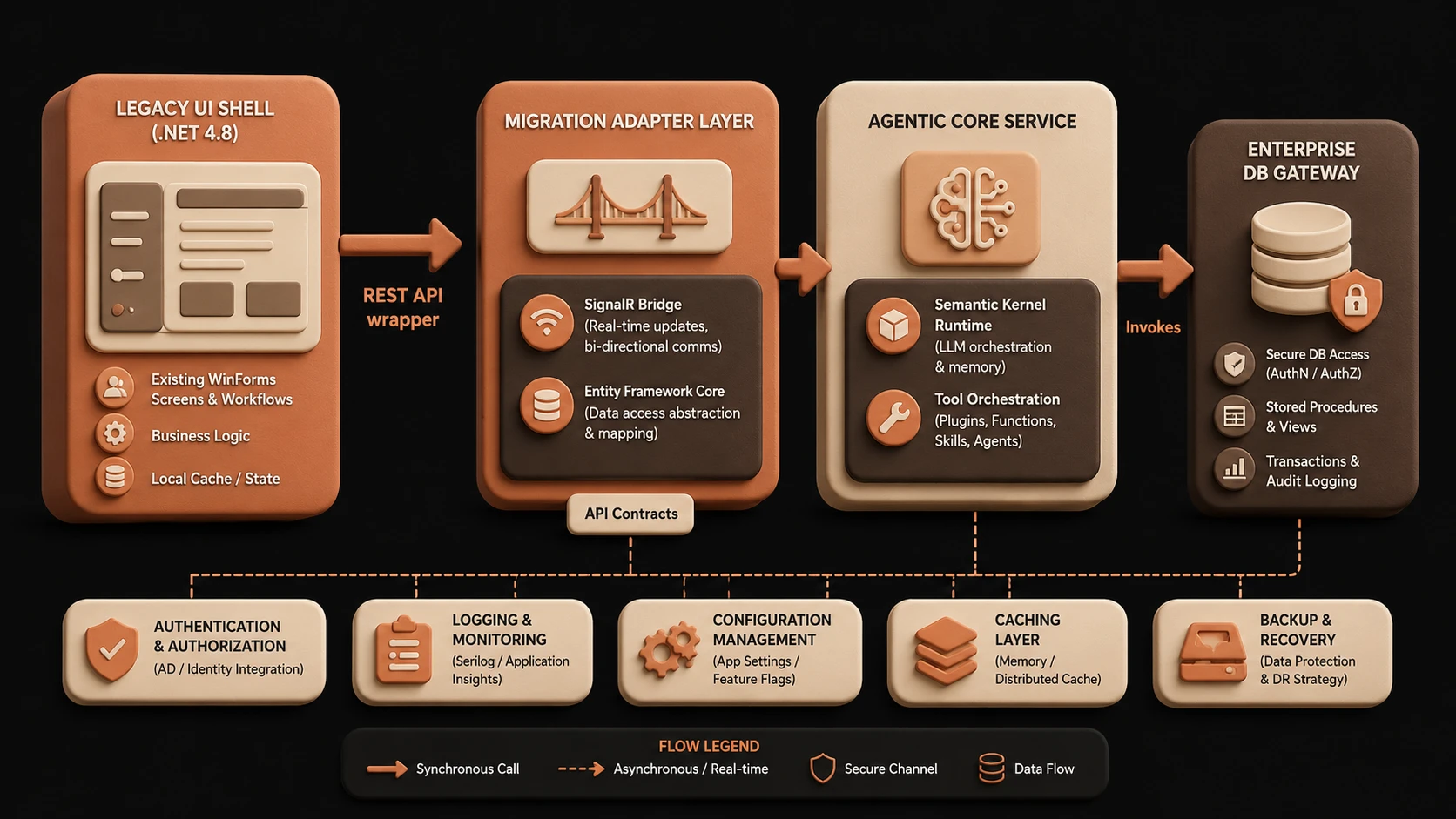
Architecture migration path from client-side desktop programs to remote agentic nodes.
Rather than authenticating only employees, organizations must authenticate and authorize intelligent agents acting on behalf of users or business processes.
Key security principles include:
- ◆Principle of least privilege
- ◆Explicit tool authorization
- ◆Secure credential delegation
- ◆End-to-end auditing
- ◆Approval workflows for sensitive operations
- ◆Encryption for data in transit and at rest
- ◆Secret management through centralized vaults
- ◆Continuous monitoring
Every tool invocation should be considered equivalent to an API request initiated by an authenticated enterprise identity.
Instead of allowing unrestricted access to enterprise systems, agents should receive narrowly scoped permissions appropriate to their assigned responsibilities.
For example:
| Agent | Allowed Operations |
|---|---|
| HR Agent | Employee records, onboarding workflows |
| Finance Agent | Invoice processing, payment reconciliation |
| IT Operations Agent | Incident management, infrastructure monitoring |
| Customer Support Agent | CRM updates, ticket management |
Segregation of duties remains equally important. An agent capable of generating purchase orders should not automatically approve payments unless organizational policy explicitly permits that workflow.
Comprehensive audit logging becomes even more valuable because AI-generated decisions may require retrospective analysis during compliance reviews.
Scalability
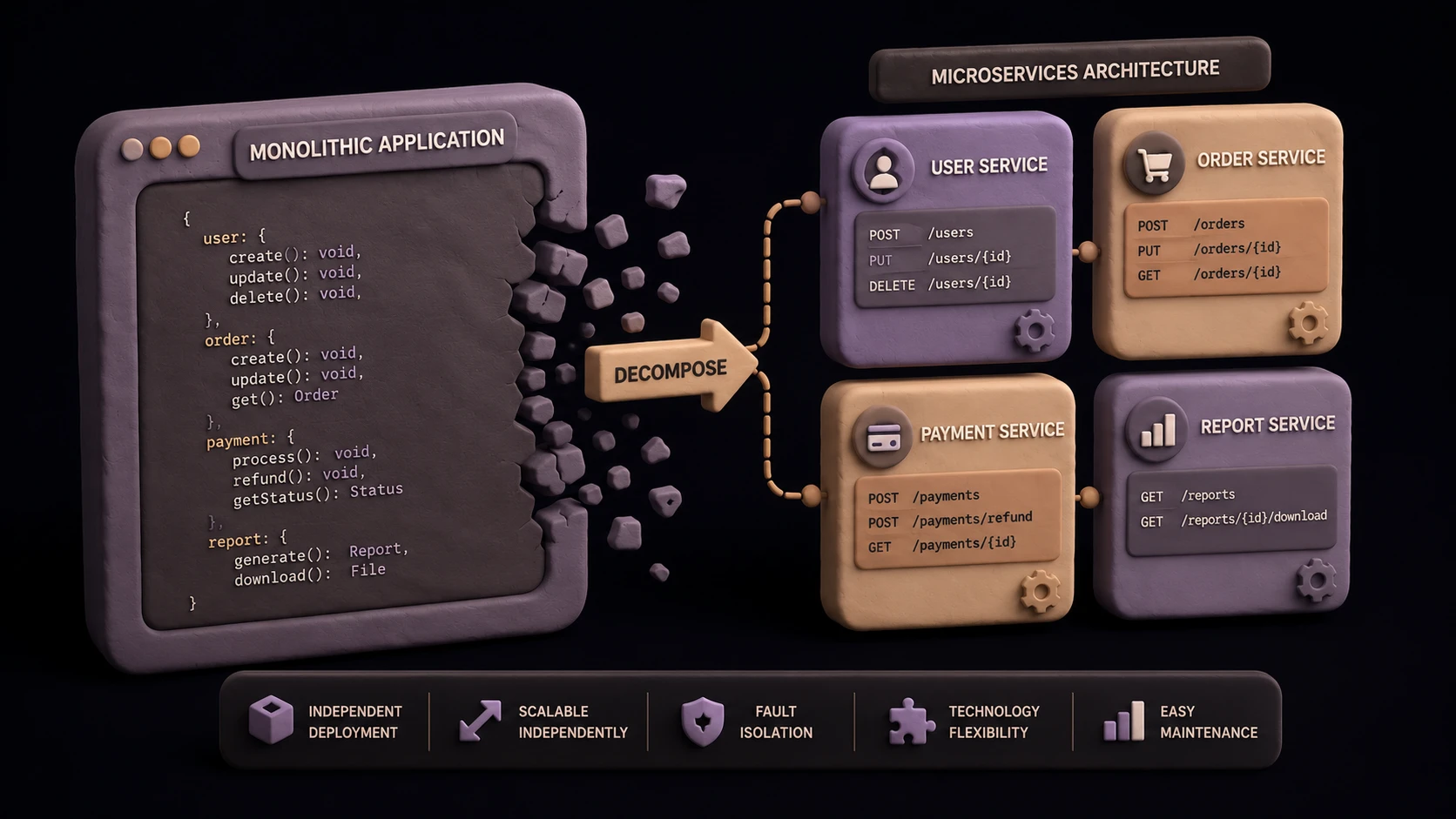
One advantage of capability-oriented architectures is their ability to scale independently.
Traditional desktop systems often scale vertically by increasing server resources supporting centralized databases.
Agentic systems benefit from horizontal scaling across multiple layers:
- ◆API gateways
- ◆AI inference endpoints
- ◆Workflow engines
- ◆Messaging infrastructure
- ◆Background workers
- ◆Vector databases
- ◆Retrieval services
Because business capabilities are exposed through independent services, organizations can scale heavily utilized functions without affecting unrelated workloads.
For example, during quarterly financial reporting, reporting agents may generate thousands of analytical summaries while inventory management services remain unaffected.
Queue-based orchestration further improves scalability by allowing workloads to be distributed dynamically among available execution nodes.
Best Practices
Organizations pursuing .NET modernization should establish architectural guidelines early in the migration process.
Recommended practices include:
Preserve Domain Models
Existing domain models often represent years of accumulated business expertise. Avoid rewriting them solely for AI integration.
Expose Stable Business Capabilities
Agents should consume well-defined business services rather than interacting directly with databases or user interface components.
Keep AI Stateless Where Possible
Persistent business state should remain inside enterprise systems of record. Agent memory should primarily contain conversational context, planning information, and temporary execution state.
Separate Planning from Execution
Reasoning engines determine *what* should happen.
Enterprise services determine *how* it happens.
Maintaining this separation improves testing, governance, and maintainability.
Design for Human Oversight
Autonomous execution should not eliminate human approval.
High-impact operations should include configurable approval checkpoints.
Instrument Everything
Observability is essential.
Organizations should capture:
- ◆Tool invocations
- ◆Planning decisions
- ◆Execution duration
- ◆Service latency
- ◆Approval events
- ◆Error conditions
- ◆Policy violations
This operational telemetry becomes invaluable for debugging and continuous optimization.
Common Mistakes
Several architectural anti-patterns frequently emerge during early AI adoption initiatives.
Embedding Business Logic Inside Prompts
Business rules belong in deterministic .NET services rather than prompt instructions.
Policies expressed only in prompts are difficult to audit, maintain, and version.
Direct Database Access by Agents
Agents should never bypass established business services simply because direct SQL access appears simpler.
Business validation, auditing, and authorization are often implemented within application services rather than the database itself.
Overly Broad Tool Permissions
Providing unrestricted access increases operational risk.
Capability-specific permissions are significantly easier to govern.
Treating AI as a Replacement for Architecture
AI improves software capabilities but does not eliminate the need for sound engineering practices.
Layered architectures, testing strategies, versioning, and operational governance remain fundamental.
Ignoring Failure Scenarios
Enterprise agents should gracefully handle:
- ◆Service outages
- ◆Timeout conditions
- ◆Partial failures
- ◆Invalid responses
- ◆Missing information
- ◆Human rejection of proposed actions
Robust recovery mechanisms are as important as successful execution paths.
Technology Comparison
| Approach | Advantages | Limitations |
|---|---|---|
| Traditional Thick Client | Mature, responsive, proven | Limited automation capabilities |
| Web Application | Broad accessibility | Human-driven workflows |
| API-First Architecture | Reusable services | Requires orchestration layer |
| Copilot Integration | Improves productivity | Typically user initiated |
| Thick Agent Platform | Autonomous execution, workflow coordination, enterprise intelligence | Requires governance, orchestration, and operational maturity |
Each architecture addresses different organizational requirements.
For many enterprises, thick agents represent an evolution rather than a replacement of existing investments.
Adoption Strategy
Successful migrations typically occur incrementally rather than through large-scale rewrites.
A practical roadmap consists of several phases:
| Phase | Objective |
|---|---|
| Assessment | Inventory business capabilities and dependencies |
| Service Extraction | Expose reusable .NET services |
| API Standardization | Establish consistent contracts |
| AI Integration | Introduce reasoning and orchestration |
| Governance | Implement approval workflows and auditing |
| Enterprise Rollout | Expand to additional business domains |
Early projects should focus on measurable productivity improvements with limited operational risk.
Suitable pilot initiatives include:
- ◆Knowledge retrieval
- ◆Internal documentation assistance
- ◆Meeting preparation
- ◆Reporting automation
- ◆Service desk augmentation
Success in these controlled environments builds organizational confidence before expanding toward higher-value autonomous workflows.
Limitations
Although thick agents provide significant opportunities, they are not universally applicable.
Current challenges include:
- ◆Model latency
- ◆Inference cost
- ◆Hallucination risk
- ◆Regulatory requirements
- ◆Explainability expectations
- ◆Organizational governance maturity
- ◆Integration complexity
- ◆Operational monitoring overhead
Enterprises should therefore view intelligent agents as collaborators operating within well-defined boundaries rather than unrestricted decision-makers.
Establishing clear escalation paths to human experts remains an important architectural consideration.
Looking Ahead
Enterprise software is entering a period where applications increasingly expose business capabilities instead of solely presenting graphical interfaces.
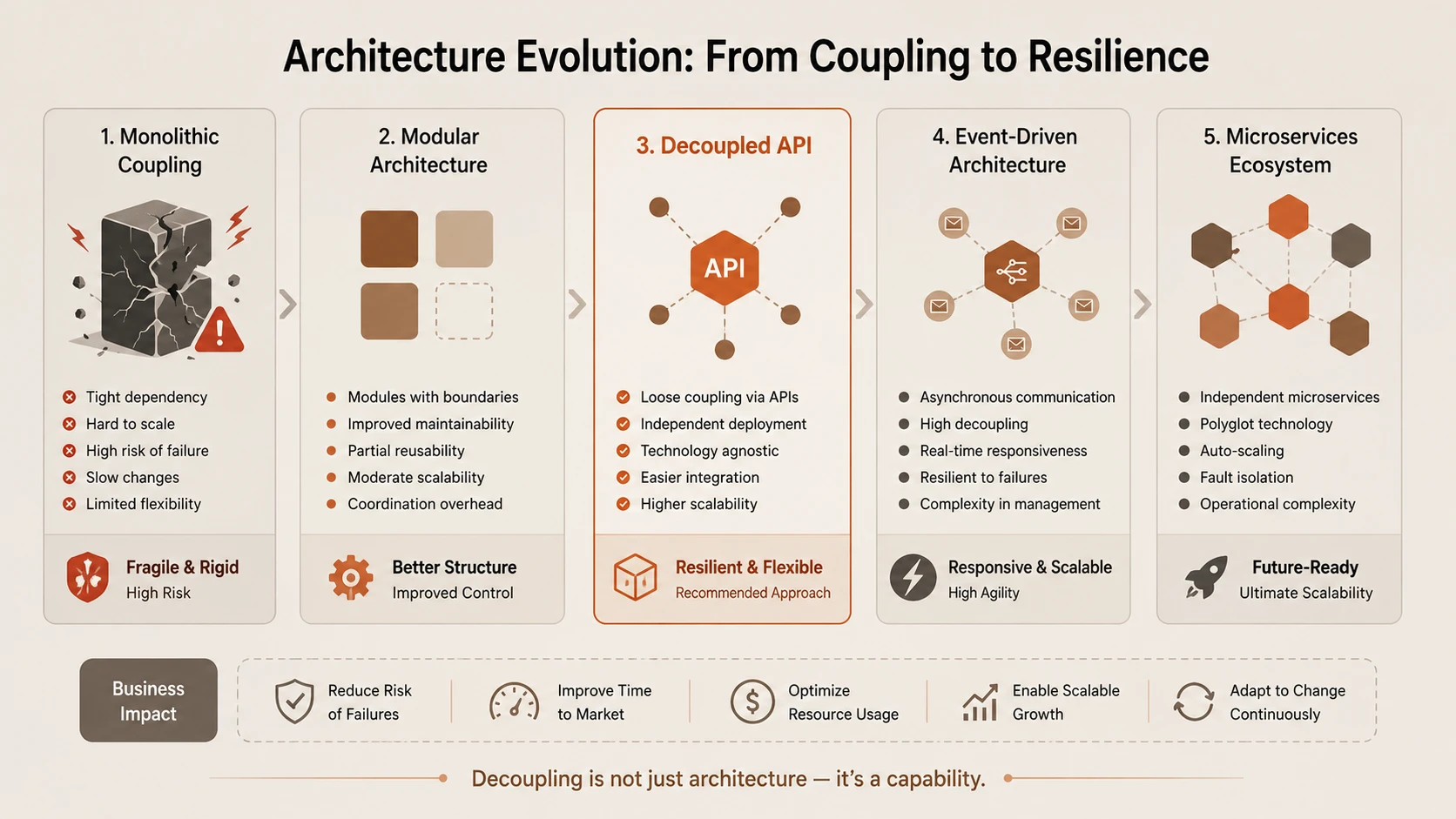
The evolution from thick clients to thick agents represents a continuation of long-standing architectural trends toward service orientation, cloud-native platforms, and intelligent automation.
For organizations invested in the .NET ecosystem, this transition does not require abandoning proven systems. Instead, it encourages a disciplined approach that elevates existing business logic into reusable enterprise capabilities while introducing AI-powered orchestration as a complementary execution layer.
The organizations most likely to succeed will be those that modernize incrementally, preserve domain expertise, establish strong governance, and design architectures where humans and intelligent agents collaborate effectively.
Rather than viewing AI agents as replacements for enterprise applications, architects should recognize them as a new interaction model built upon the strengths of existing .NET platforms. By following a structured migration strategy, enterprises can unlock new productivity gains while maintaining the reliability, security, and operational discipline that mission-critical software demands.