Introduction
Legacy systems continue to power many of the world's largest enterprises. Banking platforms, manufacturing execution systems, healthcare applications, government services, insurance platforms, ERP environments, and retail back-office systems often represent decades of accumulated business knowledge and operational reliability.
Despite their proven stability, these systems frequently present challenges for organizations pursuing digital transformation. Increasing customer expectations, cloud adoption, API-first integration, cybersecurity requirements, analytics initiatives, and faster software delivery cycles expose limitations in monolithic architectures that were never designed for today's distributed computing environments.
Modernization should not be viewed simply as replacing old software with new technology. Successful modernization balances business continuity, operational risk, technical debt reduction, and long-term architectural flexibility. In many situations, incremental modernization provides greater business value than large-scale replacement initiatives.
As of January 2023, organizations increasingly recognize modernization as an ongoing architectural capability rather than a one-time migration project.
Industry Background
Several industry trends continue driving modernization initiatives:
- ◆Hybrid cloud adoption
- ◆API-first architectures
- ◆Kubernetes and container orchestration
- ◆DevSecOps
- ◆Continuous Delivery
- ◆Event-driven integration
- ◆Enterprise automation
- ◆Data modernization
Organizations increasingly seek architectures that improve agility while preserving mission-critical business functionality.
The Business Problem
Legacy systems frequently introduce:
- ◆High maintenance costs
- ◆Slow release cycles
- ◆Tight coupling
- ◆Limited integration capabilities
- ◆Vendor lock-in
- ◆Aging infrastructure
- ◆Difficult scalability
- ◆Limited observability
Replacing these systems outright often introduces unacceptable operational and financial risk.
Understanding Legacy Modernization
Modernization focuses on evolving existing business capabilities without unnecessarily disrupting core operations.
Typical objectives include:
- ◆Reducing technical debt
- ◆Improving maintainability
- ◆Increasing deployment flexibility
- ◆Supporting cloud platforms
- ◆Enhancing security
- ◆Accelerating software delivery
Modernization initiatives should prioritize business outcomes rather than technology replacement alone.
Core Architecture
| Component | Responsibility |
|---|---|
| Legacy Business Systems | Existing mission-critical capabilities |
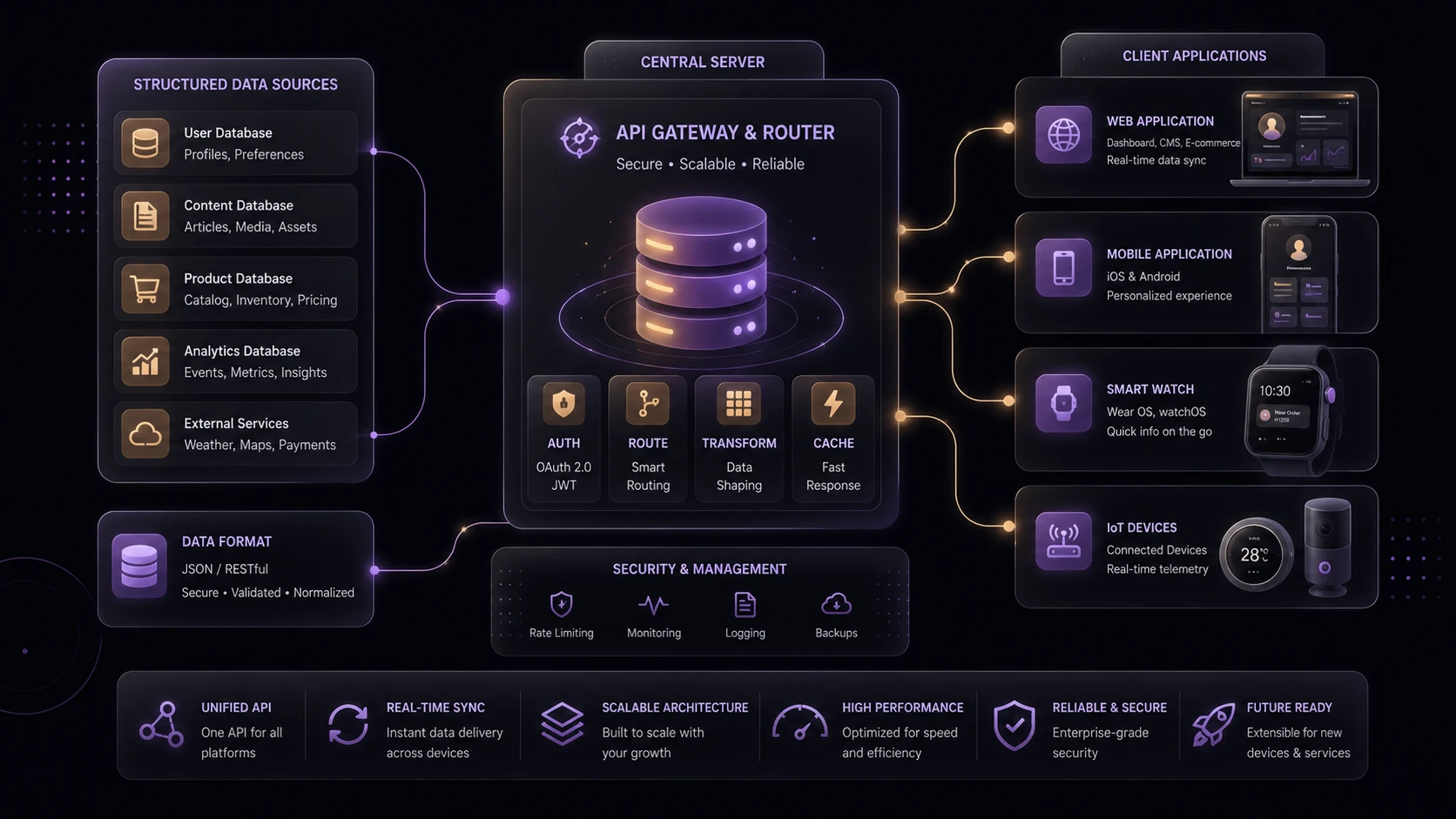
| API Layer | Standardized service access |
| Integration Platform | Connects modern and legacy applications |
| Cloud Infrastructure | Hosts modern workloads |
| Data Platform | Synchronizes operational data |
| Monitoring Platform | Provides visibility across environments |
| DevSecOps Pipeline | Automates delivery and governance |
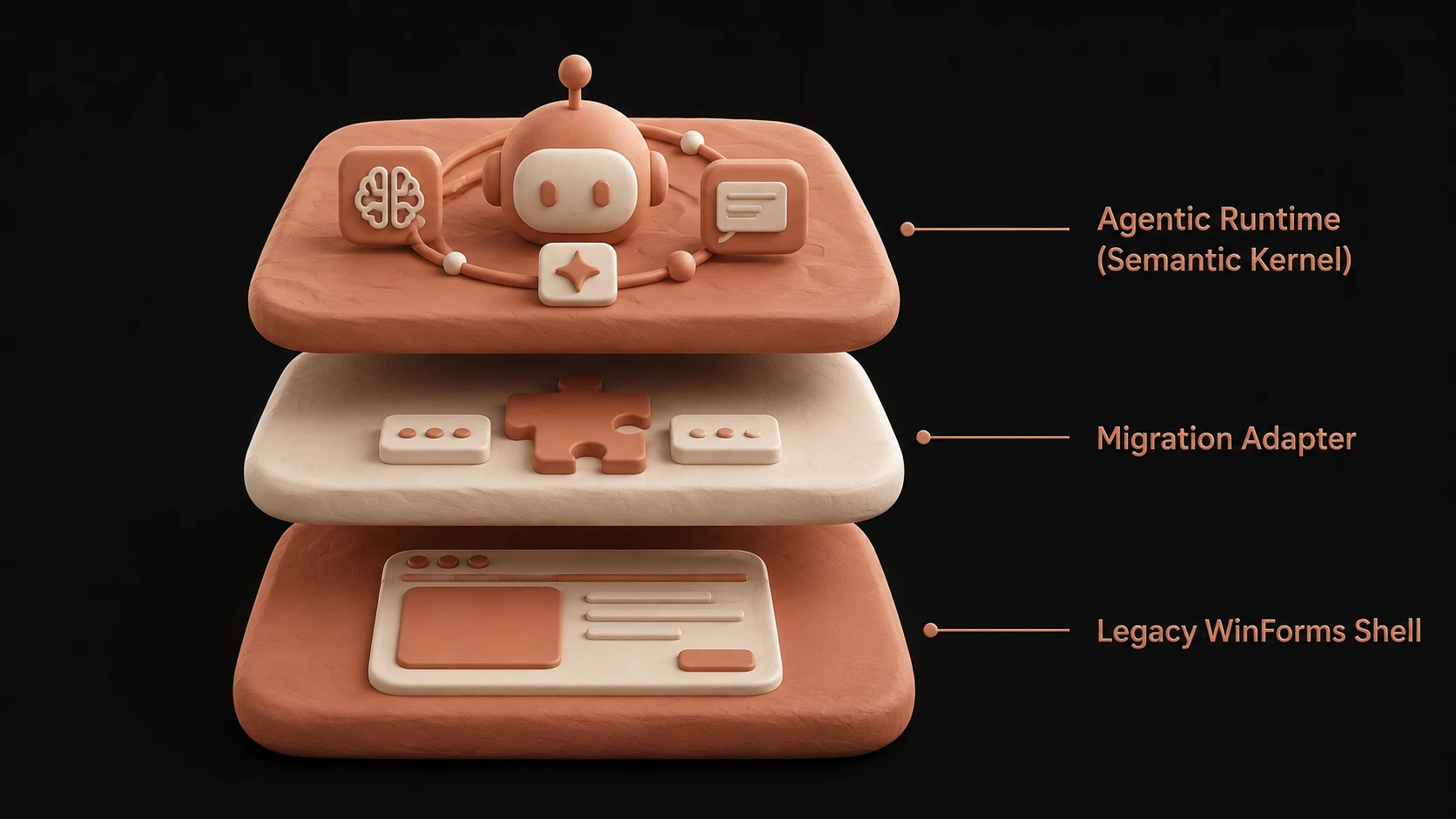
Together these components enable organizations to modernize incrementally while preserving operational continuity.
Modernization Patterns
Enterprise modernization generally follows several established architectural patterns.
Rehost
Applications move to newer infrastructure with minimal code changes.
Potential benefits include:
- ◆Faster migration
- ◆Reduced infrastructure costs
- ◆Lower operational disruption
This approach typically serves as an initial modernization step rather than a complete transformation.
Replatform
Applications adopt newer platform capabilities while preserving core business functionality.
Examples include:
- ◆Managed databases
- ◆Container platforms
- ◆Modern operating systems
- ◆Platform services
Replatforming improves operational efficiency without requiring complete application redesign.
Refactor
Specific application components are redesigned to improve maintainability or scalability.
Typical targets include:
- ◆Authentication
- ◆Reporting
- ◆Notification services
- ◆Integration components
- ◆API layers
Refactoring reduces technical debt while preserving business functionality.
Replace
Certain legacy capabilities are substituted with commercial or newly developed solutions.
Organizations should reserve replacement for situations where measurable business value justifies migration risk.
The Strangler Fig Pattern
# Nginx reverse proxy configuration routing traffic for Strangler Fig migration
upstream legacy_system {
    server legacy.shivamitcs.internal:8080;
}

upstream modern_microservice {
    server api.modern.shivamitcs.internal:3000;
}

server {
    listen 80;
    server_name app.shivamitcs.com;

    # Route /api/v2/ traffic to the modern rewritten service
    location /api/v2/ {
        proxy_pass http://modern_microservice;
    }

    # Fallback all legacy traffic to the old monolith service
    location / {
        proxy_pass http://legacy_system;
    }
}
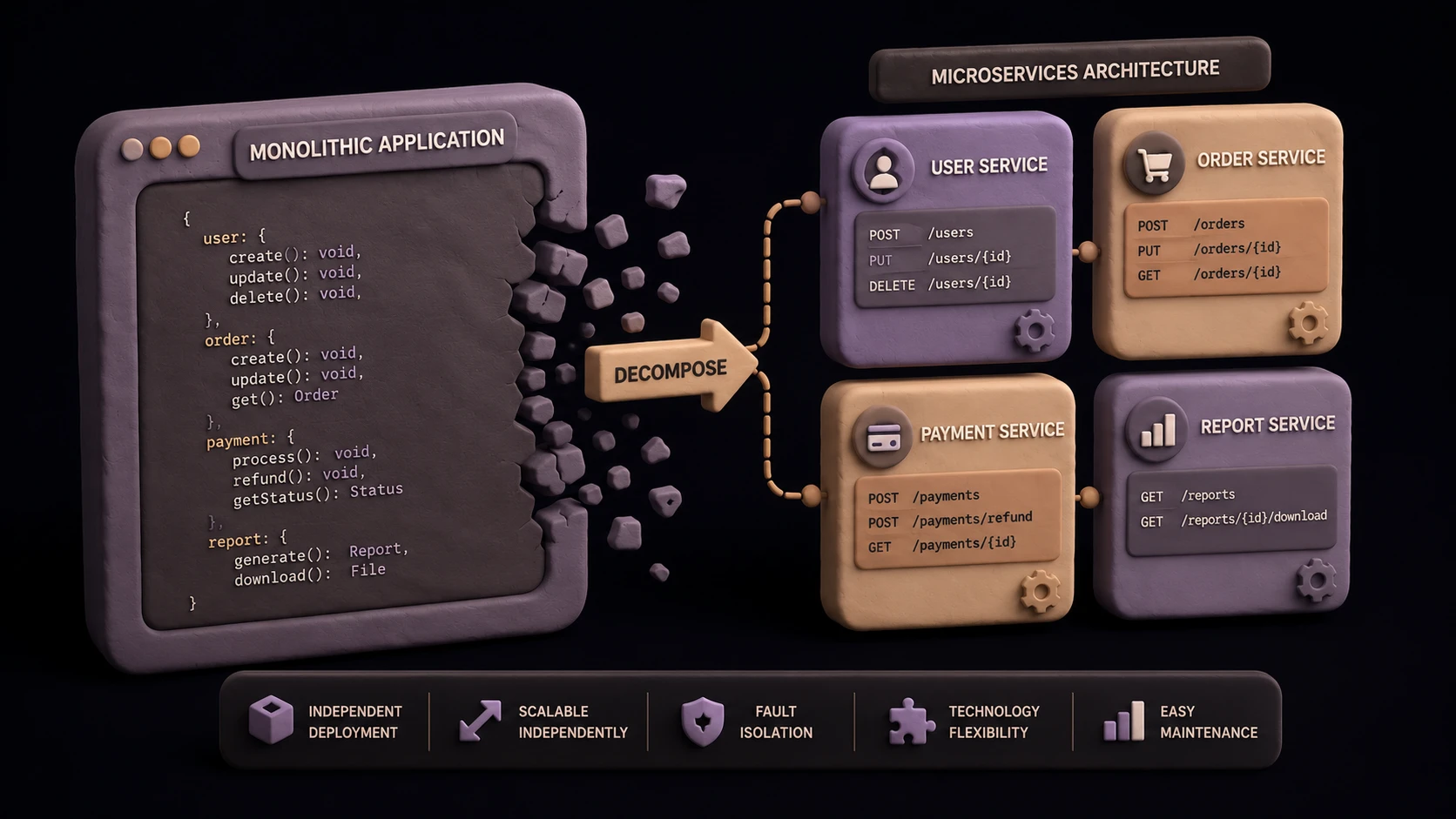
One of the most widely adopted modernization strategies involves gradually replacing functionality around an existing system.
Typical workflow:
- 1.Existing application continues operating.
- 2.New capabilities are implemented externally.
- 3.Traffic is routed selectively.
- 4.Legacy functionality is retired incrementally.
- 5.The original application gradually shrinks.
This approach reduces migration risk while allowing continuous delivery of business value.
API-First Modernization
Many organizations begin modernization by introducing APIs around existing systems.
Potential advantages include:
- ◆Standardized integration
- ◆Improved interoperability
- ◆Better partner access
- ◆Reduced application coupling
- ◆Simplified future migrations
APIs often become the foundation for broader architectural evolution.
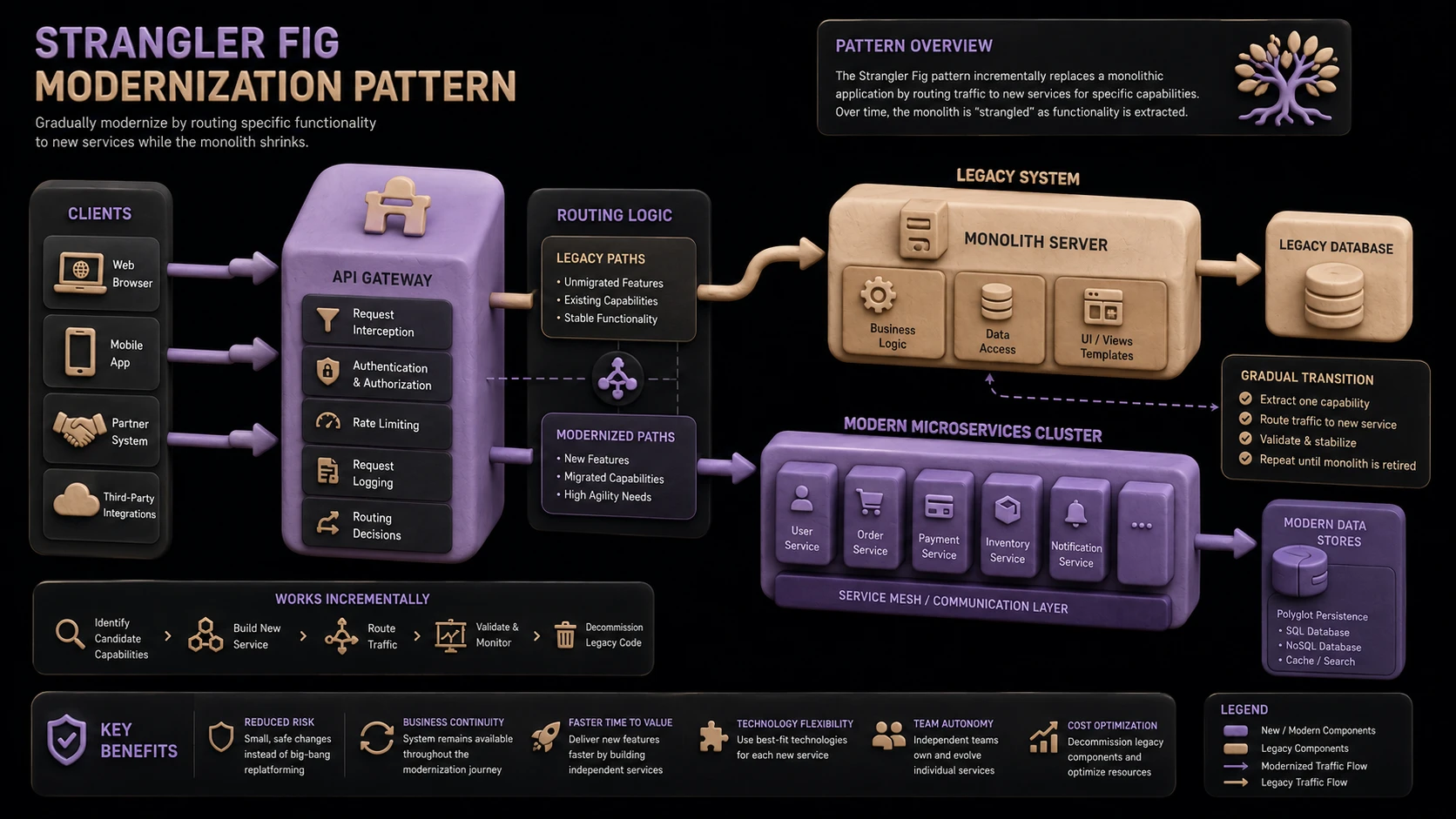
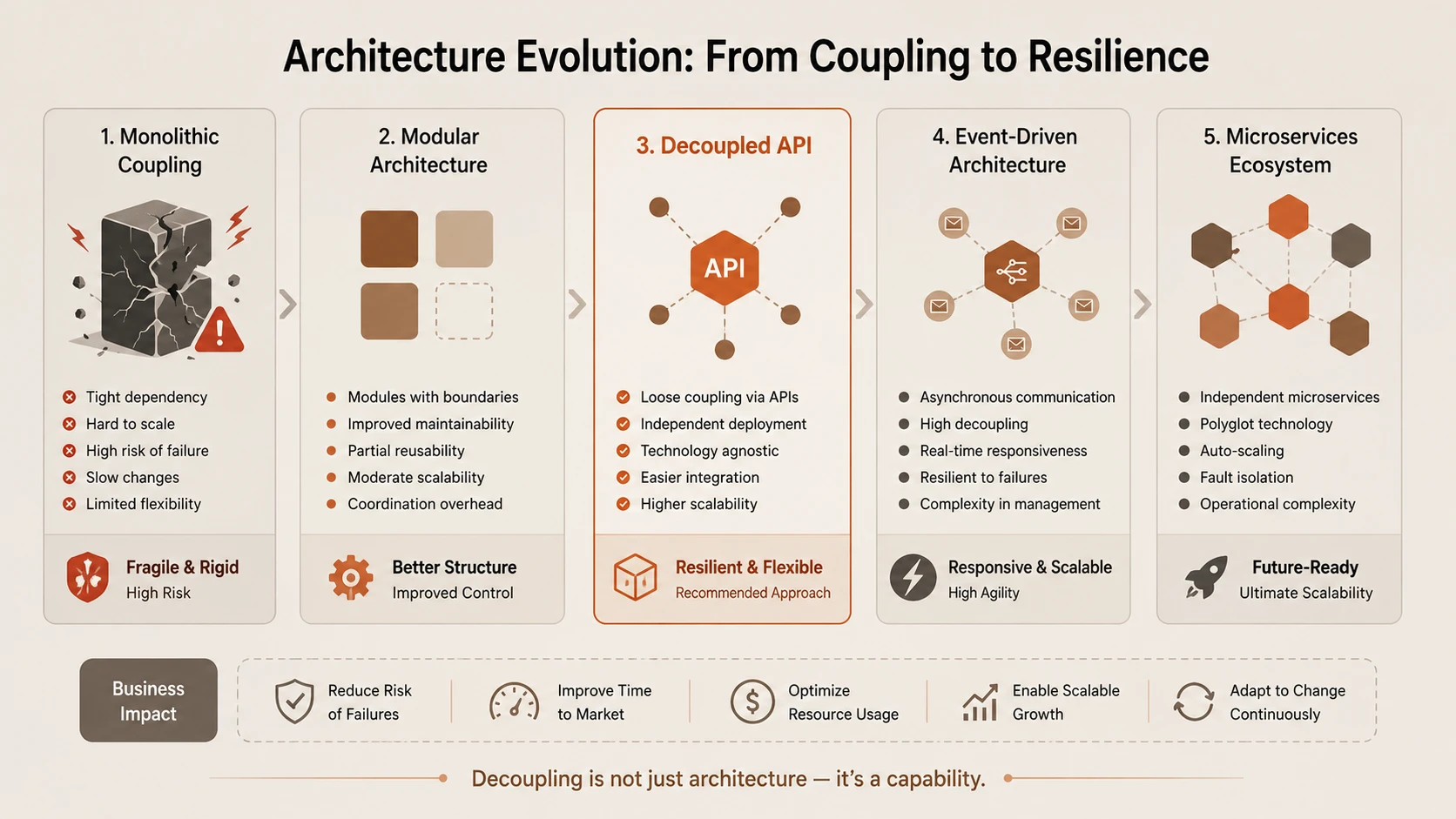
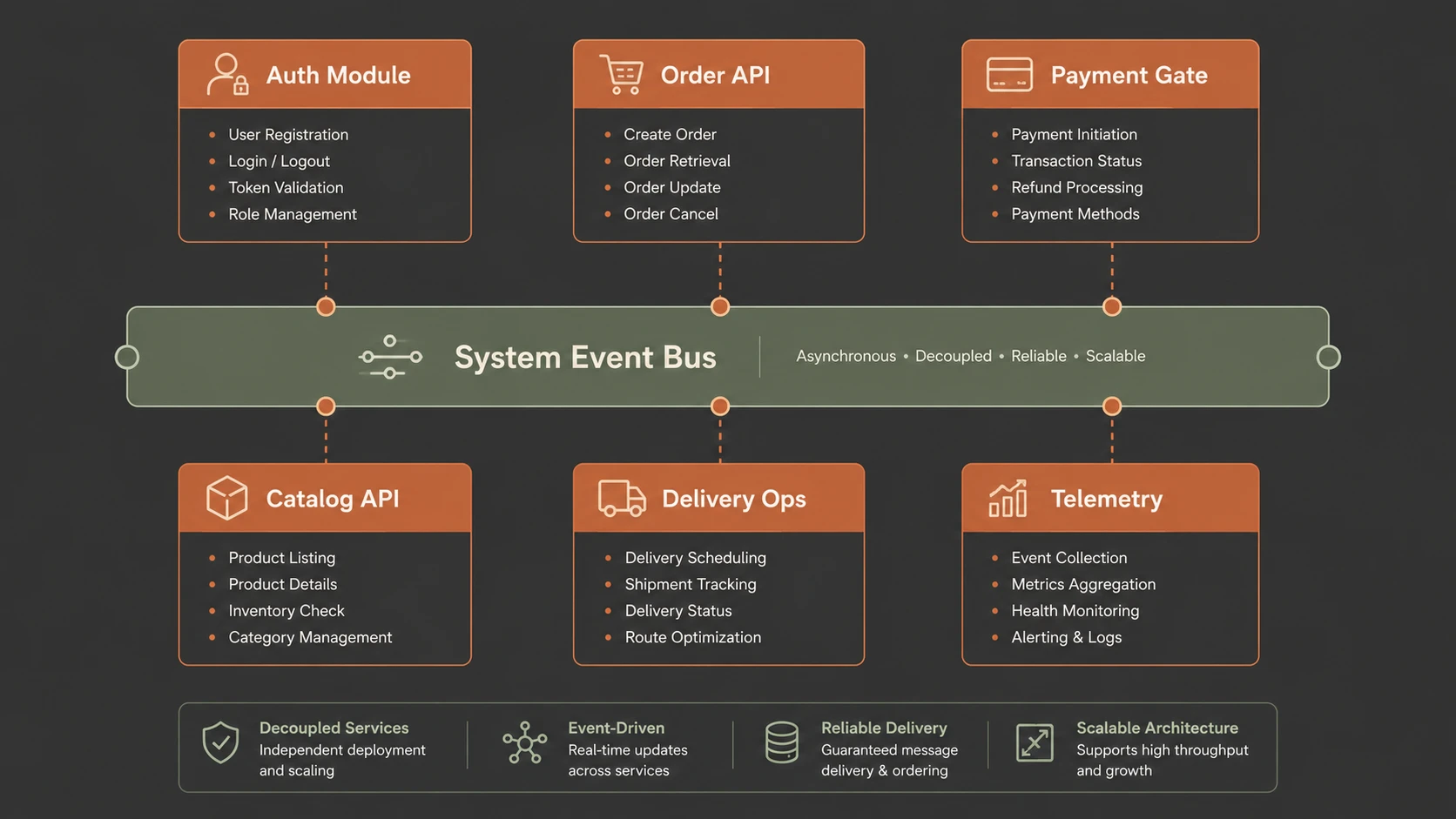
System architecture diagram and conceptual workflow layout for Rethinking Legacy Systems with Modernization Patterns.
Containerization
Container technologies increasingly support modernization efforts.
Potential benefits include:
- ◆Consistent deployments
- ◆Infrastructure portability
- ◆Automated scaling
- ◆Simplified operational management
Not every legacy application benefits equally from containerization, so suitability should be evaluated individually.
Data Modernization
Application modernization frequently depends upon data strategy.
Organizations should evaluate:
- ◆Data synchronization
- ◆Master data governance
- ◆Data quality
- ◆Backup strategies
- ◆Analytics integration
Business continuity depends upon preserving data integrity throughout modernization.
DevSecOps Integration
Modernization initiatives increasingly integrate:
- ◆Source control
- ◆Automated testing
- ◆Continuous Integration
- ◆Continuous Delivery
- ◆Security scanning
- ◆Infrastructure automation
Automation reduces deployment risk while improving delivery consistency.
Enterprise Use Cases
| Scenario | Benefit |
|---|---|
| Banking Systems | Incremental digital transformation |
| Manufacturing Platforms | Modern API integration |
| Government Services | Reduced infrastructure dependency |
| Healthcare Applications | Improved interoperability |
| Retail Platforms | Modern customer-facing services |
| ERP Modernization | Controlled architectural evolution |
Organizations can modernize according to business priorities rather than technology timelines.
Performance Considerations
Modernization projects should benchmark:
- ◆Application response time
- ◆API latency
- ◆Database performance
- ◆Infrastructure utilization
- ◆Deployment duration
- ◆Operational costs
Performance improvements should be validated using representative production workloads.
Security Considerations
Modernization provides opportunities to strengthen security through:
- ◆Identity federation
- ◆Multi-factor authentication
- ◆API security
- ◆Secrets management
- ◆Encryption
- ◆Centralized logging
- ◆Least privilege access
Security improvements should be incorporated throughout modernization rather than postponed until project completion.
Scalability
Modern architectures improve scalability through:
- ◆Stateless application services
- ◆Horizontal scaling
- ◆Cloud infrastructure
- ◆Event-driven communication
- ◆Distributed workloads
Scalability planning should align with expected business growth and operational requirements.
Best Practices
Organizations modernizing legacy systems should:
- ◆Establish measurable business objectives.
- ◆Inventory applications and dependencies.
- ◆Prioritize high-value modernization opportunities.
- ◆Modernize incrementally.
- ◆Build APIs before replacing functionality.
- ◆Automate testing and deployment.
- ◆Monitor operational metrics continuously.
- ◆Maintain strong governance throughout the transformation.
Incremental delivery reduces risk while allowing organizations to realize value throughout the modernization journey.
Common Mistakes
Organizations should avoid:
- ◆Treating modernization as purely a technology initiative.
- ◆Rewriting stable systems without measurable business justification.
- ◆Ignoring data migration planning.
- ◆Underestimating integration complexity.
- ◆Attempting organization-wide transformation in a single project.
- ◆Neglecting operational training and change management.
Successful modernization depends on balancing technical improvements with business continuity.
Technology Comparison
| Approach | Complexity | Business Risk | Typical Outcome |
|---|---|---|---|
| Rehost | Low | Low | Infrastructure modernization |
| Replatform | Moderate | Moderate | Platform modernization |
| Refactor | Moderate to High | Moderate | Improved architecture |
| Replace | High | High | New business platform |
| Strangler Pattern | Incremental | Lower than full replacement | Progressive modernization |
Selecting the appropriate strategy depends on business objectives, technical constraints, operational maturity, and long-term architectural goals.
Adoption Strategy
Organizations should approach modernization through structured phases.
A practical roadmap includes:
- 1.Assess application portfolios.
- 2.Classify systems according to business value and technical complexity.
- 3.Define modernization priorities.
- 4.Introduce APIs and integration layers.
- 5.Modernize infrastructure where appropriate.
- 6.Incrementally refactor business capabilities.
- 7.Continuously measure operational and business outcomes.
A phased strategy enables organizations to reduce technical debt while maintaining operational stability.
Limitations
As of January 2023, organizations should recognize several considerations.
Current observations include:
- ◆Not every legacy application requires complete modernization.
- ◆Business continuity should remain the primary decision factor.
- ◆Modernization frequently requires organizational, operational, and cultural change alongside technology evolution.
- ◆Long-term success depends upon governance, architecture discipline, and measurable business outcomes.
Modernization should therefore be viewed as a continuous capability that evolves alongside enterprise priorities.
Looking Ahead
As of January 2023, legacy modernization has become a strategic capability rather than a reactive technology project. Organizations are increasingly combining API-first integration, cloud platforms, containerization, DevSecOps, and incremental architectural patterns to extend the value of existing systems while preparing for future business demands.
For enterprise architects, CTOs, engineering managers, and technical leaders, the objective is not simply replacing legacy software but creating adaptable technology platforms that support continuous innovation without compromising operational reliability. Organizations that modernize incrementally, align technology decisions with business priorities, and maintain disciplined architectural governance will be better positioned to evolve their enterprise systems over the coming years.