Introduction
Enterprise application development has evolved significantly over the past decade. Organizations once focused on delivering responsive websites, followed by native mobile applications. Today, digital experiences extend far beyond traditional platforms. Customers interact with businesses through web applications, Android and iOS apps, smart watches, smart TVs, kiosks, voice assistants, IoT devices, in-car systems, and increasingly, AI-powered conversational assistants.
Developing separate backend systems for every client platform quickly becomes expensive, difficult to maintain, and operationally inefficient. Duplicate business logic, inconsistent APIs, fragmented authentication systems, and repeated integrations create unnecessary engineering overhead while slowing product delivery.
By early 2024, Multi-Experience Development has become a strategic architectural pattern. Rather than building independent applications for every device, organizations increasingly develop centralized API-driven backend platforms capable of supporting multiple user experiences simultaneously.
This architectural approach enables enterprises to deliver consistent business functionality across diverse digital channels while allowing frontend teams to innovate independently.
Industry Background
Modern digital ecosystems increasingly include:
- ◆Web Applications
- ◆Native Mobile Applications
- ◆Progressive Web Apps
- ◆Smart TVs
- ◆Wearables
- ◆IoT Devices
- ◆Conversational AI Interfaces
- ◆Enterprise Dashboards
These platforms all require access to the same business capabilities while presenting information differently according to user context.
The Business Problem
Traditional application architectures frequently suffer from:
- ◆Duplicate business logic
- ◆Multiple backend implementations
- ◆Inconsistent APIs
- ◆Different authentication mechanisms
- ◆Difficult maintenance
- ◆Slower feature delivery
- ◆Fragmented user experiences
Organizations require architectures that maximize code reuse while supporting platform-specific user interfaces.
Understanding Multi-Experience Architecture
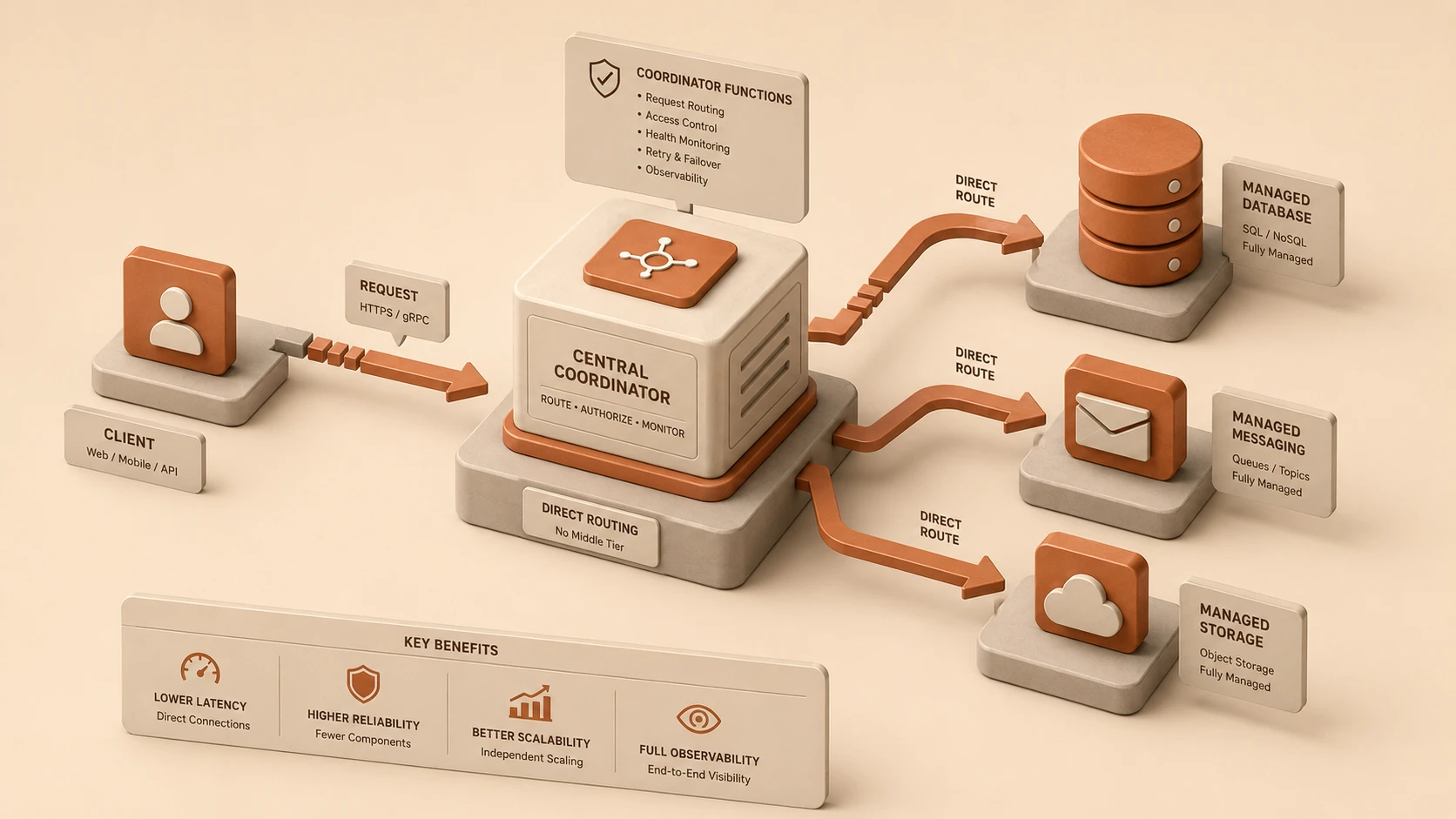
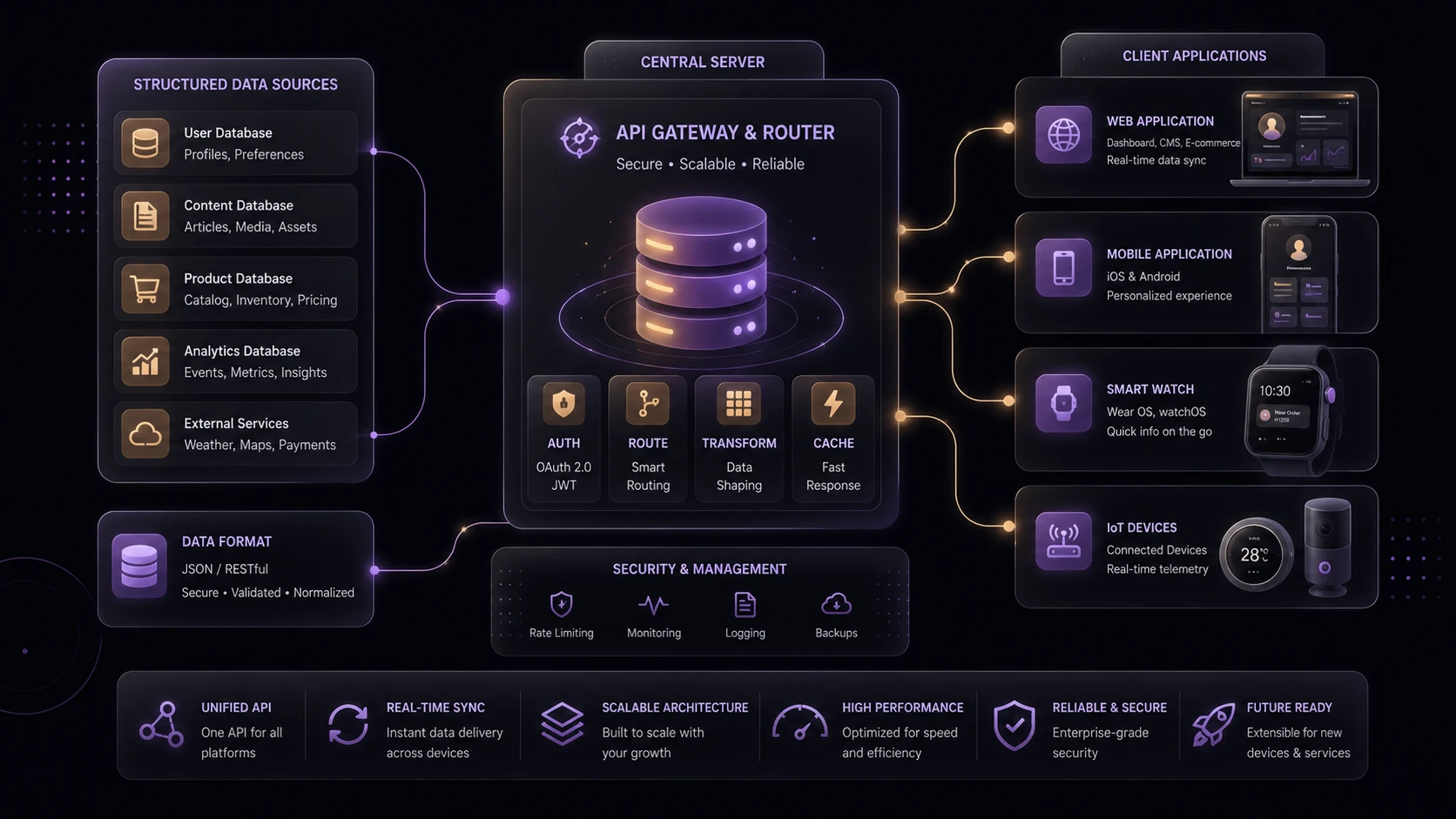
A Multi-Experience Architecture centralizes business capabilities into reusable backend services while allowing multiple frontend applications to consume the same APIs.
Primary objectives include:
- ◆API-first development
- ◆Backend reuse
- ◆Consistent business logic
- ◆Independent frontend development
- ◆Faster delivery
- ◆Omnichannel experiences
Rather than treating every application as a separate product, enterprises build shared digital platforms.
Core Architecture
| Component | Responsibility |
|---|---|
| API Gateway | Central request routing and security |
| Identity Provider | Authentication and authorization |
| Business Services | Core enterprise logic |
| Microservices | Domain-specific capabilities |
| Data Platform | Persistent storage |
| Event Platform | Real-time communication |
| Web Frontend | Browser experience |
| Mobile Applications | Native mobile interface |
| AI Assistant | Conversational interaction |
| IoT Devices | Device-specific experiences |
These components create a reusable digital foundation capable of supporting multiple presentation layers.
How Multi-Experience Platforms Work
- 1.Users interact through various client applications.
- 2.Requests pass through a centralized API Gateway.
- 3.Authentication validates user identity.
- 4.Business services process requests.
- 5.Shared APIs return standardized data.
- 6.Each frontend renders information according to its own user experience.
- 7.Event-driven services synchronize updates across connected applications.
Business rules remain centralized while user experiences remain platform-specific.
API-First Development
The foundation of multi-experience architecture is API-first design.
Rather than developing APIs after applications are completed, organizations define service contracts before frontend implementation.
Benefits include:
- ◆Consistent interfaces
- ◆Independent development teams
- ◆Easier integration
- ◆Better documentation
- ◆Improved testing
- ◆Faster delivery
Well-designed APIs become reusable enterprise assets.
Backend for Frontend (BFF)
// Express.js Backend-for-Frontend (BFF) router compiling payloads for smartwatches
const express = require('express');
const router = express.Router();
const apiClient = require('./backend-client');

router.get('/watch/dashboard', async (req, res) => {
  const rawData = await apiClient.getUserProfile(req.user.id);

  // Clean & heavily optimize payload size for smartwatch screen and memory
  const watchPayload = {
    name: rawData.shortName,
    balance: rawData.accounts[0].balance,
    alert: rawData.notifications.length > 0
  };

  res.json(watchPayload);
});

module.exports = router;
Some organizations introduce Backend-for-Frontend (BFF) services that tailor responses for specific client platforms.
Typical BFF responsibilities include:
- ◆Response aggregation
- ◆Payload optimization
- ◆Client-specific authentication
- ◆API orchestration
- ◆Performance optimization
This approach allows backend business services to remain generic while client experiences stay optimized.
Event-Driven Synchronization
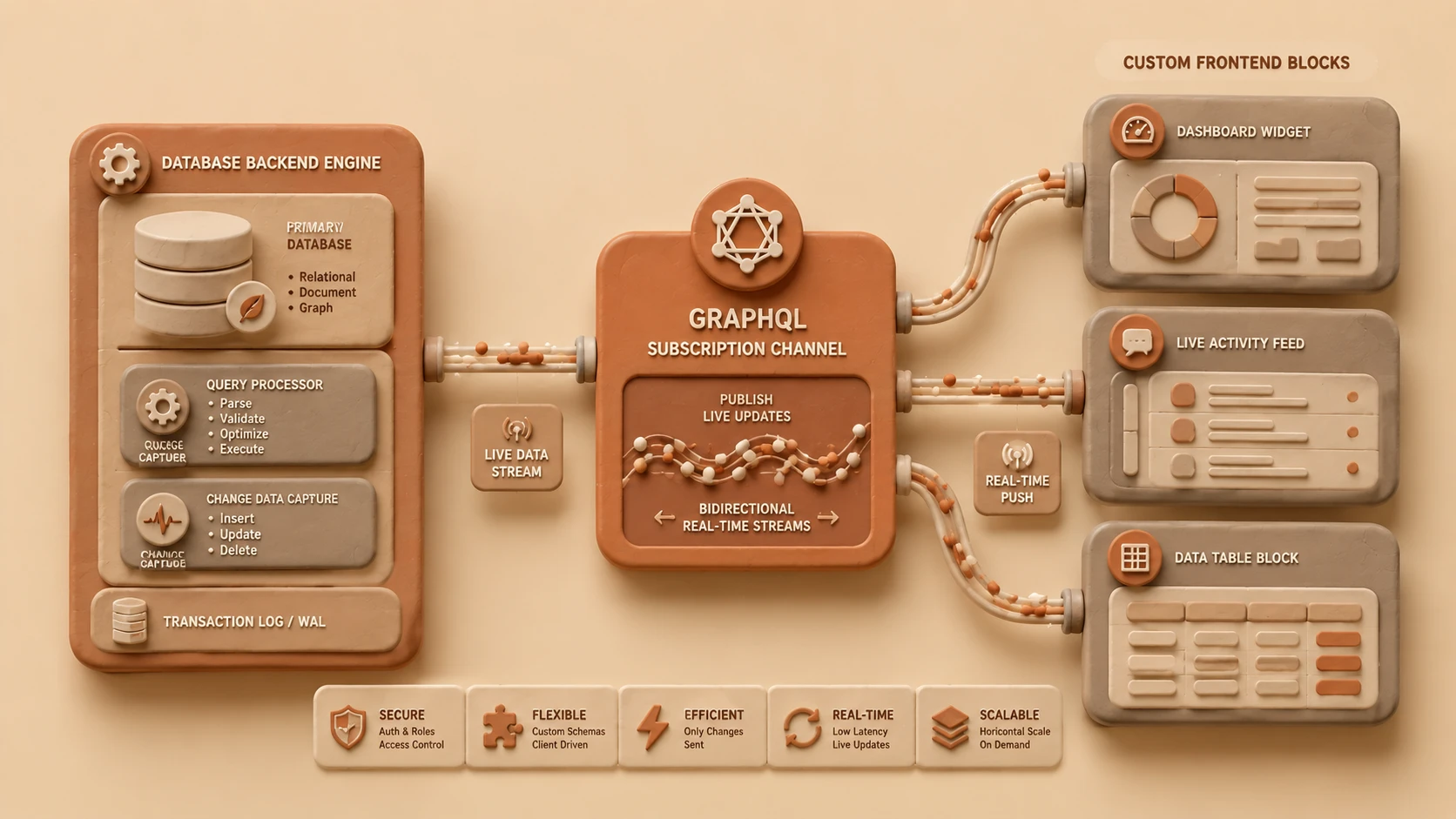
Modern applications frequently require real-time updates.
Common scenarios include:
- ◆Order status notifications
- ◆Chat applications
- ◆Inventory updates
- ◆Financial transactions
- ◆IoT telemetry
- ◆Customer support systems
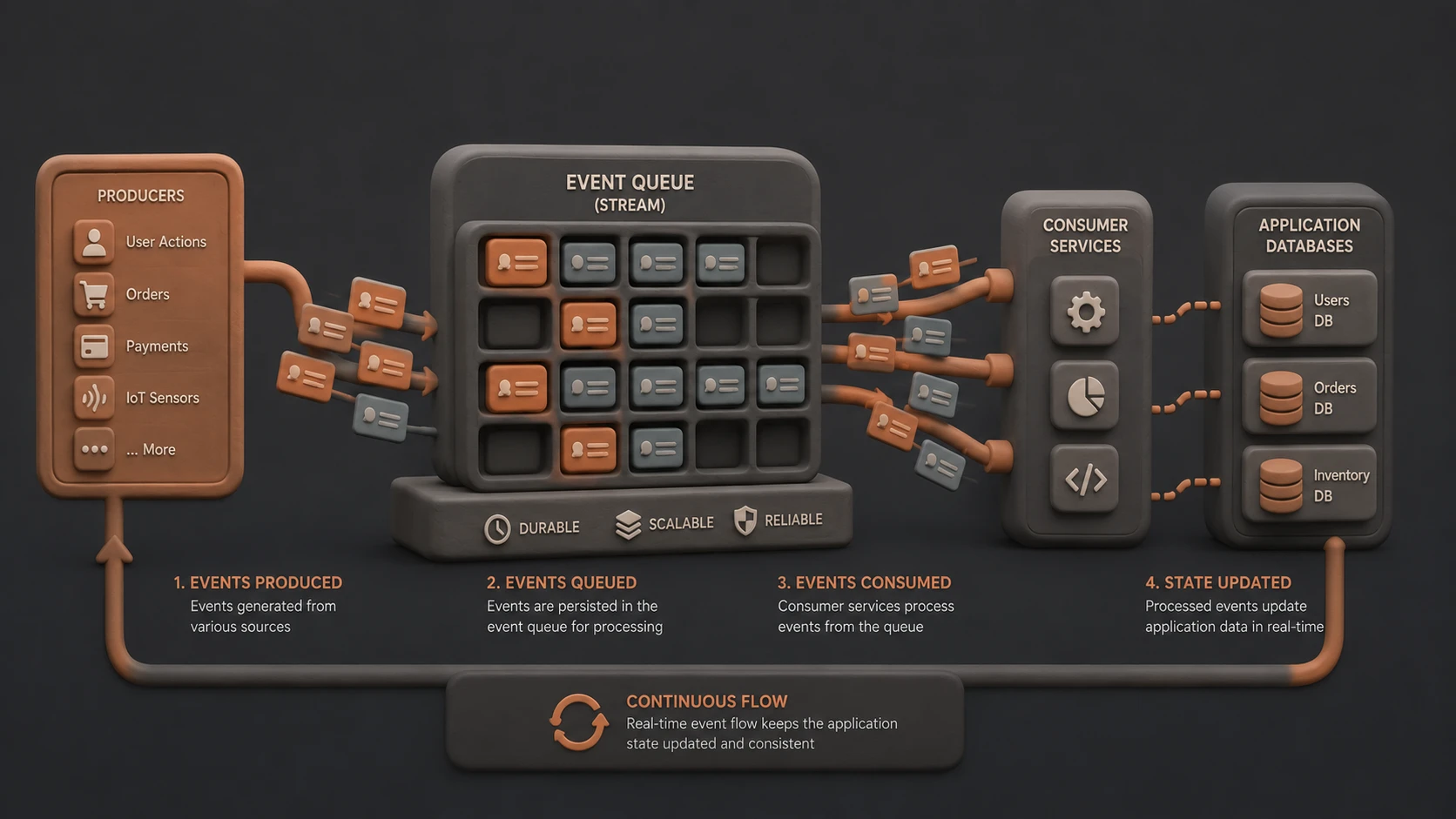
Event-driven messaging ensures every client receives timely information without duplicating backend logic.
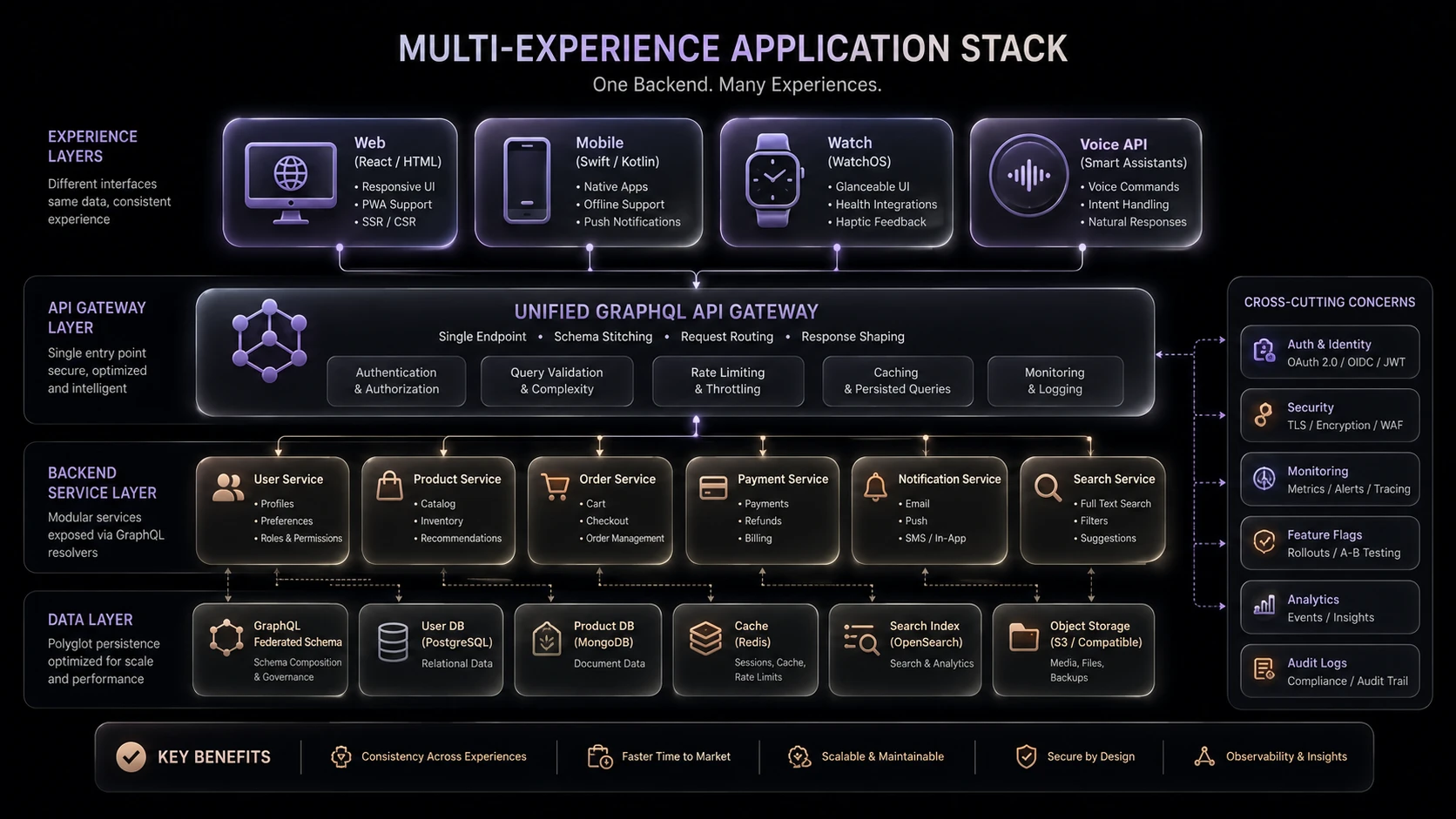
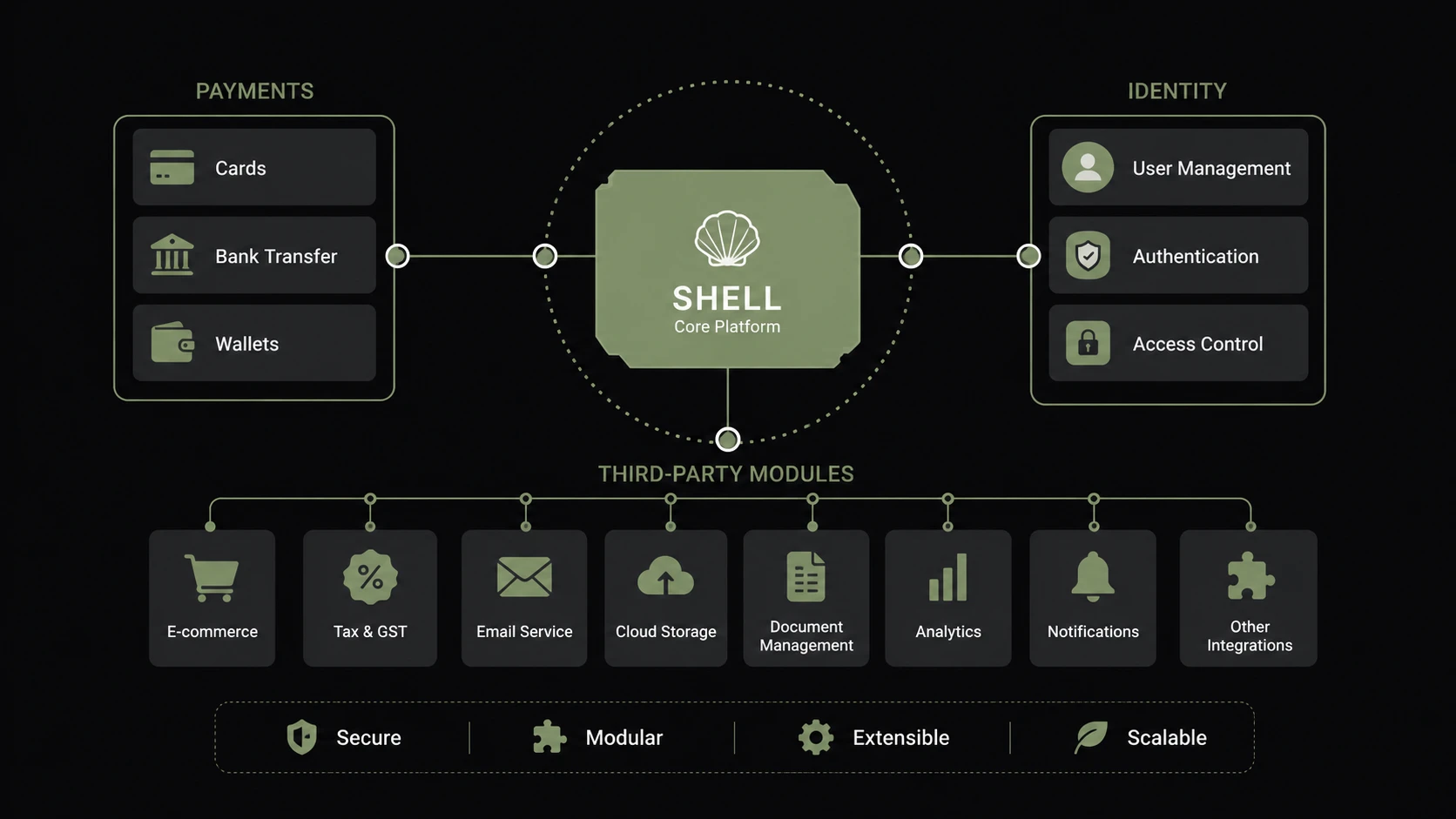
System architecture diagram and conceptual workflow layout for Multi-Experience Apps.
AI-Powered Experiences
By 2024, conversational AI increasingly joins traditional user interfaces.
Shared enterprise APIs enable AI assistants to:
- ◆Retrieve customer information
- ◆Execute workflows
- ◆Generate summaries
- ◆Search enterprise knowledge
- ◆Automate repetitive tasks
The same backend services that power web and mobile applications can also support AI-driven experiences.
Enterprise Use Cases
Banking Platforms
Deliver consistent financial services across web banking, mobile applications, ATMs, and customer support assistants.
Retail
Support e-commerce websites, mobile shopping apps, kiosks, and in-store devices through shared commerce APIs.
Healthcare
Provide patient portals, clinician dashboards, mobile applications, and virtual assistants using centralized healthcare services.
Manufacturing
Expose production data to operational dashboards, mobile maintenance tools, IoT devices, and executive reporting systems.
SaaS Platforms
Serve customers through browsers, mobile applications, public APIs, and AI assistants using the same backend platform.
Performance Considerations
Enterprise teams should monitor:
- ◆API latency
- ◆Request throughput
- ◆Backend scalability
- ◆Mobile response time
- ◆Event processing latency
- ◆Cache effectiveness
Performance optimization should consider every consumer rather than focusing solely on browser-based applications.
Security Considerations
Centralized backend platforms require comprehensive security controls.
Organizations should implement:
- ◆OAuth 2.0 and OpenID Connect
- ◆Multi-factor authentication
- ◆API rate limiting
- ◆Role-based access control
- ◆Encryption in transit and at rest
- ◆API Gateway policies
- ◆Audit logging
- ◆Zero Trust principles
Consistent security policies simplify governance across every frontend.
Scalability
Multi-experience platforms improve scalability through:
- ◆Shared business services
- ◆Stateless APIs
- ◆Horizontal scaling
- ◆Cloud-native deployment
- ◆Event-driven communication
- ◆Independent frontend releases
These capabilities allow organizations to introduce new digital channels without redesigning backend systems.
Best Practices
- ◆Design APIs before building user interfaces.
- ◆Separate business logic from presentation logic.
- ◆Standardize authentication across all platforms.
- ◆Version APIs carefully.
- ◆Use event-driven communication for real-time scenarios.
- ◆Optimize responses for different client devices.
- ◆Monitor API usage continuously.
- ◆Build reusable services instead of platform-specific implementations.
Common Mistakes
| Mistake | Enterprise Impact |
|---|---|
| Creating separate backends for every application | Increased maintenance costs |
| Embedding business logic inside frontend applications | Reduced consistency |
| Ignoring API governance | Integration challenges |
| Overloading APIs with client-specific behavior | Reduced maintainability |
| Missing centralized authentication | Security inconsistencies |
| Treating AI interfaces differently from other clients | Duplicate integration effort |
Technology Comparison
| Capability | Traditional Multi-App Development | Multi-Experience Platform |
|---|---|---|
| Backend Systems | Multiple Independent Services | Shared Enterprise Platform |
| Business Logic | Duplicated | Centralized |
| API Strategy | Application Specific | API-First |
| Frontend Development | Coupled | Independent |
| Scalability | Moderate | High |
| Channel Expansion | Slow | Rapid |
Adoption Strategy
- 1.Inventory existing digital channels.
- 2.Identify reusable business capabilities.
- 3.Standardize API contracts.
- 4.Introduce an API Gateway.
- 5.Implement centralized identity management.
- 6.Modernize applications using shared backend services.
- 7.Enable event-driven communication where appropriate.
- 8.Expand the platform to support emerging interfaces such as AI assistants and connected devices.
Limitations
As of March 2024, multi-experience architectures significantly improve reuse and consistency but require disciplined API governance and strong domain-driven design. Organizations should avoid creating overly generic APIs that attempt to satisfy every possible client requirement. Platform evolution should balance standardization with flexibility while maintaining clear ownership of business services.
Looking Ahead
From the perspective of March 2024, multi-experience development is becoming the standard approach for enterprise digital platforms. As AI assistants, wearable devices, edge computing, IoT ecosystems, and immersive interfaces continue expanding, organizations that build API-first backend platforms today will be better positioned to deliver consistent, scalable, and intelligent digital experiences across every current and future customer touchpoint.