Why Composable Business Logic Matters
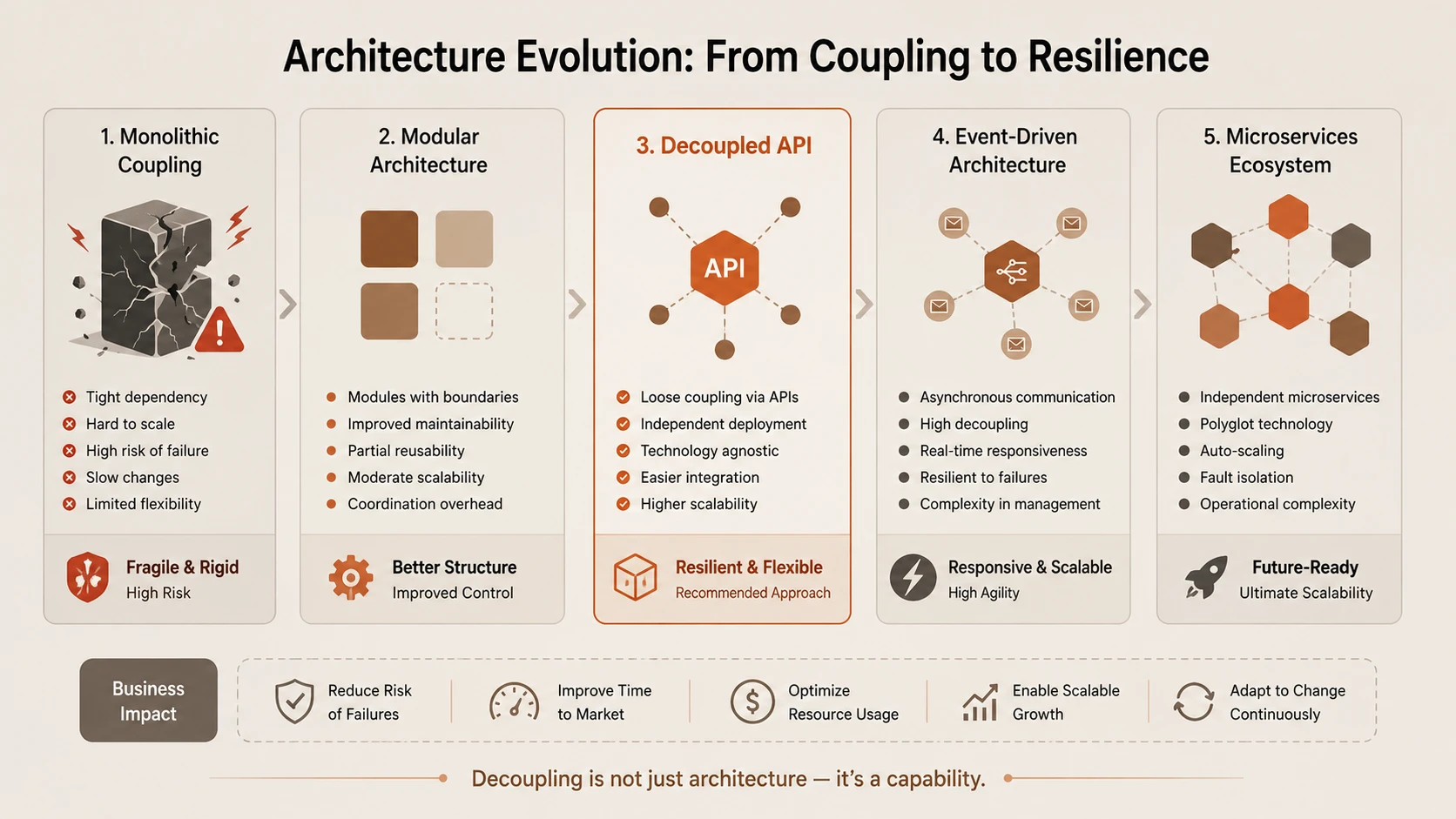
Enterprise software has traditionally been built around centralized business logic, where every feature depends on a shared application layer. As products grow, this approach creates tightly coupled systems that are difficult to maintain, scale, and evolve.
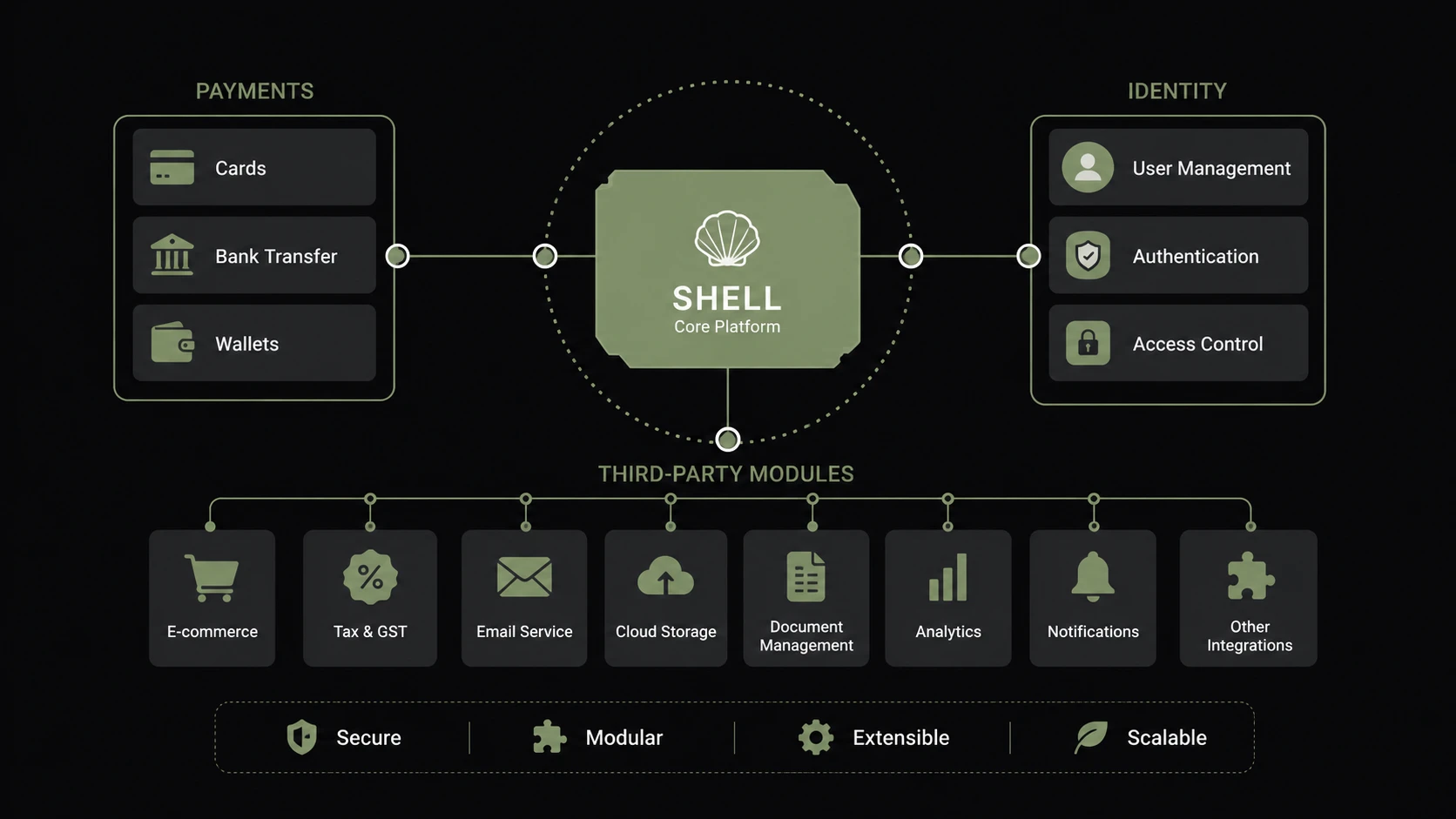
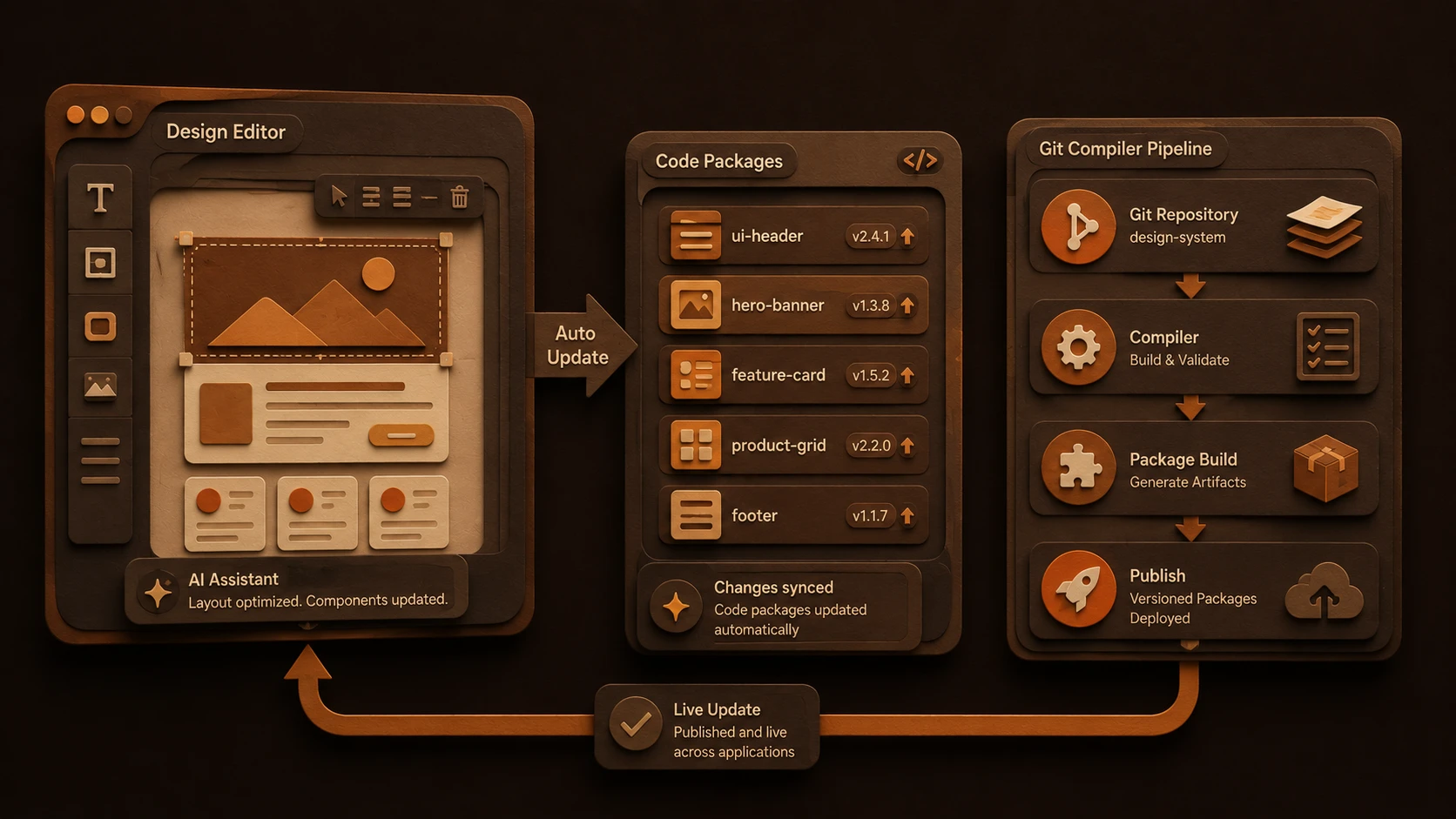
Composable business logic introduces a different philosophy. Instead of treating an application as a single product, each business capability becomes an independent product with its own lifecycle, ownership, APIs, data boundaries, and deployment strategy.
Architecture Principle: Business capabilities should evolve independently while collaborating through well-defined contracts instead of shared implementation.
---
What Is Composable Business Logic?
Composable business logic is an architectural approach where business features are implemented as isolated, reusable modules that can be developed, tested, versioned, deployed, and even sold independently.
Each feature module owns:
- ◆Business rules
- ◆Domain models
- ◆APIs
- ◆Database schema
- ◆Events
- ◆Validation logic
- ◆Permissions
- ◆Documentation
Rather than depending on internal implementation details, modules communicate through contracts and domain events.
---
Thinking in Business Products Instead of Features
Traditional software teams think in terms of screens and features.
Composable platforms think in terms of products.
Instead of building:
- ◆Login Page
- ◆Order Screen
- ◆Payment Form
Organizations build:
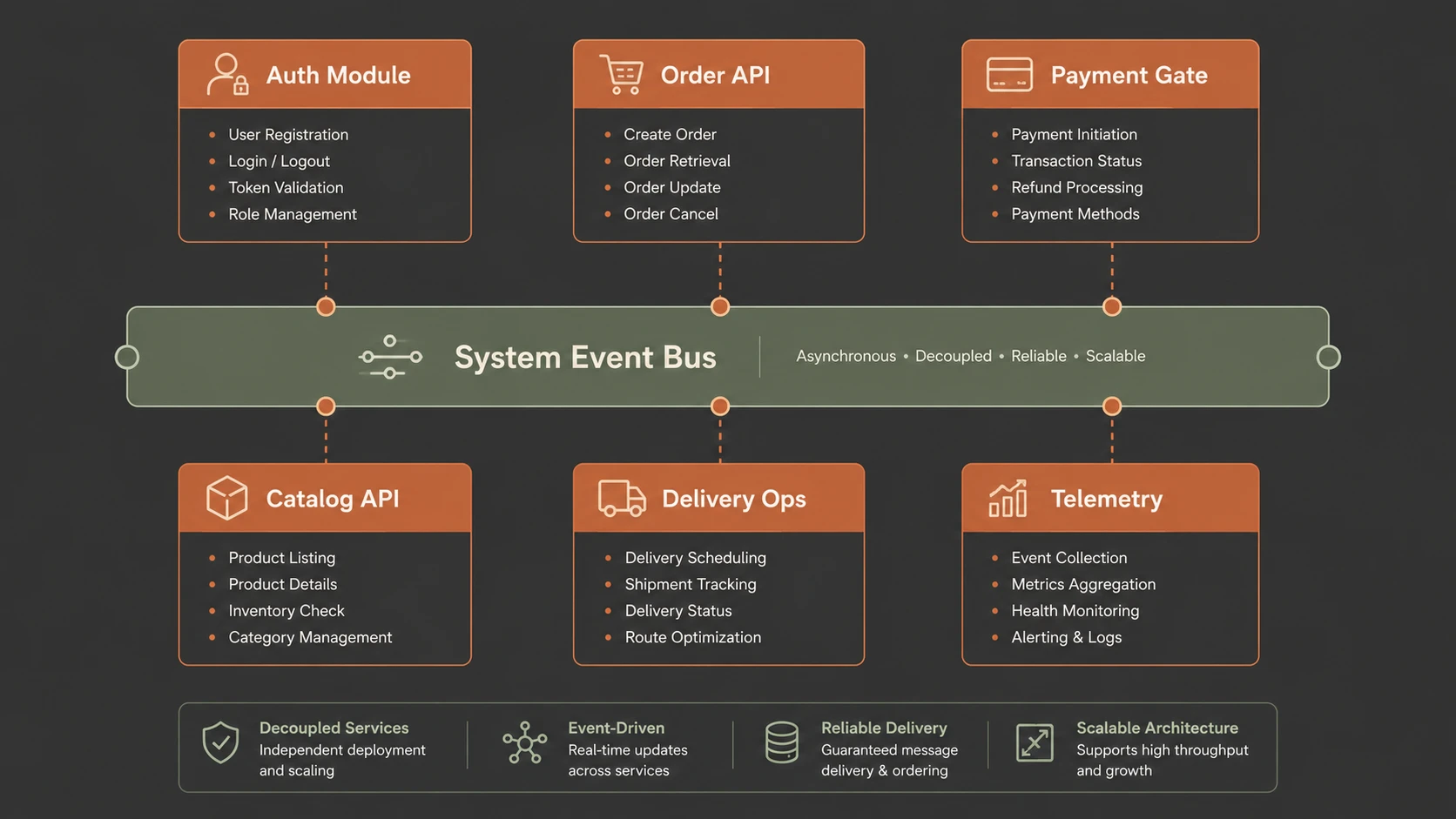
- ◆Identity Product
- ◆Order Product
- ◆Payment Product
- ◆Notification Product
- ◆Analytics Product
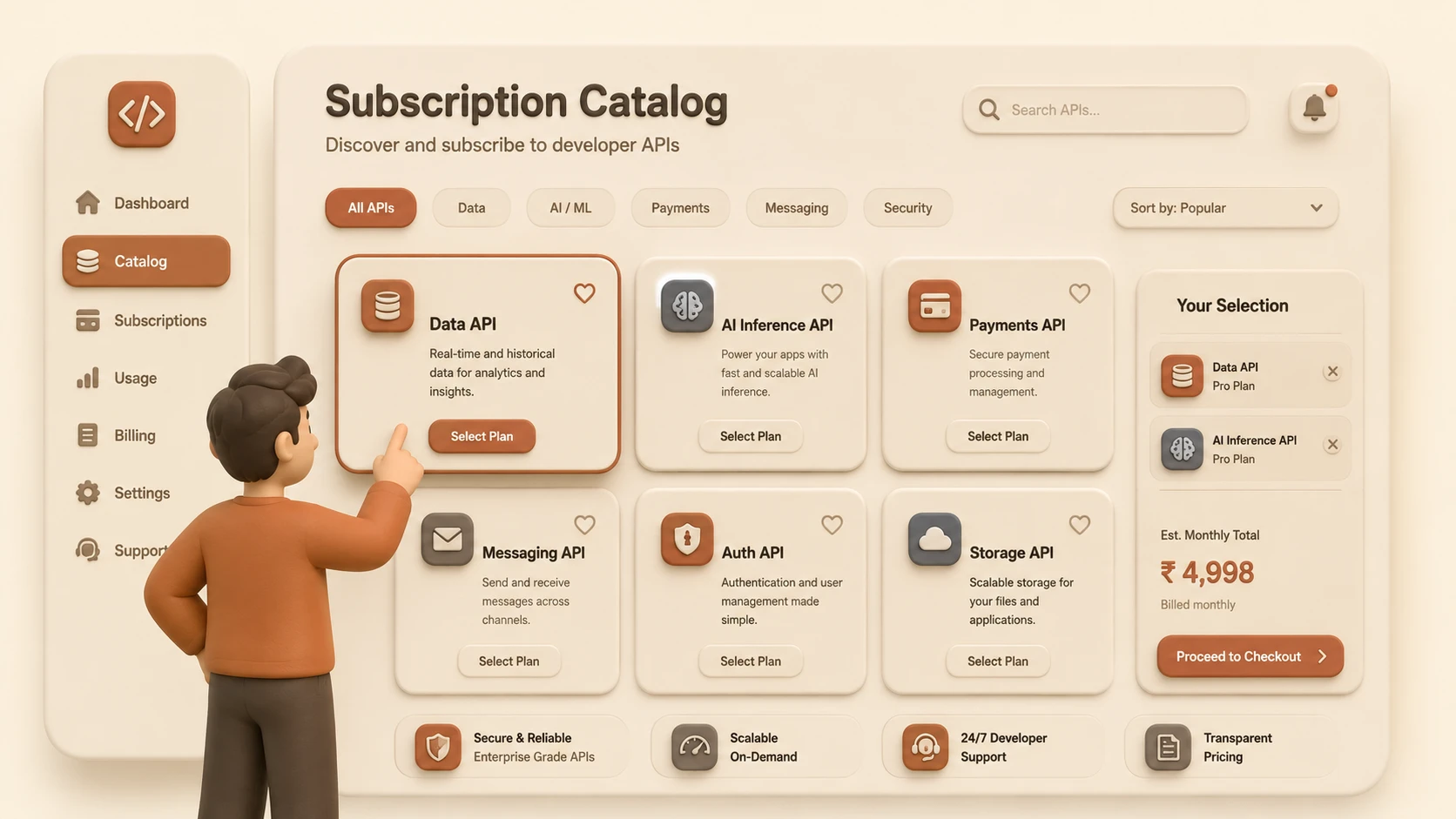
Each product becomes reusable across multiple applications.
---
Enterprise Reference Architecture
Web
Mobile
Admin Portal
Partner APIs
        │
        ▼
API Gateway
        │
───────────────────────────────────────────────
│ Identity │ Orders │ Billing │ Inventory │
│ Catalog │ Customer │ AI │ Analytics │
│ Workflow │ Notifications │ Reporting │
───────────────────────────────────────────────
        │
Event Bus
        │
Shared Contracts
        │
Infrastructure Services
Each module owns its domain while collaborating through contracts and asynchronous events.
---
Characteristics of an Independent Feature Module
A mature feature module should include:
- ◆Independent business rules
- ◆Dedicated domain model
- ◆Separate API surface
- ◆Internal persistence
- ◆Event publishing
- ◆Authorization policies
- ◆Validation pipeline
- ◆Automated testing
- ◆Versioning strategy
- ◆Documentation
This enables teams to evolve modules without impacting unrelated parts of the platform.
---
Event-Driven Collaboration
Composable modules avoid direct dependencies whenever possible.
Instead of synchronous coupling:
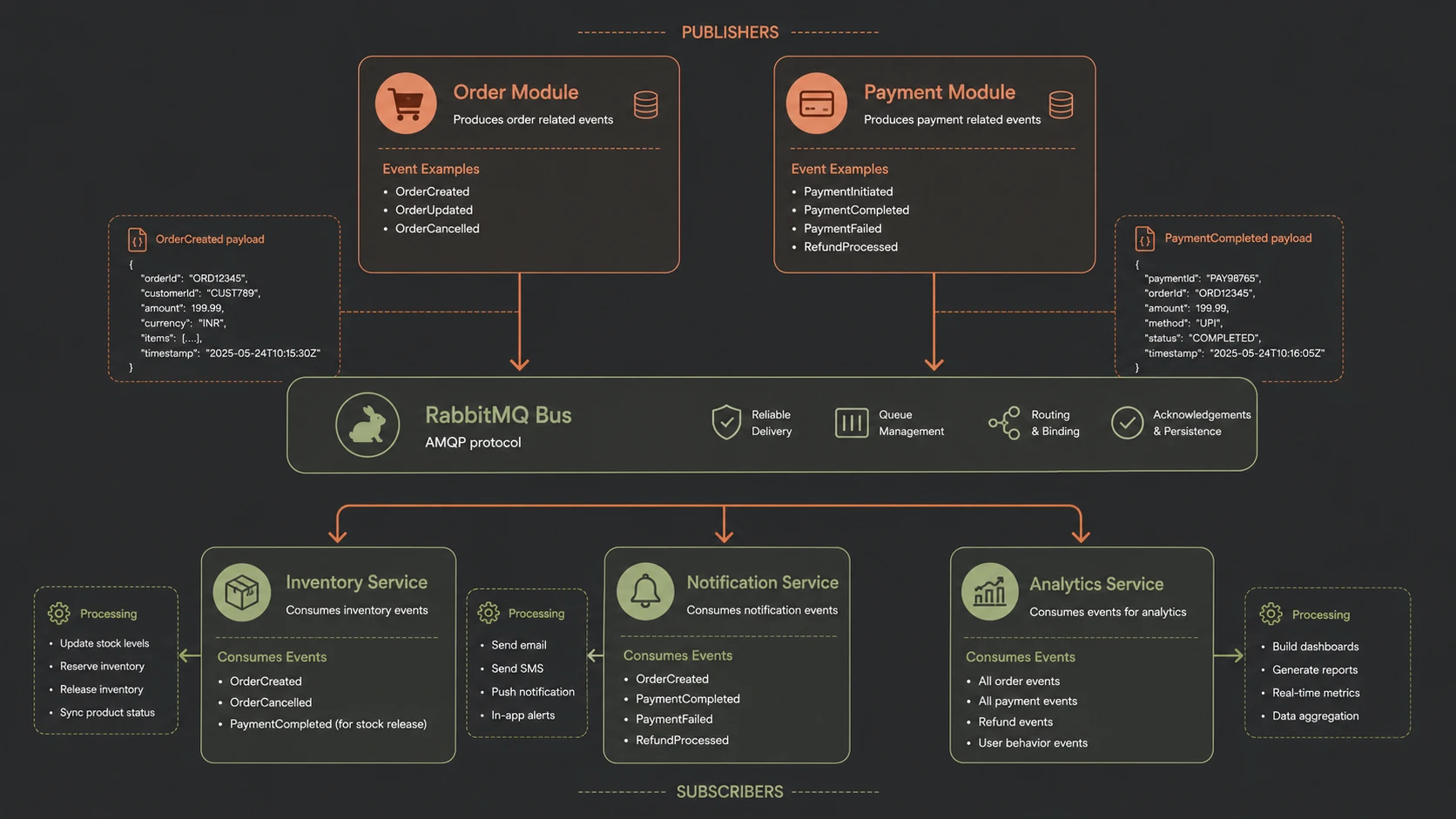
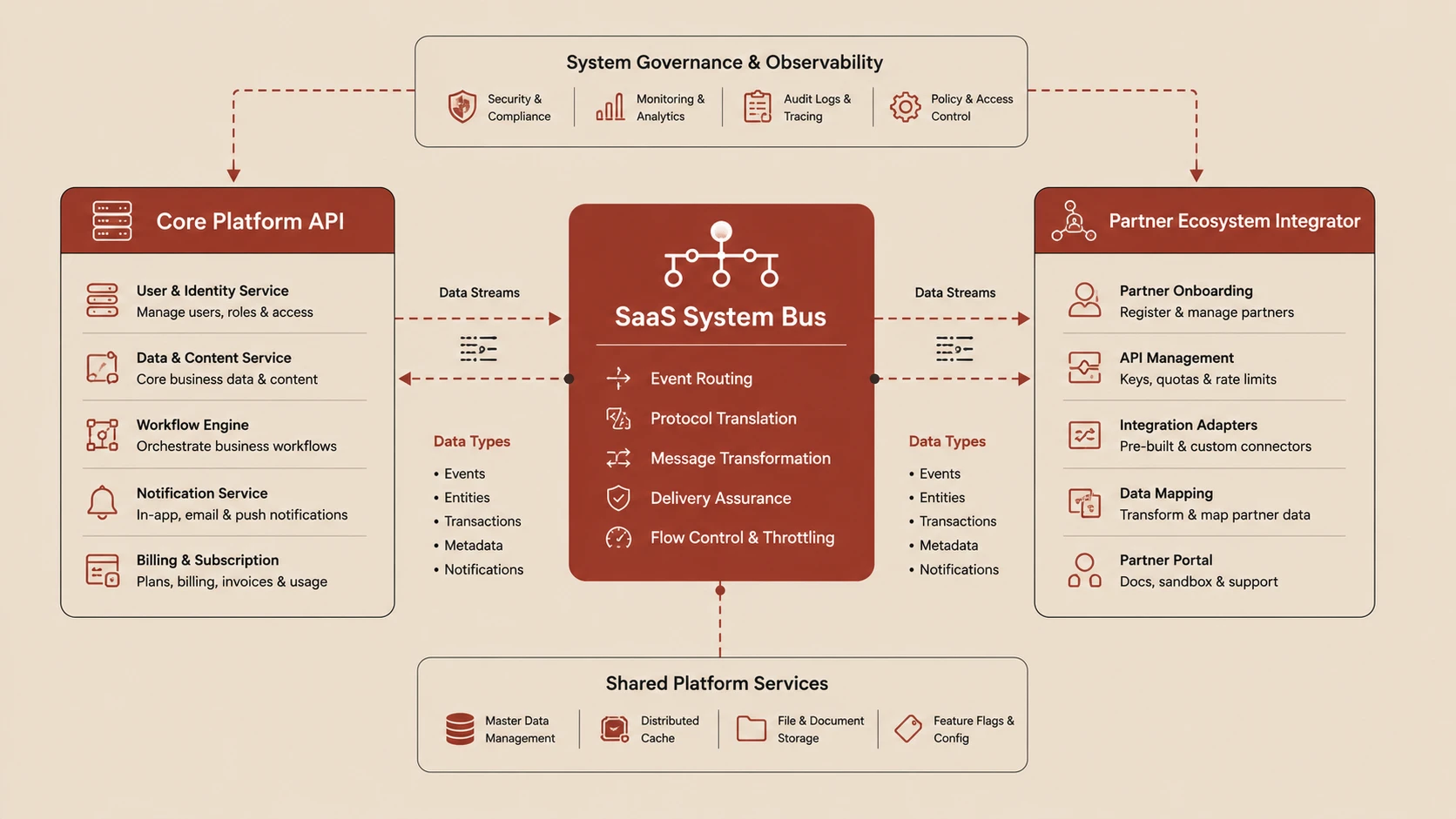
System architecture diagram and conceptual workflow layout for Composable Business Logic.
Order Module
      │
      ▼
PaymentCompleted Event
      │
Inventory Module
      │
Notification Module
      │
Analytics Module
Events allow modules to collaborate while remaining loosely coupled.
---
Applying Domain-Driven Design
Composable business logic aligns naturally with Domain-Driven Design (DDD).
Typical bounded contexts include:
- ◆Customer
- ◆Identity
- ◆Commerce
- ◆Payments
- ◆Shipping
- ◆Marketing
- ◆Finance
- ◆AI Intelligence
Each bounded context owns its own ubiquitous language, business rules, and data model.
---
AI-Ready Business Modules
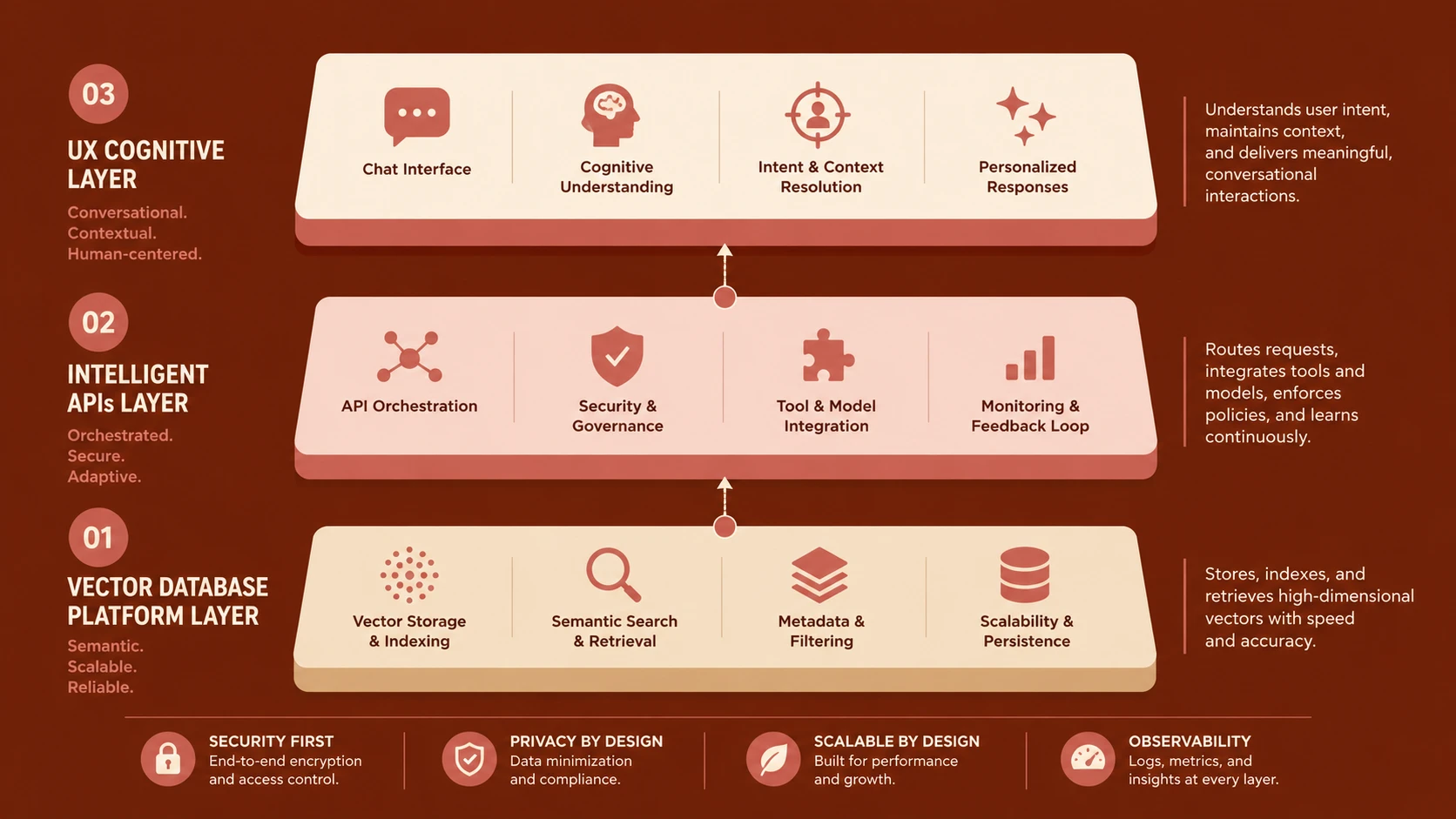
Composable architectures are particularly well suited for AI-native applications.
Dedicated AI modules can provide:
- ◆Recommendation Engines
- ◆Pricing Intelligence
- ◆Customer Insights
- ◆Fraud Detection
- ◆Document Processing
- ◆Agent Orchestration
- ◆Knowledge Retrieval
- ◆Workflow Automation
Because AI capabilities are isolated, organizations can upgrade models or introduce new intelligence without affecting core business modules.
---
Versioning and Independent Deployment
Every feature module should have its own lifecycle.
Best practices include:
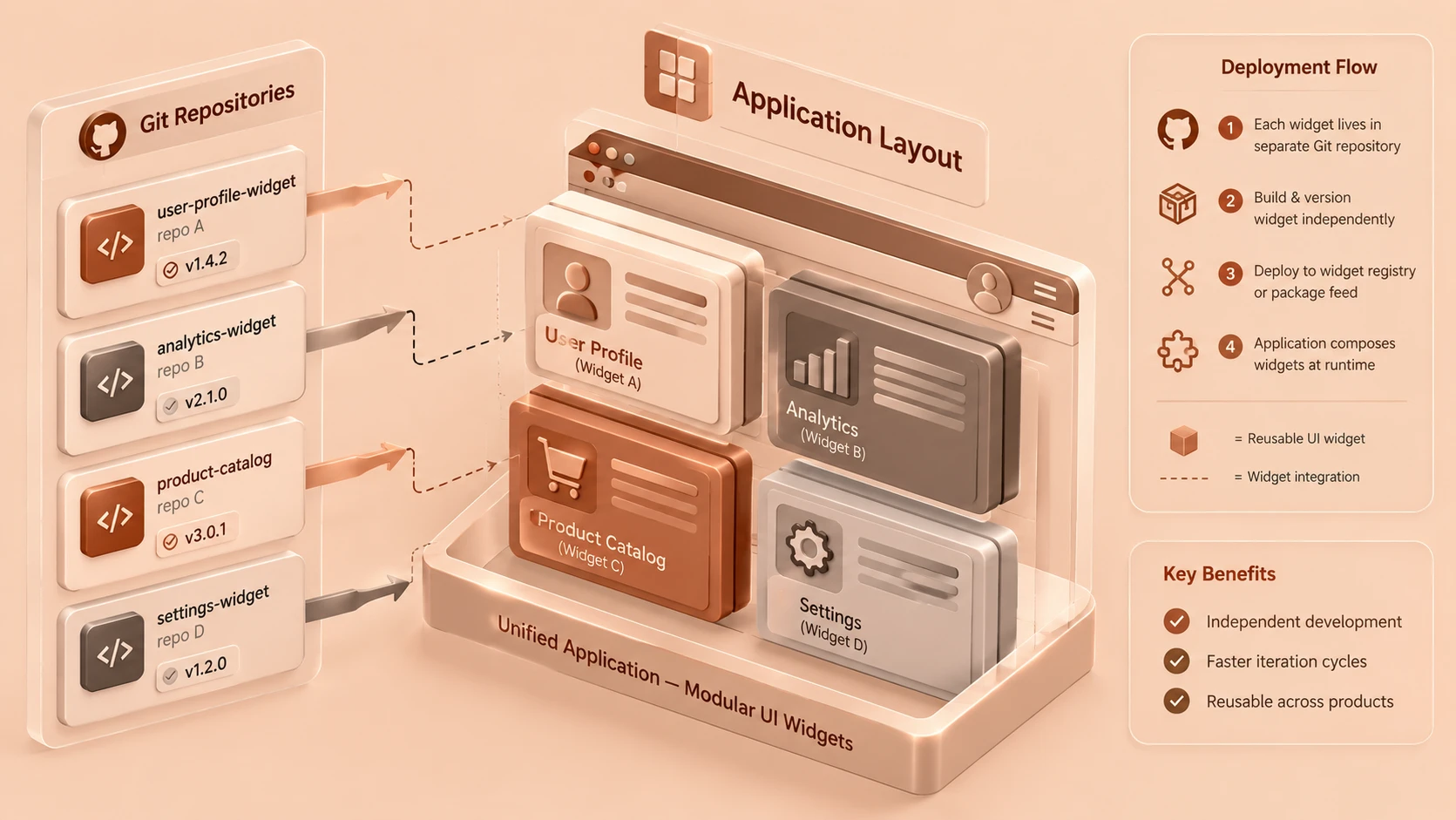
- ◆Independent repositories or packages
- ◆Semantic versioning
- ◆Backward-compatible APIs
- ◆Feature flags
- ◆Automated CI/CD
- ◆Independent deployments
- ◆Contract testing
- ◆Release automation
This enables faster innovation while reducing deployment risk.
---
Common Anti-Patterns
Avoid these architectural mistakes:
- ◆Shared business logic libraries
- ◆Cross-module database access
- ◆Circular dependencies
- ◆Shared domain models
- ◆Tight synchronous coupling
- ◆Global utility services
- ◆Feature-specific code inside the core application
- ◆Monolithic deployment pipelines
These anti-patterns reduce modularity and make long-term maintenance difficult.
---
Best Practices
| Area | Best Practice |
|---|---|
| Architecture | Composable Feature Modules |
| Design | Domain-Driven Design |
| Communication | Domain Events |
| APIs | Contract-First |
| Deployment | Independent Releases |
| Versioning | Semantic Versioning |
| Testing | Contract & Integration Tests |
| Scalability | Modular Product Teams |
---
The Future of Enterprise Software
Composable business logic represents the next evolution of enterprise architecture. As organizations adopt AI, distributed teams, and cloud-native platforms, independently managed feature modules provide the flexibility needed to innovate without increasing complexity.
Rather than maintaining one massive application, enterprises will increasingly build ecosystems of modular business products that can evolve independently, integrate seamlessly, and power multiple customer experiences from a shared architectural foundation.