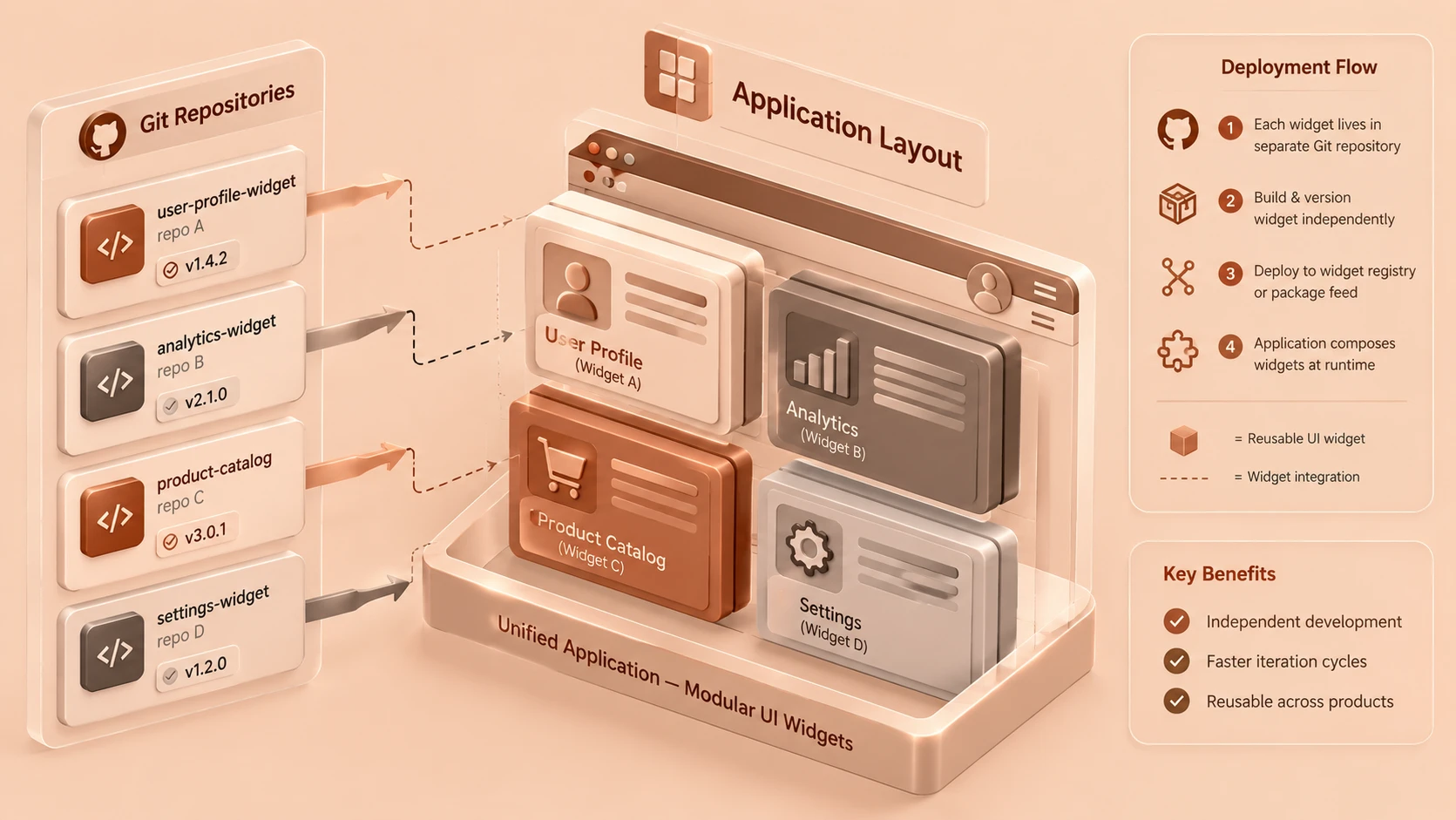
Introduction
Enterprise software development has spent the last decade embracing microservices to decouple backend systems and accelerate independent delivery. While backend teams achieved greater autonomy through service-oriented architectures, many frontend applications remained monolithic. Large web applications often consisted of a single repository, a shared deployment pipeline, tightly coupled components, and development teams competing to modify the same codebase.
As organizations scaled their engineering capabilities, frontend monoliths increasingly became organizational bottlenecks. Independent teams frequently waited for shared releases, merge conflicts became more common, deployment risk increased, and UI innovation slowed despite backend modernization.
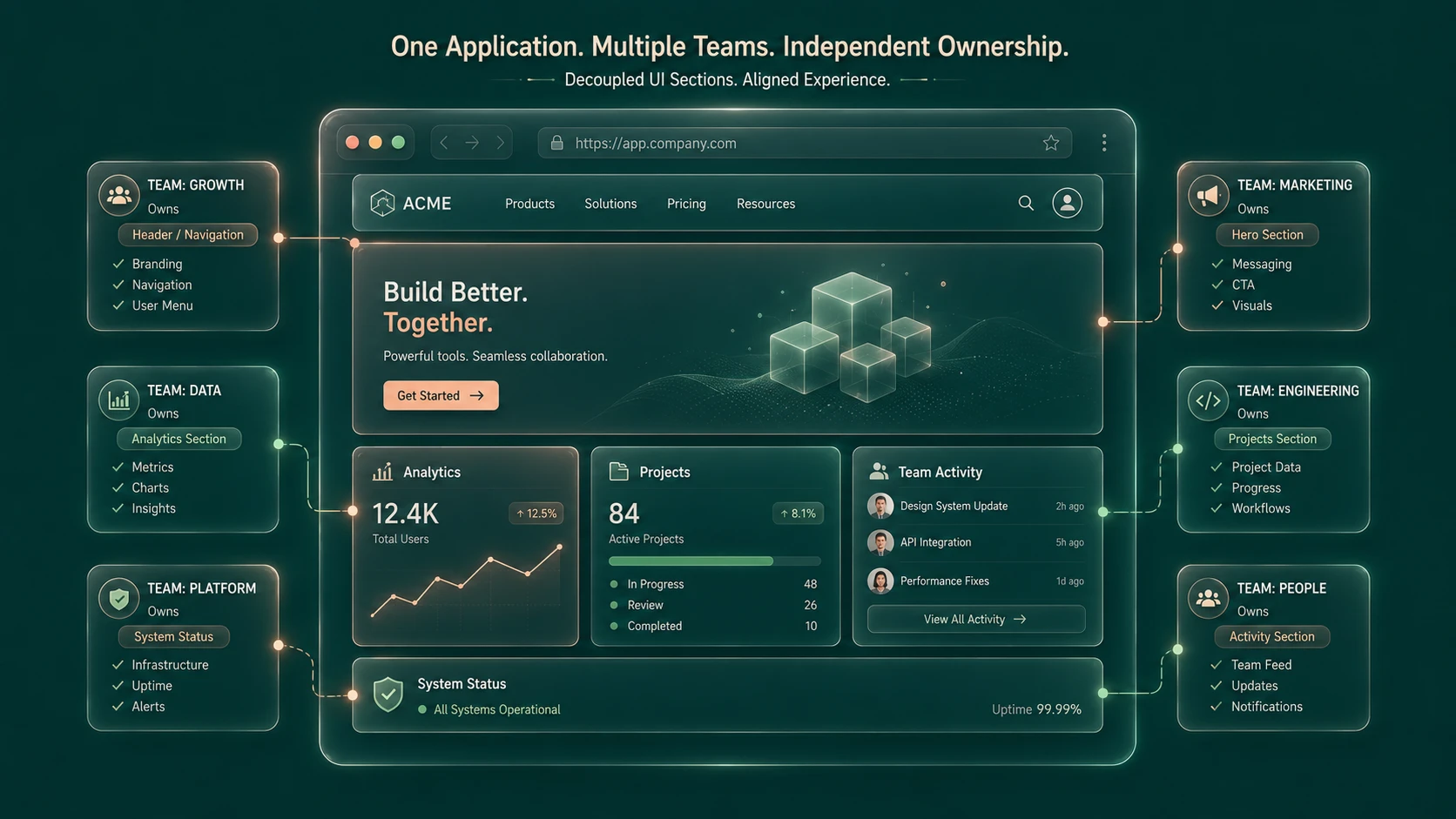
By September 2024, Micro-Frontend architecture has become a practical solution for large organizations building digital platforms across multiple business domains. Inspired by microservices, Micro-Frontends divide the user interface into independently owned applications that can be developed, tested, deployed, and maintained by autonomous teams while presenting users with a seamless experience.
Combined with Platform Engineering, Design Systems, Module Federation, edge delivery, and API-first development, Micro-Frontends represent one of the defining frontend architectural patterns for enterprise-scale applications.
Industry Background
Modern enterprise frontend platforms increasingly leverage:
- ◆Micro-Frontends
- ◆Module Federation
- ◆Design Systems
- ◆Component Libraries
- ◆API-First Development
- ◆Platform Engineering
- ◆Edge Delivery
- ◆Cloud-Native CI/CD
These technologies enable organizations to scale frontend engineering without sacrificing consistency or delivery velocity.
The Business Problem
Traditional frontend monoliths commonly experience:
- ◆Large shared codebases
- ◆Slow release cycles
- ◆Merge conflicts
- ◆Difficult ownership boundaries
- ◆Long build times
- ◆High deployment risk
- ◆Limited team autonomy
As engineering organizations expand, these challenges reduce development speed and increase operational complexity.
Understanding Micro-Frontends
Micro-Frontends divide a large frontend application into smaller, independently managed applications that collaborate to deliver a unified user experience.
Primary objectives include:
- ◆Team autonomy
- ◆Independent deployments
- ◆Modular architecture
- ◆Technology flexibility
- ◆Faster delivery
- ◆Improved maintainability
- ◆Organizational scalability
Rather than building one large frontend, organizations compose multiple independently owned experiences into a cohesive platform.
Core Architecture
| Component | Responsibility |
|---|---|
| Shell Application | Routing, authentication, and layout |
| Micro-Frontend Applications | Business domain interfaces |
| API Gateway | Backend communication |
| Design System | Shared visual consistency |
| Module Federation | Runtime module sharing |
| Identity Platform | Authentication and authorization |
| CI/CD Platform | Independent deployments |
| Observability Platform | Monitoring and analytics |
These components create a modular frontend ecosystem capable of supporting independent engineering teams.
How Micro-Frontends Work
- 1.Users access the shell application.
- 2.Authentication establishes user identity.
- 3.The shell dynamically loads required Micro-Frontend modules.
- 4.Individual frontend applications retrieve data from backend APIs.
- 5.Shared design systems ensure visual consistency.
- 6.Independent deployment pipelines continuously update each frontend.
- 7.Observability platforms monitor application performance and user experience.
Business capabilities evolve independently while users experience a unified application.
Domain-Oriented Frontend Ownership
Micro-Frontends align frontend architecture with business domains.
Examples include:
- ◆Customer Management
- ◆Orders
- ◆Billing
- ◆Inventory
- ◆Analytics
- ◆User Administration
Each domain owns its complete frontend lifecycle, reducing dependencies between teams.
Module Federation
// webpack.config.js Webpack 5 Module Federation configuration in Micro-Frontends
const ModuleFederationPlugin = require("webpack/lib/container/ModuleFederationPlugin");

module.exports = {
  plugins: [
    new ModuleFederationPlugin({
      name: "host_dashboard",
      remotes: {
        billing_mfe: "billing@http://localhost:3002/remoteEntry.js",
        profile_mfe: "profile@http://localhost:3003/remoteEntry.js"
      },
      shared: ["react", "react-dom"]
    })
  ]
};
Runtime module sharing has become a key enabler of Micro-Frontend architecture.
Benefits include:
- ◆Independent deployments
- ◆Shared libraries
- ◆Reduced duplication
- ◆Incremental application updates
- ◆Better scalability
- ◆Faster release cycles
Module Federation enables applications to consume shared modules dynamically without rebuilding the entire platform.
Design Systems
Independent teams require shared design standards.
Modern design systems provide:
- ◆Reusable components
- ◆Design tokens
- ◆Accessibility standards
- ◆Typography
- ◆Theming
- ◆Interaction patterns
Design systems preserve user experience consistency while allowing architectural independence.
Platform Engineering Integration
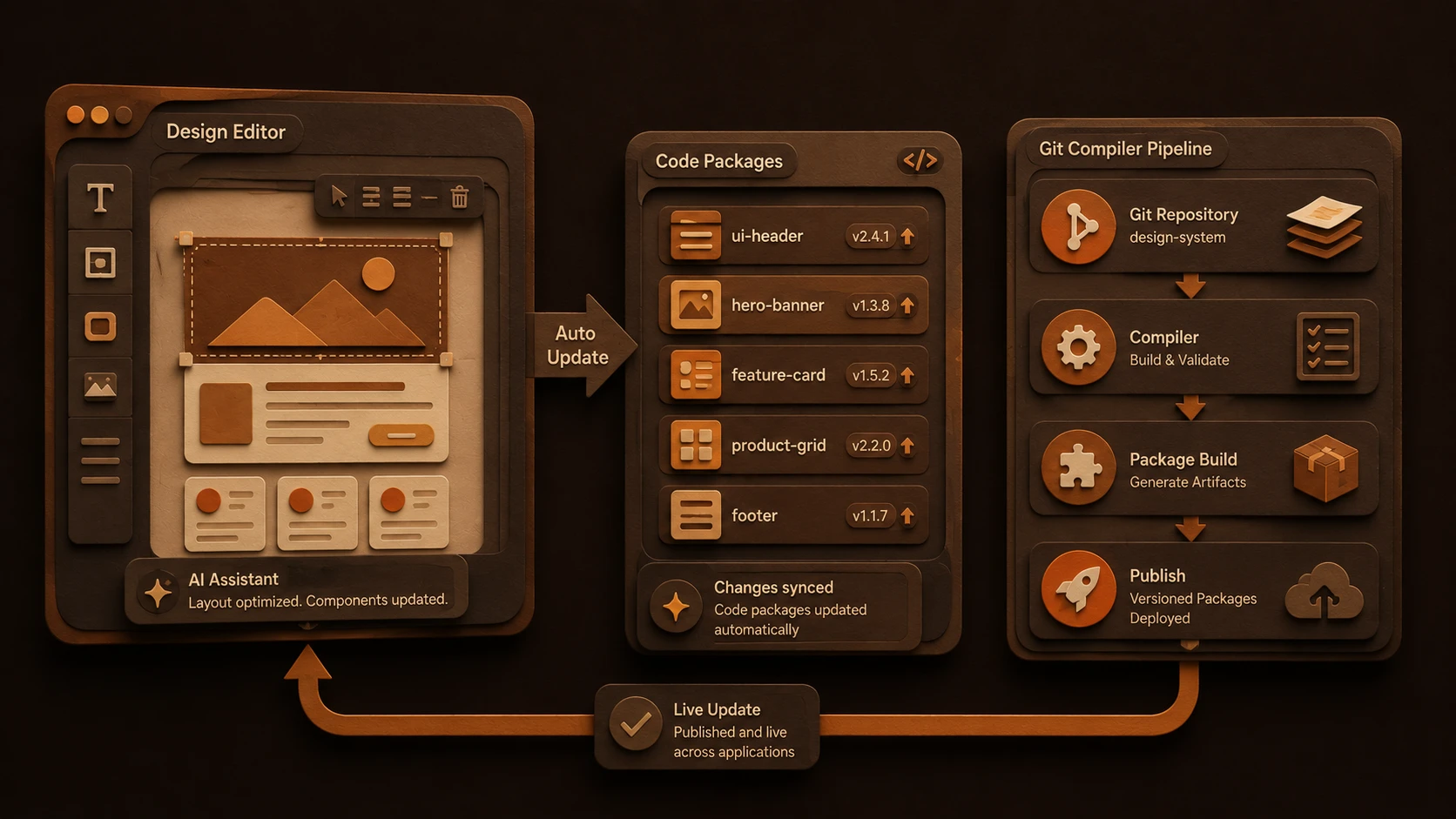
Internal Developer Platforms simplify Micro-Frontend adoption by providing:
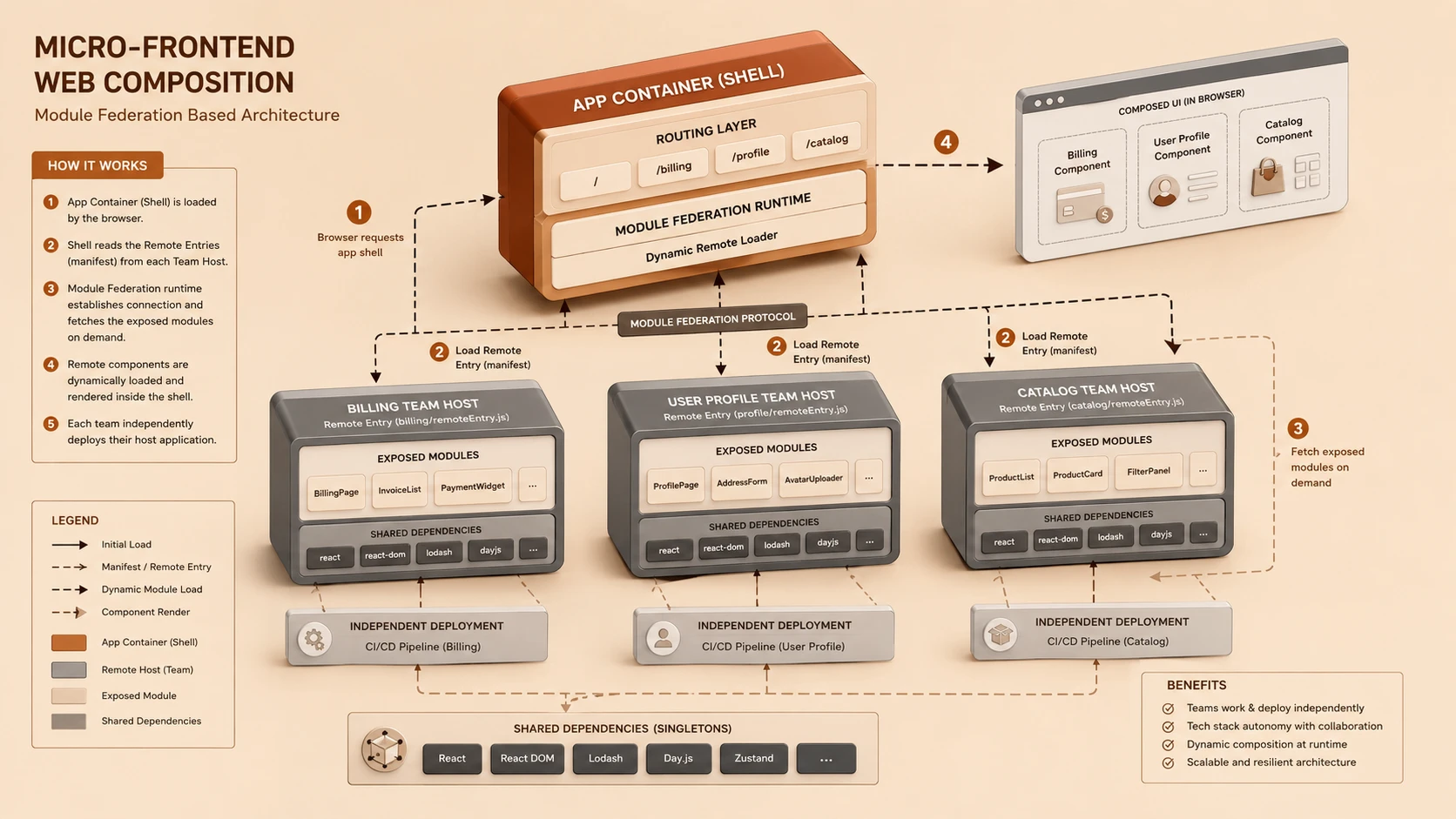
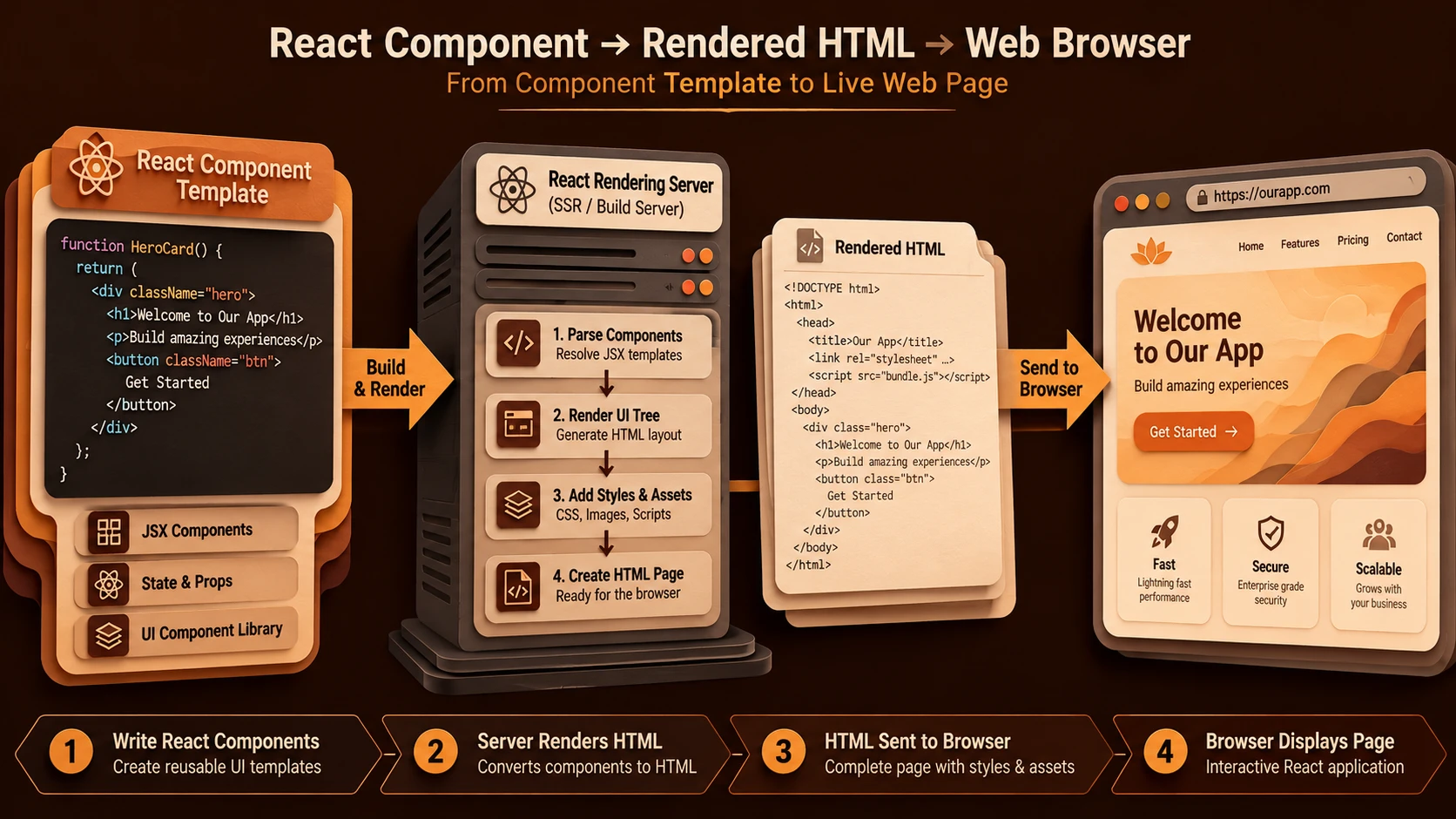
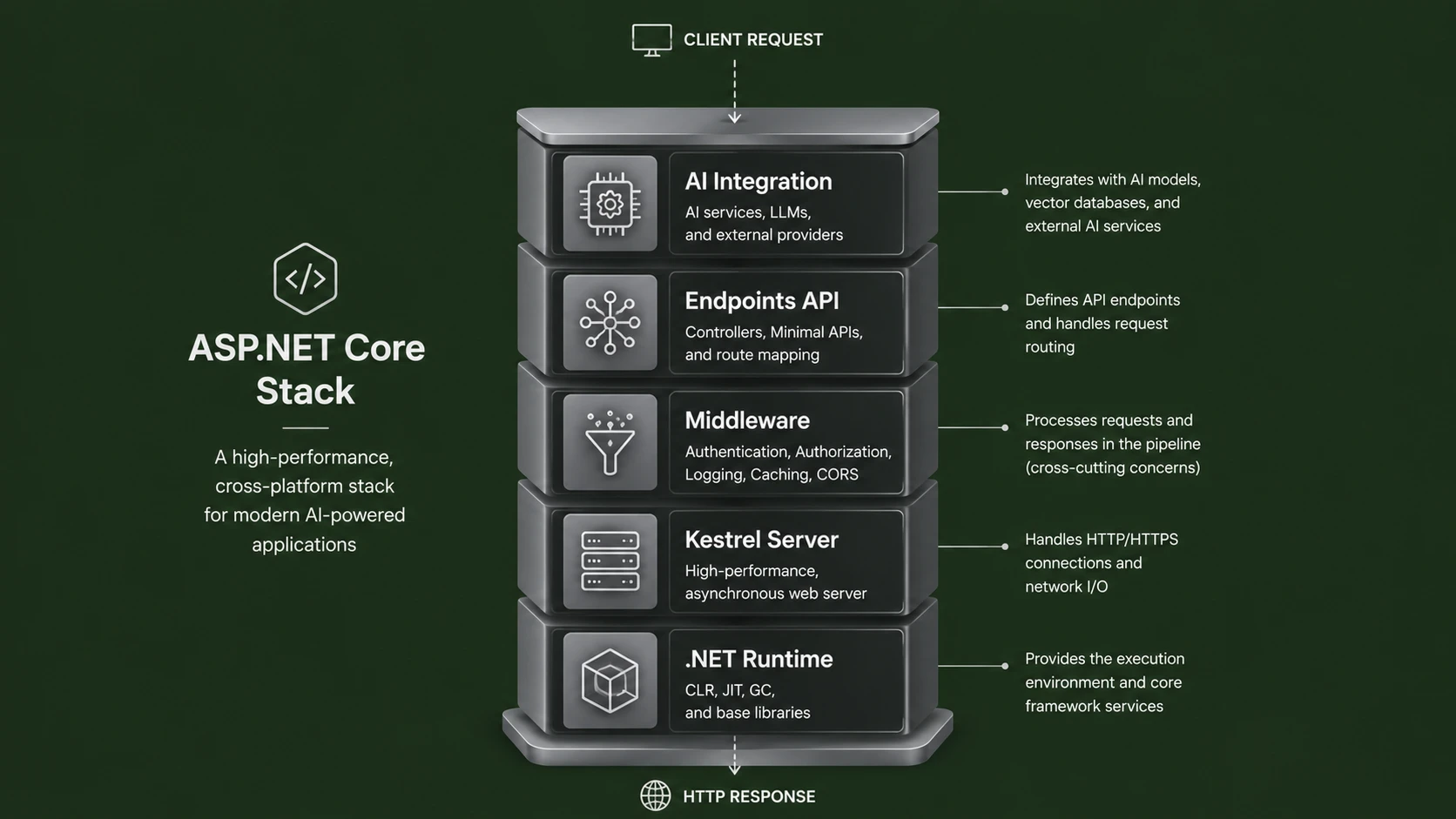
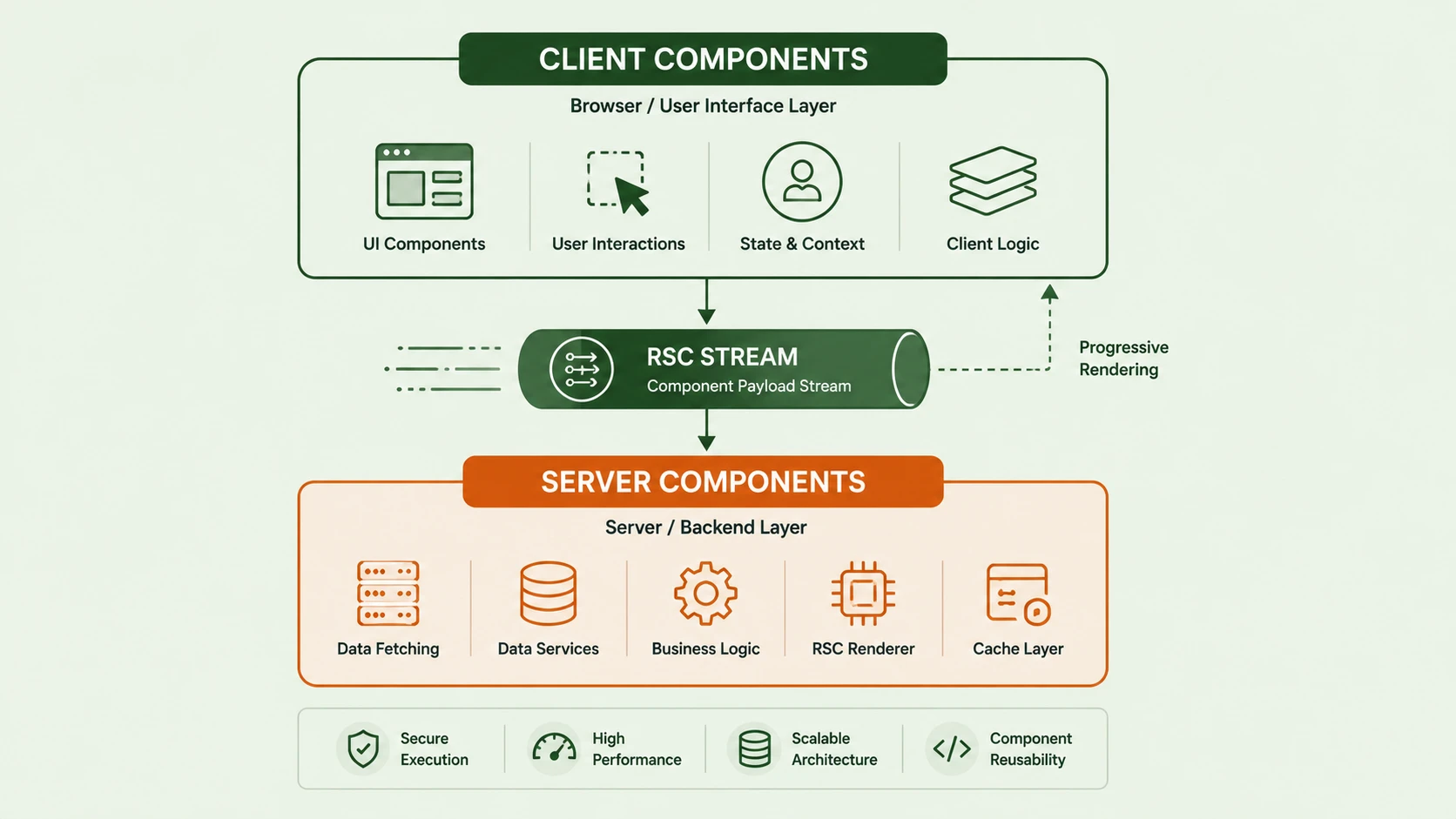
System architecture diagram and conceptual workflow layout for Micro-Frontends & the Modular Web.
- ◆Deployment templates
- ◆Build pipelines
- ◆Security policies
- ◆Shared infrastructure
- ◆Developer portals
- ◆Monitoring tools
Platform Engineering reduces operational overhead while standardizing frontend delivery.
AI-Assisted Development
By 2024, Artificial Intelligence increasingly supports frontend engineering through:
- ◆Code generation
- ◆Component recommendations
- ◆Automated testing
- ◆Accessibility analysis
- ◆Documentation generation
- ◆Dependency management
AI improves developer productivity while complementing established engineering practices.
Enterprise Use Cases
Financial Services
Allow separate teams to independently develop payments, customer accounts, lending, and reporting interfaces.
E-Commerce
Enable catalog, shopping cart, checkout, promotions, and customer support teams to release independently.
SaaS Platforms
Support multiple product modules maintained by specialized engineering teams while presenting a unified customer experience.
Healthcare
Separate patient management, appointments, clinical workflows, billing, and reporting into independently deployable applications.
Enterprise Portals
Deliver modular business capabilities through independently managed frontend applications connected by a common platform.
Performance Considerations
Organizations should monitor:
- ◆Initial application load time
- ◆Module loading latency
- ◆Bundle size
- ◆Shared dependency utilization
- ◆Runtime performance
- ◆Cross-application navigation
Performance optimization should ensure architectural modularity does not negatively affect user experience.
Security Considerations
Distributed frontend applications require centralized security governance.
Organizations should implement:
- ◆Single Sign-On (SSO)
- ◆OAuth 2.0 and OpenID Connect
- ◆Content Security Policy
- ◆Secure API communication
- ◆Role-based authorization
- ◆Dependency scanning
- ◆Runtime monitoring
- ◆Secure CI/CD pipelines
Security policies should remain consistent across independently developed applications.
Scalability
Micro-Frontends improve organizational scalability through:
- ◆Independent deployments
- ◆Domain ownership
- ◆Team autonomy
- ◆Modular codebases
- ◆Parallel development
- ◆Platform standardization
These capabilities enable engineering organizations to grow without creating frontend bottlenecks.
Best Practices
- ◆Organize frontend ownership around business domains.
- ◆Keep Micro-Frontends independently deployable.
- ◆Maintain a centralized design system.
- ◆Standardize authentication and authorization.
- ◆Minimize shared runtime dependencies.
- ◆Monitor user experience across application boundaries.
- ◆Establish clear ownership for every frontend module.
- ◆Invest in platform engineering to simplify developer workflows.
Common Mistakes
| Mistake | Enterprise Impact |
|---|---|
| Splitting applications too aggressively | Increased operational complexity |
| Duplicating shared dependencies | Larger bundles |
| Ignoring design consistency | Fragmented user experience |
| Weak governance between teams | Integration challenges |
| Building tightly coupled Micro-Frontends | Reduced deployment independence |
| Treating organizational problems as architectural problems | Limited business value |
Technology Comparison
| Capability | Frontend Monolith | Micro-Frontend Architecture |
|---|---|---|
| Team Ownership | Shared | Domain-Oriented |
| Deployment | Single Release | Independent Releases |
| Scalability | Limited | High |
| Technology Evolution | Coordinated | Incremental |
| Build Times | Longer | Smaller Independent Builds |
| Organizational Agility | Moderate | High |
Adoption Strategy
- 1.Identify business domains suitable for independent ownership.
- 2.Establish a shared design system.
- 3.Build a shell application for routing and authentication.
- 4.Introduce Module Federation where appropriate.
- 5.Standardize CI/CD pipelines across teams.
- 6.Implement centralized observability and security.
- 7.Migrate functionality incrementally rather than rewriting entire applications.
- 8.Continuously evaluate architectural complexity against measurable business outcomes.
Limitations
As of September 2024, Micro-Frontends have matured into a viable enterprise architecture, but they are not universally appropriate. Smaller applications with limited engineering teams may benefit more from a well-structured frontend monolith. Organizations should adopt Micro-Frontends primarily when independent team ownership, release autonomy, and long-term organizational scalability provide measurable value. Strong governance, shared design systems, and platform engineering remain essential for successful implementation.
Looking Ahead
From the perspective of September 2024, Micro-Frontends represent the frontend equivalent of the microservices revolution. Combined with Platform Engineering, DesignOps, AI-assisted development, cloud-native delivery, and modular platform architecture, they enable organizations to build scalable digital experiences that evolve independently without sacrificing consistency. As enterprise applications continue expanding across web, mobile, AI assistants, and emerging interfaces, the modular web is positioned to become the dominant architectural approach for large-scale frontend engineering.