Why Single-Model AI Platforms Are No Longer Enough
Early enterprise AI applications typically relied on a single Large Language Model to perform every task. While this simplified deployment, it also created significant operational challenges. Complex reasoning requests consumed expensive cloud models, lightweight classification tasks wasted high-end inference capacity, and organizations struggled to balance latency, accuracy, and infrastructure costs.
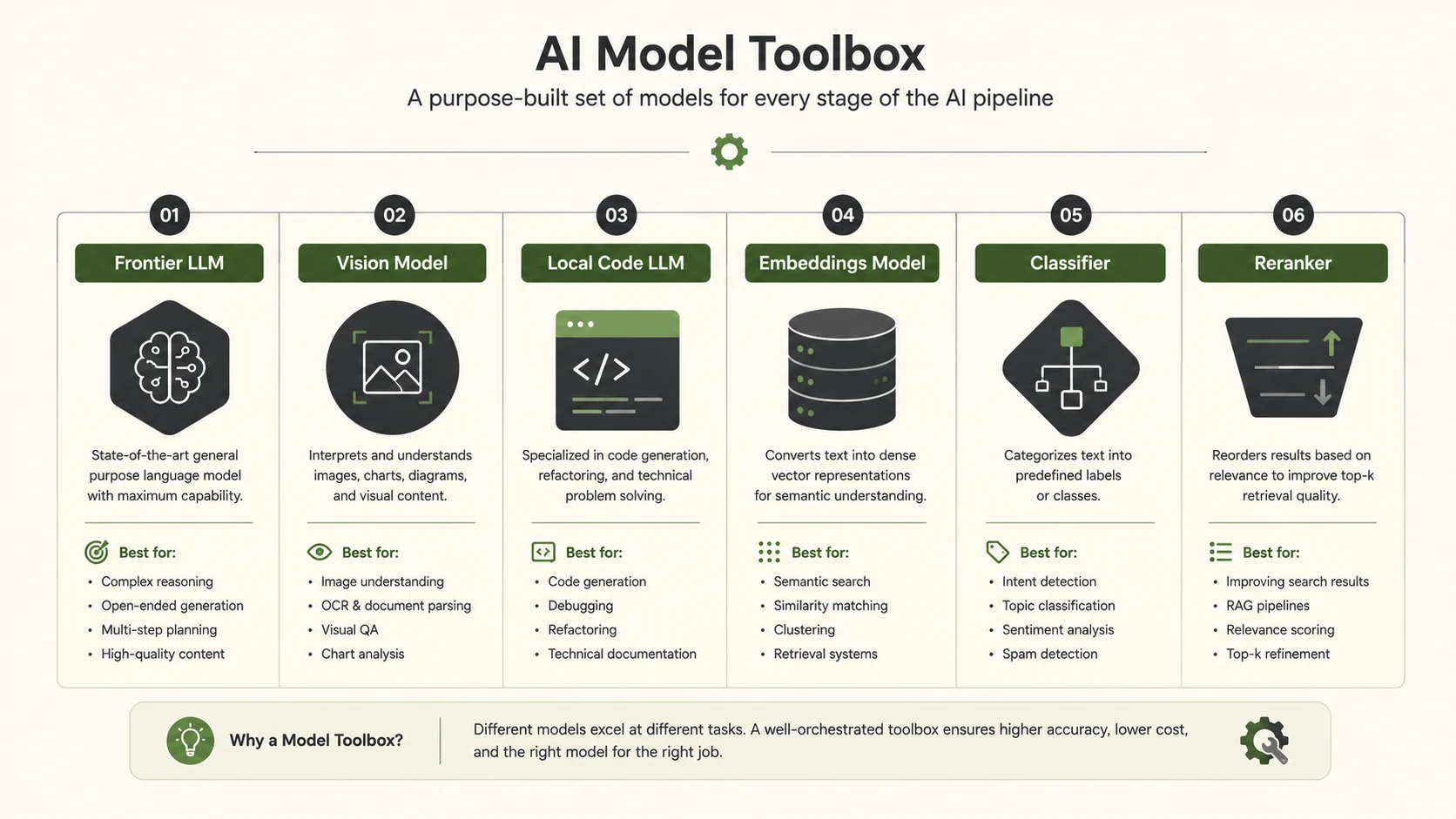
Modern AI platforms recognize that no single model excels at every workload. A reasoning model may outperform others on analytical tasks, while a lightweight local model is better suited for summarization, classification, or retrieval. Vision models specialize in image understanding, whereas embedding models focus on semantic search.
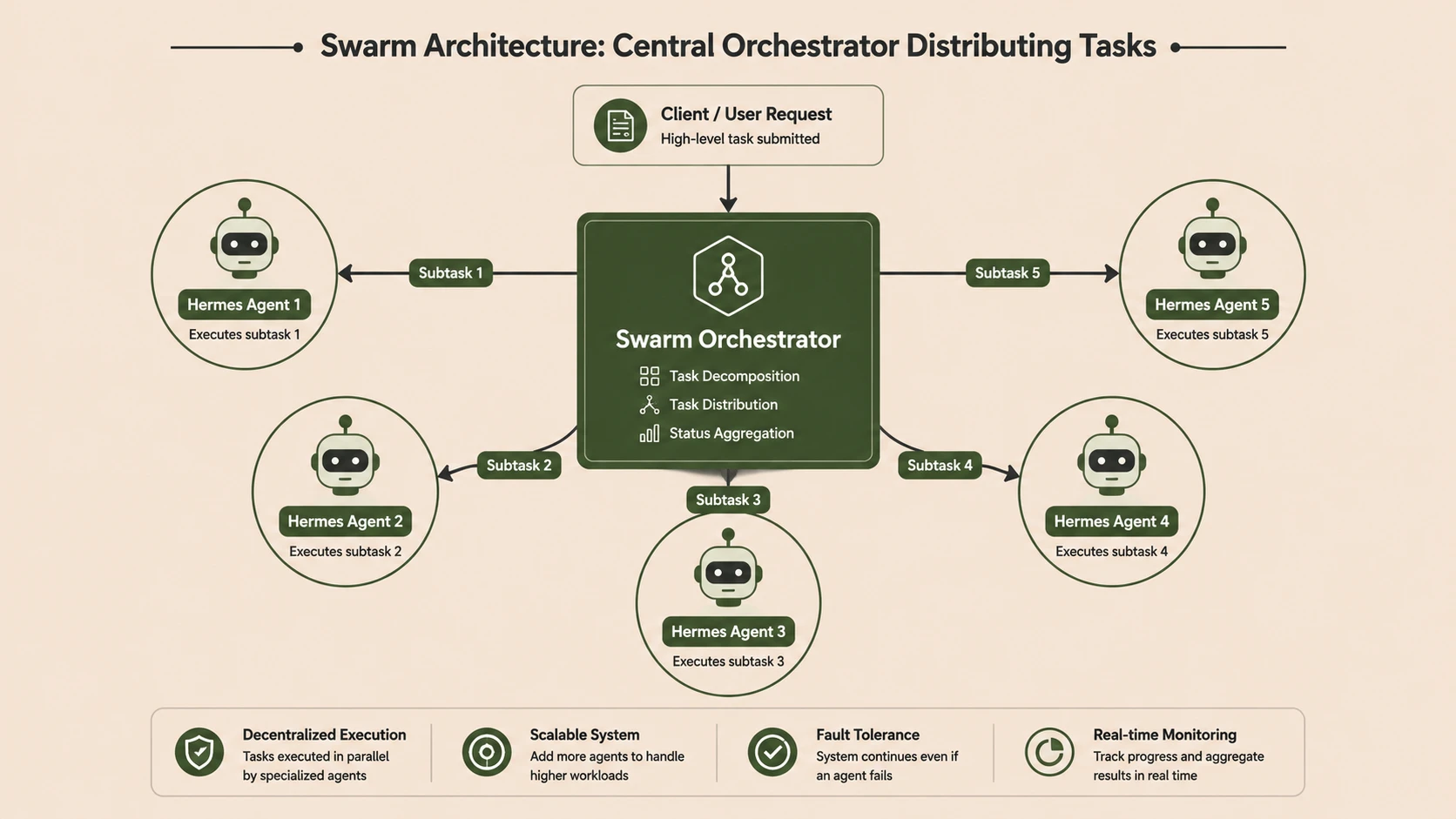
This shift has given rise to Multi-LLM orchestration—an architectural approach that coordinates multiple specialized models within a single production pipeline.
Architecture Principle: Rather than searching for one perfect AI model, enterprises build intelligent systems that dynamically combine the strengths of multiple specialized models.
---
Understanding Asymmetric Model Networks
Unlike homogeneous AI clusters where identical models process identical workloads, an asymmetric model network consists of different models with unique capabilities working together.
A production deployment may include:
- ◆Reasoning Models
- ◆Coding Models
- ◆Vision Models
- ◆Embedding Models
- ◆Speech Models
- ◆Translation Models
- ◆Local Quantized Models
- ◆Premium Cloud Models
- ◆Safety & Moderation Models
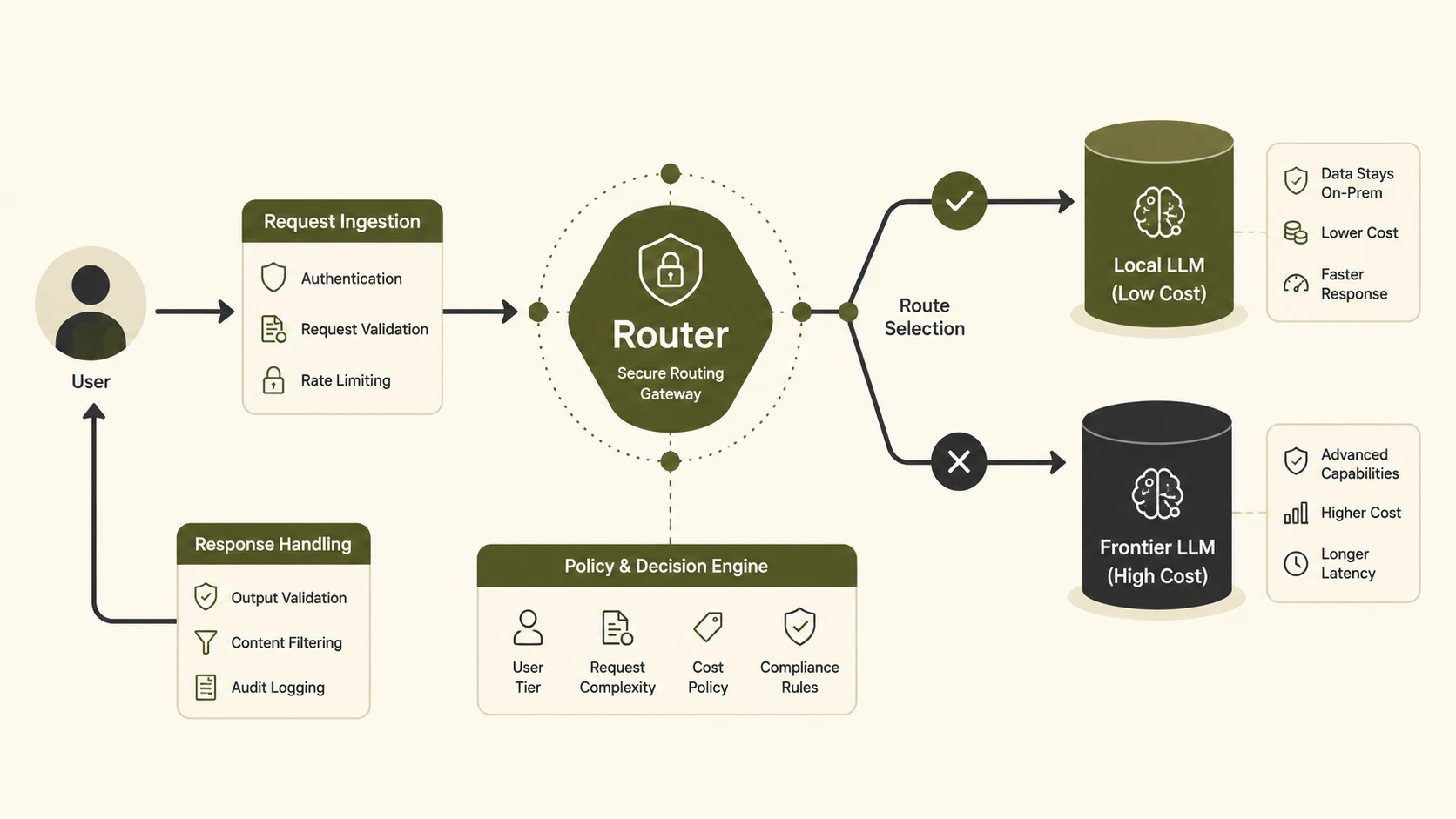
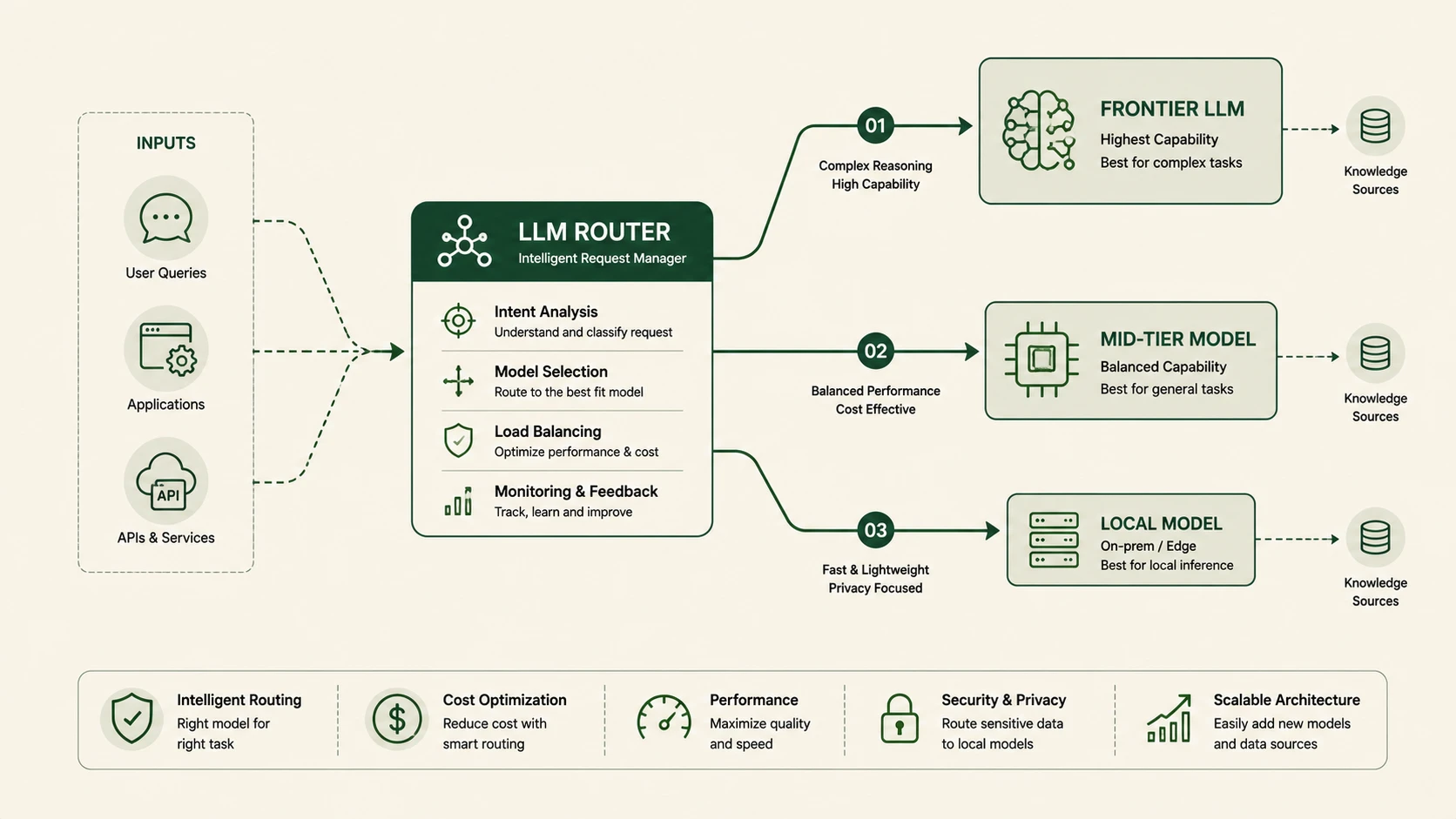
Instead of distributing requests randomly, the orchestration layer evaluates the intent of every request before selecting the most appropriate execution path.
---
Enterprise Reference Architecture
A modern Multi-LLM production platform commonly follows this architecture:
Users
   │
   ▼
API Gateway
   │
Authentication
   │
LLM Orchestrator
   │
────────────────────────────────────────────
│ Router │ Planner │ Memory │ Policy Engine │
────────────────────────────────────────────
   │
────────────────────────────────────────────
│ Reasoning │ Coding │ Vision │ Embedding │
│ Local LLM │ Cloud LLM │ Safety │ RAG │
────────────────────────────────────────────
   │
Response Aggregation
   │
Enterprise Applications
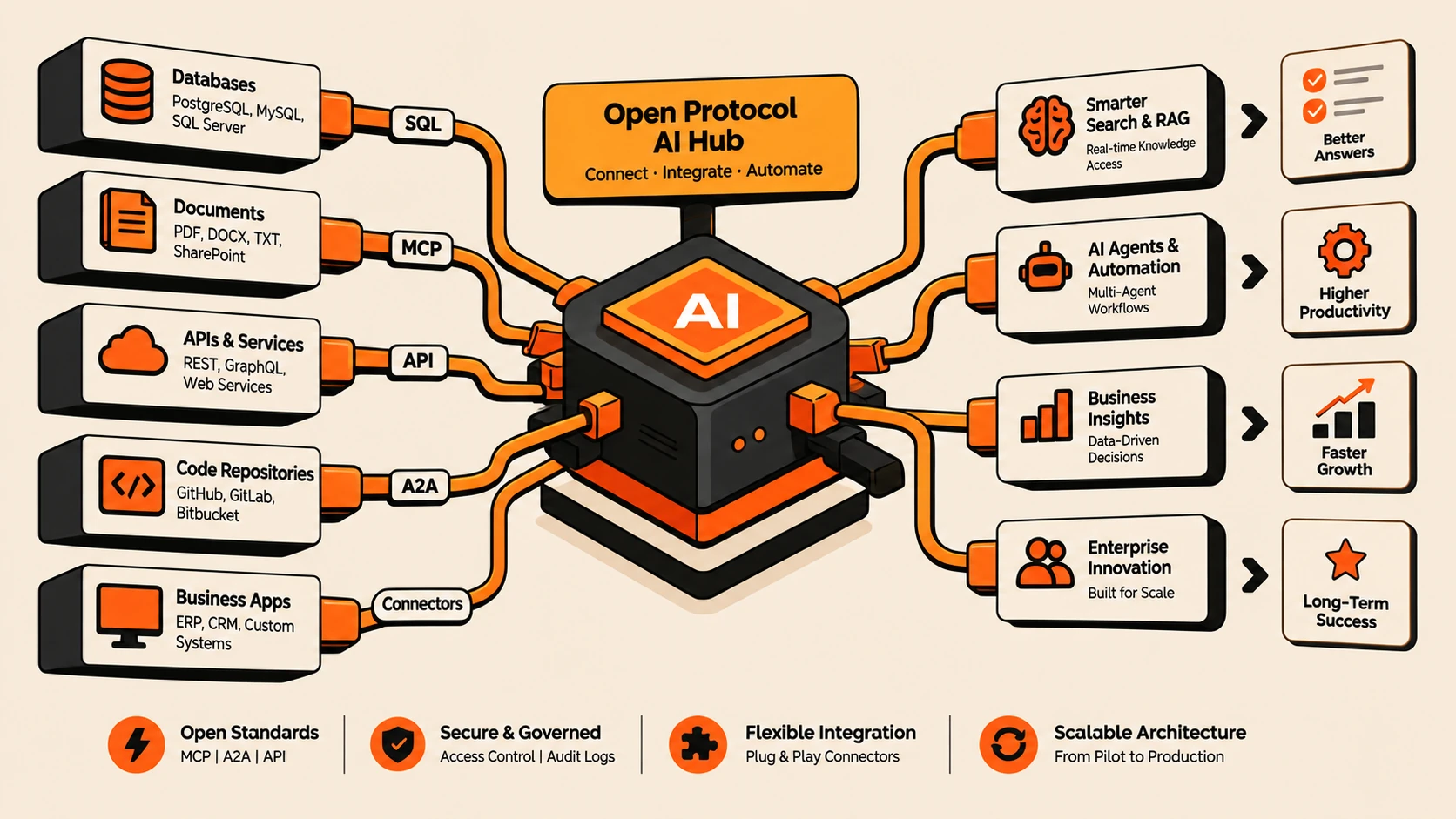
The orchestration layer separates business logic from model execution, making it easier to evolve infrastructure without changing application code.
---
Intelligent Model Selection
One of the biggest advantages of Multi-LLM orchestration is intelligent request routing.
Before selecting a model, the routing engine evaluates factors such as:
- ◆Request complexity
- ◆Estimated token count
- ◆Latency requirements
- ◆Infrastructure cost
- ◆Model health
- ◆GPU availability
- ◆Compliance requirements
- ◆Data sensitivity
- ◆Historical performance
- ◆Business priority
For example, a short internal knowledge lookup may be routed to a local quantized model, while a complex legal analysis is delegated to a high-capability cloud model.
---
Shared Memory and Context Synchronization
Production AI systems often require multiple models to collaborate on the same task.
To achieve this, orchestration platforms maintain shared context using:
- ◆Vector databases
- ◆Conversation history
- ◆Session state
- ◆Cached embeddings
- ◆Intermediate reasoning
- ◆Retrieved enterprise knowledge
- ◆Tool execution history
This shared memory allows different models to contribute without losing context or duplicating work.
---
Reliability Through Redundant Model Networks

System architecture diagram and conceptual workflow layout for Multi-LLM Orchestration.
Enterprise AI platforms cannot depend on a single provider.
If one model becomes unavailable, orchestration engines automatically redirect requests to alternative models based on predefined policies.
Typical resilience strategies include:
- ◆Automatic failover
- ◆Multi-provider routing
- ◆Local fallback models
- ◆Queue-based retry
- ◆Health monitoring
- ◆Regional redundancy
- ◆Circuit breakers
- ◆Graceful degradation
This ensures continuous AI availability even during infrastructure failures.
---
Cost Optimization Strategies
Running every request on the most powerful model is rarely economical.
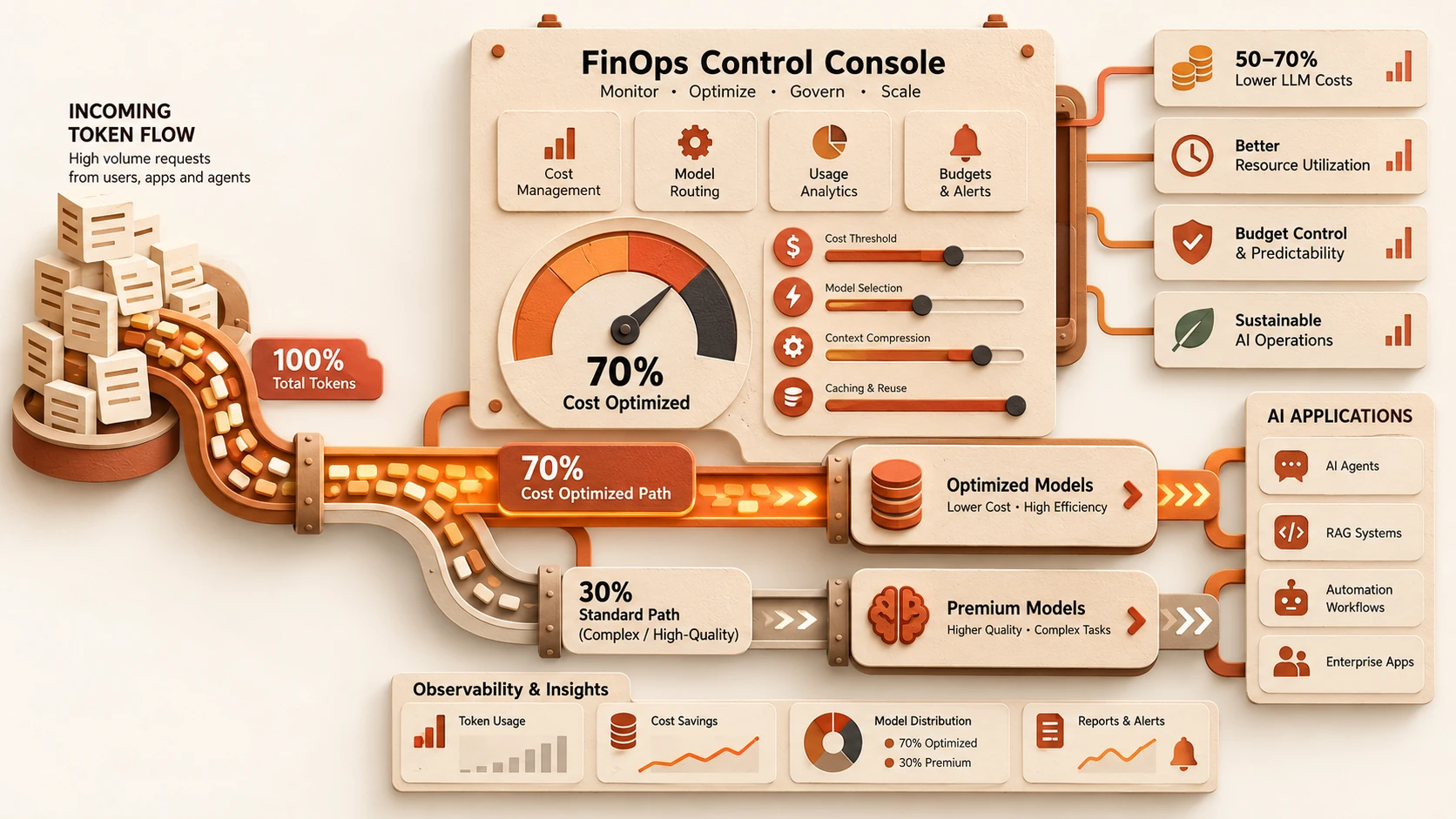
Organizations reduce operational costs by combining:
- ◆Local inference for repetitive tasks
- ◆Cloud inference for advanced reasoning
- ◆Response caching
- ◆Prompt optimization
- ◆Dynamic batching
- ◆Token budgeting
- ◆Intelligent model routing
- ◆Quantized models
These techniques significantly reduce infrastructure spending while maintaining response quality.
---
Observability and Production Monitoring
Enterprise orchestration platforms require complete visibility across the AI pipeline.
Key metrics include:
- ◆Routing accuracy
- ◆Cost per request
- ◆Average latency
- ◆Token consumption
- ◆GPU utilization
- ◆Queue depth
- ◆Model availability
- ◆Cache hit ratio
- ◆Request throughput
- ◆Response quality
Comprehensive observability enables continuous optimization and faster incident response.
---
Security and Governance
Because multiple AI providers may participate in a workflow, governance becomes increasingly important.
Recommended controls include:
- ◆Policy-based routing
- ◆Zero Trust authentication
- ◆Sensitive data filtering
- ◆Prompt inspection
- ◆Output validation
- ◆Audit logging
- ◆Role-based access control
- ◆Compliance monitoring
These controls ensure that enterprise AI pipelines remain secure while complying with regulatory requirements.
---
Best Practices
| Area | Best Practice |
|---|---|
| Model Selection | Capability-Based Routing |
| Infrastructure | Hybrid Local + Cloud |
| Reliability | Multi-Provider Failover |
| Memory | Shared Context Layer |
| Security | Policy-Driven Gateway |
| Performance | Dynamic Load Balancing |
| Cost | Quantized Local Models |
| Monitoring | End-to-End Observability |
---
The Future of Multi-LLM Systems
Enterprise AI is rapidly moving toward distributed intelligence rather than monolithic models. Future AI platforms will orchestrate dozens of specialized models that collaborate dynamically, share context, and continuously optimize execution based on workload characteristics.
Organizations that invest in Multi-LLM orchestration today will gain greater flexibility, lower infrastructure costs, improved resilience, and the ability to integrate emerging models without redesigning their entire AI platform. As production AI ecosystems continue to evolve, orchestration will become the foundation that connects diverse language models into a unified, intelligent enterprise system.