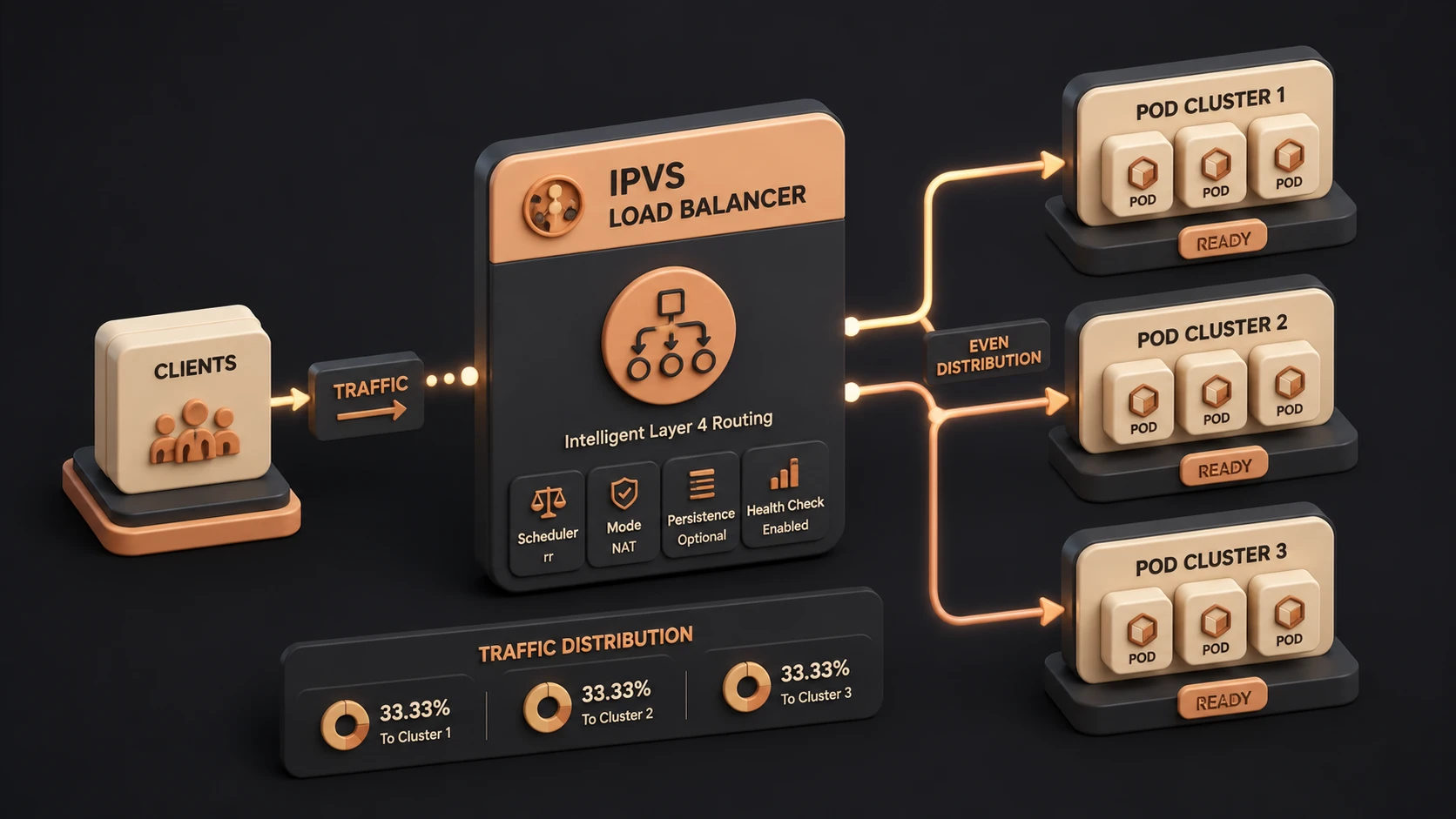
Why Modern Microservices Need Intelligence
Microservices have become the foundation of cloud-native software, enabling organizations to develop, deploy, and scale applications independently. However, as the number of services grows from dozens to hundreds, operational complexity increases dramatically. Managing service discovery, secure communication, traffic routing, observability, and resiliency manually quickly becomes unsustainable.
A Service Mesh solves many networking challenges by introducing a dedicated communication layer between services. When combined with AIOps, the platform evolves beyond automation into an intelligent system capable of predicting failures, optimizing traffic, and healing itself with minimal human intervention.
Architecture Principle: Modern distributed systems should continuously observe, optimize, and repair themselves rather than relying solely on manual operational processes.
---
What Is a Service Mesh?
A Service Mesh is an infrastructure layer that manages communication between microservices without requiring changes to application code.
Instead of embedding networking logic inside every service, the mesh provides standardized capabilities such as:
- ◆Service Discovery
- ◆Intelligent Traffic Routing
- ◆Load Balancing
- ◆Mutual TLS (mTLS)
- ◆Retry Policies
- ◆Circuit Breaking
- ◆Distributed Telemetry
- ◆Security Policies
This separation allows developers to focus on business logic while the platform manages service-to-service communication.
---
The Evolution of Cloud-Native Operations
Enterprise platforms have evolved through several architectural stages:
- 1.Monolithic Applications
- 2.Microservices
- 3.Kubernetes Orchestration
- 4.Service Mesh
- 5.Observability Platforms
- 6.AI-Driven Self-Optimizing Systems
The combination of Service Mesh and AIOps represents the next step in building autonomous infrastructure capable of making operational decisions in real time.
---
Enterprise Reference Architecture
Client Applications
        │
API Gateway
        │
Service Mesh Control Plane
        │
───────────────────────────────────────
│ Sidecar Proxies │ Policy Engine │
───────────────────────────────────────
        │
Microservices Cluster
        │
Telemetry Pipeline
        │
AI Observability Engine
        │
Predictive Analytics
        │
Autonomous Remediation
        │
Kubernetes Platform
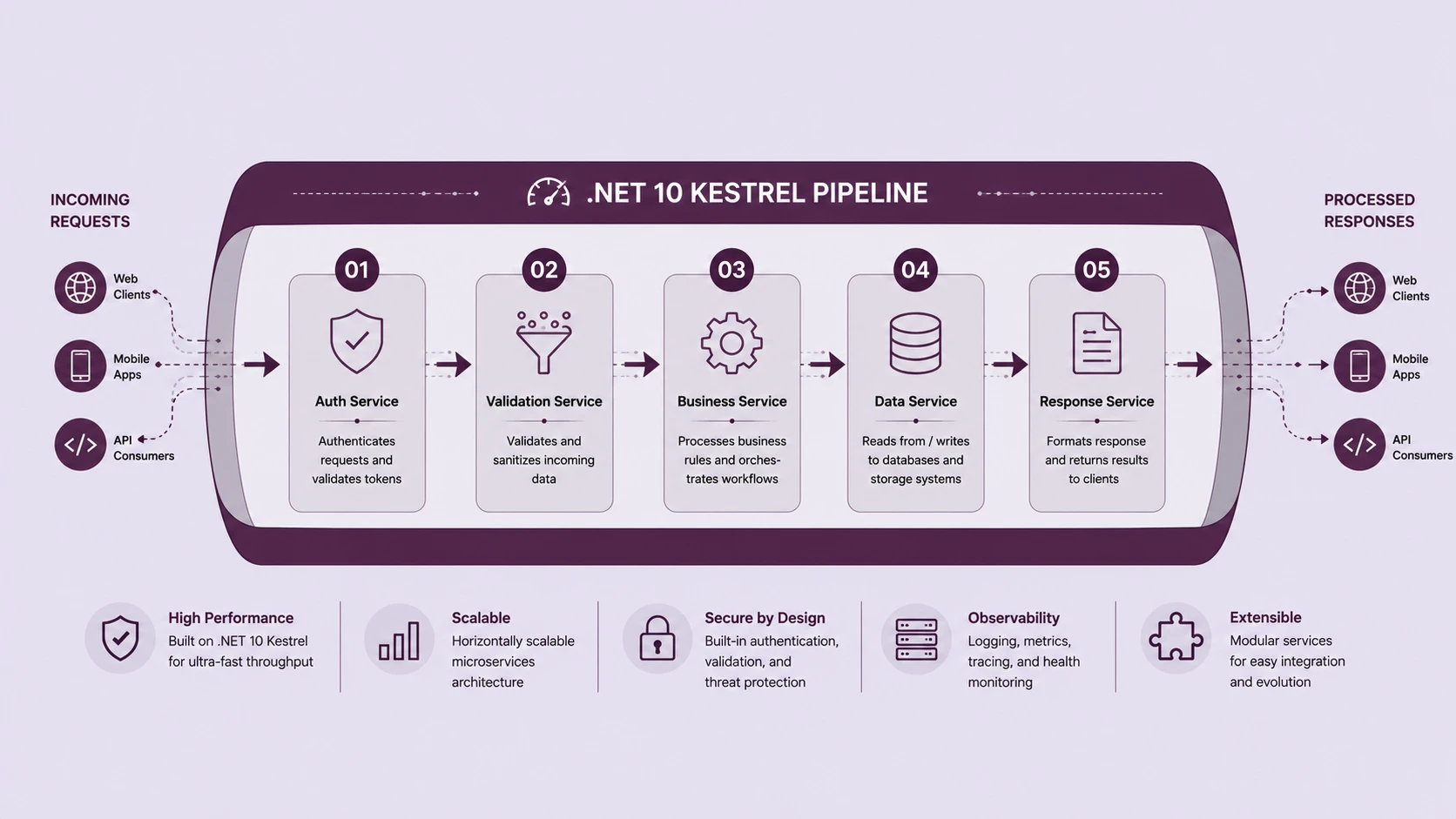
Every request passes through intelligent networking and operational intelligence before reaching application services.
---
How AIOps Enhances the Service Mesh
Traditional service meshes focus on communication and security.
AIOps extends these capabilities by adding intelligent decision-making.
Typical AI-driven capabilities include:
- ◆Predictive anomaly detection
- ◆Intelligent traffic engineering
- ◆Latency prediction
- ◆Capacity forecasting
- ◆Failure correlation
- ◆Root-cause analysis
- ◆Automated incident response
- ◆Resource optimization
Instead of reacting after problems occur, the platform continuously anticipates and mitigates operational risks.
---
Intelligent Traffic Management

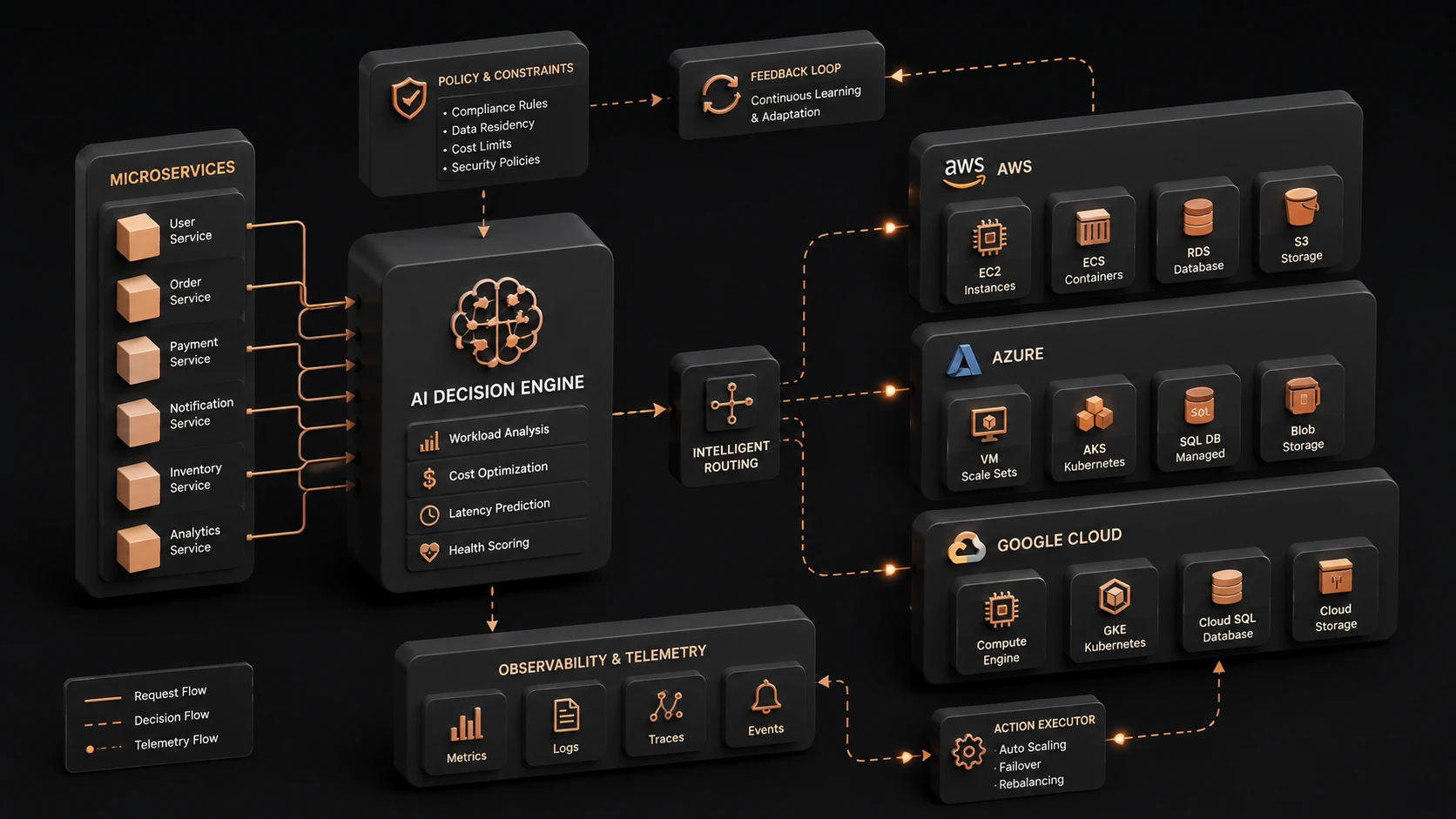
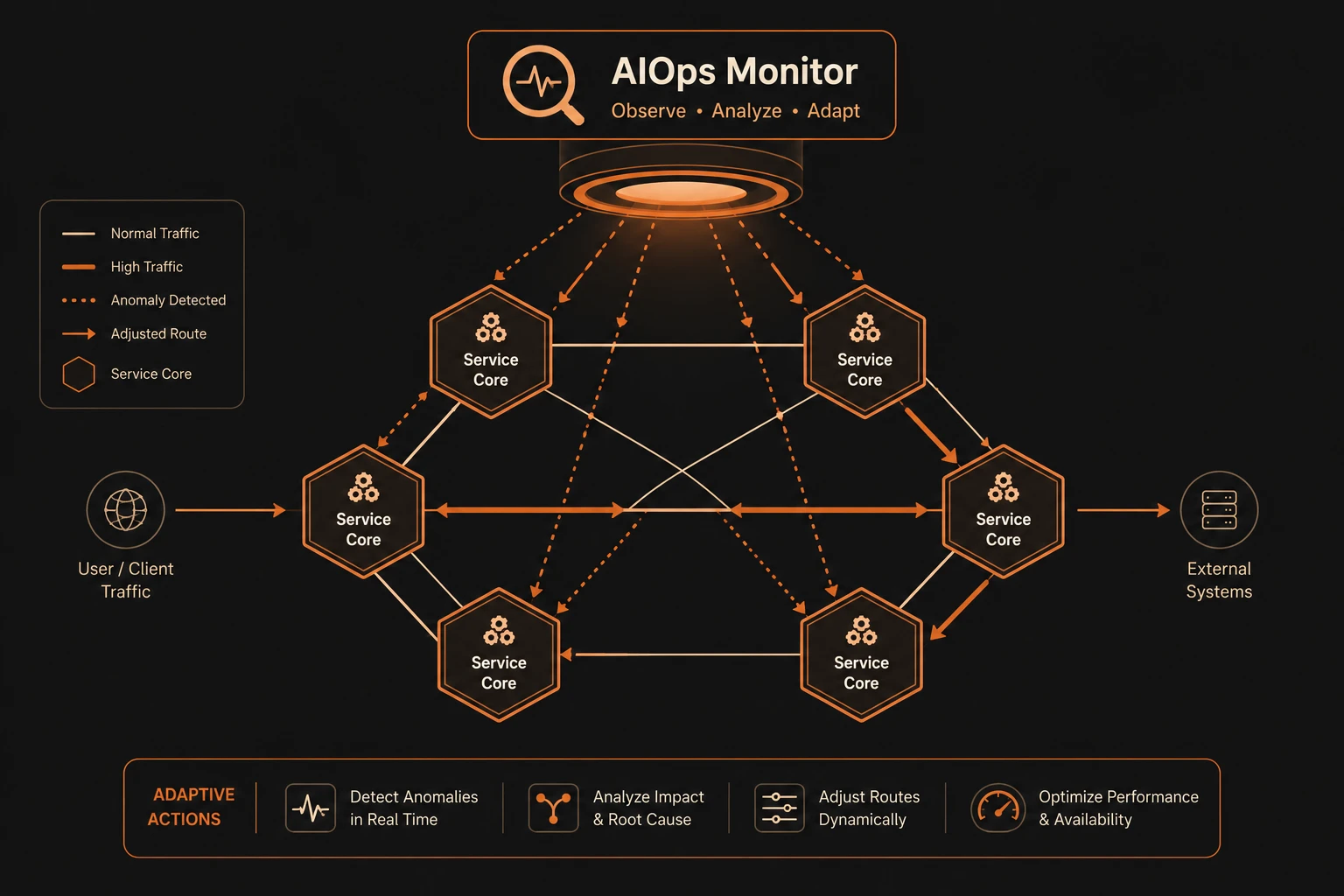
System architecture diagram and conceptual workflow layout for Micro-Service Meshes + AI Ops.
Traffic routing becomes adaptive rather than static.
The mesh can automatically:
- ◆Shift traffic away from degraded services
- ◆Prioritize critical business workloads
- ◆Balance requests across healthy regions
- ◆Optimize response latency
- ◆Detect routing bottlenecks
- ◆Apply canary deployment strategies
- ◆Execute blue-green rollouts
- ◆Minimize service disruption
These optimizations improve reliability without requiring application changes.
---
Self-Healing Infrastructure
One of the defining characteristics of self-optimizing systems is autonomous recovery.
Common remediation actions include:
- ◆Restart unhealthy workloads
- ◆Scale services automatically
- ◆Replace failed containers
- ◆Isolate faulty service instances
- ◆Roll back failed deployments
- ◆Redirect traffic dynamically
- ◆Reconfigure routing policies
- ◆Trigger automated recovery workflows
Engineering teams transition from reacting to incidents to supervising intelligent operational systems.
---
Observability and Continuous Learning
A Service Mesh generates a rich stream of operational telemetry.
AI models continuously analyze:
- ◆Request latency
- ◆Error rates
- ◆Service dependencies
- ◆Traffic patterns
- ◆CPU utilization
- ◆Memory consumption
- ◆Deployment changes
- ◆Infrastructure health
Every operational event improves future optimization decisions through continuous learning.
---
Enterprise Benefits
Organizations adopting AI-enhanced Service Mesh platforms typically achieve:
- ◆Lower application latency
- ◆Higher service availability
- ◆Faster incident resolution
- ◆Reduced operational costs
- ◆Improved deployment safety
- ◆Better infrastructure utilization
- ◆Stronger security posture
- ◆Greater engineering productivity
These benefits become increasingly valuable as distributed systems continue to grow in complexity.
---
Best Practices
| Area | Best Practice |
|---|---|
| Networking | Service Mesh |
| Security | Mutual TLS Everywhere |
| Observability | OpenTelemetry |
| Intelligence | AI-Powered AIOps |
| Scaling | Predictive Auto Scaling |
| Reliability | Self-Healing Automation |
| Deployment | Progressive Delivery |
| Governance | Policy-as-Code |
---
The Future of Autonomous Cloud Platforms
The future of cloud-native engineering lies in platforms that continuously optimize themselves. By combining Service Mesh technology with AI-driven operational intelligence, enterprises can build distributed systems that adapt to changing workloads, recover automatically from failures, and improve performance without constant manual intervention.
As organizations embrace increasingly complex microservice ecosystems, self-optimizing platforms powered by AIOps will become a foundational capability for delivering resilient, secure, and scalable digital services.