Why Platform Engineering Needs Governance
As organizations scale, engineering teams often create their own deployment pipelines, infrastructure templates, security controls, and operational practices. While this flexibility accelerates individual teams, it also introduces inconsistency, duplicated effort, compliance risks, and operational complexity.
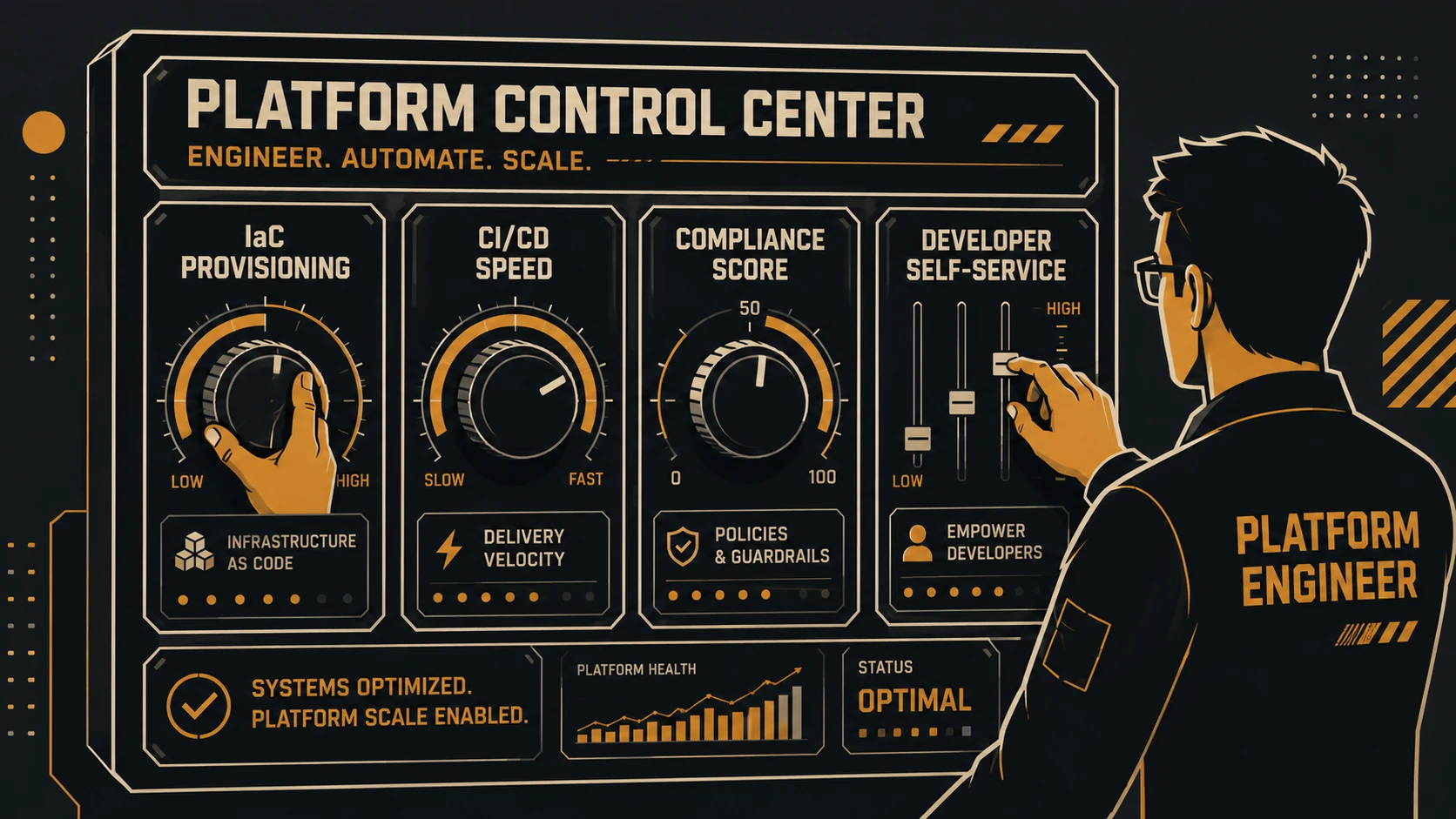
Platform Engineering Governance addresses these challenges by providing a standardized Internal Developer Platform (IDP) that offers reusable services, policy-driven automation, and self-service capabilities without sacrificing developer autonomy.
Architecture Principle: Governance should provide safe, standardized building blocks that accelerate engineering teams instead of restricting them.
---
What Is Platform Engineering Governance?
Platform Engineering Governance is the practice of defining standards, policies, automation, and operational guardrails that enable development teams to build and deploy software consistently across the organization.
Rather than every team managing infrastructure independently, a dedicated platform team provides reusable capabilities including:
- ◆Internal Developer Portal
- ◆Service Catalog
- ◆Infrastructure Templates
- ◆Deployment Automation
- ◆Policy Enforcement
- ◆Security Guardrails
- ◆Observability Platform
- ◆Cost Management
This approach allows product teams to focus on business features while the platform team manages operational excellence.
---
Core Principles
Effective platform governance is built on several principles:
- ◆Self-service over manual requests
- ◆Standardization without limiting innovation
- ◆Policy as Code
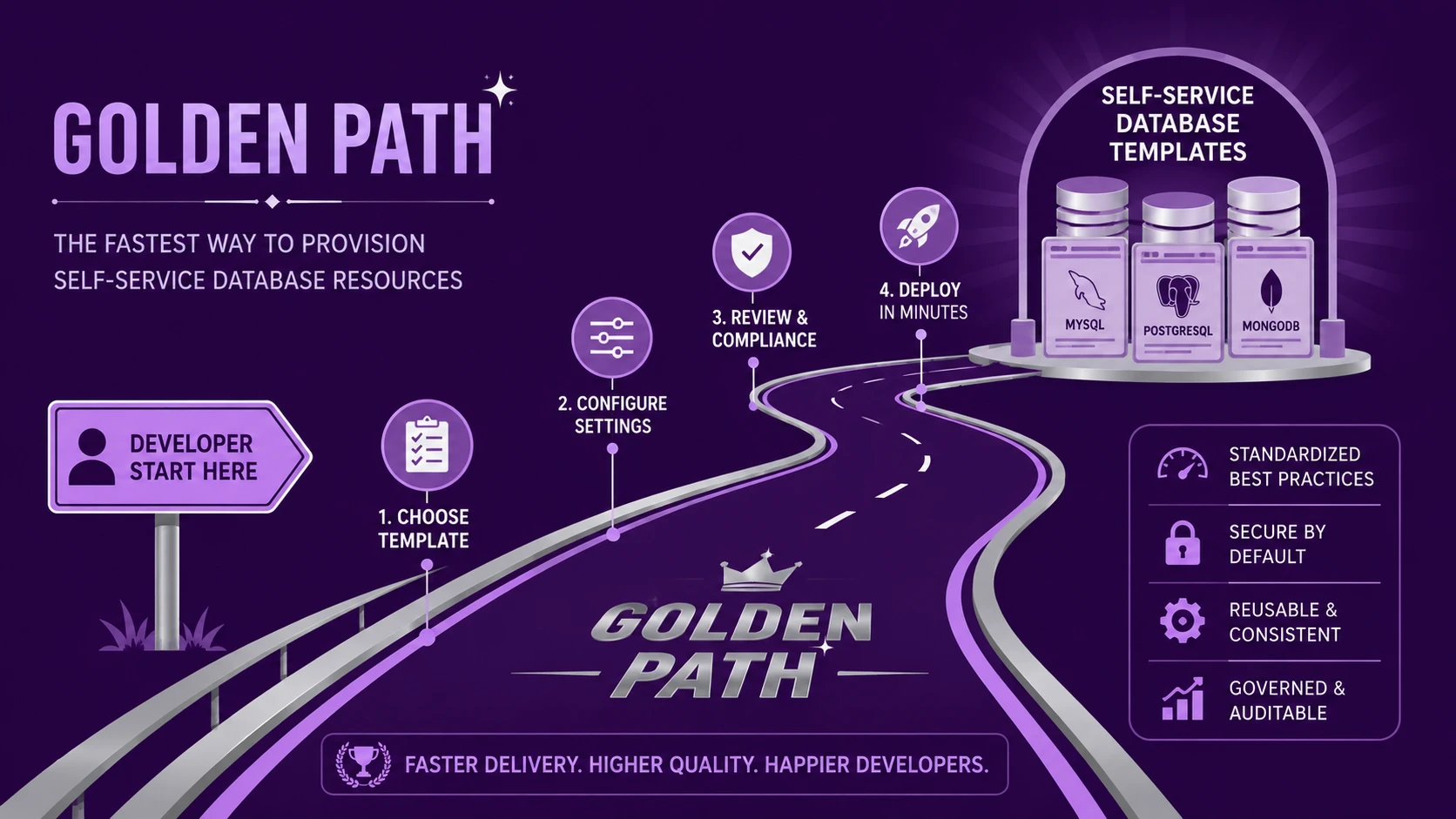
- ◆Golden deployment paths
- ◆Secure-by-default infrastructure
- ◆Continuous platform improvement
- ◆Developer experience first
- ◆Automated compliance
These principles reduce operational overhead while improving delivery speed.
---
Enterprise Reference Architecture
Engineering Teams
        │
        ▼
Internal Developer Portal
        │
Service Catalog
        │
Platform APIs
        │
────────────────────────────────────────
│ Kubernetes │ CI/CD │ Secrets │ IAM │
│ Monitoring │ Logging │ Policies │
────────────────────────────────────────
        │
Policy Engine
        │
Cloud Infrastructure
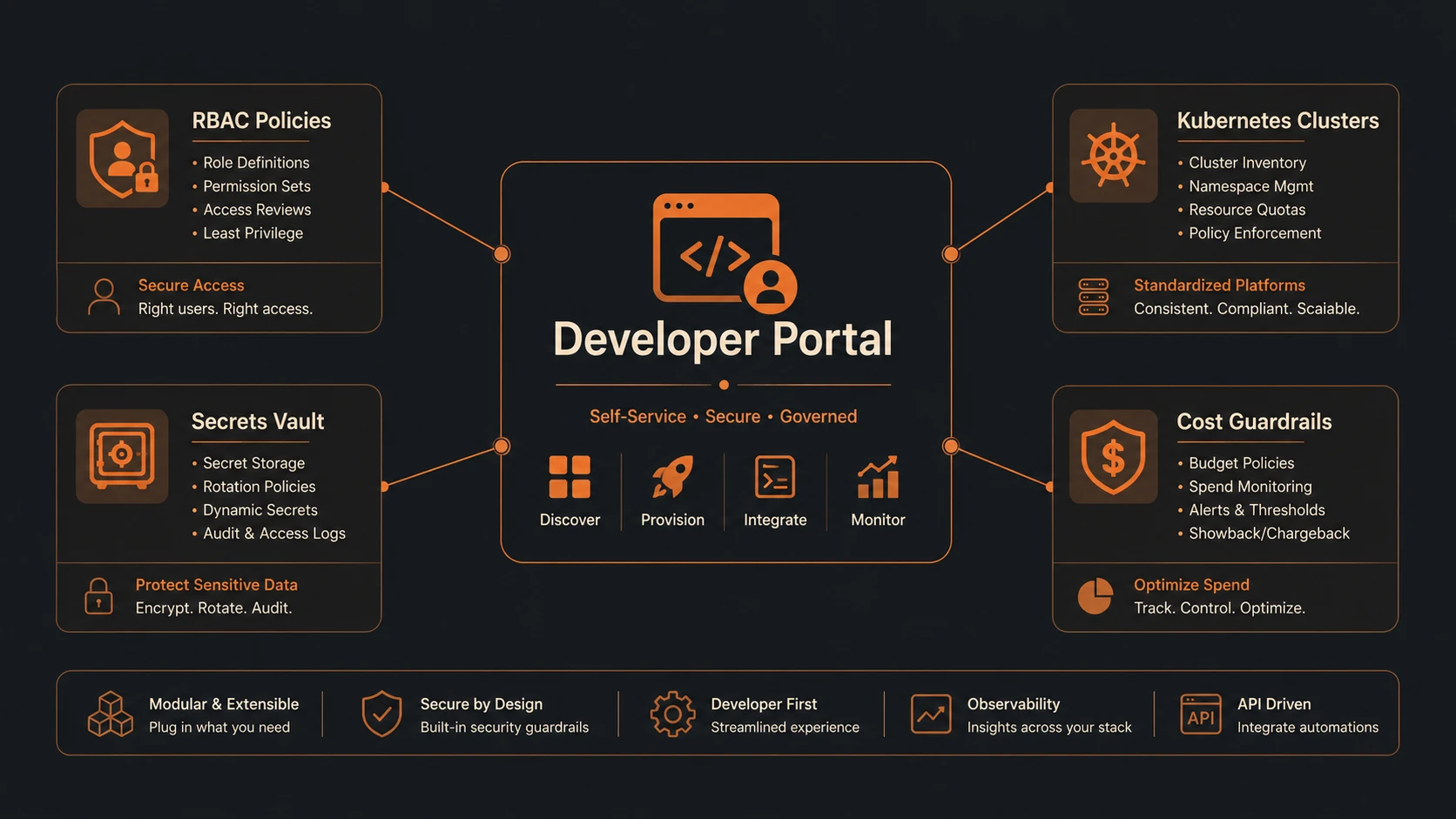
The platform layer abstracts infrastructure complexity while enforcing governance across the enterprise.
---
Self-Service Developer Platform
Instead of opening infrastructure tickets, developers consume standardized platform services.
Common self-service capabilities include:
- ◆Create new applications
- ◆Provision databases
- ◆Deploy Kubernetes workloads
- ◆Generate CI/CD pipelines
- ◆Configure monitoring
- ◆Manage secrets
- ◆Request cloud resources
- ◆Register APIs
Automation dramatically reduces lead time while maintaining operational consistency.

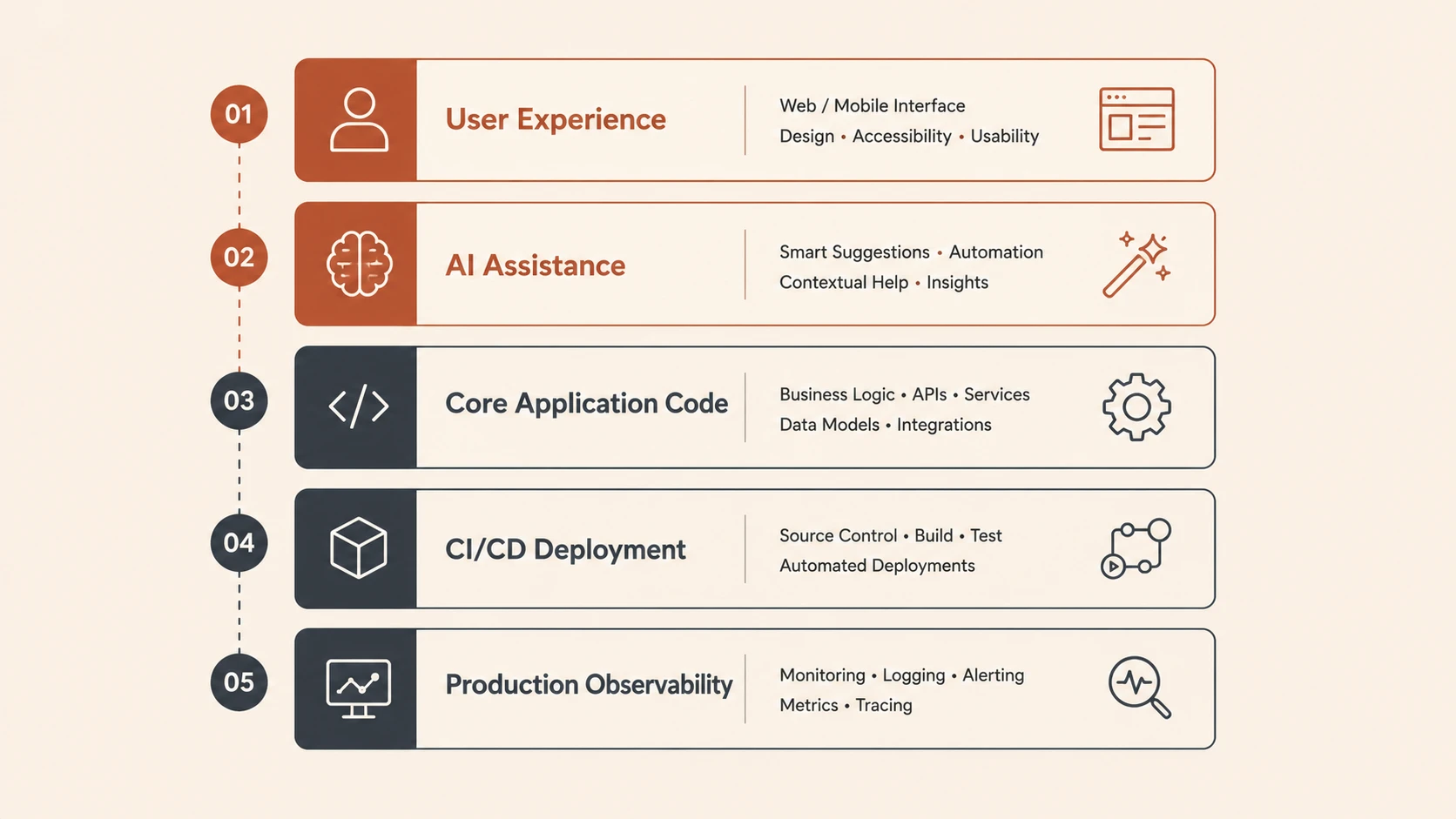
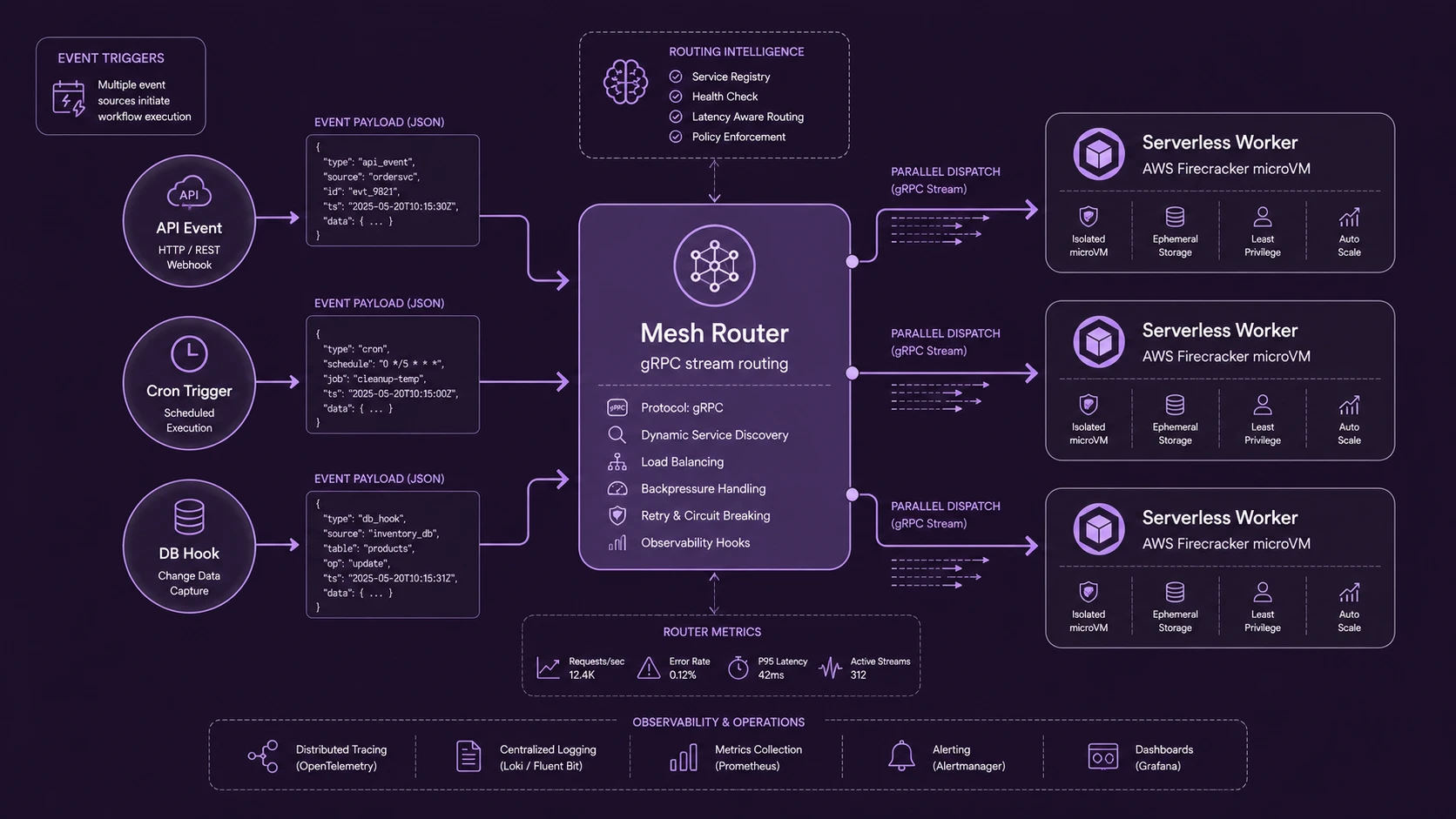
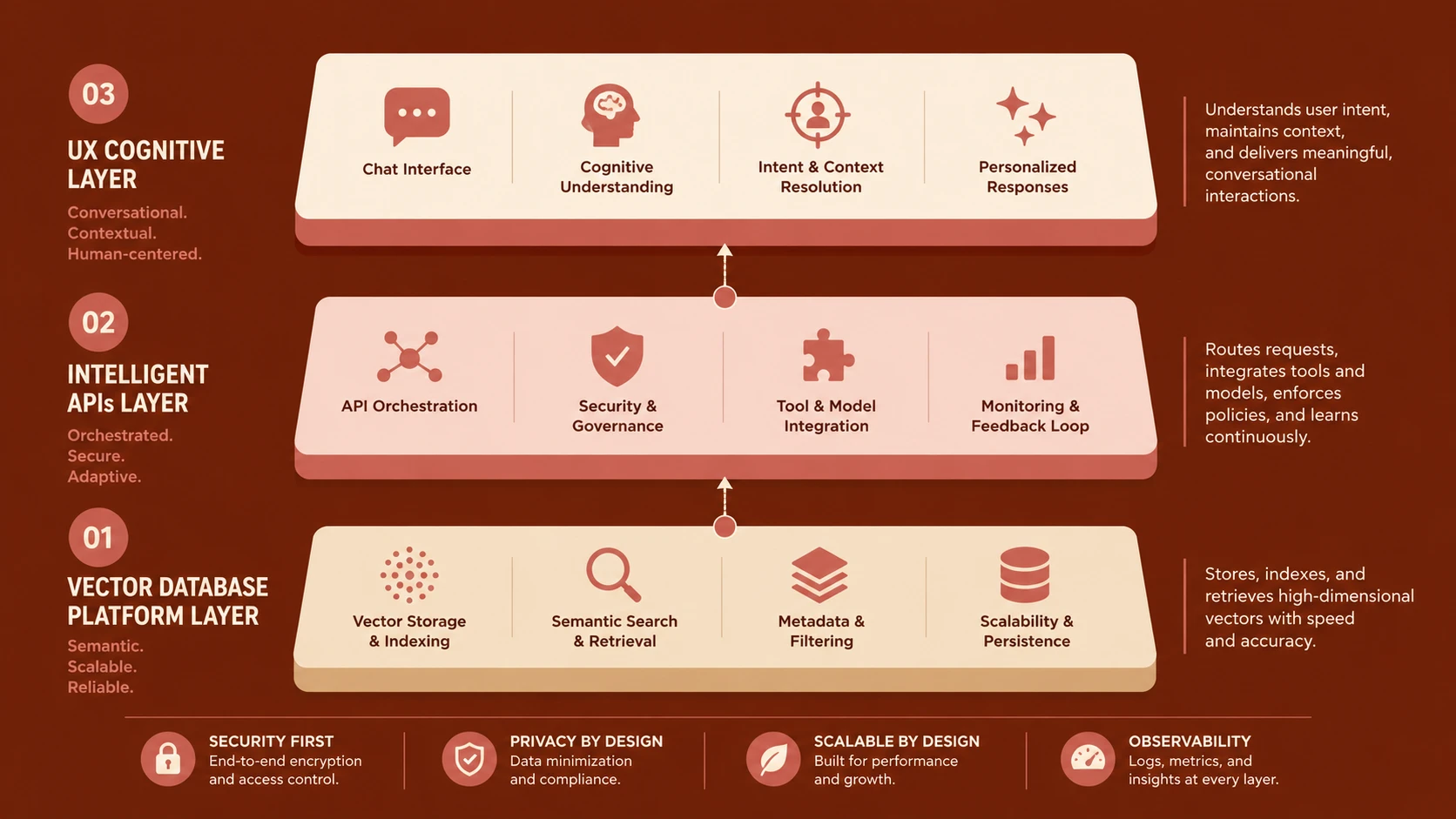
System architecture diagram and conceptual workflow layout for Platform Engineering Governance.
---
Policy as Code
Governance becomes scalable when policies are automated.
Examples include:
- ◆Deployment policies
- ◆Resource quotas
- ◆Security baselines
- ◆Network restrictions
- ◆Cost controls
- ◆Compliance rules
- ◆Naming conventions
- ◆Infrastructure validation
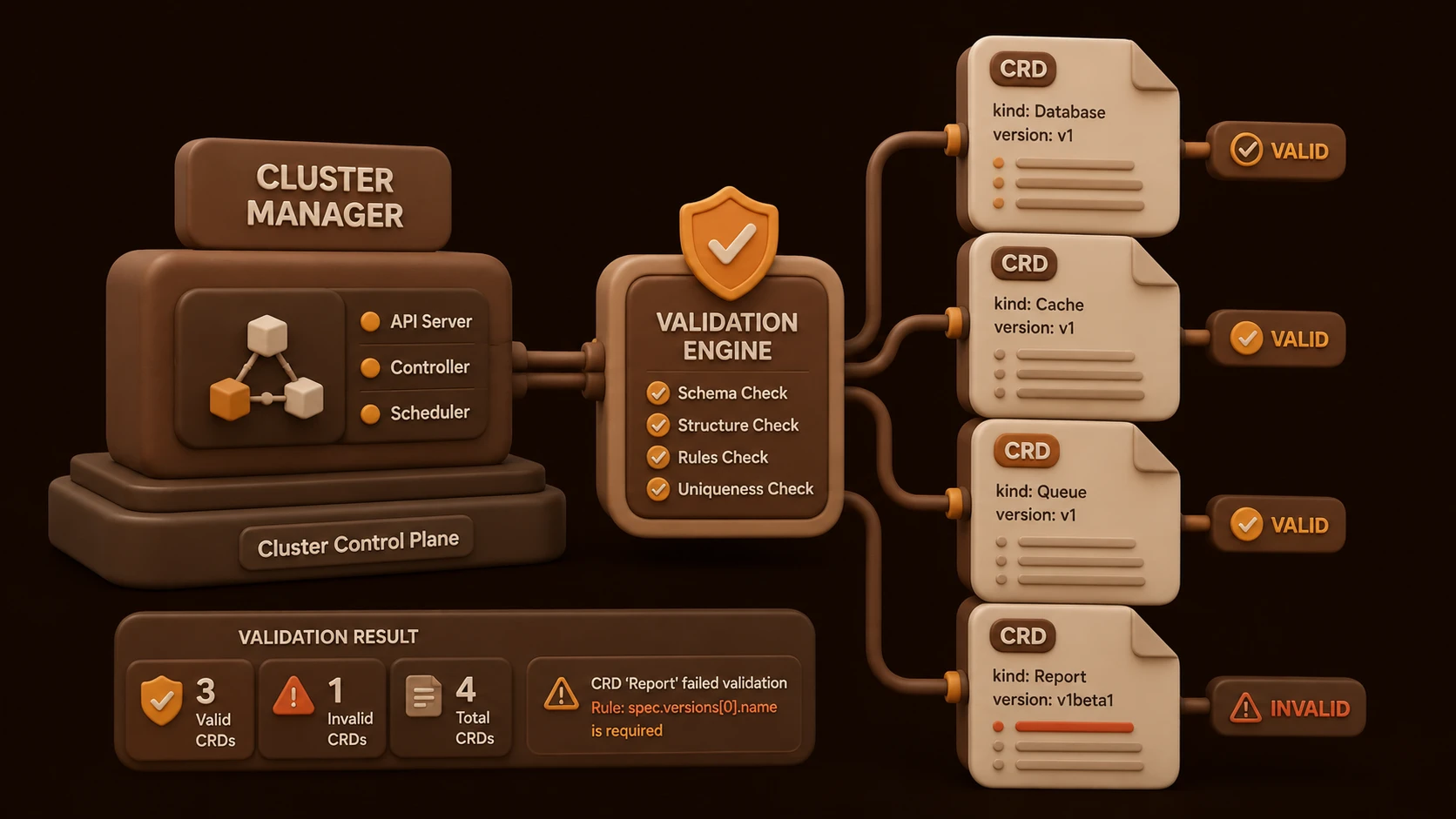
Policy engines continuously validate every deployment before it reaches production.
---
Security and Compliance
Platform governance integrates security directly into the software delivery lifecycle.
Recommended controls include:
- ◆Identity Federation
- ◆RBAC
- ◆Secret Management
- ◆Container Image Scanning
- ◆Infrastructure Scanning
- ◆Supply Chain Security
- ◆Audit Logging
- ◆Continuous Compliance
This ensures secure deployments without slowing developer productivity.
---
Observability and Platform Metrics
Successful platform teams measure the health of the platform itself.
Important metrics include:
- ◆Deployment frequency
- ◆Lead time for changes
- ◆Platform adoption
- ◆Service reliability
- ◆Developer satisfaction
- ◆Infrastructure utilization
- ◆Incident rate
- ◆Platform availability
These insights help platform teams continuously improve the developer experience.
---
Best Practices
| Area | Best Practice |
|---|---|
| Platform | Internal Developer Platform |
| Governance | Policy as Code |
| Infrastructure | Golden Templates |
| Security | Secure-by-Default |
| Delivery | Self-Service Automation |
| Operations | Kubernetes Native |
| Observability | Platform Telemetry |
| Developer Experience | Platform APIs & Service Catalog |
---
The Future of Platform Engineering
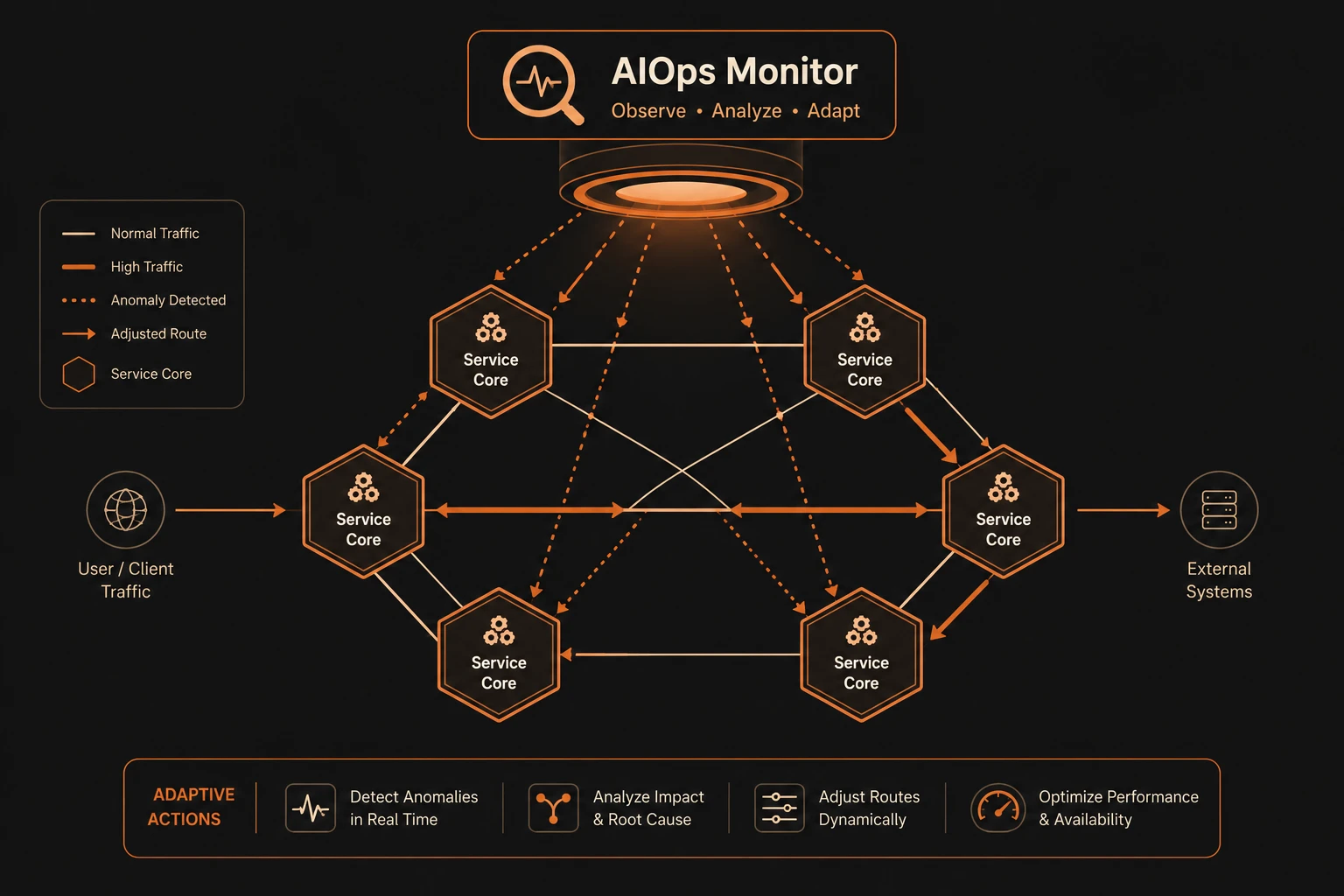
Platform Engineering is becoming the operating system for modern software organizations. Future platforms will increasingly combine AI-assisted operations, policy-driven automation, intelligent developer portals, and autonomous infrastructure management to reduce complexity while improving delivery speed.
Organizations that invest in strong platform governance today will be better positioned to scale engineering teams, maintain operational consistency, and accelerate innovation without sacrificing security, reliability, or developer experience.