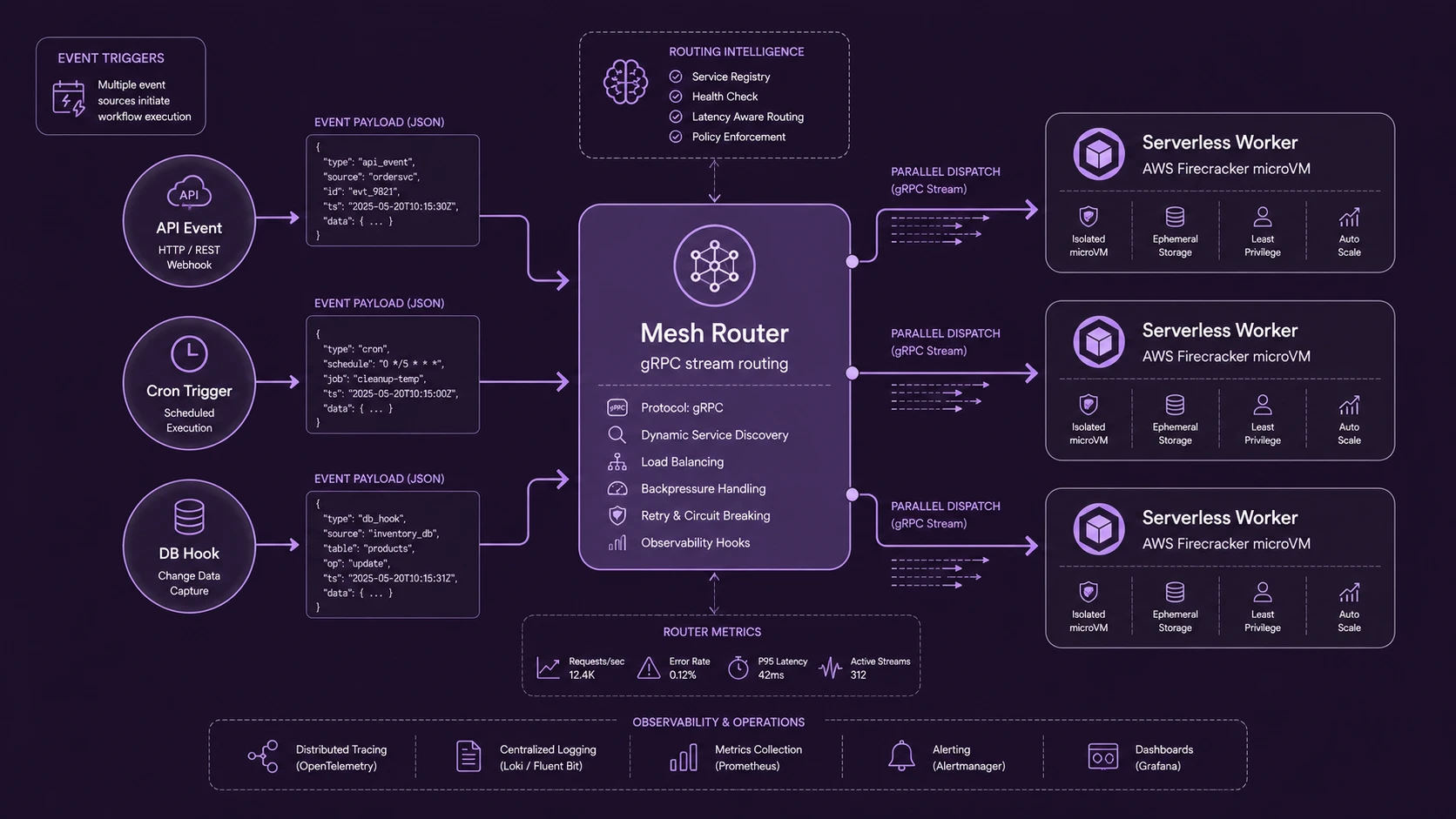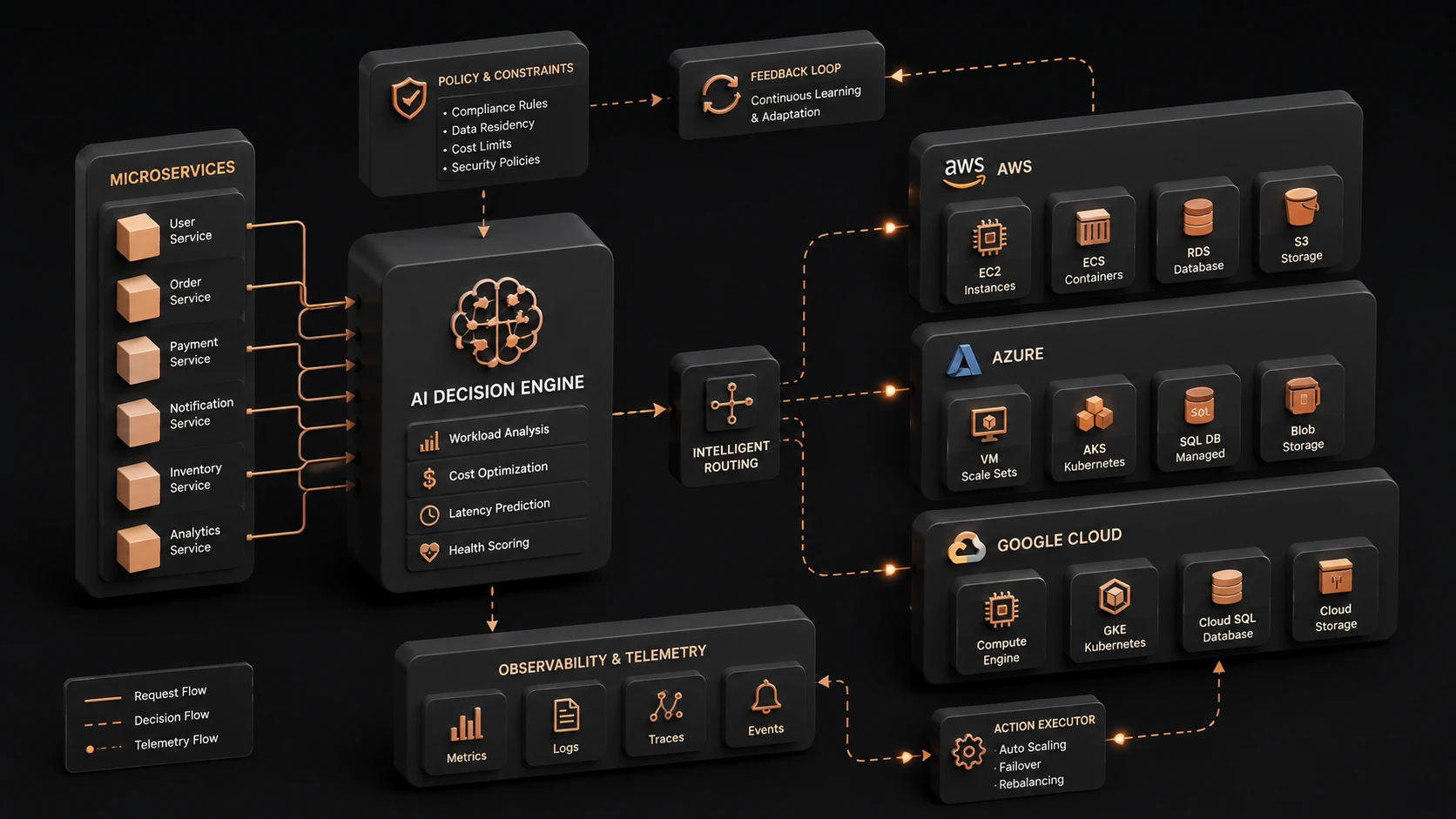
Introduction
Over the past decade, cloud computing has evolved from a single-provider deployment model into highly distributed, multi-cloud ecosystems. Organizations increasingly combine services from AWS, Microsoft Azure, Google Cloud Platform (GCP), and private cloud environments to improve resilience, reduce vendor dependency, optimize costs, and satisfy regional compliance requirements.
However, operating across multiple cloud providers introduces significant operational complexity. Engineering teams must manage different networking models, identity systems, monitoring tools, infrastructure services, security controls, pricing structures, and deployment pipelines. Manual operations quickly become difficult as environments continue expanding.
By late 2023, Artificial Intelligence and autonomous operational systems are emerging as essential technologies for simplifying multi-cloud management. Rather than relying entirely on human operators, modern cloud platforms increasingly leverage machine learning, predictive analytics, policy engines, and intelligent automation to optimize infrastructure continuously.
For enterprise architects, multi-cloud intelligence represents the next stage of cloud maturity, where infrastructure becomes increasingly self-optimizing, self-monitoring, and self-healing while remaining governed through centralized policies.
Industry Background
Modern enterprise platforms increasingly include:
- ◆Public cloud providers
- ◆Hybrid cloud infrastructure
- ◆Kubernetes clusters
- ◆Edge computing
- ◆AI-assisted operations (AIOps)
- ◆Infrastructure as Code
- ◆Zero Trust networking
- ◆Platform engineering
These technologies collectively enable resilient, globally distributed enterprise systems.
The Business Problem
Organizations operating multiple cloud environments frequently experience:
- ◆Operational complexity
- ◆Tool fragmentation
- ◆Inconsistent security policies
- ◆Rising cloud costs
- ◆Resource duplication
- ◆Limited infrastructure visibility
- ◆Manual incident response
Managing multiple providers efficiently requires intelligent automation rather than simply adding more operational staff.
Understanding Multi-Cloud Intelligence
Multi-cloud intelligence combines cloud management platforms, AI, analytics, automation, and policy-driven governance.
Its primary objectives include:
- ◆Unified visibility
- ◆Automated optimization
- ◆Intelligent workload placement
- ◆Cost governance
- ◆Security standardization
- ◆Operational resilience
Rather than replacing cloud platforms, intelligent management coordinates them as a unified operational environment.
Core Architecture
| Component | Responsibility |
|---|---|
| Cloud Providers | Infrastructure services |
| Kubernetes Platform | Container orchestration |
| Multi-Cloud Management Layer | Unified operations |
| AI Analytics Engine | Operational intelligence |
| Policy Engine | Governance and compliance |
| Observability Platform | Metrics, logs, and tracing |
| Infrastructure as Code | Automated provisioning |
| Automation Platform | Autonomous remediation |
Together these components establish a centralized operating model for distributed cloud infrastructure.
How Multi-Cloud Intelligence Works
- 1.Applications are deployed across multiple cloud providers.
- 2.Monitoring platforms continuously collect infrastructure telemetry.
- 3.AI models analyze utilization, performance, and operational trends.
- 4.Policy engines evaluate compliance and governance rules.
- 5.Automation platforms recommend or execute infrastructure changes.
- 6.Workloads are optimized for performance, cost, and availability.
- 7.Engineering teams review operational insights while maintaining governance.
This feedback loop enables continuous optimization across cloud environments.
AI-Powered Infrastructure Optimization
// Node.js script using AWS and Azure SDKs to autonomously balance resources based on metrics
const AWS = require('aws-sdk');
const { ComputeManagementClient } = require('@azure/arm-compute');

async function balanceMultiCloudWorkload(awsMetric, azureMetric) {
  // If CPU load on AWS is too high, scale up Azure VM Instance scale set
  if (awsMetric.cpuLoad > 85 && azureMetric.activeVMCount < 10) {
    console.log('Scaling up Azure scale set to absorb AWS peak workload...');
    await scaleAzureInstances(azureMetric.activeVMCount + 2);
  } else if (awsMetric.cpuLoad < 30 && azureMetric.activeVMCount > 2) {
    console.log('Downscaling Azure workloads to optimize multi-cloud billing...');
    await scaleAzureInstances(azureMetric.activeVMCount - 1);
  }
}
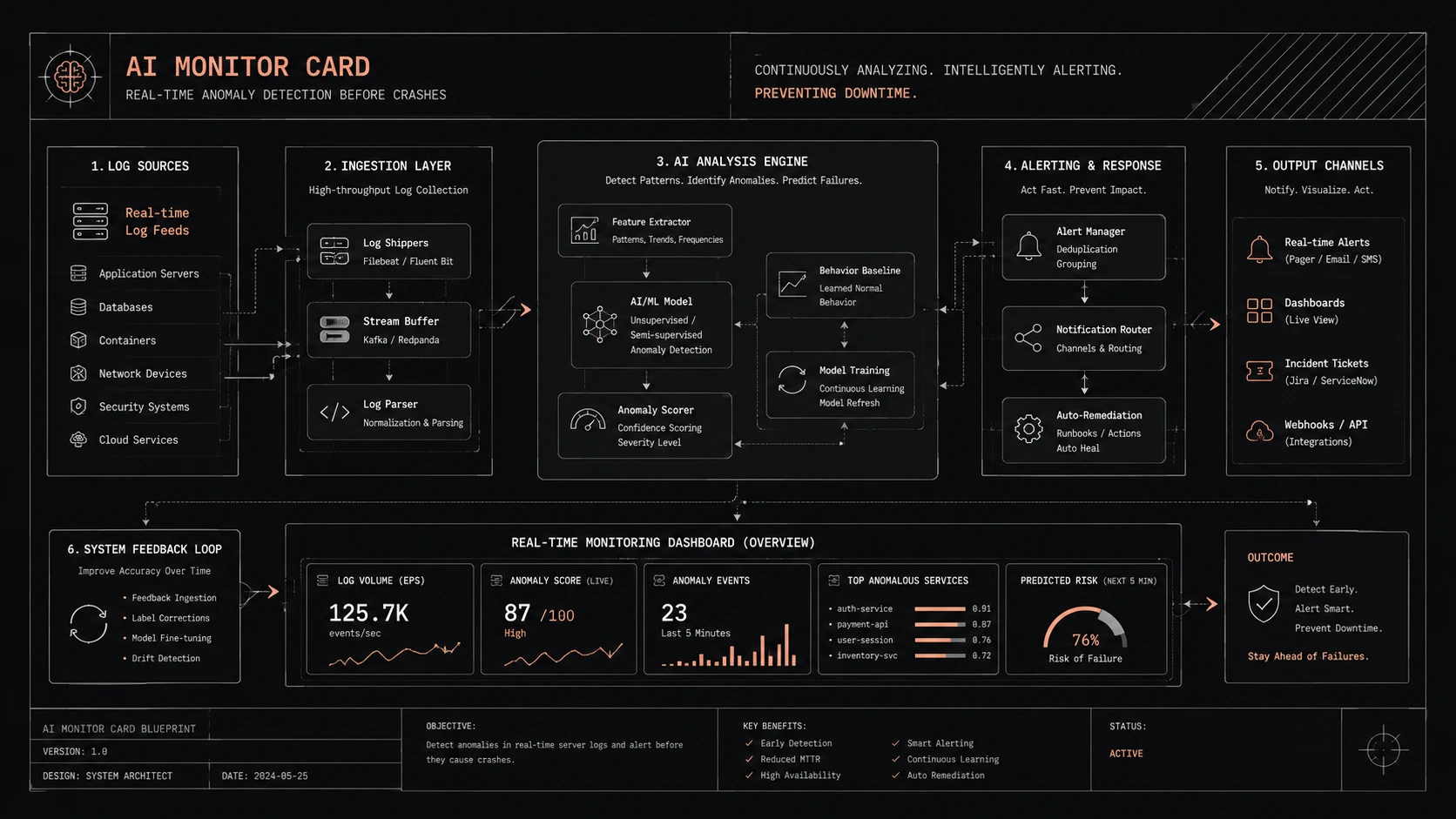
Artificial Intelligence increasingly assists cloud operations by analyzing:
- ◆Infrastructure utilization
- ◆Capacity trends
- ◆Network performance
- ◆Application latency
- ◆Failure patterns
- ◆Resource allocation
AI recommendations enable engineering teams to make more informed operational decisions while reducing manual analysis.
Autonomous Operations
Autonomous systems extend automation beyond predefined scripts.
Typical capabilities include:
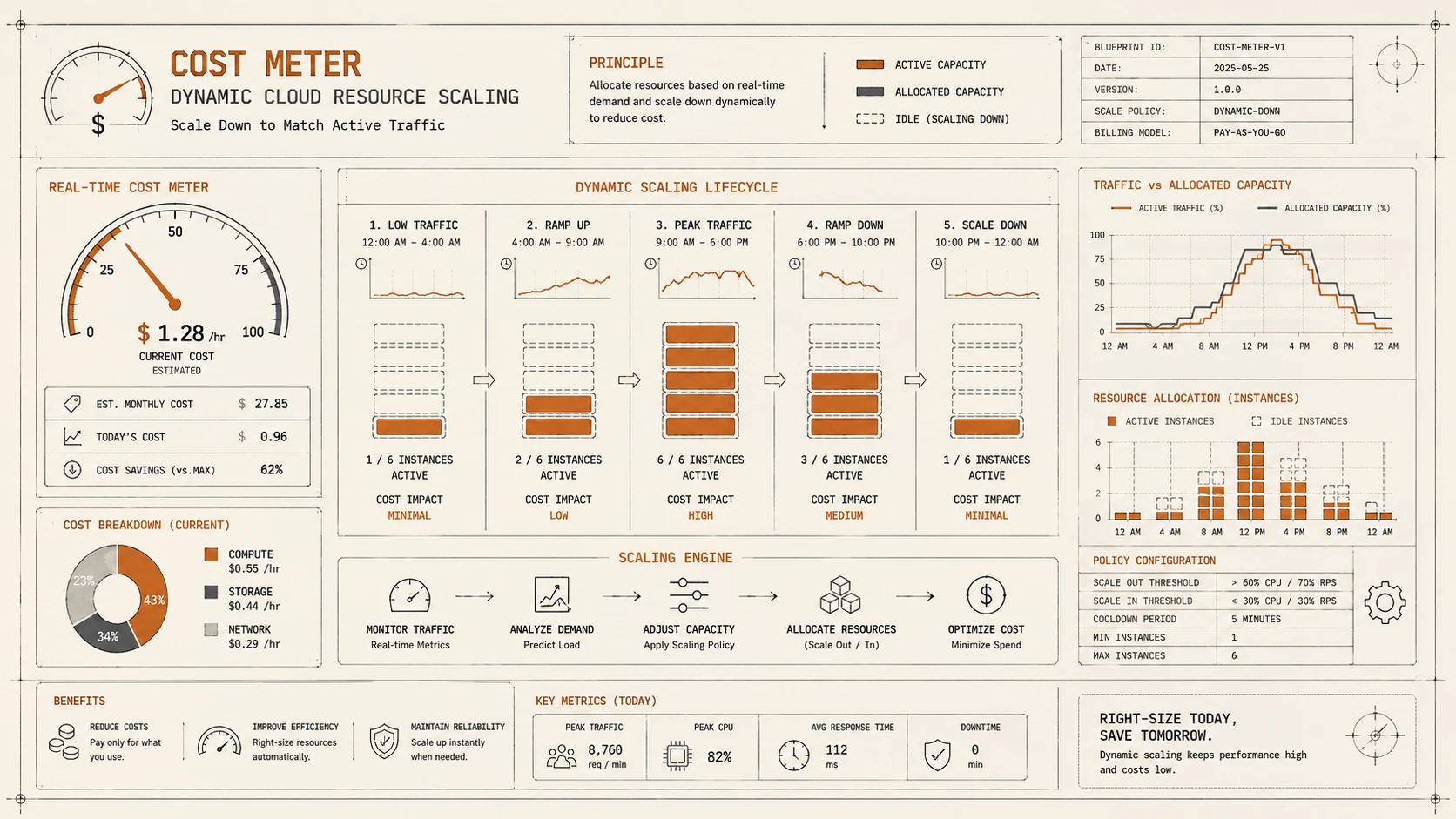
- ◆Automatic scaling
- ◆Infrastructure healing
- ◆Capacity optimization
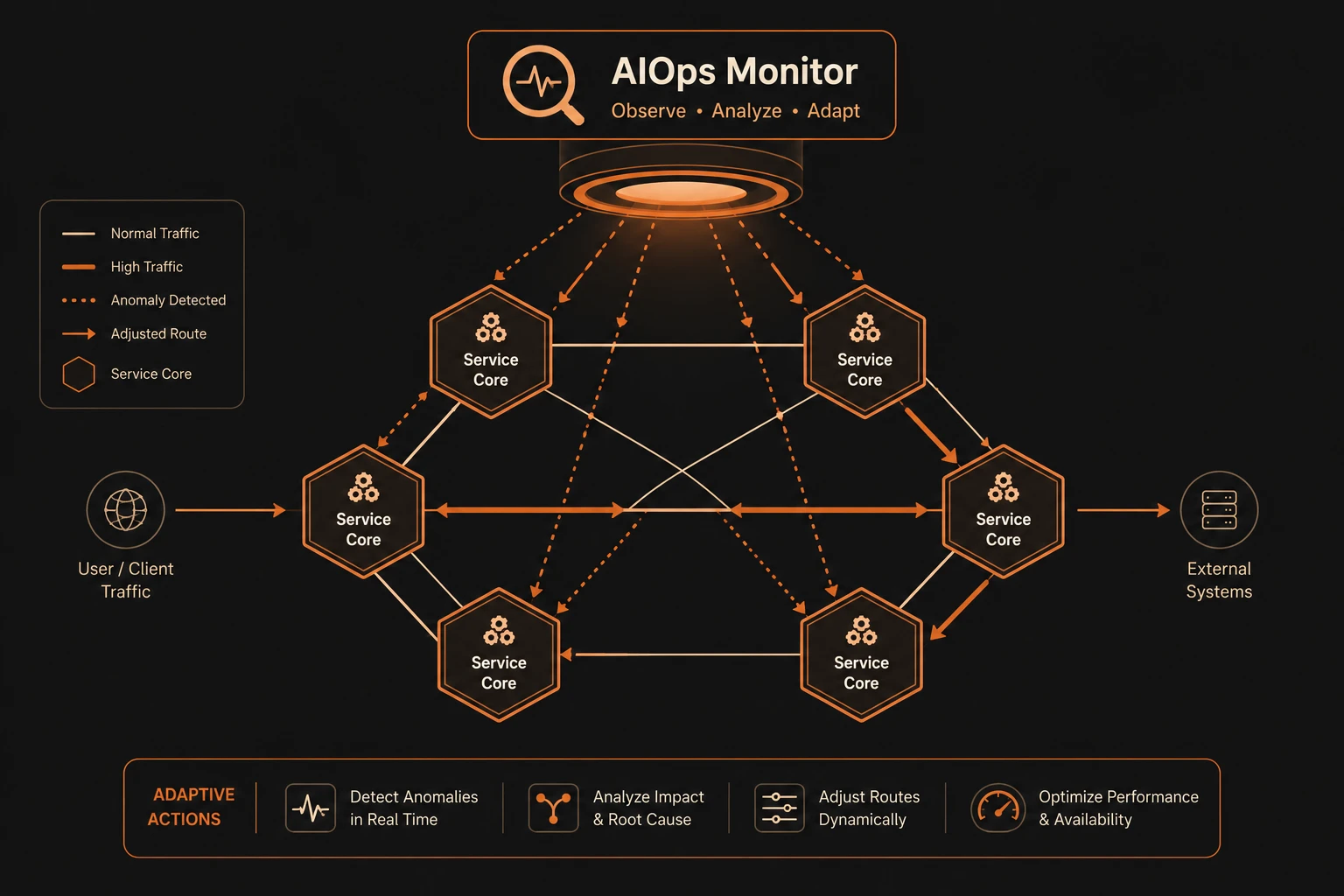
- ◆Incident correlation
- ◆Performance tuning
- ◆Resource cleanup
These systems reduce operational overhead while improving infrastructure reliability.
Intelligent Workload Placement
One of the most valuable capabilities of multi-cloud intelligence is workload optimization.
Decision factors may include:
- ◆Regional latency
- ◆Infrastructure availability
- ◆Compliance requirements
- ◆Operational cost
- ◆Resource utilization
- ◆Service capabilities
Rather than statically assigning workloads, intelligent platforms continuously evaluate optimal deployment locations.
Unified Observability
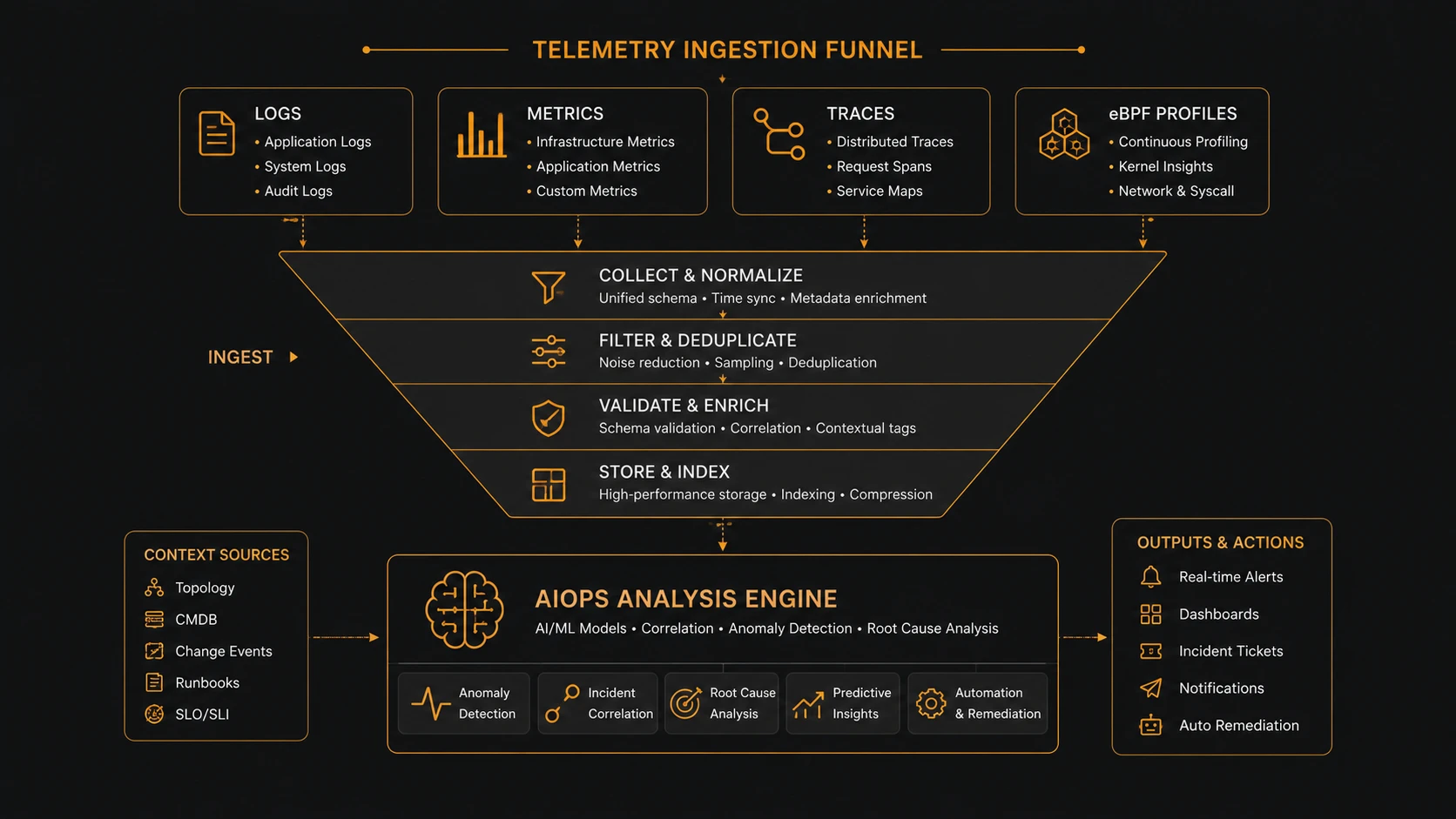
Managing multiple clouds requires centralized visibility.
Enterprise observability platforms increasingly collect:
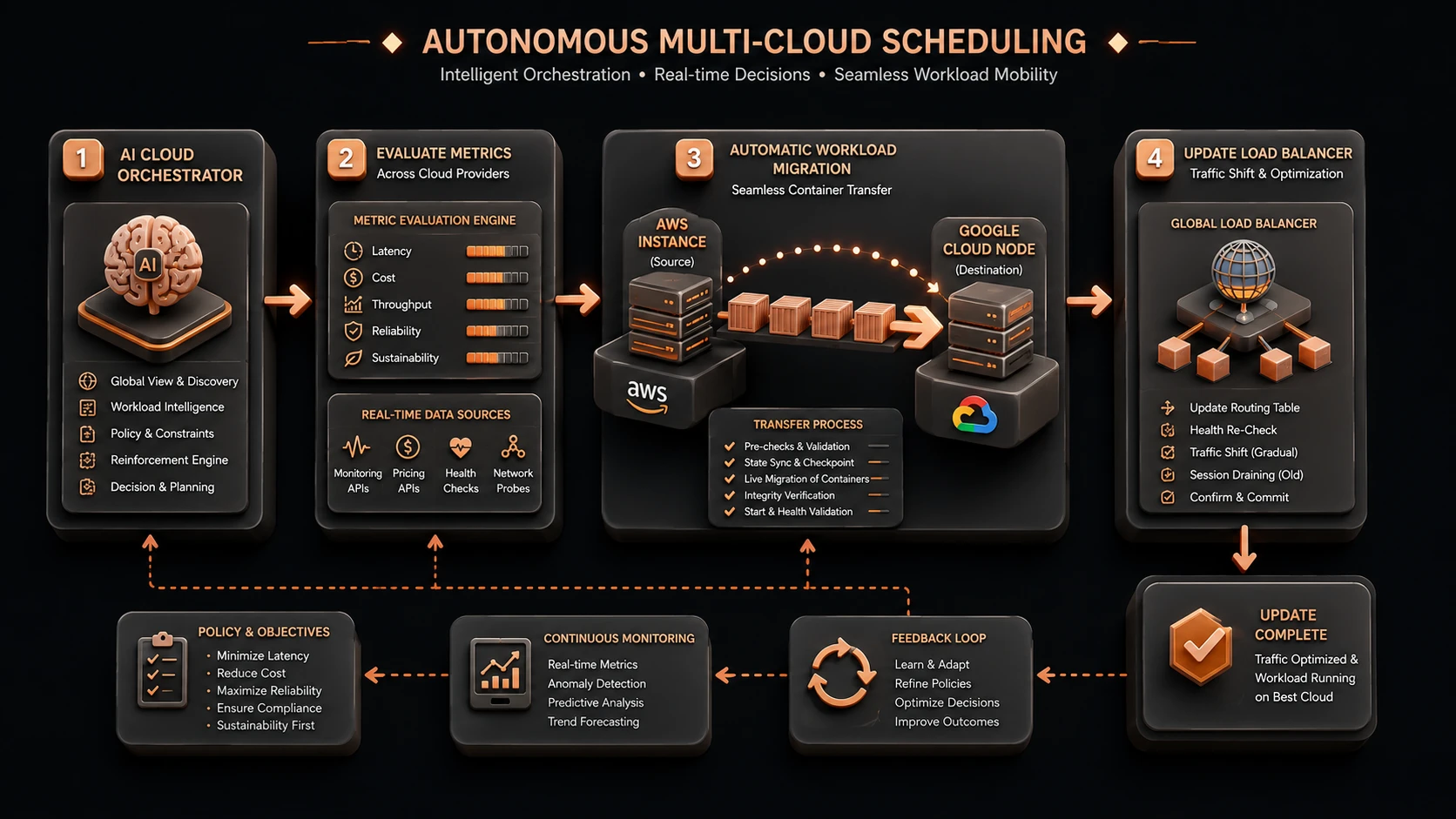
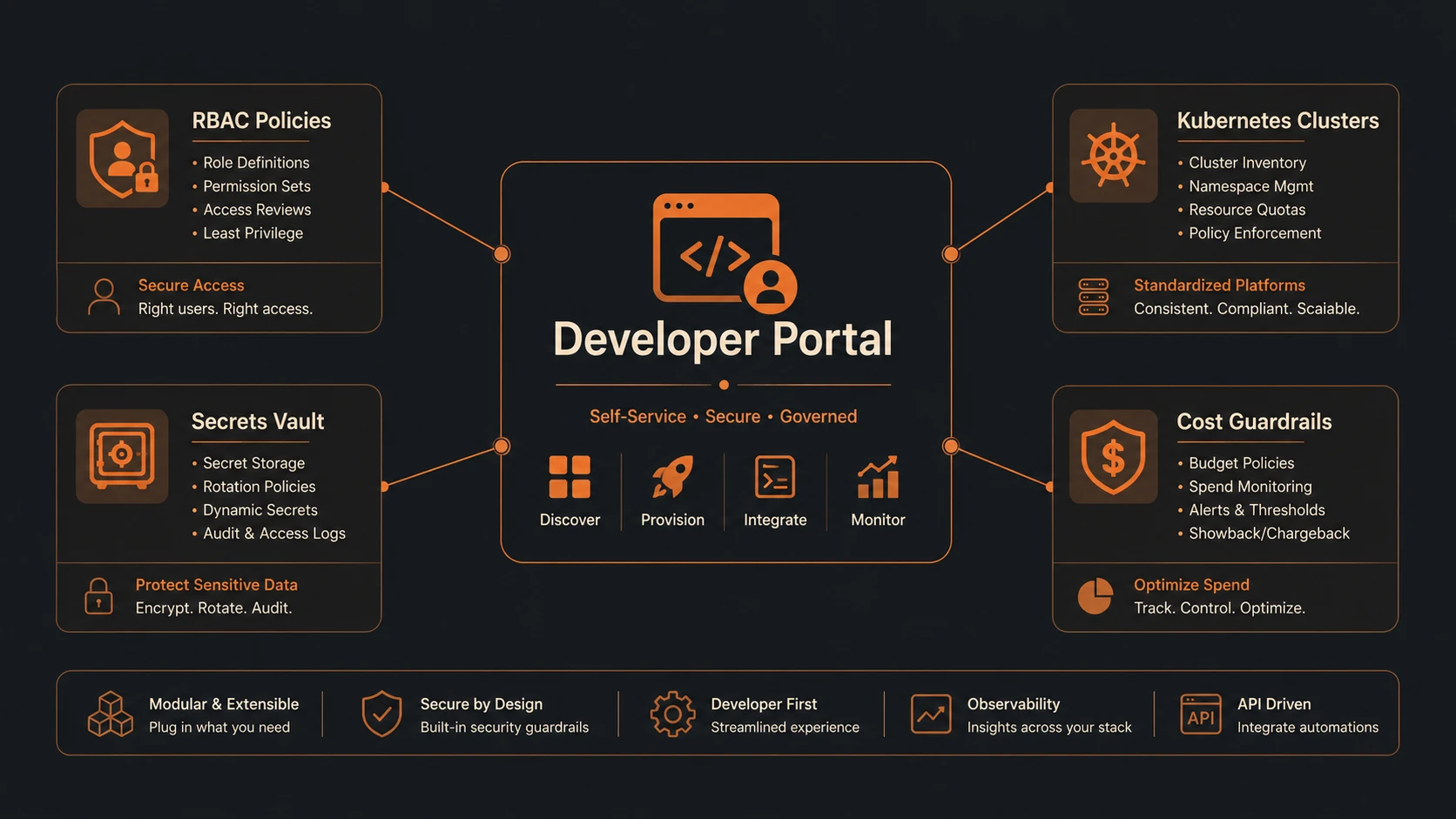
System architecture diagram and conceptual workflow layout for Multi-Cloud Intelligence and Autonomous Systems.
- ◆Infrastructure metrics
- ◆Application logs
- ◆Distributed traces
- ◆Security events
- ◆Cost analytics
- ◆Operational health indicators
Unified monitoring enables consistent operational decisions regardless of cloud provider.
Policy-Driven Governance
Automation should operate within clearly defined governance boundaries.
Organizations increasingly implement policies for:
- ◆Identity management
- ◆Resource provisioning
- ◆Security compliance
- ◆Cost controls
- ◆Data residency
- ◆Infrastructure standards
Policy engines ensure autonomous decisions remain aligned with business requirements.
Enterprise Use Cases
Financial Services
Deploy regulated workloads across multiple regions while maintaining compliance and resilience.
Healthcare
Optimize infrastructure while protecting sensitive patient information.
Global SaaS Platforms
Serve worldwide customers using geographically distributed cloud resources.
Manufacturing
Coordinate edge, cloud, and factory infrastructure through centralized operations.
Retail
Automatically scale applications during seasonal demand while optimizing cloud costs.
Performance Considerations
Organizations should continuously monitor:
- ◆Cross-cloud latency
- ◆Application availability
- ◆Infrastructure utilization
- ◆Kubernetes cluster efficiency
- ◆Network throughput
- ◆Resource allocation
Performance optimization should balance responsiveness, availability, and operational cost.
Security Considerations
Multi-cloud environments require consistent security governance.
Organizations should implement:
- ◆Zero Trust Architecture
- ◆Centralized identity management
- ◆Policy-based access control
- ◆Infrastructure encryption
- ◆Continuous compliance monitoring
- ◆Security posture assessment
- ◆Runtime threat detection
- ◆Automated audit reporting
Security automation should complement human oversight rather than replace it.
Scalability
Intelligent multi-cloud platforms improve scalability through:
- ◆Automated provisioning
- ◆Dynamic workload placement
- ◆Elastic resource allocation
- ◆Predictive capacity planning
- ◆AI-assisted operations
- ◆Distributed infrastructure management
These capabilities allow enterprises to expand globally while maintaining operational consistency.
Best Practices
- ◆Standardize infrastructure using Infrastructure as Code.
- ◆Implement centralized observability across every cloud provider.
- ◆Establish policy-driven governance before enabling autonomous automation.
- ◆Monitor cloud costs continuously.
- ◆Design applications for portability where practical.
- ◆Automate routine operational tasks.
- ◆Validate AI-generated operational recommendations before broad deployment.
- ◆Continuously measure business outcomes alongside infrastructure metrics.
Common Mistakes
| Mistake | Enterprise Impact |
|---|---|
| Treating every cloud independently | Operational fragmentation |
| Missing centralized governance | Inconsistent security and compliance |
| Blindly trusting autonomous automation | Increased operational risk |
| Ignoring workload portability | Vendor dependency |
| Optimizing only for infrastructure cost | Reduced application performance |
| Failing to standardize monitoring | Limited operational visibility |
Technology Comparison
| Capability | Traditional Multi-Cloud | Intelligent Multi-Cloud |
|---|---|---|
| Infrastructure Management | Manual | AI-Assisted |
| Scaling | Rule-Based | Predictive |
| Incident Response | Operator Driven | Autonomous Assistance |
| Cost Optimization | Periodic Reviews | Continuous Optimization |
| Governance | Separate Cloud Policies | Unified Policy Engine |
| Operational Visibility | Provider Specific | Centralized Observability |
Adoption Strategy
- 1.Inventory existing cloud environments.
- 2.Standardize deployment using Infrastructure as Code.
- 3.Implement centralized observability.
- 4.Introduce AI-assisted analytics for operational insights.
- 5.Automate repetitive infrastructure operations.
- 6.Establish organization-wide governance policies.
- 7.Validate autonomous workflows in controlled environments.
- 8.Expand intelligent automation incrementally while maintaining operational oversight.
Limitations
As of December 2023, autonomous cloud operations continue evolving rapidly. Although AI significantly improves operational efficiency, enterprise organizations should recognize that autonomous systems are most effective when operating within clearly defined governance frameworks. Human expertise remains essential for strategic architecture decisions, compliance oversight, complex incident management, and business prioritization.
Looking Ahead
From the perspective of December 2023, multi-cloud intelligence represents a major advancement in enterprise cloud architecture. By combining AI-powered analytics, autonomous automation, policy-driven governance, and unified observability, organizations can manage increasingly complex cloud ecosystems with greater efficiency, resilience, and agility. As cloud platforms continue evolving and AI capabilities mature, intelligent multi-cloud operations are expected to become a foundational capability for next-generation enterprise infrastructure.