Introduction
Kubernetes has rapidly become the leading platform for orchestrating containerized workloads across public cloud, private cloud, and hybrid infrastructure. As enterprise deployments continue growing from dozens of services to thousands of containers, networking infrastructure has become one of the most critical aspects of cluster reliability and performance.
The Kubernetes 1.11 release focuses heavily on improving networking efficiency and operational maturity. Two of the most significant enhancements are the General Availability of the IPVS-based Service proxy and the promotion of CoreDNS to Beta as the recommended cluster DNS solution.
Together these improvements address scalability limitations found in large clusters while simplifying network service discovery and traffic distribution.
For enterprise architects building production Kubernetes platforms, Kubernetes 1.11 represents an important milestone in networking maturity.
Industry Background
Enterprise Kubernetes environments increasingly support:
- ◆Microservices
- ◆API platforms
- ◆Continuous Delivery
- ◆Stateful workloads
- ◆Hybrid cloud deployments
- ◆Service discovery
- ◆Internal developer platforms
- ◆Multi-node production clusters
As clusters expand, efficient service routing and reliable DNS become foundational platform requirements.
The Business Problem
Large Kubernetes clusters commonly encounter:
- ◆Growing iptables rule sets
- ◆Slower Service routing
- ◆Increased DNS traffic
- ◆Complex networking management
- ◆Longer convergence times
- ◆Operational overhead
Organizations require networking components capable of supporting production-scale deployments without sacrificing reliability.
Understanding Kubernetes 1.11
Kubernetes 1.11 continues improving production readiness through enhancements in networking, scheduling, storage, and operational tooling.
Key networking improvements include:
- ◆IPVS proxy reaching General Availability
- ◆CoreDNS promoted to Beta
- ◆Improved Service scalability
- ◆Faster load-balancing performance
- ◆Better cluster DNS flexibility
Core Architecture
| Component | Responsibility |
|---|---|
| API Server | Cluster management |
| etcd | Cluster state storage |
| kube-proxy | Service routing |
| IPVS | High-performance Service load balancing |
| CoreDNS | Cluster DNS |
| kubelet | Node agent |
| Scheduler | Pod placement |
How It Works
- 1.A Service is created.
- 2.kube-proxy programs IPVS virtual servers.
- 3.Client requests arrive at the Service IP.
- 4.IPVS distributes traffic to backend Pods.
- 5.CoreDNS resolves Kubernetes Service names.
- 6.Applications communicate using stable DNS names.
This architecture improves networking performance while preserving Kubernetes Service semantics.
IPVS Load Balancing
Traditional kube-proxy implementations relied primarily on iptables.
Kubernetes 1.11 promotes IPVS mode to General Availability, offering a networking backend designed specifically for high-performance load balancing.
Enterprise advantages include:
- ◆Faster packet forwarding
- ◆Better scalability
- ◆Efficient connection management
- ◆Reduced rule management overhead
- ◆Improved large-cluster performance
IPVS is particularly beneficial for clusters containing large numbers of Services.
CoreDNS Integration
# CoreDNS Corefile configuration for cluster DNS resolution in Kubernetes 1.11
.:53 {
    errors
    health
    kubernetes cluster.local in-addr.arpa ip6.arpa {
       pods insecure
       upstream
       fallthrough in-addr.arpa ip6.arpa
    }
    prometheus :9153
    forward . /etc/resolv.conf
    cache 30
    loop
    reload
    loadbalance
}
CoreDNS reaches Beta in Kubernetes 1.11 and represents the future direction for cluster DNS.
Compared with earlier DNS implementations, CoreDNS offers:
- ◆Flexible plugin architecture
- ◆Simpler configuration
- ◆Better extensibility
- ◆Improved maintainability
- ◆Active community development
Reliable service discovery remains essential for microservice communication.
Key Features
IPVS General Availability
Production-ready Service load balancing using Linux IPVS.
CoreDNS Beta
Modern DNS implementation designed for Kubernetes clusters.
Improved Networking Performance
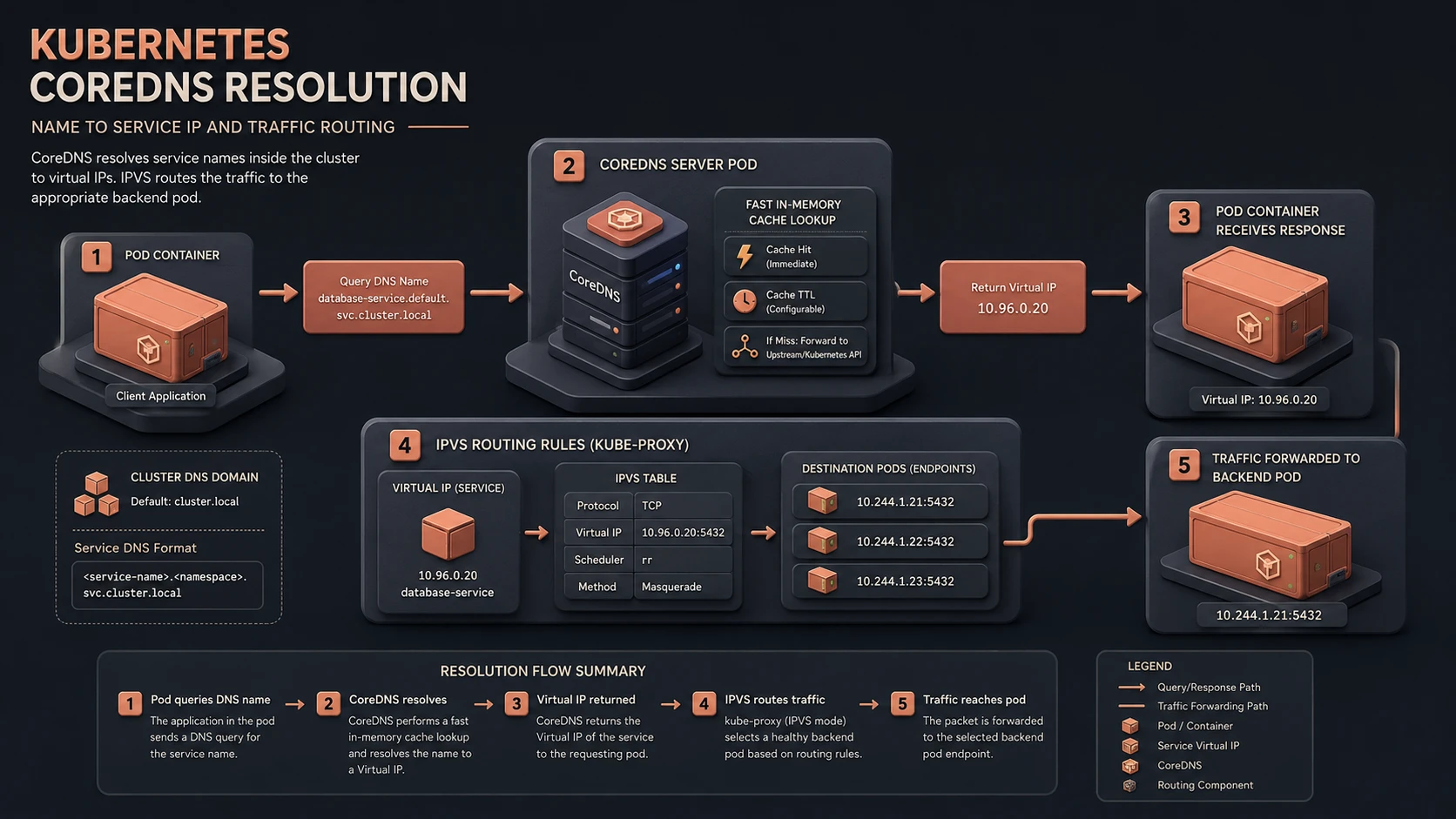
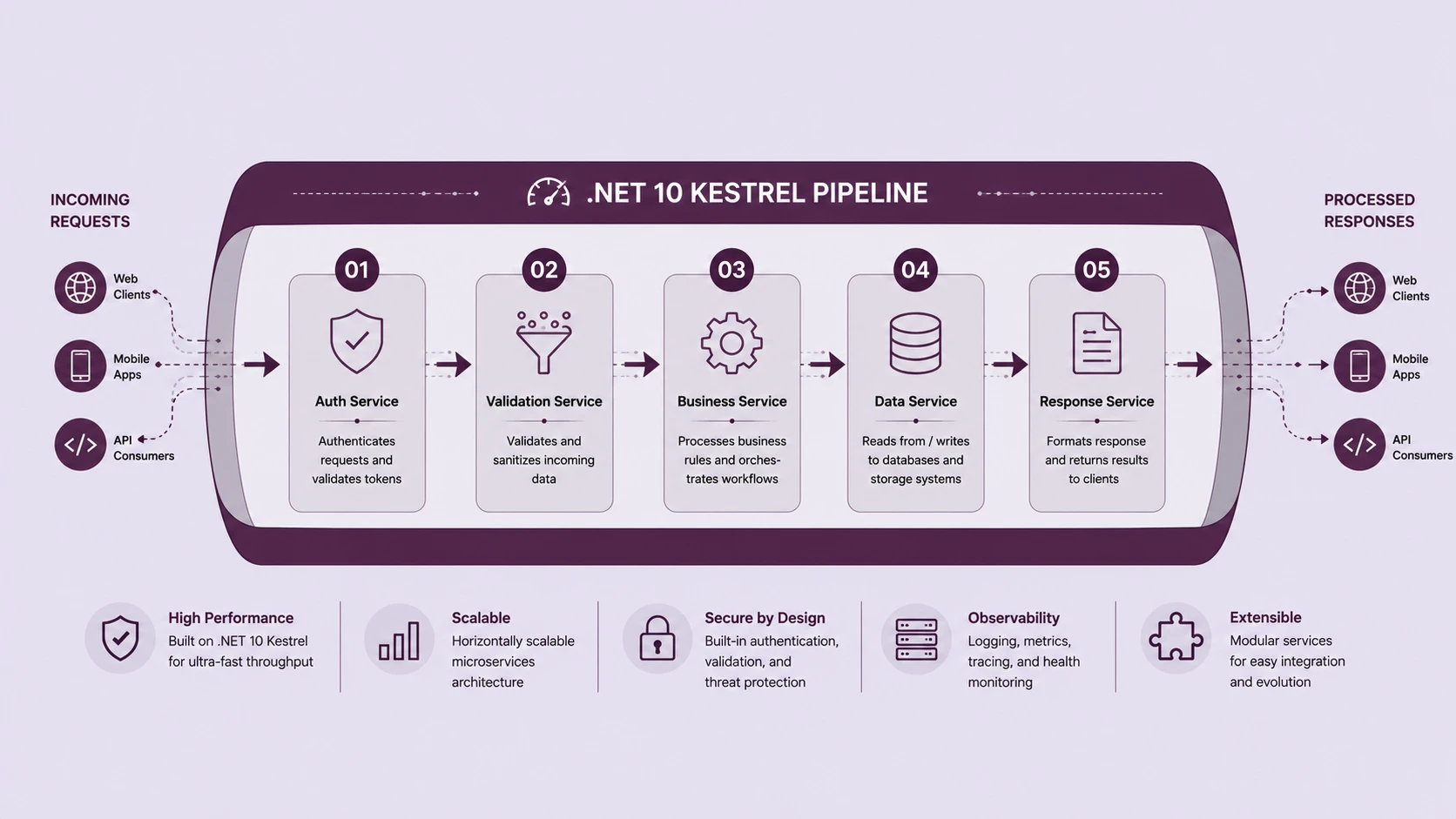
System architecture diagram and conceptual workflow layout for Kubernetes 1.11.
Reduced overhead for large Service deployments.
Better Operational Flexibility
Simplified DNS customization through CoreDNS plugins.
Enterprise Scalability
Networking improvements target increasingly large production clusters.
Enterprise Use Cases
Microservice Platforms
Large Service meshes benefit from improved routing efficiency.
SaaS Platforms
Reliable DNS improves service-to-service communication.
Hybrid Cloud
Consistent networking behavior simplifies multi-environment deployments.
Internal Developer Platforms
Platform teams benefit from scalable Service discovery.
High-Traffic APIs
IPVS provides efficient request distribution across backend Pods.
Performance Considerations
Organizations should evaluate:
- ◆Service creation latency
- ◆DNS response time
- ◆kube-proxy performance
- ◆Network throughput
- ◆Cluster scale
- ◆Connection handling
Benchmarking should be performed under realistic production workloads.
Security Considerations
Enterprise deployments should continue implementing:
- ◆RBAC
- ◆Network Policies
- ◆TLS for cluster components
- ◆Secure API authentication
- ◆Namespace isolation
- ◆Audit logging
Networking improvements complement but do not replace Kubernetes security controls.
Scalability
Kubernetes 1.11 improves scalability through:
- ◆Efficient IPVS routing
- ◆Improved DNS infrastructure
- ◆Better Service management
- ◆Reduced networking overhead
- ◆Production-ready load balancing
These capabilities support larger enterprise clusters with growing application portfolios.
Best Practices
- ◆Evaluate IPVS mode for production clusters.
- ◆Test CoreDNS before replacing existing DNS infrastructure.
- ◆Monitor Service routing performance.
- ◆Keep networking components updated.
- ◆Benchmark cluster networking after upgrades.
- ◆Apply Network Policies where appropriate.
- ◆Monitor DNS health continuously.
- ◆Automate cluster validation.
Common Mistakes
| Mistake | Enterprise Impact |
|---|---|
| Upgrading without validating networking | Production risk |
| Ignoring DNS monitoring | Service discovery failures |
| Assuming default networking fits every workload | Performance bottlenecks |
| Delaying IPVS evaluation | Missed scalability improvements |
| Weak network security policies | Increased attack surface |
| Lack of production benchmarking | Inefficient cluster tuning |
Technology Comparison
| Capability | kube-proxy (iptables) | kube-proxy (IPVS) |
|---|---|---|
| Scalability | Good | Better |
| Rule Management | iptables Rules | IPVS Tables |
| Large Cluster Performance | Moderate | Improved |
| Connection Handling | Standard | Optimized |
| Production Readiness | Mature | GA in Kubernetes 1.11 |
Adoption Strategy
- 1.Upgrade non-production clusters.
- 2.Evaluate IPVS networking mode.
- 3.Test CoreDNS compatibility.
- 4.Benchmark Service performance.
- 5.Validate application DNS behavior.
- 6.Monitor networking metrics.
- 7.Roll out incrementally.
- 8.Standardize networking configuration across clusters.
Limitations
As of July 2018, CoreDNS is in Beta and should be evaluated carefully before broad production deployment. Organizations migrating from kube-dns should validate plugin compatibility, operational tooling, and DNS behavior. While IPVS is production-ready, deployment planning and performance testing remain essential for enterprise environments.
Looking Ahead
From the perspective of July 2018, Kubernetes 1.11 significantly advances the platform's networking capabilities. The General Availability of IPVS load balancing and the continued evolution of CoreDNS demonstrate Kubernetes' focus on production-scale operations. These improvements position Kubernetes as an increasingly mature platform for enterprise container orchestration, enabling larger, more reliable, and more efficient cloud-native infrastructure.