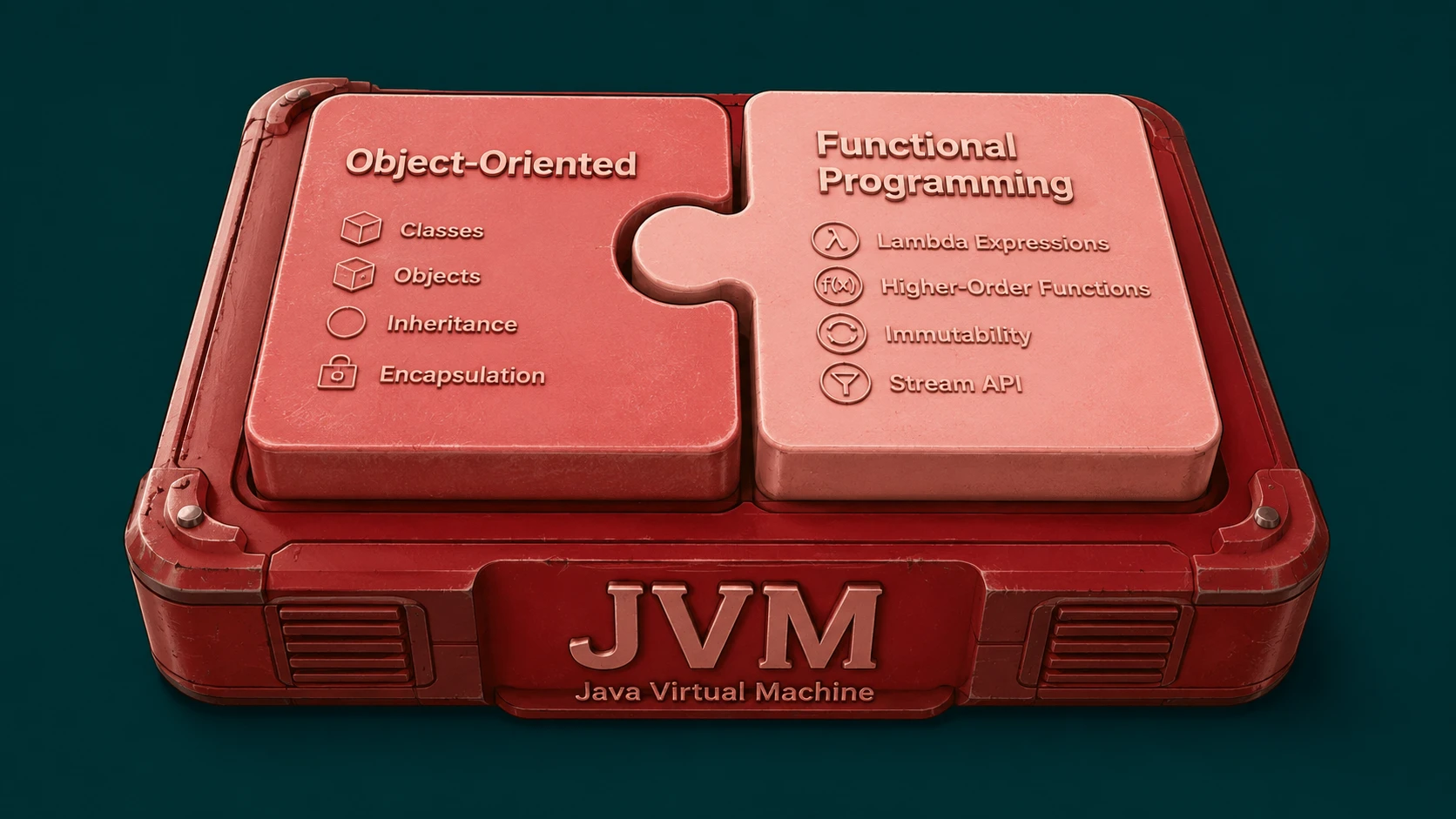
Enterprise software development continues to evolve beyond traditional object-oriented programming. While object-oriented design remains the foundation of most .NET applications, developers are increasingly adopting programming techniques that reduce repetitive code, improve readability, and encourage more declarative approaches to solving business problems.
One of the most significant developments in the Microsoft ecosystem has been the introduction of Language Integrated Query (LINQ) together with lambda expressions. These capabilities allow developers to express operations on collections in a concise, strongly typed manner while introducing several concepts commonly associated with functional programming.
Rather than replacing object-oriented programming, LINQ and lambda expressions complement existing practices. Together they encourage cleaner code, better separation of concerns, and more maintainable enterprise applications.
As enterprise projects continue to grow in complexity, understanding these language features is becoming increasingly valuable for software architects and development teams.
The Evolution of Enterprise C# Development
Early .NET applications often relied on explicit loops, manual filtering, repetitive data transformations, and extensive boilerplate code.
Typical enterprise applications process:
- ◆Customer records
- ◆Orders
- ◆Financial transactions
- ◆Product catalogs
- ◆Employee information
- ◆Audit logs
- ◆Configuration data
Manipulating these collections traditionally required numerous loops and conditional statements.
Although effective, these approaches often resulted in verbose code that became increasingly difficult to maintain.
LINQ provides a more expressive alternative.
Understanding Functional Programming Concepts
Functional programming emphasizes writing software through the composition of functions while minimizing unnecessary state changes.
Although C# is fundamentally an object-oriented language, it now incorporates several functional programming ideas.
Examples include:
- ◆Functions as values
- ◆Lambda expressions
- ◆Higher-order functions
- ◆Declarative queries
- ◆Immutability where appropriate
- ◆Collection transformations
These features encourage developers to describe *what* should happen rather than explicitly describing every implementation step.
What Is LINQ?
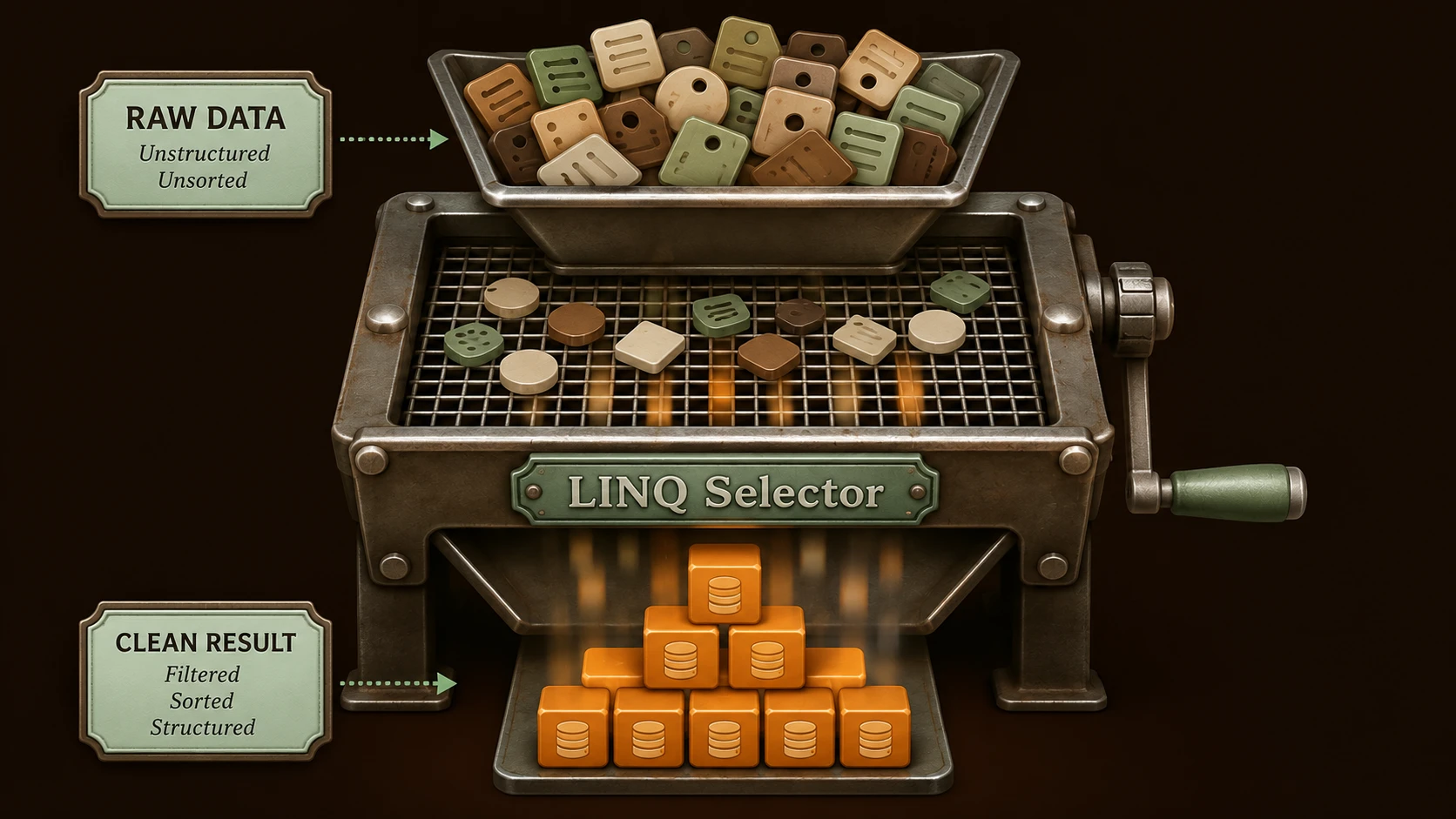
Language Integrated Query (LINQ) extends C# by allowing developers to query collections using strongly typed language constructs.
Rather than constructing separate query languages for different data sources, LINQ provides a unified programming model.
Developers can work with:
- ◆In-memory collections
- ◆XML documents
- ◆Entity Framework
- ◆LINQ to SQL
- ◆Other LINQ-enabled providers
The programming model remains consistent regardless of the underlying data source.
Traditional Collection Processing
Before LINQ, filtering a collection often required explicit iteration.
foreach (Customer customer in customers)
{
    if (customer.City == "London")
    {
        // Process customer
    }
}
While straightforward, this approach becomes repetitive across large enterprise applications.
LINQ Query Syntax
LINQ introduces declarative query expressions.
var londonCustomers =
    from customer in customers
    where customer.City == "London"
    select customer;
The query clearly communicates its intent while reducing implementation details.
Lambda Expressions
Lambda expressions provide another concise mechanism for expressing behavior.
Example:
var londonCustomers =
    customers.Where(c => c.City == "London");
The expression:
c => c.City == "London"represents an anonymous function.
Lambda expressions are widely used throughout modern .NET libraries and frameworks.
Why Lambdas Improve Enterprise Development
Lambda expressions simplify common programming tasks.
Advantages include:
- ◆Reduced boilerplate code
- ◆Improved readability
- ◆Better code reuse
- ◆Simplified collection processing
- ◆Strong typing
Rather than defining numerous small helper methods, developers can express behavior directly where it is needed.
Extension Methods
Many LINQ operations are implemented through extension methods.
Examples include:
- ◆Where()
- ◆Select()
- ◆OrderBy()
- ◆GroupBy()
- ◆First()
- ◆Count()
- ◆Any()
Extension methods allow developers to extend existing types without modifying their original implementations.
This contributes to cleaner APIs and more expressive application code.
Deferred Execution
One important concept in LINQ is deferred execution.
Many queries are not executed immediately.
Instead, execution occurs when results are actually enumerated.
Benefits include:
- ◆Improved efficiency
- ◆Reduced unnecessary processing
- ◆Better composition of query operations
Developers should nevertheless understand when query execution occurs to avoid unexpected behavior.
Enterprise Architecture
LINQ integrates naturally into layered enterprise architectures.
Typical structure:
Presentation Layer
        |
Application Services
        |
Business Logic
        |
Repository Layer
        |
LINQ
        |
Entity Framework
        |
SQL Server
Business services remain independent while LINQ simplifies data retrieval and transformation.
LINQ with Entity Framework
Entity Framework and LINQ work together particularly well.
Example:
var activeCustomers =
    context.Customers
           .Where(c => c.IsActive)
           .OrderBy(c => c.Name);
Developers write strongly typed C# rather than manually constructing SQL queries.
The ORM framework translates the query appropriately.
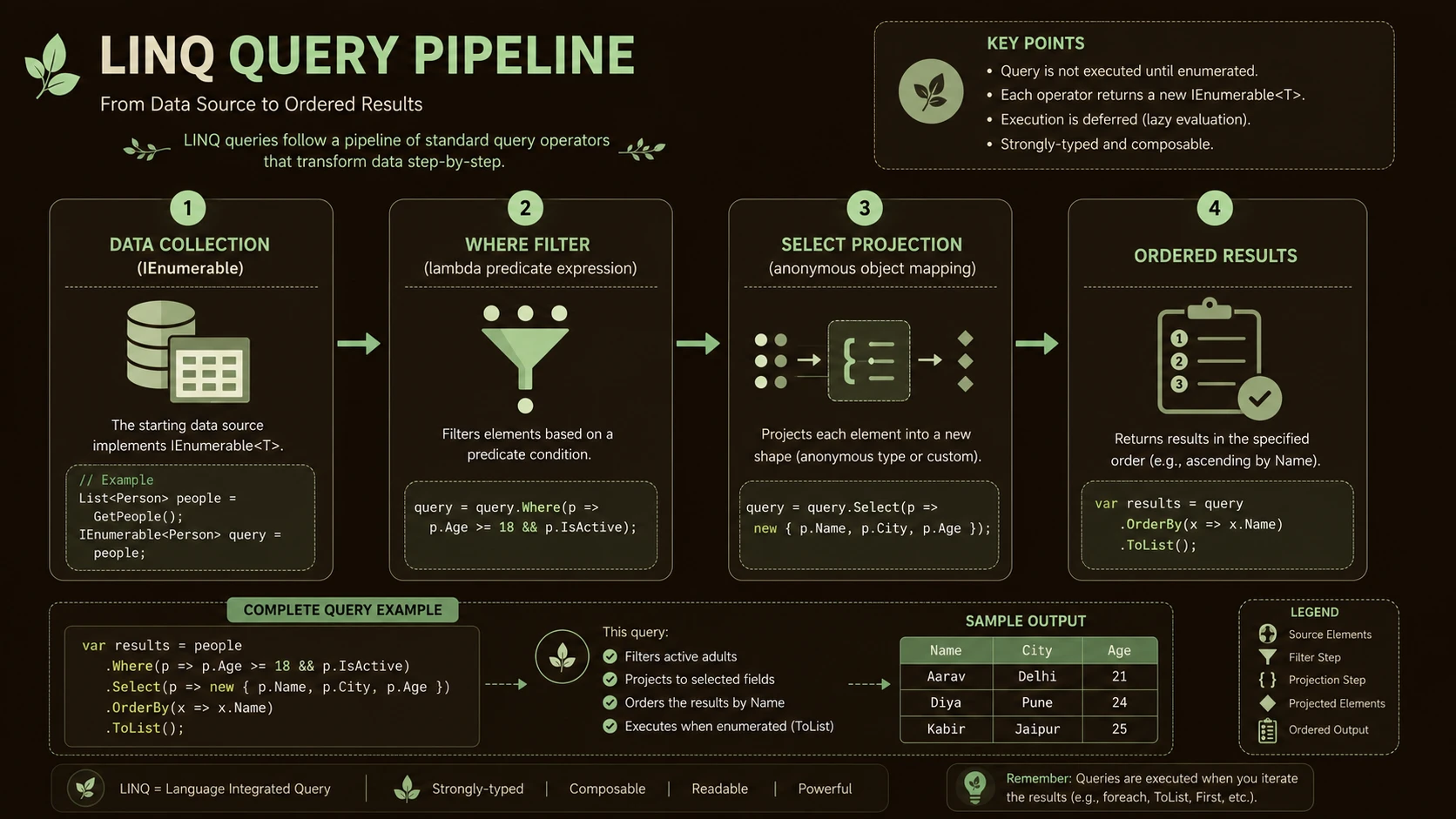
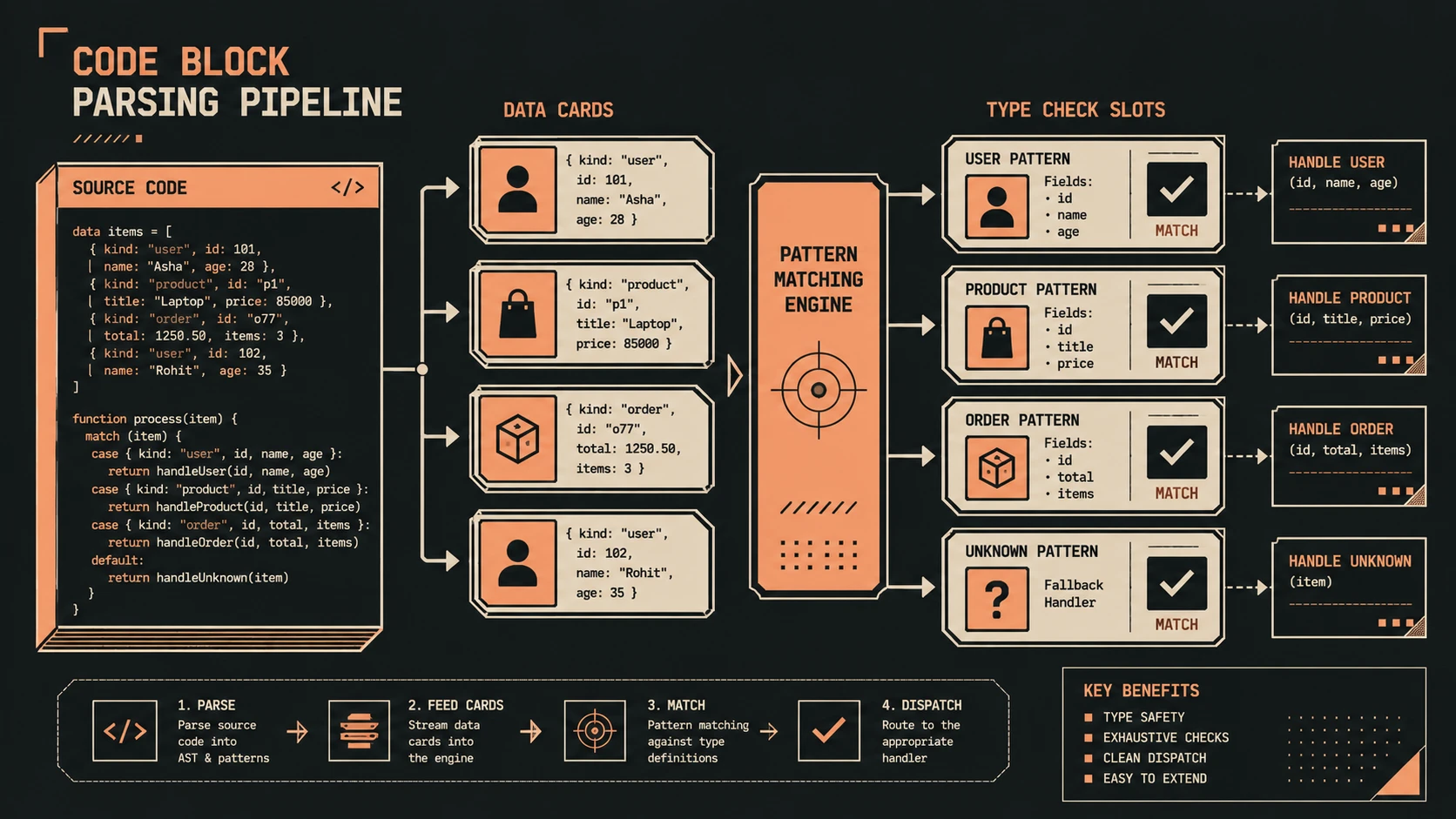
System architecture diagram and conceptual workflow layout for Functional Paradigms in C#.
Enterprise Use Cases
Customer Management
LINQ simplifies:
- ◆Customer searches
- ◆Account filtering
- ◆Reporting
- ◆Dashboard queries
Financial Systems
Financial applications frequently process:
- ◆Transactions
- ◆Accounts
- ◆Payment records
- ◆Audit information
Declarative collection processing improves readability while reducing repetitive loops.
Human Resources
HR systems often manage:
- ◆Employees
- ◆Departments
- ◆Benefits
- ◆Performance records
LINQ enables concise filtering and reporting across these business entities.
Inventory Management
Warehouse applications can efficiently query:
- ◆Products
- ◆Suppliers
- ◆Stock levels
- ◆Purchase orders
using a consistent programming model.
Higher-Order Functions
Lambda expressions enable methods that accept behavior as input.
For example:
customers.Where(predicate)The filtering logic becomes a parameter rather than being embedded inside the method implementation.
This improves flexibility and encourages reusable components.
Readability and Maintainability
Enterprise applications often survive for many years.
Code readability therefore becomes as important as correctness.
LINQ frequently produces code that more closely resembles business intent.
Rather than emphasizing implementation details, queries describe desired results.
This improves collaboration across development teams.
Performance Considerations
Although LINQ improves developer productivity, performance should still be evaluated carefully.
Recommended practices include:
- ◆Avoid unnecessary query execution.
- ◆Materialize results only when required.
- ◆Review generated SQL when using ORMs.
- ◆Filter data as early as practical.
- ◆Measure performance under realistic workloads.
Developers should balance expressiveness with efficiency.
Best Practices
Organizations adopting LINQ should consider the following recommendations.
Prefer Readable Queries
Clarity should take precedence over compact syntax.
Separate Business Logic
Business rules should remain independent from query implementation.
Use Strong Typing
Leverage compile-time checking whenever possible.
Reuse Query Logic
Common filtering behavior should be encapsulated rather than duplicated.
Review Query Performance
Generated queries should be evaluated during testing.
Common Mistakes
Enterprise teams often encounter similar challenges.
Writing Overly Complex Queries
Excessively long query chains can reduce readability.
Ignoring Deferred Execution
Developers should understand when LINQ queries actually execute.
Multiple Enumeration
Repeatedly enumerating the same query may introduce unnecessary processing.
Mixing Business Logic into Queries
Business rules should remain distinct from data retrieval logic.
Choosing LINQ for Every Scenario
Traditional loops remain appropriate when they improve clarity or performance.
Comparing Traditional Collection Processing and LINQ
| Traditional Approach | LINQ Approach |
|---|---|
| Explicit loops | Declarative queries |
| Manual filtering | Where() |
| Manual sorting | OrderBy() |
| Repetitive code | Reusable extension methods |
| More implementation detail | Greater focus on business intent |
Both techniques remain valuable, and experienced developers should choose the approach best suited to each problem.
Adoption Recommendations
Organizations introducing LINQ and lambda expressions should proceed gradually.
Recommended roadmap:
- 1.Train development teams.
- 2.Introduce LINQ in new development.
- 3.Standardize coding conventions.
- 4.Review query readability during code reviews.
- 5.Evaluate performance carefully.
- 6.Integrate LINQ with existing data access strategies.
- 7.Expand adoption based on development experience.
Incremental adoption allows organizations to gain confidence while maintaining existing application stability.
Looking Ahead
Functional programming concepts are steadily becoming part of mainstream enterprise software development. Through LINQ, lambda expressions, extension methods, and related language features, C# provides developers with powerful tools for expressing business logic more clearly while maintaining compatibility with established object-oriented design principles.
As enterprise applications continue growing in complexity, development teams that embrace expressive language features, disciplined architecture, and strong coding standards will be better positioned to build software that is easier to maintain, simpler to test, and more adaptable to evolving business requirements.