Introduction
The C# language has steadily evolved by introducing practical language features that improve productivity without sacrificing readability or backward compatibility. Previous releases focused on asynchronous programming, null safety improvements, string interpolation, expression-bodied members, and compiler-assisted refactoring capabilities.
Enterprise software development, however, continues to present new challenges. Modern applications increasingly process complex object models, high-volume data streams, distributed services, cloud workloads, and performance-sensitive business logic. Developers seek language constructs that reduce boilerplate code while improving both maintainability and runtime efficiency.
The preview releases of C# 7.0 demonstrate Microsoft's continued investment in language evolution. Rather than introducing disruptive syntax changes, C# 7.0 expands the language with features inspired by practical programming scenarios, including pattern matching, tuples, deconstruction, ref returns, local functions, binary literals, and digit separators.
As of November 2016, these capabilities remain preview features intended for evaluation and experimentation. Enterprise development teams should understand their architectural implications while recognizing that implementation details may continue evolving before the final language release.
Industry Background
Enterprise applications continue growing in complexity.
Development teams increasingly build:
- ◆Microservices
- ◆Cloud applications
- ◆RESTful APIs
- ◆High-throughput processing systems
- ◆Business workflow engines
- ◆Analytics platforms
- ◆Cross-platform services
These systems often require concise code without compromising maintainability or runtime performance.
Programming language evolution increasingly focuses on helping developers express intent more clearly while enabling compiler optimizations.
The Business Problem
Large enterprise applications commonly experience:
- ◆Verbose object handling
- ◆Complex conditional logic
- ◆Temporary data transfer objects
- ◆Performance overhead from unnecessary copying
- ◆Difficult code maintenance
- ◆Repetitive utility methods
- ◆Reduced readability in business logic
Language improvements that simplify these recurring patterns can improve long-term development efficiency.
Understanding the C# 7.0 Preview
The preview version of C# 7.0 introduces several new language capabilities intended to improve both expressiveness and performance.
Major preview features include:
- ◆Pattern matching
- ◆Tuples
- ◆Variable deconstruction
- ◆Ref returns
- ◆Ref locals
- ◆Local functions
- ◆Binary literals
- ◆Digit separators
Collectively these additions modernize common programming techniques while remaining compatible with existing C# development practices.
Core Architecture
| Language Feature | Primary Responsibility |
|---|---|
| Pattern Matching | Simplify type and value evaluation |
| Tuples | Return multiple related values |
| Deconstruction | Extract tuple values efficiently |
| Ref Returns | Return references instead of copies |
| Ref Locals | Store references locally |
| Local Functions | Organize helper logic within methods |
Each capability addresses a specific area of everyday software development.
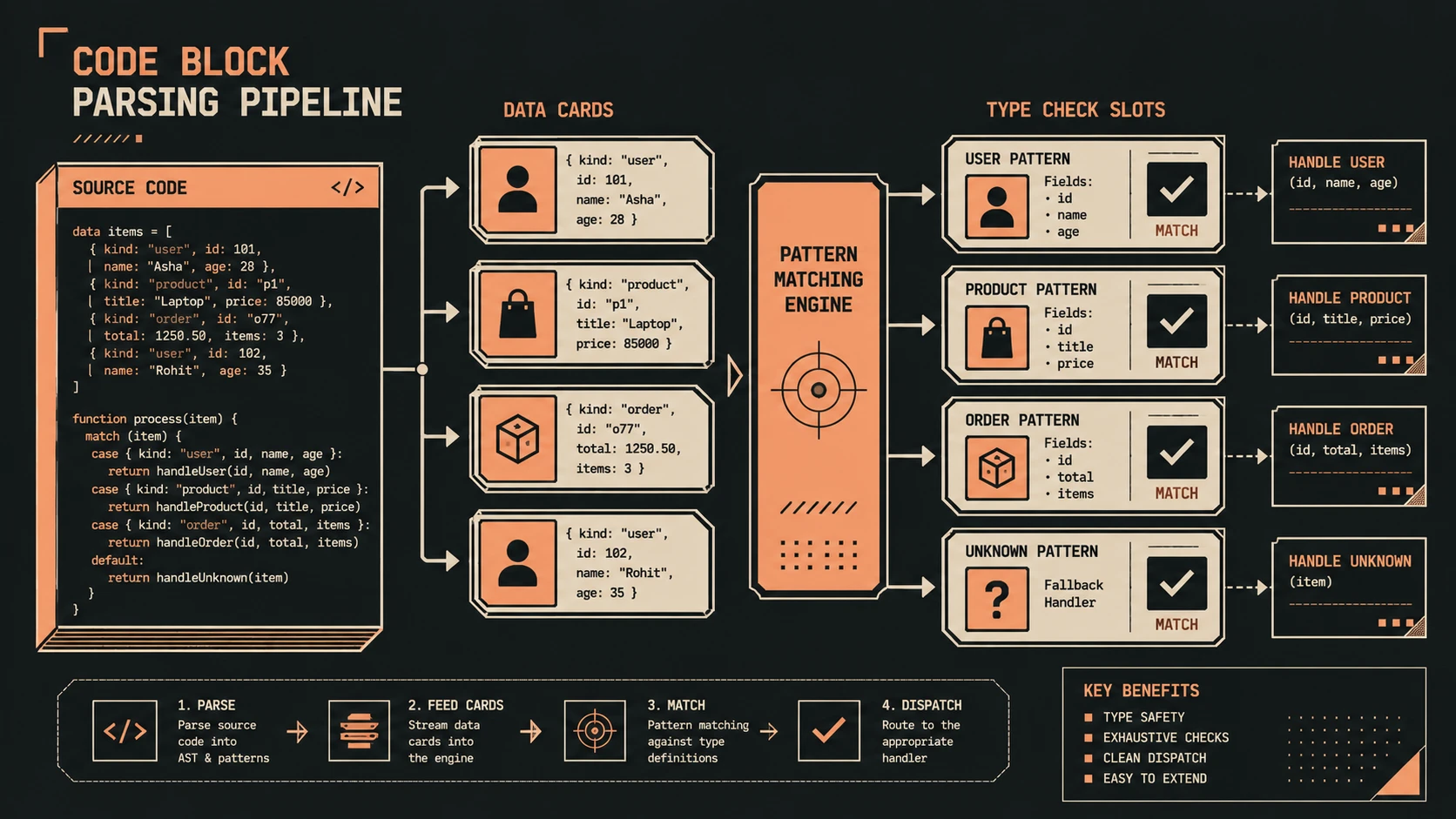
Pattern Matching
// Pattern matching and tuple deconstruction in C# 7.0
public static double GetDiscount(object order)
{
    switch (order)
    {
        case CorporateOrder corp when corp.Volume > 100:
            return 0.20;
        case CorporateOrder corp:
            return 0.10;
        case IndividualOrder ind when ind.IsPreferred:
            return 0.05;
        default:
            return 0.0;
    }
}

// Tuple creation and deconstruction
public (string name, double price) GetProductInfo(int productId)
{
    return ("Cloud Server A", 120.0);
}

var (prodName, price) = GetProductInfo(123);
Pattern matching introduces a more expressive mechanism for evaluating object types and values.
Rather than relying exclusively on combinations of type checking and casting, developers can express conditional logic more directly.
Potential advantages include:
- ◆Improved readability
- ◆Reduced casting
- ◆Clearer conditional logic
- ◆More maintainable business rules
Applications processing heterogeneous object hierarchies may benefit from simplified decision structures.
Because the feature remains in preview, organizations should expect syntax and capabilities to continue evolving.
Tuples
Developers frequently need methods that return multiple related values.
Historically, common approaches have included:
- ◆Custom data transfer objects
- ◆Output parameters
- ◆Anonymous types
- ◆Existing Tuple classes
The new tuple syntax aims to provide a lighter-weight alternative that improves readability while reducing implementation overhead.
Typical scenarios include:
- ◆Returning coordinates
- ◆Multiple calculation results
- ◆Validation outcomes
- ◆Business rule evaluation
Variable Deconstruction
Closely related to tuples is deconstruction.
Rather than accessing tuple members individually, developers can assign multiple values simultaneously.
Benefits include:
- ◆Cleaner assignment syntax
- ◆Reduced temporary variables
- ◆Improved readability
- ◆Better alignment with tuple-based programming
Deconstruction supports concise handling of logically related values.
Ref Returns and Ref Locals
Performance-sensitive enterprise applications sometimes manipulate large structures where unnecessary copying can introduce overhead.
Ref returns allow methods to return references instead of value copies.
Complementing this capability, ref locals enable developers to store those references locally.
Potential advantages include:
- ◆Reduced memory copying
- ◆Improved performance
- ◆More efficient manipulation of large data structures
- ◆Better support for specialized algorithms
Because references introduce additional complexity, these features should be reserved for scenarios where measurable performance benefits justify their use.
Local Functions
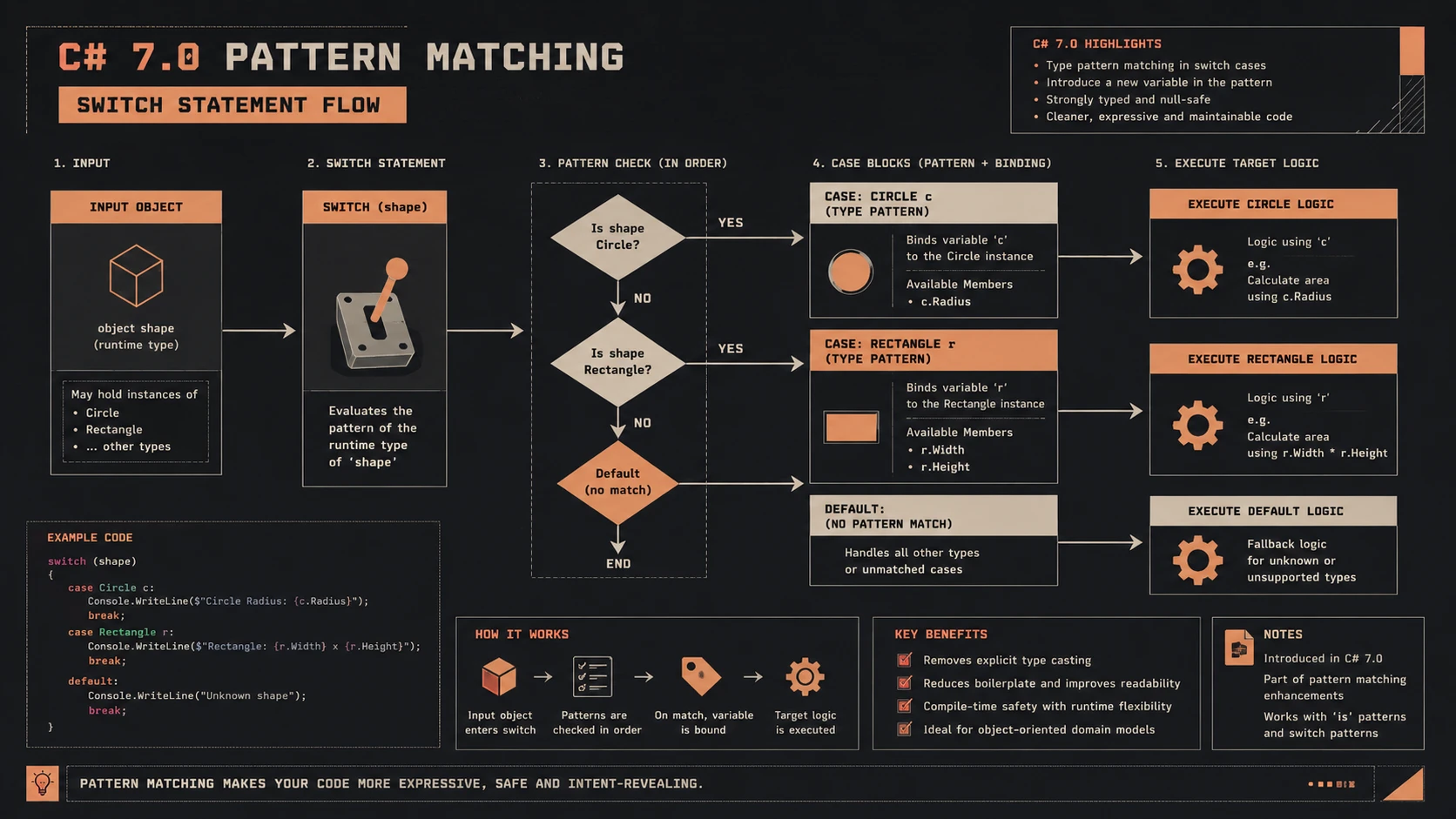
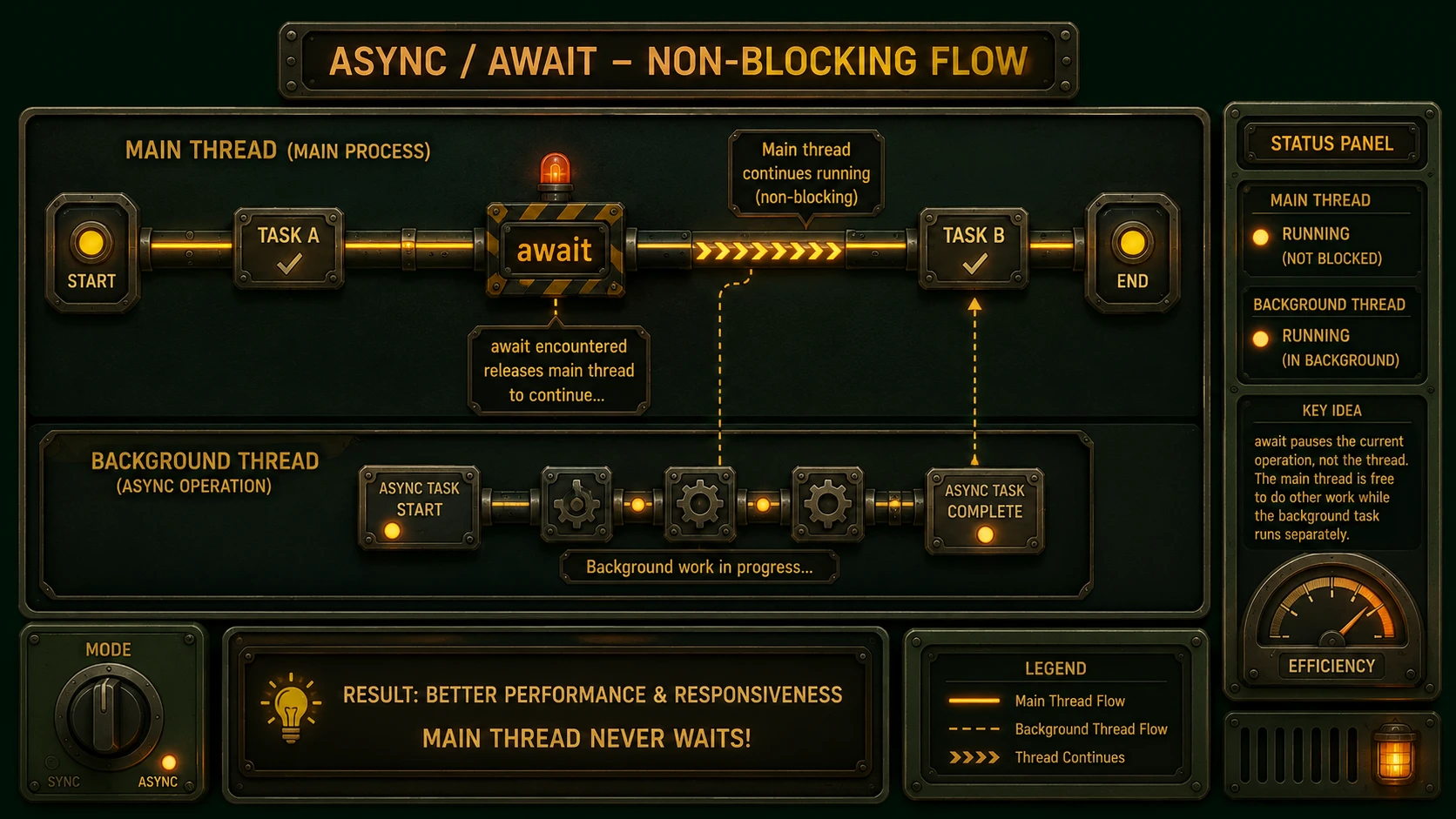
System architecture diagram and conceptual workflow layout for C# 7.0 Previews.
Large methods often contain small helper routines used only within a single implementation.
Local functions allow these helpers to remain close to the code that depends upon them.
Advantages include:
- ◆Improved organization
- ◆Better encapsulation
- ◆Reduced class-level method clutter
- ◆Easier code comprehension
Local functions encourage clearer implementation boundaries within complex methods.
Binary Literals and Digit Separators
C# 7.0 also introduces quality-of-life improvements for numeric literals.
Binary literals improve readability when working with:
- ◆Bit masks
- ◆Hardware interfaces
- ◆Low-level protocols
- ◆Flag enumerations
Digit separators improve readability for large numeric constants without affecting runtime behavior.
These additions enhance clarity while preserving existing language semantics.
Enterprise Use Cases
| Scenario | Benefit |
|---|---|
| Financial Systems | Tuple-based calculation results |
| Business Rule Engines | Pattern matching |
| High-Performance Libraries | Ref returns |
| Cloud Services | Cleaner helper functions |
| Data Processing | Efficient value deconstruction |
| Enterprise APIs | Improved code readability |
Organizations maintaining extensive C# codebases benefit from language features that reduce repetitive implementation patterns.
Performance Considerations
Not every C# 7.0 feature targets runtime performance.
Development teams should distinguish between:
- ◆Productivity improvements
- ◆Readability improvements
- ◆Performance optimizations
Ref returns may reduce copying in specific scenarios, while pattern matching and tuples primarily improve code expressiveness.
Performance decisions should continue to be guided by profiling rather than assumptions.
Security Considerations
Language enhancements do not alter core application security responsibilities.
Organizations should continue implementing:
- ◆Authentication
- ◆Authorization
- ◆Input validation
- ◆Secure exception handling
- ◆HTTPS communication
- ◆Dependency management
Improved syntax should complement, not replace, established secure coding practices.
Scalability
C# 7.0 contributes to scalable software engineering by encouraging:
- ◆More expressive business logic
- ◆Cleaner method implementations
- ◆Better code organization
- ◆Reduced boilerplate
- ◆Maintainable application architecture
Long-lived enterprise systems benefit from language features that improve readability across large development teams.
Best Practices
Organizations evaluating C# 7.0 previews should:
- ◆Introduce preview features only in evaluation projects.
- ◆Measure performance before adopting ref returns.
- ◆Use tuples where they improve clarity.
- ◆Keep local functions focused.
- ◆Avoid replacing readable code solely to use new syntax.
- ◆Maintain existing coding standards.
- ◆Monitor language evolution throughout the preview period.
- ◆Validate compiler compatibility before production adoption.
Thoughtful experimentation provides valuable experience while minimizing migration risk.
Common Mistakes
Development teams should avoid:
- ◆Assuming preview syntax is finalized.
- ◆Overusing tuples where domain models remain more appropriate.
- ◆Applying ref returns without demonstrated performance requirements.
- ◆Replacing clear object-oriented design with unnecessary language features.
- ◆Introducing inconsistent coding styles across projects.
- ◆Migrating production systems prematurely during the preview phase.
Successful adoption depends upon disciplined engineering judgment rather than enthusiasm for new syntax.
Technology Comparison
| Capability | C# 6.0 | C# 7.0 Preview |
|---|---|---|
| Pattern Matching | No | Preview |
| Native Tuples | No | Preview |
| Variable Deconstruction | No | Preview |
| Ref Returns | No | Preview |
| Local Functions | No | Preview |
| Binary Literals | No | Preview |
The preview expands the language with practical capabilities while preserving compatibility with established C# development practices.
Adoption Strategy
Organizations should approach preview features cautiously.
A practical evaluation strategy includes:
- 1.Install preview tooling in isolated development environments.
- 2.Build prototype applications.
- 3.Evaluate code readability improvements.
- 4.Benchmark performance-sensitive scenarios.
- 5.Gather developer feedback.
- 6.Update internal coding guidelines as features mature.
- 7.Reassess adoption when the language reaches general availability.
Controlled experimentation allows organizations to prepare for future language capabilities while protecting production stability.
Limitations
As of November 2016, C# 7.0 remains in preview.
Current considerations include:
- ◆Syntax and feature behavior may continue evolving.
- ◆Tooling support is still maturing.
- ◆Production deployment should be evaluated carefully.
- ◆Documentation and best practices continue to develop.
Organizations should treat preview releases as opportunities for technical evaluation rather than immediate production migration.
Looking Ahead
The C# 7.0 previews demonstrate Microsoft's ongoing commitment to evolving the language through practical enhancements that improve developer productivity, expressiveness, and performance. Features such as pattern matching, tuples, deconstruction, ref returns, and local functions address common enterprise programming scenarios while maintaining the language's emphasis on clarity and backward compatibility.
As of November 2016, enterprise architects and senior developers should begin evaluating these capabilities within prototype projects and internal tooling. Early familiarity with the new language constructs will help organizations prepare for future adoption while continuing to prioritize maintainability, performance, and disciplined software engineering practices.