Introduction
Enterprise software development continues to demand languages that balance performance, maintainability, and developer productivity. Modern applications frequently span web services, desktop software, cloud platforms, REST APIs, mobile backends, and distributed enterprise systems. As these systems grow in complexity, seemingly small language improvements can significantly reduce repetitive code and improve long-term maintainability.
Since its introduction, C# has steadily evolved while preserving compatibility with the .NET Framework. Previous releases introduced important capabilities such as generics, LINQ, lambda expressions, extension methods, dynamic binding, asynchronous programming with async and await, and caller information attributes. Each iteration has focused on making enterprise development both more expressive and less error-prone.
C# 6.0 continues this philosophy by introducing language enhancements that simplify common programming tasks rather than radically changing application architecture. Features such as null-conditional operators, auto-property initializers, string interpolation, expression-bodied members, nameof expressions, and improved exception handling reduce boilerplate code while making intent clearer.
For enterprise development teams adopting Visual Studio 2015 and the latest .NET tooling, C# 6.0 offers meaningful productivity improvements with minimal migration effort.
Industry Background
The .NET ecosystem remains one of the primary platforms for enterprise software development. Organizations continue building:
- ◆ASP.NET web applications
- ◆Windows desktop software
- ◆Windows services
- ◆Enterprise REST APIs
- ◆Business process automation systems
- ◆Cloud-hosted applications
- ◆Internal productivity tools
Large codebases often contain repetitive validation logic, verbose string formatting, and initialization patterns that increase maintenance costs. Language improvements that simplify these common tasks can improve readability across millions of lines of enterprise code.
The Business Problem
Enterprise developers commonly encounter:
- ◆Repeated null checking
- ◆Verbose property initialization
- ◆Complex string formatting
- ◆Error-prone refactoring
- ◆Excessive boilerplate code
- ◆Difficult-to-read object initialization
- ◆Increased maintenance effort
Although none of these problems individually prevent application delivery, together they contribute significantly to long-term development cost.
Understanding C# 6.0
C# 6.0 focuses primarily on improving developer productivity while preserving compatibility with existing language constructs.
Rather than introducing major architectural changes, the language adds features that simplify everyday programming tasks.
Key additions include:
- ◆Null-conditional operators
- ◆Auto-property initializers
- ◆String interpolation
- ◆Expression-bodied members
- ◆nameof expressions
- ◆Exception filters
These features integrate naturally into existing enterprise applications without requiring substantial redesign.
Core Architecture
| Language Feature | Primary Responsibility |
|---|---|
| Null-Conditional Operator | Safe member access |
| Auto-Property Initializer | Inline property initialization |
| String Interpolation | Readable string construction |
| nameof Expression | Compile-time symbol names |
| Expression-Bodied Members | Simplified member definitions |
| Exception Filters | Improved exception handling |
Each feature targets common development scenarios while reducing repetitive implementation patterns.
Null-Conditional Operators
// Null-Conditional Operator and String Interpolation in C# 6.0
public class Customer
{
    public string FirstName { get; set; } = "Vijay";
    public string LastName { get; set; } = "Paliwal";
    public Address Address { get; set; }

    public string GetFullDetails()
    {
        // String interpolation with null-conditional validation
        string streetName = Address?.Street ?? "Unknown Street";
        return `${FirstName} ${LastName} lives at ${streetName}`;
    }
}
One of the most significant additions in C# 6.0 is the null-conditional operator.
Null reference exceptions remain one of the most common runtime errors in enterprise applications. Traditionally, developers write multiple conditional statements before accessing nested object members.
The null-conditional operator allows member access to stop safely when a reference evaluates to null.
Typical benefits include:
- ◆Reduced defensive code
- ◆Improved readability
- ◆Fewer nested conditional statements
- ◆Lower risk of NullReferenceException during member access
This feature is particularly useful when working with layered domain models, optional relationships, and complex object graphs.
Auto-Property Initializers
Previous versions of C# typically required constructors to initialize simple property values.
C# 6.0 allows properties to receive default values directly within their declarations.
Advantages include:
- ◆Less constructor boilerplate
- ◆Improved readability
- ◆Clear default values
- ◆Simpler immutable-style object initialization
Property declarations become more self-contained, making class definitions easier to understand.
String Interpolation
Enterprise applications generate numerous formatted strings including:
- ◆Log entries
- ◆Error messages
- ◆Reports
- ◆SQL statements
- ◆Diagnostic information
- ◆User interface text
Historically, developers relied heavily on string concatenation or composite formatting.
String interpolation allows variables and expressions to be embedded directly within string literals.
Benefits include:
- ◆Improved readability
- ◆Reduced formatting errors
- ◆Easier maintenance
- ◆More expressive code
This feature is especially valuable for logging and diagnostic scenarios.
nameof Expressions
Hard-coded string literals frequently appear when referencing:
- ◆Property names
- ◆Parameter names
- ◆Method names
- ◆Class members
Such strings become difficult to maintain during refactoring.
The nameof expression provides compile-time generation of symbol names.
Advantages include:
- ◆Improved refactoring safety
- ◆Reduced maintenance effort
- ◆Better compiler validation
- ◆Clearer intent
Enterprise applications that rely heavily on validation frameworks and notification systems benefit from this feature.
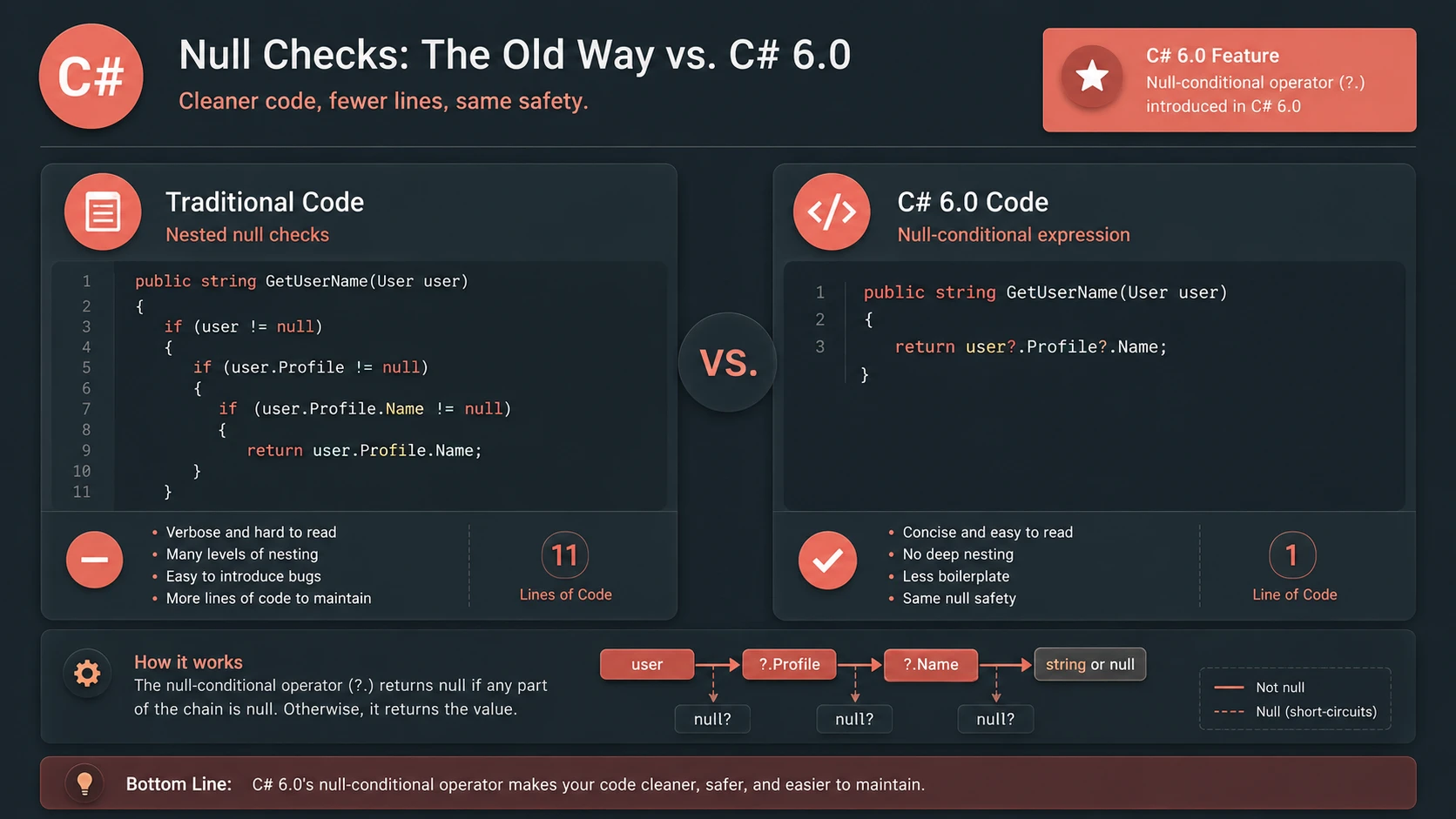
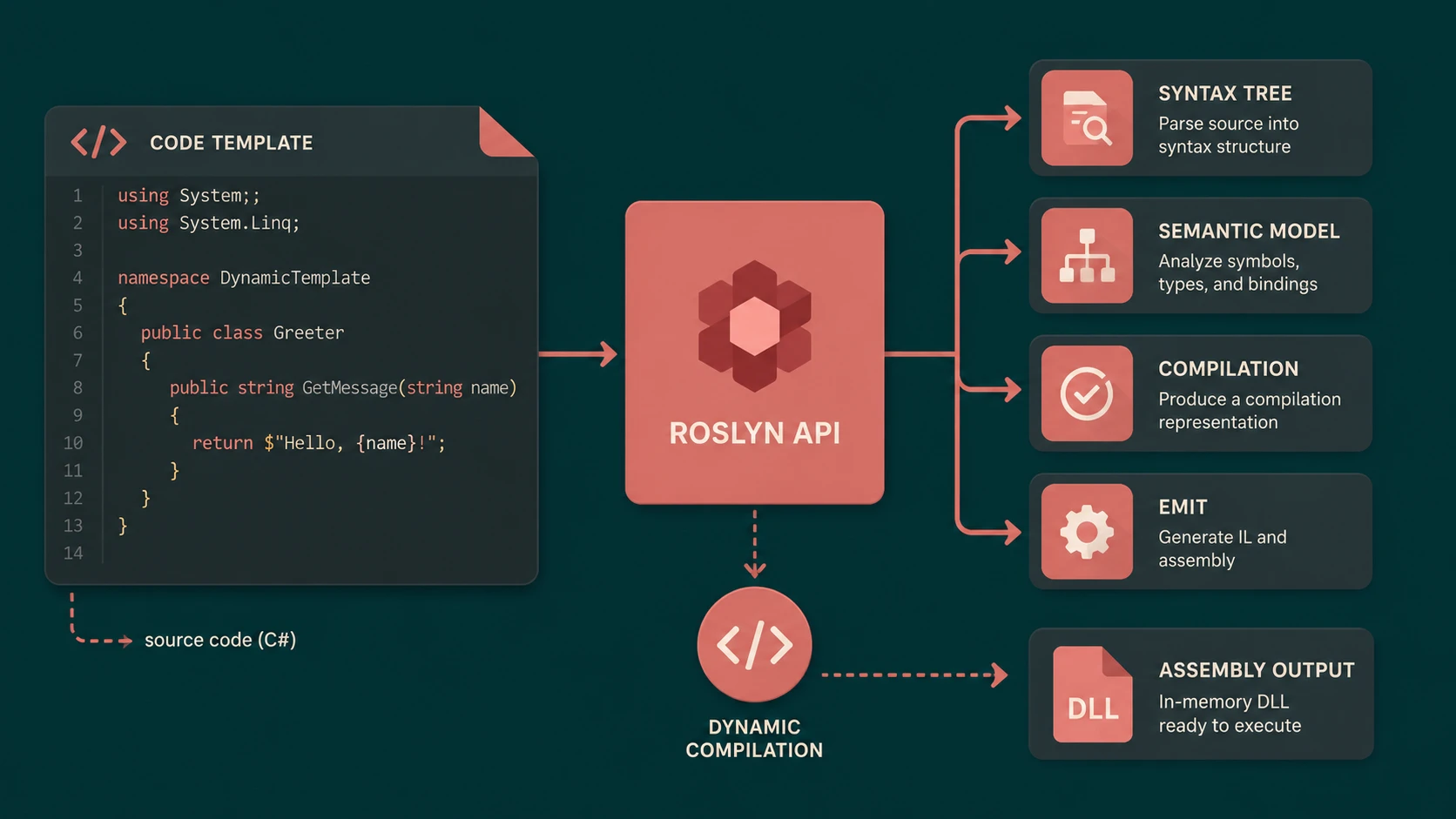
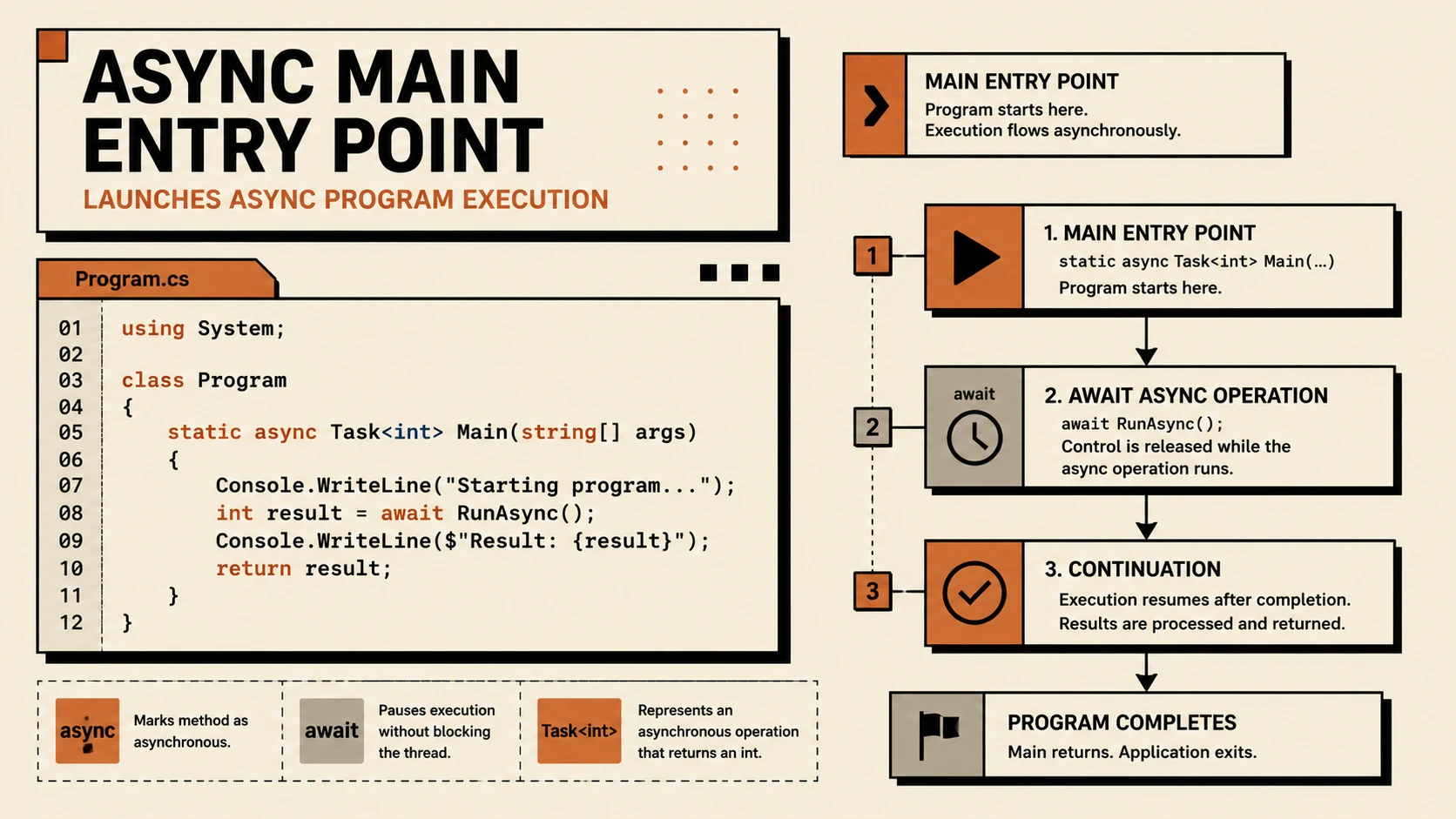
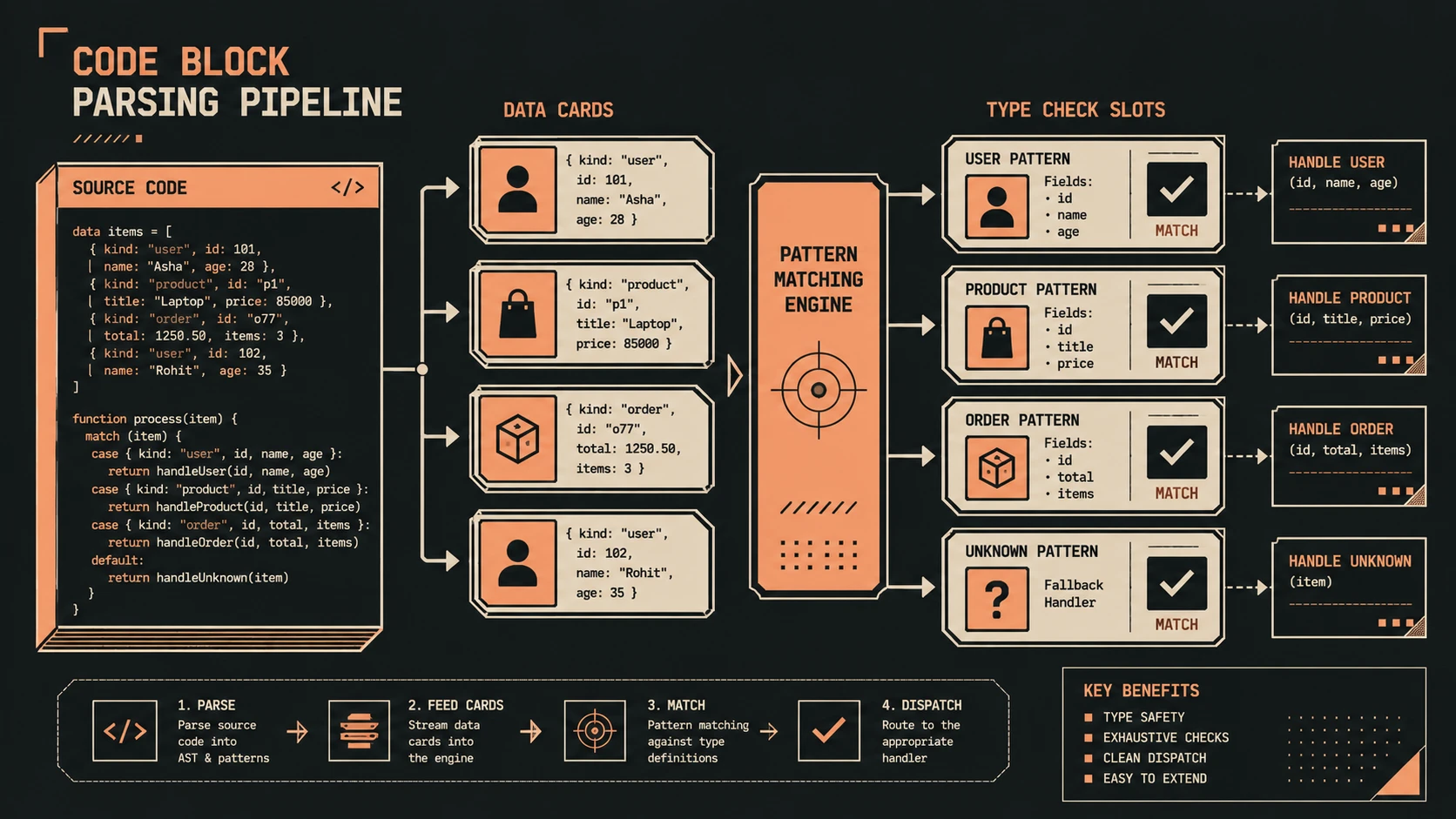
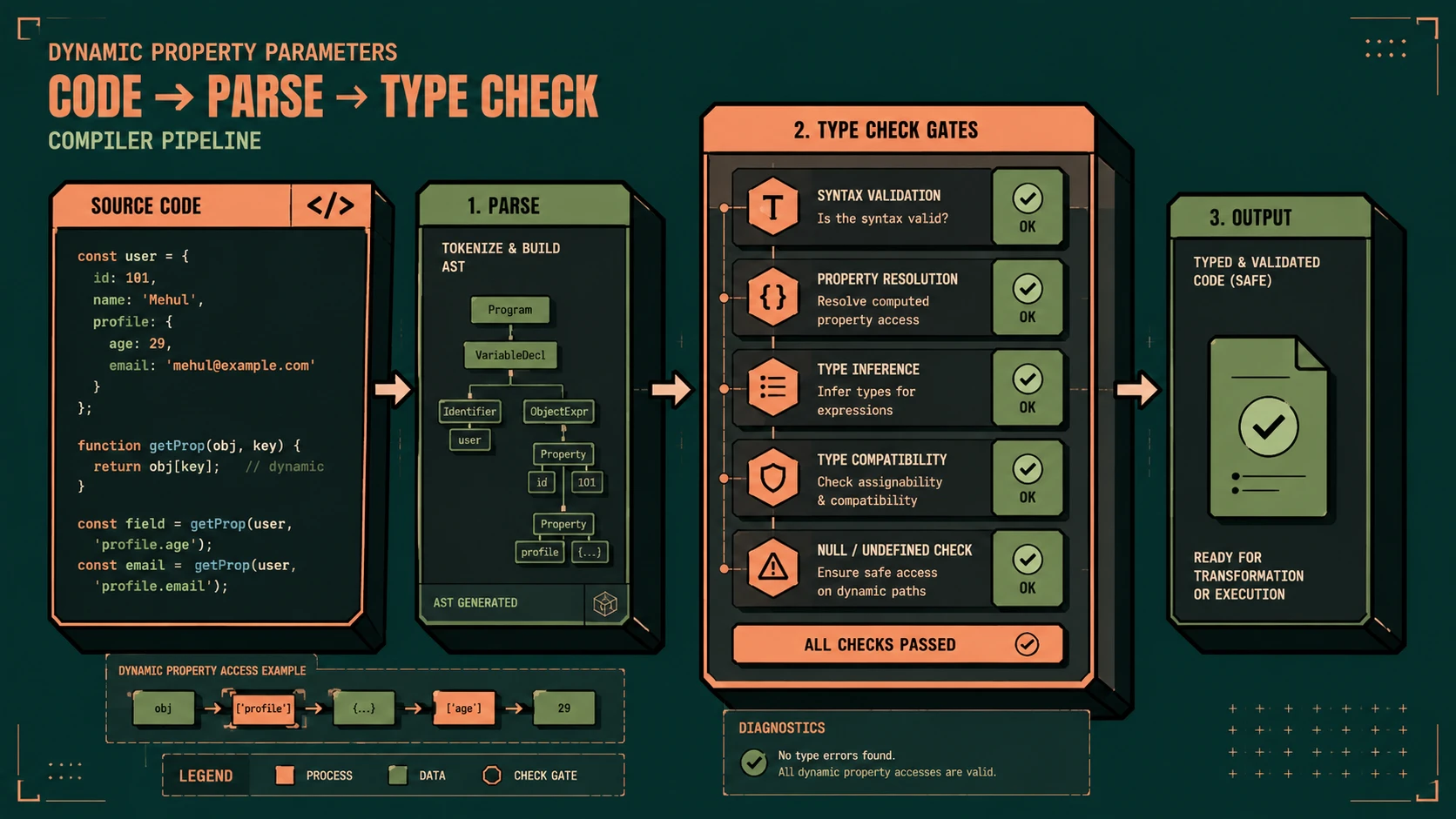
System architecture diagram and conceptual workflow layout for C# 6.0 Features.
Expression-Bodied Members
Many methods simply return a calculated value or delegate work to another member.
Expression-bodied members allow these concise implementations to be written using simplified syntax.
Appropriate scenarios include:
- ◆Read-only properties
- ◆Utility methods
- ◆Conversion helpers
- ◆Lightweight object members
Developers should continue favoring readability over brevity for more complex implementations.
Exception Filters
// Handling exceptions conditionally using C# 6.0 Exception Filters
try
{
    await ProcessTransactionsAsync();
}
catch (HttpException ex) when (ex.StatusCode == 404)
{
    LogWarning("Transaction endpoint not found.");
}
catch (HttpException ex) when (ex.StatusCode == 500)
{
    LogError("Remote server encountered critical error.");
}
C# 6.0 introduces exception filters, allowing conditions to be evaluated before entering a catch block.
Potential advantages include:
- ◆More precise exception handling
- ◆Reduced nested conditional logic
- ◆Cleaner separation of recovery paths
Exception filters can improve clarity when applications must distinguish between different runtime conditions.
Enterprise Use Cases
| Scenario | Benefit |
|---|---|
| ASP.NET Applications | Cleaner controller and service code |
| Enterprise APIs | Simplified null handling |
| Business Applications | Reduced boilerplate |
| Logging Systems | Readable message formatting |
| Desktop Software | Improved maintainability |
| Shared Libraries | Cleaner public APIs |
Organizations maintaining large .NET solutions benefit most from language features that improve readability across many projects.
Performance Considerations
Most C# 6.0 features primarily improve developer productivity rather than dramatically changing runtime performance.
Organizations should continue evaluating:
- ◆Application architecture
- ◆Memory allocation
- ◆Asynchronous operations
- ◆Database performance
- ◆Network latency
Well-designed software architecture remains significantly more influential than language syntax alone.
Security Considerations
Language improvements do not replace secure application design.
Development teams should continue implementing:
- ◆Input validation
- ◆Authentication
- ◆Authorization
- ◆Secure data access
- ◆HTTPS communication
- ◆Proper exception management
Cleaner syntax should not encourage reduced attention to secure coding practices.
Scalability
C# 6.0 contributes to long-term scalability by improving:
- ◆Code readability
- ◆Team collaboration
- ◆Refactoring safety
- ◆Consistent coding standards
- ◆Maintenance efficiency
Large enterprise projects often realize greater value from maintainable code than from isolated syntax improvements.
Best Practices
Organizations adopting C# 6.0 should:
- ◆Use null-conditional operators to simplify defensive code.
- ◆Apply auto-property initializers where default values are appropriate.
- ◆Prefer string interpolation for readable formatted output.
- ◆Replace hard-coded member names with nameof expressions.
- ◆Use expression-bodied members only for concise implementations.
- ◆Continue writing explicit code when readability would otherwise suffer.
- ◆Standardize language feature usage across development teams.
- ◆Validate generated code through existing testing practices.
Consistent coding conventions maximize the benefits of newer language capabilities.
Common Mistakes
Development teams should avoid:
- ◆Using concise syntax when it reduces readability.
- ◆Replacing clear business logic with overly compact expressions.
- ◆Assuming null-conditional operators eliminate the need for proper validation.
- ◆Mixing multiple coding styles within the same project.
- ◆Treating language improvements as substitutes for architectural quality.
- ◆Ignoring existing coding standards during migration.
Language enhancements are most valuable when applied consistently and appropriately.
Technology Comparison
| Capability | Earlier C# Versions | C# 6.0 |
|---|---|---|
| Null Safety | Manual checks | Null-conditional operators |
| Property Initialization | Constructor-based | Inline auto-property initialization |
| String Formatting | Concatenation or composite formatting | String interpolation |
| Symbol References | String literals | nameof expression |
| Lightweight Members | Traditional syntax | Expression-bodied members |
| Exception Filtering | Limited | Built-in support |
C# 6.0 modernizes common programming patterns while maintaining strong compatibility with existing .NET applications.
Adoption Strategy
Organizations should introduce C# 6.0 incrementally.
A practical migration approach includes:
- 1.Upgrade development environments to Visual Studio 2015.
- 2.Enable C# 6.0 for new projects.
- 3.Adopt language features during routine maintenance rather than mass rewrites.
- 4.Update coding standards.
- 5.Train development teams on new syntax.
- 6.Review code during peer review for consistent usage.
- 7.Measure maintainability improvements over time.
Gradual adoption minimizes migration effort while allowing teams to benefit from improved language expressiveness.
Limitations
Although C# 6.0 improves developer productivity, several considerations remain.
Current observations include:
- ◆Existing applications do not require immediate migration.
- ◆New language features should complement existing coding standards.
- ◆Readability should remain the primary objective.
- ◆Architectural quality continues to outweigh syntactic improvements.
Organizations should adopt new features where they provide measurable value rather than pursuing language modernization alone.
Looking Ahead
C# 6.0 continues Microsoft's strategy of refining the language through practical enhancements that improve everyday software development. Features such as null-conditional operators, string interpolation, auto-property initializers, and nameof expressions address common enterprise programming scenarios while reducing repetitive code and improving readability.
As of November 2015, enterprise development teams adopting Visual Studio 2015 should evaluate these capabilities as incremental improvements that enhance maintainability without disrupting existing applications. By combining modern language features with disciplined architecture and established engineering practices, organizations can continue building reliable, scalable, and maintainable .NET software for the evolving enterprise landscape.