Introduction
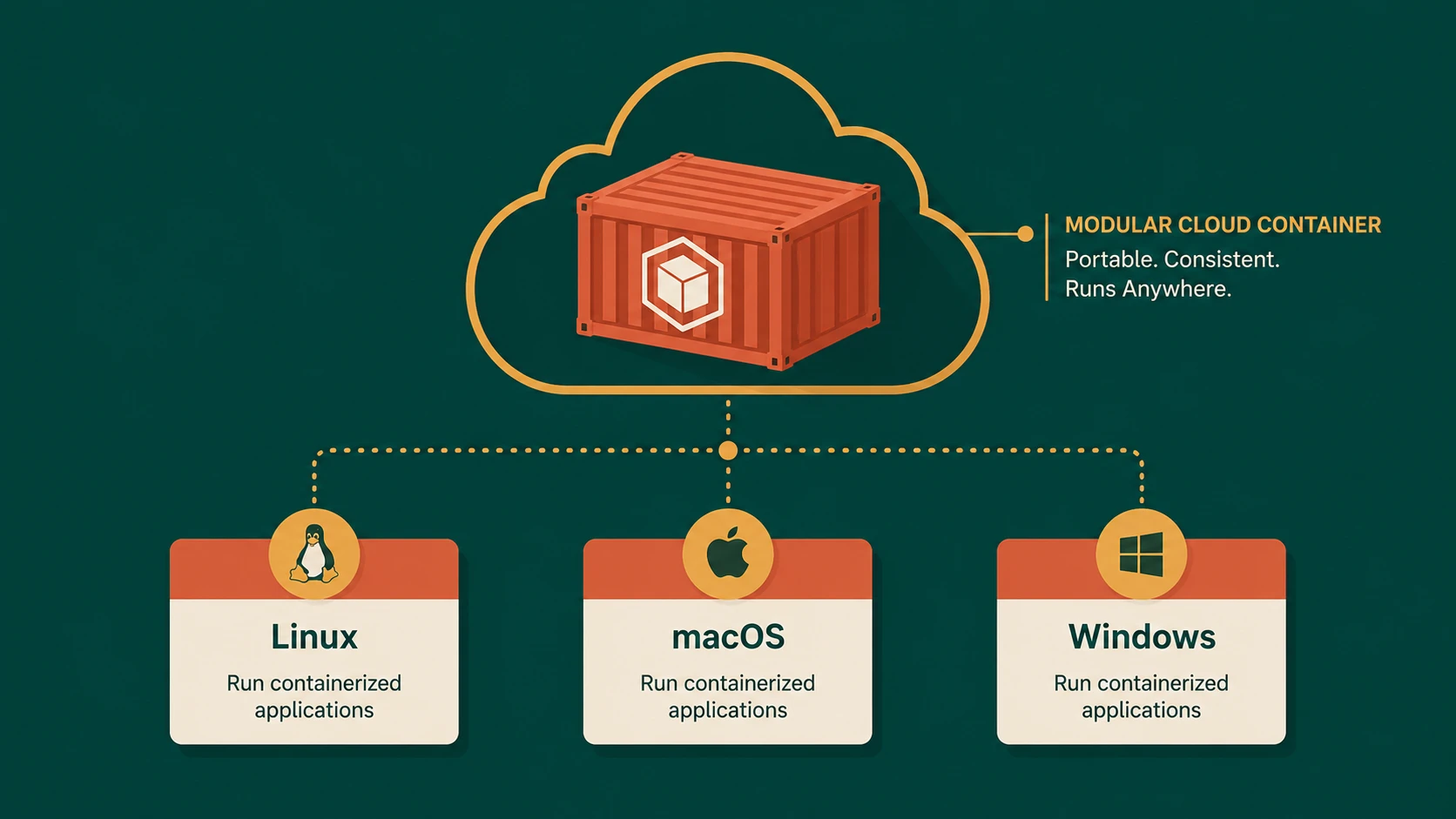
Over the past several years, Microsoft has fundamentally transformed the .NET ecosystem. The introduction of .NET Core established a modern, cross-platform runtime capable of running Linux, Windows, and macOS workloads while significantly improving application performance, deployment flexibility, and cloud readiness. Meanwhile, Mono continued serving mobile platforms and specialized application environments, while the traditional .NET Framework remained widely deployed across enterprise organizations.
Although each platform evolved successfully within its own domain, maintaining multiple implementations introduced complexity for developers, framework authors, tooling vendors, and enterprise architecture teams. Different runtimes, APIs, compatibility targets, and deployment strategies increased the effort required to build applications that could span multiple environments.
.NET 5 represents Microsoft's strategy to unify these technologies under a single modern platform. Rather than creating another separate runtime, .NET 5 becomes the successor to .NET Core while incorporating technologies and lessons from Mono and the wider .NET ecosystem.
Alongside this platform unification, C# 9.0 introduces several important language improvements including Record Types, init-only properties, top-level programs, and pattern matching enhancements that improve developer productivity and domain modeling.
From the perspective of November 2020, .NET 5 represents one of the most significant milestones in the modern history of Microsoft's developer platform.
Industry Background
Enterprise software increasingly demands:
- ◆Cross-platform deployment.
- ◆Cloud-native architecture.
- ◆Microservices.
- ◆Containerized workloads.
- ◆High-performance APIs.
- ◆Modern language features.
- ◆Unified development platforms.
Organizations commonly develop:
- ◆ASP.NET applications.
- ◆REST APIs.
- ◆Cloud services.
- ◆Desktop applications.
- ◆Mobile applications.
- ◆Background processing systems.
- ◆Enterprise business platforms.
Reducing platform fragmentation has become increasingly important for organizations maintaining large application portfolios.
The Business Problem
Large enterprise environments frequently encounter several operational challenges.
Organizations commonly experience:
- ◆Multiple runtime targets.
- ◆Platform-specific APIs.
- ◆Framework compatibility concerns.
- ◆Duplicate development effort.
- ◆Complex deployment strategies.
- ◆Inconsistent tooling.
- ◆Long-term maintenance overhead.
Maintaining separate runtime implementations increases engineering complexity while slowing platform modernization.
.NET 5 addresses these concerns through a unified platform architecture.
Understanding the Technology
.NET 5 represents the next major evolution of Microsoft's modern development platform.
Major capabilities include:
- ◆Unified .NET platform.
- ◆Cross-platform runtime.
- ◆C# 9.0 language support.
- ◆Record Types.
- ◆Improved runtime performance.
- ◆Garbage collection enhancements.
- ◆Better container support.
These capabilities simplify enterprise development while improving application performance and maintainability.
Core Architecture
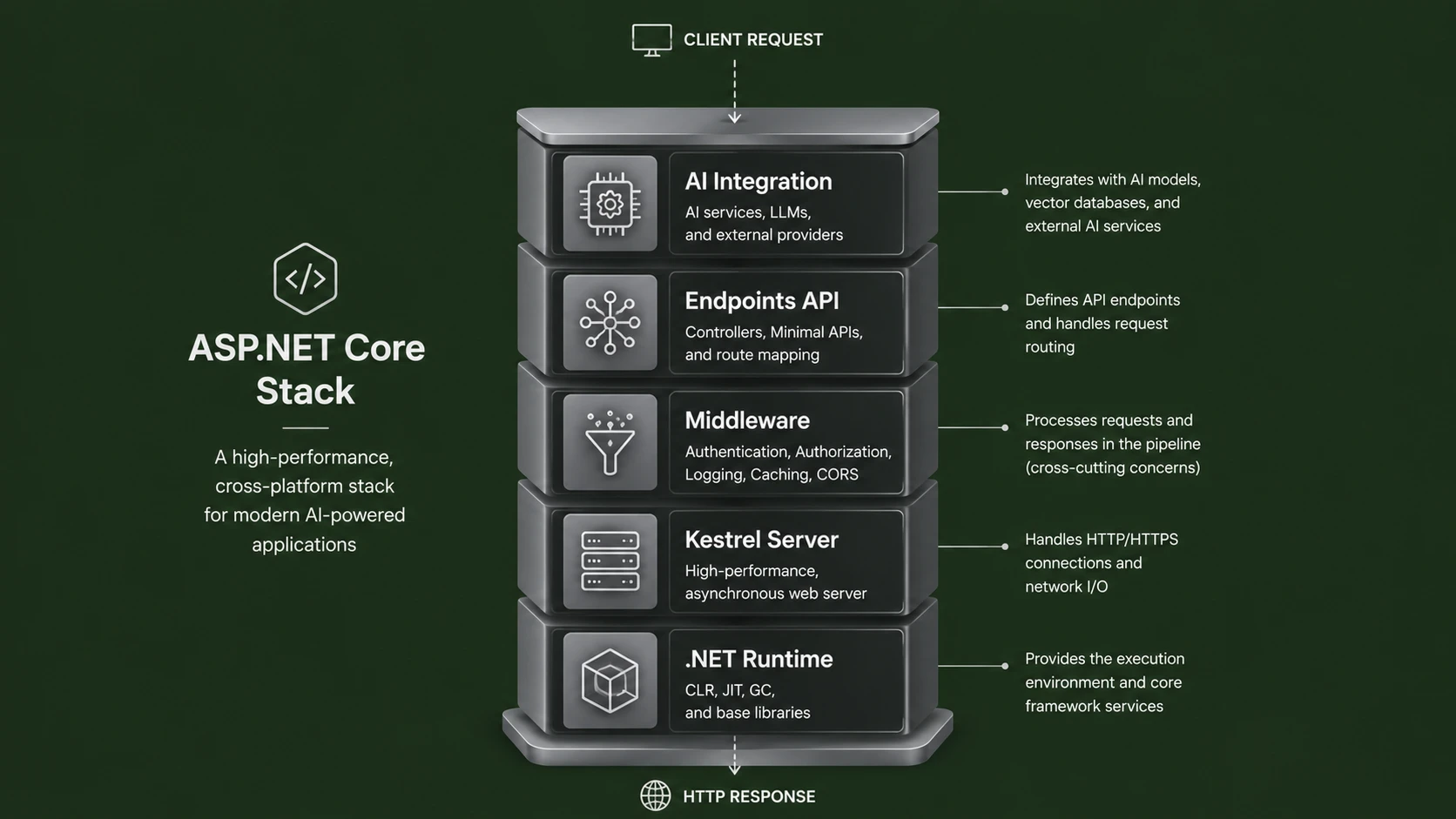
A simplified .NET 5 architecture appears below.
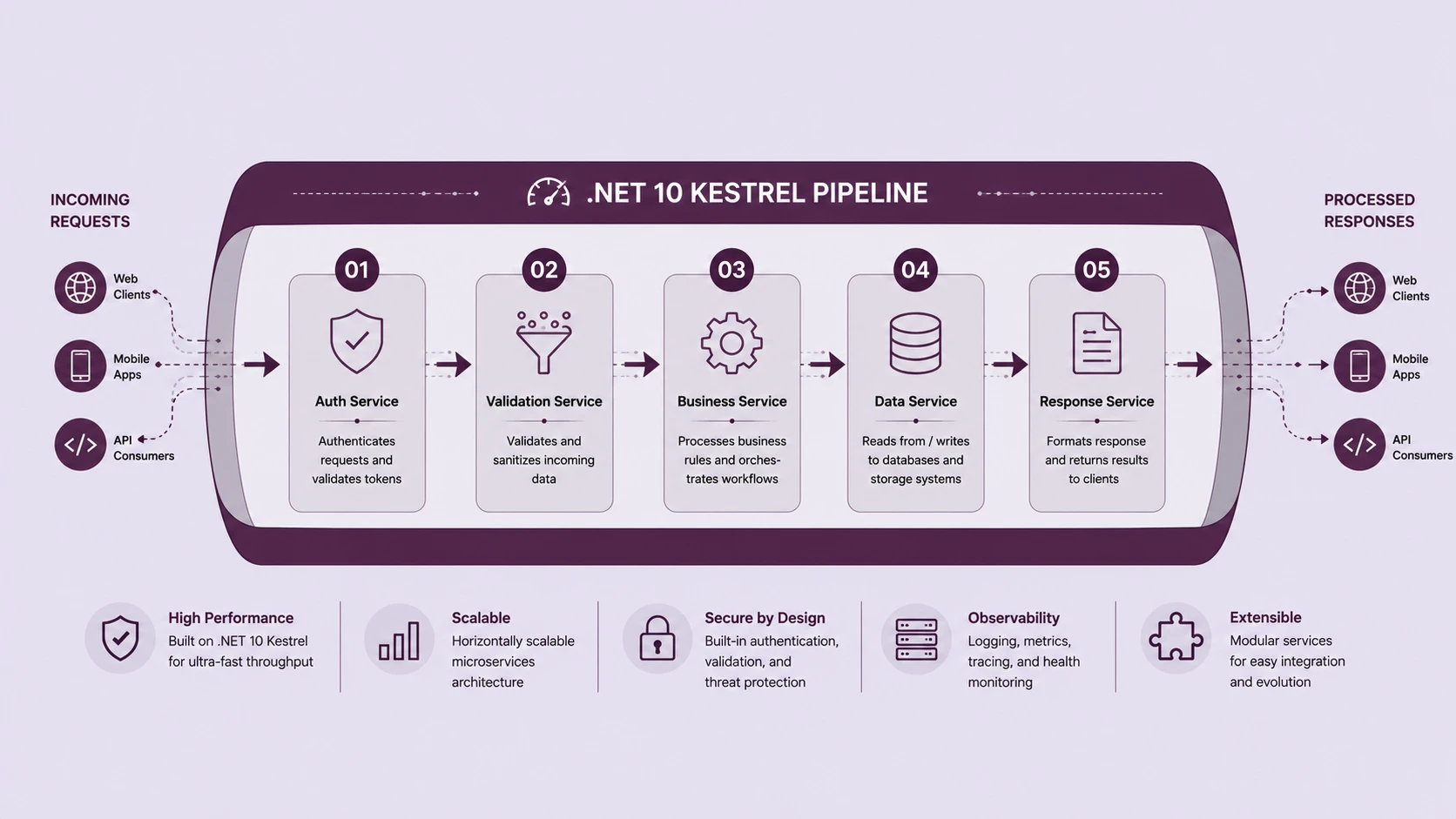
| Component | Responsibility |
|---|---|
| C# Source Code | Business logic |
| Roslyn Compiler | Compilation |
| .NET 5 Runtime | Application execution |
| Base Class Libraries | Shared APIs |
| ASP.NET Core | Web framework |
| CLR | Memory management and execution |
| Operating System | Process execution |
The unified runtime provides a consistent execution environment across supported operating systems while enabling multiple application models.
Key Features
Unified .NET Platform
The defining objective of .NET 5 is platform unification.
Rather than maintaining separate runtime families for modern application development, Microsoft is establishing a single platform that serves cloud services, desktop applications, web applications, mobile scenarios, and developer tooling.
This simplifies:
- ◆Runtime selection.
- ◆Framework development.
- ◆Package compatibility.
- ◆Long-term maintenance.
- ◆Enterprise modernization.
Organizations gain a clearer roadmap for future application development.
C# 9.0 Record Types
One of the most significant language additions is Record Types.
Many enterprise applications model immutable business entities such as:
- ◆Customer profiles.
- ◆Orders.
- ◆Financial transactions.
- ◆Configuration objects.
- ◆Event messages.
Traditional class implementations often require repetitive boilerplate code for equality, constructors, and value comparison.
Record Types simplify these scenarios by providing concise syntax for immutable data-oriented objects while automatically supporting value-based equality semantics.
This improves readability and reduces repetitive implementation effort.
Init-Only Properties
C# 9.0 introduces init-only properties.
Developers can initialize object properties during construction while preventing modification afterward.
This capability complements immutable programming models and integrates naturally with Record Types.
Top-Level Programs
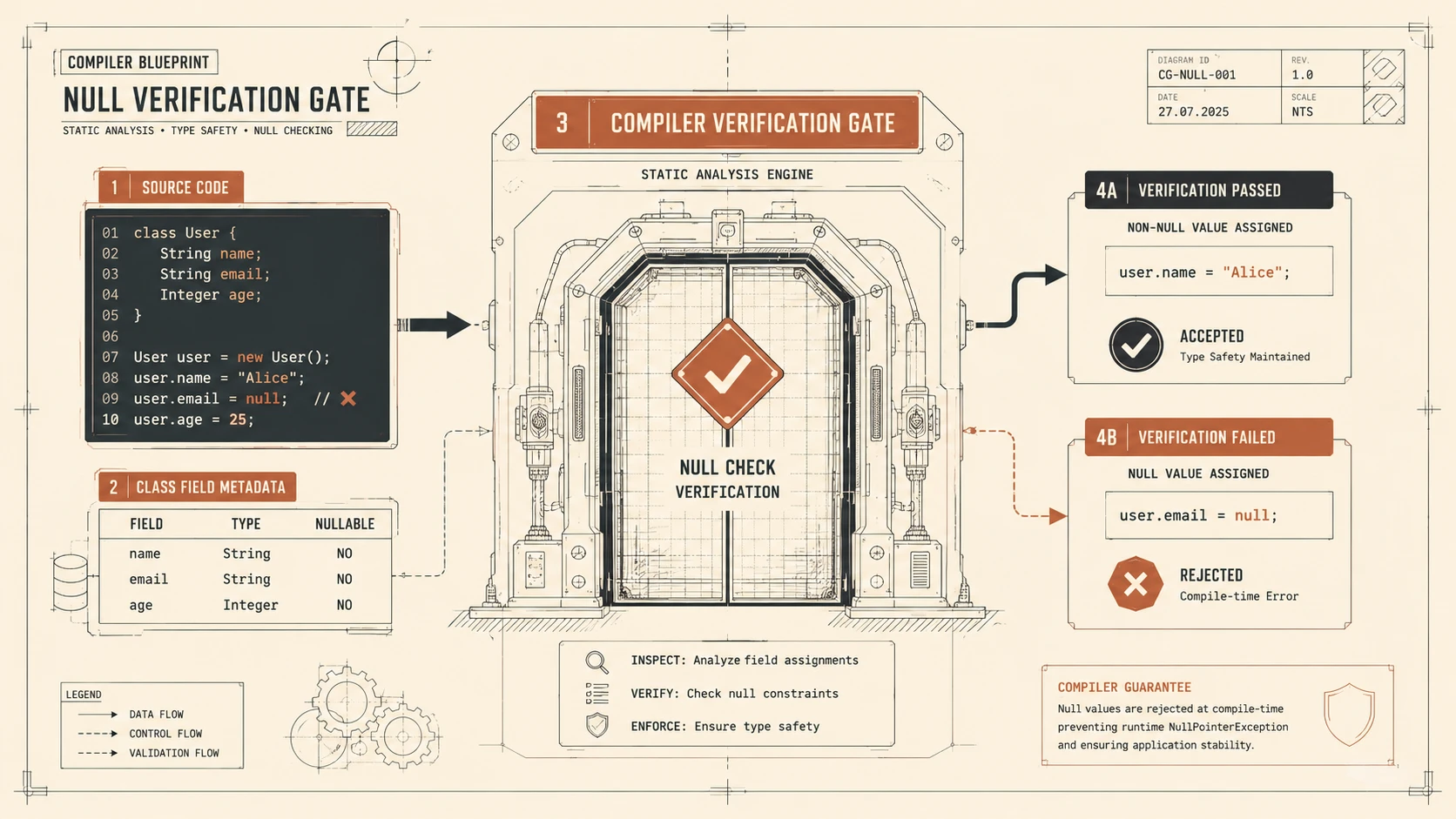
Simple applications no longer require explicit Program class definitions.
Top-level programs reduce ceremony for:
- ◆Learning.
- ◆Utilities.
- ◆Samples.
- ◆Small services.
while preserving full language capabilities.
Pattern Matching Enhancements
C# 9.0 continues expanding pattern matching.
Developers gain more expressive ways to evaluate:
- ◆Object types.
- ◆Value relationships.
- ◆Conditional logic.
- ◆Domain models.
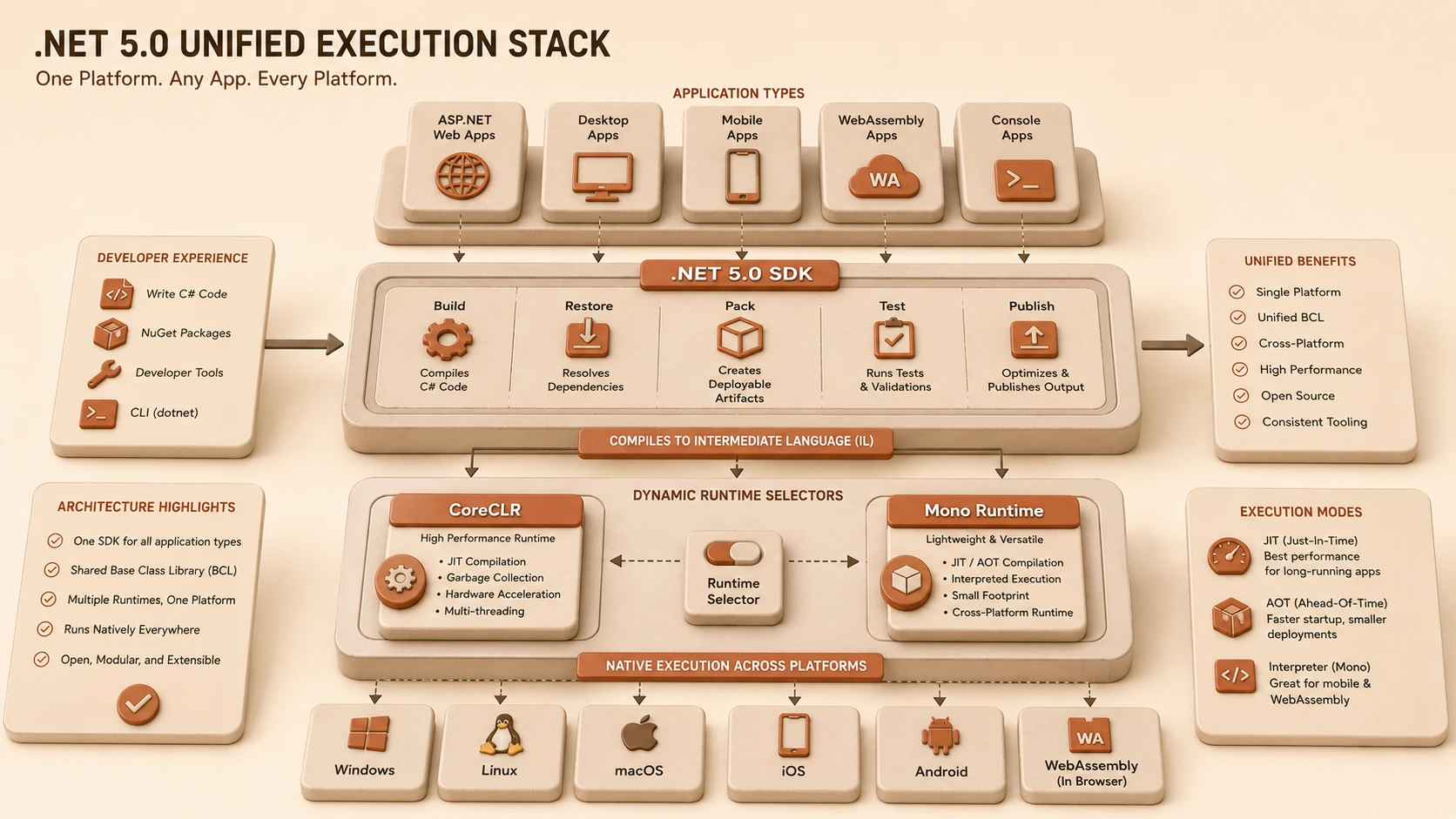
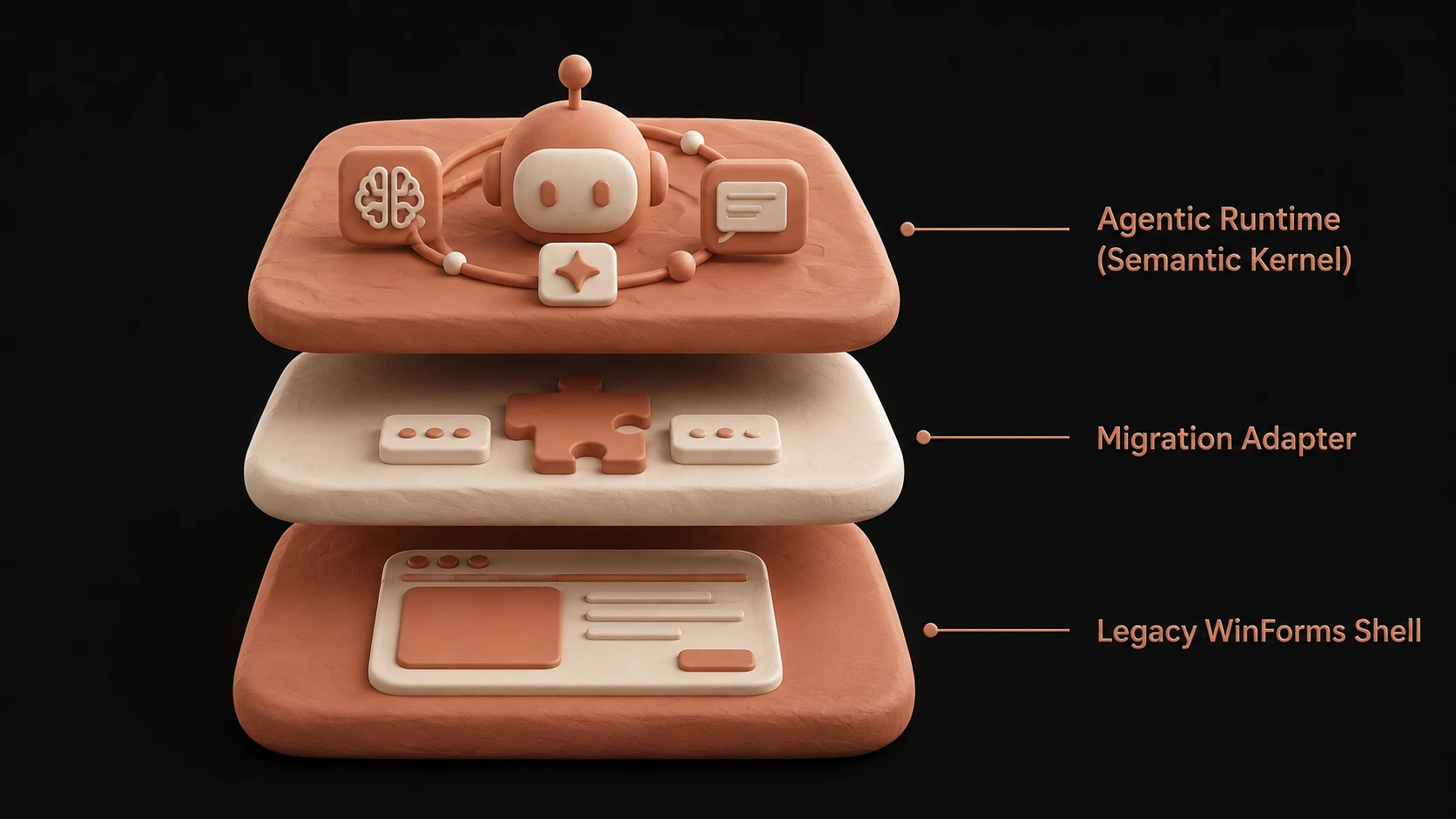
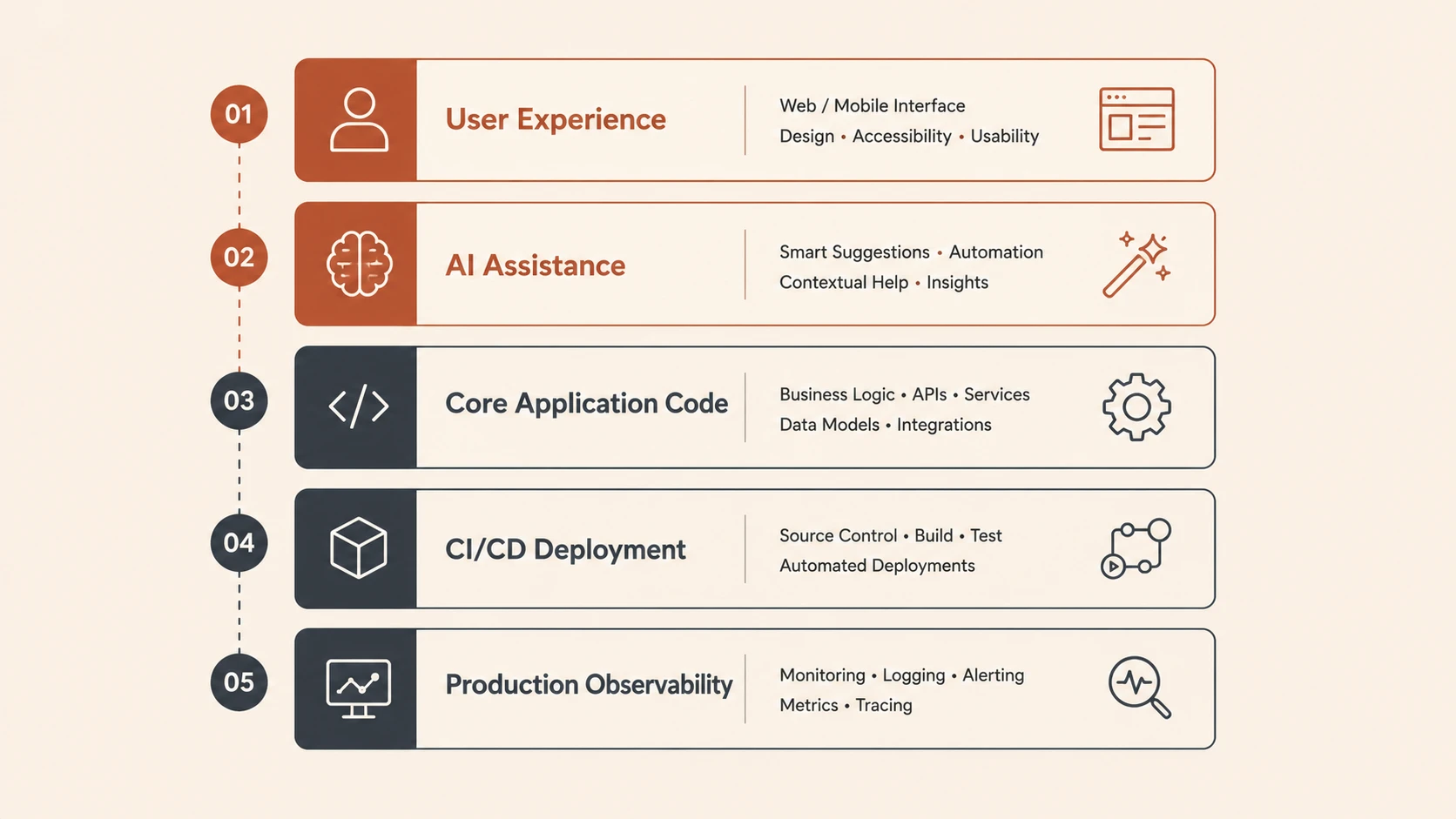
System architecture diagram and conceptual workflow layout for .NET 5.0 Release.
These enhancements improve readability throughout enterprise applications.
Runtime Performance Improvements
.NET 5 continues optimizing runtime execution through improvements across:
- ◆JIT compilation.
- ◆Garbage collection.
- ◆Memory allocation.
- ◆Networking.
- ◆Collections.
These runtime refinements contribute to higher throughput and lower resource consumption.
How It Works
A simplified execution workflow appears below.
C# Source
      |
Roslyn Compiler
      |
Intermediate Language
      |
.NET 5 Runtime
      |
JIT Compilation
      |
Application Execution
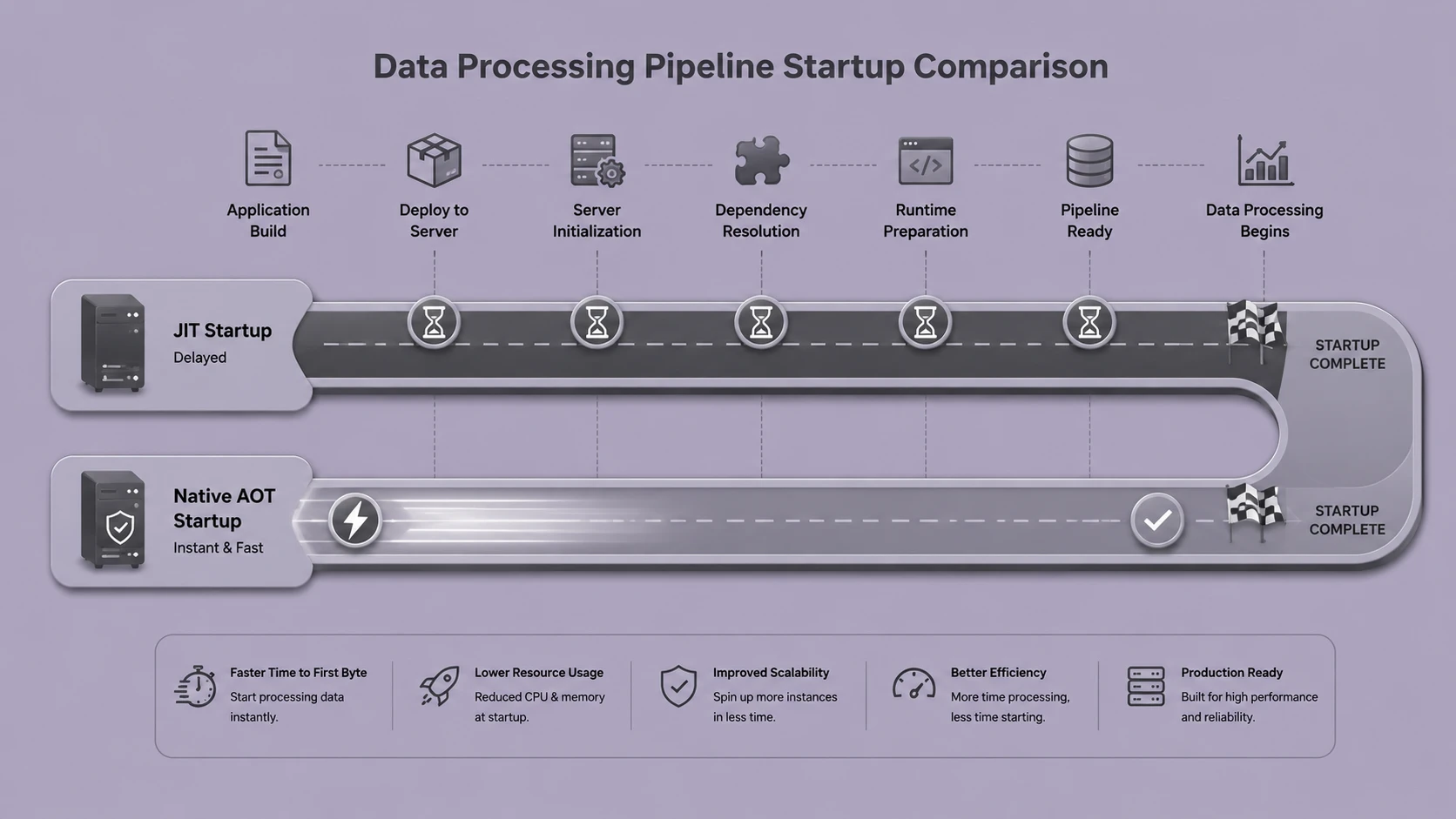
The compiler generates Intermediate Language while the runtime performs Just-In-Time compilation and manages memory during execution.
Enterprise Use Cases
Cloud APIs
ASP.NET Core applications benefit from improved runtime performance and simplified deployment.
Microservices
Containerized services gain from the unified runtime and modern language capabilities.
Enterprise Business Applications
Record Types improve modeling of immutable business entities throughout complex domains.
Desktop Software
Organizations modernizing desktop applications benefit from the unified platform roadmap.
Internal Development Platforms
Development teams gain consistent tooling and runtime behavior across multiple application types.
Performance Considerations
.NET 5 continues Microsoft's focus on runtime efficiency.
Organizations should evaluate:
- ◆Startup performance.
- ◆Request throughput.
- ◆Garbage collection latency.
- ◆Memory utilization.
- ◆Container density.
- ◆API response time.
Representative production benchmarking should accompany all platform upgrades.
Security Considerations
.NET 5 continues Microsoft's secure development practices.
Organizations should continue implementing:
- ◆Authentication.
- ◆Authorization.
- ◆HTTPS.
- ◆Secure dependency management.
- ◆Input validation.
- ◆Secret management.
Platform modernization should complement broader enterprise security architecture.
Scalability
.NET 5 strengthens enterprise scalability through:
- ◆Unified runtime.
- ◆Improved performance.
- ◆Cross-platform deployment.
- ◆Modern language features.
- ◆Simplified platform strategy.
These characteristics support large distributed enterprise systems.
Best Practices
Organizations adopting .NET 5 should:
- ◆Evaluate migration from .NET Core where appropriate.
- ◆Adopt Record Types for immutable domain models.
- ◆Use init-only properties for configuration and business objects.
- ◆Benchmark representative workloads.
- ◆Validate third-party package compatibility.
- ◆Standardize SDK versions across engineering teams.
- ◆Modernize deployment pipelines alongside runtime upgrades.
Incremental adoption minimizes operational disruption while enabling organizations to benefit from platform improvements.
Common Mistakes
| Mistake | Business Impact |
|---|---|
| Assuming .NET Framework applications migrate without planning | Migration complexity |
| Using Record Types for every object regardless of domain requirements | Reduced architectural clarity |
| Ignoring package compatibility validation | Deployment failures |
| Skipping runtime performance benchmarking | Uncertain production behavior |
| Mixing multiple SDK versions across projects | Build inconsistency |
| Delaying modernization of deployment pipelines | Reduced operational efficiency |
Successful adoption depends upon careful migration planning and disciplined platform standardization.
Technology Comparison
| Characteristic | .NET Core 3.1 | .NET 5 |
|---|---|---|
| Platform Strategy | Modern cross-platform runtime | Unified .NET platform |
| C# Version | C# 8.0 | C# 9.0 |
| Record Types | Not available | Supported |
| Init-Only Properties | Not available | Supported |
| Runtime Performance | High performance | Further optimized |
| Enterprise Direction | Modernization | Platform unification |
.NET 5 extends the capabilities of .NET Core while establishing a unified future for Microsoft's development ecosystem.
Adoption Strategy
Organizations should approach .NET 5 through structured modernization.
- 1.Inventory existing .NET applications.
- 2.Validate third-party package compatibility.
- 3.Upgrade development environments and SDKs.
- 4.Benchmark representative production workloads.
- 5.Introduce C# 9.0 features gradually.
- 6.Expand deployment after comprehensive testing.
This phased strategy minimizes operational risk while enabling organizations to adopt the unified .NET platform.
Limitations
As of November 2020, organizations should recognize several considerations.
- ◆Existing .NET Framework applications may require migration planning depending on application architecture.
- ◆Record Types are best suited for immutable data models rather than every class hierarchy.
- ◆Third-party libraries should be validated before upgrading production workloads.
- ◆Platform modernization should proceed incrementally.
- ◆Representative performance testing remains essential before organization-wide deployment.
These considerations should guide enterprise migration planning.
Looking Ahead
From the perspective of November 2020, .NET 5 marks the beginning of a unified future for Microsoft's development platform. By bringing together the evolution of .NET Core, Mono, and the broader .NET ecosystem under a single runtime strategy, Microsoft simplifies long-term application development while strengthening cross-platform capabilities.
Combined with C# 9.0 innovations such as Record Types, init-only properties, enhanced pattern matching, and ongoing runtime optimizations, .NET 5 provides enterprise development teams with a modern foundation for building scalable web services, cloud-native applications, desktop software, and distributed systems. Organizations planning long-term platform investments should view .NET 5 as a significant architectural milestone that establishes the direction of the modern .NET ecosystem.