Introduction
Enterprise application development is undergoing a significant transformation. Cloud computing, virtualization, DevOps practices, and service-oriented architectures are encouraging software vendors to rethink traditional application frameworks. Organizations increasingly require applications that are lightweight, modular, rapidly deployable, and capable of operating consistently across diverse infrastructure environments.
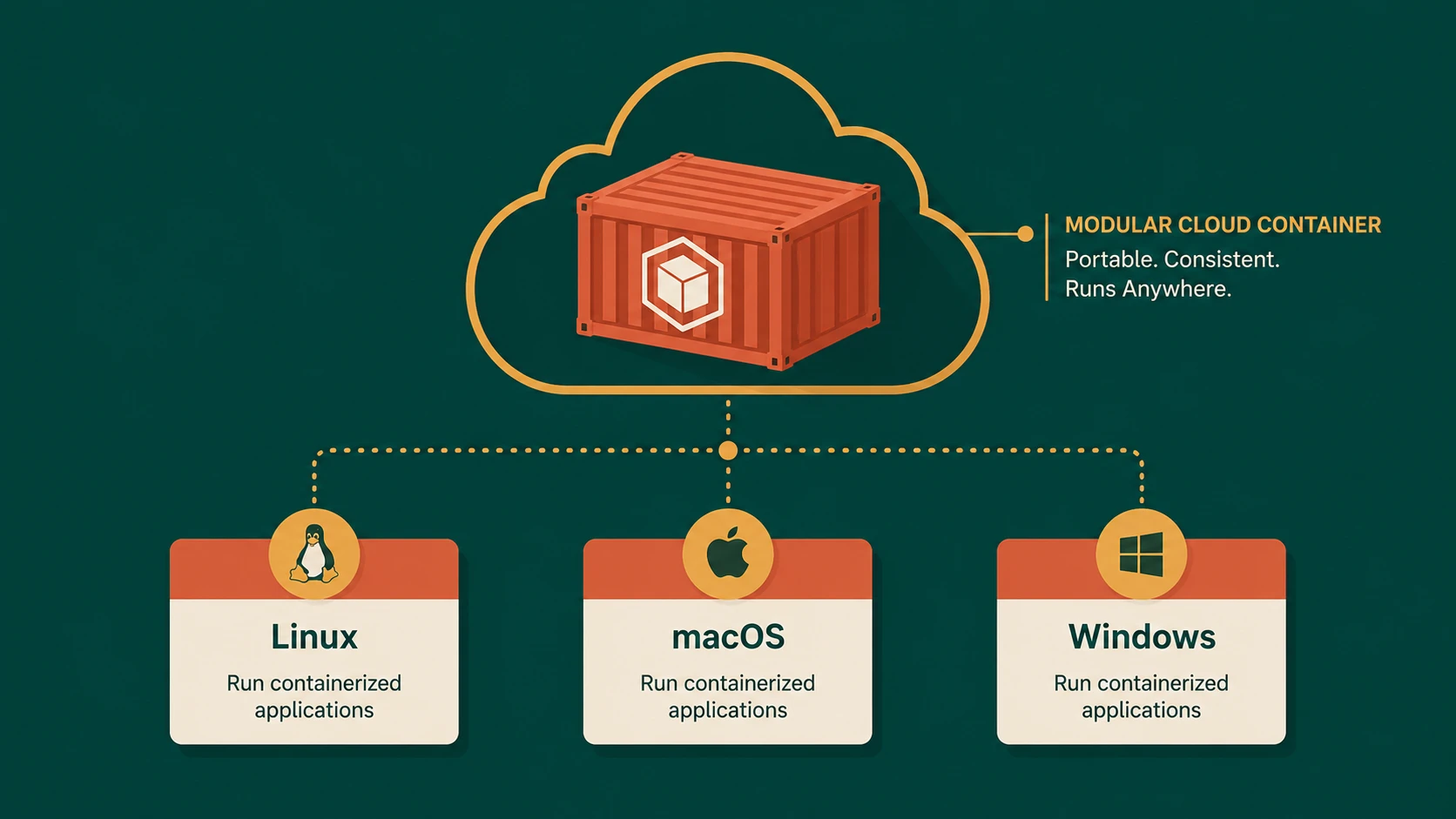
Microsoft has introduced ASP.NET vNext, representing a substantial redesign of the ASP.NET platform rather than a routine framework update. The initiative emphasizes modular architecture, cloud optimization, dependency injection, simplified deployment, and an ambitious vision for supporting multiple operating systems through a cross-platform .NET runtime.
From the perspective of May 2014, ASP.NET vNext signals Microsoft's intention to modernize enterprise web development while preserving the productivity and maturity that have made the .NET ecosystem a cornerstone of business software development.
Industry Background
Enterprise software architectures continue evolving rapidly.
Organizations are increasingly adopting:
- ◆Cloud infrastructure.
- ◆Continuous Delivery.
- ◆RESTful services.
- ◆Virtualized environments.
- ◆Microservice-oriented architectures.
- ◆Automated deployment pipelines.
Traditional web frameworks often assume monolithic deployments hosted on centrally managed web servers. While effective for many enterprise workloads, these assumptions introduce limitations as organizations seek faster deployments, independent service evolution, and infrastructure portability.
Competing development ecosystems have begun emphasizing modular packages, lightweight runtimes, and simplified deployment models. ASP.NET vNext represents Microsoft's response to these architectural trends.
The Business Problem
Large enterprise applications frequently encounter several operational challenges.
Organizations commonly experience:
- ◆Large framework dependencies.
- ◆Complex deployment procedures.
- ◆Version compatibility concerns.
- ◆Difficult framework upgrades.
- ◆Environment inconsistencies.
- ◆Slow application startup.
- ◆Infrastructure rigidity.
These issues increase operational costs while reducing development agility.
A modular runtime seeks to reduce these concerns by allowing applications to depend only on the framework components they actually require.
Understanding the Technology
ASP.NET vNext introduces a redesigned application model emphasizing modularity and deployment flexibility.
Core architectural concepts include:
- ◆Modular framework components.
- ◆Lightweight runtime architecture.
- ◆Built-in dependency injection.
- ◆Cloud-oriented deployment.
- ◆Cross-platform runtime support.
- ◆Simplified configuration.
- ◆Side-by-side framework versioning.
Rather than treating the framework as a monolithic installation shared across every application, ASP.NET vNext encourages applications to reference only the components necessary for their specific workloads.
Core Architecture
A simplified ASP.NET vNext architecture appears below.
| Component | Responsibility |
|---|---|
| Client Applications | Browser and service consumers |
| ASP.NET vNext Framework | Request processing |
| Modular Runtime Components | Framework services |
| Dependency Injection Container | Service resolution |
| Application Middleware | Request pipeline |
| Cross-Platform .NET Runtime | Application execution |
| Cloud Infrastructure | Deployment environment |
This modular architecture reduces unnecessary dependencies while supporting more flexible application composition.
Key Features
Modular Framework Design
Applications reference only the framework packages they require, reducing deployment size and simplifying maintenance.
Built-in Dependency Injection
Dependency injection becomes a fundamental part of the application architecture rather than requiring external frameworks.
Cloud-Oriented Deployment
The platform is designed with cloud-hosted workloads and automated deployment processes in mind.
Cross-Platform Vision
Microsoft has announced plans for applications to execute across multiple operating systems using a modern .NET runtime.
Side-by-Side Versioning
Applications may carry framework dependencies independently, reducing conflicts between multiple deployed solutions.
Lightweight Hosting
The redesigned hosting model aims to reduce infrastructure overhead while improving deployment flexibility.
How It Works
A simplified request pipeline appears below.
Client Request
        |
Web Server
        |
ASP.NET vNext Pipeline
        |
Middleware Components
        |
Dependency Injection
        |
Application Logic
        |
Response
Applications compose request-processing pipelines using modular middleware rather than relying exclusively on large predefined framework stacks.
Enterprise Use Cases
ASP.NET vNext supports numerous enterprise scenarios.
Cloud-Native Applications
Organizations deploying applications to public or private cloud environments benefit from lightweight deployment models.
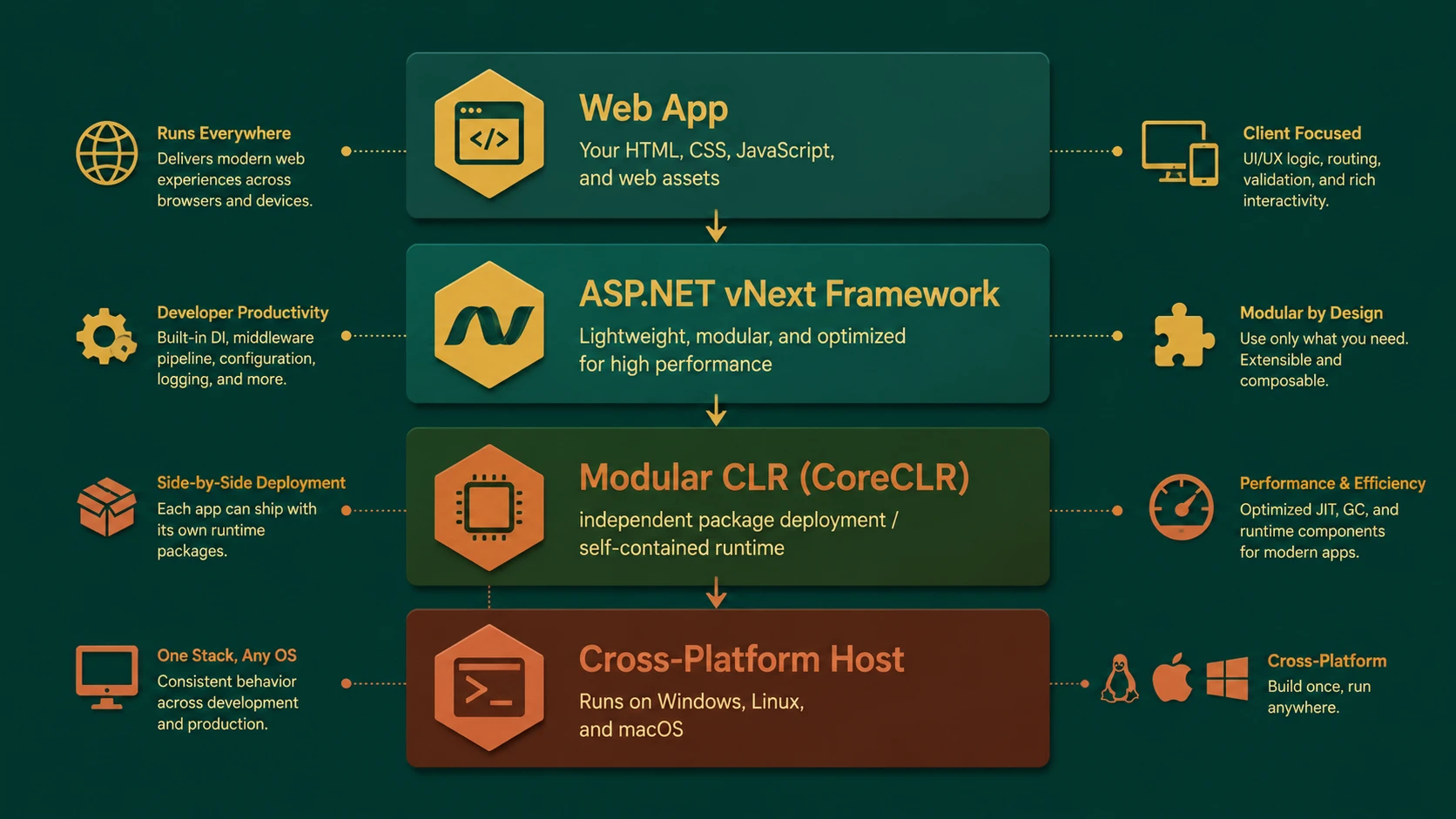
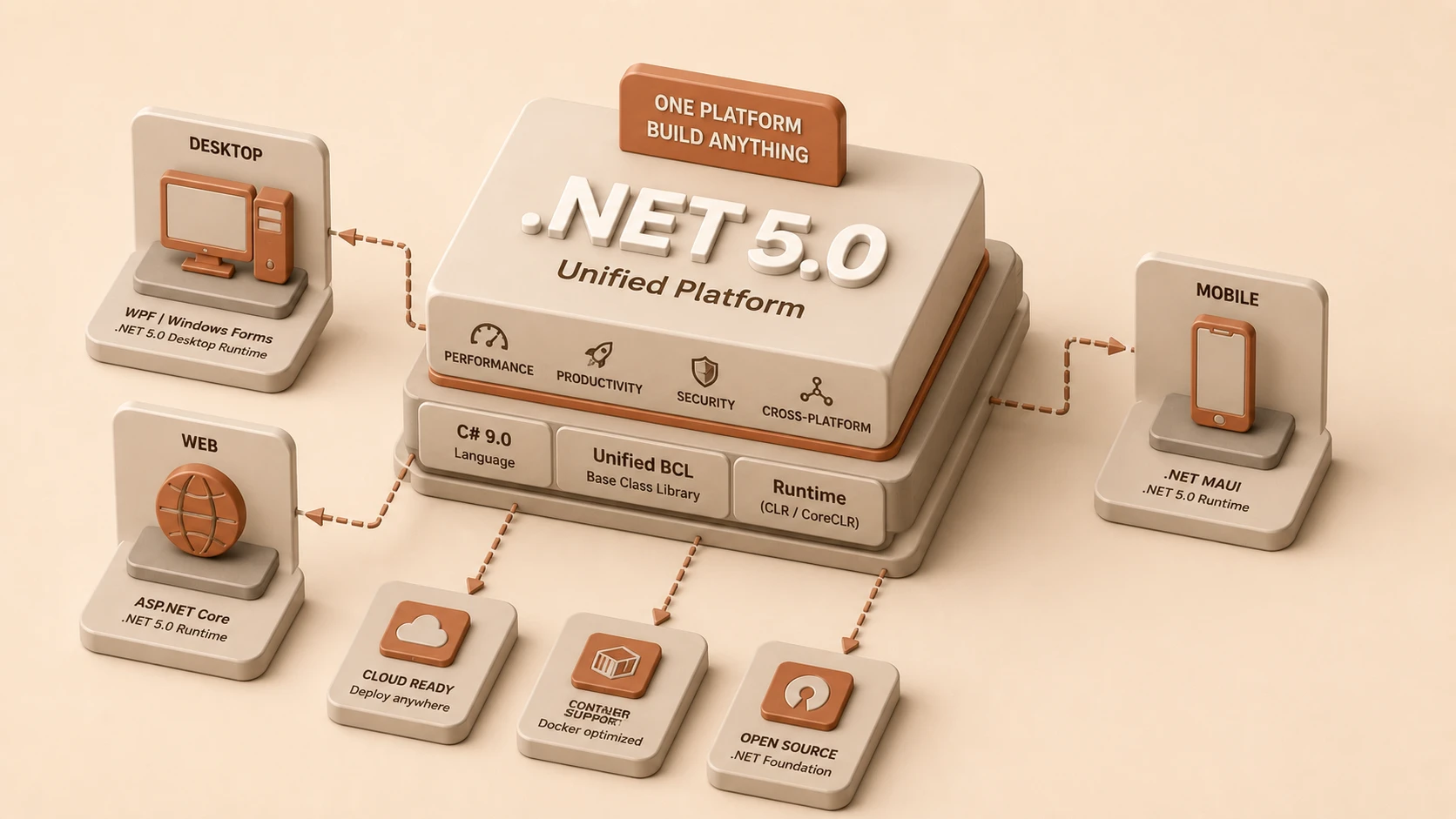
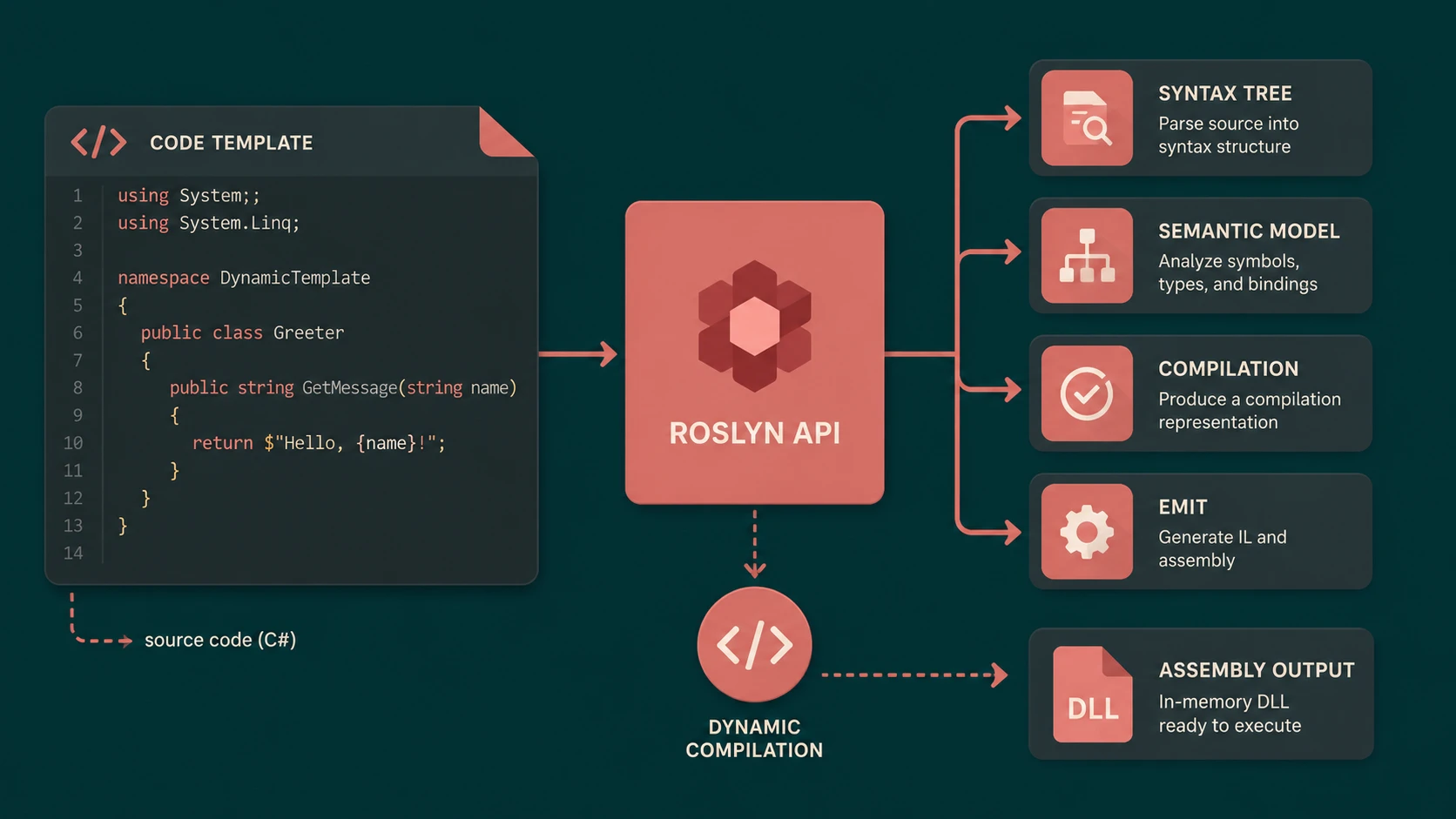
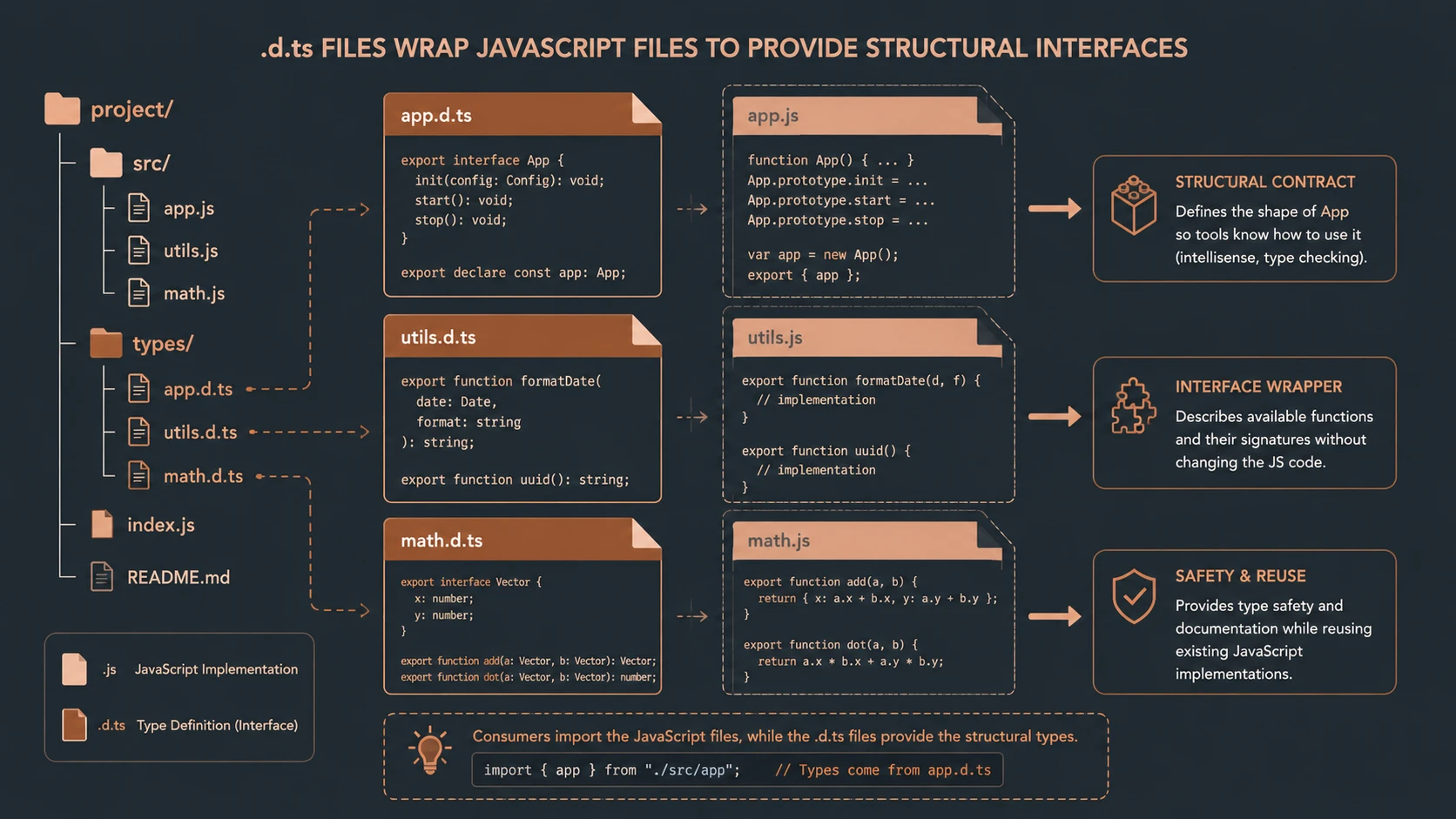
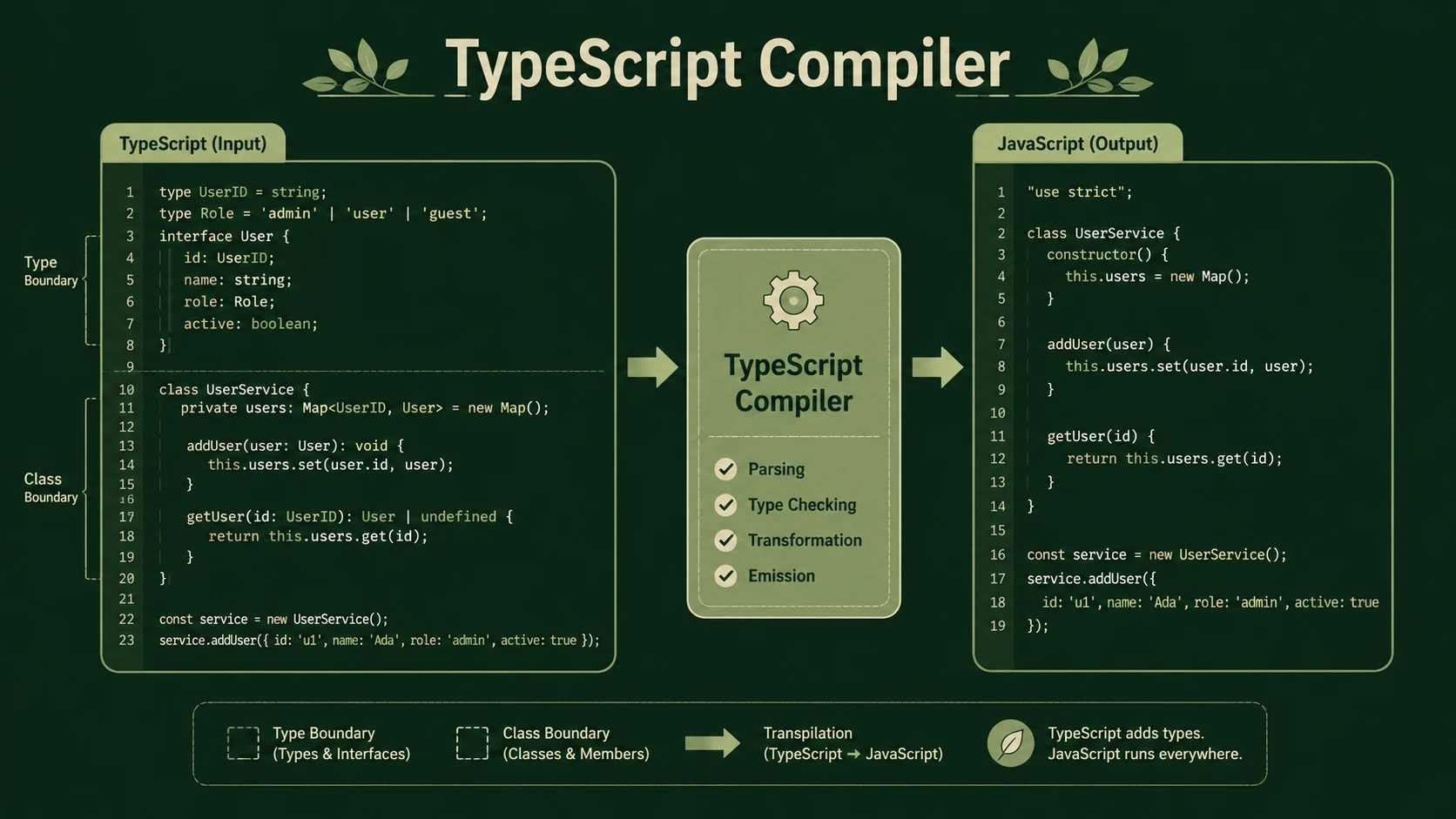
System architecture diagram and conceptual workflow layout for ASP.NET vNext: Designing a Cross-Platform, Modular .NET Runtime for Cloud.
RESTful Services
Service-oriented architectures can leverage streamlined request pipelines and modular hosting.
Enterprise Web Applications
Business applications gain flexibility through dependency injection and simplified framework composition.
Continuous Delivery
Independent application packaging aligns well with automated deployment pipelines.
Multi-Team Development
Modular architecture enables development teams to manage application dependencies more independently.
Performance Considerations
Several architectural decisions aim to improve application performance.
Important considerations include:
- ◆Reduced framework overhead.
- ◆Lightweight hosting.
- ◆Optimized request pipelines.
- ◆Faster application startup.
- ◆Efficient dependency resolution.
Organizations should validate performance improvements using representative production workloads before migration.
Security Considerations
Modern application architecture should continue following established enterprise security practices.
Recommended controls include:
- ◆Authentication.
- ◆Authorization.
- ◆HTTPS communication.
- ◆Secure configuration management.
- ◆Dependency validation.
- ◆Secure deployment pipelines.
Framework modernization complements but does not replace secure application design principles.
Scalability
ASP.NET vNext emphasizes scalability through modular application composition.
Advantages include:
- ◆Smaller deployment packages.
- ◆Independent application versioning.
- ◆Simplified cloud deployment.
- ◆Improved resource utilization.
- ◆Flexible infrastructure choices.
These characteristics align well with distributed enterprise systems and cloud-based hosting environments.
Best Practices
Organizations evaluating ASP.NET vNext should:
- ◆Design applications around modular components.
- ◆Use dependency injection consistently.
- ◆Minimize unnecessary framework dependencies.
- ◆Automate deployment pipelines.
- ◆Validate application performance throughout development.
- ◆Standardize package management practices.
- ◆Establish governance for framework updates.
Careful architectural planning improves long-term maintainability.
Common Mistakes
| Mistake | Business Impact |
|---|---|
| Migrating existing applications without evaluation | Increased project risk |
| Including unnecessary framework modules | Larger deployment footprint |
| Ignoring dependency management | Maintenance complexity |
| Treating cloud deployment as identical to traditional hosting | Reduced operational efficiency |
| Inadequate testing across deployment environments | Production instability |
| Delaying architectural planning | Difficult modernization efforts |
Organizations should treat ASP.NET vNext as an architectural evolution rather than simply a framework upgrade.
Technology Comparison
| Characteristic | Traditional ASP.NET | ASP.NET vNext |
|---|---|---|
| Framework Architecture | Monolithic | Modular |
| Dependency Injection | External frameworks commonly used | Built into the platform |
| Deployment Model | Shared framework installation | Application-focused deployment |
| Cloud Optimization | Supported | Primary design objective |
| Cross-Platform Direction | Windows focused | Multi-platform vision |
ASP.NET vNext emphasizes deployment flexibility and modularity while preserving compatibility with established enterprise development practices where practical.
Adoption Strategy
Organizations should evaluate ASP.NET vNext through structured pilot projects.
Recommended roadmap:
- 1.Review existing ASP.NET application portfolios.
- 2.Identify suitable cloud-oriented workloads.
- 3.Evaluate modular architecture patterns.
- 4.Train development teams on dependency injection and middleware concepts.
- 5.Pilot new projects using ASP.NET vNext.
- 6.Expand adoption based on operational experience.
This phased approach reduces migration risk while allowing organizations to gain familiarity with the redesigned platform.
Limitations
As of May 2014, ASP.NET vNext remains an evolving platform.
Organizations should recognize several considerations.
- ◆Tooling continues to mature.
- ◆Existing enterprise applications may require architectural changes.
- ◆Third-party ecosystem support is still developing.
- ◆Cross-platform capabilities are in the early stages of adoption.
- ◆Operational guidance will continue evolving as the platform matures.
Careful evaluation should precede large-scale enterprise migration.
Looking Ahead
From the perspective of May 2014, ASP.NET vNext represents one of Microsoft's most ambitious efforts to modernize enterprise web development. By emphasizing modular architecture, dependency injection, lightweight hosting, cloud deployment, and a cross-platform runtime, Microsoft is positioning the .NET ecosystem to better address the demands of modern distributed applications.
If the platform matures successfully and the surrounding tooling ecosystem continues expanding, ASP.NET vNext has the potential to provide enterprise development teams with a more flexible foundation for building cloud-ready applications while preserving the productivity, tooling, and language features that have long defined the .NET platform.