Introduction
JavaScript has become the dominant language for client-side web development, powering increasingly sophisticated browser applications. As enterprise systems continue to migrate toward richer web interfaces, development teams are encountering new challenges related to application scale, maintainability, and long-term code quality.
Microsoft has introduced TypeScript 0.8, an open source language that extends JavaScript with optional static typing, classes, interfaces, and tooling designed to improve developer productivity without abandoning existing JavaScript ecosystems.
From the perspective of August 2012, TypeScript represents an ambitious attempt to bridge the flexibility of JavaScript with many of the engineering practices expected in enterprise software development.
Industry Background
Over the past several years, JavaScript has evolved beyond simple browser scripting into the foundation for complex client-side applications.
Developers now build:
- ◆Enterprise portals.
- ◆Customer relationship management systems.
- ◆Financial dashboards.
- ◆Project management applications.
- ◆Rich administrative interfaces.
- ◆Single Page Applications.
While JavaScript provides exceptional flexibility, large projects frequently suffer from:
- ◆Dynamic typing.
- ◆Runtime errors.
- ◆Limited tooling.
- ◆Difficult refactoring.
- ◆Inconsistent coding practices.
- ◆Large unstructured codebases.
The emergence of frameworks such as AngularJS and Backbone.js further increases the need for maintainable JavaScript architectures.
The Business Problem
Large JavaScript projects introduce several operational challenges for enterprise development teams.
Common concerns include:
- ◆Maintaining thousands of lines of JavaScript.
- ◆Discovering errors only during execution.
- ◆Difficult navigation across large projects.
- ◆Limited compile-time validation.
- ◆Inconsistent object definitions.
- ◆Team collaboration challenges.
As web applications become comparable in complexity to desktop software, organizations require stronger language features and improved development tooling.
Understanding the Technology
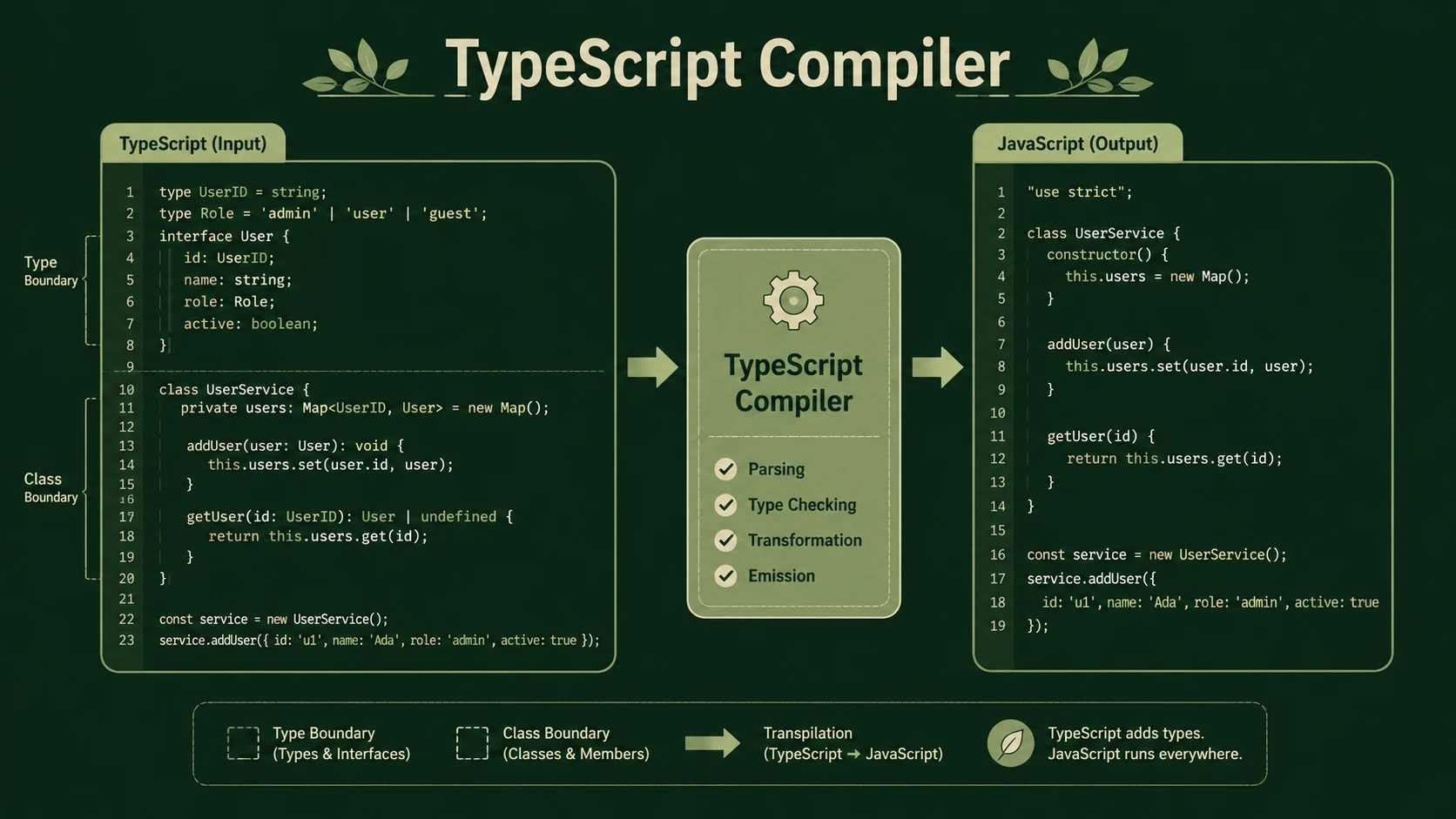
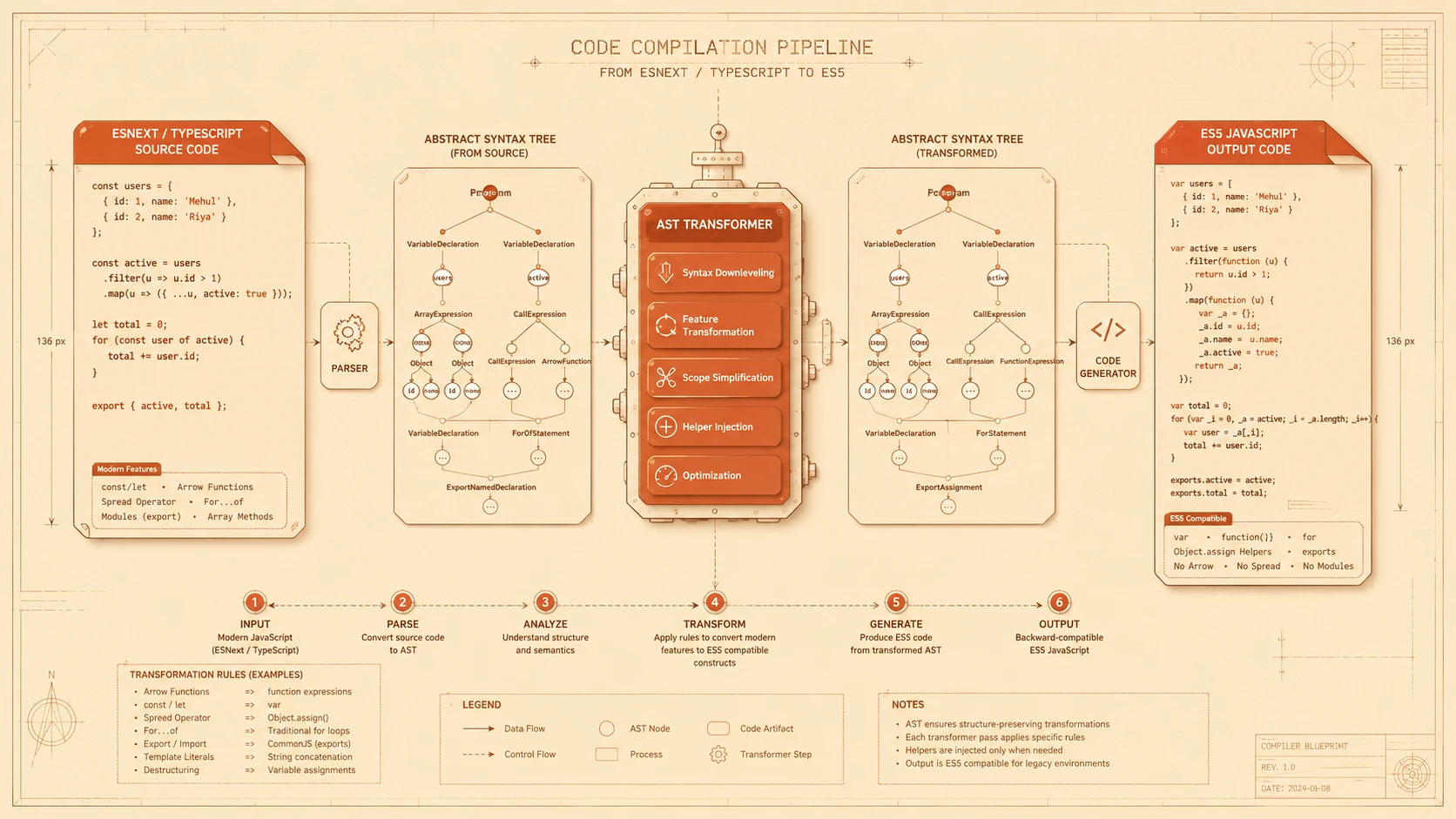
TypeScript is a superset of JavaScript that introduces additional language constructs while compiling into standard JavaScript.
Key language capabilities include:
- ◆Optional static typing.
- ◆Classes.
- ◆Interfaces.
- ◆Modules.
- ◆Function signatures.
- ◆Compile-time error detection.
- ◆Improved editor support.
Existing JavaScript remains valid TypeScript, allowing developers to adopt the language incrementally rather than rewriting applications from scratch.
Core Architecture
The TypeScript development workflow builds upon existing JavaScript deployment practices.
| Component | Responsibility |
|---|---|
| TypeScript Source | Application development |
| TypeScript Compiler | Code analysis and JavaScript generation |
| Generated JavaScript | Browser execution |
| Web Browser | Runtime environment |
| Development Tools | Editing and navigation |
The compiler validates source code before generating JavaScript compatible with current browsers.
Key Features
Optional Static Typing
Developers can define variable and function types without sacrificing JavaScript compatibility.
Classes
TypeScript introduces a familiar object-oriented programming model for organizing application logic.
Interfaces
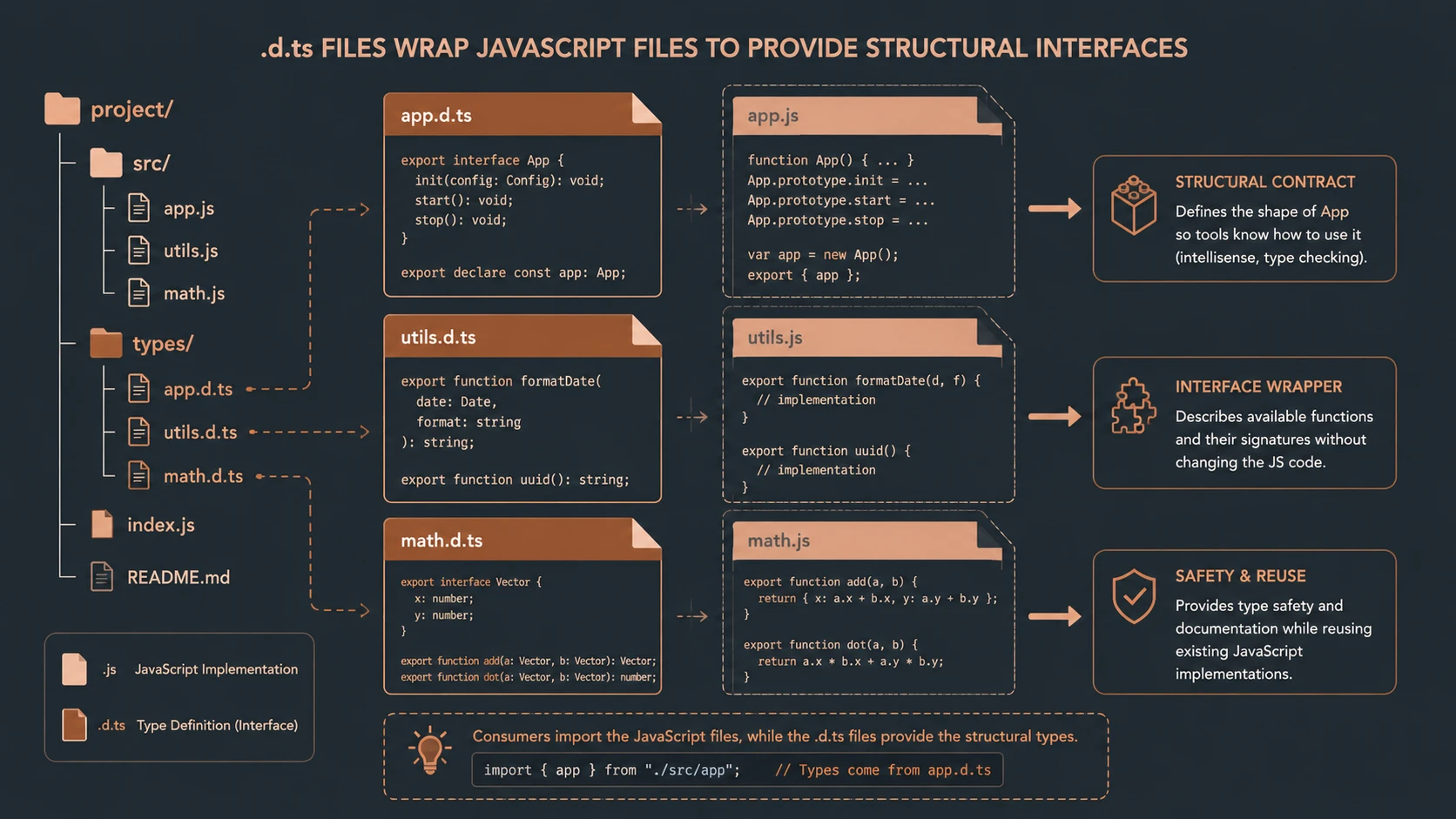
Interfaces provide contracts describing object structure, improving maintainability and documentation.
Modules
Applications can be organized into reusable logical units rather than large global scripts.
Compile-Time Validation
Many programming mistakes can be identified before deployment instead of appearing only during execution.
JavaScript Compatibility
Existing JavaScript code can coexist with TypeScript, enabling gradual adoption.
How It Works
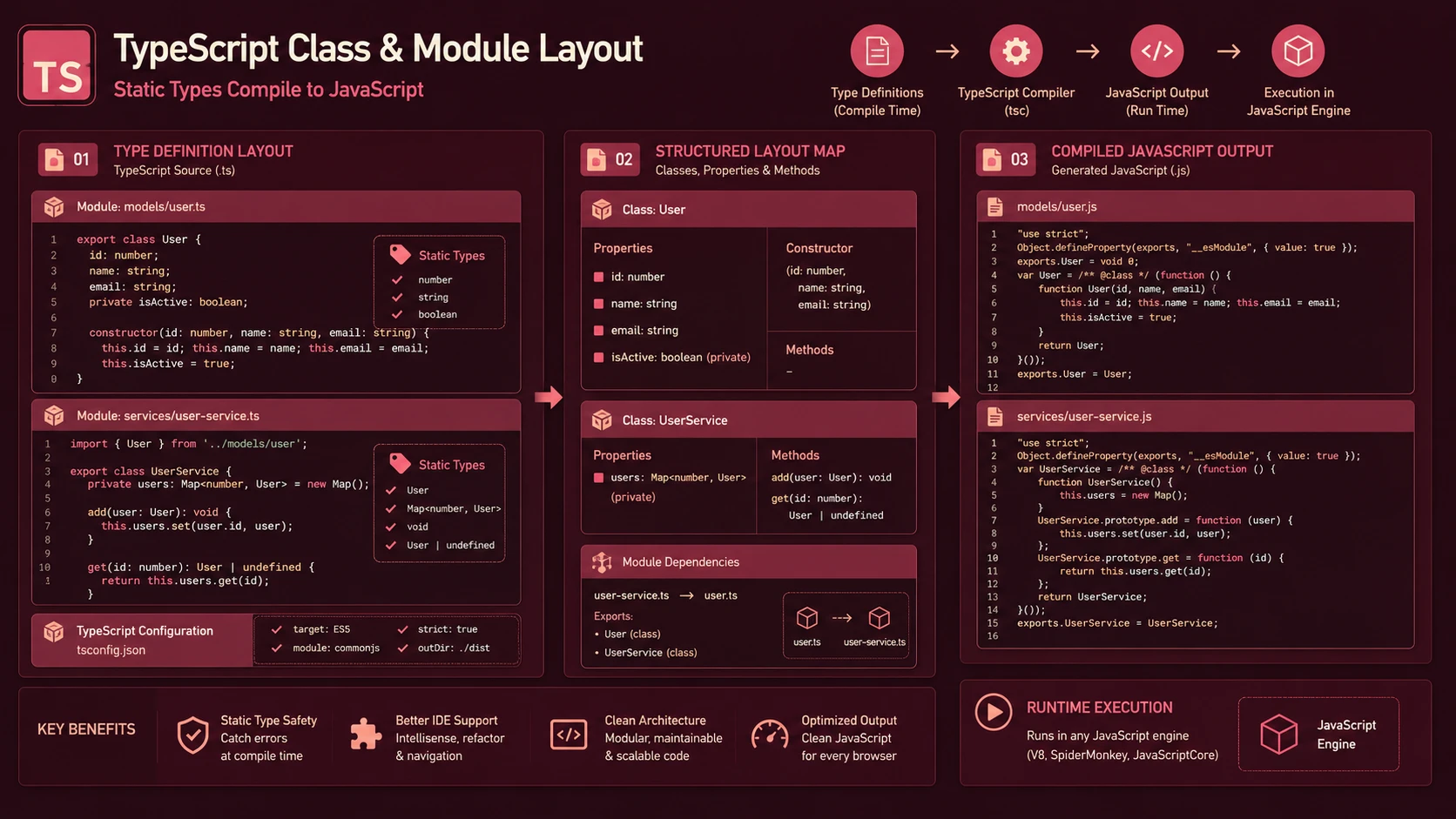
The development workflow follows a straightforward compilation model.
Developer
      |
TypeScript Source
      |
TypeScript Compiler
      |
JavaScript Output
      |
Browser
      |
Application Execution
Developers write TypeScript while browsers continue executing standard JavaScript.
Enterprise Use Cases
TypeScript is particularly relevant for organizations developing large browser applications.
Enterprise Portals
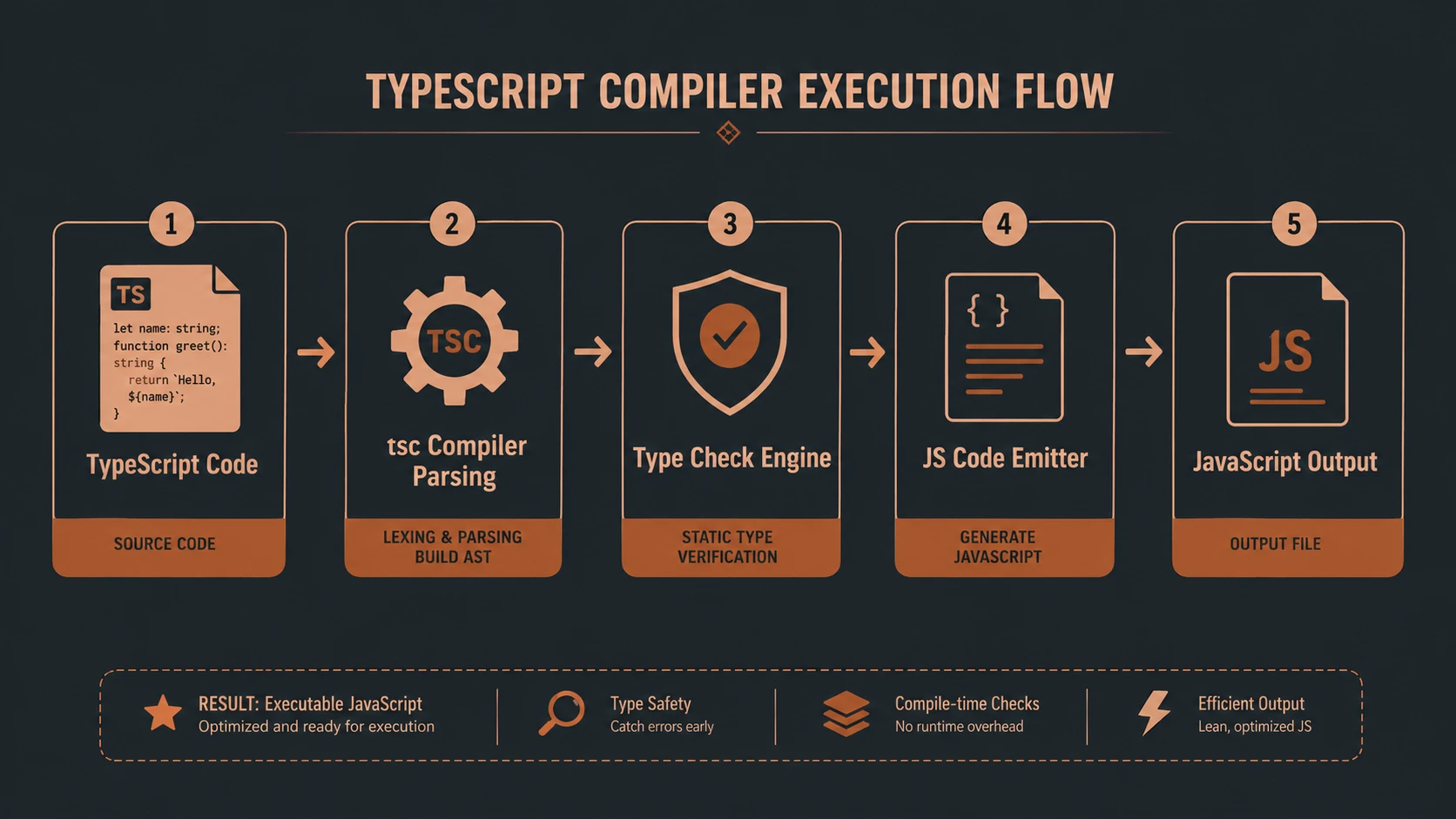
System architecture diagram and conceptual workflow layout for TypeScript 0.8: Reviewing Microsoft's Open Source Compiler Preview.
Large web portals benefit from improved project organization and stronger type checking.
Single Page Applications
Applications built with frameworks such as AngularJS can become easier to maintain through structured code organization.
Internal Business Systems
Organizations modernizing legacy web applications may benefit from gradual migration strategies.
Team-Based Development
Static typing and interfaces improve communication between development teams working on shared codebases.
API Development
Well-defined interfaces simplify interaction between client-side applications and REST services.
Performance Considerations
Since browsers execute generated JavaScript rather than TypeScript directly, runtime performance primarily depends on the generated code and application design.
Important considerations include:
- ◆Efficient JavaScript generation.
- ◆Browser execution speed.
- ◆Framework performance.
- ◆DOM interaction.
- ◆Network latency.
Compile-time validation improves development quality but does not eliminate the need for runtime optimization.
Security Considerations
TypeScript enhances code quality but does not replace established web security practices.
Organizations should continue implementing:
- ◆Input validation.
- ◆Secure authentication.
- ◆Authorization.
- ◆HTTPS communication.
- ◆Cross-site scripting protection.
- ◆Secure session management.
Security remains primarily the responsibility of application architecture and server-side implementation.
Scalability
TypeScript introduces several capabilities that support long-term application growth.
Benefits include:
- ◆Better code organization.
- ◆Modular architecture.
- ◆Improved refactoring.
- ◆Clear interface definitions.
- ◆Enhanced tooling support.
These characteristics become increasingly valuable as projects involve larger teams and more extensive codebases.
Best Practices
Organizations evaluating TypeScript should consider the following recommendations.
- ◆Adopt incrementally rather than rewriting applications.
- ◆Define interfaces for shared objects.
- ◆Use modules to organize application components.
- ◆Maintain consistent coding standards.
- ◆Integrate compilation into build processes.
- ◆Continue writing automated tests.
- ◆Preserve compatibility with existing JavaScript libraries.
These practices reduce migration risk while improving maintainability.
Common Mistakes
| Mistake | Business Impact |
|---|---|
| Attempting complete rewrites | Increased project risk |
| Ignoring modular design | Difficult maintenance |
| Mixing inconsistent coding styles | Reduced readability |
| Overusing global variables | Lower scalability |
| Treating compile-time checks as complete testing | Hidden runtime issues |
Balanced adoption enables organizations to realize the benefits of stronger tooling without disrupting existing development processes.
Technology Comparison
| Technology | Primary Strength | Type Safety |
|---|---|---|
| JavaScript | Universal browser support | Dynamic |
| TypeScript 0.8 | Structured application development | Optional static typing |
| CoffeeScript | Simplified language syntax | Dynamic |
| Dart | Alternative web programming language | Static typing |
Unlike alternatives that introduce entirely new execution environments, TypeScript retains compatibility with standard JavaScript by compiling to browser-supported code.
Adoption Strategy
Enterprise teams should approach TypeScript incrementally.
Recommended adoption plan:
- 1.Pilot TypeScript in a new application.
- 2.Introduce interfaces for shared models.
- 3.Train development teams.
- 4.Integrate compiler execution into build processes.
- 5.Expand usage as confidence increases.
- 6.Continue leveraging existing JavaScript libraries.
This approach minimizes disruption while improving code quality.
Limitations
As an early compiler preview, TypeScript 0.8 presents several considerations.
- ◆The language ecosystem is still developing.
- ◆Third-party tooling continues to mature.
- ◆Development teams must learn new language features.
- ◆Existing JavaScript libraries may not provide complete type information.
- ◆Long-term adoption across the broader JavaScript community remains uncertain.
Organizations should evaluate these factors before adopting TypeScript broadly.
Looking Ahead
From the perspective of August 2012, TypeScript represents a noteworthy evolution in JavaScript development. By introducing optional static typing, object-oriented programming constructs, and stronger tooling while preserving JavaScript compatibility, Microsoft has addressed several longstanding concerns surrounding large-scale web application development.
If TypeScript gains acceptance among developers and framework authors, it has the potential to become a valuable tool for enterprise engineering teams building increasingly sophisticated browser applications. Its success will depend on community adoption, tooling maturity, compatibility with existing JavaScript ecosystems, and its ability to improve productivity without sacrificing the flexibility that has contributed to JavaScript's widespread adoption.