Introduction
JavaScript has become the dominant language for modern web application development, powering increasingly sophisticated enterprise applications across browsers, servers, and cloud platforms. As applications continue growing in complexity, development teams require stronger compile-time guarantees to improve maintainability, reduce runtime failures, and support collaboration across large engineering organizations.
TypeScript has steadily evolved into a practical superset of JavaScript by introducing static typing, interfaces, classes, modules, and advanced tooling while preserving compatibility with existing JavaScript ecosystems. The release of TypeScript 2.0 represents another significant milestone by strengthening one of the language's weakest areas: null safety.
With features such as strict null checking, control flow-based type analysis, enhanced compiler type guards, and non-null assertion operators, TypeScript 2.0 enables developers to identify many potential runtime errors during compilation rather than after deployment.
From the perspective of July 2016, TypeScript 2.0 continues Microsoft's effort to establish a modern programming language suitable for enterprise-scale JavaScript development.
Industry Background
Enterprise front-end applications have become significantly larger over the past several years.
Organizations increasingly build:
- ◆Single Page Applications.
- ◆Cloud administration portals.
- ◆Enterprise dashboards.
- ◆Financial trading systems.
- ◆Healthcare management platforms.
- ◆Customer relationship management applications.
- ◆Cross-platform web applications.
Modern development teams frequently consist of dozens or even hundreds of engineers working within shared codebases.
As applications expand, runtime errors caused by invalid object references become increasingly difficult to identify through testing alone.
Static analysis therefore plays a growing role in enterprise software quality.
The Business Problem
Large JavaScript applications commonly encounter several reliability challenges.
Organizations frequently experience:
- ◆Null reference exceptions.
- ◆Undefined property access.
- ◆Inconsistent type usage.
- ◆Difficult debugging.
- ◆Reduced IDE assistance.
- ◆Runtime production failures.
- ◆Increased maintenance costs.
Although testing identifies many defects, compile-time verification provides earlier feedback while reducing production risk.
TypeScript 2.0 addresses these concerns through stronger compiler analysis.
Understanding the Technology
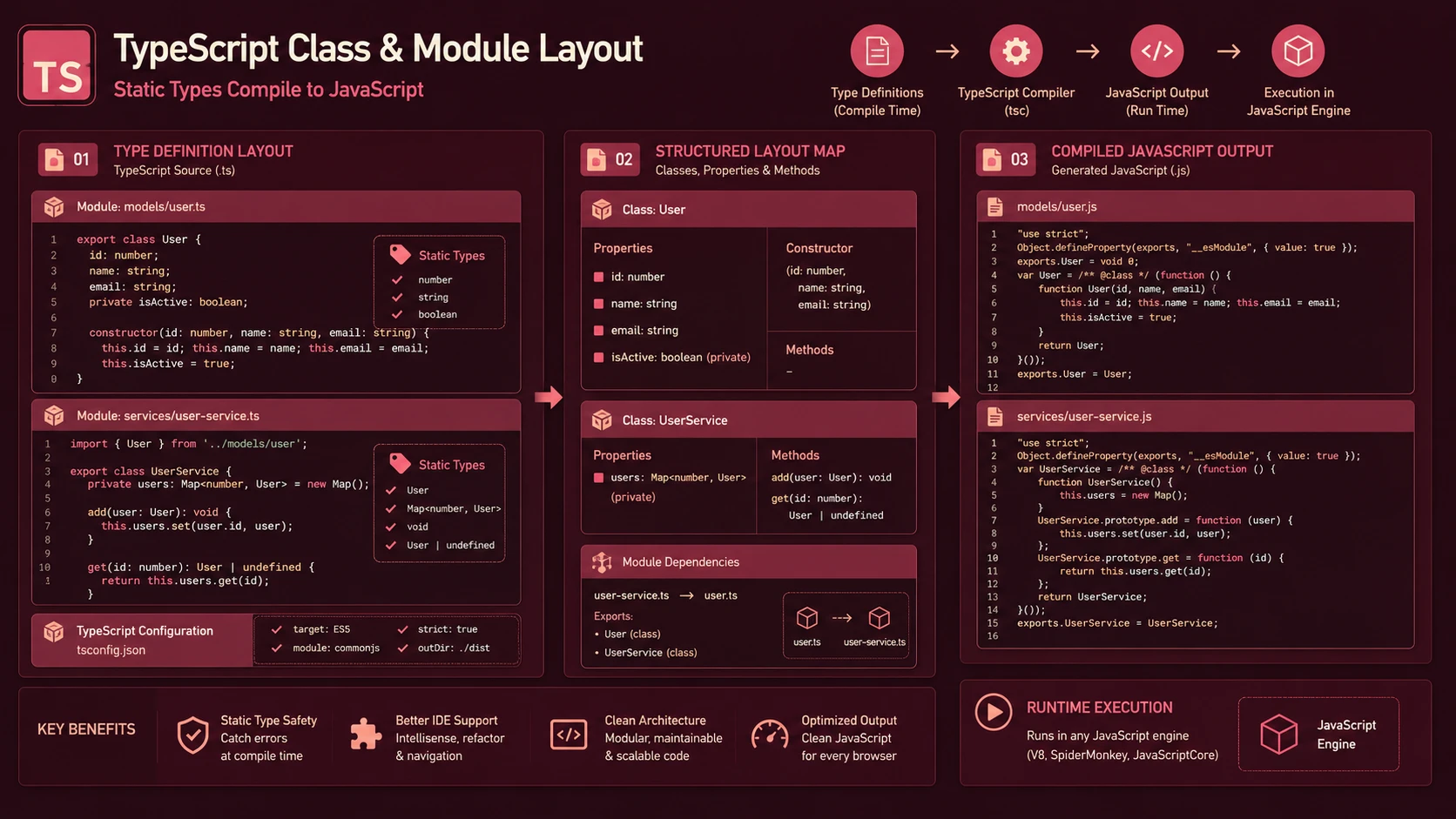
TypeScript extends JavaScript by introducing optional static typing while compiling into standard JavaScript.
Version 2.0 introduces several important compiler improvements.
Major capabilities include:
- ◆Strict null checking.
- ◆Control flow-based type analysis.
- ◆Improved type guards.
- ◆Non-null assertion operator.
- ◆Better type inference.
- ◆Expanded language service support.
Rather than changing JavaScript execution, these improvements enhance compile-time validation and developer productivity.
Core Architecture
A simplified TypeScript 2.0 compilation architecture appears below.
| Component | Responsibility |
|---|---|
| TypeScript Source | Application implementation |
| TypeScript Compiler | Static analysis and compilation |
| Type Checker | Validates type correctness |
| Control Flow Analyzer | Tracks variable state |
| JavaScript Output | Executable application |
| Browser or Node.js Runtime | Executes generated JavaScript |
The compiler performs increasingly sophisticated analysis before generating standard JavaScript.
Key Features
Strict Null Checking
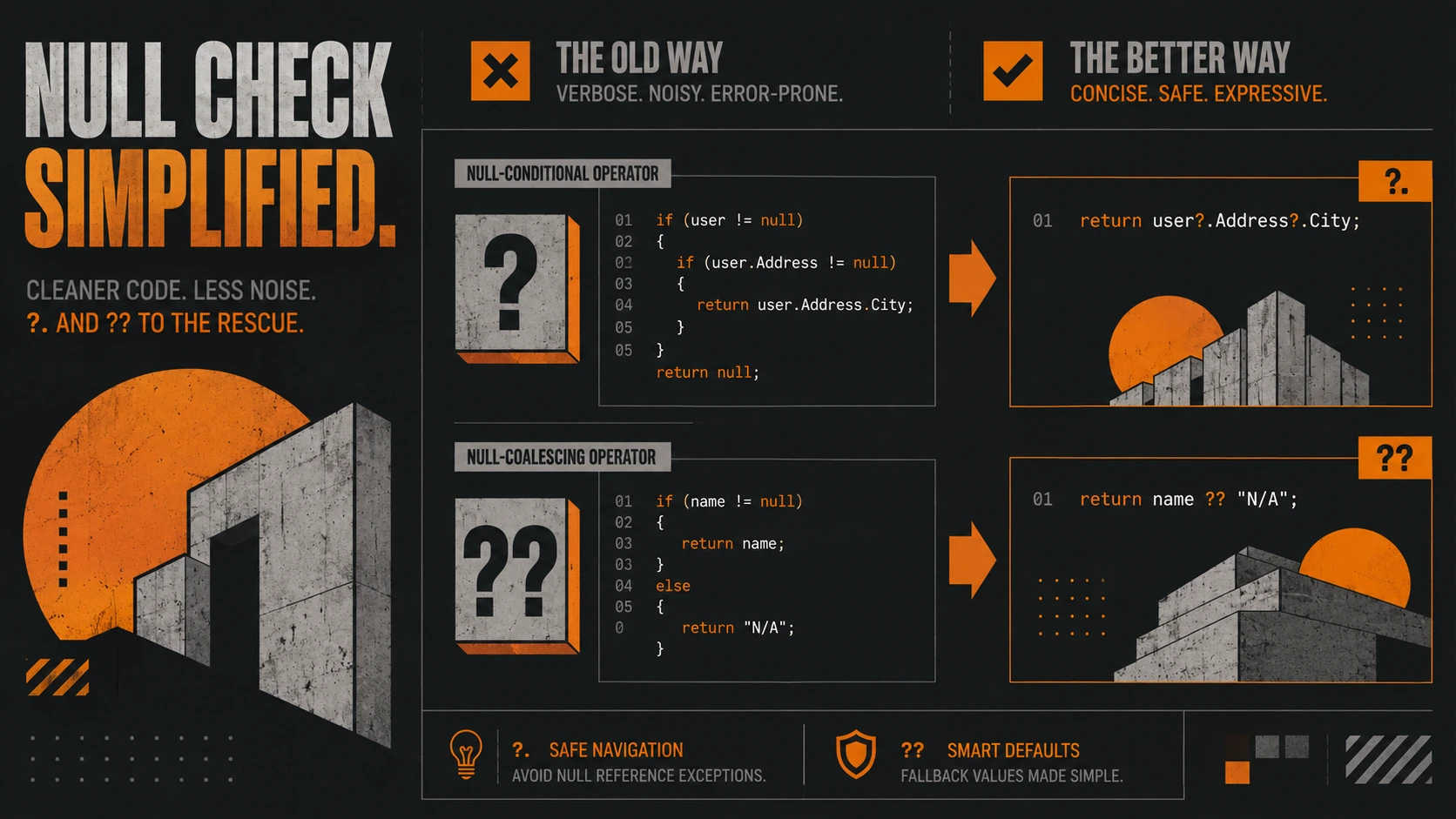
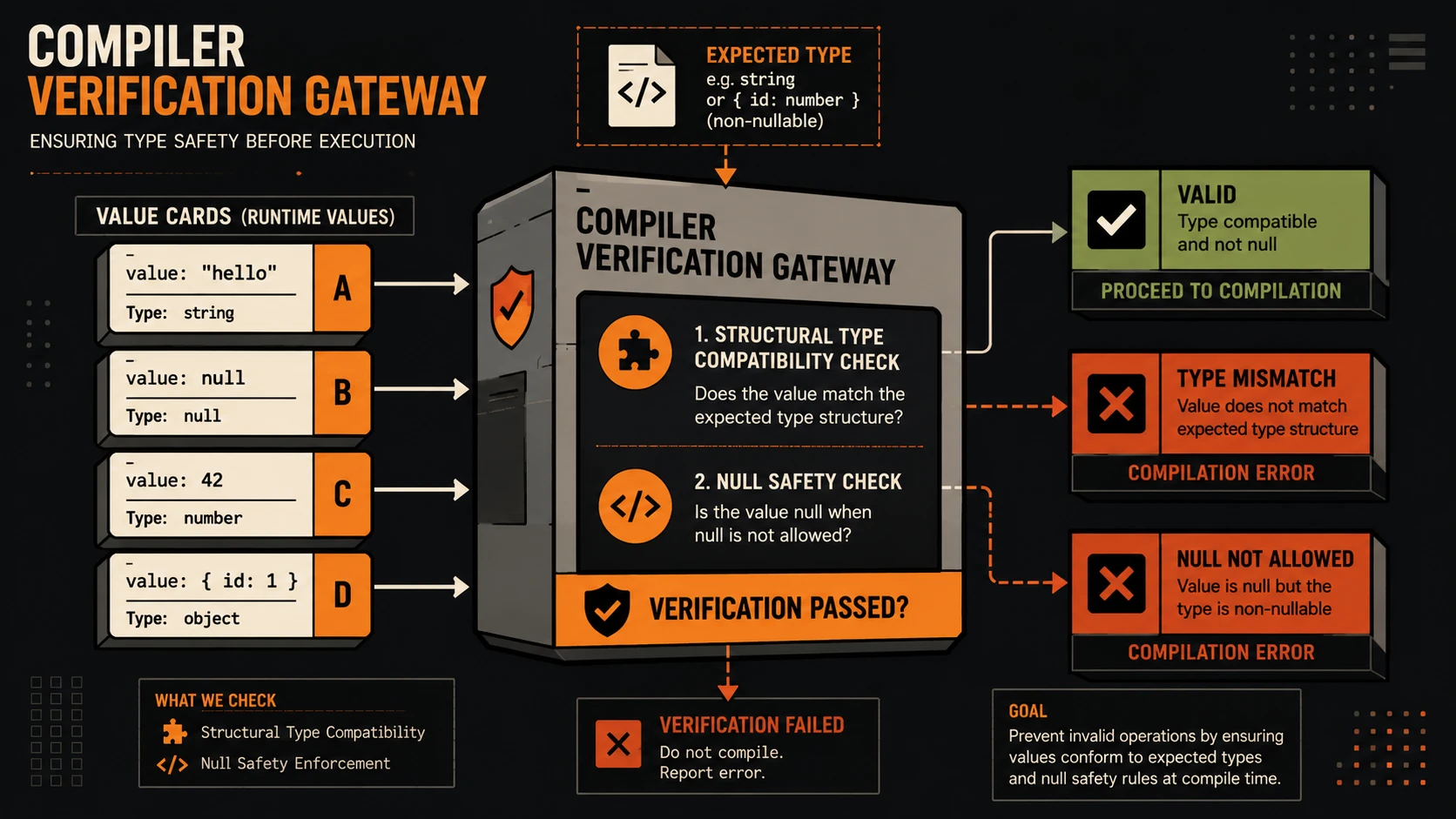
One of the most significant additions is strict null checking.
Under this mode, null and undefined are treated as distinct types rather than being automatically assignable to every value.
Developers must explicitly acknowledge when values may be absent, allowing the compiler to identify numerous potential runtime failures.
This feature significantly improves software correctness within large applications.
Control Flow-Based Type Analysis
TypeScript 2.0 improves type analysis by considering application control flow.
The compiler analyzes conditional branches, assignments, and execution paths to determine the most appropriate type for variables throughout program execution.
This enables more accurate diagnostics while reducing unnecessary type annotations.
Enhanced Type Guards
Type guards become more effective by allowing the compiler to narrow variable types following conditional checks.
This produces safer code while improving developer productivity.
Non-Null Assertion Operator
Developers may explicitly indicate when values should be treated as non-null in situations where compiler analysis cannot infer this automatically.
Used carefully, this feature simplifies integration with existing application code.
Improved Type Inference
The compiler continues expanding its ability to infer types automatically, reducing repetitive declarations while preserving static safety.
Better IDE Support
More accurate compiler analysis improves code completion, navigation, diagnostics, and refactoring capabilities within development environments.
How It Works
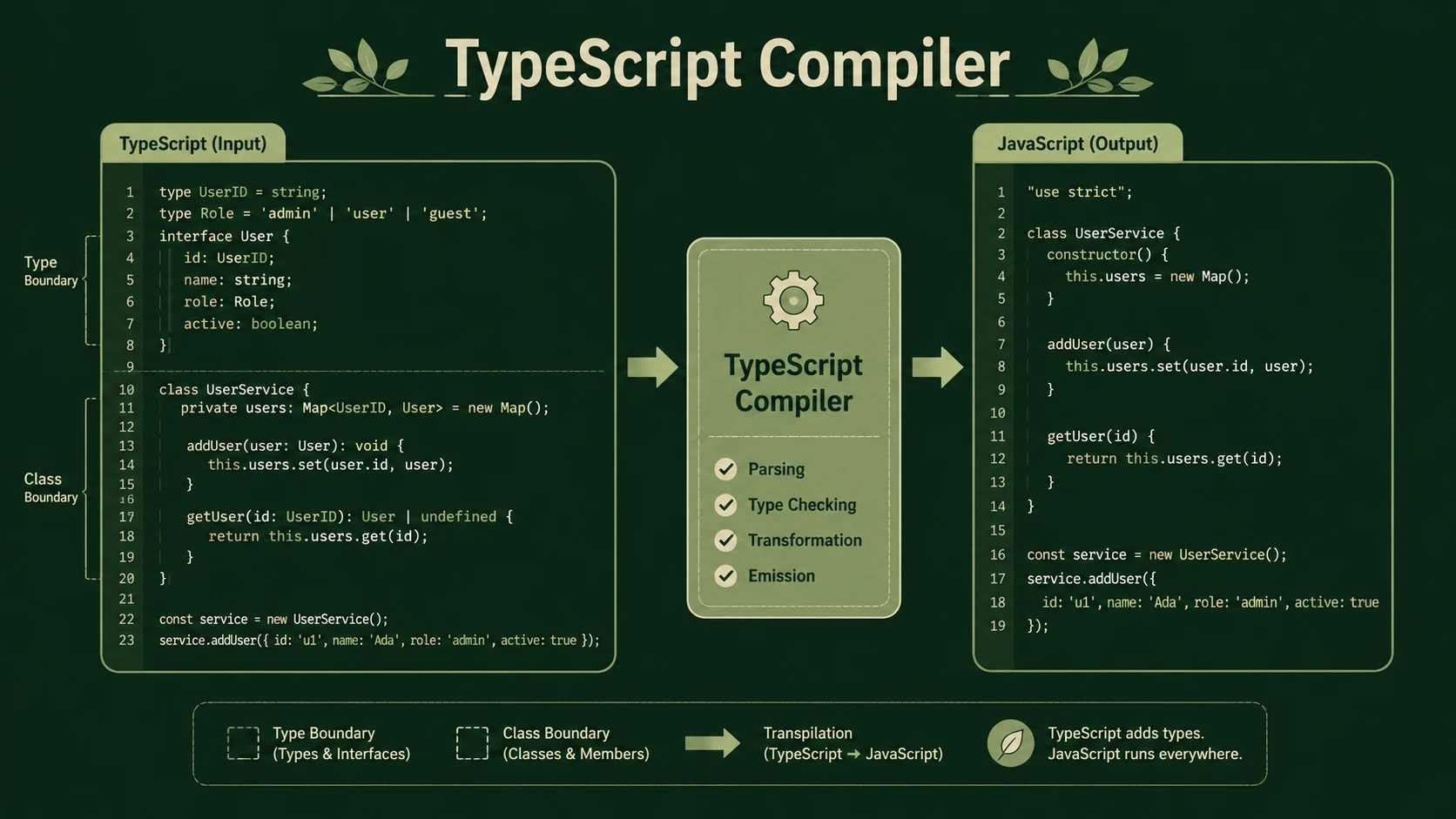
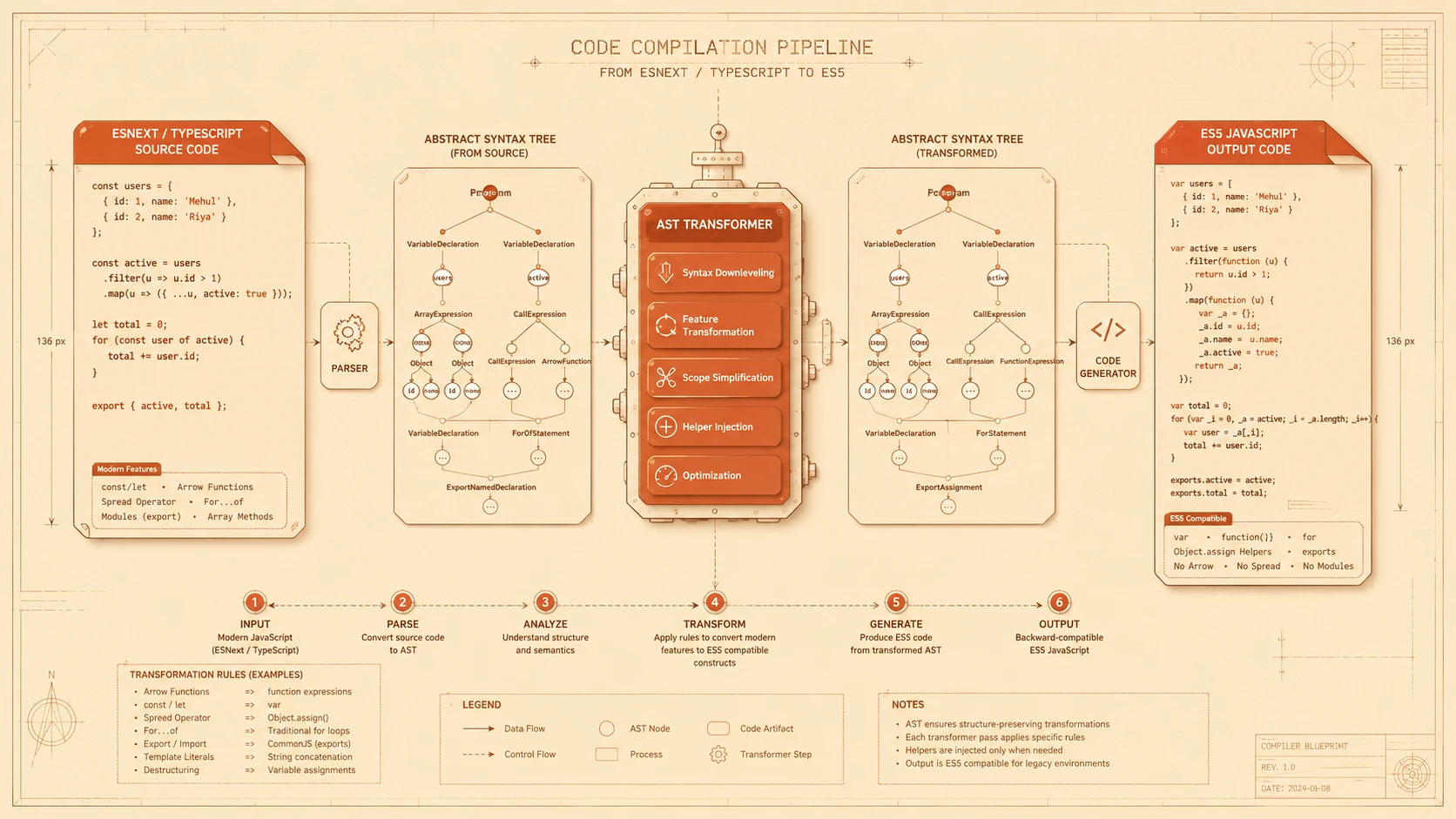
A simplified compilation workflow appears below.
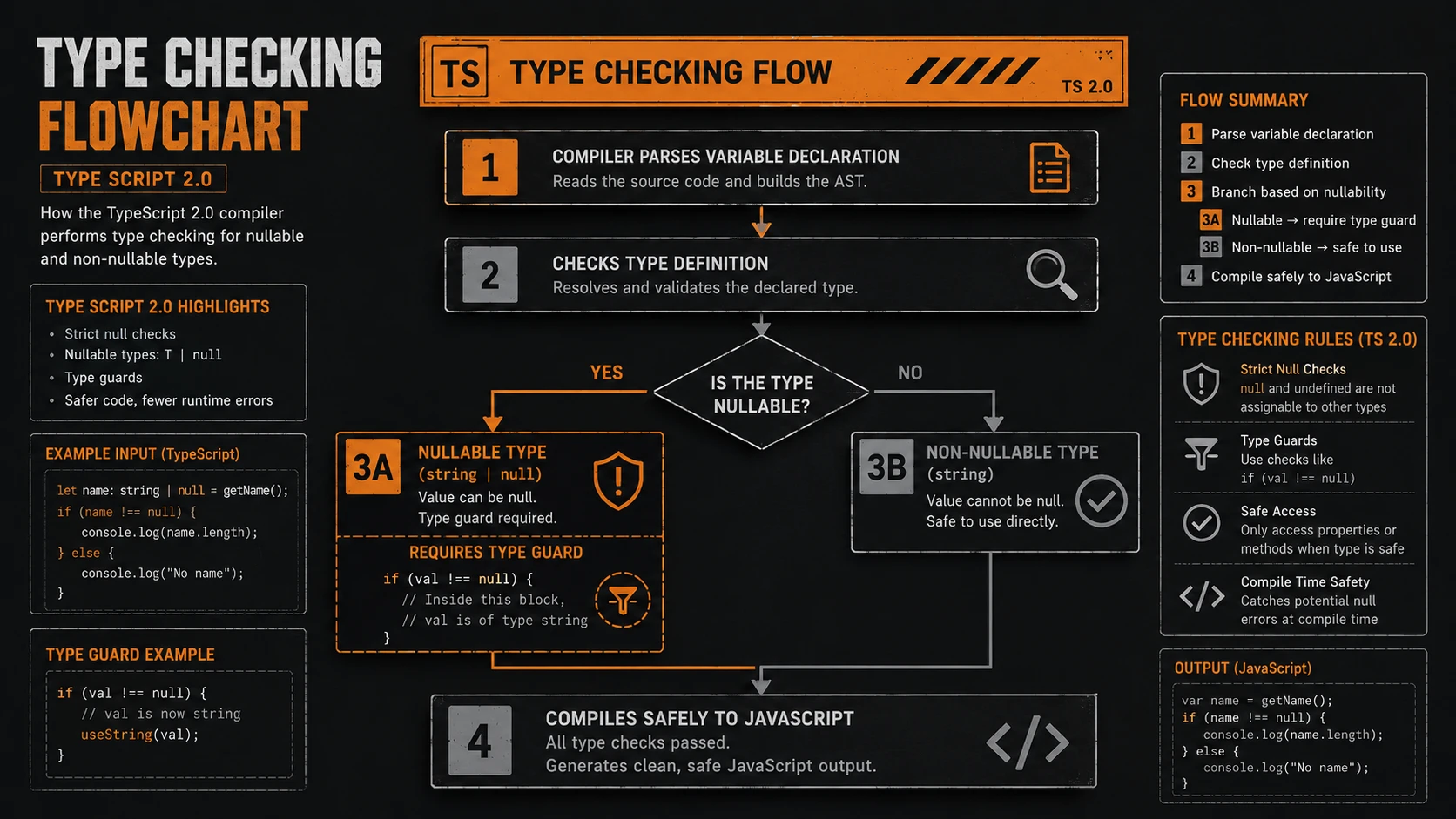
System architecture diagram and conceptual workflow layout for TypeScript 2.0: Strict Null Checking and Compiler Type Guarding.
TypeScript Source
        |
Parser
        |
Type Checker
        |
Control Flow Analysis
        |
Compiler Diagnostics
        |
JavaScript Output
Compilation identifies potential type errors before deployment while producing standards-compliant JavaScript.
Enterprise Use Cases
Large Single Page Applications
Enterprise applications containing thousands of components benefit from stronger compile-time validation.
Angular Applications
TypeScript's enhanced type system complements Angular's component architecture and dependency injection model.
Enterprise API Clients
Applications communicating with REST services gain stronger validation for optional and nullable response data.
Financial Software
Business-critical applications handling complex object models benefit from improved type safety.
Multi-Team Development
Static typing improves collaboration by establishing consistent interfaces across independently developed modules.
Performance Considerations
TypeScript primarily affects development workflows rather than runtime performance.
Important considerations include:
- ◆Compilation speed.
- ◆Type checking complexity.
- ◆IDE responsiveness.
- ◆Build pipeline integration.
- ◆Generated JavaScript efficiency.
Organizations should monitor build performance as applications continue expanding.
Security Considerations
Although TypeScript improves application correctness, it does not replace secure software development.
Organizations should continue implementing:
- ◆Authentication.
- ◆Authorization.
- ◆Input validation.
- ◆HTTPS communication.
- ◆Secure API development.
- ◆Dependency management.
Static typing complements secure engineering practices by reducing certain programming errors.
Scalability
TypeScript 2.0 supports scalable enterprise engineering through stronger compile-time guarantees.
Advantages include:
- ◆Earlier defect detection.
- ◆Improved maintainability.
- ◆Better developer collaboration.
- ◆Consistent application interfaces.
- ◆Higher code quality.
These characteristics become increasingly valuable as applications and development teams continue growing.
Best Practices
Organizations adopting TypeScript 2.0 should:
- ◆Enable strict null checking for new projects.
- ◆Design clear interface definitions.
- ◆Use type guards consistently.
- ◆Avoid unnecessary use of the non-null assertion operator.
- ◆Integrate compiler diagnostics into Continuous Integration.
- ◆Standardize TypeScript coding conventions.
- ◆Expand compiler strictness gradually for existing applications.
A disciplined adoption strategy maximizes software quality while minimizing migration challenges.
Common Mistakes
| Mistake | Business Impact |
|---|---|
| Disabling strict compiler options unnecessarily | Reduced software reliability |
| Overusing the non-null assertion operator | Hidden runtime defects |
| Ignoring compiler warnings | Lower code quality |
| Mixing inconsistent typing styles | Reduced maintainability |
| Migrating large codebases without planning | Increased project risk |
| Skipping automated testing | Incomplete quality assurance |
Organizations should treat compiler diagnostics as an integral part of enterprise software engineering.
Technology Comparison
| Characteristic | TypeScript 1.x | TypeScript 2.0 |
|---|---|---|
| Null Handling | Limited compiler validation | Strict null checking |
| Type Analysis | Basic flow analysis | Control flow-based type analysis |
| Type Guards | Supported | Enhanced compiler narrowing |
| Nullable Safety | Developer responsibility | Strong compile-time verification |
| IDE Diagnostics | Good | Improved through richer compiler analysis |
TypeScript 2.0 substantially improves compile-time correctness while preserving compatibility with existing JavaScript development.
Adoption Strategy
Organizations should introduce TypeScript 2.0 through incremental modernization.
- 1.Upgrade compiler and development tools.
- 2.Evaluate existing applications.
- 3.Enable strict compiler options for new projects.
- 4.Introduce strict null checking module by module.
- 5.Train development teams on control flow analysis.
- 6.Expand adoption through Continuous Integration enforcement.
This phased strategy reduces migration risk while improving long-term application quality.
Limitations
As of July 2016, TypeScript 2.0 introduces stricter compiler validation that may require updates to existing applications.
Organizations should recognize several considerations.
- ◆Existing projects may generate additional compiler diagnostics.
- ◆Third-party type definitions may require updates.
- ◆Development teams need training on new compiler behavior.
- ◆Migration should be performed incrementally.
- ◆Compiler strictness may initially increase refactoring effort.
These considerations should be incorporated into enterprise modernization planning.
Looking Ahead
From the perspective of July 2016, TypeScript 2.0 represents one of the most important advancements in enterprise JavaScript development. By introducing strict null checking, enhanced control flow analysis, and more intelligent compiler type guarding, Microsoft continues moving JavaScript development toward stronger compile-time correctness without sacrificing compatibility with the broader JavaScript ecosystem.
As enterprise web applications continue increasing in size and complexity, compiler-assisted development is becoming an essential part of modern software engineering. Organizations adopting TypeScript 2.0 today will be better positioned to build maintainable, reliable, and scalable applications while reducing the frequency of runtime defects caused by invalid object references and inconsistent type usage.