Introduction
TypeScript has rapidly become the preferred language for developing large-scale JavaScript applications. By combining JavaScript's flexibility with static type analysis, it allows engineering teams to detect entire classes of errors during compilation rather than at runtime. As enterprise applications continue growing in size and complexity, stronger compile-time guarantees become increasingly valuable for maintaining code quality across distributed development teams.
Over the past several releases, TypeScript has steadily expanded its type system with conditional types, mapped types, utility types, and improved type inference. These capabilities have enabled developers to express increasingly sophisticated relationships between data structures without sacrificing developer productivity.
TypeScript 4.1 represents another major milestone in this evolution. Rather than focusing primarily on syntax, this release significantly expands the expressive power of the type system through Template Literal Types, Key Remapping in Mapped Types, Recursive Conditional Types, and stricter compiler analysis. Together, these capabilities allow libraries and enterprise applications to model complex APIs with greater precision while reducing duplication and improving maintainability.
As of December 2020, TypeScript 4.1 continues strengthening the language's position as the foundation for modern JavaScript development across web, cloud, desktop, and server-side platforms.
Industry Background
Modern enterprise JavaScript development increasingly depends upon:
- ◆Type-safe APIs
- ◆Component-based frontend frameworks
- ◆Cloud-native backend services
- ◆Monorepositories
- ◆Shared component libraries
- ◆Continuous Integration and Continuous Delivery
- ◆Automated testing
- ◆Static code analysis
Organizations increasingly rely on compile-time validation to reduce runtime defects and improve developer confidence.
The Business Problem
Large TypeScript codebases commonly encounter:
- ◆Repetitive interface definitions
- ◆Complex object transformations
- ◆Difficult API modeling
- ◆Dynamic property naming
- ◆Type duplication
- ◆Limited compiler validation
- ◆Manual synchronization between runtime objects and type definitions
Development teams require richer type abstractions that improve maintainability while preserving runtime performance.
Understanding TypeScript 4.1
TypeScript 4.1 introduces several important language enhancements:
- ◆Template Literal Types
- ◆Key Remapping in Mapped Types
- ◆Recursive Conditional Types
- ◆Improved compiler checking
- ◆Enhanced module resolution behavior
- ◆Editor tooling improvements
These capabilities primarily improve compile-time correctness rather than changing JavaScript runtime behavior.
Core Architecture
| Component | Responsibility |
|---|---|
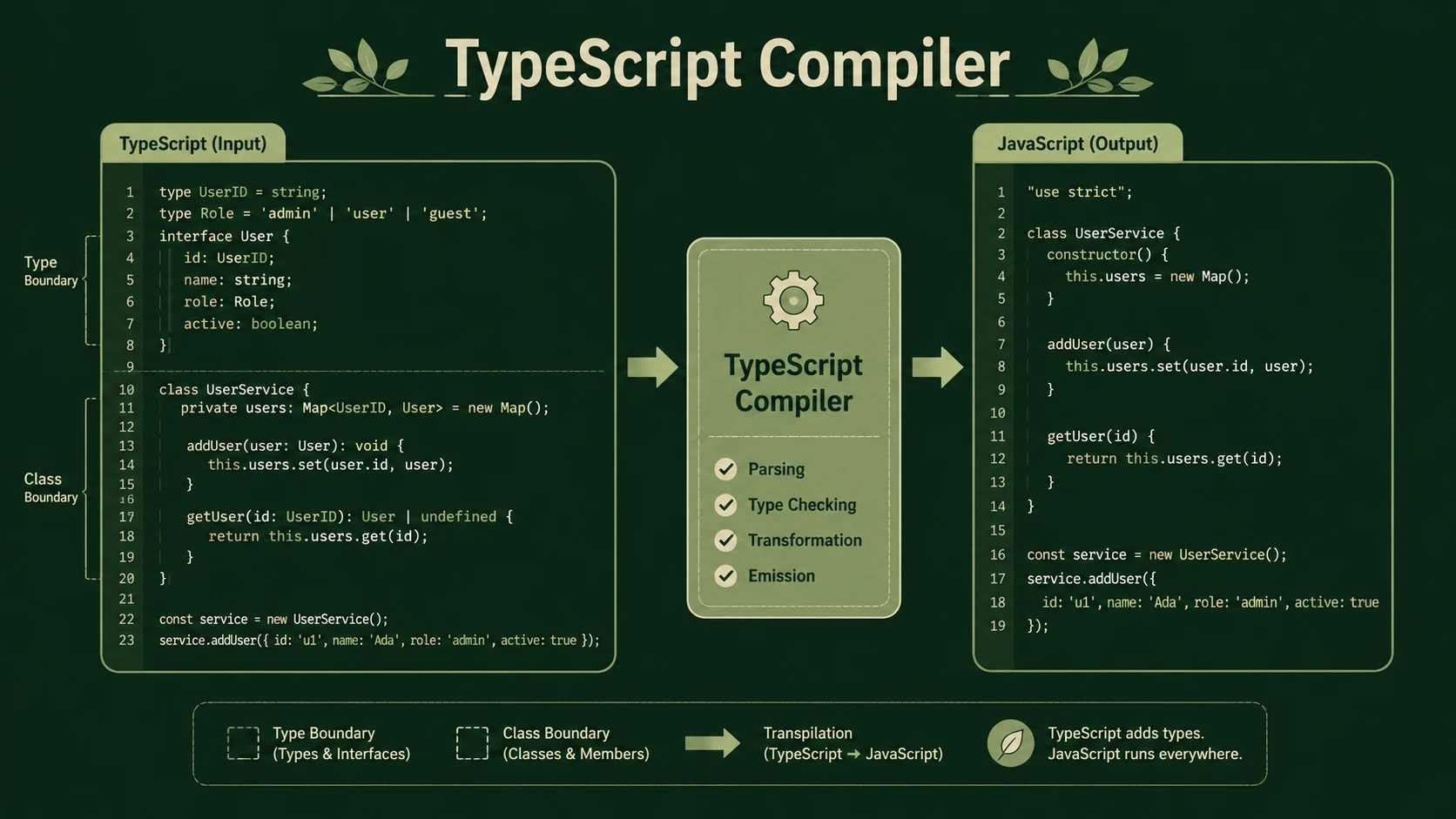
| TypeScript Compiler | Performs parsing, type checking, and code generation |
| Template Literal Types | Generates string-based types |
| Mapped Types | Creates transformed object types |
| Conditional Types | Expresses type relationships |
| Language Service | Provides editor intelligence |
| JavaScript Runtime | Executes compiled output |
The compiler performs sophisticated static analysis while generating standard JavaScript compatible with supported runtime environments.
Template Literal Types
// Declaring strict API route shapes using Template Literal Types in TS 4.1
type Endpoint = "users" | "orders" | "inventory";
type ApiRoute = `/api/v1/${Endpoint}`;

// Valid API route matching compile-time verification
const usersRoute: ApiRoute = "/api/v1/users";

// Compile error: Type '"/api/v1/billing"' is not assignable to type ApiRoute
// const invalidRoute: ApiRoute = "/api/v1/billing";
One of the most significant additions in TypeScript 4.1 is Template Literal Types.
JavaScript applications frequently generate string values following predictable naming conventions.
Examples include:
- ◆Event names
- ◆Property identifiers
- ◆CSS class prefixes
- ◆Configuration keys
- ◆API endpoint names
- ◆State management actions
Previously, these patterns often relied on broad string types or manually maintained unions.
Template Literal Types allow developers to construct new string literal types from existing type information.
Potential enterprise benefits include:
- ◆Reduced duplication
- ◆Stronger API contracts
- ◆Improved autocomplete
- ◆Better compiler validation
- ◆Easier maintenance of naming conventions
This feature enables the compiler to understand relationships between strings that previously existed only as documentation or developer convention.
Key Remapping in Mapped Types
Mapped Types have long allowed developers to transform existing object structures.
TypeScript 4.1 extends this capability through Key Remapping.
Rather than preserving original property names, mapped types can now transform keys during type generation.
Typical enterprise scenarios include:
- ◆API adapters
- ◆DTO transformations
- ◆Serialization layers
- ◆Configuration generation
- ◆Library development
Benefits include:
- ◆Cleaner abstractions
- ◆Less repetitive type code
- ◆More reusable utility types
- ◆Improved consistency across large projects
Recursive Conditional Types
Conditional Types become significantly more expressive through recursive definitions.
This capability enables sophisticated compile-time transformations for deeply nested structures.
Potential enterprise applications include:
- ◆Configuration processing
- ◆JSON modeling
- ◆Utility libraries
- ◆Framework internals
- ◆Complex API typing
While powerful, recursive types should be introduced thoughtfully to preserve readability.
Improved Compiler Checking
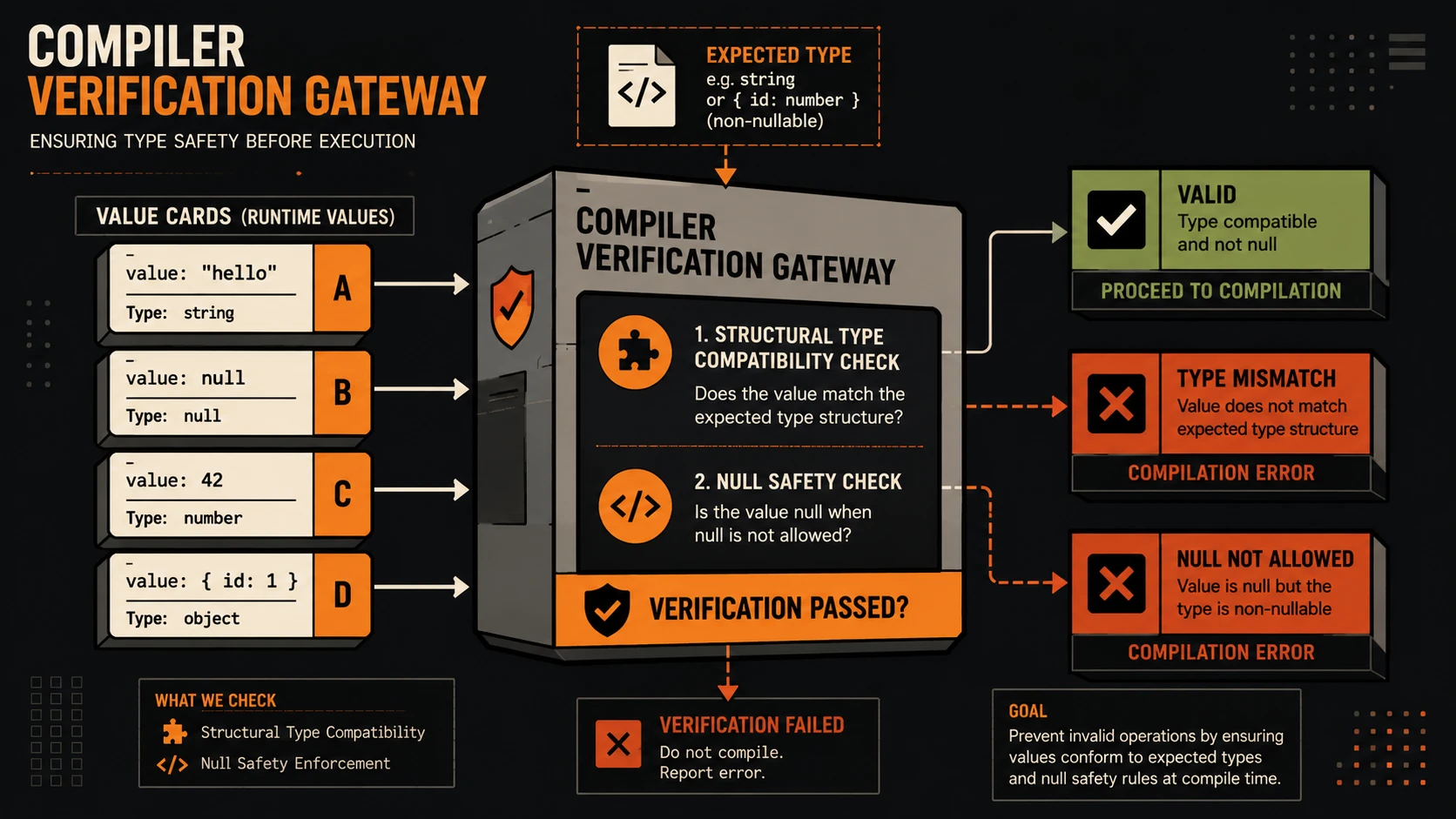
TypeScript 4.1 also strengthens compiler analysis.
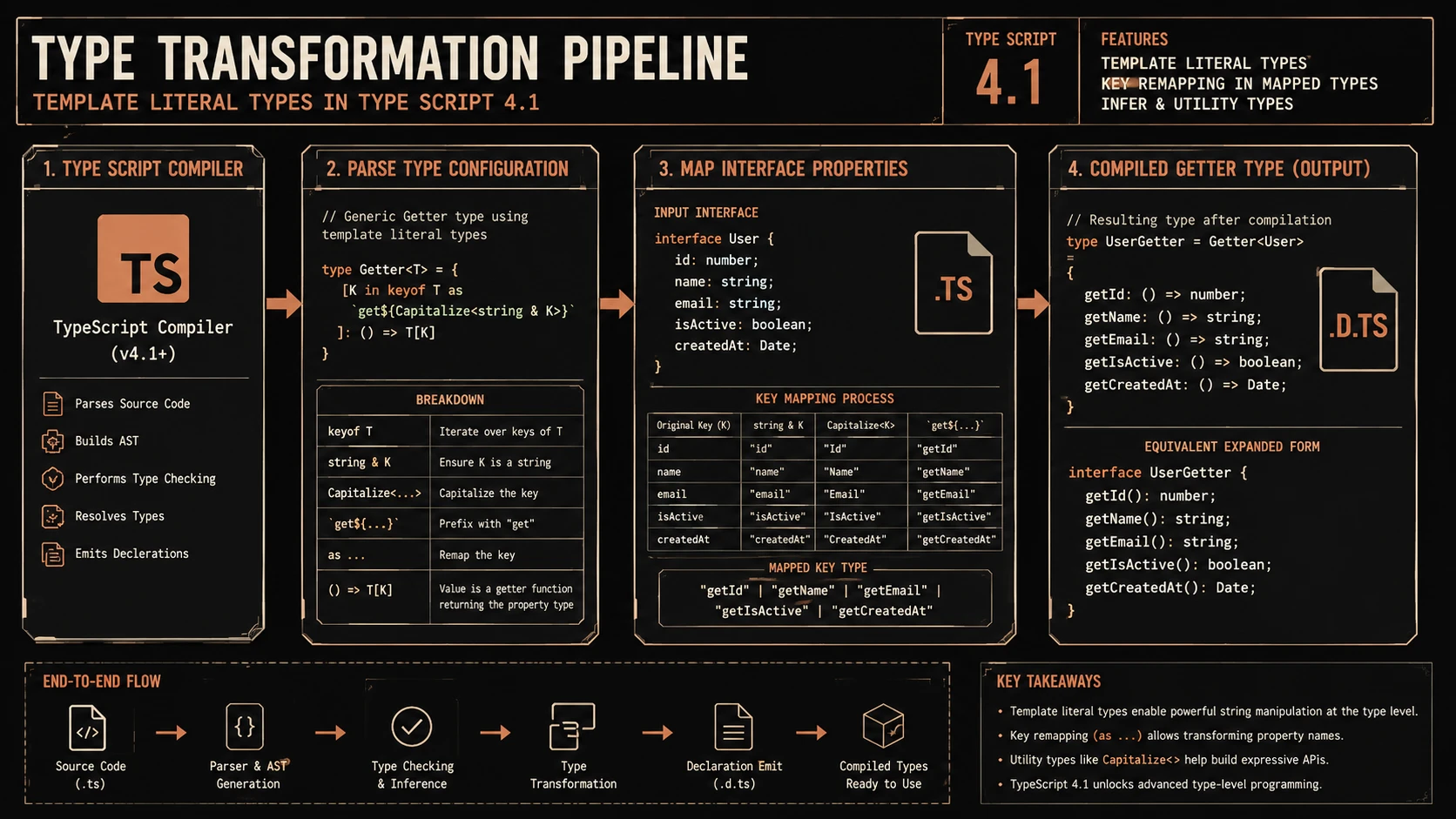
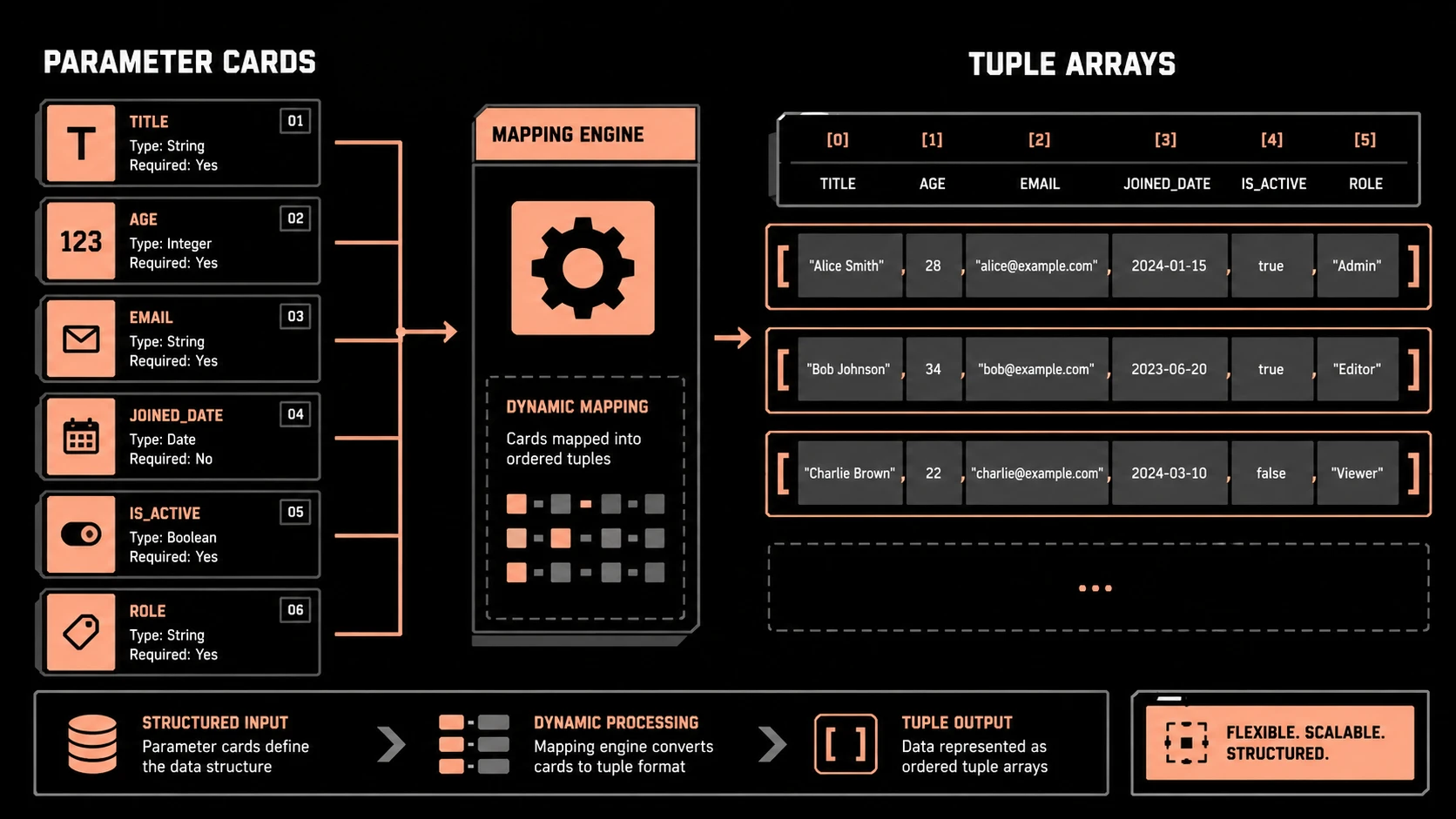
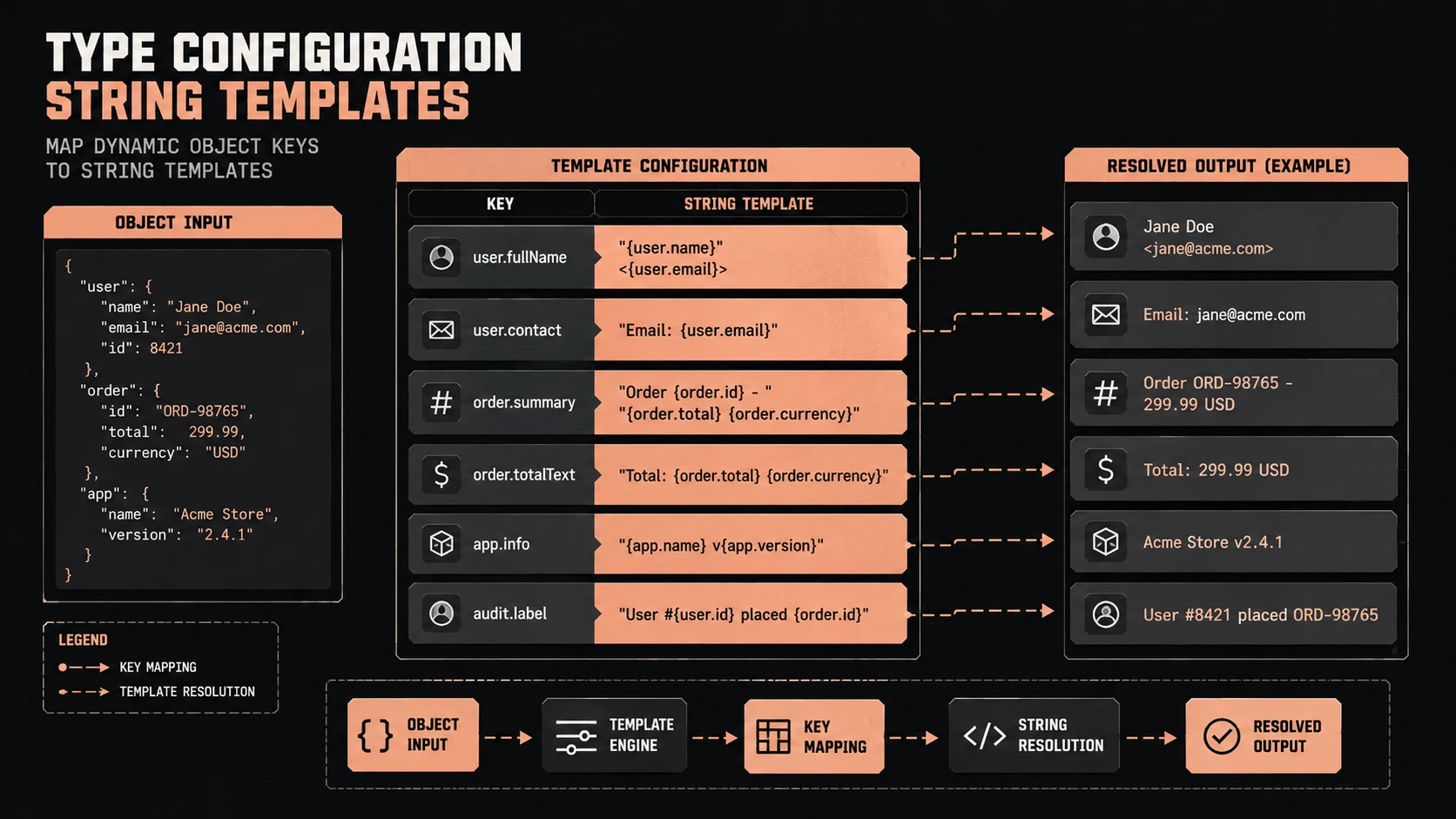
System architecture diagram and conceptual workflow layout for TypeScript 4.1: Template Literal Types, Key Remapping, and Strict Compiler Checking.
Development teams benefit from:
- ◆Earlier detection of type inconsistencies
- ◆Improved inference
- ◆Better diagnostics
- ◆Enhanced editor feedback
These improvements reduce debugging effort by identifying potential issues before deployment.
Static Type Analysis Workflow
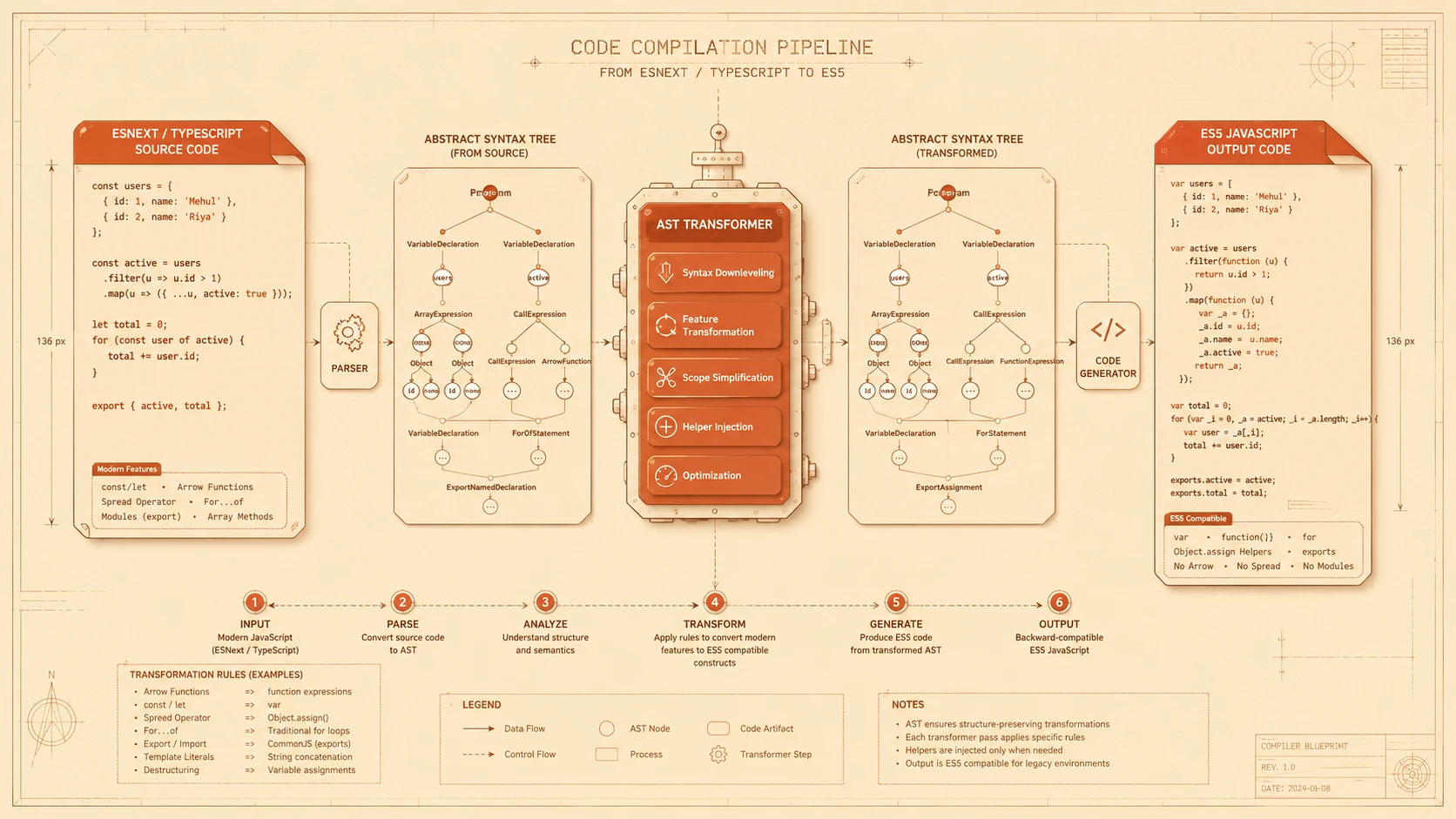
A typical TypeScript compilation workflow includes:
- 1.Source files are parsed.
- 2.Type relationships are evaluated.
- 3.Template literal types are resolved.
- 4.Mapped types generate transformed structures.
- 5.Compiler diagnostics are reported.
- 6.JavaScript output is produced.
This process improves code quality without affecting runtime execution.
Enterprise Use Cases
| Scenario | Benefit |
|---|---|
| API Client Libraries | Stronger endpoint typing |
| Design Systems | Consistent component property generation |
| Enterprise Dashboards | Improved state management types |
| Shared SDKs | Reduced duplicated type definitions |
| Cloud Services | Better compile-time validation |
| Internal Frameworks | More expressive utility types |
Organizations maintaining large TypeScript codebases benefit from richer compile-time abstractions that reduce manual maintenance.
Performance Considerations
TypeScript 4.1 primarily improves compile-time capabilities.
Development teams should evaluate:
- ◆Compiler execution time
- ◆Incremental build performance
- ◆Language service responsiveness
- ◆Type-checking complexity
- ◆Build pipeline duration
Generated JavaScript remains the primary determinant of runtime performance.
Security Considerations
TypeScript's type system does not replace application security.
Organizations should continue implementing:
- ◆Input validation
- ◆Authentication
- ◆Authorization
- ◆Output encoding
- ◆Secure dependency management
- ◆Secure API communication
Static typing improves software correctness but should complement established secure development practices.
Scalability
TypeScript 4.1 supports scalable enterprise development by:
- ◆Improving type reuse
- ◆Reducing duplicated declarations
- ◆Strengthening compile-time validation
- ◆Supporting sophisticated library design
- ◆Enhancing maintainability across large codebases
These improvements become increasingly valuable as engineering organizations expand.
Best Practices
Organizations adopting TypeScript 4.1 should:
- ◆Introduce Template Literal Types where naming conventions are well defined.
- ◆Use Key Remapping to simplify reusable utility types.
- ◆Apply Recursive Conditional Types selectively to preserve readability.
- ◆Continue enabling strict compiler options.
- ◆Standardize type utility patterns across teams.
- ◆Benchmark compiler performance for large monorepositories.
- ◆Expand automated testing alongside static analysis.
- ◆Document advanced type abstractions for maintainability.
Thoughtful adoption enables stronger compile-time guarantees while maintaining code clarity.
Common Mistakes
Development teams should avoid:
- ◆Using advanced type features where simpler solutions are sufficient.
- ◆Creating excessively complex recursive types that reduce readability.
- ◆Assuming compile-time safety eliminates the need for runtime validation.
- ◆Ignoring compiler diagnostics.
- ◆Introducing inconsistent type utility patterns across projects.
- ◆Treating sophisticated types as a substitute for good software architecture.
Successful adoption depends on balancing type expressiveness with long-term maintainability.
Technology Comparison
| Capability | TypeScript 4.0 | TypeScript 4.1 |
|---|---|---|
| Template Literal Types | No | Yes |
| Key Remapping in Mapped Types | No | Yes |
| Recursive Conditional Types | Limited | Enhanced |
| Improved Compiler Diagnostics | Good | Enhanced |
| Type Inference | Mature | Further refined |
| Enterprise API Modeling | Strong | More expressive |
TypeScript 4.1 significantly expands the language's ability to model sophisticated application architectures through compile-time type transformations.
Adoption Strategy
Organizations should modernize incrementally.
A recommended strategy includes:
- 1.Upgrade the TypeScript compiler within development environments.
- 2.Validate framework and tooling compatibility.
- 3.Introduce Template Literal Types into new modules.
- 4.Refactor reusable utility types using Key Remapping where beneficial.
- 5.Monitor compiler performance across large repositories.
- 6.Update internal coding standards.
- 7.Expand adoption after successful validation across production development workflows.
A phased approach minimizes migration risk while allowing engineering teams to gain experience with the enhanced type system.
Limitations
As of December 2020, several considerations remain.
Current observations include:
- ◆Advanced type features increase compiler expressiveness but may introduce additional learning requirements.
- ◆Excessive type complexity can reduce readability if applied indiscriminately.
- ◆Organizations should evaluate tooling compatibility before upgrading compiler versions.
- ◆Successful enterprise adoption depends on consistent engineering standards rather than simply using more advanced language features.
TypeScript 4.1 provides powerful capabilities, but they should be introduced according to measurable architectural needs.
Looking Ahead
TypeScript 4.1 represents one of the most significant advancements in the language's type system to date. Template Literal Types, Key Remapping, Recursive Conditional Types, and improved compiler analysis enable developers to model increasingly sophisticated APIs while reducing duplication and improving maintainability. These capabilities strengthen TypeScript's role as the preferred language for enterprise-scale JavaScript development.
As of December 2020, enterprise architects and engineering teams should evaluate these enhancements as practical tools for improving compile-time correctness rather than opportunities to increase unnecessary type complexity. Organizations that combine disciplined coding standards, incremental modernization, and comprehensive testing will be well positioned to leverage TypeScript's continued evolution while maintaining readable and maintainable codebases.