Introduction
As JavaScript applications continue growing in scale and complexity, engineering teams increasingly rely on static analysis to improve maintainability, reduce runtime defects, and accelerate large-scale development. TypeScript has become a central technology in this transformation by extending JavaScript with a powerful type system that integrates seamlessly into existing development workflows.
Modern enterprise applications often contain thousands of modules, shared component libraries, distributed development teams, and Continuous Integration pipelines that compile millions of lines of code. In these environments, improvements to type inference and compiler performance can significantly influence developer productivity.
TypeScript 3.4 focuses on practical enhancements rather than introducing entirely new programming paradigms. The release improves immutable programming through const assertions and readonly tuple support while also introducing incremental compilation improvements that reduce build times for large projects.
From the perspective of March 2019, TypeScript 3.4 represents another important step toward making JavaScript development more predictable, maintainable, and efficient for enterprise engineering organizations.
Industry Background
TypeScript adoption continues expanding throughout enterprise software development.
Organizations increasingly build:
- ◆React applications.
- ◆Angular applications.
- ◆Vue applications.
- ◆Node.js backend services.
- ◆Progressive Web Applications.
- ◆Cloud management platforms.
- ◆Shared component libraries.
These applications require:
- ◆Strong type safety.
- ◆Reliable refactoring.
- ◆Efficient compilation.
- ◆Scalable architecture.
- ◆Developer productivity.
- ◆Long-term maintainability.
As projects continue expanding, compiler efficiency and expressive type systems become essential engineering requirements.
The Business Problem
Large JavaScript and TypeScript codebases frequently encounter several challenges.
Organizations commonly experience:
- ◆Unintended object mutation.
- ◆Weak type inference.
- ◆Long build times.
- ◆Large dependency graphs.
- ◆Complex generic definitions.
- ◆Increasing maintenance costs.
- ◆Slower Continuous Integration pipelines.
Development teams require language features that improve correctness while reducing repetitive type declarations.
TypeScript 3.4 addresses these concerns through stronger immutable typing and compiler improvements.
Understanding the Technology
TypeScript 3.4 builds upon earlier releases with improvements focused on developer productivity and stronger type inference.
Major enhancements include:
- ◆Const assertions.
- ◆Readonly tuple support.
- ◆Readonly array improvements.
- ◆Incremental compilation.
- ◆Faster project builds.
- ◆Improved generic type inference.
- ◆Better tooling responsiveness.
These refinements enhance compile-time validation while preserving JavaScript compatibility.
Core Architecture
A simplified TypeScript development architecture appears below.
| Component | Responsibility |
|---|---|
| TypeScript Source | Application implementation |
| Type System | Compile-time validation |
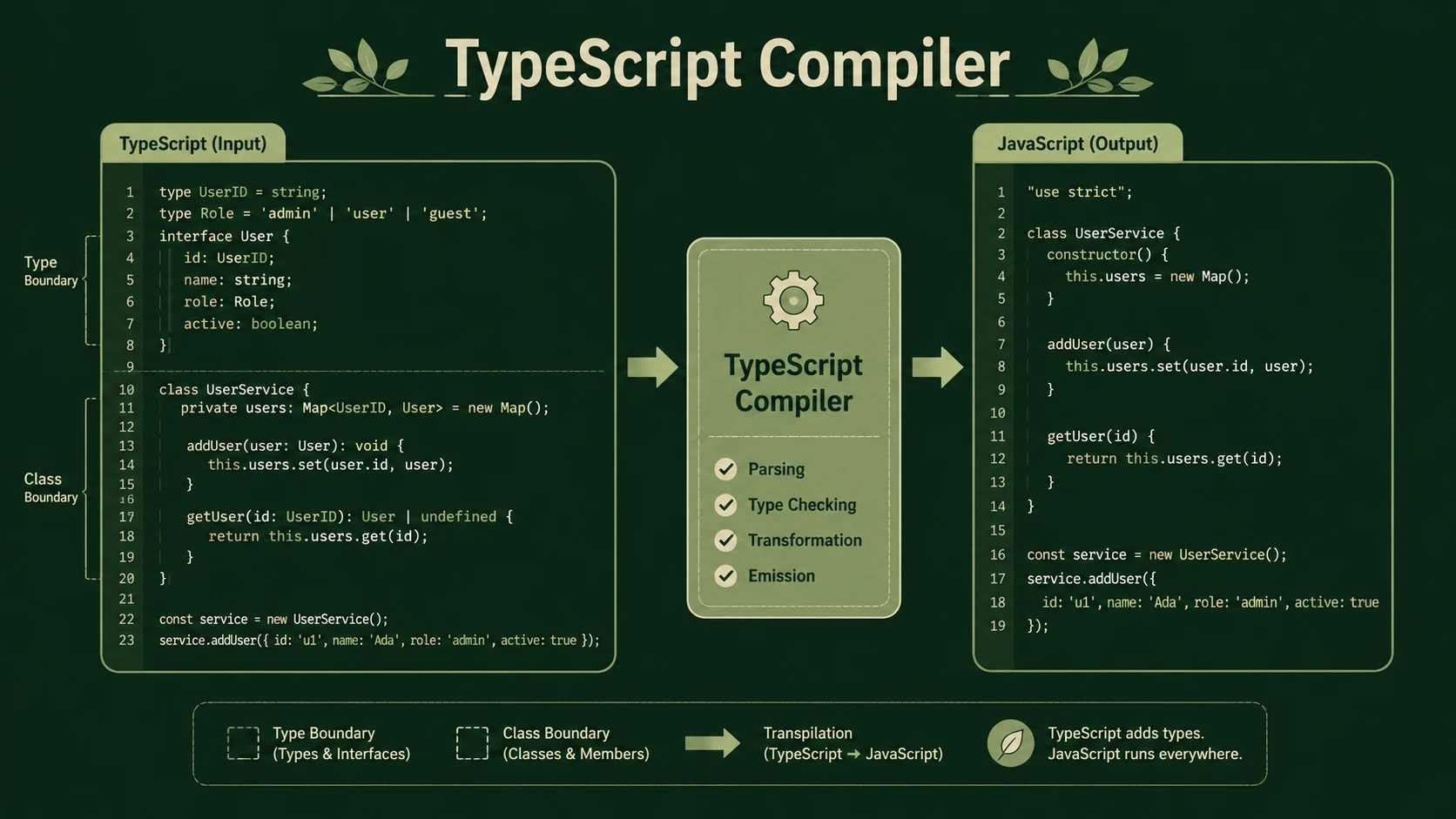
| TypeScript Compiler | Parsing and transpilation |
| Incremental Build Cache | Faster recompilation |
| JavaScript Output | Runtime execution |
| Browser or Node.js | Application runtime |
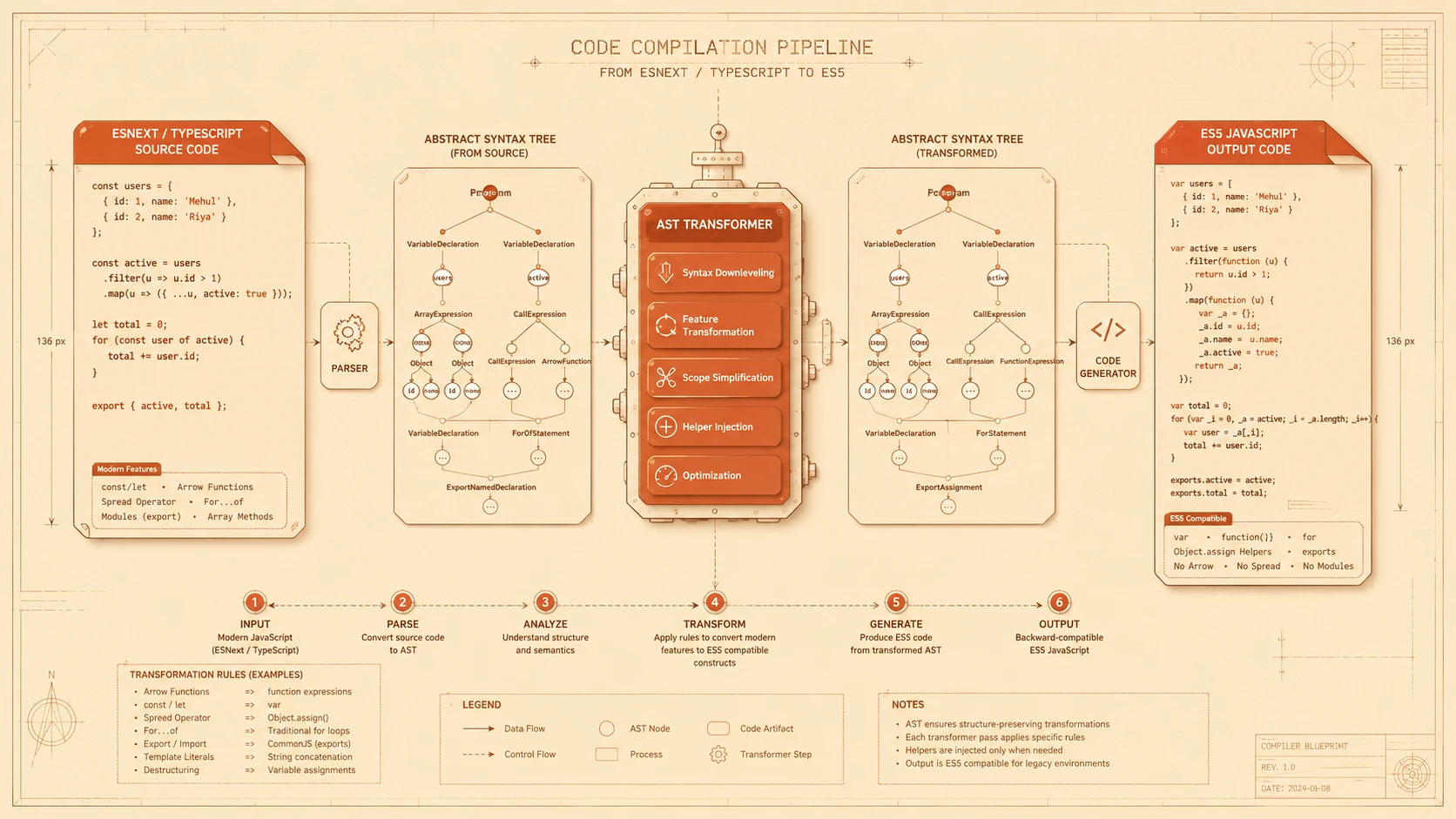
The compiler validates types, performs inference, and generates standard JavaScript without affecting runtime semantics.
Key Features
Const Assertions
The defining feature of TypeScript 3.4 is the introduction of const assertions.
Const assertions allow developers to preserve literal types instead of widening them into broader primitive types.
For example, object properties and array values can retain their exact literal values, enabling stronger compile-time guarantees and reducing unnecessary type annotations.
This capability is particularly valuable when defining:
- ◆Configuration objects.
- ◆Application constants.
- ◆Redux-style action objects.
- ◆Routing definitions.
- ◆Feature flags.
By preserving literal information, TypeScript can perform more accurate type inference throughout the application.
Readonly Array Syntax
TypeScript 3.4 simplifies immutable array declarations through improved readonly syntax.
Rather than relying exclusively on generic utility types, developers can express immutable arrays more naturally.
This improves readability while encouraging safer programming practices.
Readonly Tuples
Tuple types now support readonly declarations.
Immutable tuples help protect structured data from unintended modification while preserving positional type information.
This enhancement benefits APIs that depend on fixed-length collections.
Incremental Compilation
Large enterprise projects often spend significant time during compilation.
TypeScript 3.4 introduces incremental compilation support that allows the compiler to reuse information from previous builds.
Instead of recompiling every source file, subsequent builds can process only affected portions of the project.
This substantially improves development workflows for large applications.
Improved Generic Type Inference
The compiler continues refining generic inference across increasingly sophisticated type relationships.
Developers can express reusable abstractions with fewer explicit type annotations while maintaining compile-time safety.
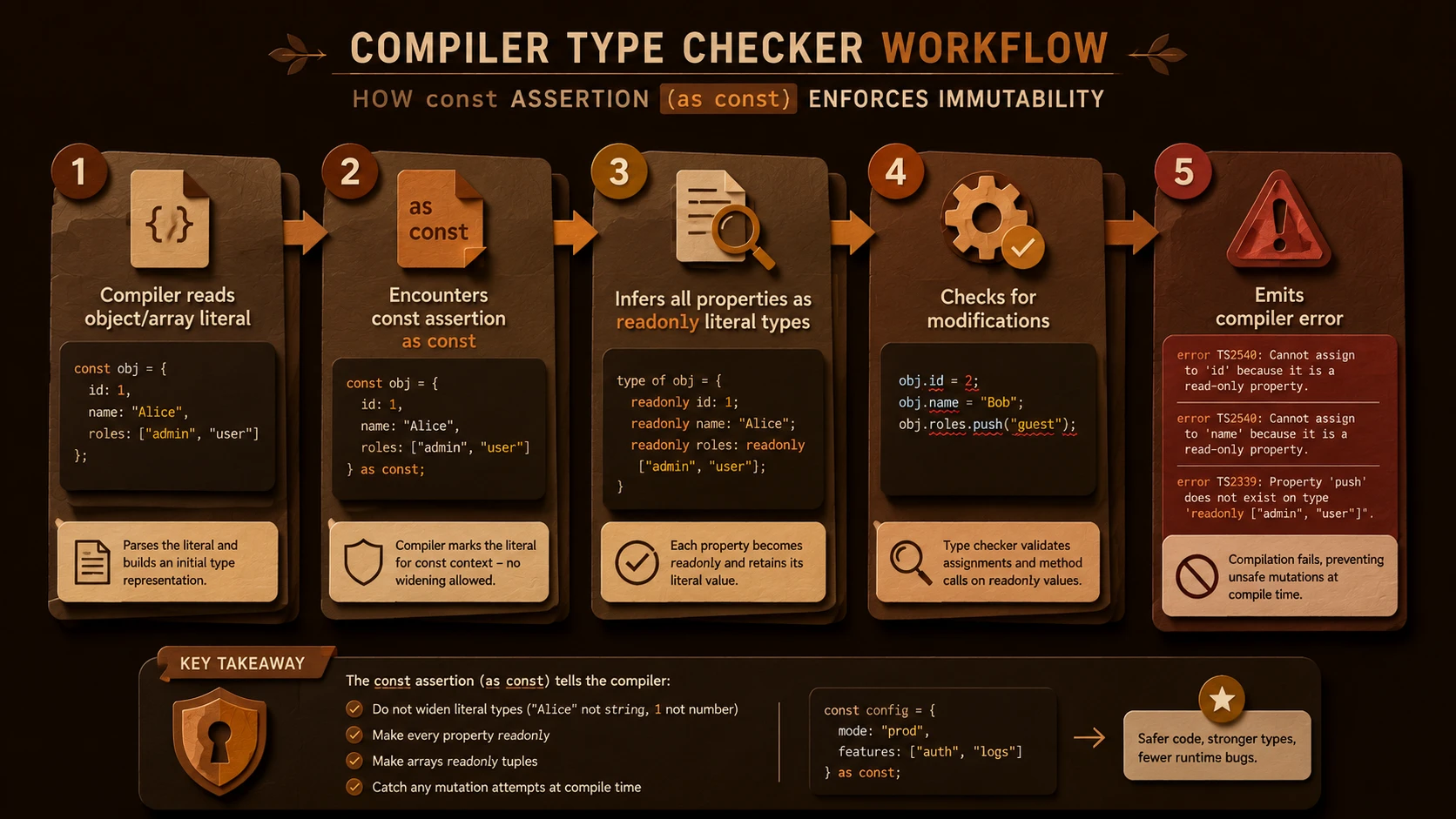
System architecture diagram and conceptual workflow layout for TypeScript 3.4: Const Assertions and Readonly Array Typings.
Better Developer Productivity
Combined improvements to compiler performance, immutable typing, and inference reduce repetitive coding while improving editor responsiveness.
How It Works
A simplified compilation workflow appears below.
TypeScript Source
        |
Type Analysis
        |
Const Assertions
        |
Incremental Compiler
        |
JavaScript Output
        |
Browser or Node.js
The compiler performs type analysis before generating standard JavaScript while using incremental information to reduce recompilation work.
Enterprise Use Cases
React Applications
Configuration objects, component properties, and application state definitions benefit from stronger literal type inference.
Shared Component Libraries
Immutable APIs reduce accidental modification while improving library reliability.
Node.js Services
Large backend applications benefit from faster incremental compilation during active development.
Cloud Platforms
Infrastructure configuration objects gain improved compile-time validation through const assertions.
Continuous Integration
Incremental compilation contributes to shorter build cycles and faster developer feedback.
Performance Considerations
TypeScript 3.4 primarily improves development performance.
Organizations should evaluate:
- ◆Full compilation duration.
- ◆Incremental build speed.
- ◆Editor responsiveness.
- ◆Type checking complexity.
- ◆Dependency graph size.
- ◆Continuous Integration throughput.
Generated JavaScript performance remains largely unchanged because these improvements occur during compilation.
Security Considerations
TypeScript enhances software quality but does not replace secure application architecture.
Organizations should continue implementing:
- ◆Authentication.
- ◆Authorization.
- ◆Input validation.
- ◆Secure dependency management.
- ◆Secure API communication.
- ◆HTTPS deployment.
Compile-time type safety complements secure engineering practices by reducing programming errors.
Scalability
TypeScript 3.4 strengthens enterprise scalability through:
- ◆Faster incremental builds.
- ◆Better immutable programming.
- ◆Improved type inference.
- ◆More maintainable APIs.
- ◆Reduced development friction.
These improvements become increasingly valuable as applications continue expanding across multiple engineering teams.
Best Practices
Organizations adopting TypeScript 3.4 should:
- ◆Use const assertions for immutable configuration objects.
- ◆Prefer readonly arrays where mutation is unnecessary.
- ◆Adopt readonly tuples for fixed data structures.
- ◆Enable incremental compilation for large projects.
- ◆Continue using strict compiler settings.
- ◆Benchmark build performance following upgrades.
- ◆Standardize compiler configuration across development teams.
Consistent compiler settings improve both maintainability and collaboration.
Common Mistakes
| Mistake | Business Impact |
|---|---|
| Overusing const assertions where flexibility is required | Reduced code adaptability |
| Assuming readonly prevents runtime modification | Architectural misunderstanding |
| Ignoring incremental compilation | Longer build times |
| Using mutable collections unnecessarily | Increased maintenance risk |
| Skipping compiler performance benchmarking | Missed productivity improvements |
| Delaying compiler upgrades | Reduced tooling efficiency |
Successful adoption requires balancing immutability with practical application requirements.
Technology Comparison
| Characteristic | TypeScript 3.3 | TypeScript 3.4 |
|---|---|---|
| Literal Type Inference | Limited widening control | Const assertions preserve literal values |
| Immutable Arrays | Generic readonly syntax | Simplified readonly array support |
| Readonly Tuples | Not available | Supported |
| Build Performance | Standard compilation | Incremental compilation improvements |
| Enterprise Productivity | Mature tooling | Faster builds and stronger type inference |
TypeScript 3.4 improves both the language and compiler while preserving compatibility with existing JavaScript ecosystems.
Adoption Strategy
Organizations should adopt TypeScript 3.4 through structured upgrades.
- 1.Upgrade the TypeScript compiler across development environments.
- 2.Enable incremental compilation for large projects.
- 3.Introduce const assertions into configuration-heavy modules.
- 4.Modernize immutable collection definitions.
- 5.Benchmark build performance before organization-wide rollout.
- 6.Update engineering guidelines to reflect new language capabilities.
This phased approach minimizes operational disruption while allowing development teams to realize measurable productivity improvements.
Limitations
As of March 2019, organizations should recognize several considerations.
- ◆Const assertions affect compile-time typing rather than runtime behavior.
- ◆Existing projects may require gradual modernization.
- ◆Development teams should understand immutable programming concepts before broad adoption.
- ◆Compiler improvements vary depending on project structure and dependency relationships.
- ◆Third-party type definitions should be validated during upgrades.
These considerations should guide enterprise migration planning.
Looking Ahead
From the perspective of March 2019, TypeScript 3.4 represents another important refinement in Microsoft's strategy of making JavaScript development increasingly suitable for enterprise-scale software engineering. By introducing const assertions, strengthening readonly type support, and improving incremental compilation, this release enhances both application correctness and developer productivity.
Rather than introducing disruptive language changes, TypeScript 3.4 focuses on practical engineering improvements that simplify large codebases, accelerate build pipelines, and encourage more predictable programming patterns. Organizations building long-lived React, Angular, Vue, and Node.js applications should view this release as a valuable step toward more maintainable, scalable, and reliable JavaScript development.