Introduction
Over the past decade, Node.js has evolved from a lightweight JavaScript runtime into one of the primary platforms for enterprise application development. Organizations now rely on Node.js for REST APIs, GraphQL services, server-side rendering, build automation, developer tooling, microservices, serverless functions, and event-driven distributed systems.
As enterprise JavaScript ecosystems continue expanding, development teams increasingly manage multiple related applications, shared libraries, internal packages, and common infrastructure within a single source repository. At the same time, modern asynchronous applications require more standardized mechanisms for cancelling long-running operations without relying on framework-specific implementations.
Node.js 15 addresses both of these challenges. The release ships with NPM 7 as the default package manager, introducing native Workspaces support for monorepositories and improving dependency resolution. It also expands native support for the AbortController API, allowing developers to standardize request cancellation patterns across asynchronous operations.
Additional improvements to the V8 JavaScript engine, diagnostics, package management, and runtime behavior continue Node.js' modernization while maintaining compatibility with existing JavaScript development practices.
As of October 2020, Node.js 15 represents an innovation release intended for evaluation and early adoption rather than long-term enterprise standardization.
Industry Background
Enterprise JavaScript development increasingly emphasizes:
- ◆Microservices
- ◆Monorepositories
- ◆Shared component libraries
- ◆Continuous Integration and Continuous Delivery
- ◆Cloud-native deployment
- ◆Containerized services
- ◆Event-driven architecture
- ◆Automated dependency management
Organizations increasingly require tooling capable of managing multiple related packages while maintaining predictable dependency resolution and consistent development workflows.
The Business Problem
Large Node.js environments frequently encounter:
- ◆Multiple repositories for related projects
- ◆Dependency duplication
- ◆Inconsistent package versions
- ◆Complex peer dependency management
- ◆Framework-specific cancellation mechanisms
- ◆Difficult local package development
- ◆Build pipeline complexity
Development teams require standardized tooling that simplifies repository organization while improving asynchronous programming consistency.
Understanding Node.js 15
Node.js 15 introduces several important platform improvements:
- ◆NPM 7 as the default package manager
- ◆Native Workspaces support
- ◆Improved peer dependency installation
- ◆Native AbortController integration
- ◆Updated V8 JavaScript engine
- ◆Runtime and diagnostics enhancements
These improvements primarily target developer productivity, package management, and modern asynchronous programming.
Core Architecture
| Component | Responsibility |
|---|---|
| V8 JavaScript Engine | Executes JavaScript |
| Node.js Runtime | Provides server-side APIs |
| NPM 7 | Dependency and package management |
| Workspaces | Multi-package repository management |
| AbortController | Cancellation of asynchronous operations |
| Event Loop | Coordinates asynchronous execution |
Together these components provide a modern runtime environment for scalable enterprise JavaScript applications.
NPM 7 as the Default Package Manager
Node.js 15 adopts NPM 7 as its default package manager.
This release introduces several improvements focused on dependency management, package consistency, and large project organization.
Notable enhancements include:
- ◆Native Workspaces support
- ◆Improved dependency resolution
- ◆Better peer dependency handling
- ◆Enhanced package management workflows
For enterprise engineering teams managing hundreds of packages, these capabilities simplify repository maintenance and development workflows.
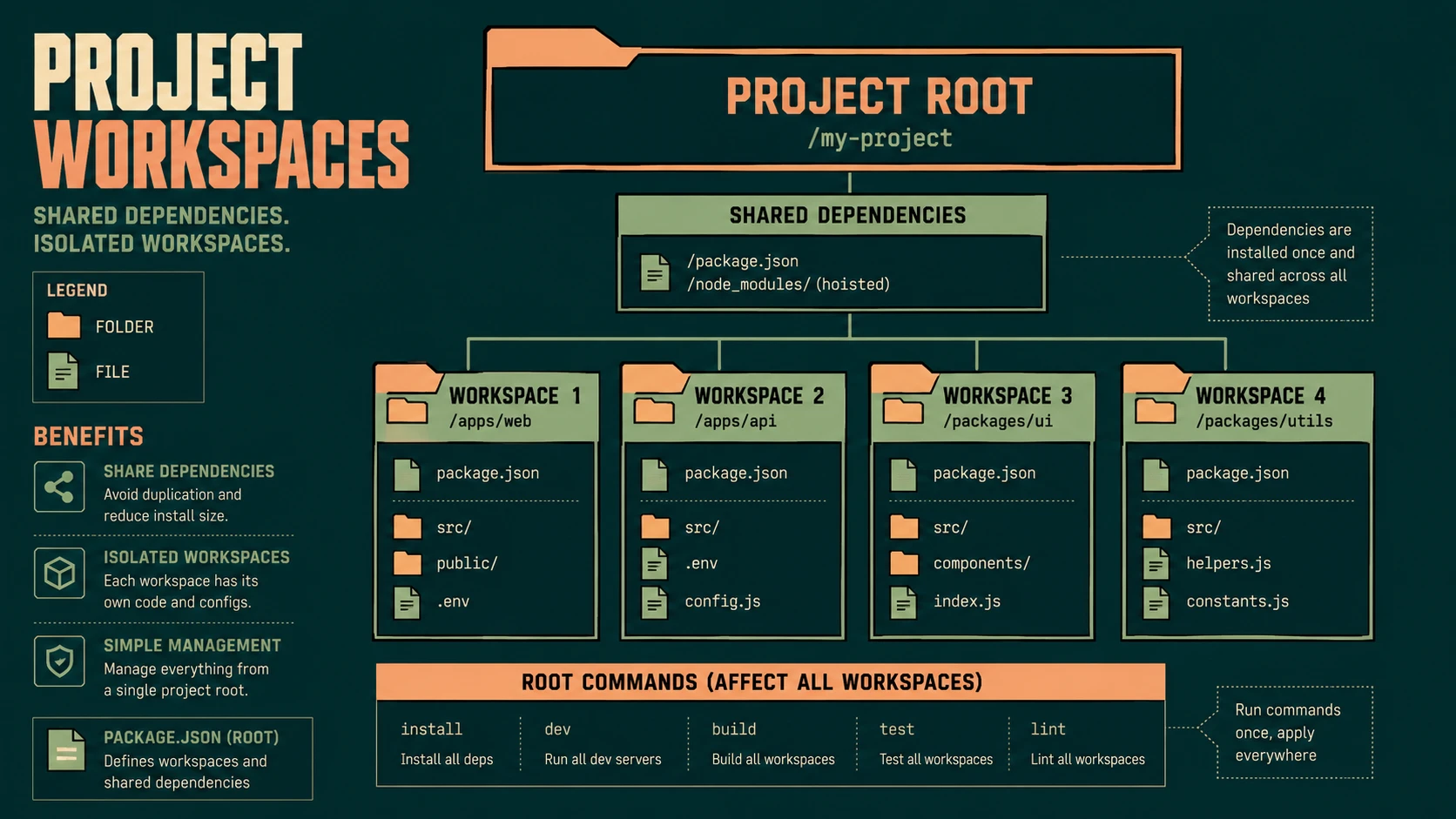
Workspaces
One of the most significant additions in NPM 7 is native Workspaces support.
Many organizations maintain multiple related packages, including:
- ◆Shared libraries
- ◆API services
- ◆Frontend applications
- ◆Build tools
- ◆Internal SDKs
- ◆Utility packages
Historically, coordinating these packages often required third-party tooling or multiple independent repositories.
Workspaces allow related packages to coexist within a single repository while sharing dependency management.
Potential enterprise benefits include:
- ◆Simplified repository organization
- ◆Easier local package development
- ◆Consistent dependency versions
- ◆Improved developer productivity
- ◆Reduced duplication
Monorepository Workflow
A typical Workspace-based workflow includes:
- 1.Multiple packages are defined within one repository.
- 2.NPM identifies workspace relationships.
- 3.Shared dependencies are installed.
- 4.Local package references are resolved.
- 5.Development proceeds using linked packages.
- 6.Individual packages remain independently publishable when appropriate.
This model simplifies collaboration across large engineering organizations.
Peer Dependency Improvements
Peer dependencies help ensure compatible versions of shared libraries across application packages.
NPM 7 introduces improved handling of peer dependency installation.
Potential advantages include:
- ◆Better dependency consistency
- ◆Earlier detection of compatibility issues
- ◆Reduced runtime surprises
- ◆More predictable package installation
Organizations should review existing dependency trees when upgrading to understand any compatibility implications.
Native AbortController Integration
Another significant enhancement is expanded native support for AbortController.
Modern applications increasingly perform long-running asynchronous operations such as:
- ◆HTTP requests
- ◆File processing
- ◆Database communication
- ◆Streaming operations
- ◆Timers
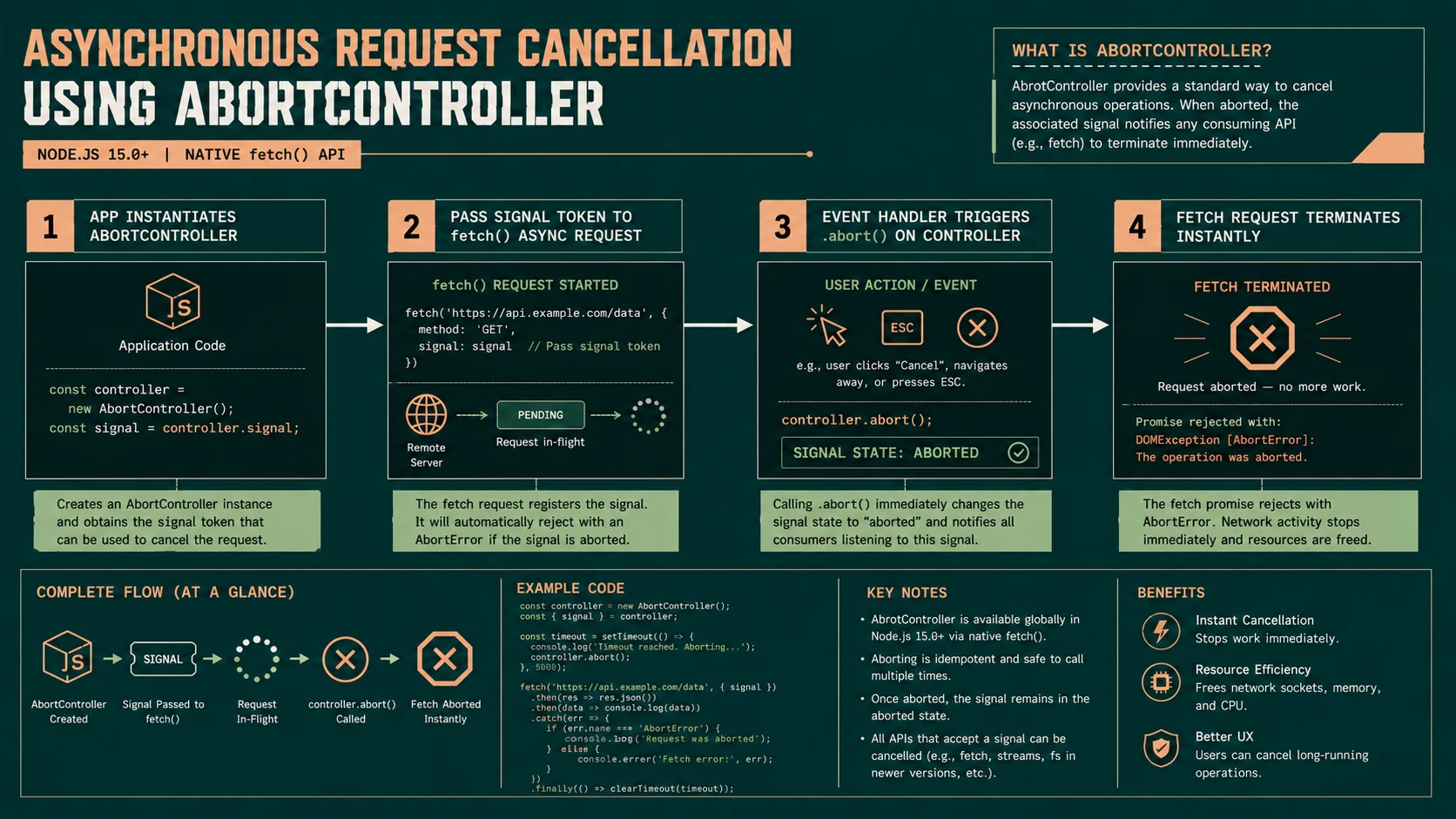
AbortController provides a standardized mechanism for signalling cancellation.
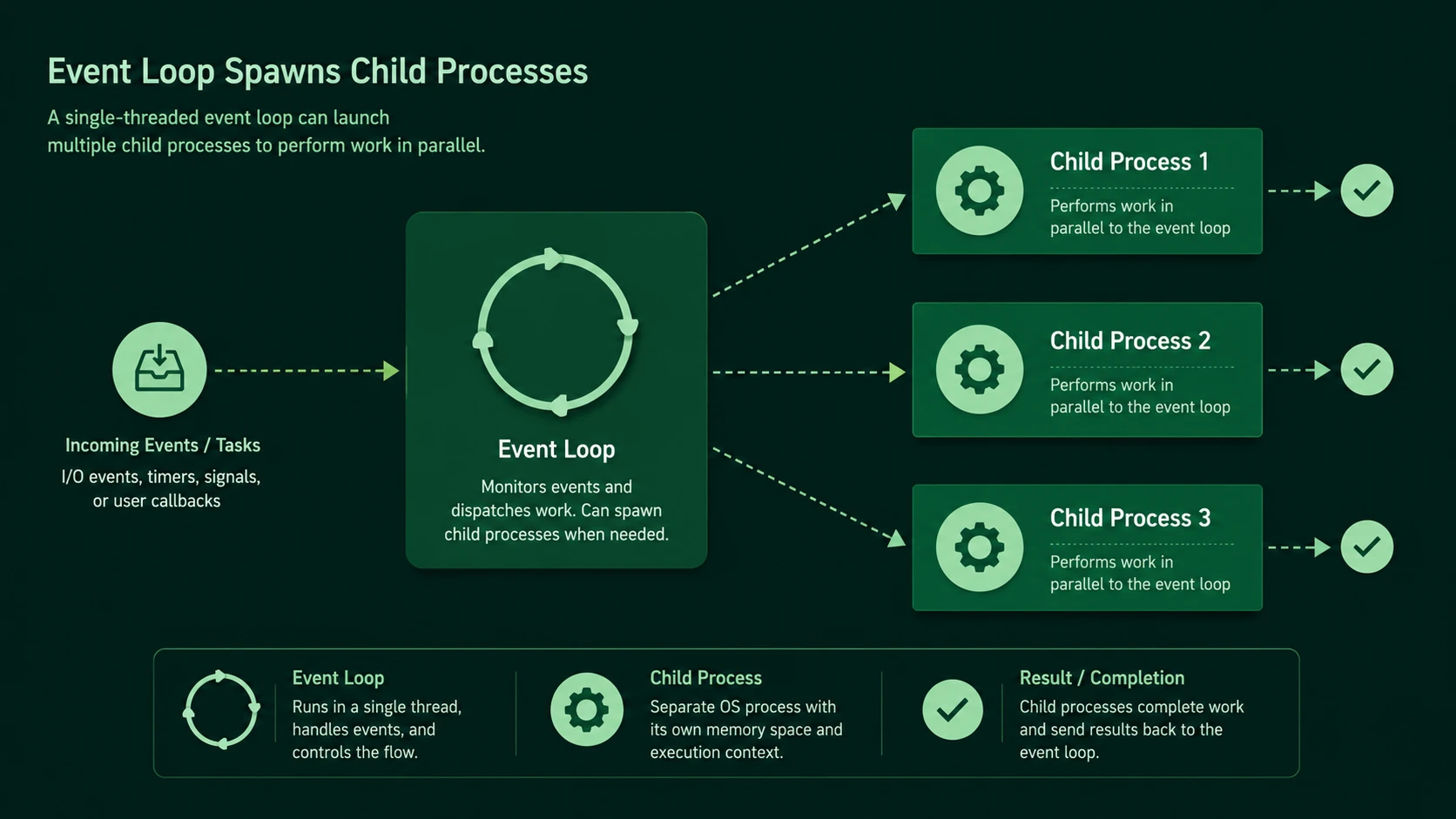
Event loop routing for non-blocking asynchronous I/O execution threads.
Potential enterprise benefits include:
- ◆Consistent cancellation behavior
- ◆Cleaner asynchronous code
- ◆Reduced resource consumption
- ◆Improved responsiveness
By aligning with standardized web APIs, Node.js improves consistency between browser and server-side JavaScript development.
Asynchronous Cancellation Workflow
A typical cancellation sequence includes:
- 1.An asynchronous operation begins.
- 2.An AbortController is created.
- 3.The operation receives an associated signal.
- 4.Cancellation is requested when appropriate.
- 5.The runtime stops the operation if supported.
- 6.Resources are released gracefully.
This model simplifies cancellation logic across complex applications.
Runtime Improvements
Node.js 15 also continues improving:
- ◆Runtime performance
- ◆JavaScript engine updates
- ◆Diagnostics
- ◆Platform compatibility
- ◆Developer tooling
These incremental improvements reinforce Node.js' position as a mature enterprise application platform.
Enterprise Use Cases
| Scenario | Benefit |
|---|---|
| Monorepositories | Native Workspace management |
| Shared Libraries | Simplified package development |
| REST APIs | Standardized request cancellation |
| Microservices | Consistent dependency management |
| Build Tooling | Improved package organization |
| Enterprise Platforms | Better repository scalability |
Organizations maintaining large JavaScript ecosystems benefit from standardized package management and consistent asynchronous programming patterns.
Performance Considerations
Node.js 15 focuses primarily on developer productivity rather than major runtime performance changes.
Development teams should evaluate:
- ◆Dependency installation time
- ◆Repository build duration
- ◆Memory utilization
- ◆Application startup
- ◆Package resolution performance
- ◆Cancellation overhead
Performance decisions should continue relying on representative production benchmarking.
Security Considerations
Organizations should continue implementing:
- ◆Dependency auditing
- ◆Package integrity verification
- ◆Authentication
- ◆Authorization
- ◆Secure API communication
- ◆Regular dependency updates
Improved package management complements secure software supply chain practices but does not replace established governance processes.
Scalability
Node.js 15 supports scalable enterprise development through:
- ◆Native Workspace management
- ◆Improved dependency consistency
- ◆Standardized asynchronous cancellation
- ◆Better repository organization
- ◆Modern package management workflows
These improvements become increasingly valuable as engineering organizations grow and software portfolios expand.
Best Practices
Organizations evaluating Node.js 15 should:
- ◆Introduce Workspaces for new multi-package repositories.
- ◆Review peer dependency compatibility before upgrading existing projects.
- ◆Standardize AbortController usage for cancellable operations.
- ◆Benchmark package installation performance.
- ◆Maintain dependency version governance.
- ◆Update Continuous Integration pipelines.
- ◆Continue comprehensive regression testing.
- ◆Document repository conventions for development teams.
Incremental adoption reduces operational risk while allowing engineering teams to benefit from modern package management capabilities.
Common Mistakes
Development teams should avoid:
- ◆Migrating large repositories without dependency compatibility validation.
- ◆Assuming all asynchronous APIs immediately support cancellation.
- ◆Ignoring peer dependency warnings after upgrading.
- ◆Mixing inconsistent repository organization strategies.
- ◆Treating Workspaces as a replacement for thoughtful package architecture.
- ◆Upgrading production environments without regression testing.
Successful modernization depends on disciplined repository governance and careful dependency management.
Technology Comparison
| Capability | Node.js 14 | Node.js 15 |
|---|---|---|
| Default Package Manager | NPM 6 | NPM 7 |
| Native Workspaces | No | Yes |
| Peer Dependency Handling | Previous behavior | Improved |
| AbortController Integration | Limited | Expanded native support |
| Updated V8 Engine | Earlier version | Newer release |
| Enterprise Repository Support | Good | Enhanced |
Node.js 15 continues the platform's incremental modernization by improving package management and asynchronous programming consistency.
Adoption Strategy
Organizations should evaluate Node.js 15 through controlled pilot deployments.
A practical migration strategy includes:
- 1.Inventory existing repositories.
- 2.Evaluate Workspace suitability.
- 3.Validate dependency compatibility.
- 4.Upgrade development environments.
- 5.Introduce AbortController in new asynchronous workflows.
- 6.Benchmark package installation and build performance.
- 7.Continue monitoring future Long-Term Support releases before broad production standardization.
This phased approach allows engineering teams to gain operational experience while minimizing business risk.
Limitations
As of October 2020, several considerations remain.
Current observations include:
- ◆Node.js 15 is not a Long-Term Support release.
- ◆Existing dependency trees should be reviewed carefully before migration.
- ◆Third-party tooling may require compatibility validation with NPM 7.
- ◆Repository modernization should proceed incrementally rather than through large-scale rewrites.
Organizations should therefore evaluate Node.js 15 as an opportunity to prepare for future platform evolution while maintaining established production stability.
Looking Ahead
Node.js 15 advances the JavaScript server-side ecosystem through improved package management, native Workspace support, and standardized asynchronous cancellation with AbortController. These capabilities address practical challenges encountered by modern enterprise engineering teams managing large repositories, shared libraries, and increasingly complex asynchronous workloads.
As of October 2020, enterprise architects should evaluate Node.js 15 through pilot projects, monorepository experiments, and modern package management workflows. Organizations that combine disciplined dependency governance, comprehensive testing, and incremental adoption will be well positioned for the continued evolution of the Node.js platform.