Introduction
Node.js has established itself as one of the leading platforms for server-side JavaScript development. Its event-driven architecture and non-blocking I/O model have enabled organizations to build scalable REST APIs, real-time communication platforms, streaming services, and microservice-based applications using a single programming language across both frontend and backend systems.
One of Node.js' defining architectural principles has been its single-threaded JavaScript execution model. Combined with libuv's asynchronous event loop, this design allows applications to efficiently manage thousands of concurrent I/O operations. However, CPU-intensive workloads such as image processing, encryption, machine learning inference, video transcoding, scientific computation, and large-scale data transformation can monopolize the event loop, reducing responsiveness for all connected clients.
Node.js 11.0 introduces experimental support for Worker Threads, providing developers with a standardized mechanism for executing JavaScript code on separate threads while maintaining communication with the primary application. Rather than replacing Node.js' asynchronous programming model, Worker Threads extend it by enabling computational workloads to execute independently from the main event loop.
As of October 2018, Worker Threads represent an important milestone in the evolution of server-side JavaScript, particularly for organizations building increasingly compute-intensive backend systems.
Industry Background
Modern enterprise applications increasingly perform:
- ◆Image and video processing
- ◆Cryptographic operations
- ◆Data analytics
- ◆Machine learning preprocessing
- ◆File compression
- ◆Financial calculations
- ◆Large-scale JSON transformation
While asynchronous I/O remains Node.js' greatest strength, these CPU-bound workloads benefit from execution models that prevent long-running computations from blocking request processing.
The Business Problem
Organizations operating large Node.js services commonly encounter:
- ◆Event loop blocking
- ◆Increased request latency
- ◆Reduced API responsiveness
- ◆CPU-intensive background processing
- ◆Limited utilization of multi-core processors
- ◆Complex child process management
- ◆Operational overhead for computational services
Development teams require mechanisms for distributing CPU-intensive work without abandoning the familiar JavaScript programming model.
Understanding Worker Threads
Worker Threads introduce the ability to execute JavaScript in separate threads within a single Node.js process.
Each worker maintains its own:
- ◆JavaScript runtime
- ◆Event loop
- ◆Execution context
- ◆Memory management
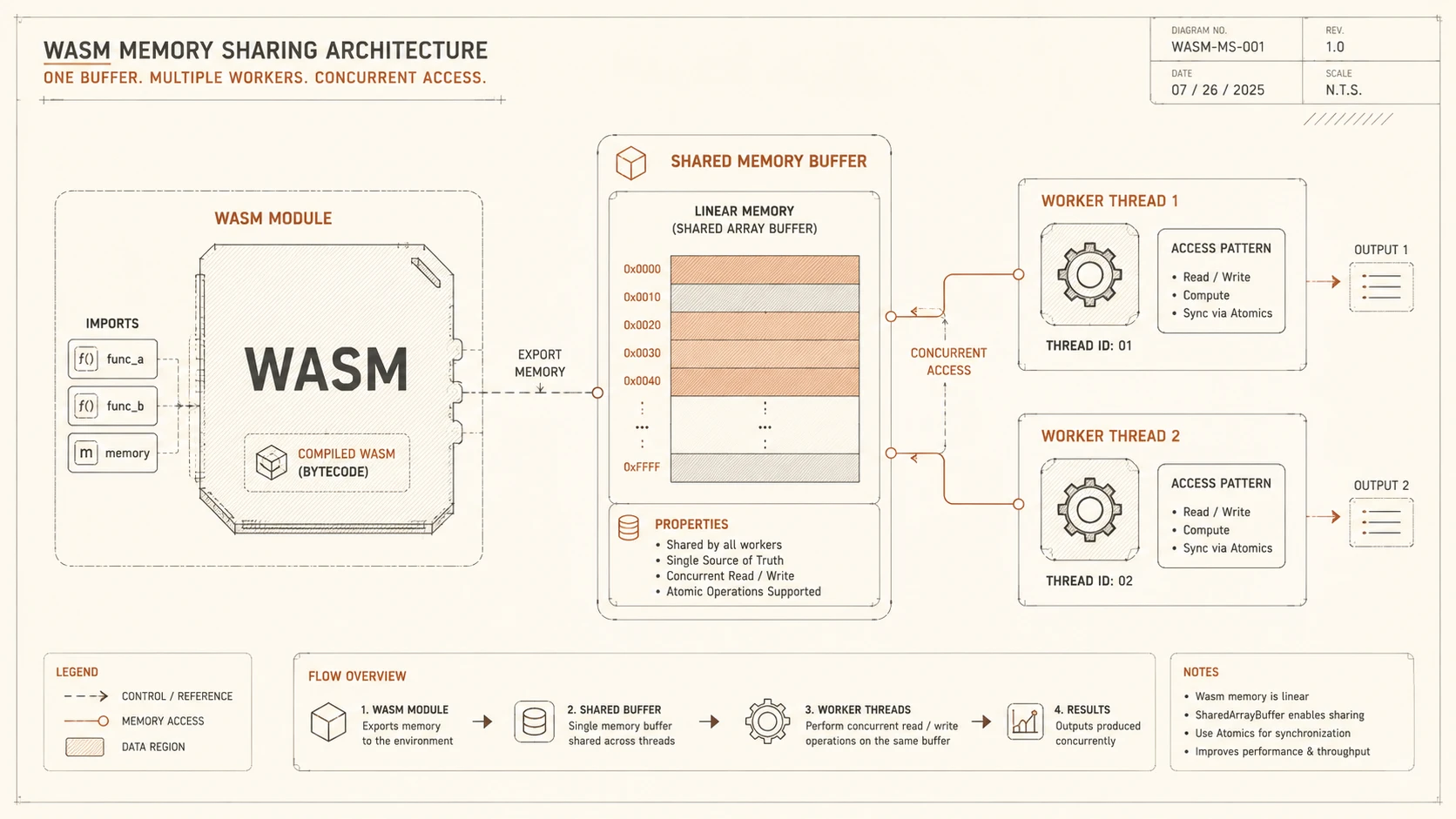
Workers communicate with the main application through structured message passing and, where appropriate, shared memory.
This architecture allows computational work to proceed without blocking request processing performed by the primary event loop.
Core Architecture
| Component | Responsibility |
|---|---|
| Main Thread | Handles application coordination and request processing |
| Worker Thread | Executes CPU-intensive JavaScript workloads |
| Event Loop | Manages asynchronous I/O for each thread |
| Message Channel | Transfers data between threads |
| SharedArrayBuffer | Enables controlled shared memory access |
| libuv | Continues managing asynchronous system operations |
Together these components provide a scalable execution model while preserving Node.js' event-driven architecture.
Worker Lifecycle
A typical Worker Thread execution follows these stages:
- 1.The main application creates a worker.
- 2.Initialization data is transferred.
- 3.The worker executes JavaScript independently.
- 4.Results are communicated back through message passing.
- 5.Resources are released when processing completes.
This lifecycle isolates long-running computations from request-processing responsibilities.
Message Passing
Communication between workers and the primary thread occurs through structured messages.
Typical data exchanges include:
- ◆Processing requests
- ◆Intermediate status updates
- ◆Completed results
- ◆Error notifications
- ◆Control messages
Message passing encourages loose coupling between computational components while reducing shared-state complexity.
Shared Memory Support
// Using SharedArrayBuffer and Atomics to coordinate memory safely across worker threads
const { Worker, isMainThread, workerData } = require('worker_threads');

if (isMainThread) {
  // Allocate 10 bytes of shared memory
  const sharedBuffer = new SharedArrayBuffer(10);
  const sharedArray = new Int32Array(sharedBuffer);

  const worker = new Worker(__filename, { workerData: sharedBuffer });

  // Wait for worker to write to shared array
  worker.on('exit', () => {
    console.log('Value in shared memory:', Atomics.load(sharedArray, 0));
  });
} else {
  const sharedArray = new Int32Array(workerData);
  // Atomically set index 0 to 42
  Atomics.store(sharedArray, 0, 42);
}
Worker Threads also support shared memory using SharedArrayBuffer and Atomics.
Potential enterprise scenarios include:
- ◆Numerical computation
- ◆Shared caches
- ◆Parallel algorithms
- ◆High-performance processing pipelines
Shared memory introduces additional synchronization responsibilities and should be applied carefully to avoid race conditions.
Worker Threads vs Child Processes
Before Worker Threads, organizations often relied on child processes for CPU-intensive work.
Worker Threads provide an alternative execution model within the same process.
| Capability | Child Process | Worker Thread |
|---|---|---|
| Process Isolation | Yes | No |
| Separate JavaScript Runtime | Yes | Yes |
| Shared Memory Support | Limited | Yes |
| Startup Overhead | Higher | Lower |
| Inter-Component Communication | Inter-process communication | Message passing |
| Resource Usage | Process-based | Thread-based |
Both approaches remain valuable depending on workload isolation and operational requirements.
Event Loop Integration
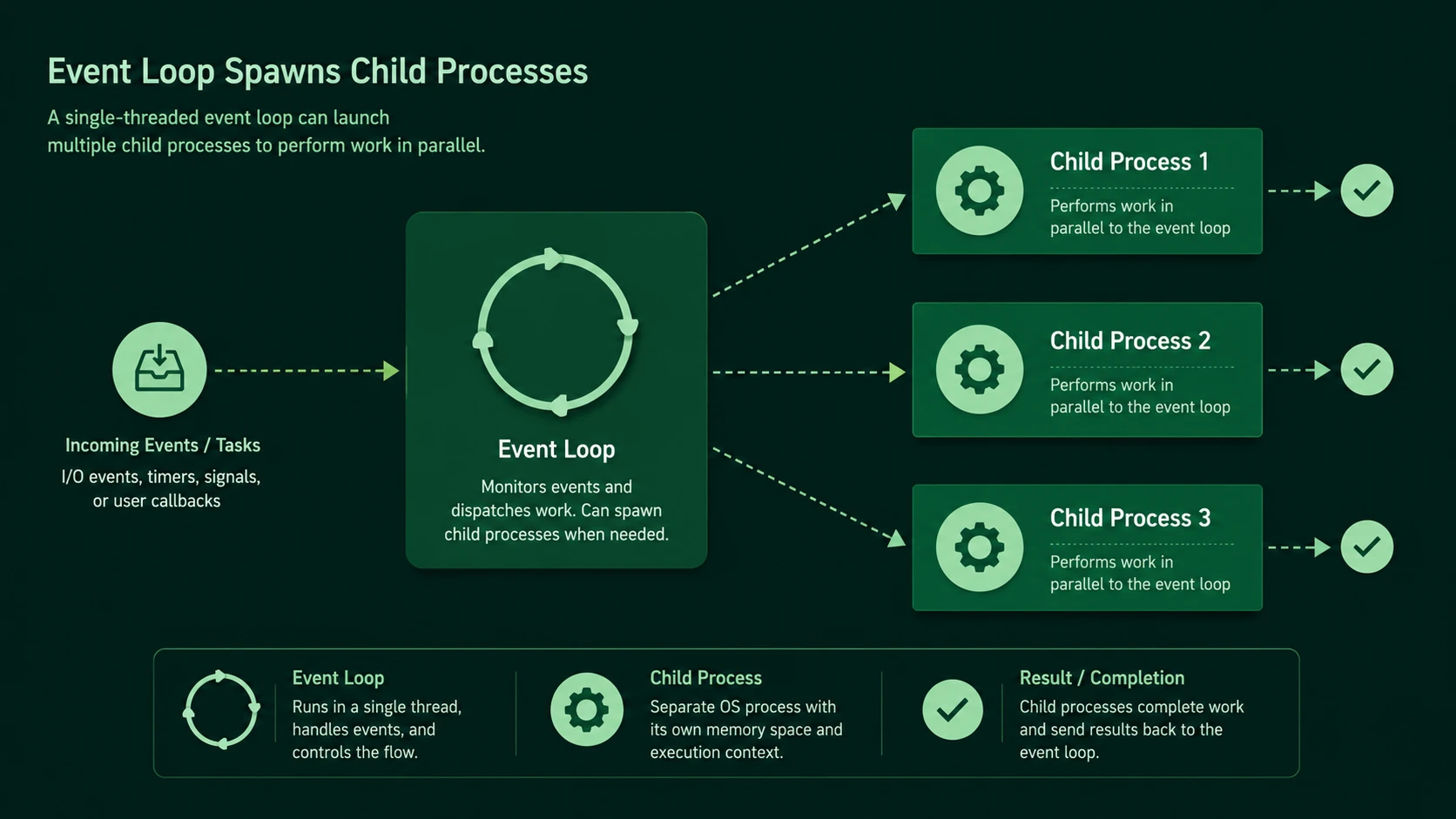
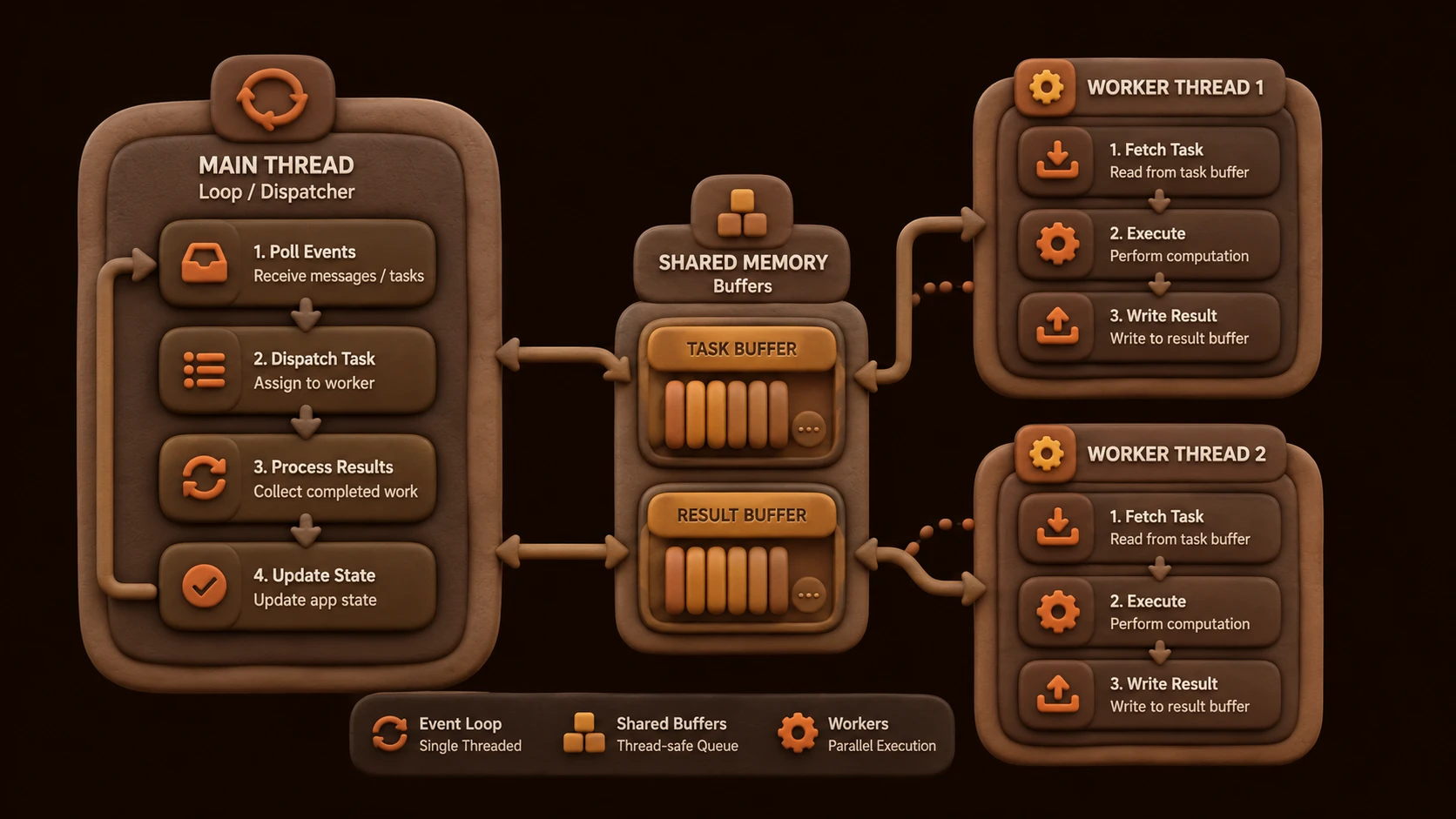
Worker Threads complement the existing event loop rather than replacing it.
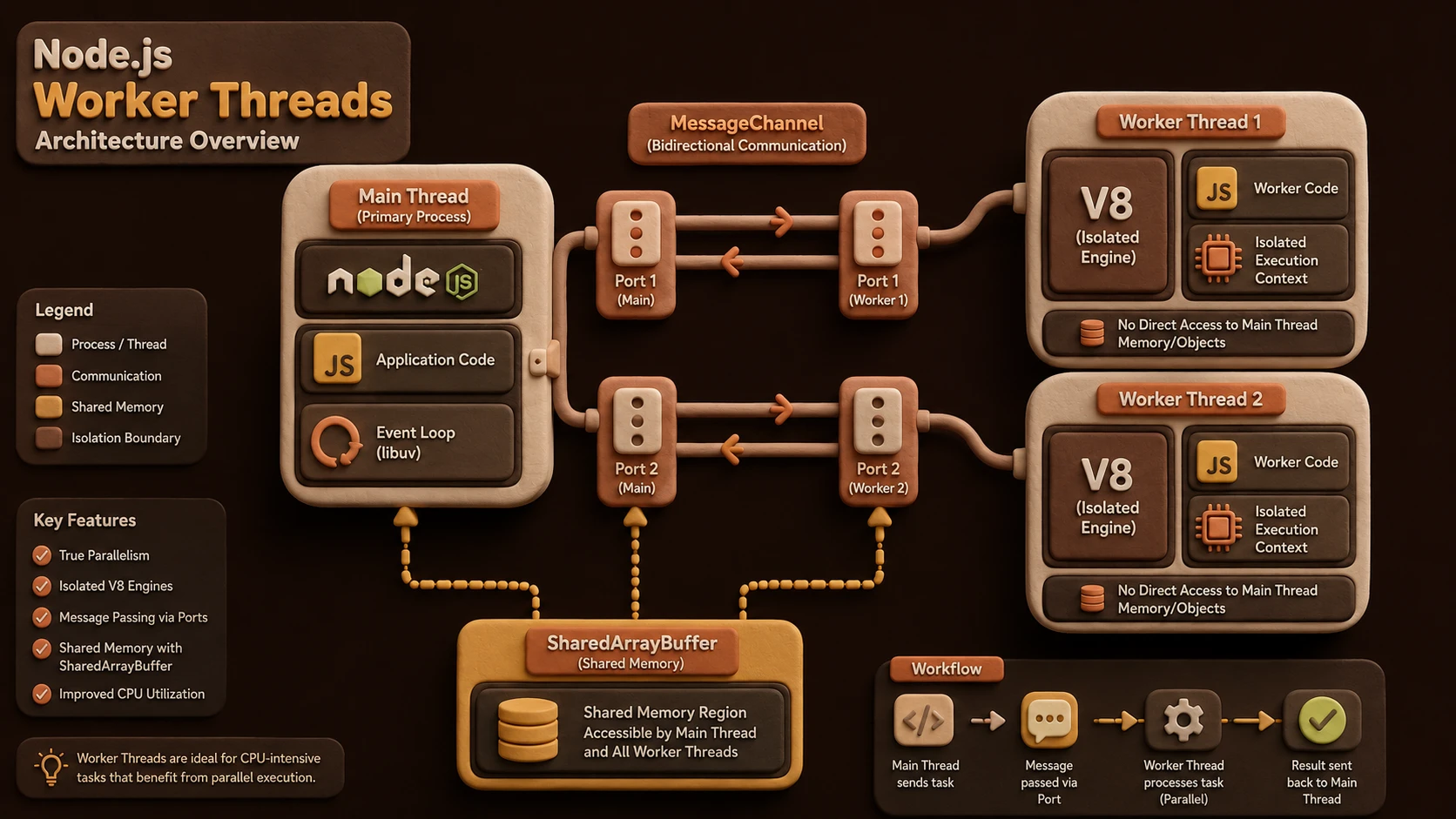
Event loop routing for non-blocking asynchronous I/O execution threads.
The main thread continues handling:
- ◆Incoming HTTP requests
- ◆Asynchronous file operations
- ◆Network communication
- ◆Timers
- ◆Event scheduling
CPU-intensive work can be delegated to workers, allowing the primary event loop to remain responsive.
Enterprise Use Cases
| Scenario | Benefit |
|---|---|
| Image Processing Services | Parallel computation |
| Data Analytics | Background calculations |
| Machine Learning Preprocessing | Non-blocking execution |
| Financial Systems | Large numerical workloads |
| File Compression Services | Improved responsiveness |
| API Platforms | Reduced event loop blocking |
Organizations performing computationally intensive processing alongside traditional API workloads stand to benefit most from Worker Threads.
Performance Considerations
Worker Threads are not a universal performance optimization.
Development teams should evaluate:
- ◆Thread creation overhead
- ◆Task granularity
- ◆Memory consumption
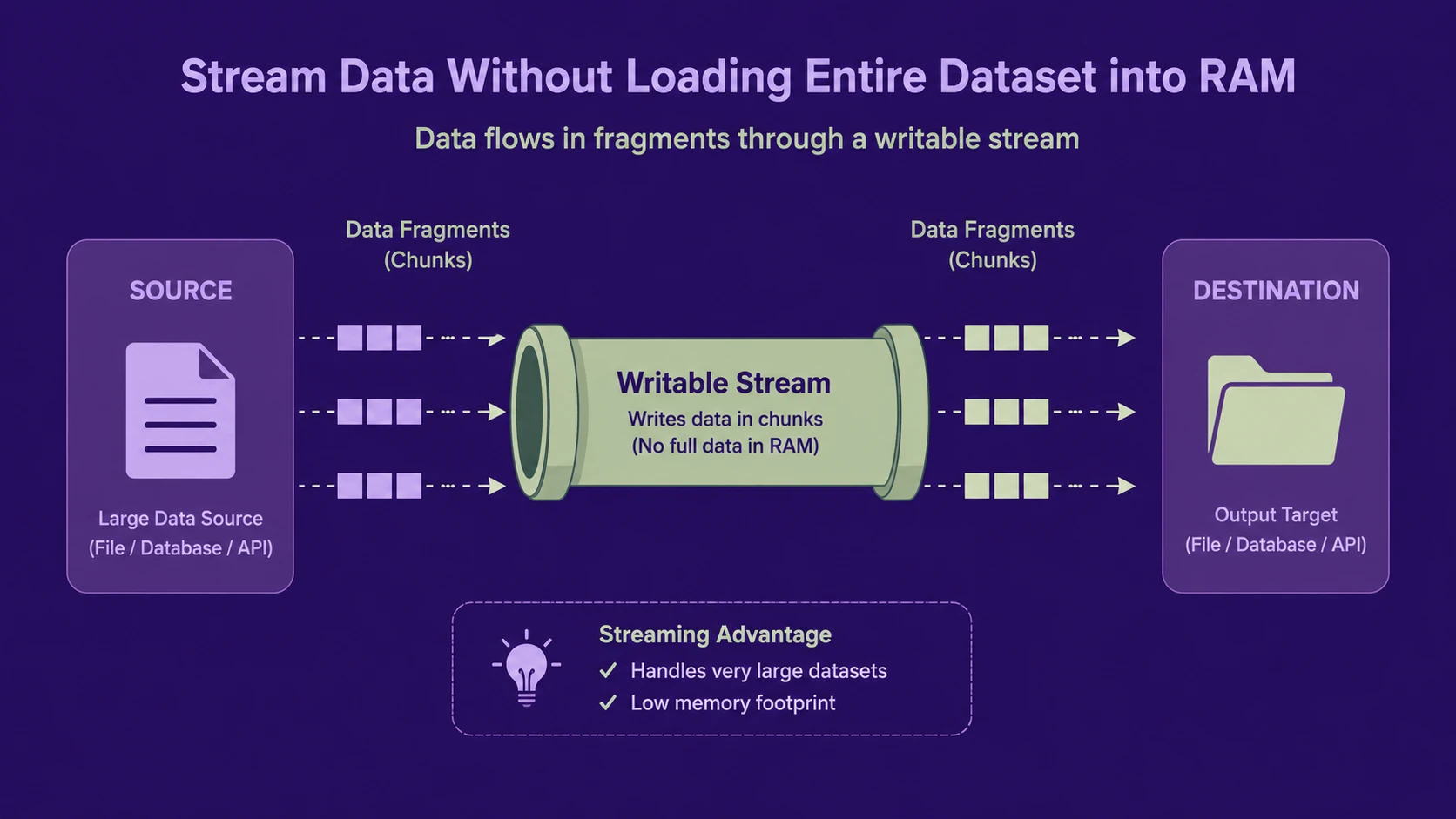
- ◆Serialization costs
- ◆Message transfer latency
- ◆CPU utilization
Small computational tasks may execute more efficiently within the primary thread, while larger workloads are more likely to justify parallel execution.
Security Considerations
Worker Threads do not alter the application's overall security model.
Organizations should continue implementing:
- ◆Input validation
- ◆Authentication
- ◆Authorization
- ◆Dependency management
- ◆Secure inter-service communication
- ◆Resource monitoring
Applications using shared memory should carefully coordinate concurrent access to prevent inconsistent application state.
Scalability
Worker Threads improve scalability by enabling better utilization of modern multi-core processors.
Architectural recommendations include:
- ◆Separate I/O from computation.
- ◆Use worker pools for repeated workloads.
- ◆Monitor CPU utilization continuously.
- ◆Limit excessive worker creation.
- ◆Design stateless computational tasks where practical.
Scalability depends on both application architecture and operational monitoring rather than thread count alone.
Best Practices
Organizations evaluating Worker Threads should:
- ◆Reserve workers for CPU-intensive operations.
- ◆Keep request-processing logic within the main event loop.
- ◆Reuse workers through pooling where appropriate.
- ◆Minimize message payload sizes.
- ◆Benchmark representative production workloads.
- ◆Monitor memory usage during load testing.
- ◆Implement robust error handling between threads.
- ◆Validate operational behavior before production deployment.
Thoughtful workload partitioning maximizes the benefits of multithreaded execution.
Common Mistakes
Development teams should avoid:
- ◆Moving ordinary asynchronous I/O into workers unnecessarily.
- ◆Creating excessive numbers of workers.
- ◆Sharing mutable state without synchronization.
- ◆Assuming multithreading automatically improves performance.
- ◆Ignoring message serialization overhead.
- ◆Introducing unnecessary architectural complexity.
Successful parallel execution requires careful workload analysis and performance measurement.
Technology Comparison
| Capability | Traditional Node.js | Node.js 11 Worker Threads |
|---|---|---|
| JavaScript Execution | Single thread | Multiple JavaScript threads |
| Event Loop | Single primary event loop | One event loop per worker |
| CPU-Bound Processing | Blocks main thread | Can execute independently |
| Message Passing | Not applicable | Built in |
| Shared Memory | No | Supported |
| Multi-Core Utilization | Limited for JavaScript execution | Improved |
Worker Threads extend Node.js' capabilities without changing its established asynchronous programming model.
Adoption Strategy
Organizations should adopt Worker Threads incrementally.
A practical migration strategy includes:
- 1.Identify CPU-intensive application components.
- 2.Benchmark existing performance.
- 3.Prototype Worker Thread implementations.
- 4.Validate communication overhead.
- 5.Introduce worker pools where appropriate.
- 6.Monitor production resource utilization.
- 7.Expand adoption only after measurable performance improvements.
Incremental adoption minimizes operational risk while allowing engineering teams to evaluate real-world performance characteristics.
Limitations
As of October 2018, Worker Threads remain an experimental capability.
Current considerations include:
- ◆APIs may continue evolving.
- ◆Production adoption should be carefully evaluated.
- ◆Existing asynchronous programming models remain appropriate for I/O-bound workloads.
- ◆Multithreading introduces additional architectural complexity that requires disciplined engineering practices.
Organizations should evaluate Worker Threads selectively based on measurable computational requirements rather than adopting them universally.
Looking Ahead
Node.js 11.0 introduces an important new capability by enabling multithreaded JavaScript execution through Worker Threads. While Node.js' event-driven architecture continues providing exceptional scalability for asynchronous I/O, Worker Threads offer a complementary solution for CPU-intensive workloads that benefit from parallel execution across modern multi-core systems.
As of October 2018, enterprise architects should view Worker Threads as a promising addition to the Node.js platform for computationally demanding applications. Organizations that combine careful workload analysis, performance benchmarking, and disciplined concurrency design will be well positioned to leverage this emerging capability as the Node.js runtime continues to mature.