Introduction
Over the past decade, Node.js has transformed JavaScript from a browser-centric scripting language into one of the world's most widely adopted platforms for backend development. Enterprises now depend upon Node.js to build REST APIs, real-time collaboration platforms, serverless workloads, developer tooling, microservices, and cloud-native applications.
As the platform has matured, enterprise priorities have expanded beyond raw performance. Organizations increasingly demand stronger standards compliance, predictable module management, secure execution environments, interoperability with multiple programming languages, and long-term maintainability.
Node.js 14 represents another important milestone in this evolution. While the release includes numerous runtime improvements, two developments deserve particular attention: experimental support for the WebAssembly System Interface (WASI) and the continued stabilization of ECMAScript Modules (ESM).
WASI opens the possibility of executing WebAssembly applications outside the browser using standardized operating system capabilities, while ongoing ESM improvements move Node.js closer to the official JavaScript module standard.
From the perspective of August 2020, these features position Node.js for an increasingly standards-based and language-agnostic future.
Industry Background
Modern enterprise platforms increasingly emphasize:
- ◆Cloud-native applications.
- ◆Microservices.
- ◆Serverless computing.
- ◆Cross-platform portability.
- ◆Secure execution.
- ◆Modern JavaScript standards.
- ◆Continuous Integration and Continuous Delivery.
Organizations commonly develop:
- ◆REST APIs.
- ◆Enterprise dashboards.
- ◆Event-driven systems.
- ◆Developer tooling.
- ◆Automation services.
- ◆Edge computing applications.
- ◆Internal platform services.
Modern backend development increasingly requires flexible runtime architectures capable of supporting multiple languages and deployment environments.
The Business Problem
Large Node.js environments frequently encounter several engineering challenges.
Organizations commonly experience:
- ◆Module interoperability issues.
- ◆Dependency management complexity.
- ◆Language ecosystem fragmentation.
- ◆Native extension portability challenges.
- ◆Runtime compatibility concerns.
- ◆Long-term maintenance costs.
- ◆Deployment consistency issues.
Traditional JavaScript execution environments were designed primarily around JavaScript itself.
Node.js 14 continues evolving toward broader interoperability and standards compliance.
Understanding the Technology
Node.js 14 introduces improvements across runtime architecture, language compatibility, and developer tooling.
Major enhancements include:
- ◆Experimental WASI support.
- ◆Continued ECMAScript Module maturation.
- ◆Runtime performance improvements.
- ◆Updated V8 engine.
- ◆Better diagnostics.
- ◆Developer tooling refinements.
- ◆Improved platform stability.
These capabilities strengthen Node.js for enterprise backend development while preparing the platform for future ecosystem evolution.
Core Architecture
A simplified Node.js 14 architecture appears below.
| Component | Responsibility |
|---|---|
| JavaScript Application | Business logic |
| ECMAScript Module Loader | Module resolution |
| Node.js Runtime | Application execution |
| V8 JavaScript Engine | JavaScript execution |
| WASI Layer | WebAssembly system interface |
| Operating System | File system, networking, process management |
The runtime coordinates JavaScript execution while enabling standards-based module loading and experimental WebAssembly integration.
Key Features
Experimental WebAssembly System Interface (WASI)
One of the most significant architectural additions in Node.js 14 is experimental support for WASI.
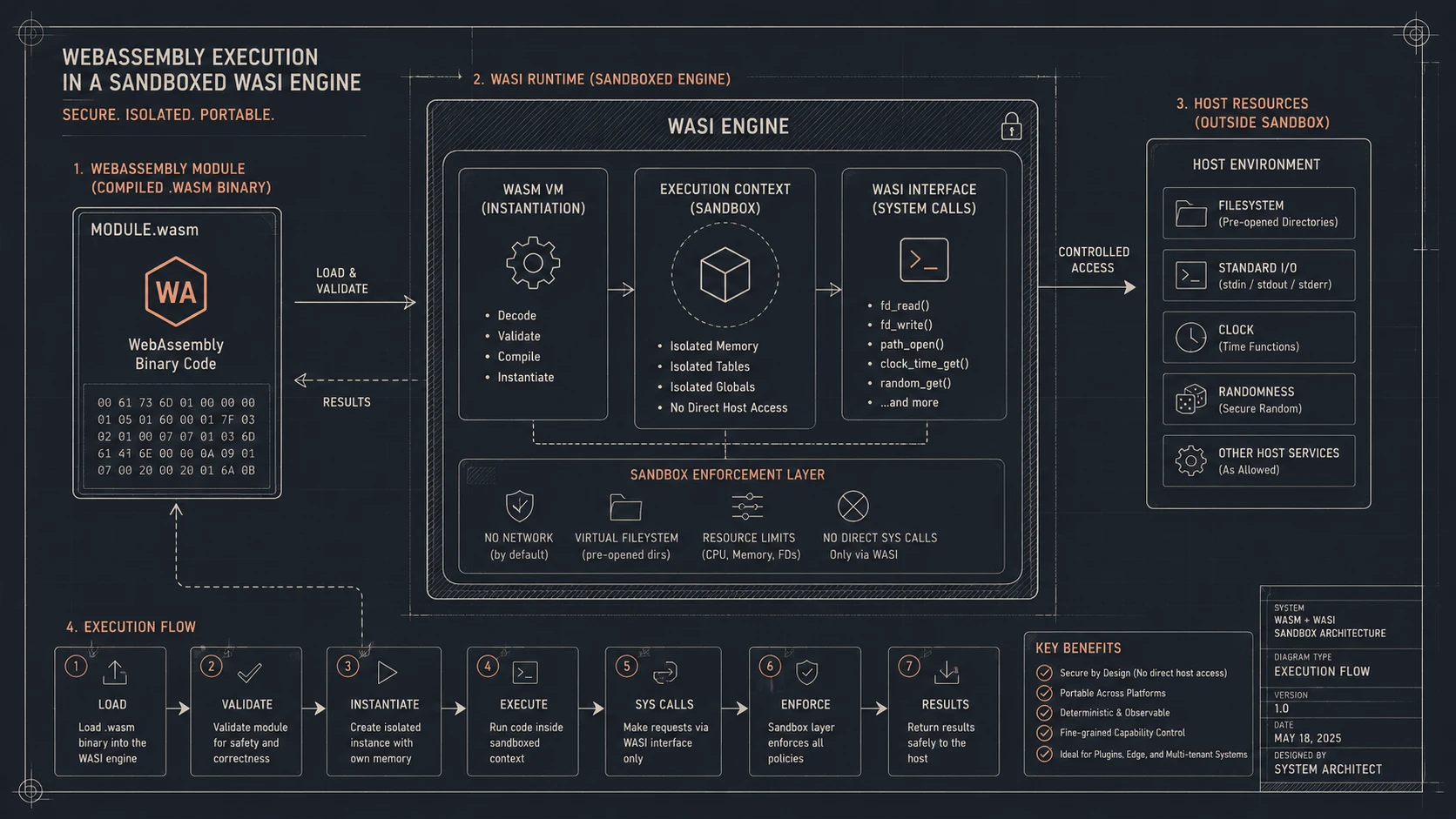
WebAssembly was originally designed to execute portable binary code inside web browsers. WASI extends this model by defining standardized interfaces that allow WebAssembly programs to interact with operating system resources in controlled ways.
Within Node.js, experimental WASI support provides an early foundation for executing WebAssembly applications that require capabilities such as:
- ◆File access.
- ◆Standard input and output.
- ◆Environment variables.
- ◆Directory access.
This standardized interface improves portability while encouraging language interoperability.
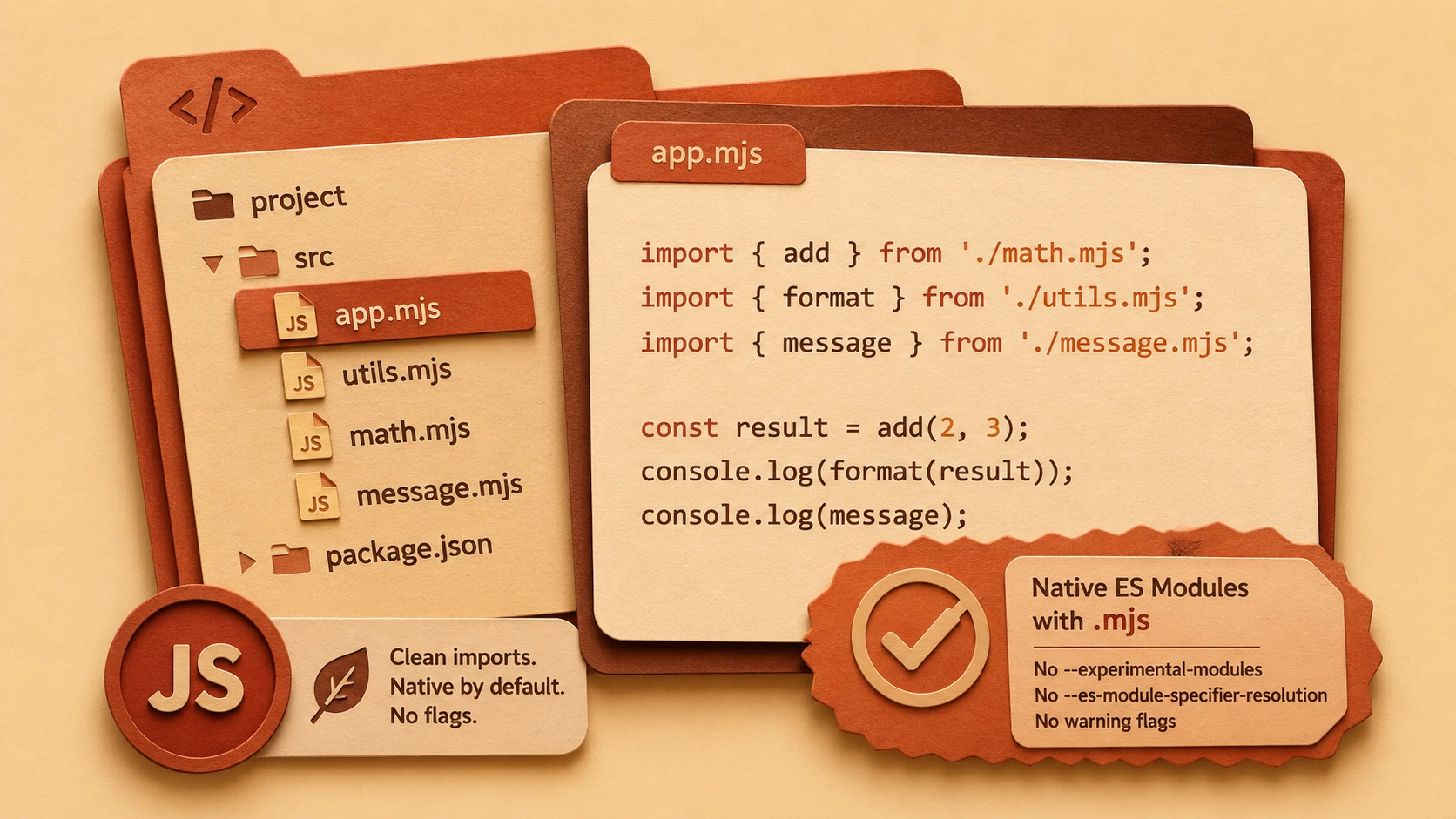
Continued ECMAScript Module (ESM) Maturation
ECMAScript Modules continue progressing toward becoming the preferred JavaScript module system.
Node.js 14 further improves support for native JavaScript modules while allowing developers to align applications with the official ECMAScript specification.
Advantages include:
- ◆Standards compliance.
- ◆Better interoperability.
- ◆Improved tooling compatibility.
- ◆Cleaner module organization.
Organizations beginning new projects should increasingly evaluate ESM as part of long-term application architecture.
Updated V8 Engine
Node.js 14 incorporates a newer version of Google's V8 JavaScript engine.
The updated engine delivers improvements across:
- ◆JavaScript language support.
- ◆Runtime execution.
- ◆Memory management.
- ◆Engine optimization.
These enhancements improve overall platform capabilities without requiring major application changes.
Improved Diagnostics
Node.js continues strengthening operational visibility through improvements to debugging and diagnostic tooling.
Enterprise engineering teams benefit from better insight into runtime behavior during development and production troubleshooting.
Runtime Stability
Node.js 14 includes numerous refinements throughout the runtime that improve consistency, reliability, and operational maturity.
Although many of these changes are incremental, they contribute significantly to enterprise production environments.
Cross-Language Potential
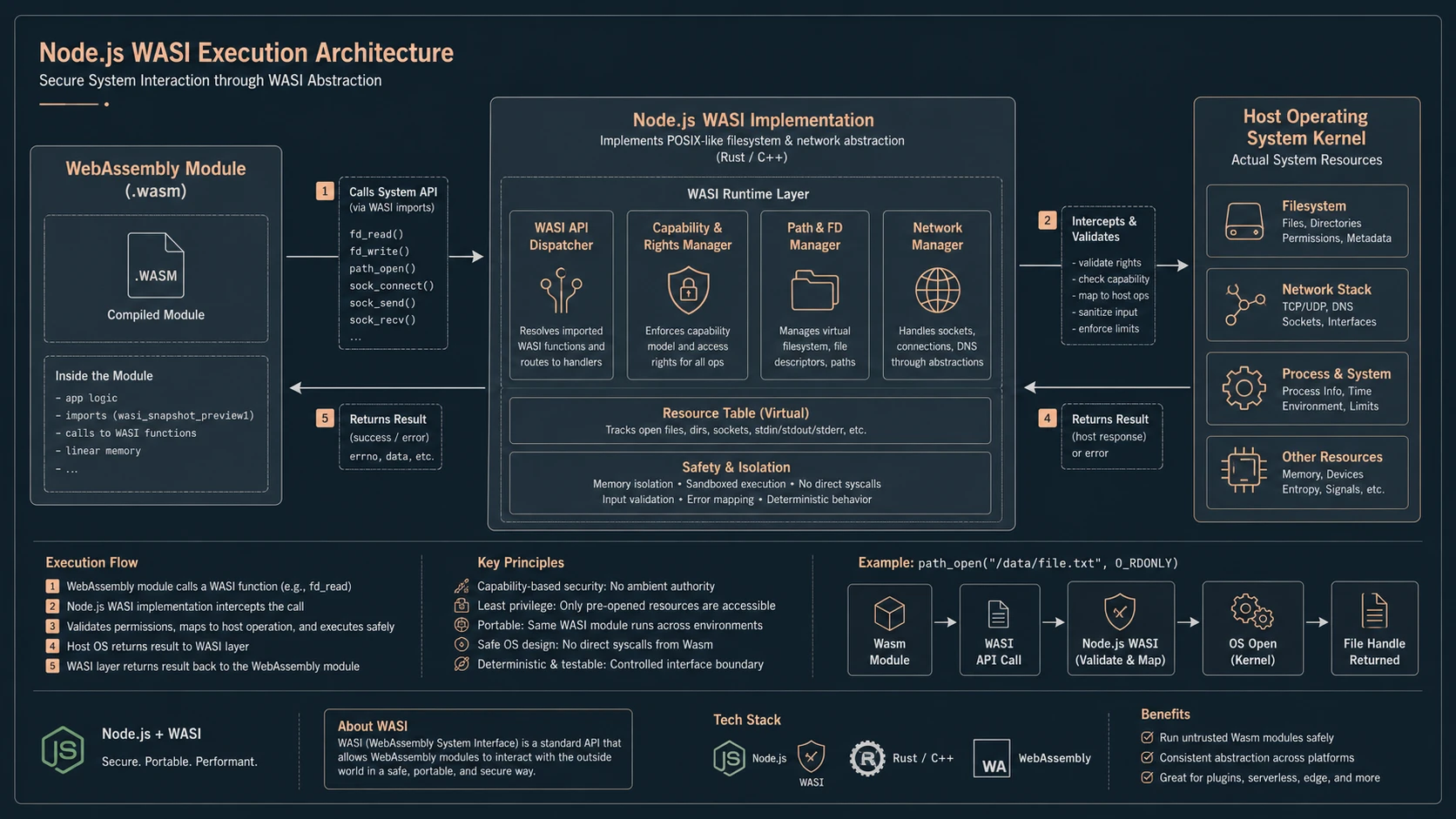
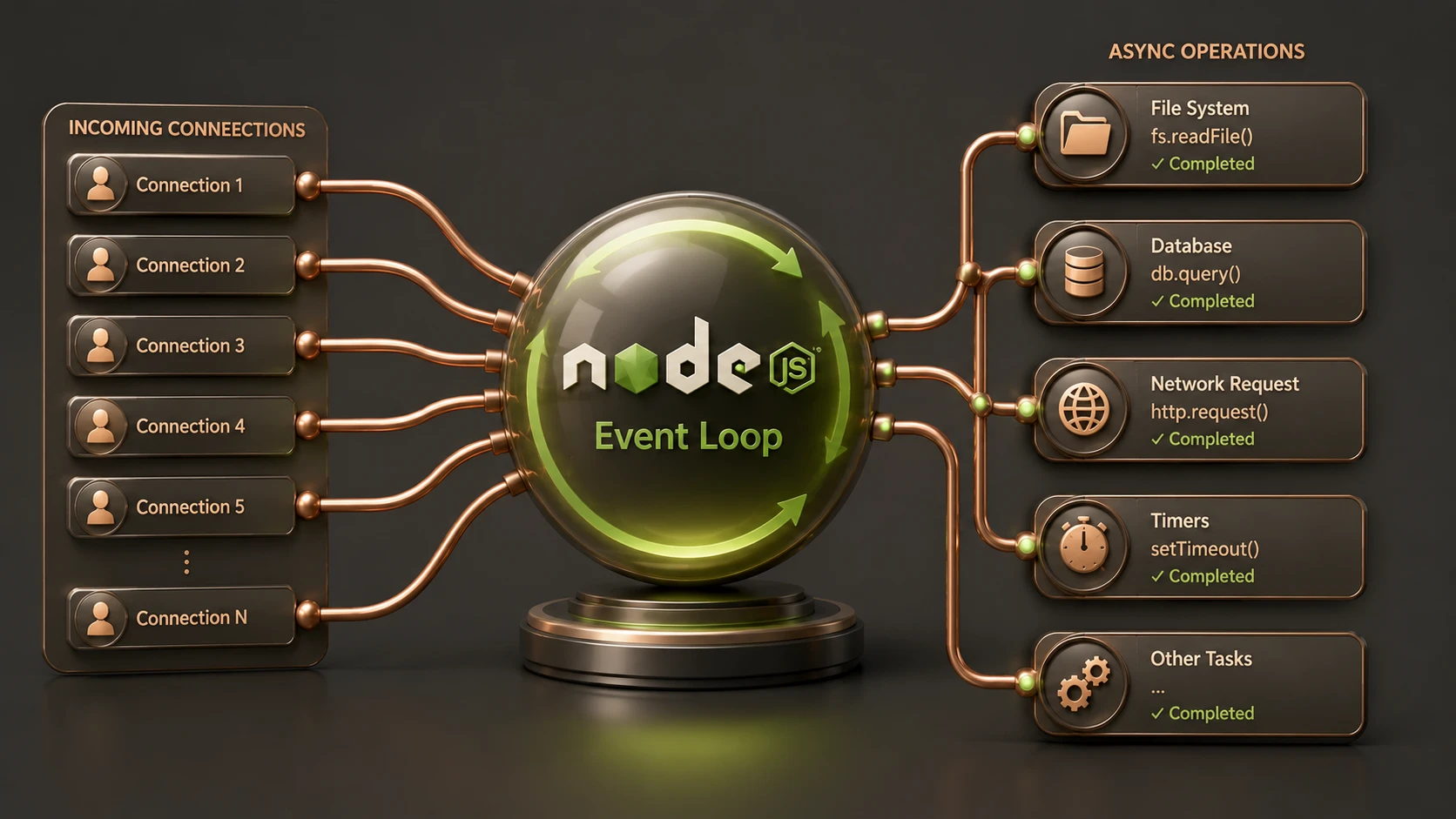
Event loop routing for non-blocking asynchronous I/O execution threads.
Experimental WASI support demonstrates Node.js's growing interest in becoming a host environment capable of executing more than JavaScript alone.
This architectural direction may simplify future interoperability between JavaScript applications and components developed using other languages capable of targeting WebAssembly.
How It Works
A simplified execution workflow appears below.
Application
      |
Node.js Runtime
      |
JavaScript or WebAssembly
      |
ESM Loader / WASI
      |
V8 Engine
      |
Operating System
JavaScript applications continue executing through V8 while WebAssembly programs may access operating system functionality through the experimental WASI interface.
Enterprise Use Cases
Cloud APIs
Modern REST services benefit from updated runtime capabilities and improved standards compliance.
Microservices
Organizations can evaluate ECMAScript Modules when designing long-lived distributed systems.
Developer Platforms
Internal tooling benefits from improved module organization and updated JavaScript language features.
Cross-Language Components
Teams exploring WebAssembly-based libraries can begin evaluating experimental WASI support for backend interoperability.
Enterprise Automation
Operational automation platforms gain from runtime stability improvements and standardized module management.
Performance Considerations
Node.js 14 includes numerous runtime optimizations.
Organizations should evaluate:
- ◆Startup performance.
- ◆Memory utilization.
- ◆Module loading.
- ◆WebAssembly execution.
- ◆Garbage collection behavior.
- ◆API throughput.
Experimental WASI workloads should be benchmarked independently because implementation maturity continues evolving.
Security Considerations
Node.js 14 strengthens platform capabilities but does not replace secure application architecture.
Organizations should continue implementing:
- ◆HTTPS.
- ◆Secure dependency management.
- ◆Authentication.
- ◆Authorization.
- ◆Input validation.
- ◆Principle of least privilege.
Experimental technologies should undergo thorough security review before production deployment.
Scalability
Node.js 14 strengthens enterprise scalability through:
- ◆Improved runtime stability.
- ◆Standards-based module loading.
- ◆Better diagnostics.
- ◆Modern JavaScript support.
- ◆Cross-language interoperability foundations.
These characteristics support long-term platform evolution.
Best Practices
Organizations adopting Node.js 14 should:
- ◆Evaluate ECMAScript Modules for new applications.
- ◆Continue validating CommonJS compatibility during migration.
- ◆Experiment with WASI only in controlled development environments.
- ◆Benchmark representative production workloads.
- ◆Update Continuous Integration pipelines.
- ◆Review third-party dependency compatibility.
- ◆Standardize runtime versions across engineering teams.
Incremental modernization minimizes migration risk while enabling organizations to benefit from evolving platform capabilities.
Common Mistakes
| Mistake | Business Impact |
|---|---|
| Assuming WASI is production-ready for every workload | Deployment risk |
| Mixing CommonJS and ESM without architectural planning | Module interoperability issues |
| Upgrading runtime versions without dependency validation | Production compatibility problems |
| Ignoring runtime benchmarking | Uncertain performance expectations |
| Introducing experimental features into critical systems prematurely | Operational instability |
| Neglecting module standardization across projects | Increased maintenance complexity |
Successful adoption depends on balancing modern platform capabilities with disciplined production engineering practices.
Technology Comparison
| Characteristic | Node.js 12 | Node.js 14 |
|---|---|---|
| ECMAScript Modules | Improving support | Continued maturation toward broader adoption |
| WebAssembly | Browser-oriented integration | Experimental WASI support |
| JavaScript Engine | Earlier V8 release | Updated V8 engine |
| Runtime Diagnostics | Mature | Further refined |
| Enterprise Readiness | Strong | Strengthened through modern standards support |
Node.js 14 continues modernizing the platform while maintaining compatibility with existing enterprise development workflows.
Adoption Strategy
Organizations should approach Node.js 14 through structured upgrades.
- 1.Validate application compatibility in development environments.
- 2.Benchmark representative workloads.
- 3.Evaluate ECMAScript Modules for new projects.
- 4.Experiment with WASI using isolated proof-of-concept applications.
- 5.Update Continuous Integration pipelines.
- 6.Expand production deployment following comprehensive testing.
This phased approach minimizes operational disruption while allowing engineering teams to evaluate emerging platform capabilities.
Limitations
As of August 2020, organizations should recognize several considerations.
- ◆WASI support remains experimental and should be evaluated carefully before production use.
- ◆Existing applications using CommonJS may require gradual migration if adopting ECMAScript Modules.
- ◆Third-party ecosystem compatibility should be reviewed during upgrades.
- ◆Cross-language WebAssembly tooling continues evolving.
- ◆Production benchmarking remains essential before organization-wide deployment.
These considerations should guide enterprise modernization planning.
Looking Ahead
From the perspective of August 2020, Node.js 14 demonstrates the platform's continued evolution beyond its original JavaScript runtime roots. Experimental WASI support introduces the possibility of standardized WebAssembly execution outside the browser, while continued ECMAScript Module maturation moves Node.js closer to the official JavaScript language standard.
Although both areas continue evolving, they illustrate a clear architectural direction toward greater interoperability, improved standards compliance, and broader runtime capabilities. Organizations investing in cloud-native services, modern JavaScript applications, and long-lived backend platforms should view Node.js 14 as an important release that strengthens today's production environments while laying the foundation for future innovation in server-side JavaScript.