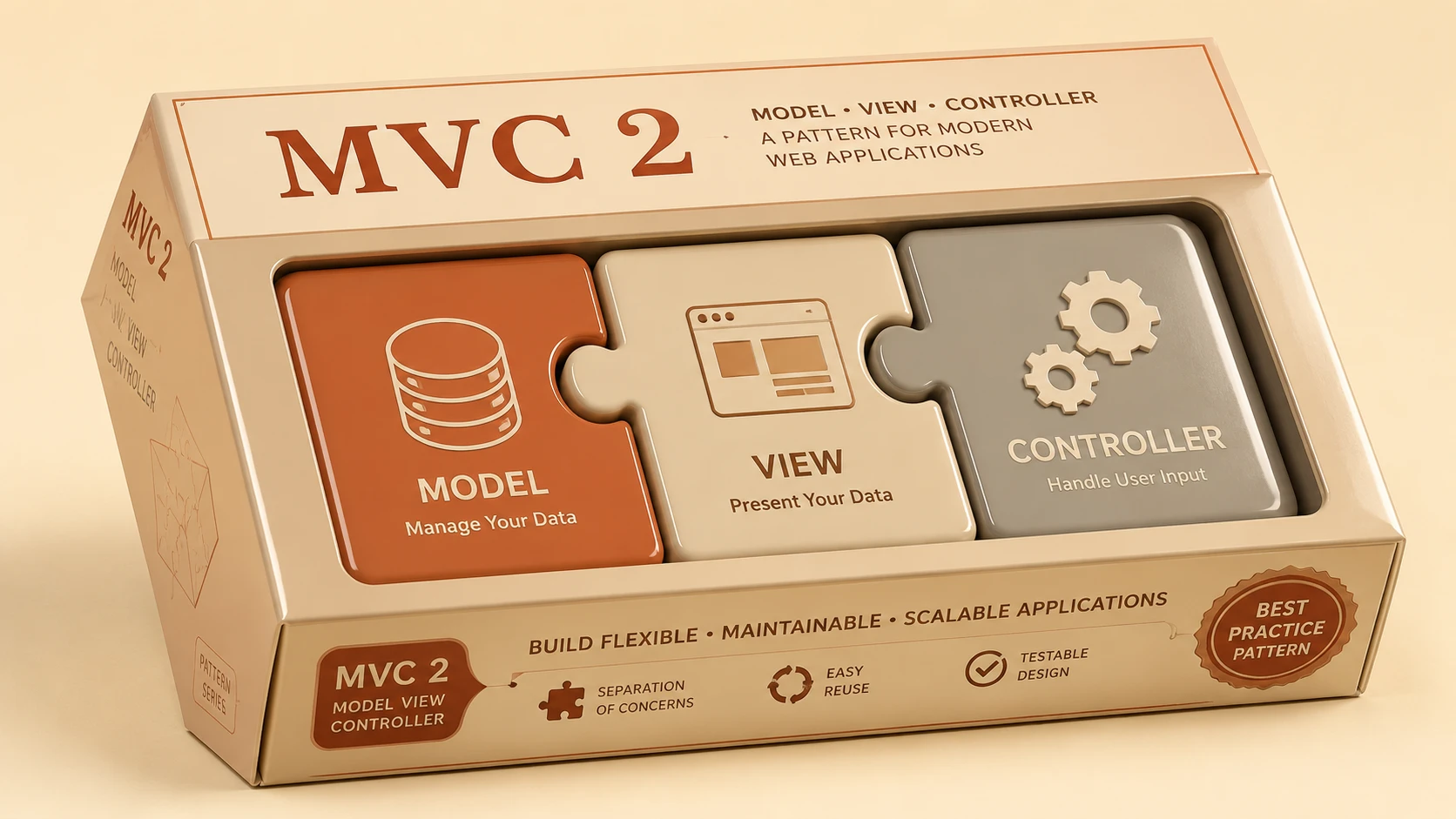
ASP.NET MVC 2 marks an important milestone for Microsoft web development. Released at a time when many enterprise development teams were questioning the long-term suitability of the Web Forms programming model for modern web applications, MVC 2 builds upon the foundation established by ASP.NET MVC 1 while addressing several real-world development challenges.
For years, ASP.NET Web Forms enabled rapid application development by abstracting HTML through server controls, ViewState, and an event-driven programming model. This approach significantly reduced the learning curve for Windows developers transitioning to web development. However, as web standards matured and enterprise applications became increasingly interactive, organizations began encountering limitations involving testability, maintainability, performance, and control over generated markup.
ASP.NET MVC 2 represents Microsoft's response to these evolving enterprise requirements. Rather than replacing Web Forms, MVC offers an alternative architectural pattern based on the proven Model-View-Controller design. It encourages separation of concerns, greater control over HTML generation, improved automated testing, and cleaner application architecture.
For enterprise architects planning new web platforms in 2010, MVC 2 deserves careful evaluation as a strategic technology for long-term application development.
Why Enterprises Are Reconsidering Web Forms
The success of ASP.NET Web Forms cannot be understated. It enabled thousands of organizations to build intranet portals, line-of-business applications, customer management systems, reporting dashboards, and enterprise websites.
However, larger development teams increasingly identified architectural pain points.
Common Challenges
| Challenge | Business Impact |
|---|---|
| Large ViewState | Increased page size and bandwidth usage |
| Complex page lifecycle | Difficult debugging and maintenance |
| Limited HTML control | Challenges meeting web standards |
| Event-driven abstraction | Reduced understanding of HTTP requests |
| Difficult unit testing | Lower software quality and slower development |
| Tight coupling | Reduced flexibility for large projects |
As enterprise applications grew in complexity, these limitations became increasingly significant.
Developers often found themselves working around framework behavior rather than focusing on business requirements.
The MVC Architectural Pattern
Model-View-Controller is not a new concept. It has existed for many years and has proven effective for building maintainable software systems.
ASP.NET MVC adopts this established architecture.
Model
The Model represents:
- ◆Business rules
- ◆Domain objects
- ◆Data validation
- ◆Business logic
- ◆Data persistence
The model should remain independent of user interface concerns.
View
Views are responsible for presentation only.
Their responsibilities include:
- ◆Rendering HTML
- ◆Displaying model data
- ◆Minimal presentation logic
- ◆User interface layout
Views should avoid implementing business rules.
Controller
Controllers coordinate the application.
Typical responsibilities include:
- ◆Receiving HTTP requests
- ◆Calling business services
- ◆Validating user input
- ◆Selecting appropriate views
- ◆Returning responses
This separation creates significantly cleaner application architecture.
What's New in ASP.NET MVC 2
MVC 2 builds upon the original MVC framework with several practical improvements aimed at enterprise developers.
Strongly Typed HTML Helpers
One of the most useful enhancements is the introduction of strongly typed helper methods.
Instead of relying on string-based property references, developers can now use lambda expressions.
Benefits include:
- ◆Better compile-time checking
- ◆Refactoring support
- ◆Improved IntelliSense
- ◆Reduced runtime errors
This seemingly small enhancement substantially improves developer productivity.
Client-Side Validation
MVC 2 introduces improved support for client-side validation.
Validation rules defined on models can now be reflected in browser behavior, reducing unnecessary server requests while maintaining server-side validation.
Enterprise benefits include:
- ◆Better user experience
- ◆Reduced server processing
- ◆Consistent validation rules
- ◆Improved maintainability
Templated Helpers
Display and Editor Templates simplify repetitive user interface generation.
Rather than duplicating rendering logic across numerous pages, organizations can centralize presentation for common data types.
Examples include:
- ◆Date formatting
- ◆Currency display
- ◆Address rendering
- ◆Customer summaries
- ◆Product information
This encourages greater consistency across enterprise applications.
Area Support
Large enterprise systems often contain multiple functional modules.
Areas allow applications to be organized into logical sections.
Example structure:
- ◆Administration
- ◆Sales
- ◆Customer Service
- ◆Reporting
- ◆Human Resources
Each area maintains independent controllers, views, and routes while remaining part of the overall application.
Improved Testability
Perhaps the strongest argument for MVC is its support for automated testing.
Traditional Web Forms applications often intertwine presentation logic, business rules, and infrastructure concerns.
MVC encourages isolation.
Typical testing targets include:
- ◆Controllers
- ◆Business services
- ◆Validation logic
- ◆Repository classes
- ◆Domain models
Developers can verify application behavior without launching a browser.
This reduces development risk and encourages continuous quality improvement.
Clean Separation of Concerns
Enterprise software frequently remains in production for many years.
Maintainability becomes more important than rapid initial development.
MVC naturally separates responsibilities.
| Layer | Responsibility |
|---|---|
| Controller | Request processing |
| Model | Business logic |
| View | Presentation |
| Data Access | Database communication |
This structure allows individual components to evolve independently.
Greater Control Over HTML
Modern websites increasingly require standards-compliant markup.
Organizations are also paying closer attention to:
- ◆Accessibility
- ◆Search engine optimization
- ◆Browser compatibility
- ◆CSS-based layouts
MVC provides developers with direct control over generated HTML.
Unlike server controls that often generate complex markup, MVC views produce exactly the HTML developers specify.
This improves interoperability with modern JavaScript libraries and CSS frameworks.
Routing as a First-Class Feature
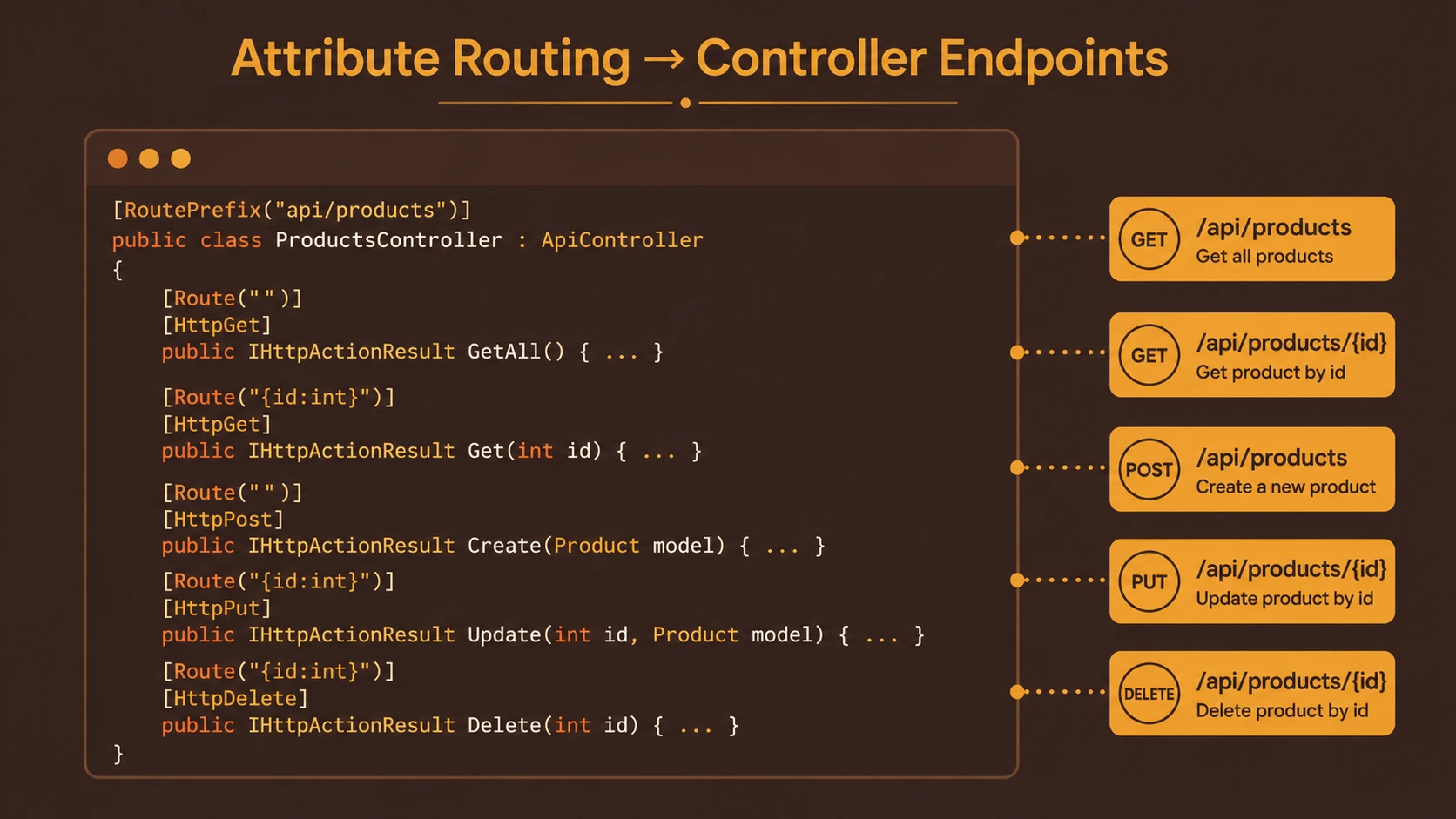
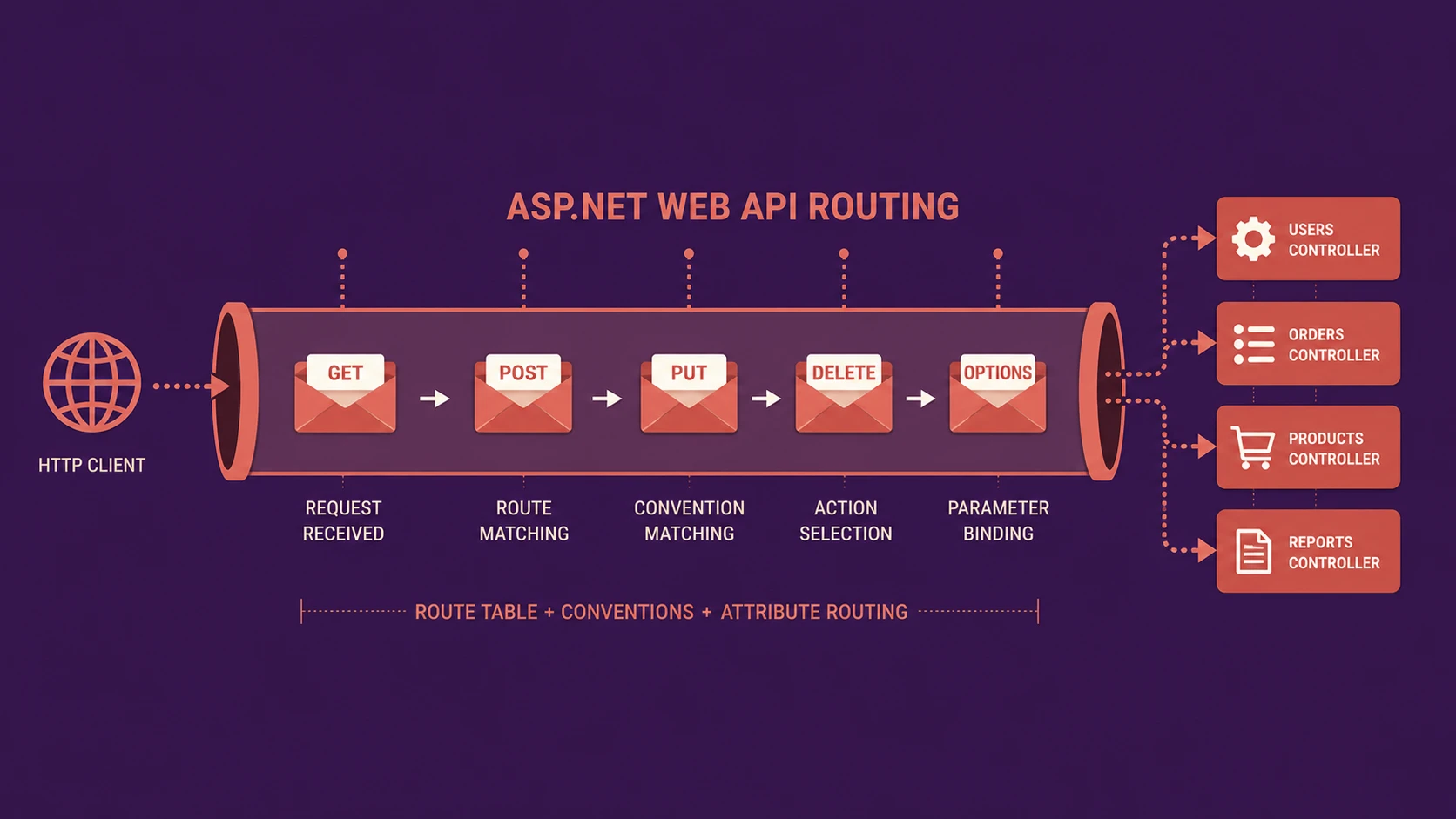
One of MVC's defining capabilities is ASP.NET Routing.
Instead of physical page names, applications expose meaningful URLs.
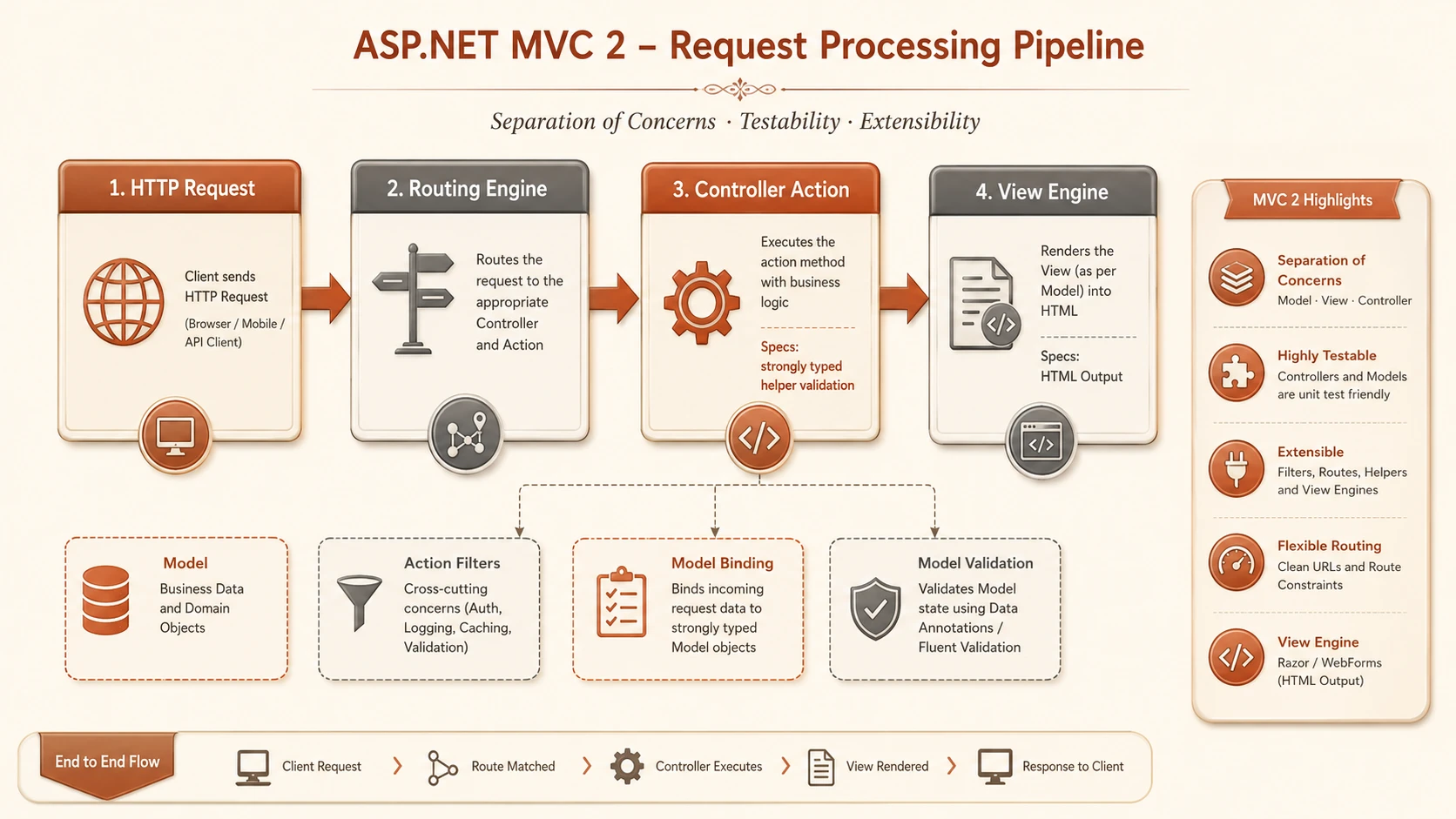
Model-View-Controller processing pipeline resolving client requests into dynamic pages.
Example:
/Products/Details/15rather than
/Product.aspx?id=15Benefits include:
- ◆Cleaner URLs
- ◆Easier bookmarking
- ◆Improved search engine visibility
- ◆Better application organization
Routing also decouples URLs from physical file structure.
Enterprise Architecture Considerations
Organizations evaluating MVC should consider architectural practices from the beginning.
Business Layer
Business logic should remain outside controllers.
Controllers should coordinate workflow rather than implement complex business rules.
Repository Pattern
Data access should be isolated from controllers.
Repositories provide:
- ◆Cleaner architecture
- ◆Easier testing
- ◆Reduced duplication
- ◆Improved maintainability
Dependency Management
Controllers should depend on abstractions rather than concrete implementations whenever practical.
This simplifies testing and future maintenance.
Typical Enterprise Scenarios
MVC 2 is well suited for numerous enterprise solutions.
Examples include:
- ◆Corporate portals
- ◆Customer relationship management systems
- ◆Partner extranets
- ◆E-commerce platforms
- ◆Public-facing websites
- ◆Content management interfaces
- ◆Business dashboards
- ◆Self-service portals
Applications requiring significant customization and clean architecture particularly benefit from MVC.
Performance Considerations
MVC removes several features associated with Web Forms.
Examples include:
- ◆ViewState
- ◆Server control lifecycle
- ◆Automatic postback behavior
The result is often:
- ◆Smaller page sizes
- ◆Reduced bandwidth consumption
- ◆Faster response times
- ◆More predictable rendering
Performance improvements ultimately depend upon application design, but MVC provides a lightweight foundation.
Learning Curve for Existing ASP.NET Developers
Organizations should recognize that MVC requires a different mindset.
Developers familiar only with Web Forms must become comfortable with:
- ◆HTTP fundamentals
- ◆HTML structure
- ◆CSS
- ◆JavaScript integration
- ◆Routing
- ◆Controller design
While this learning investment is significant, it also produces developers with stronger understanding of web technologies.
Comparing MVC 2 and Web Forms
| Feature | ASP.NET MVC 2 | ASP.NET Web Forms |
|---|---|---|
| HTML Control | Excellent | Limited |
| ViewState | None | Extensive |
| Testability | Strong | Limited |
| Page Lifecycle | Simple | Complex |
| Rapid Drag-and-Drop Development | Limited | Excellent |
| Separation of Concerns | Excellent | Moderate |
| URL Flexibility | Excellent | Limited |
| Learning Curve | Higher | Lower |
Neither framework is universally superior.
Each addresses different development priorities.
Best Practices
Organizations adopting MVC 2 should establish architectural standards early.
Recommended practices include:
- ◆Keep controllers small and focused.
- ◆Place business rules inside domain or service classes.
- ◆Use strongly typed views whenever possible.
- ◆Organize large applications with Areas.
- ◆Validate data consistently.
- ◆Design reusable templates.
- ◆Keep presentation logic within views only.
- ◆Write automated tests for controller behavior.
- ◆Maintain consistent routing conventions.
- ◆Use meaningful model classes.
These practices improve long-term maintainability.
Common Mistakes
Some development teams mistakenly recreate Web Forms architecture inside MVC.
Examples include:
- ◆Large controllers containing business logic
- ◆Database access directly inside controllers
- ◆Excessive code in views
- ◆Duplicated validation logic
- ◆Poor organization of models
MVC delivers its greatest value when developers embrace its architectural principles rather than treating it as another page framework.
Migration Considerations
Many enterprises already possess substantial investments in ASP.NET Web Forms.
A complete rewrite is rarely practical.
Instead, organizations should evaluate:
- ◆New application development using MVC
- ◆Incremental migration strategies
- ◆Side-by-side deployment
- ◆Team training
- ◆Shared business libraries
Because ASP.NET MVC operates alongside the existing ASP.NET platform, organizations can adopt it gradually without abandoning previous investments.
Security Considerations
Enterprise applications should continue following established ASP.NET security practices.
Areas requiring careful attention include:
- ◆Input validation
- ◆Authentication
- ◆Authorization
- ◆Request validation
- ◆SQL injection prevention
- ◆Cross-site scripting protection
MVC does not eliminate these concerns, but its architecture can make security responsibilities easier to organize.
Development Team Impact
MVC changes collaboration between developers and designers.
Front-end specialists gain greater control over HTML and CSS.
Back-end developers focus on:
- ◆Business rules
- ◆Controllers
- ◆Services
- ◆Data access
This separation enables parallel development and clearer responsibilities.
Is MVC 2 Right for Every Project?
Not necessarily.
Organizations with existing Web Forms expertise and relatively simple internal applications may continue achieving success with the traditional model.
However, projects emphasizing:
- ◆Long-term maintainability
- ◆Automated testing
- ◆Standards compliance
- ◆Clean architecture
- ◆Search engine optimization
- ◆Rich user experiences
should strongly consider MVC 2.
The decision should be based on project requirements rather than technology trends.
Future Outlook
ASP.NET MVC 2 demonstrates Microsoft's growing commitment to modern web application architecture. Rather than replacing Web Forms outright, Microsoft now offers two complementary development models targeting different project requirements.
The introduction of stronger testing support, improved HTML control, client-side validation, and cleaner separation of concerns positions MVC as a compelling choice for enterprise development going forward.
As web applications continue evolving toward richer user experiences and standards-based development, architectural flexibility and maintainability will become increasingly valuable. Organizations beginning new enterprise projects in 2010 should evaluate ASP.NET MVC 2 not simply as a new framework, but as a strategic architectural direction capable of supporting large, maintainable, and testable business applications for years to come.