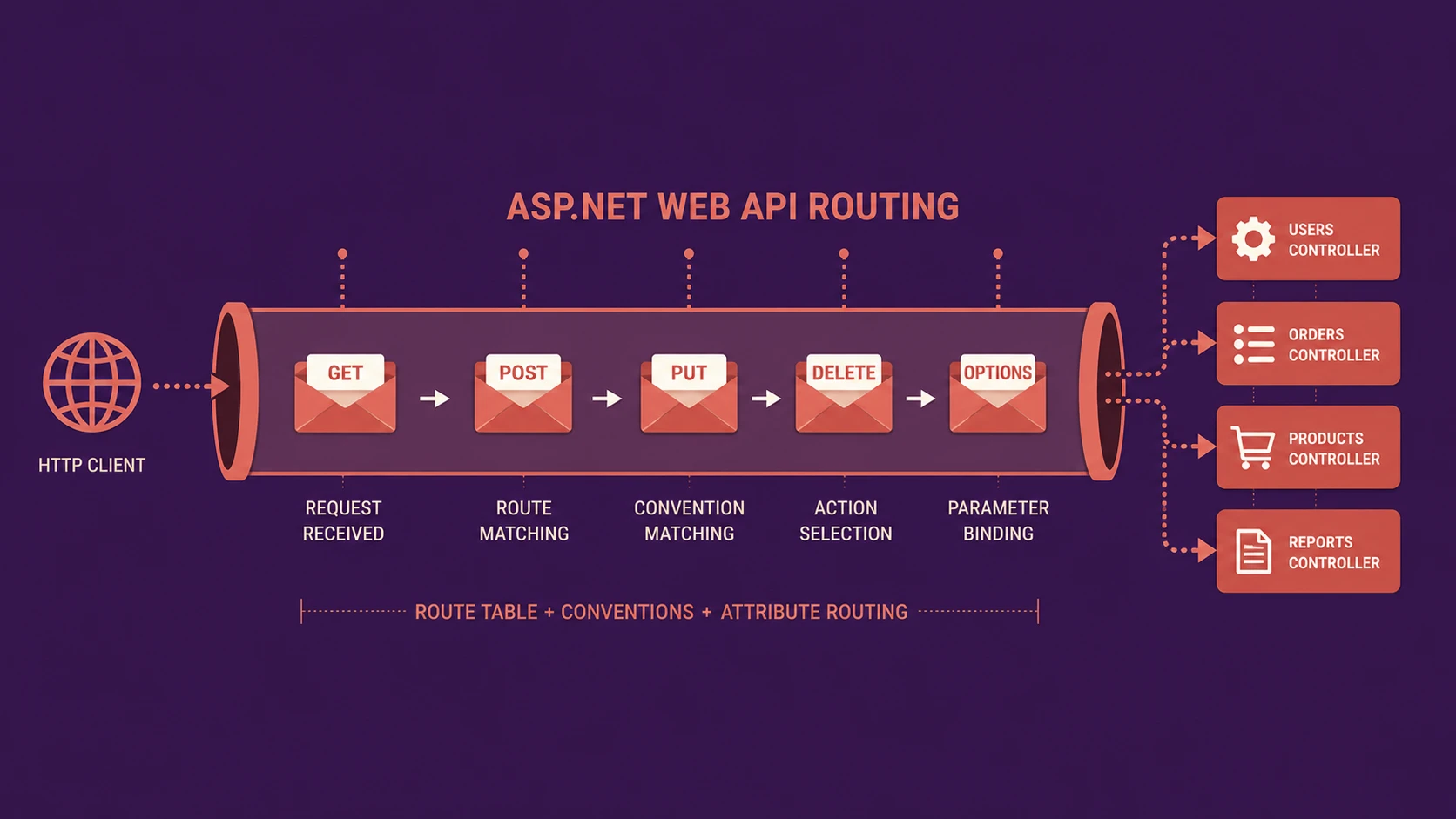
Introduction
Enterprise application development is undergoing a significant architectural transition. Traditional web applications remain important, but an increasing number of systems now expose services that must be consumed by browsers, mobile applications, desktop clients, and business partners. HTTP is evolving from merely transporting HTML pages into a universal application protocol capable of delivering structured data to a wide variety of consumers.
Microsoft has introduced ASP.NET Web API as part of the ASP.NET framework to address this emerging requirement. Rather than treating HTTP as a transport layer for remote procedure calls, ASP.NET Web API embraces the architecture of the web by providing a framework specifically designed for building HTTP services.
For organizations already invested in ASP.NET MVC and the .NET Framework, ASP.NET Web API offers a familiar development experience while introducing a programming model optimized for RESTful services, content negotiation, and multiple client platforms.
This article examines the architecture, capabilities, enterprise implications, and adoption considerations of ASP.NET Web API from the perspective of its initial release in early 2012.
Industry Background
Service-oriented architecture has become a common architectural pattern within enterprise software. Technologies such as ASP.NET Web Services (ASMX) and Windows Communication Foundation (WCF) have enabled organizations to expose business functionality through standardized service interfaces.
While SOAP-based services continue to provide strong interoperability for enterprise integration, the rapid growth of web applications, smartphones, tablets, and JavaScript-based clients has increased demand for lightweight HTTP services using formats such as JSON and XML.
Developers increasingly require frameworks that naturally align with HTTP methods, resource-oriented design, and web standards instead of abstracting HTTP behind remote procedure calls.
ASP.NET Web API is Microsoft's response to these evolving architectural requirements.
The Business Problem
Enterprise systems often expose functionality to numerous consumers with varying technical requirements.
Common challenges include:
- ◆Supporting browsers and mobile applications simultaneously
- ◆Exposing business functionality through standard HTTP interfaces
- ◆Reducing service complexity
- ◆Simplifying serialization of business objects
- ◆Maintaining consistent APIs across multiple applications
- ◆Supporting multiple data formats
- ◆Improving interoperability with non-.NET platforms
Existing technologies can address many of these scenarios, but organizations increasingly seek a framework specifically optimized for HTTP-based application programming interfaces.
Understanding ASP.NET Web API
ASP.NET Web API is a framework for building HTTP services that can be consumed by a broad range of clients.
Rather than generating HTML views, Web API controllers return resources that are serialized into formats such as JSON or XML depending on client capabilities and request headers.
The framework is designed around the principles of HTTP itself, allowing developers to work naturally with:
- ◆Resources
- ◆URIs
- ◆HTTP verbs
- ◆Request headers
- ◆Response headers
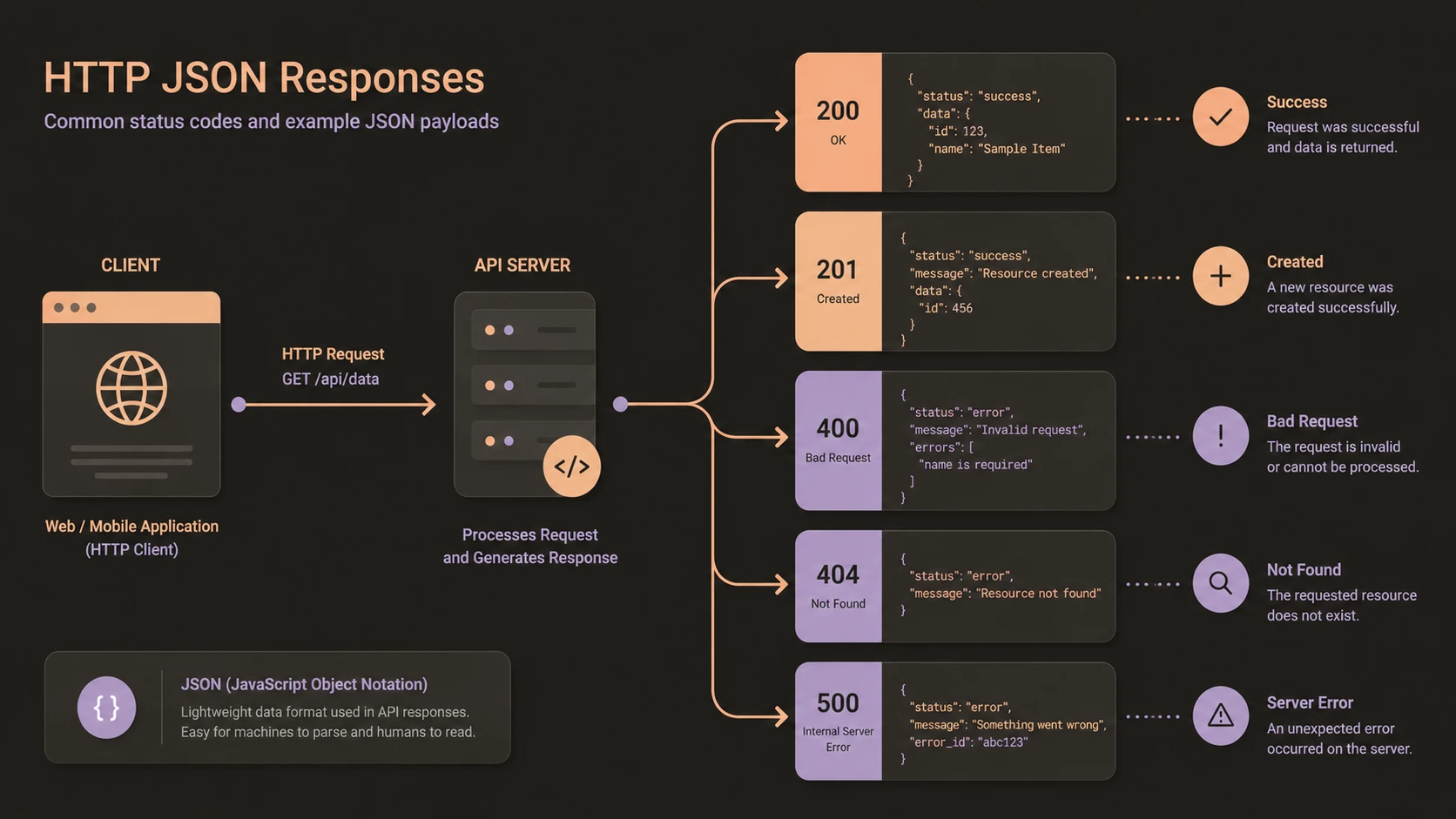
- ◆Status codes
- ◆Content negotiation
This approach enables applications to expose services using familiar web standards.
Core Architecture
ASP.NET Web API introduces a request processing pipeline that emphasizes HTTP semantics while integrating with the ASP.NET runtime.
| Component | Responsibility |
|---|---|
| HTTP Request | Client communication |
| Routing | Maps URIs to controllers |
| ApiController | Handles HTTP requests |
| Model Binding | Converts request data into .NET objects |
| Media Formatters | Serialize responses into JSON or XML |
| HTTP Response | Returns resources and status codes |
The framework separates transport concerns from business logic, allowing developers to focus on implementing application behavior.
RESTful Design Principles
Although REST is an architectural style rather than a protocol, ASP.NET Web API provides features that naturally support REST-oriented design.
A typical RESTful service:
- ◆Identifies resources through URIs
- ◆Uses HTTP verbs consistently
- ◆Returns appropriate status codes
- ◆Supports stateless communication
- ◆Represents resources through structured data
For example, a product catalog might expose resources such as:
GET /api/products
GET /api/products/25
POST /api/products
PUT /api/products/25
DELETE /api/products/25
By aligning application behavior with HTTP itself, services become easier to understand and integrate.
Routing
Routing remains one of the most important components of the framework.
Incoming HTTP requests are matched to controllers and actions based on configured route templates.
A well-designed routing strategy should:
- ◆Produce meaningful resource identifiers
- ◆Avoid unnecessary complexity
- ◆Remain consistent across services
- ◆Support predictable API evolution
Thoughtful URI design contributes significantly to long-term maintainability.
Controllers and Request Processing
ASP.NET Web API introduces the ApiController base class.
Controllers receive HTTP requests, invoke business logic, and produce HTTP responses.
Typical controller responsibilities include:
- ◆Validating requests
- ◆Accessing business services
- ◆Returning appropriate status codes
- ◆Handling exceptions
- ◆Producing serialized responses
Business rules should remain within service or domain layers rather than controllers themselves.
Media Formatters and Content Negotiation
One of the distinguishing capabilities of ASP.NET Web API is content negotiation.
Different clients may prefer different representations of the same resource.
For example:
- ◆Browsers may request JSON.
- ◆Enterprise applications may request XML.
- ◆Integration systems may specify explicit media types.
Media formatters determine how .NET objects are serialized into the requested representation.
This mechanism allows a single service implementation to support multiple client requirements.
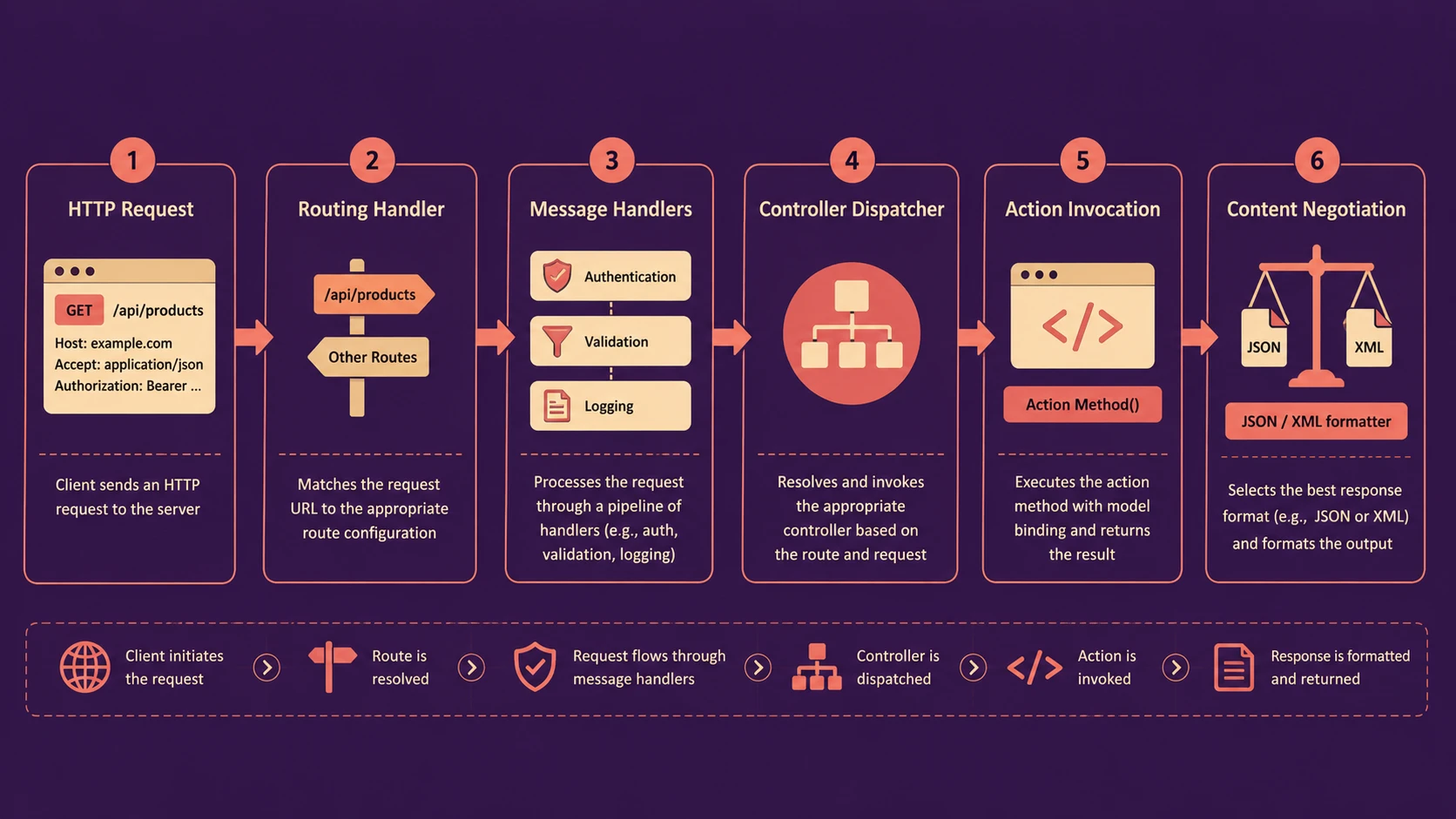
System architecture diagram and conceptual workflow layout for ASP.NET Web API.
Model Binding
Model binding simplifies request processing by converting HTTP parameters into strongly typed .NET objects.
Data may originate from:
- ◆URI parameters
- ◆Query strings
- ◆Request bodies
- ◆Form values
This reduces repetitive parsing logic while improving code readability.
Validation should accompany model binding to ensure service robustness.
Enterprise Use Cases
ASP.NET Web API supports numerous enterprise scenarios.
| Scenario | Benefit |
|---|---|
| Mobile application backend | Lightweight HTTP services |
| AJAX web applications | JSON-based communication |
| Business partner integration | Standard HTTP interfaces |
| Internal enterprise APIs | Reusable service layer |
| Cloud-connected applications | Internet-friendly communication |
| Multi-platform systems | Broad client compatibility |
Organizations increasingly building service-oriented applications can leverage a single framework across multiple client types.
Performance Considerations
Performance depends on application design as well as framework capabilities.
Important considerations include:
- ◆Minimize payload size.
- ◆Use efficient serialization.
- ◆Avoid unnecessary database queries.
- ◆Return only required data.
- ◆Cache responses where appropriate.
- ◆Design stateless services.
Because HTTP services may serve many concurrent clients, efficient request processing is essential.
Security Considerations
Exposing services over HTTP requires careful attention to security.
Organizations should consider:
- ◆Authentication
- ◆Authorization
- ◆Transport security through HTTPS
- ◆Input validation
- ◆Protection against parameter tampering
- ◆Secure error handling
- ◆Logging and auditing
Service endpoints should never expose sensitive implementation details through exception messages.
Authentication strategies should align with organizational security policies.
Scalability
Stateless HTTP services naturally support horizontal scaling.
By avoiding server-side session dependencies where possible, organizations can:
- ◆Deploy multiple web servers
- ◆Distribute requests across servers
- ◆Improve fault tolerance
- ◆Increase throughput
Infrastructure planning remains important, but stateless service design simplifies many scaling strategies.
Best Practices
Organizations adopting ASP.NET Web API should establish architectural standards early.
Recommended practices include:
- ◆Design resource-oriented URIs.
- ◆Use HTTP verbs consistently.
- ◆Return meaningful HTTP status codes.
- ◆Keep controllers lightweight.
- ◆Separate business logic from transport logic.
- ◆Validate all client input.
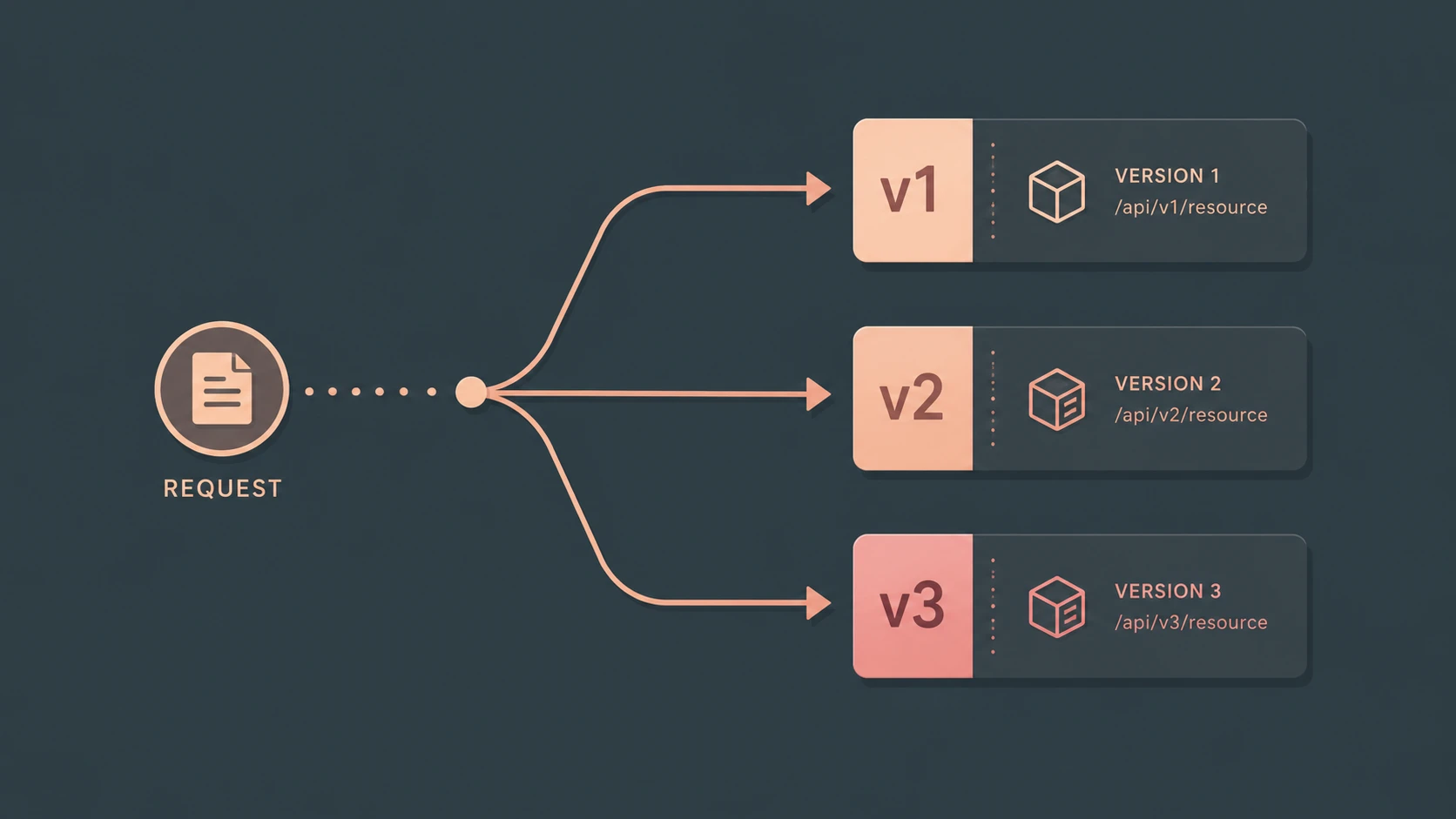
- ◆Version APIs carefully.
- ◆Produce clear documentation.
- ◆Standardize error responses.
- ◆Monitor service performance.
Consistency across services reduces long-term maintenance costs.
Common Mistakes
Early adopters frequently encounter several architectural issues.
Common mistakes include:
- ◆Designing APIs around methods instead of resources
- ◆Ignoring HTTP status codes
- ◆Returning excessive data
- ◆Embedding business logic within controllers
- ◆Creating inconsistent URI structures
- ◆Neglecting validation
- ◆Treating HTTP as a simple transport protocol
Successful RESTful services depend as much on thoughtful API design as on framework capabilities.
Technology Comparison
| Capability | ASP.NET Web API | WCF REST | ASP.NET MVC |
|---|---|---|---|
| HTTP-centric design | Excellent | Good | Moderate |
| HTML View Rendering | No | No | Yes |
| REST-oriented programming model | Excellent | Moderate | Limited |
| JSON Support | Excellent | Good | Good |
| Multiple Media Types | Excellent | Good | Limited |
| Browser and Mobile APIs | Excellent | Good | Moderate |
Each technology addresses different architectural scenarios. WCF remains well suited for many enterprise integration workloads, while ASP.NET MVC continues to excel at server-rendered web applications. ASP.NET Web API specifically targets modern HTTP service development.
Adoption Strategy
Organizations should introduce ASP.NET Web API incrementally.
A practical adoption strategy includes:
- 1.Identify services currently exposed through custom HTTP handlers or lightweight REST implementations.
- 2.Build a pilot API using ASP.NET Web API.
- 3.Establish URI and versioning standards.
- 4.Integrate authentication with existing enterprise infrastructure.
- 5.Benchmark performance under expected workloads.
- 6.Expand adoption across additional business services.
Development teams already familiar with ASP.NET MVC will find many concepts familiar, reducing the learning curve.
Limitations
Although ASP.NET Web API provides a modern framework for HTTP services, organizations should evaluate its fit carefully.
Current considerations include:
- ◆Existing WCF investments may remain appropriate for SOAP-based integrations.
- ◆Successful API design requires understanding HTTP principles.
- ◆Service versioning strategies should be planned early.
- ◆Governance becomes increasingly important as APIs grow.
Technology selection should always reflect business requirements rather than framework availability alone.
Looking Ahead
ASP.NET Web API represents an important evolution within the Microsoft web development platform. As organizations increasingly expose services to browsers, mobile devices, and partner applications, HTTP-oriented programming models are expected to become more common across enterprise architectures.
By aligning closely with web standards while integrating naturally with the ASP.NET ecosystem, ASP.NET Web API provides developers with a strong foundation for building interoperable services. Enterprises planning new service-oriented applications should evaluate the framework alongside existing technologies to determine where its HTTP-centric approach best fits their long-term application architecture.