Introduction
The rapid growth of mobile applications and rich browser-based clients has placed increasing pressure on traditional REST APIs. Modern applications frequently consume information from numerous endpoints, requiring multiple HTTP requests to assemble a single screen. This approach often results in excessive network traffic, unnecessary data transfer, and growing API maintenance complexity.
Facebook has addressed these challenges by releasing GraphQL as an open source project. Originally developed to support Facebook's mobile applications, GraphQL introduces a strongly typed query language that allows clients to request precisely the information they need through a single endpoint.
Rather than replacing HTTP, GraphQL provides a new model for interacting with application data. The protocol shifts control from the server to the client while preserving centralized schema definitions and server-side business logic.
For enterprise architects evaluating next-generation API strategies, GraphQL represents an important alternative to conventional REST-based application development.
Industry Background
REST has become the dominant architectural style for web services over the past decade. Most enterprise systems expose resources through multiple endpoints representing customers, products, orders, invoices, users, and other business entities.
While REST remains highly successful, modern applications increasingly require:
- ◆Mobile optimization
- ◆Reduced network latency
- ◆Flexible client applications
- ◆Rapid UI evolution
- ◆Cross-platform API reuse
- ◆Efficient data retrieval
These requirements have encouraged exploration of more flexible API models.
The Business Problem
Enterprise REST APIs commonly encounter several operational challenges:
- ◆Multiple network requests for a single page
- ◆Over-fetching unnecessary information
- ◆Under-fetching requiring additional requests
- ◆Versioning complexity
- ◆Tight coupling between clients and endpoints
- ◆Difficult support for rapidly changing user interfaces
Organizations developing web and mobile applications seek API architectures capable of reducing these inefficiencies.
Understanding GraphQL
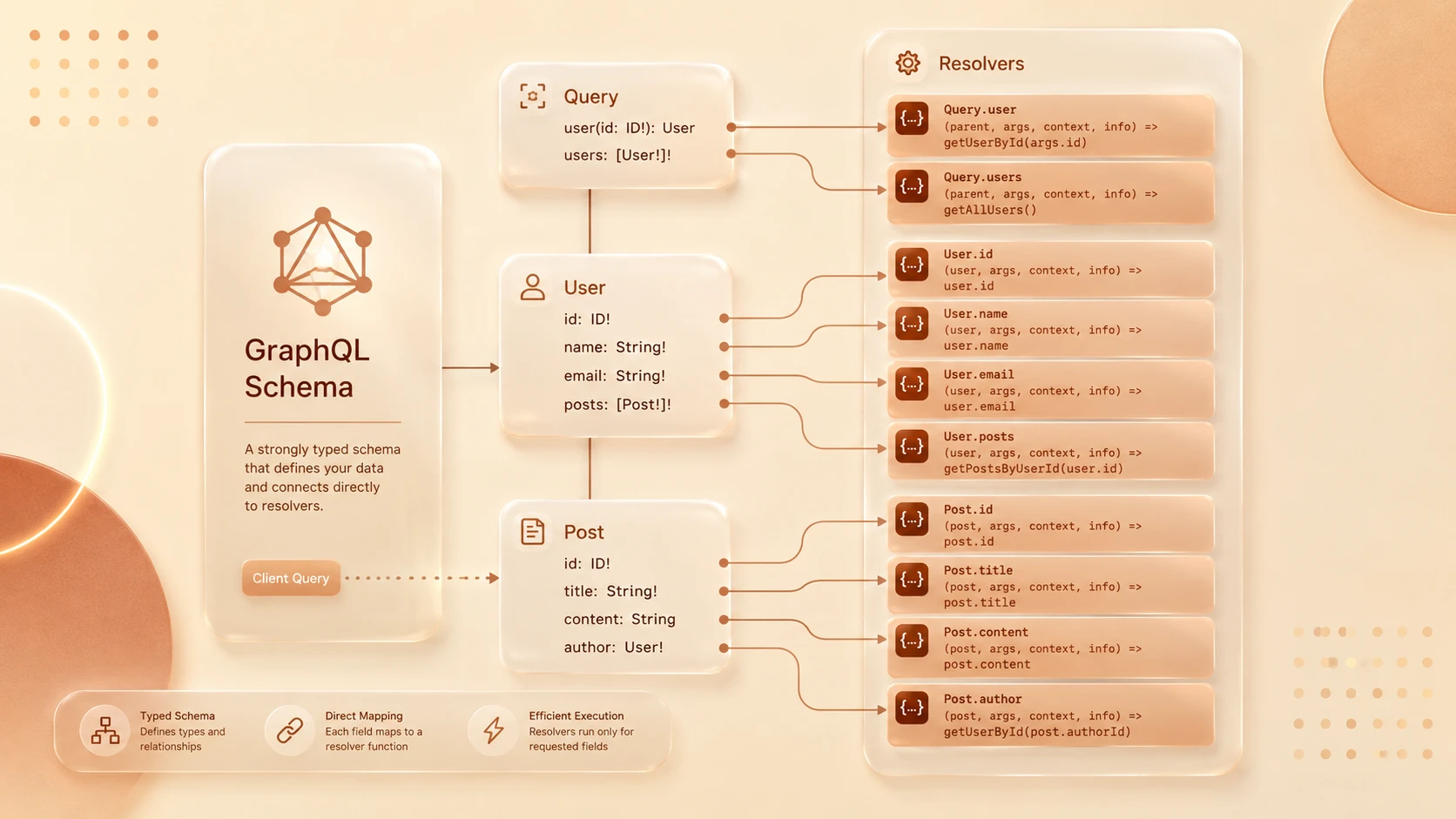
GraphQL is a query language and server-side runtime for APIs.
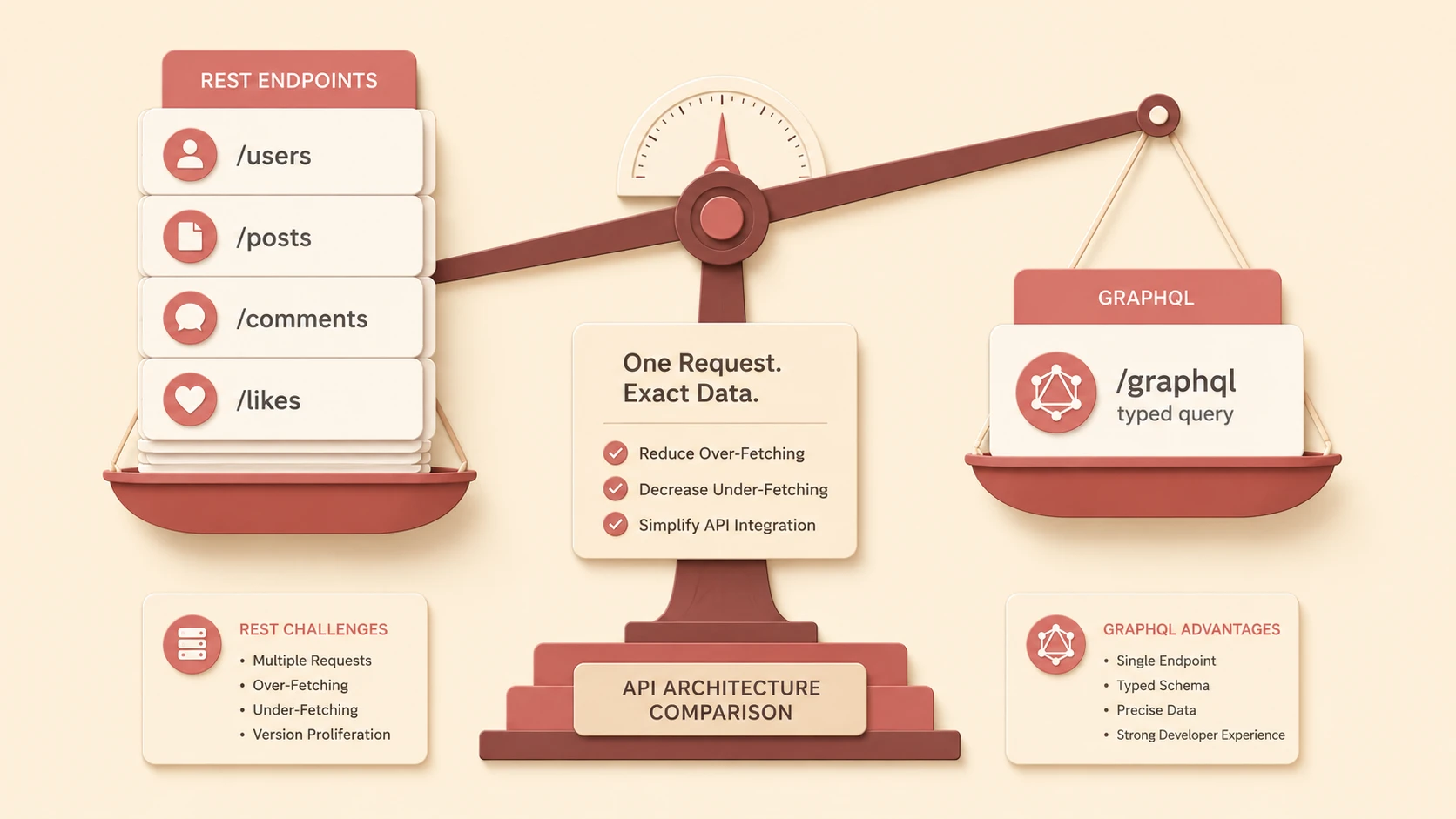
Instead of exposing numerous resource-specific endpoints, GraphQL typically exposes a single endpoint through which clients submit structured queries describing exactly which fields should be returned.
The server validates requests against a strongly typed schema before executing resolver functions that retrieve application data.
Core objectives include:
- ◆Client-driven data retrieval
- ◆Strongly typed schemas
- ◆Reduced network requests
- ◆Flexible application evolution
- ◆Improved developer productivity
- ◆Better mobile application support
Core Architecture
| Component | Responsibility |
|---|---|
| GraphQL Schema | Defines available types and operations |
| Query | Reads application data |
| Mutation | Modifies application data |
| Resolver | Retrieves requested information |
| GraphQL Server | Executes queries |
| Client Application | Defines requested fields |
The schema becomes the contract between clients and server implementations.
How GraphQL Works
A typical request workflow includes:
- 1.Client submits a GraphQL query.
- 2.Server validates the query against the schema.
- 3.Appropriate resolver functions execute.
- 4.Business logic retrieves required data.
- 5.Requested fields are assembled.
- 6.Server returns a structured response matching the original query.
Unlike REST, the response structure closely mirrors the shape requested by the client.
Key Features
Single Endpoint
Applications communicate with one GraphQL endpoint rather than numerous REST resources.
Strongly Typed Schema
# GraphQL Type Definition schema representation
type User {
  id: ID!
  name: String!
  email: String!
  orders(limit: Int): [Order!]!
}

type Order {
  id: ID!
  amount: Float!
  createdAt: String!
}

type Query {
  user(id: ID!): User
  popularUsers: [User!]!
}
Every available field, object, and relationship is defined within a central schema.
Client-Controlled Queries
Consumers specify the precise fields required, reducing unnecessary data transfer.
Hierarchical Data Retrieval
Related objects can be requested together in a single operation.
Introspection
The schema itself can be queried, improving tooling and API discoverability.
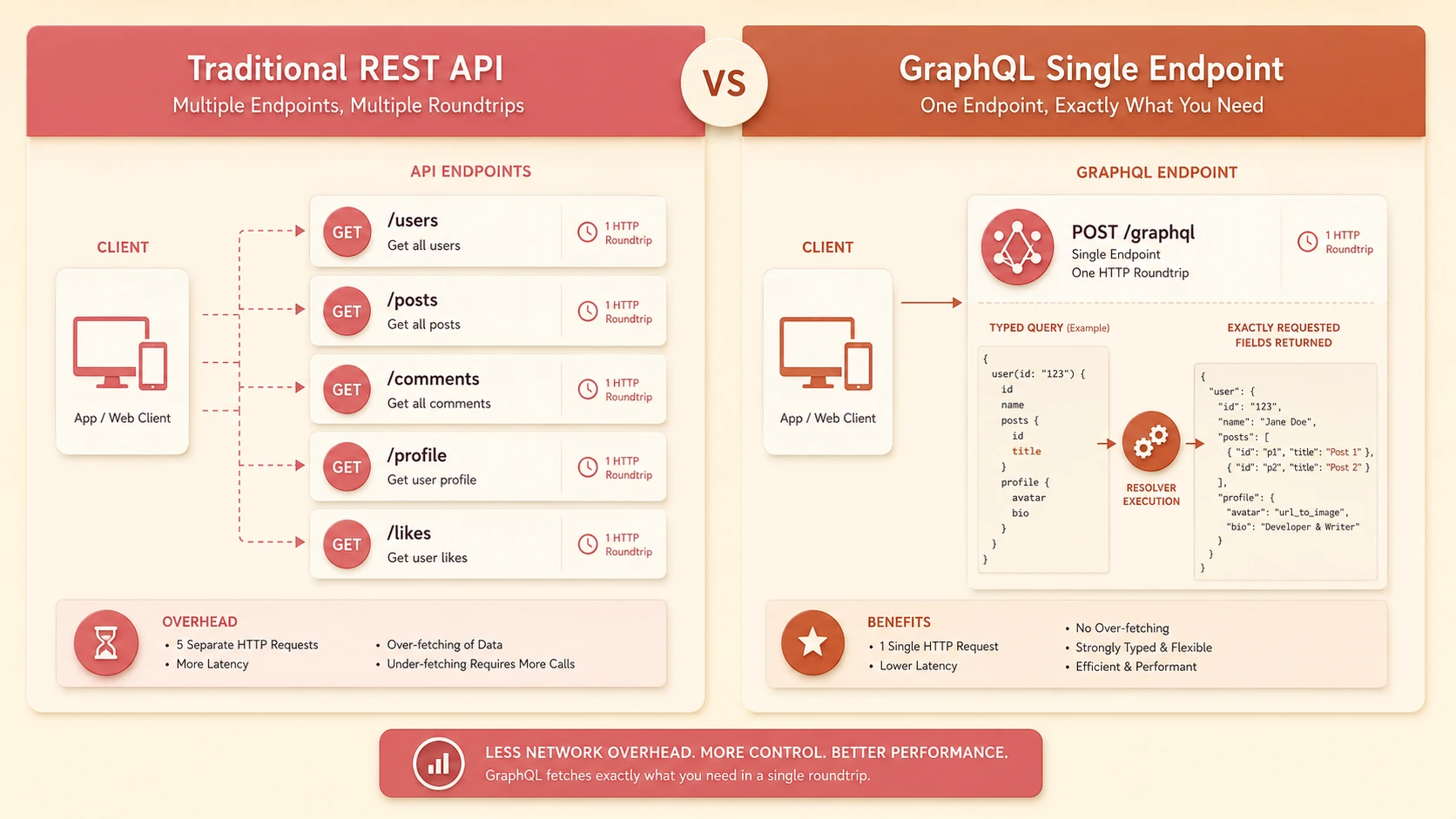
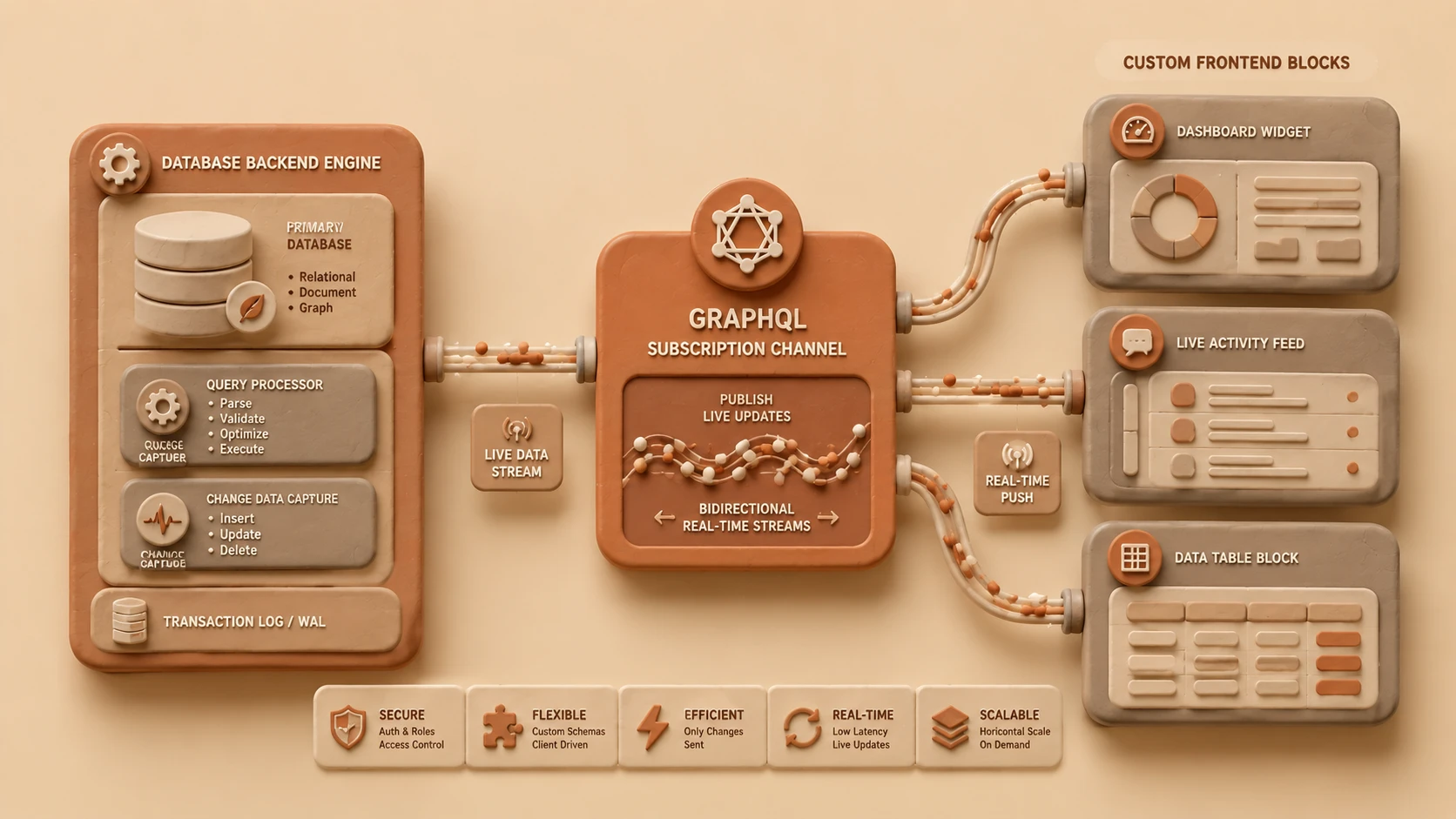
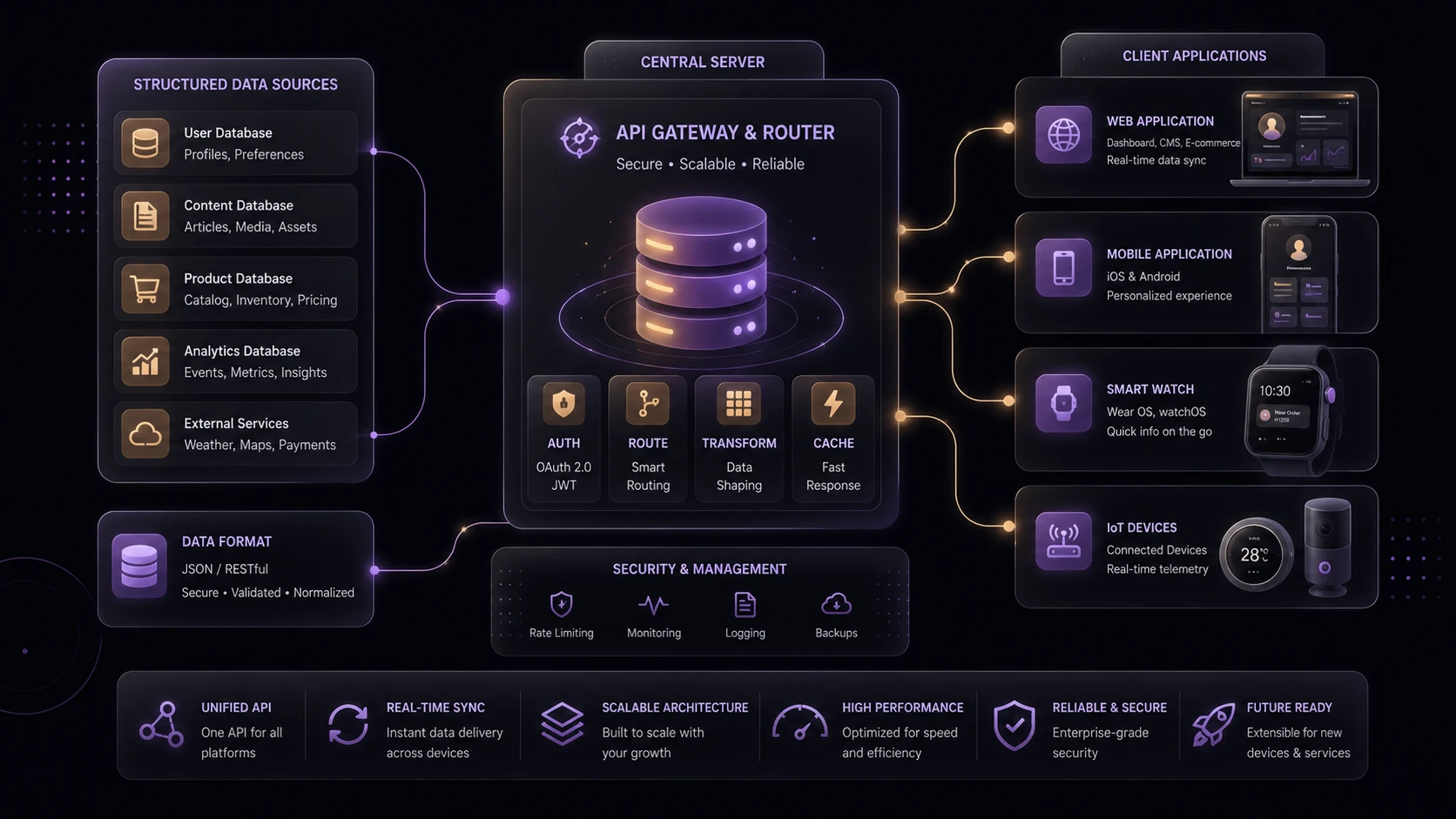
System architecture diagram and conceptual workflow layout for GraphQL Open Source Release.
Enterprise Use Cases
Mobile Applications
Reducing network requests is particularly valuable for mobile devices operating over variable network conditions.
Single Page Applications
Modern JavaScript applications can retrieve complete page models through one query.
API Gateways
GraphQL can aggregate data originating from multiple backend services behind a unified interface.
Business Dashboards
Complex reporting screens benefit from requesting only the information currently displayed.
Multi-Platform Development
Web, Android, and iOS clients can request different data while sharing the same backend schema.
Performance Considerations
GraphQL reduces unnecessary data transfer but does not automatically guarantee better performance.
Organizations should evaluate:
- ◆Resolver efficiency
- ◆Database query optimization
- ◆Query complexity
- ◆Network latency
- ◆Response size
- ◆Caching strategy
Well-designed resolvers remain essential for scalable enterprise deployments.
Security Considerations
GraphQL introduces new considerations alongside existing API security practices.
Recommended measures include:
- ◆Authentication
- ◆Authorization
- ◆Input validation
- ◆Query depth limits
- ◆Rate limiting
- ◆Audit logging
Because clients define query structure, organizations should validate query complexity to protect backend resources.
Scalability
GraphQL supports scalable API evolution by separating client requirements from fixed endpoint definitions.
Advantages include:
- ◆Reduced API versioning pressure
- ◆Flexible client development
- ◆Centralized schema management
- ◆Better API reuse
- ◆Simplified frontend evolution
These characteristics are particularly attractive for organizations supporting numerous client applications.
Best Practices
- ◆Design schemas around business domains.
- ◆Keep resolver logic focused.
- ◆Validate query complexity.
- ◆Reuse common object types.
- ◆Document schema conventions.
- ◆Benchmark production workloads.
- ◆Monitor API usage patterns.
- ◆Integrate GraphQL gradually alongside existing services.
Common Mistakes
| Mistake | Enterprise Impact |
|---|---|
| Treating GraphQL as a database interface | Poor architecture |
| Complex resolver chains | Performance degradation |
| Ignoring authorization rules | Security exposure |
| Uncontrolled query depth | Resource exhaustion |
| Poor schema design | Difficult long-term maintenance |
| Immediate replacement of all REST services | Increased migration risk |
Technology Comparison
| Capability | REST | GraphQL |
|---|---|---|
| Endpoints | Multiple | Typically Single |
| Client Data Selection | Fixed by Endpoint | Client Controlled |
| Over-Fetching | Common | Reduced |
| Schema | Optional Documentation | Strongly Typed |
| API Evolution | Versioning Often Required | Schema Evolution |
| Mobile Efficiency | Moderate | Improved for Complex Data |
GraphQL complements rather than invalidates existing REST architectures.
Adoption Strategy
Organizations evaluating GraphQL should:
- 1.Identify API-heavy applications.
- 2.Evaluate mobile and web data requirements.
- 3.Design an initial schema.
- 4.Build resolver implementations.
- 5.Integrate authentication and authorization.
- 6.Benchmark representative workloads.
- 7.Pilot selected applications.
- 8.Expand adoption after operational validation.
Limitations
As of April 2015, GraphQL is newly available as an open source project. Tooling, ecosystem support, operational practices, and enterprise experience are still developing. Organizations should evaluate the technology carefully while recognizing that established REST architectures continue to serve many workloads effectively.
Looking Ahead
From the perspective of April 2015, Facebook's decision to open source GraphQL introduces a promising new direction for API development. By enabling clients to request exactly the information they require through a typed schema and a unified endpoint, GraphQL addresses several long-standing challenges associated with traditional REST services. As web and mobile applications continue growing in sophistication, enterprise organizations will likely evaluate GraphQL as an architectural option for building flexible, maintainable, and client-centric APIs.