Introduction
HTTP-based APIs have rapidly become the preferred integration mechanism for web applications, mobile platforms, cloud services, and enterprise systems. Rather than exposing functionality exclusively through browser-rendered interfaces or SOAP-based services, organizations are increasingly publishing RESTful APIs that allow diverse clients to interact using standard web technologies.
The growing popularity of JSON, the widespread adoption of JavaScript-based applications, and the expansion of mobile computing have accelerated this transition. However, simply exposing endpoints over HTTP does not automatically result in a well-designed RESTful API. Consistency, discoverability, security, and interoperability are essential for long-term success.
Enterprise architects are therefore placing greater emphasis on standardizing resource design, HTTP semantics, JSON representations, status codes, and browser interoperability. Technologies such as Cross-Origin Resource Sharing (CORS) and hypermedia-driven APIs are becoming increasingly relevant as organizations expose services across organizational and platform boundaries.
This article examines the architectural principles and implementation considerations for designing enterprise-grade RESTful APIs as of July 2013.
Industry Background
Over the past several years, HTTP has evolved from a protocol primarily associated with serving HTML documents into a general-purpose application protocol. Mobile applications, JavaScript clients, cloud platforms, and server-to-server integrations increasingly exchange structured data using JSON transported over HTTP.
Frameworks including ASP.NET Web API, Ruby on Rails, Node.js, Java enterprise frameworks, and numerous REST libraries have simplified API development. At the same time, browsers continue enforcing security boundaries that influence how client-side applications communicate with external services.
Organizations are now recognizing that successful APIs require architectural consistency as much as implementation quality.
The Business Problem
As API ecosystems grow, inconsistent interface design introduces operational and maintenance challenges.
Common issues include:
- ◆Inconsistent resource naming
- ◆Improper HTTP verb usage
- ◆Unclear JSON response structures
- ◆Misuse of HTTP status codes
- ◆Browser integration limitations
- ◆Weak API discoverability
- ◆Increased client implementation complexity
These inconsistencies make APIs more difficult to integrate, document, maintain, and evolve.
A standardized design approach improves interoperability across internal systems, partner integrations, and public developer ecosystems.
Understanding RESTful APIs
REST, or Representational State Transfer, is an architectural style for distributed systems that leverages the capabilities of HTTP.
RESTful APIs typically emphasize:
- ◆Resource-oriented design
- ◆Uniform resource identifiers (URIs)
- ◆Stateless communication
- ◆Standard HTTP methods
- ◆Resource representations
- ◆Cacheable interactions where appropriate
Rather than exposing procedural operations, REST encourages modeling business entities as resources that clients manipulate using standardized HTTP semantics.
Core Architecture
A typical RESTful architecture separates responsibilities across several components.
| Component | Responsibility |
|---|---|
| Client Application | Initiates HTTP requests |
| API Server | Processes business logic |
| Resource Layer | Represents business entities |
| JSON Serializer | Produces resource representations |
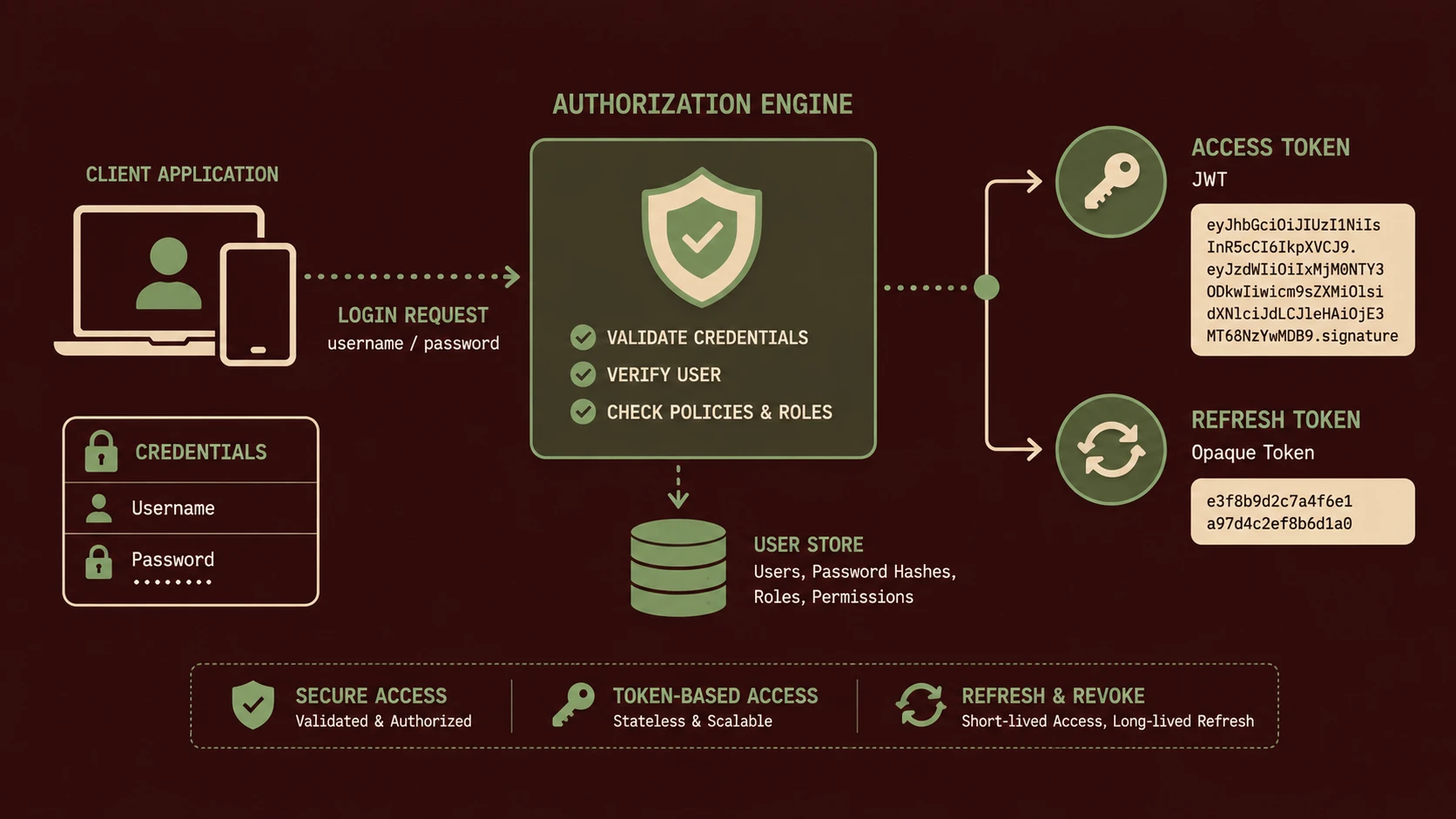
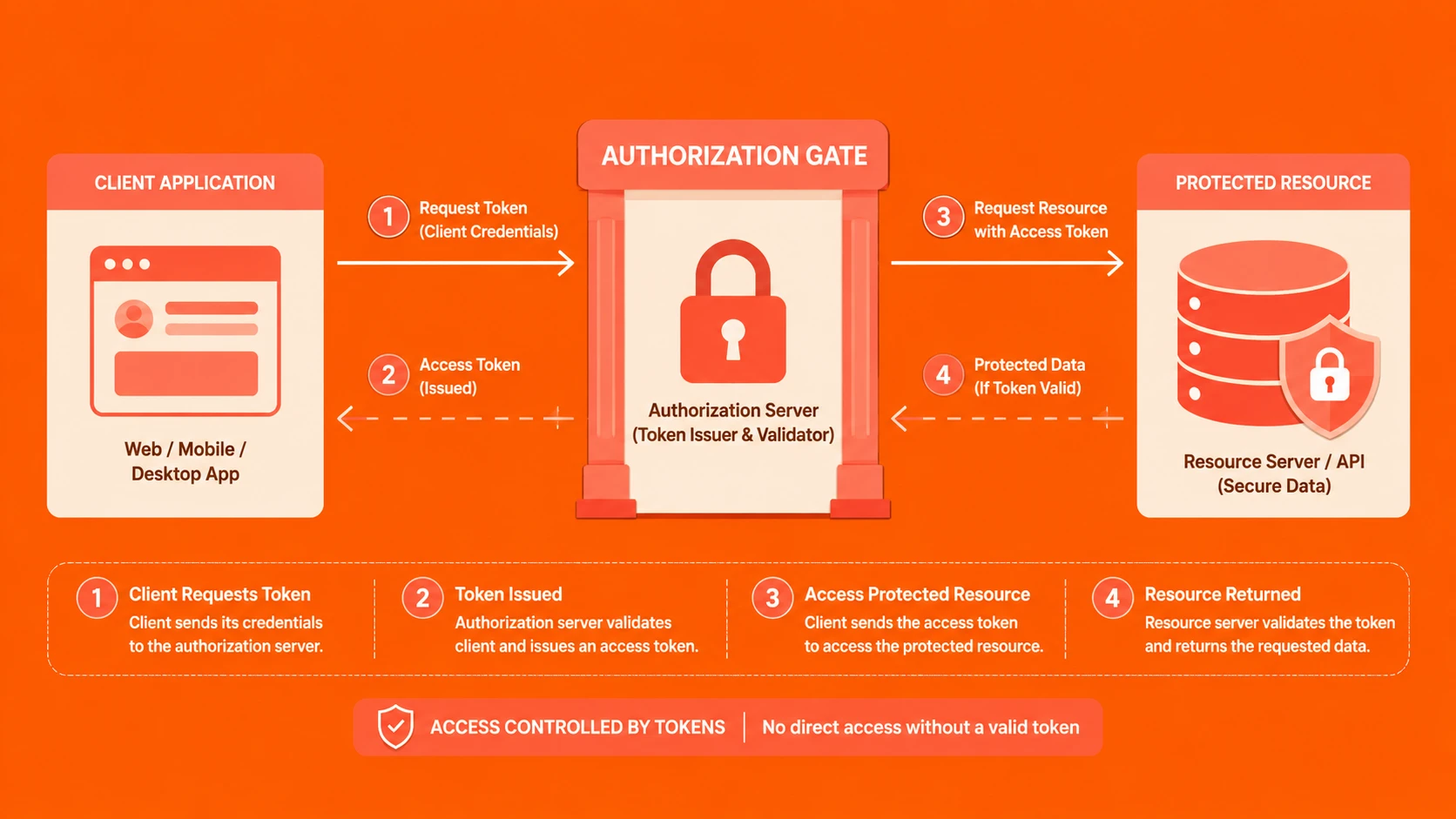
| Authentication Layer | Protects API access |
| Data Store | Persists application data |
This separation improves maintainability while allowing APIs to evolve independently from client implementations.
Resource-Oriented Design
RESTful APIs should identify business entities as resources rather than exposing implementation-specific operations.
Examples include:
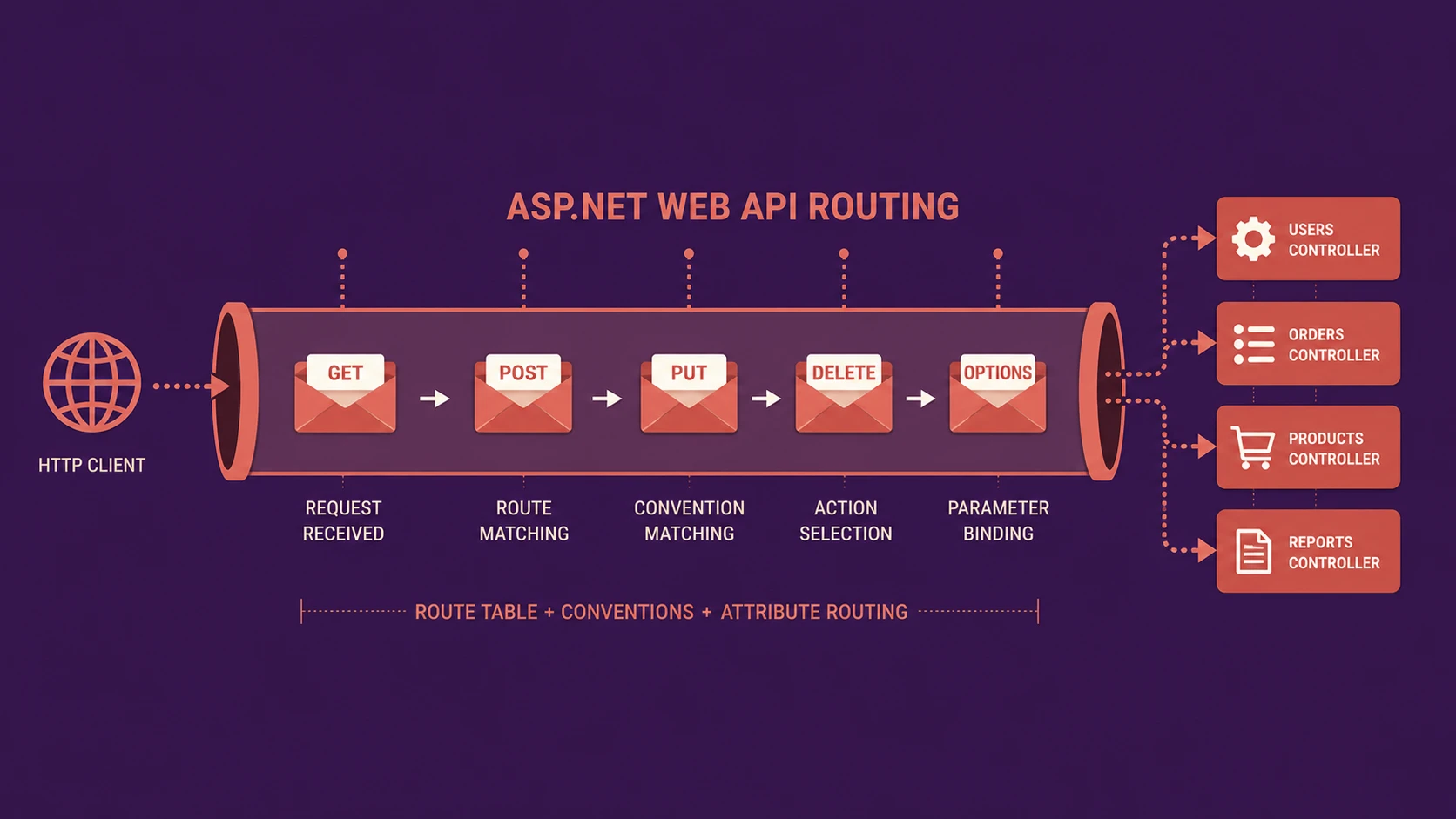
GET    /customers
GET    /customers/125
POST   /customers
PUT    /customers/125
DELETE /customers/125
Meaningful resource naming improves readability while making interfaces easier to understand.
Plural resource names and predictable URI structures contribute to long-term consistency.
Standardizing JSON Responses
JSON has become the preferred representation format for many web and mobile applications because of its simplicity and broad language support.
Consistent JSON structures improve both developer productivity and client interoperability.
Typical response characteristics include:
- ◆Predictable property names
- ◆Consistent object structures
- ◆Meaningful field names
- ◆Minimal unnecessary nesting
- ◆Stable response contracts
Organizations should establish JSON conventions early and apply them consistently across all APIs.
HTTP Status Codes
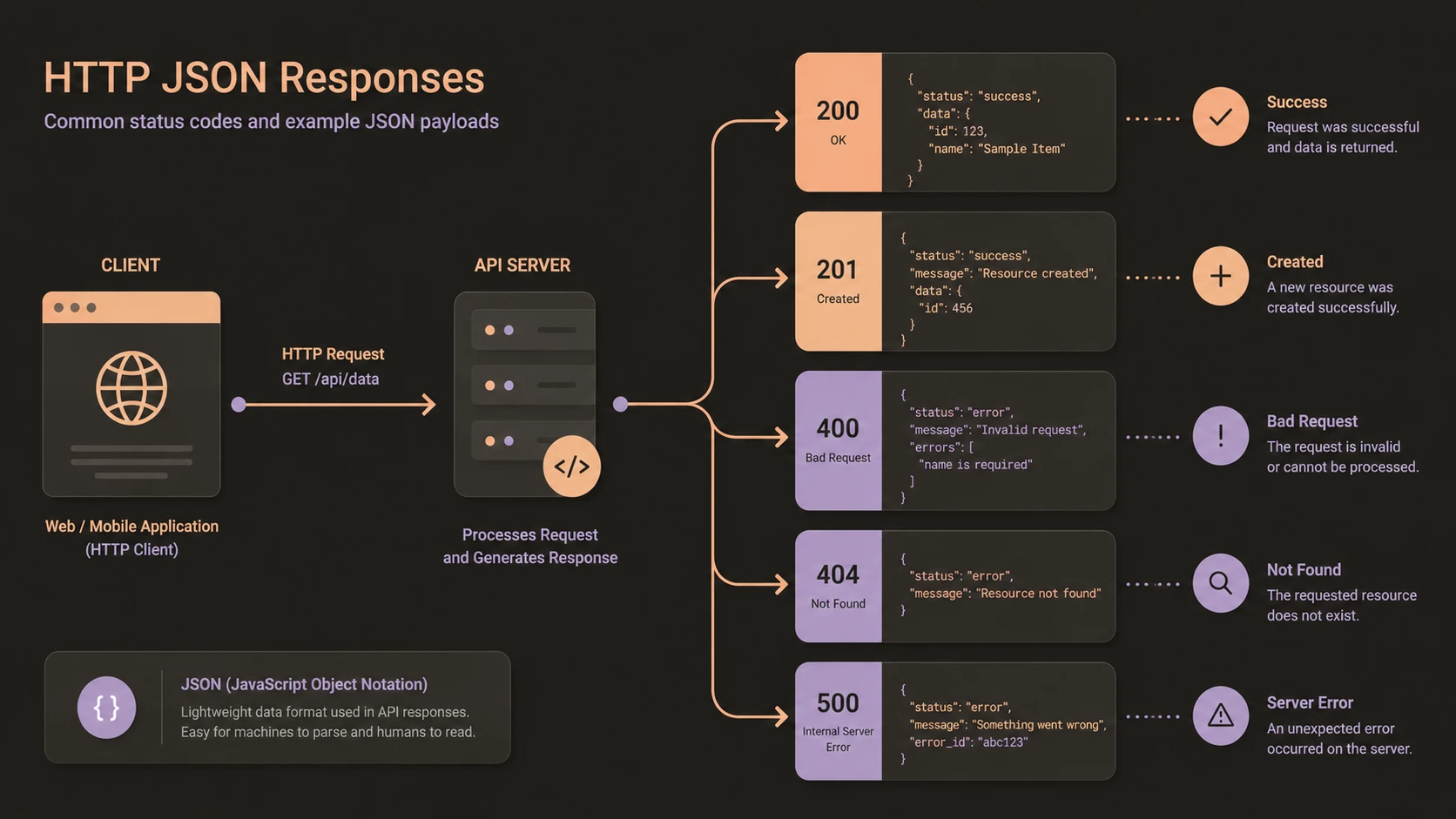
HTTP status codes communicate the outcome of a request independently of the response body.
Well-designed APIs should rely on standard status codes whenever possible.
| Status Code | Meaning | Typical Usage |
|---|---|---|
| 200 OK | Successful request | Resource retrieval |
| 201 Created | Resource created | POST operations |
| 204 No Content | Successful request with no response body | Delete operations |
| 400 Bad Request | Invalid client request | Validation failures |
| 401 Unauthorized | Authentication required | Protected resources |
| 403 Forbidden | Request understood but not permitted | Authorization failure |
| 404 Not Found | Resource unavailable | Missing resources |
| 500 Internal Server Error | Unexpected server failure | Unhandled exceptions |
Returning appropriate status codes allows client applications to interpret results without relying exclusively on custom response payloads.
Error Response Design
In addition to status codes, APIs should provide consistent error information.
Useful error responses typically include:
- ◆Error identifier
- ◆Human-readable message
- ◆Validation details where applicable
- ◆Correlation information for diagnostics
Consistent error structures simplify troubleshooting while improving client implementation quality.
Hypermedia
Hypermedia is one of the defining concepts associated with REST.
Rather than requiring clients to understand every possible URI in advance, a hypermedia-driven API includes links describing available actions within resource representations.
Potential advantages include:
- ◆Improved discoverability
- ◆Reduced client assumptions
- ◆Greater flexibility for future API evolution
- ◆Self-describing responses
Although implementation approaches vary, architects designing long-lived APIs should evaluate whether hypermedia provides value for their integration scenarios.
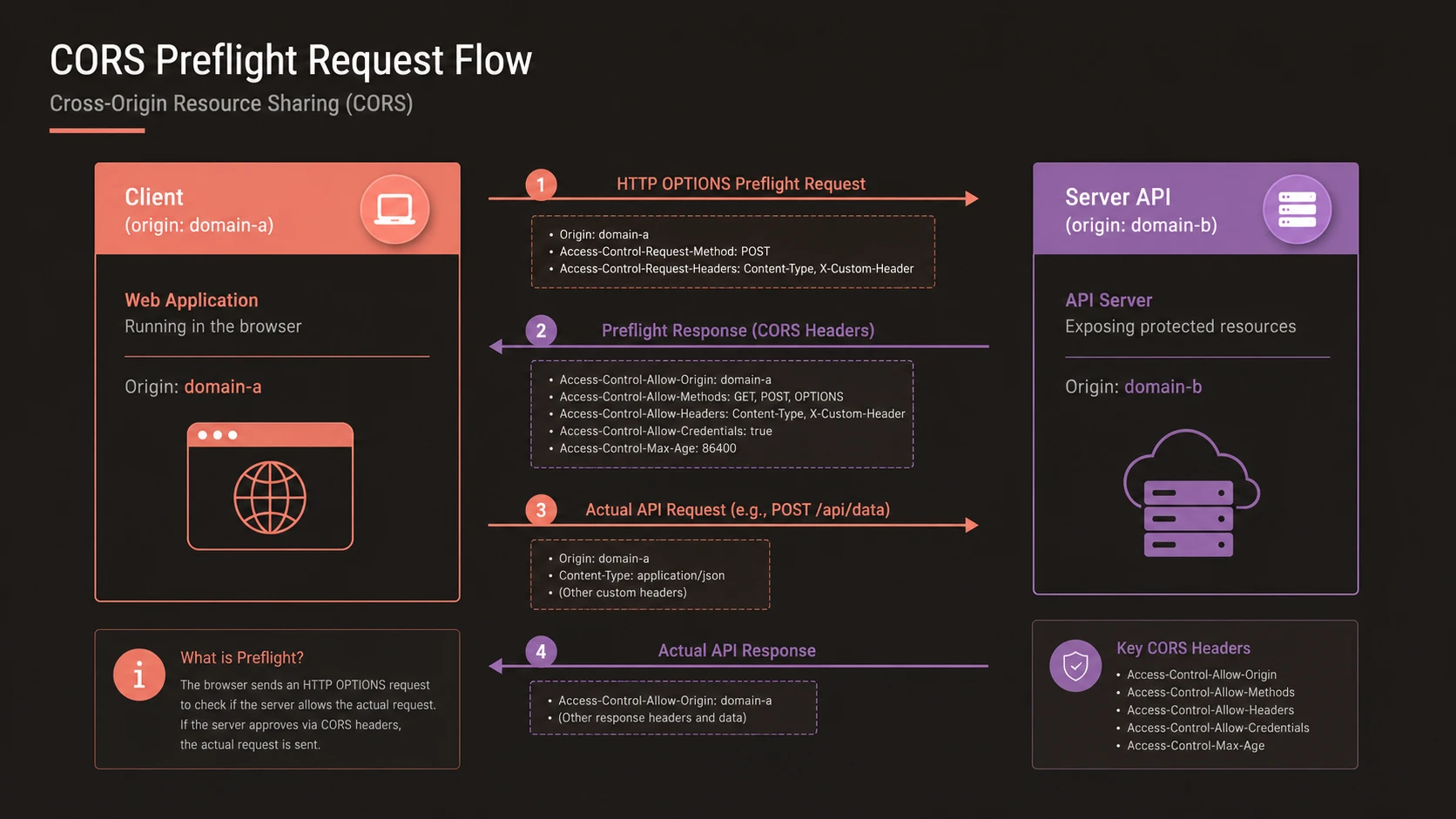
System architecture diagram and conceptual workflow layout for Designing RESTful APIs.
Cross-Origin Resource Sharing (CORS)
Modern browsers enforce the same-origin policy to protect users from unauthorized cross-site interactions.
However, many enterprise applications require JavaScript clients hosted on one origin to access APIs hosted on another.
Cross-Origin Resource Sharing (CORS) extends HTTP through additional headers that allow servers to indicate which origins may access protected resources.
Typical considerations include:
- ◆Allowed origins
- ◆Permitted HTTP methods
- ◆Allowed request headers
- ◆Credential support
Proper CORS configuration enables browser-based integrations while maintaining controlled access.
Enterprise Use Cases
RESTful APIs support numerous enterprise scenarios.
| Scenario | Benefit |
|---|---|
| Mobile application backends | Standardized communication |
| Internal enterprise APIs | Consistent service interfaces |
| Cloud platforms | Cross-platform interoperability |
| Business partner integration | Simplified external connectivity |
| Software as a Service | Multi-client access |
| JavaScript web applications | Lightweight data exchange |
Organizations increasingly treat APIs as reusable enterprise assets rather than application-specific interfaces.
Performance Considerations
API performance depends on architecture as well as implementation.
Recommendations include:
- ◆Minimize payload size.
- ◆Return only necessary resource fields.
- ◆Support HTTP caching where appropriate.
- ◆Reduce unnecessary round trips.
- ◆Optimize database access.
- ◆Compress responses when supported.
Performance measurements should reflect representative production workloads rather than isolated benchmarks.
Security Considerations
Public and enterprise APIs require careful security planning.
Organizations should implement:
- ◆HTTPS for encrypted communication
- ◆Authentication mechanisms appropriate to client types
- ◆Authorization controls
- ◆Input validation
- ◆Request logging
- ◆Rate limiting where appropriate
- ◆Secure CORS configuration
Security should be integrated into API architecture from the beginning rather than added after deployment.
Scalability
RESTful APIs naturally support scalable architectures because they emphasize stateless communication.
Benefits include:
- ◆Easier load balancing
- ◆Simplified horizontal scaling
- ◆Reduced server-side session dependency
- ◆Better resource utilization
Stateless design enables infrastructure expansion without significantly increasing architectural complexity.
Best Practices
Organizations developing enterprise APIs should establish design standards.
Recommended practices include:
- ◆Design resources rather than procedures.
- ◆Use HTTP methods consistently.
- ◆Return appropriate status codes.
- ◆Standardize JSON structures.
- ◆Maintain consistent URI conventions.
- ◆Document APIs thoroughly.
- ◆Validate client input.
- ◆Configure CORS carefully.
- ◆Consider hypermedia where it aligns with integration goals.
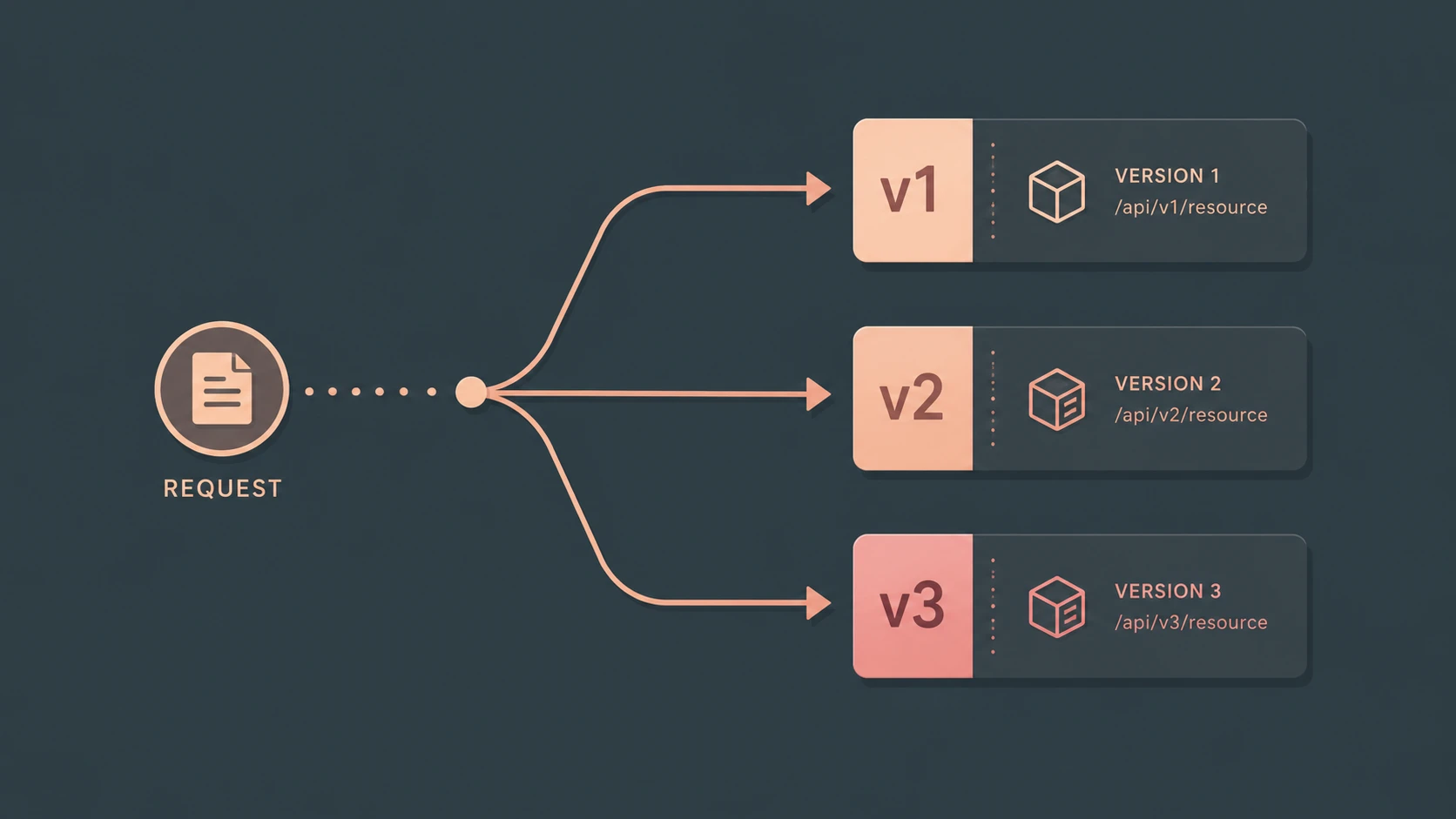
- ◆Version APIs thoughtfully when introducing incompatible changes.
Consistency across services improves developer productivity and long-term maintainability.
Common Mistakes
Development teams frequently encounter several API design issues.
Common mistakes include:
- ◆Embedding operation names within URIs.
- ◆Returning HTTP 200 for every outcome.
- ◆Creating inconsistent JSON responses.
- ◆Ignoring browser security policies.
- ◆Overexposing internal implementation details.
- ◆Using excessive custom conventions instead of HTTP semantics.
Careful API governance helps prevent these problems from spreading across large service portfolios.
Technology Comparison
| Capability | RESTful API | Traditional RPC-Style HTTP Services |
|---|---|---|
| Resource Orientation | Yes | Limited |
| Standard HTTP Semantics | Strong | Often inconsistent |
| JSON Integration | Excellent | Varies |
| Browser Compatibility | High | Varies |
| Hypermedia Support | Possible | Typically limited |
| Stateless Communication | Core principle | Implementation dependent |
RESTful architecture emphasizes interoperability and standardized communication rather than procedure invocation.
Adoption Strategy
Organizations should approach API standardization incrementally.
Recommended approach:
- 1.Establish enterprise API design guidelines.
- 2.Standardize URI conventions.
- 3.Define JSON representation rules.
- 4.Adopt consistent HTTP status code usage.
- 5.Configure CORS based on application requirements.
- 6.Evaluate hypermedia where long-term API evolution is expected.
- 7.Introduce governance and design reviews for new services.
This phased approach promotes consistency while minimizing disruption to existing applications.
Limitations
Although REST provides a flexible architectural style, organizations should recognize several considerations.
Current challenges include:
- ◆Existing systems may require gradual migration.
- ◆Hypermedia introduces additional design considerations.
- ◆Browser security policies continue to influence client implementation.
- ◆Strong governance is necessary as API portfolios expand.
Architectural discipline remains essential regardless of implementation technology.
Looking Ahead
RESTful APIs are becoming a central component of enterprise application architecture. As organizations continue exposing services to browsers, mobile devices, cloud platforms, and business partners, standardized API design will become increasingly important.
As of July 2013, enterprises investing in service-oriented architectures should establish consistent practices around resource design, JSON representations, HTTP status codes, hypermedia, and CORS. Doing so will improve interoperability, simplify client development, and provide a more maintainable foundation for the growing ecosystem of web-connected applications.