Introduction
The web application landscape has changed dramatically over the past several years. What began as document-oriented websites has steadily evolved into sophisticated business applications capable of delivering experiences once reserved for desktop software. Customer relationship management platforms, project management tools, collaboration portals, reporting dashboards, and business intelligence applications increasingly rely on JavaScript to deliver responsive interfaces with minimal page reloads.
This evolution has encouraged developers to rethink traditional web architecture. Instead of generating every page on the server, many applications now move a significant portion of user interface logic into the browser. Users expect immediate interaction, seamless navigation, and dynamic updates without waiting for complete page refreshes.
Backbone.js has emerged as one of the most influential JavaScript libraries supporting this architectural shift. Rather than attempting to solve every frontend problem, Backbone.js provides a lightweight structure for organizing JavaScript applications through models, collections, views, events, and routing.
As of January 2012, the concept of the Single Page Application (SPA) continues to gain momentum. While not every enterprise application requires this architecture, organizations developing highly interactive browser-based software are increasingly evaluating frameworks such as Backbone.js.
This article explores SPA architecture, examines Backbone.js components, compares traditional web applications with client-driven designs, and discusses practical enterprise adoption strategies.
The Evolution of Web Applications
Traditional enterprise web applications typically follow a request-response model.
Each user interaction often involves:
- ◆Sending an HTTP request
- ◆Executing server-side logic
- ◆Rendering HTML
- ◆Returning an entirely new page
This model has proven reliable for many years.
However, increasingly interactive applications expose limitations including:
- ◆Frequent page reloads
- ◆Higher network usage
- ◆Slower perceived responsiveness
- ◆More tightly coupled presentation logic
Modern JavaScript libraries are helping developers build applications that behave more like desktop software.
What Is a Single Page Application?
A Single Page Application loads the primary application shell once and updates content dynamically through JavaScript.
Instead of navigating between numerous server-rendered pages, the browser communicates with backend services to retrieve only the required data.
Common SPA characteristics include:
- ◆Client-side navigation
- ◆Dynamic interface updates
- ◆AJAX communication
- ◆Rich user interaction
- ◆Reduced page reloads
- ◆Separation of presentation and data services
The result is a smoother and more responsive user experience.
Understanding Backbone.js
Backbone.js is intentionally lightweight.
Rather than providing a complete application platform, it offers essential building blocks for organizing JavaScript code.
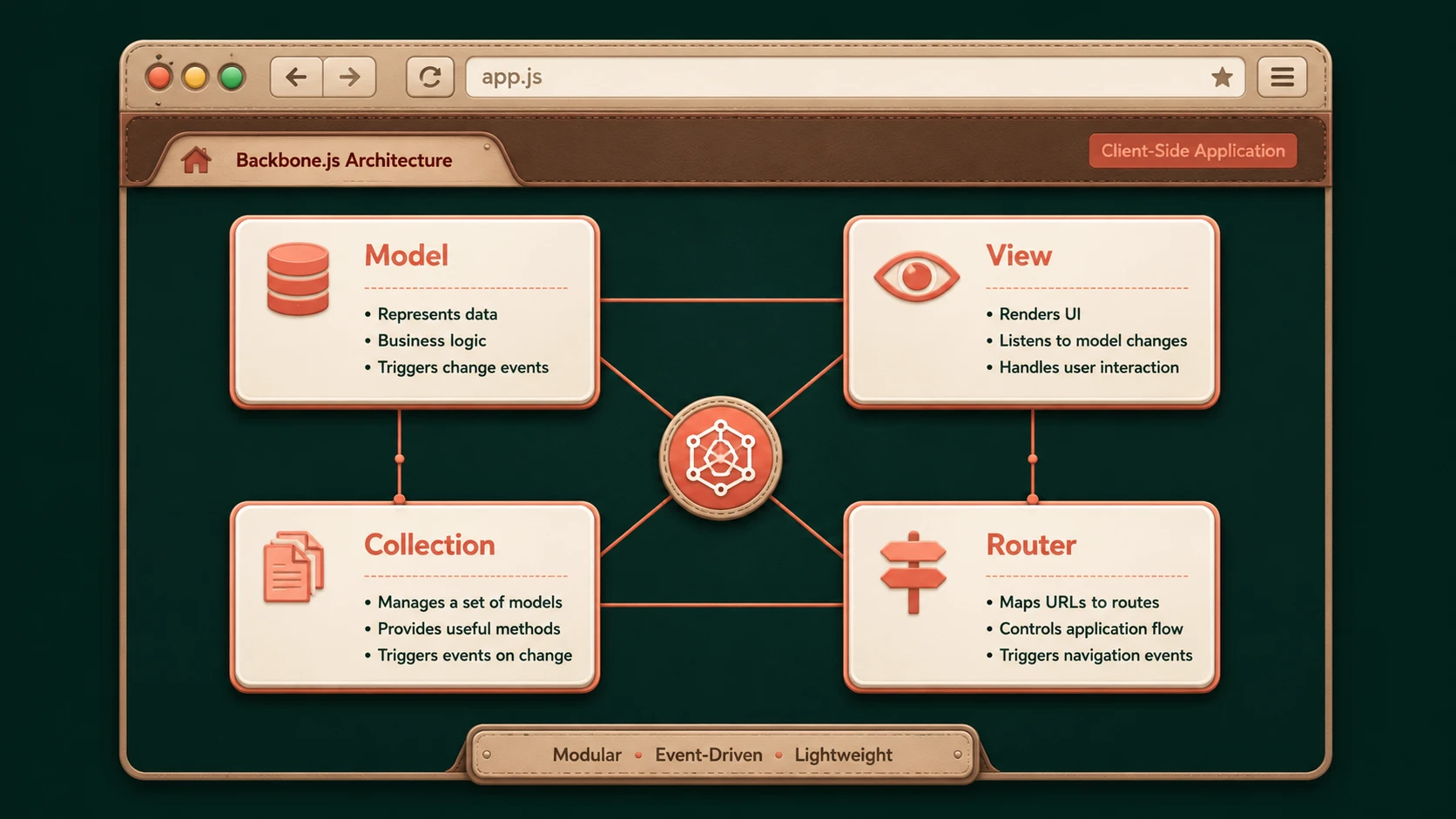
Core components include:
- ◆Models
- ◆Collections
- ◆Views
- ◆Routers
- ◆Events
Developers remain free to choose templating libraries and additional JavaScript utilities according to project requirements.
Models
Models represent business entities and encapsulate application data.
Examples include:
- ◆Customer
- ◆Product
- ◆Order
- ◆Employee
- ◆Invoice
Models also support validation and synchronization with backend services.
Example:
var Customer = Backbone.Model.extend({
    defaults: {
        name: "",
        email: ""
    }
});
Models provide a structured representation of application data while remaining independent of user interface concerns.
Collections
Collections manage groups of related models.
For example:
- ◆Customer lists
- ◆Product catalogs
- ◆Orders
- ◆Notifications
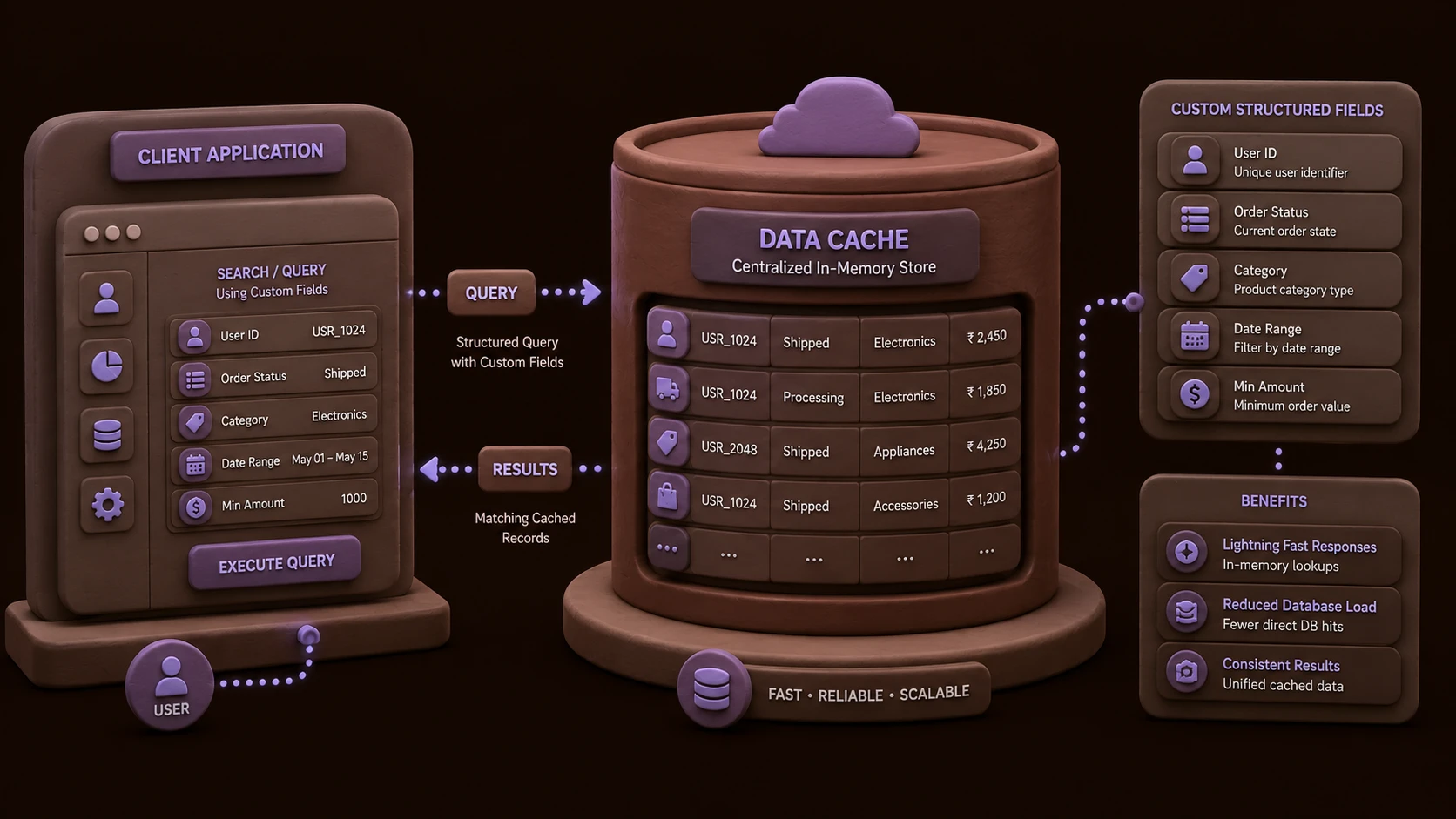
Collections simplify iteration, filtering, and synchronization with server-side resources.
Views
Views connect user interface elements with application data.
Responsibilities typically include:
- ◆Rendering templates
- ◆Handling user interaction
- ◆Updating displayed information
- ◆Listening for model changes
Separating views from models encourages cleaner application architecture.
Routers
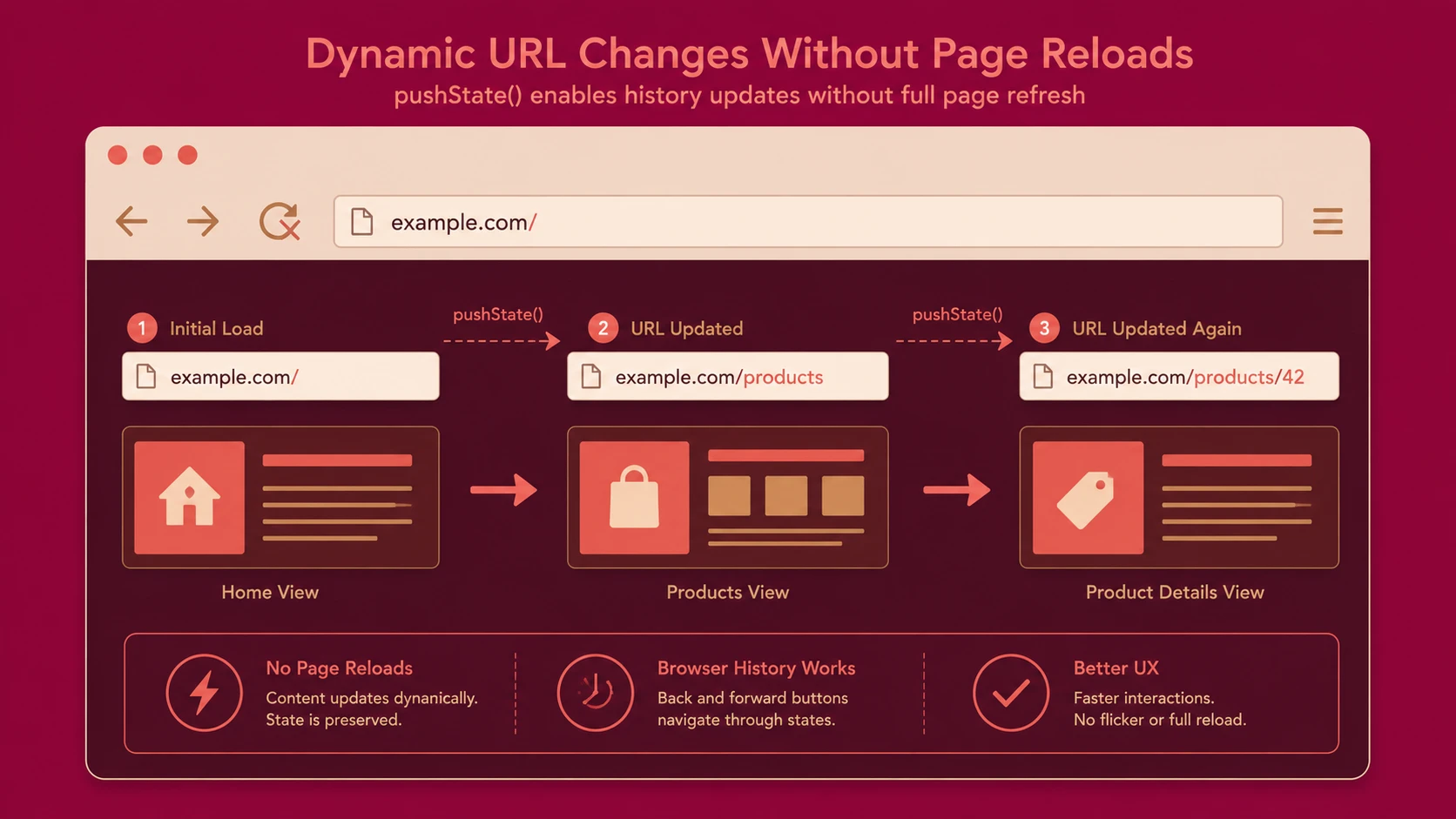
Routing enables navigation within a Single Page Application.
Instead of requesting new HTML pages from the server, routes update application state while maintaining browser history.
Example routes may include:
- ◆Dashboard
- ◆Customers
- ◆Orders
- ◆Reports
- ◆Administration
This approach provides a more fluid navigation experience.
Event-Driven Architecture
Backbone.js relies heavily on events.
When models change, views can respond automatically.
Benefits include:
- ◆Loose coupling
- ◆Better maintainability
- ◆Reduced manual synchronization
- ◆Improved modularity
The event-driven model simplifies communication between application components.
Comparing Traditional Applications and SPAs
| Feature | Traditional Web Application | Single Page Application |
|---|---|---|
| Navigation | Full Page Reloads | Client-Side Routing |
| User Experience | Moderate | More Interactive |
| Data Exchange | HTML Pages | JSON and AJAX |
| Client Logic | Limited | Extensive |
| JavaScript Role | Supplemental | Central |
| Network Usage | Higher Page Transfers | Smaller Data Requests |
| Responsiveness | Moderate | Improved |
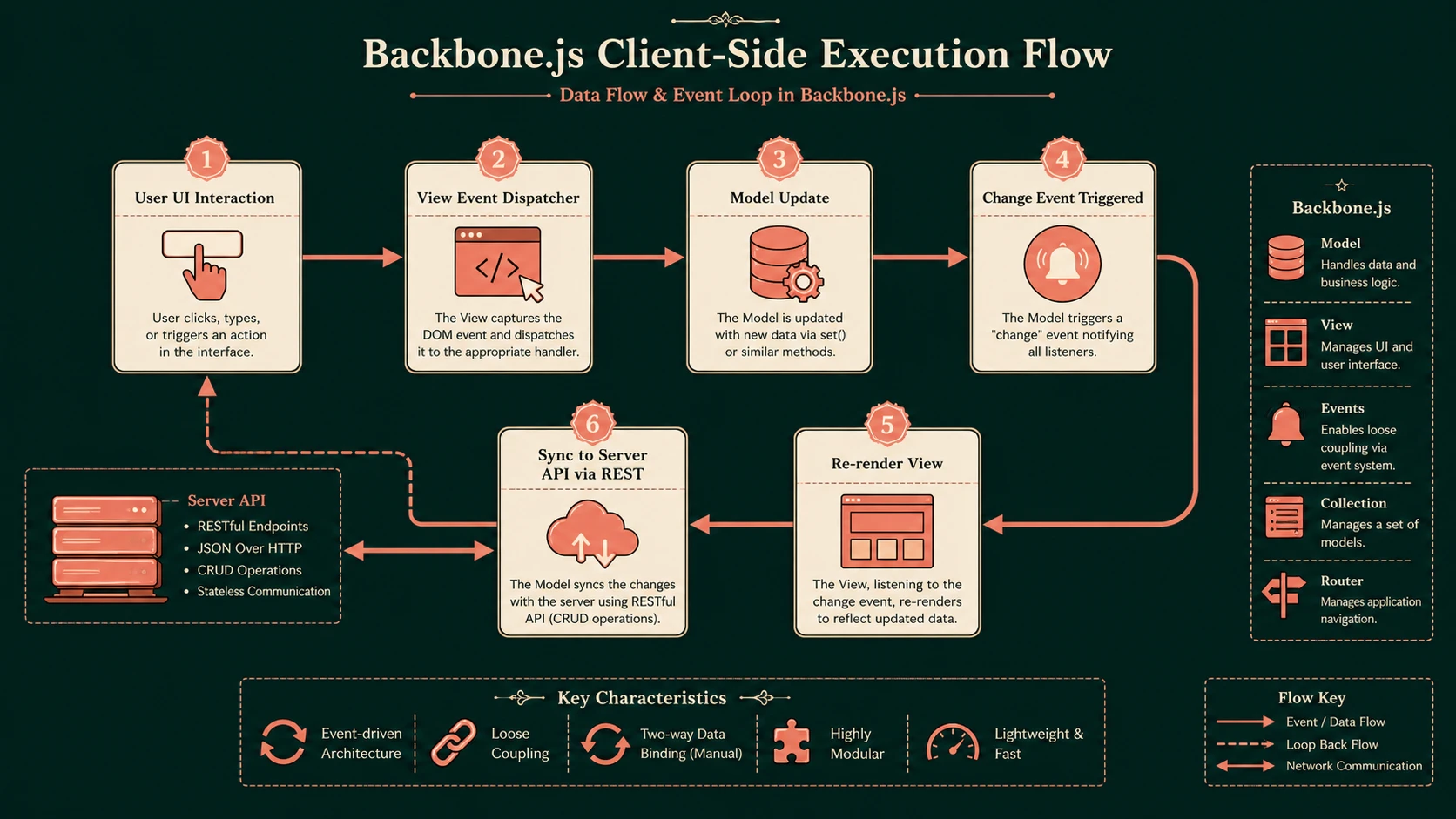
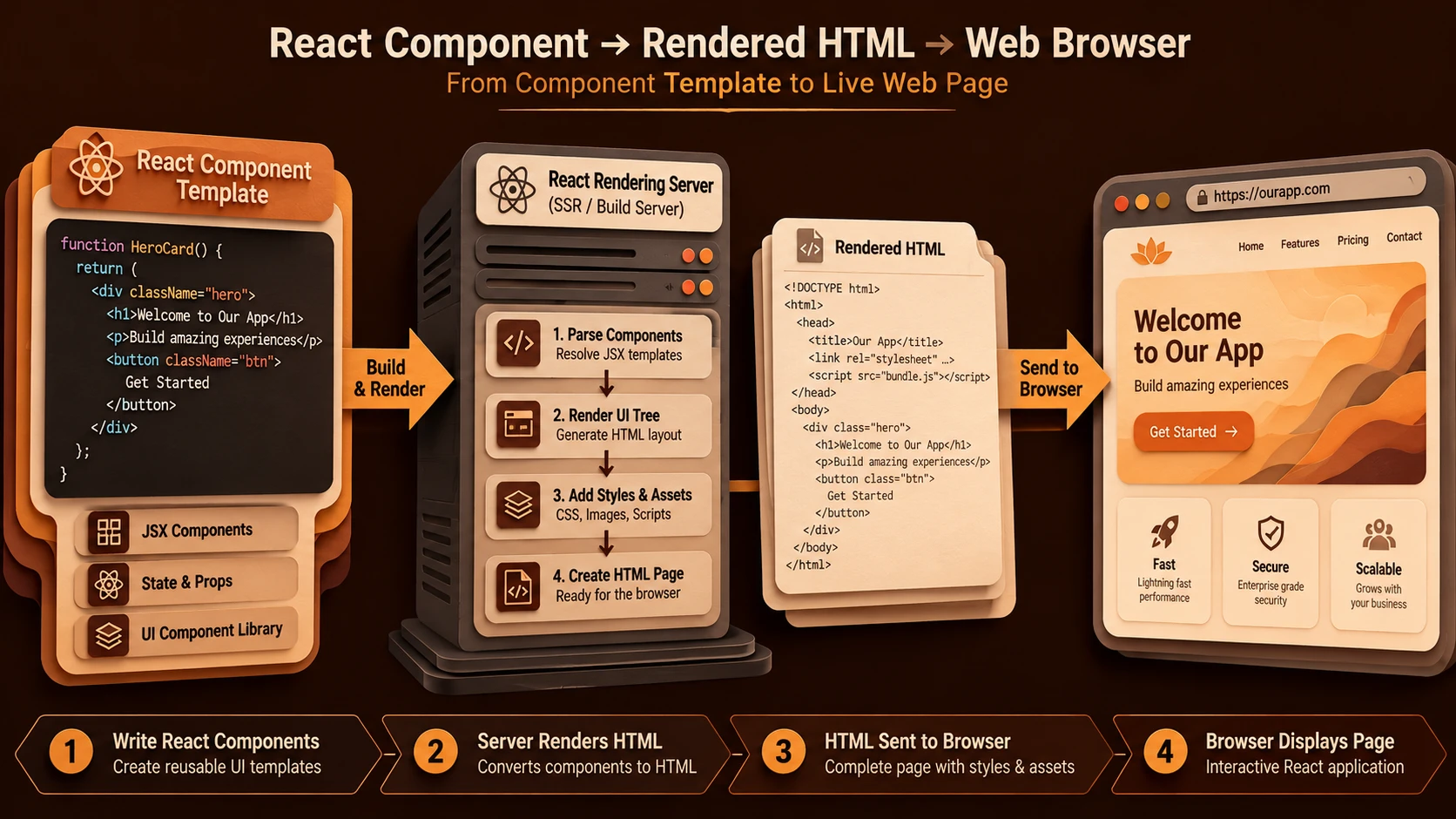
System architecture diagram and conceptual workflow layout for Single Page Applications.
Both approaches remain valuable depending on business requirements.
Enterprise Architecture
A simplified SPA architecture may resemble:
Browser
      |
Backbone.js
      |
REST Services
      |
Application Server
      |
Business Services
      |
Enterprise Database
The browser manages interface behavior while backend services expose business functionality through web APIs.
Enterprise Use Cases
Customer Relationship Management
Interactive customer management systems benefit from rapid navigation between accounts, contacts, and activities.
Project Management
Task boards, calendars, and collaboration interfaces require frequent updates without interrupting user workflows.
Business Intelligence Dashboards
Dashboards displaying charts, reports, and operational metrics benefit from dynamic data updates.
Content Management Systems
Administrative interfaces often require extensive editing capabilities that align well with SPA architecture.
Software-as-a-Service Platforms
Hosted business applications increasingly emphasize responsive browser experiences comparable to desktop software.
Performance Considerations
Single Page Applications improve perceived responsiveness but also introduce additional responsibilities.
Development teams should optimize:
- ◆JavaScript execution
- ◆Network requests
- ◆Browser memory usage
- ◆Asset loading
- ◆API performance
- ◆Client-side rendering
Application architecture remains the primary determinant of overall performance.
Benefits of Backbone.js
Several characteristics contribute to Backbone.js' growing popularity.
- ◆Lightweight architecture
- ◆Minimal framework overhead
- ◆Flexible component design
- ◆Strong separation of concerns
- ◆Event-driven communication
- ◆Compatibility with existing JavaScript libraries
- ◆Improved maintainability
- ◆Better code organization
These features make Backbone.js attractive for teams seeking structure without excessive framework complexity.
Best Practices
Organizations evaluating Backbone.js should consider the following recommendations.
- ◆Design clear application models.
- ◆Keep views focused on presentation.
- ◆Build RESTful service interfaces.
- ◆Minimize client-server coupling.
- ◆Organize JavaScript into modular components.
- ◆Cache frequently accessed data where appropriate.
- ◆Test across supported browsers.
- ◆Document routing conventions.
- ◆Establish coding standards early.
These practices improve maintainability while supporting long-term application growth.
Common Mistakes
Several implementation issues should be avoided.
Moving All Business Logic to the Browser
Business rules should remain within trusted server-side services.
Ignoring Application Structure
Even lightweight frameworks benefit from consistent architectural patterns.
Excessive Client-Side State
Applications should manage browser memory carefully as complexity increases.
Weak API Design
SPA performance depends heavily on efficient backend service interfaces.
Underestimating Browser Compatibility
Organizations should validate behavior across supported enterprise browsers before deployment.
Adoption Recommendations
Enterprise teams should adopt SPA architecture incrementally.
Phase 1
- ◆Identify highly interactive application modules.
- ◆Evaluate JavaScript architecture.
- ◆Prototype Backbone.js implementations.
Phase 2
- ◆Design RESTful backend services.
- ◆Introduce models and collections.
- ◆Establish frontend coding guidelines.
Phase 3
- ◆Expand SPA architecture where measurable user experience improvements exist.
- ◆Standardize routing patterns.
- ◆Improve automated testing.
Phase 4
- ◆Refine component libraries.
- ◆Continue optimizing client performance.
- ◆Review evolving JavaScript ecosystem developments.
A gradual adoption strategy enables organizations to gain experience while reducing implementation risk.
Balancing Simplicity and Structure
Backbone.js demonstrates that frontend frameworks do not necessarily need to be large or prescriptive to provide architectural value. By introducing models, views, collections, routing, and events while remaining relatively lightweight, Backbone.js helps developers organize increasingly sophisticated JavaScript applications without imposing excessive constraints.
Organizations should adopt only the architectural complexity required to support their business objectives. Well-designed APIs, modular JavaScript, and disciplined frontend engineering remain more important than framework selection alone.
Looking Ahead
Single Page Applications represent an important evolution in enterprise web development by shifting more interface responsibility to the browser while relying on backend services for business logic and data management. Backbone.js provides a practical foundation for this architectural approach through its lightweight yet structured programming model.
As organizations continue modernizing enterprise web applications throughout 2012, Backbone.js deserves careful evaluation for projects requiring rich client-side interaction, responsive navigation, and maintainable JavaScript architecture. By combining disciplined frontend engineering with well-designed service interfaces, development teams can build browser-based business applications that deliver responsive user experiences while remaining scalable and maintainable.