Introduction
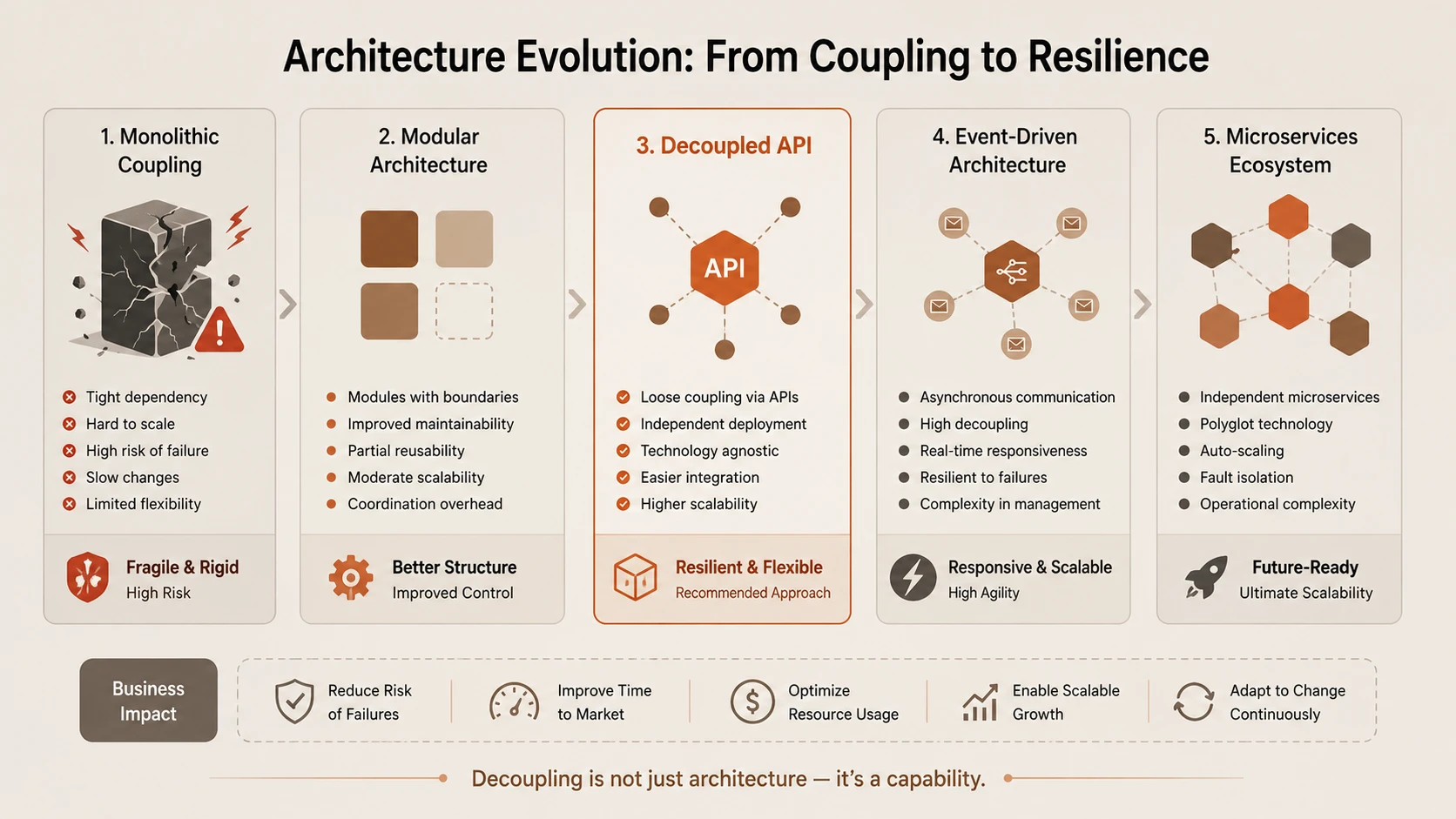
Enterprise software has evolved significantly over the past decade. Organizations have successfully built increasingly sophisticated business applications supporting finance, customer relationship management, supply chain management, manufacturing, healthcare, retail, and government services. These applications frequently consist of millions of lines of code developed over many years by multiple engineering teams.
While monolithic application architectures have served enterprises well, growing business demands are exposing new challenges. As applications become larger, development cycles slow, deployments become increasingly risky, and individual components become more tightly coupled. A seemingly small change in one module may require testing and redeploying an entire application.
At the same time, service-oriented architecture (SOA) has demonstrated the value of separating business capabilities into reusable services. Many architects are now exploring whether services can become even smaller, more autonomous, and independently deployable.
Although the term microservices is only beginning to emerge within software architecture discussions, the underlying concepts of fine-grained services, independent deployment, and loose coupling are attracting considerable interest. Rather than building one large application, organizations are evaluating whether multiple focused services can improve agility and operational flexibility.
As of October 2011, this architectural style remains an emerging practice rather than an established enterprise standard. Nevertheless, the principles behind service decoupling deserve careful evaluation.
This article explores these emerging architectural ideas, compares them with traditional monolithic systems, discusses enterprise use cases, and provides practical guidance for organizations considering more modular service-oriented application designs.
The Challenges of Monolithic Applications
Traditional enterprise applications often combine numerous business capabilities into a single deployable unit.
Typical modules include:
- ◆Customer management
- ◆Authentication
- ◆Billing
- ◆Inventory
- ◆Reporting
- ◆Notifications
- ◆Administration
- ◆Search
Although these modules serve different business functions, they frequently share the same deployment process, runtime environment, and release schedule.
As applications grow, several challenges commonly emerge.
- ◆Longer build times
- ◆More complex deployments
- ◆Larger testing efforts
- ◆Tight coupling between modules
- ◆Reduced development agility
- ◆Difficult scalability planning
These issues encourage architects to explore alternative designs.
Service-Oriented Thinking
Service-Oriented Architecture introduced the concept of exposing business capabilities as reusable services.
Core SOA principles include:
- ◆Loose coupling
- ◆Service contracts
- ◆Reusability
- ◆Interoperability
- ◆Standard communication protocols
Many enterprise integration projects have successfully adopted these principles.
The emerging discussion extends these ideas by considering whether services themselves should become smaller and independently deployable.
What Is Service Decoupling?
Service decoupling emphasizes separating business capabilities into focused services with clearly defined responsibilities.
Rather than one large application managing every function, separate services may handle:
- ◆Customer accounts
- ◆Product catalogs
- ◆Orders
- ◆Payments
- ◆Notifications
- ◆Reporting
Each service owns its own business logic while interacting with other services through well-defined interfaces.
The objective is reducing dependencies while improving maintainability.
Characteristics of Small Services
Although implementation approaches vary, several common characteristics are emerging.
These include:
- ◆Focused business responsibility
- ◆Independent deployment
- ◆Well-defined interfaces
- ◆Loose coupling
- ◆Autonomous development
- ◆Independent scaling where appropriate
These principles encourage applications to evolve as collections of business capabilities rather than single executable systems.
Comparing Monolithic Applications and Service-Based Architectures
| Feature | Monolithic Application | Small Service-Based Architecture |
|---|---|---|
| Deployment | Single Application | Multiple Services |
| Codebase | Centralized | Distributed |
| Scaling | Entire Application | Individual Services |
| Team Ownership | Shared | Business Capability Focused |
| Maintenance | Larger Scope | Smaller Scope |
| Fault Isolation | Limited | Improved |
| Operational Complexity | Lower Initially | Higher |
The service-based approach introduces flexibility while also increasing operational responsibilities.
Enterprise Architecture
A simplified service-oriented architecture may resemble:
Users
    |
Load Balancer
    |
-----------------------------
| Web Application |
-----------------------------
        |
---------------------------------------------
| Customer Service |
| Order Service |
| Inventory Service |
| Billing Service |
| Notification Service |
---------------------------------------------
        |
Enterprise Databases
Business capabilities remain logically separated while client applications communicate through service interfaces.
Benefits of Smaller Services
Organizations evaluating service decoupling may observe several potential advantages.
Independent Development
Teams can focus on individual business capabilities without modifying unrelated modules.
Easier Maintenance
Smaller codebases are generally easier to understand and maintain.
Flexible Scaling
Frequently used services may be scaled independently according to workload requirements.
Reduced Deployment Risk
Updating a single service may require less coordination than redeploying an entire application.
Improved Business Alignment
Services often map naturally to business capabilities.
Enterprise Use Cases
E-Commerce Platforms
Retail applications commonly include catalog management, inventory, ordering, payments, and customer accounts.
Separating these capabilities can simplify ongoing development.
Financial Applications
Banking platforms often contain independent business functions such as customer management, transaction processing, reporting, and notifications.
Software-as-a-Service Platforms
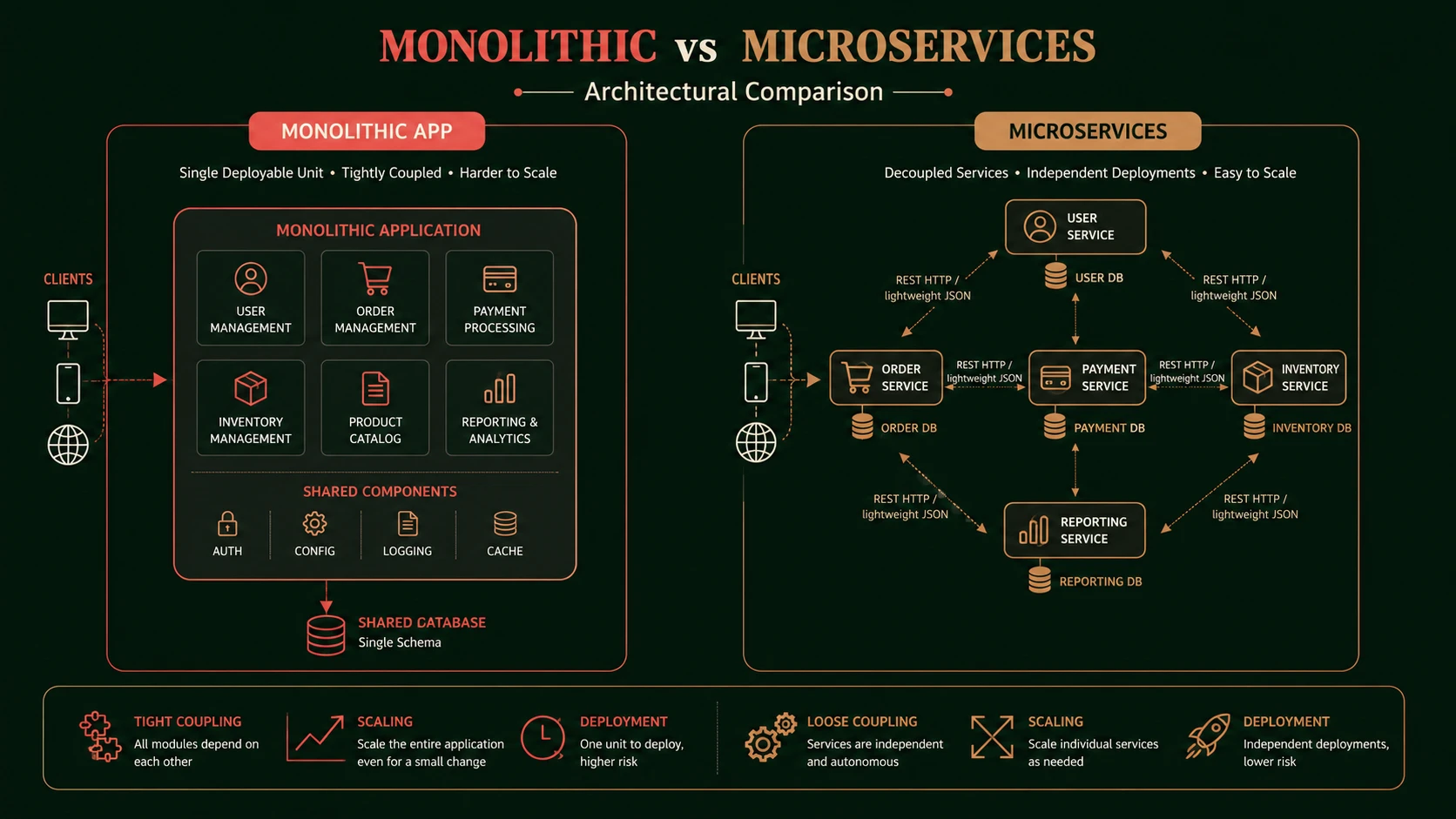
System architecture diagram and conceptual workflow layout for Microservices Architecture.
Growing SaaS providers frequently add new features over time, making modular architectures increasingly attractive.
Internal Business Systems
Large organizations may benefit from allowing different development teams to manage independent services.
Partner Integration
Clearly defined service interfaces simplify communication with external business partners.
Communication Between Services
Services require reliable communication mechanisms.
Organizations commonly evaluate:
- ◆HTTP-based web services
- ◆RESTful interfaces
- ◆SOAP services where appropriate
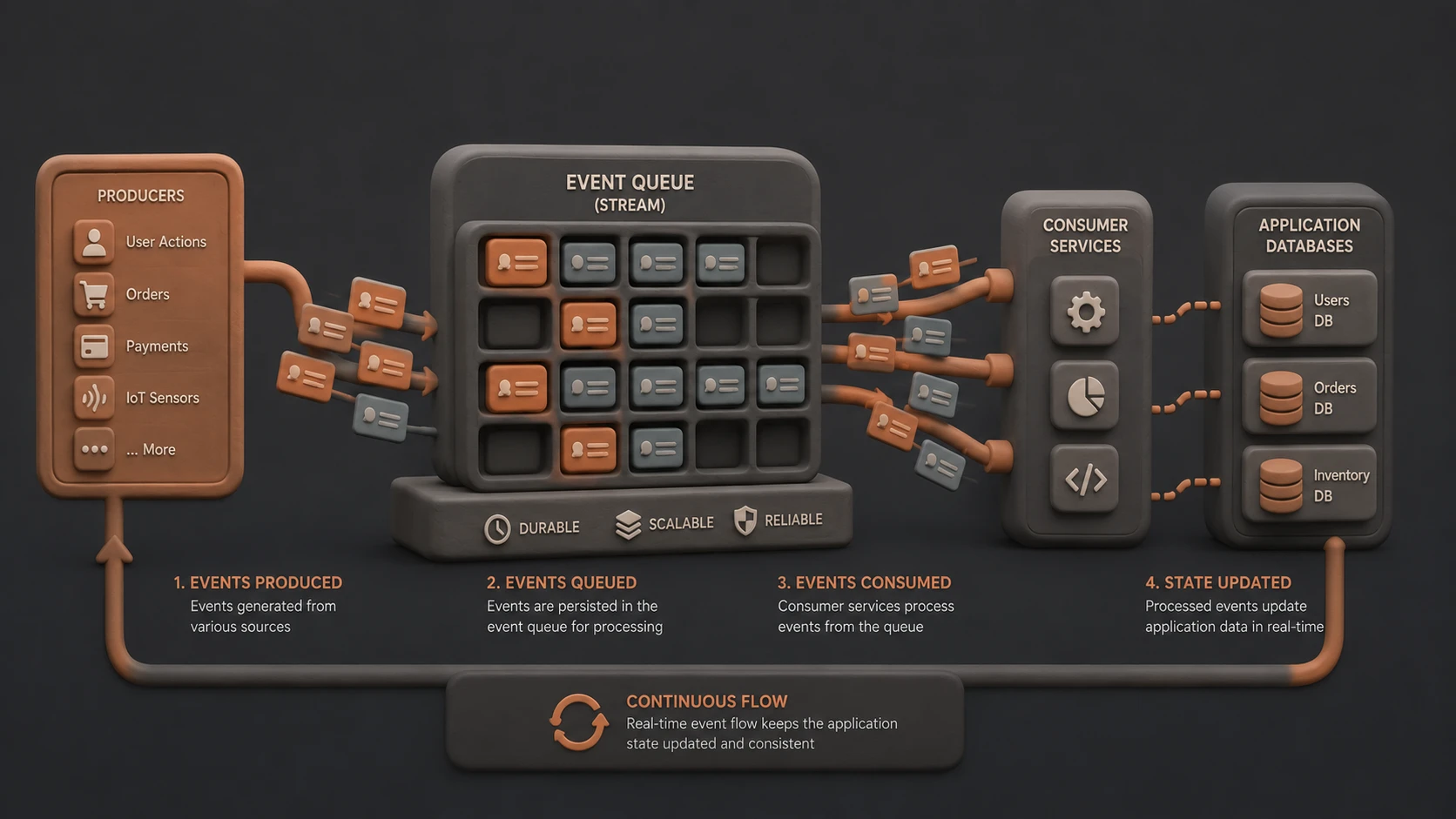
- ◆Message-oriented integration
Selecting the appropriate communication approach depends upon latency requirements, interoperability goals, and existing enterprise standards.
Data Management Considerations
One of the most important architectural decisions involves data ownership.
Questions include:
- ◆Should services share databases?
- ◆Should each service manage its own data?
- ◆How should transactions spanning multiple services be handled?
These remain active areas of architectural evaluation in 2011.
Organizations should establish clear data ownership rules before separating business functionality.
Operational Challenges
Smaller services introduce additional operational considerations.
Architects should prepare for:
- ◆Service monitoring
- ◆Logging
- ◆Version management
- ◆Deployment coordination
- ◆Network communication
- ◆Fault diagnosis
Managing numerous services requires disciplined operational practices.
Performance Considerations
Separating applications into multiple services changes performance characteristics.
Architects should evaluate:
- ◆Network latency
- ◆Service response times
- ◆Interface efficiency
- ◆Database access patterns
- ◆Infrastructure capacity
Performance testing should include complete end-to-end business workflows.
Best Practices
Organizations evaluating service decoupling should consider the following recommendations.
- ◆Begin with clear business boundaries.
- ◆Design stable service interfaces.
- ◆Keep services focused on a single responsibility.
- ◆Avoid unnecessary dependencies.
- ◆Monitor service performance.
- ◆Document service contracts.
- ◆Automate testing where practical.
- ◆Maintain consistent security policies.
- ◆Plan operational monitoring before deployment.
These practices improve maintainability while reducing architectural complexity.
Common Mistakes
Several implementation issues should be avoided.
Splitting Services Too Aggressively
Creating numerous extremely small services without clear business boundaries may increase operational complexity.
Ignoring Service Contracts
Unstable interfaces complicate integration and maintenance.
Shared Database Dependencies
Excessive sharing of database structures can undermine service independence.
Weak Monitoring
Distributed applications require comprehensive operational visibility.
Treating Architecture as an End Goal
Architectural decisions should always support measurable business objectives.
Adoption Recommendations
Organizations interested in service decoupling should adopt the approach gradually.
Phase 1
- ◆Identify logical business capabilities.
- ◆Review existing application boundaries.
- ◆Document dependencies.
Phase 2
- ◆Separate selected non-critical services.
- ◆Define interface standards.
- ◆Establish deployment procedures.
Phase 3
- ◆Expand modular architecture where measurable benefits exist.
- ◆Standardize operational monitoring.
- ◆Improve automation.
Phase 4
- ◆Refine governance practices.
- ◆Continue evaluating service granularity.
- ◆Share architectural guidance across development teams.
A measured transition reduces operational risk while allowing engineering teams to build practical experience.
Balancing Flexibility and Complexity
Service decoupling offers the potential for improved scalability, maintainability, and organizational agility. However, these advantages come with increased operational complexity. More services require more monitoring, deployment coordination, interface management, and infrastructure planning.
Successful enterprise adoption therefore depends upon selecting appropriate service boundaries rather than pursuing decomposition for its own sake. Organizations should prioritize business value while maintaining architectural simplicity wherever possible.
Looking Ahead
The architectural concepts that emphasize smaller, independently deployable services represent an interesting evolution beyond traditional monolithic applications and established service-oriented architectures. Although these ideas are still developing during 2011, they encourage architects to reconsider how enterprise software should be structured to support growing development teams and increasingly dynamic business requirements.
As organizations continue modernizing enterprise applications throughout 2011, service decoupling deserves thoughtful evaluation for systems that have become difficult to maintain or scale. By introducing modular service boundaries incrementally, validating operational practices, and aligning architecture with business capabilities, enterprise teams can build more adaptable software while continuing to leverage proven engineering principles.