Introduction
Apple's introduction of Swift in 2014 represented one of the most significant changes to its software development ecosystem since the introduction of Objective-C. Designed to provide a safer, more expressive, and modern programming language, Swift rapidly attracted interest from developers building iOS and OS X applications.
With the release of Swift 2.0 and Apple's announcement that Swift will become an open source project, the language enters an important new phase. Beyond language improvements, open sourcing Swift demonstrates Apple's intention to encourage broader community participation while enabling adoption beyond Apple's internal engineering teams.
Swift 2.0 also introduces several notable language enhancements, including structured error handling, protocol extensions, compiler improvements, better interoperability with Objective-C, and continued optimization of Automatic Reference Counting (ARC). These capabilities make the language increasingly attractive for enterprise software projects requiring maintainability, performance, and long-term scalability.
For enterprise architects and development teams invested in Apple's platforms, Swift 2.0 represents an important step toward a mature production language.
Industry Background
Mobile application development has evolved rapidly over the past several years. Enterprise organizations increasingly develop:
- ◆Customer-facing mobile applications
- ◆Business productivity tools
- ◆Field service applications
- ◆Healthcare software
- ◆Financial applications
- ◆Retail commerce platforms
- ◆Enterprise collaboration tools
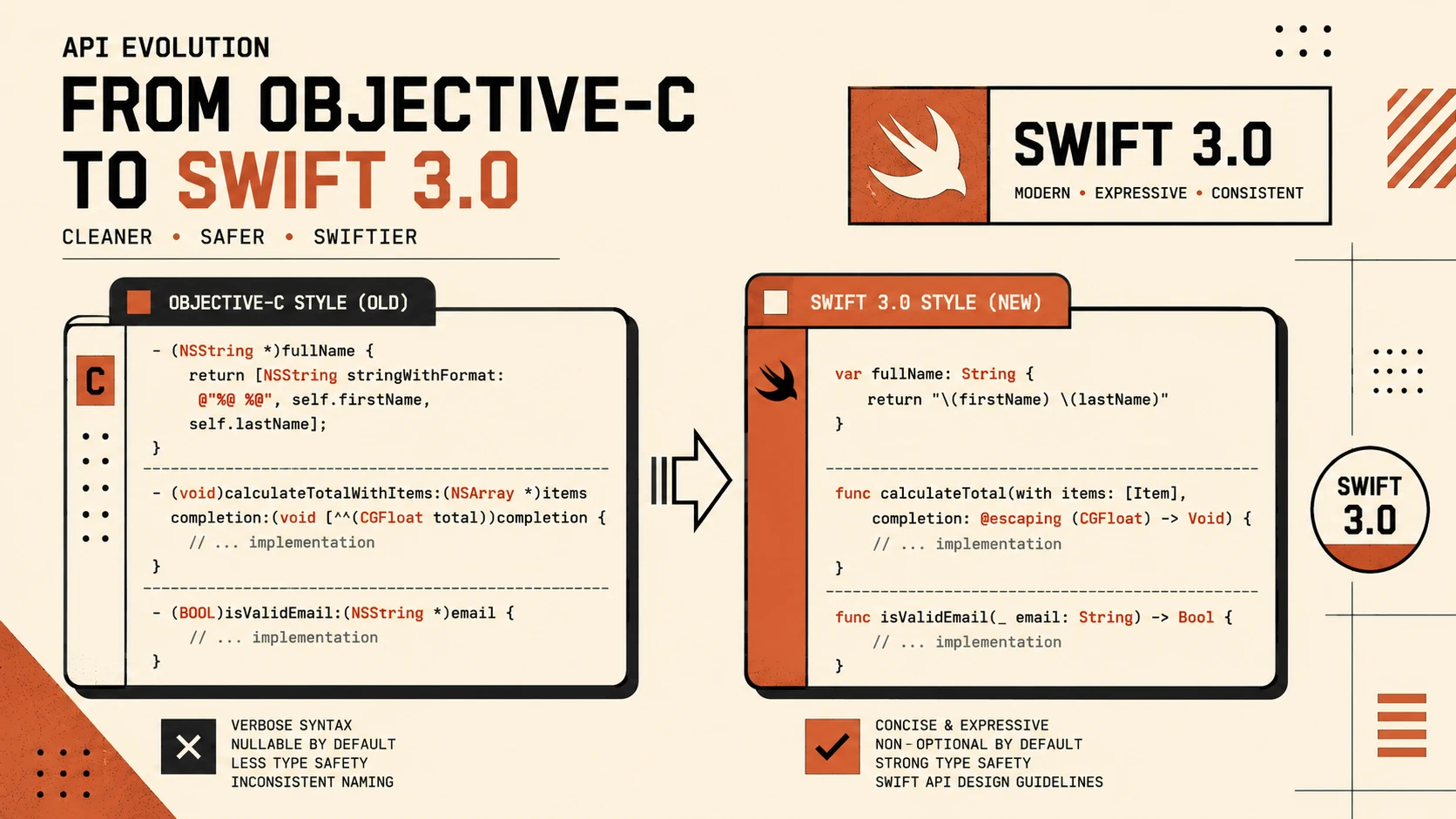
Objective-C has successfully powered Apple's software ecosystem for decades. However, many organizations have sought a language offering stronger safety guarantees, simpler syntax, and improved developer productivity.
Swift was designed to address these requirements while maintaining interoperability with existing Objective-C codebases.
The Business Problem
Large software projects frequently encounter:
- ◆Complex memory management
- ◆Runtime crashes
- ◆Error propagation difficulties
- ◆Limited code reuse
- ◆Long maintenance cycles
- ◆Growing development complexity
Enterprise teams require programming languages capable of improving code quality without sacrificing runtime performance.
Understanding Swift 2.0
Swift 2.0 is Apple's modern programming language for developing applications across Apple's platforms.
The language emphasizes:
- ◆Safety
- ◆Performance
- ◆Expressive syntax
- ◆Strong typing
- ◆Modern compiler design
- ◆Interoperability with Objective-C
Unlike Objective-C, Swift incorporates many contemporary language features while continuing to leverage Apple's existing development frameworks.
Core Architecture
| Component | Responsibility |
|---|---|
| Swift Compiler | Source compilation |
| ARC | Automatic memory management |
| Standard Library | Core language functionality |
| Protocols | Interface abstraction |
| Extensions | Language extensibility |
| Xcode | Development environment |
| LLVM | Code generation and optimization |
Together these components provide a modern development platform capable of producing optimized native applications.
How Swift 2.0 Works
A typical application development workflow includes:
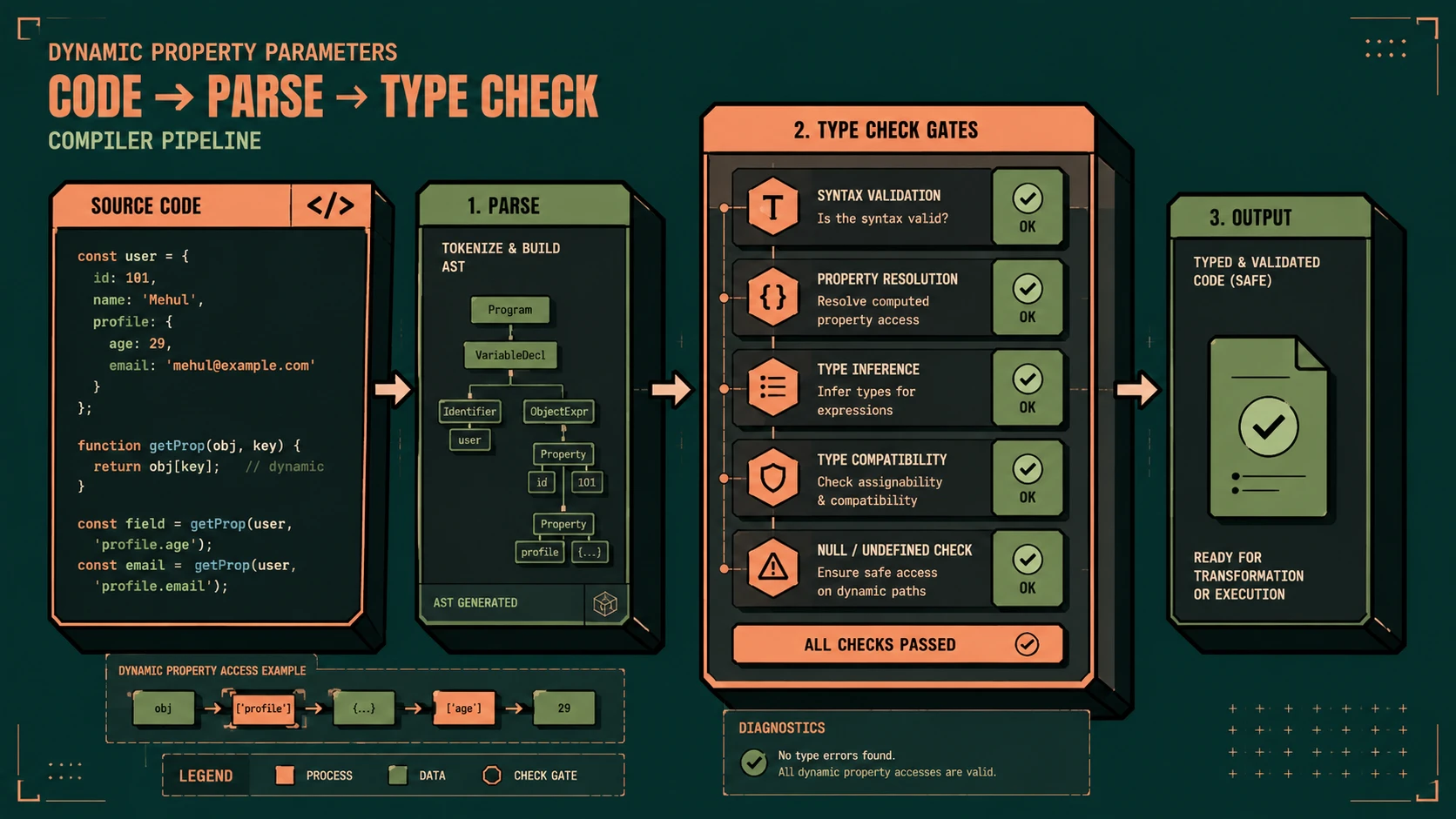
- 1.Developers write Swift source code.
- 2.The compiler performs syntax and type analysis.
- 3.Compile-time safety checks identify potential issues.
- 4.LLVM generates optimized native code.
- 5.ARC automatically manages object lifetimes.
- 6.Applications execute using Apple's native runtime and frameworks.
This workflow reduces manual memory management while maintaining native execution performance.
Key Features
Open Source Swift
Apple's decision to open source Swift allows developers outside Apple to contribute to the language, inspect compiler implementation, and participate in future language evolution.
For enterprise organizations, open source governance increases transparency while encouraging broader ecosystem growth.
Structured Error Handling
Swift 2.0 introduces a dedicated error handling model using throw, try, catch, and throws.
Rather than relying on optional return values or error codes alone, developers can express recoverable failures using structured language constructs.
Benefits include:
- ◆Clearer control flow
- ◆Improved maintainability
- ◆Better separation of success and failure paths
- ◆More predictable application behavior
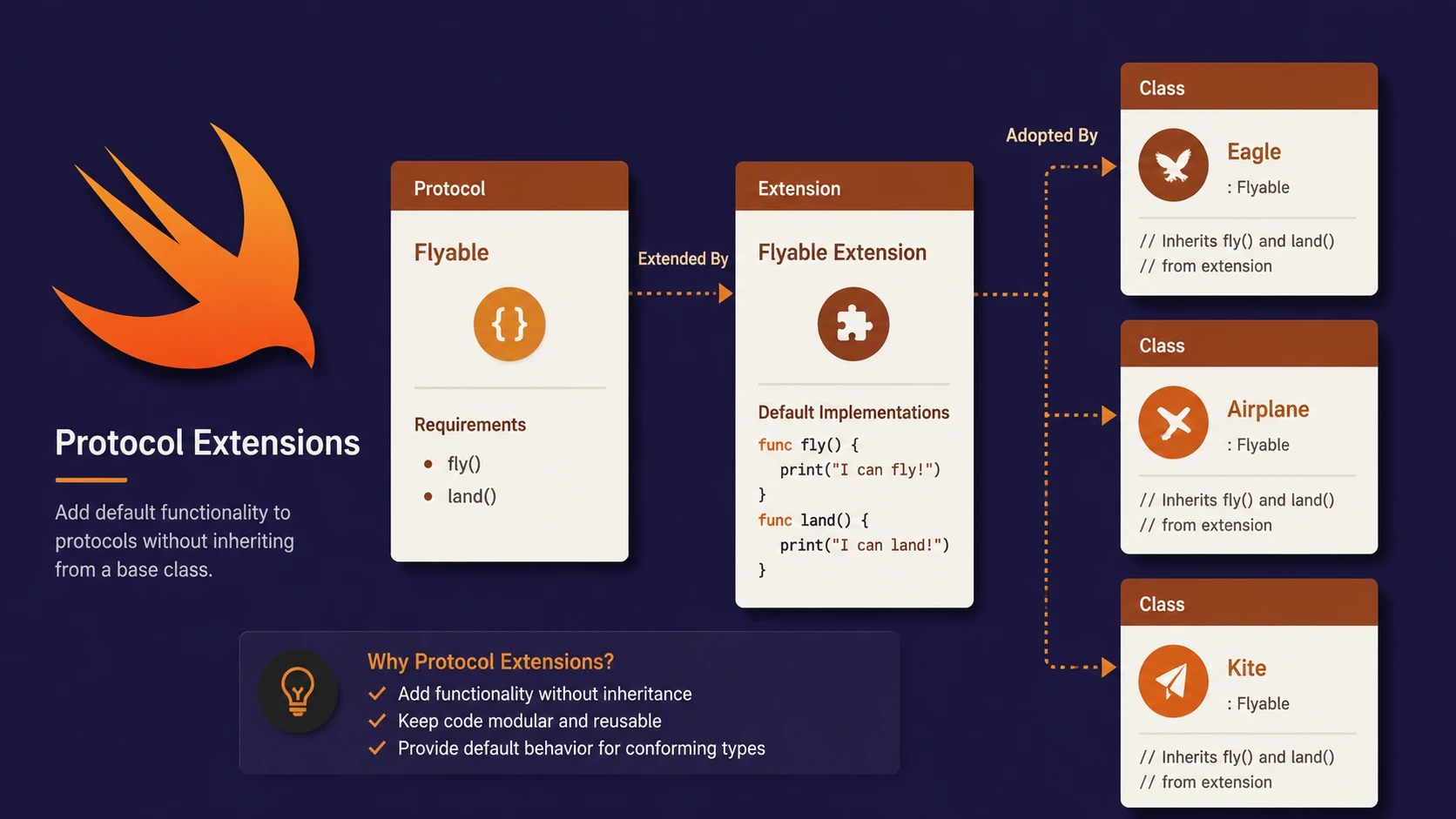
Protocol Extensions
Protocol extensions significantly expand Swift's abstraction capabilities.
Developers can provide default implementations directly within protocols, reducing duplicated code while encouraging protocol-oriented software design.
Advantages include:
- ◆Increased code reuse
- ◆Cleaner architecture
- ◆Simplified API design
- ◆Better modularity
Automatic Reference Counting
Swift continues using Automatic Reference Counting for memory management.
ARC automatically tracks object references and releases unused objects without requiring manual memory deallocation.
Compared with manual memory management, ARC reduces common programming errors including:
- ◆Memory leaks
- ◆Premature object destruction
- ◆Dangling references
Compiler Improvements
Swift 2.0 includes compiler enhancements focused on:
- ◆Faster compilation
- ◆Better diagnostics
- ◆Improved optimization
- ◆Enhanced developer productivity
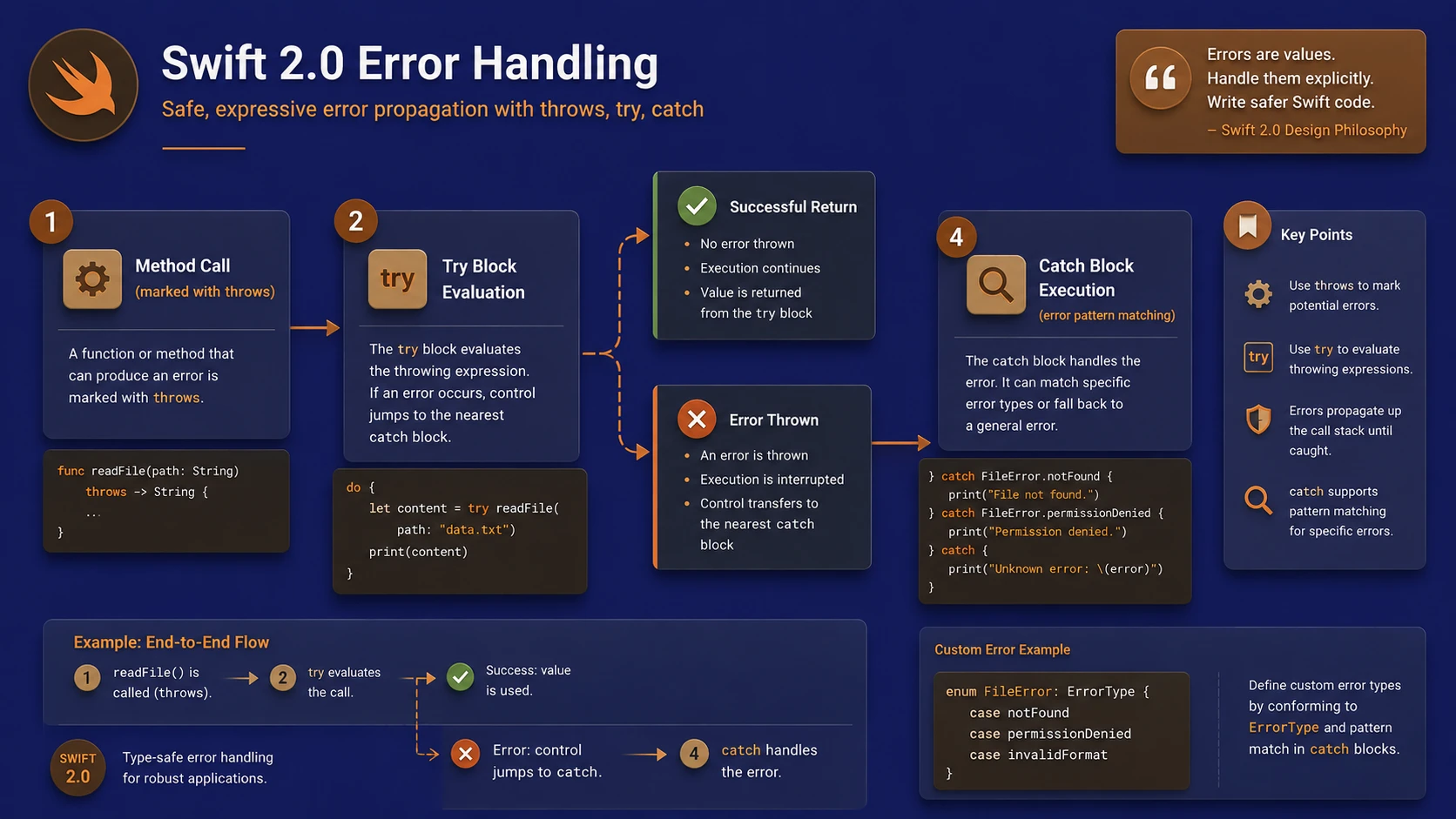
System architecture diagram and conceptual workflow layout for Swift 2.0 Open Source.
These improvements contribute to a smoother development experience for large projects.
Enterprise Use Cases
Swift 2.0 supports numerous enterprise development scenarios.
Business Applications
Organizations developing internal productivity applications benefit from improved language safety and maintainability.
Financial Services
Structured error handling supports applications where predictable failure management is essential.
Healthcare Software
Strong typing and compile-time validation help reduce software defects.
Retail Applications
Modern user interfaces and improved development productivity accelerate mobile application delivery.
Enterprise Framework Development
Protocol-oriented design encourages reusable application components across multiple projects.
Performance Considerations
Swift continues emphasizing native execution performance.
Performance considerations include:
- ◆LLVM optimization
- ◆Efficient ARC implementation
- ◆Native compilation
- ◆Strong type analysis
- ◆Reduced runtime overhead
- ◆Compiler optimizations
Applications continue executing as native binaries rather than interpreted code.
Security Considerations
Swift incorporates several language features intended to improve software reliability.
Enterprise development teams should continue implementing:
- ◆Input validation
- ◆Authentication
- ◆Authorization
- ◆Secure communication
- ◆Data protection
- ◆Secure coding practices
Language safety complements rather than replaces comprehensive application security.
Scalability
Swift 2.0 introduces language capabilities supporting long-term software maintainability.
Scalability advantages include:
- ◆Modular architecture
- ◆Protocol-oriented development
- ◆Strong type system
- ◆Improved code organization
- ◆Better compiler diagnostics
- ◆Enhanced code reuse
These capabilities benefit enterprise projects involving multiple development teams.
Best Practices
Organizations adopting Swift 2.0 should consider the following recommendations.
- ◆Prefer protocol-oriented design where appropriate.
- ◆Use structured error handling consistently.
- ◆Keep application modules focused.
- ◆Minimize unnecessary Objective-C dependencies.
- ◆Follow established API design guidelines.
- ◆Leverage compiler warnings during development.
- ◆Perform regular code reviews.
- ◆Establish coding standards across development teams.
Common Mistakes
| Mistake | Enterprise Impact |
|---|---|
| Overusing forced unwrapping | Runtime failures |
| Ignoring structured error handling | Reduced maintainability |
| Excessive Objective-C compatibility layers | Increased complexity |
| Poor protocol design | Reduced code reuse |
| Large monolithic classes | Lower scalability |
| Delaying migration planning | Technical debt |
Enterprise adoption benefits from gradual migration rather than wholesale application rewrites.
Technology Comparison
| Capability | Objective-C | Swift 2.0 |
|---|---|---|
| Syntax | Traditional | Modern |
| Memory Management | ARC | ARC |
| Error Handling | NSError Patterns | Structured Errors |
| Protocol Extensions | No | Yes |
| Type Safety | Moderate | Strong |
| Open Source | No | Yes |
Swift extends Apple's development ecosystem while preserving interoperability with existing Objective-C applications.
Adoption Strategy
Organizations planning Swift adoption should:
- 1.Evaluate existing Objective-C applications.
- 2.Introduce Swift into new development projects.
- 3.Train development teams.
- 4.Establish coding standards.
- 5.Adopt structured error handling consistently.
- 6.Build reusable protocol-based libraries.
- 7.Measure productivity improvements.
- 8.Expand Swift adoption incrementally.
Gradual migration minimizes project risk while allowing organizations to benefit from modern language capabilities.
Limitations
Although Swift 2.0 represents a substantial advancement, several considerations remain.
- ◆Existing Objective-C applications continue requiring interoperability.
- ◆The language continues evolving rapidly.
- ◆Development teams require training.
- ◆Some third-party libraries remain Objective-C based.
- ◆Large enterprise migrations should proceed incrementally.
Organizations should evaluate Swift adoption according to existing application portfolios and long-term development strategy.
Looking Ahead
From the perspective of September 2015, Swift 2.0 represents a major milestone in Apple's software development ecosystem. The combination of structured error handling, protocol extensions, compiler improvements, ARC enhancements, and the decision to open source the language positions Swift as a modern foundation for future application development.
As the Swift community expands through open source collaboration and enterprise adoption grows, the language is expected to mature into an increasingly important platform for building reliable, maintainable, and high-performance applications across Apple's software ecosystem.