Introduction
Enterprise software has grown far beyond traditional websites. Modern organizations now deliver consistent digital experiences across responsive web applications, native mobile apps, desktop software, wearable devices, internal portals, customer platforms, and emerging digital channels. As digital ecosystems expand, maintaining visual consistency becomes increasingly difficult.
Historically, design values such as colors, typography, spacing, border radii, elevations, animation timings, and breakpoints were manually duplicated across design files, CSS stylesheets, mobile applications, and frontend frameworks. This duplication often resulted in inconsistent branding, slower development cycles, increased maintenance effort, and fragmented user experiences.
Design Tokens have emerged as a standardized solution to this challenge. Rather than treating visual properties as isolated implementation details, Design Tokens represent design decisions as reusable, technology-independent values that can be shared across multiple platforms.
By separating design intent from implementation, organizations create a single source of truth that enables designers and developers to work from the same design language.
From the perspective of May 2023, Design Tokens have become one of the most important architectural building blocks for scalable enterprise design systems.
Industry Background
Digital transformation initiatives continue expanding across industries.
Organizations increasingly develop:
- ◆Enterprise SaaS platforms.
- ◆Customer self-service portals.
- ◆Mobile applications.
- ◆Design systems.
- ◆Internal business tools.
- ◆E-commerce platforms.
- ◆Multi-brand digital products.
Modern product organizations prioritize:
- ◆Consistent branding.
- ◆Cross-platform development.
- ◆Faster product delivery.
- ◆Accessibility.
- ◆Component reuse.
- ◆Design engineering.
Scalable user experience increasingly depends on centralized design governance.
The Business Problem
Large digital platforms frequently encounter several UX challenges.
Organizations commonly experience:
- ◆Inconsistent colors.
- ◆Duplicate design decisions.
- ◆Fragmented component libraries.
- ◆Difficult theme management.
- ◆Cross-platform inconsistencies.
- ◆Slower design implementation.
- ◆Higher maintenance costs.
As design systems grow, manually synchronizing visual properties across multiple technologies becomes impractical.
Design Tokens address these challenges through centralized design definitions.
Understanding the Technology
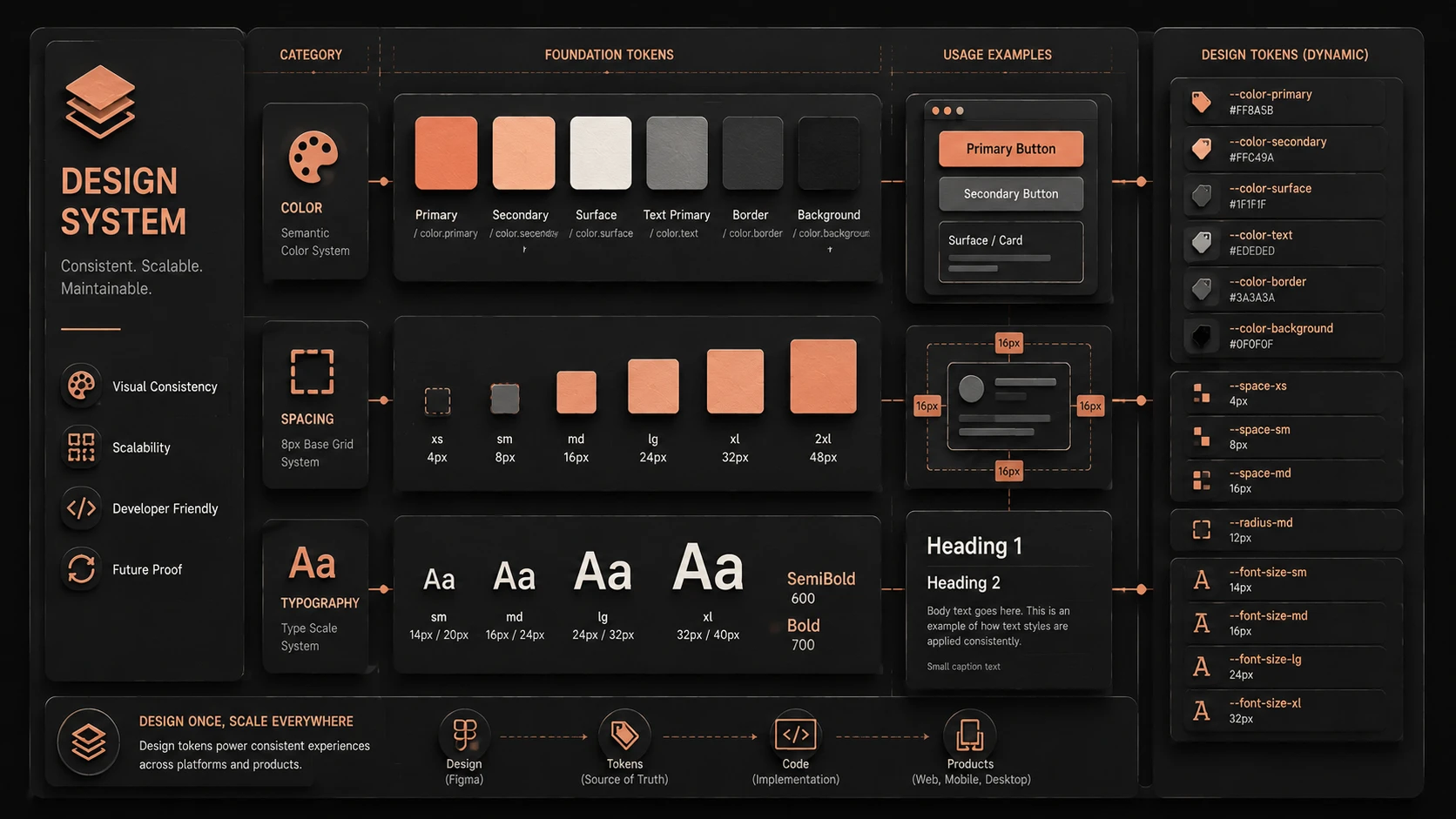
Design Tokens represent visual design decisions as structured, reusable values.
Rather than embedding visual properties directly into implementation code, tokens describe design attributes in a technology-independent format.
Common token categories include:
- ◆Colors.
- ◆Typography.
- ◆Font sizes.
- ◆Spacing.
- ◆Border radius.
- ◆Shadows.
- ◆Animation durations.
- ◆Breakpoints.
- ◆Elevation.
- ◆Opacity.
These values can then be transformed into platform-specific formats for web, iOS, Android, desktop, and design tools.
Core Architecture
A simplified Design Token architecture appears below.
| Component | Responsibility |
|---|---|
| Design System | Defines visual language |
| Design Tokens | Store design decisions |
| Token Transformation | Generate platform outputs |
| Web Applications | Consume CSS variables or styles |
| Mobile Applications | Consume native resources |
| Design Tools | Share visual specifications |
| Component Libraries | Implement reusable UI components |
The token layer acts as the bridge between design intent and implementation.
Key Features
Single Source of Truth
The defining characteristic of Design Tokens is centralization.
Rather than duplicating values throughout multiple projects, organizations maintain design decisions in one authoritative location.
This improves:
- ◆Consistency.
- ◆Maintainability.
- ◆Collaboration.
- ◆Governance.
Updates automatically propagate across supported platforms through token generation pipelines.
Cross-Platform Consistency
Modern enterprises rarely build for a single platform.
The same design language may be required across:
- ◆Web.
- ◆Android.
- ◆iOS.
- ◆Desktop.
- ◆Internal portals.
- ◆Marketing websites.
Design Tokens ensure these platforms reference identical design values while allowing platform-specific implementation details.
Theme Management
Organizations increasingly support:
- ◆Light themes.
- ◆Dark themes.
- ◆High-contrast accessibility modes.
- ◆Customer branding.
- ◆Multi-brand products.
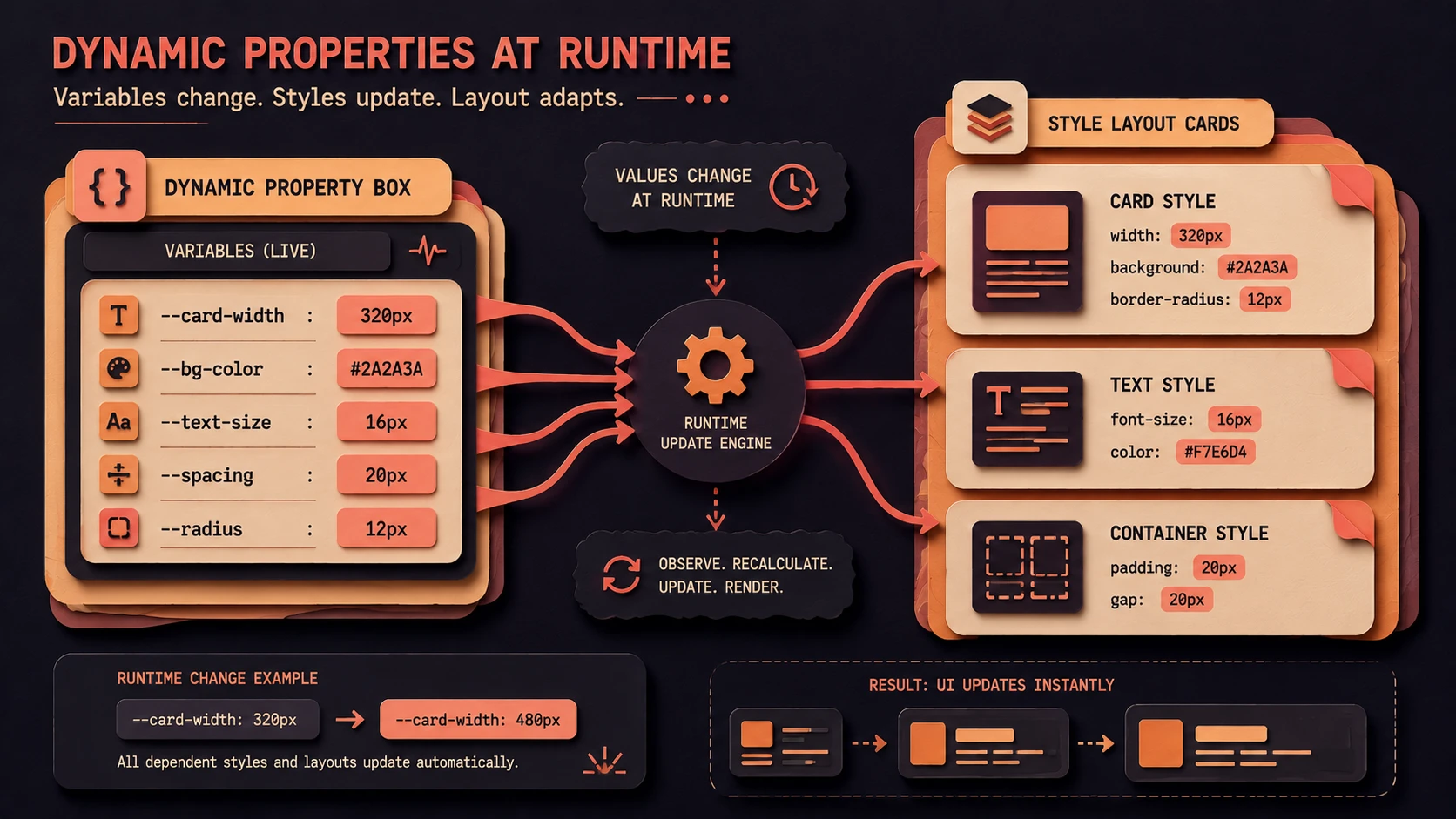
Token-based architecture simplifies theme switching by changing token values rather than rewriting application styles.
Improved Designer-Developer Collaboration
Design Tokens establish a common vocabulary shared by designers and engineers.
Instead of exchanging isolated design specifications, teams collaborate around reusable semantic values such as:
- ◆Primary Color.
- ◆Surface Background.
- ◆Body Text.
- ◆Large Spacing.
- ◆Border Radius Medium.
This reduces communication overhead and implementation ambiguity.
Component Library Integration
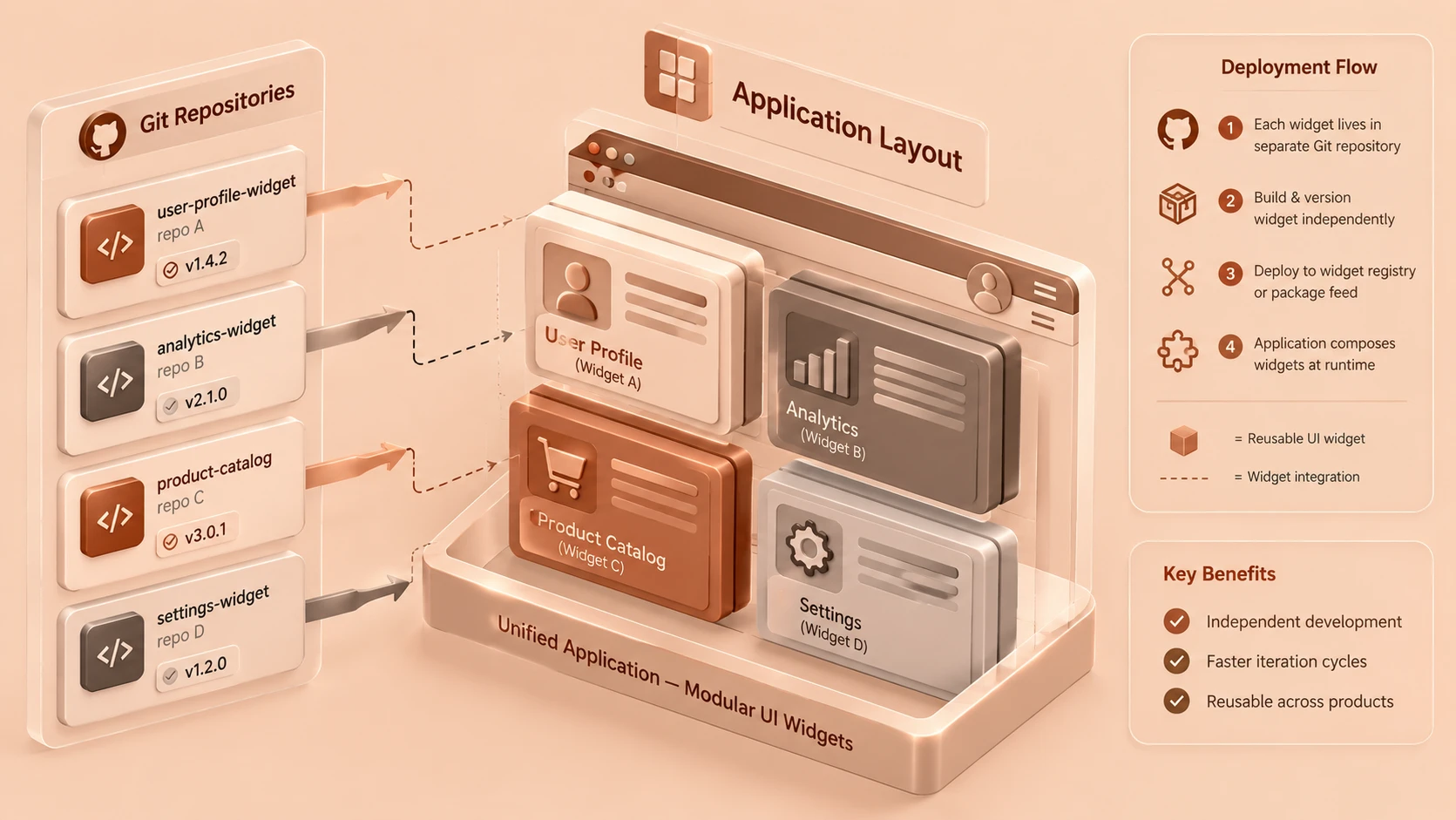
Reusable UI components reference tokens instead of hardcoded values.
This allows organizations to update the appearance of hundreds of components by modifying centralized token definitions.
Component libraries become significantly easier to maintain.
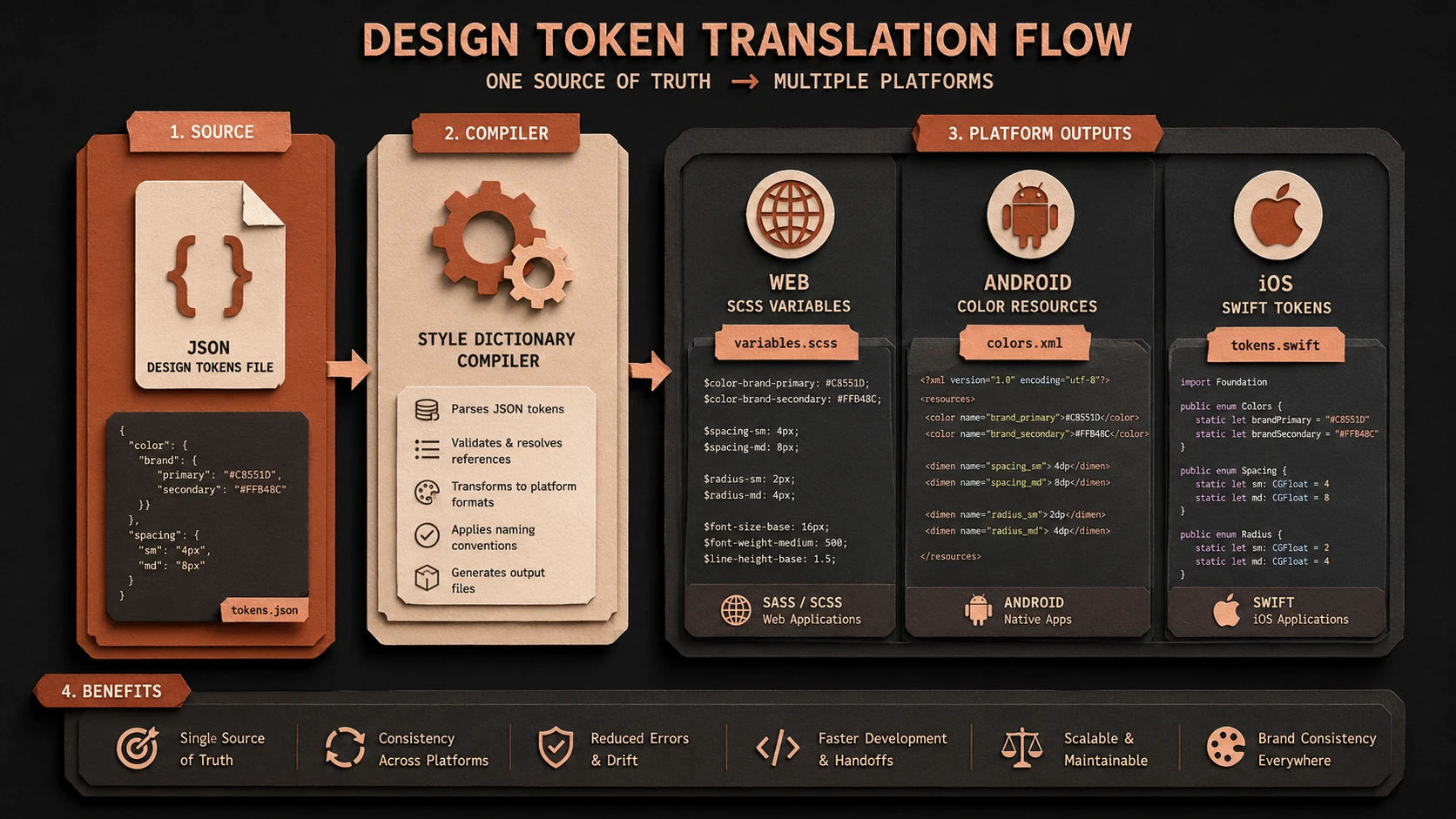
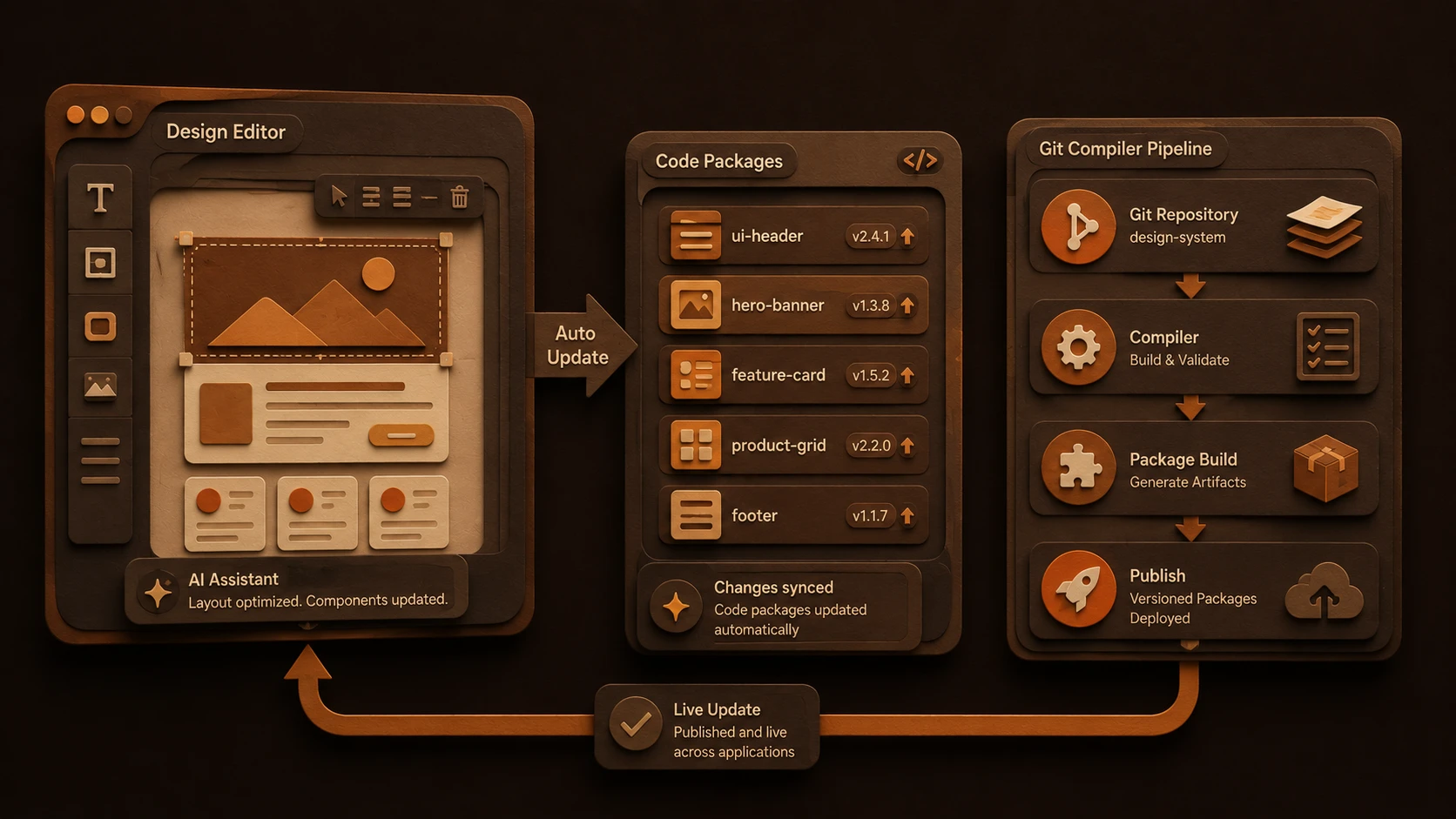
System architecture diagram and conceptual workflow layout for The Rise of Design Tokens and Scalable UX.
Enterprise Governance
Large organizations increasingly establish DesignOps and Design Engineering teams responsible for governing token evolution.
Governance ensures:
- ◆Brand consistency.
- ◆Accessibility compliance.
- ◆Documentation quality.
- ◆Platform alignment.
- ◆Version management.
This enables design systems to scale across numerous product teams.
How It Works
A simplified workflow appears below.
Design Decisions
        |
Design Tokens
        |
Token Transformation
        |
Web CSS
iOS Resources
Android Resources
Design Libraries
        |
Reusable Components
        |
Consistent User Experience
The same token definitions generate platform-specific assets while preserving a unified design language.
Enterprise Use Cases
Enterprise SaaS Platforms
Multiple product teams share a consistent visual language while independently developing application features.
Banking Applications
Security-focused interfaces maintain consistent branding across customer portals and internal systems.
E-Commerce Platforms
Product catalogs, checkout flows, and customer accounts remain visually consistent across multiple devices.
Multi-Brand Organizations
Companies operating several brands can generate customized themes from shared token structures.
Government and Healthcare Platforms
Accessibility improvements become easier to implement through centralized typography, color, and spacing definitions.
Performance Considerations
Design Tokens primarily improve maintainability rather than runtime performance.
Organizations should evaluate:
- ◆CSS generation.
- ◆Bundle size.
- ◆Theme switching efficiency.
- ◆Component rendering.
- ◆Build pipeline performance.
- ◆Token transformation automation.
Well-designed token systems reduce maintenance complexity without negatively affecting application responsiveness.
Security Considerations
Although Design Tokens focus on presentation, enterprise governance remains important.
Organizations should implement:
- ◆Version control.
- ◆Design review workflows.
- ◆Access controls.
- ◆Documentation.
- ◆Component validation.
- ◆Release management.
Design consistency should complement broader enterprise software governance.
Scalability
Design Tokens improve enterprise scalability through:
- ◆Centralized design decisions.
- ◆Component reuse.
- ◆Faster branding updates.
- ◆Multi-platform synchronization.
- ◆Simplified maintenance.
- ◆Shared design language.
These characteristics enable organizations to scale digital products without sacrificing user experience consistency.
Best Practices
Organizations adopting Design Tokens should:
- ◆Build semantic token names instead of implementation-specific names.
- ◆Separate primitive values from semantic design tokens.
- ◆Version token changes carefully.
- ◆Integrate tokens into automated build pipelines.
- ◆Align component libraries with token architecture.
- ◆Establish DesignOps governance.
- ◆Document token usage across engineering teams.
Successful implementation depends on organizational discipline as much as technical tooling.
Common Mistakes
| Mistake | Business Impact |
|---|---|
| Hardcoding visual values inside components | Reduced maintainability |
| Using implementation-specific token names | Limited flexibility |
| Allowing teams to bypass the design system | Inconsistent user experience |
| Failing to version token changes | Unexpected UI regressions |
| Duplicating token definitions across repositories | Increased maintenance effort |
| Ignoring accessibility during token design | Poor user experience |
Organizations should treat Design Tokens as enterprise infrastructure rather than simply a styling technique.
Technology Comparison
| Characteristic | Traditional UI Styling | Design Token Architecture |
|---|---|---|
| Visual Values | Hardcoded across applications | Centralized definitions |
| Cross-Platform Support | Manual synchronization | Automated generation |
| Theme Management | Complex | Token-driven |
| Component Consistency | Team dependent | Systematic |
| Scalability | Difficult | Enterprise-ready |
| Maintenance | High effort | Significantly simplified |
Design Tokens establish a standardized foundation for scalable user experience engineering across modern digital platforms.
Adoption Strategy
Organizations should adopt Design Tokens incrementally.
- 1.Audit existing design systems and UI components.
- 2.Identify reusable design properties.
- 3.Create centralized token definitions.
- 4.Integrate token generation into build pipelines.
- 5.Update component libraries to consume tokens.
- 6.Expand adoption across web, mobile, and design tooling.
This phased approach minimizes disruption while enabling organizations to modernize their design systems systematically.
Limitations
As of May 2023, organizations should recognize several considerations.
- ◆Design Tokens require strong governance to remain effective as products and teams grow.
- ◆Existing applications may require gradual migration rather than complete redesign.
- ◆Cross-platform transformation pipelines should be validated before production adoption.
- ◆Successful implementation depends on collaboration between design, engineering, and product teams.
- ◆Tokens improve consistency but do not replace thoughtful UX research or product design.
These considerations should guide enterprise design system modernization.
Looking Ahead
From the perspective of May 2023, Design Tokens have evolved from a design system implementation detail into a strategic enterprise capability. By establishing a shared language between designers and developers, organizations can deliver consistent experiences across web, mobile, desktop, and future digital platforms while significantly reducing maintenance overhead.
As digital ecosystems continue expanding, scalable UX will increasingly depend on treating design decisions as reusable, governed assets rather than isolated styling values. Organizations investing in Design Tokens, automated design pipelines, component libraries, and DesignOps practices will be better positioned to deliver accessible, consistent, and maintainable user experiences at enterprise scale.