Introduction
Modern frontend development has shifted dramatically from monolithic CSS files toward component-driven user interfaces. As applications grow, maintaining traditional CSS architectures becomes increasingly difficult due to selector conflicts, cascading complexity, unused stylesheets, and inconsistent design implementation across development teams.
Utility-first CSS frameworks have emerged as an alternative approach that emphasizes composing interfaces directly from reusable utility classes rather than continually authoring custom CSS. Tailwind CSS has become one of the leading frameworks in this category by providing low-level utility classes that can be combined to construct complex interfaces while maintaining a consistent design system.
One common concern surrounding utility-first frameworks is the apparent increase in stylesheet size during development. Because Tailwind generates a comprehensive set of utilities, development builds often include many classes that individual applications never use.
Tailwind CSS 1.4 addresses this concern by improving integration with PurgeCSS, making it significantly easier to remove unused utility classes during production builds. The result is a development workflow optimized for flexibility while producing considerably smaller deployment artifacts.
As of April 2020, Tailwind CSS 1.4 represents an important step toward enterprise adoption by simplifying production optimization without sacrificing developer productivity.
Industry Background
Modern web applications increasingly prioritize:
- ◆Component-based development
- ◆Design systems
- ◆Responsive layouts
- ◆Performance optimization
- ◆Continuous Integration and Continuous Delivery
- ◆Bundle size reduction
- ◆Mobile-first experiences
- ◆Maintainable frontend architecture
Organizations now measure frontend performance using metrics such as page load time, rendering speed, JavaScript execution, and CSS download size.
The Business Problem
Enterprise frontend projects commonly encounter:
- ◆Large CSS bundles
- ◆Unused stylesheet rules
- ◆Difficult CSS maintenance
- ◆Selector conflicts
- ◆Design inconsistency
- ◆Slow production page loading
- ◆Growing technical debt
Development teams require styling systems that remain maintainable while minimizing production payload size.
Understanding Tailwind CSS 1.4
Tailwind CSS is a utility-first framework that provides small, composable utility classes instead of predefined UI components.
Major characteristics include:
- ◆Utility-first styling
- ◆Configuration-driven design systems
- ◆Responsive utilities
- ◆Theme customization
- ◆Production optimization
- ◆PurgeCSS integration
Rather than encouraging large custom stylesheets, Tailwind promotes composition directly within application markup.
Core Architecture
| Component | Responsibility |
|---|---|
| Tailwind Configuration | Defines design tokens and framework behavior |
| Utility Generator | Produces utility classes |
| PurgeCSS | Removes unused CSS |
| Build Tool | Generates production assets |
| Browser CSS Engine | Applies styles |
| Application Components | Consume generated utilities |
The build pipeline performs optimization before deployment, allowing development builds to remain comprehensive while production bundles remain compact.
Utility-First CSS
Tailwind organizes styling around individual utility classes representing:
- ◆Layout
- ◆Spacing
- ◆Typography
- ◆Colors
- ◆Borders
- ◆Flexbox
- ◆Grid
- ◆Positioning
Instead of creating numerous custom CSS selectors, developers compose interfaces using combinations of these utilities.
Potential enterprise benefits include:
- ◆Consistent styling
- ◆Reduced selector conflicts
- ◆Faster interface development
- ◆Easier design standardization
Large engineering organizations may find utility-first workflows particularly valuable when maintaining shared component libraries.
PurgeCSS Integration
// tailwind.config.js PurgeCSS configuration in Tailwind CSS 1.4
module.exports = {
  purge: [
    './src/**/*.html',
    './src/**/*.vue',
    './src/**/*.jsx',
    './src/**/*.tsx'
  ],
  theme: {
    extend: {
      colors: {
        shivamCyan: '#00E5FF',
        shivamPurple: '#7C4DFF'
      }
    }
  },
  variants: {},
  plugins: []
}
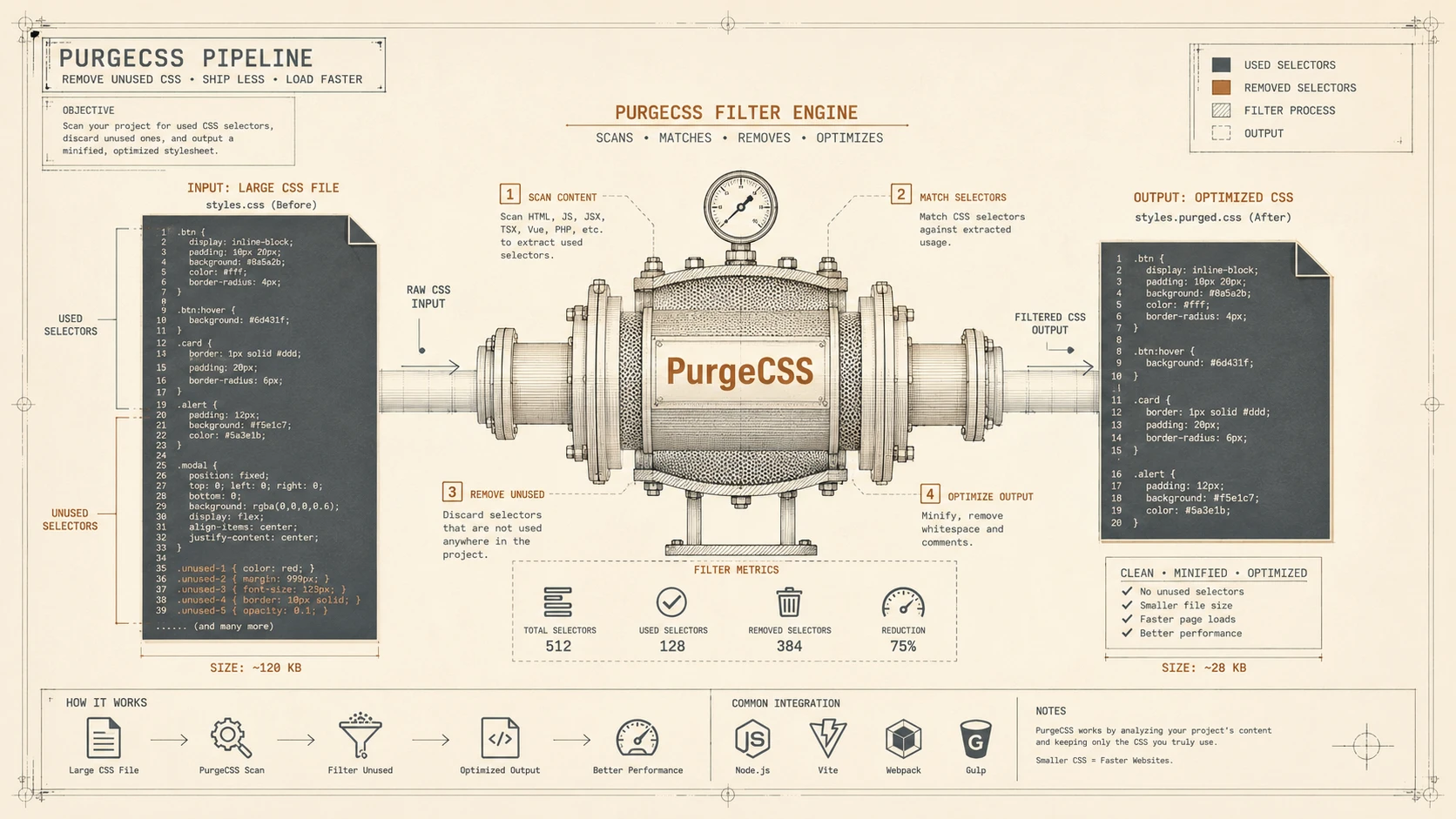
One of the most significant improvements in Tailwind CSS 1.4 is enhanced PurgeCSS integration.
During development, Tailwind generates a large collection of utility classes.
Production applications, however, typically use only a subset of these utilities.
PurgeCSS analyzes project source files and removes unused CSS before deployment.
Typical workflow:
- 1.Tailwind generates the full utility set.
- 2.Application templates are analyzed.
- 3.Referenced utility classes are identified.
- 4.Unused utilities are removed.
- 5.Optimized CSS is generated.
- 6.Production assets are deployed.
This approach enables flexible development without shipping unnecessary CSS to production environments.
Configuration-Driven Design Systems
Tailwind's configuration file acts as a centralized definition of design standards.
Organizations can define:
- ◆Color palettes
- ◆Typography scales
- ◆Spacing systems
- ◆Breakpoints
- ◆Shadows
- ◆Border radius values
Centralized configuration promotes consistency across large engineering teams while simplifying long-term maintenance.
Responsive Design
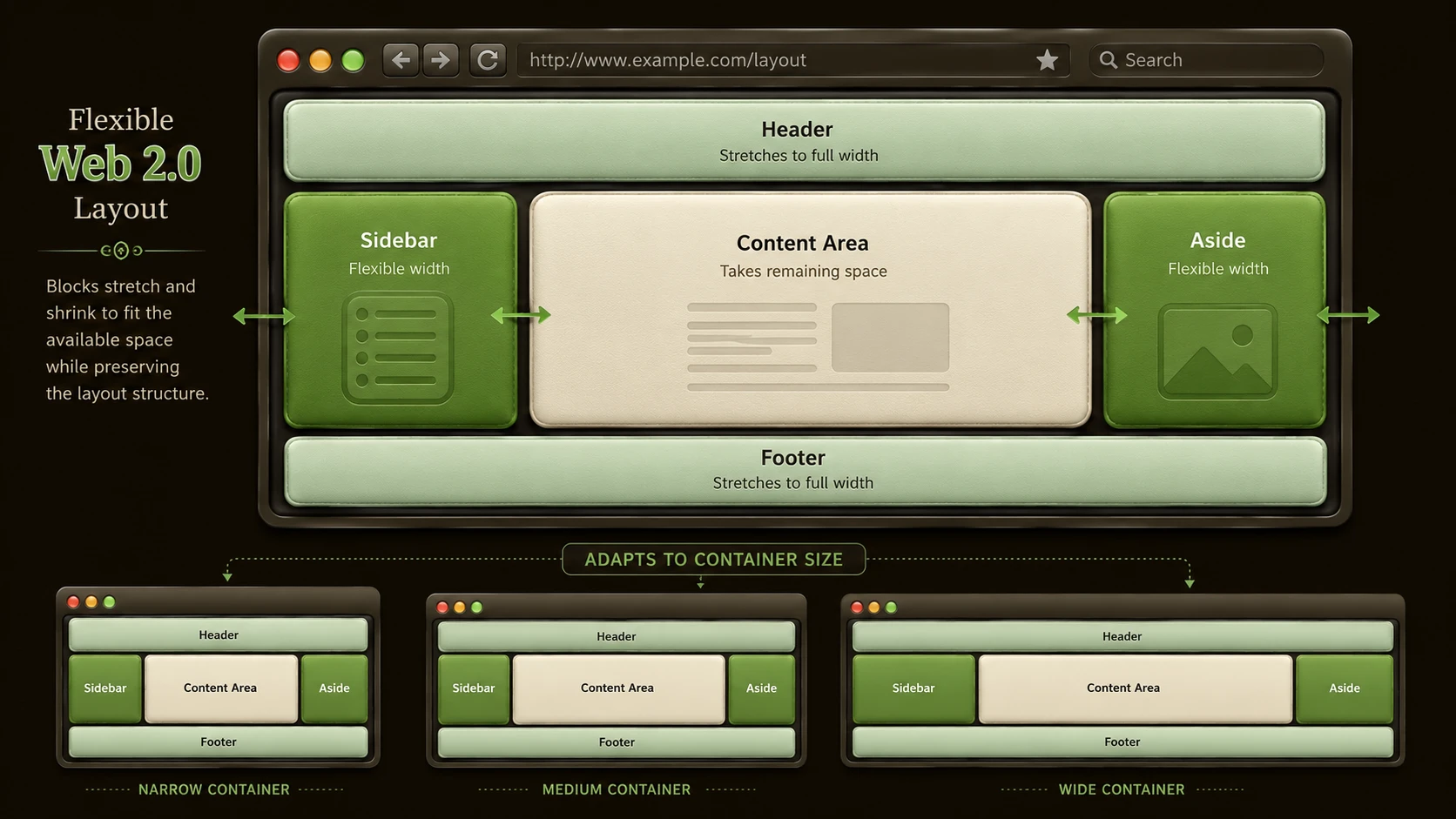
Responsive utilities remain a core strength of Tailwind.
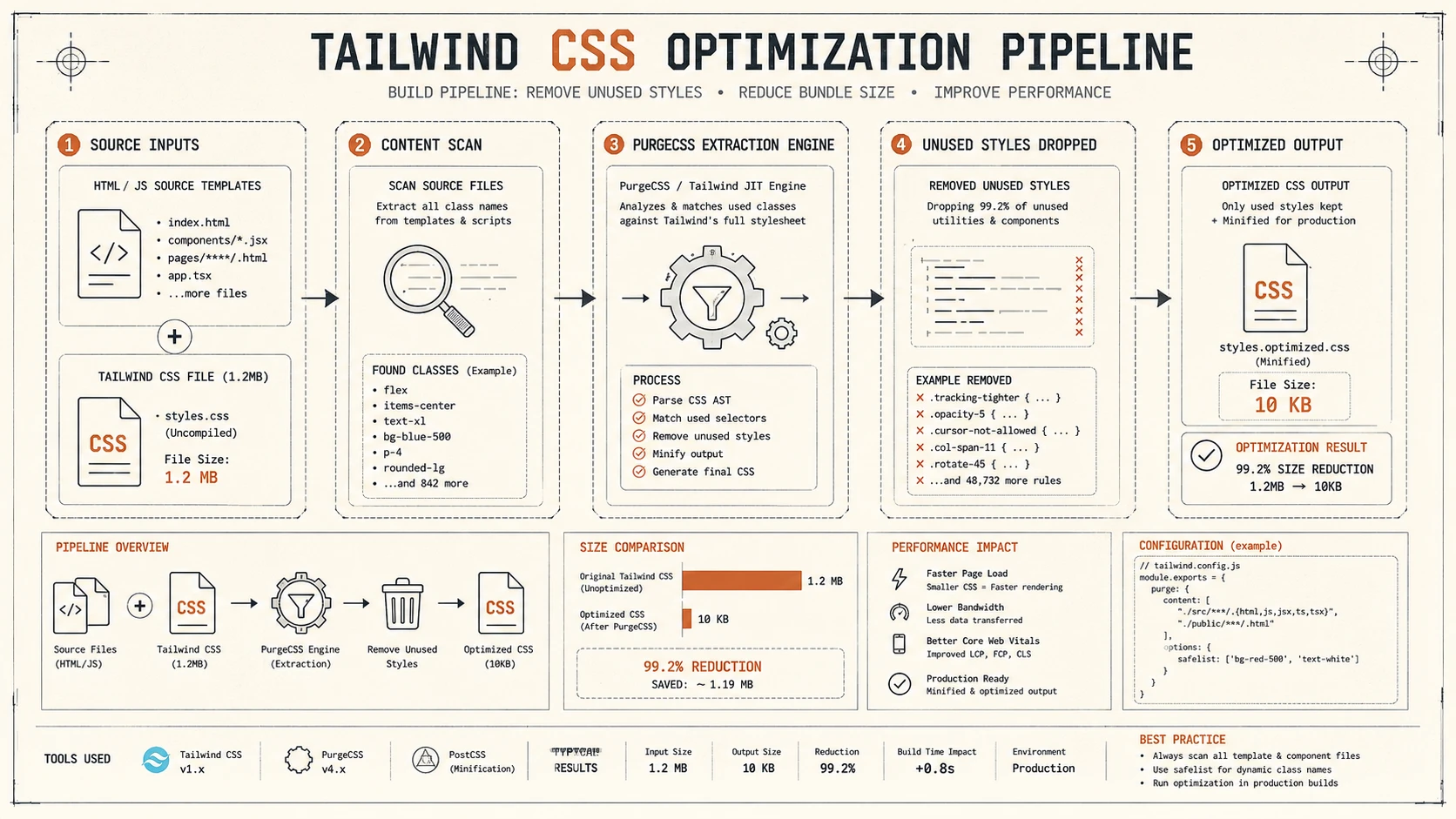
System architecture diagram and conceptual workflow layout for Tailwind CSS 1.4.
Development teams can adapt layouts for multiple viewport sizes using predefined responsive variants.
Typical enterprise applications include:
- ◆Customer portals
- ◆Administrative dashboards
- ◆SaaS platforms
- ◆E-commerce systems
- ◆Internal business applications
Consistent responsive behavior improves user experience across desktop and mobile devices.
Enterprise Use Cases
| Scenario | Benefit |
|---|---|
| Enterprise Dashboards | Consistent utility-based layouts |
| SaaS Platforms | Smaller production CSS bundles |
| Customer Portals | Faster page loading |
| Component Libraries | Shared design language |
| Administrative Applications | Reduced CSS maintenance |
| Progressive Web Applications | Improved mobile performance |
Organizations maintaining large frontend codebases benefit from standardized styling patterns and automated CSS optimization.
Performance Considerations
Tailwind CSS 1.4 primarily improves production performance through CSS optimization.
Development teams should evaluate:
- ◆Final CSS bundle size
- ◆Initial page load
- ◆Render blocking resources
- ◆Build duration
- ◆PurgeCSS execution time
- ◆Browser rendering performance
Production measurements should always be based on representative deployment environments.
Security Considerations
Tailwind CSS does not alter frontend security practices.
Organizations should continue implementing:
- ◆Content Security Policy where appropriate
- ◆Secure dependency management
- ◆Regular package updates
- ◆Input validation
- ◆Output encoding
- ◆Secure deployment pipelines
Build optimization complements secure software delivery but does not replace established security controls.
Scalability
Tailwind CSS supports scalable frontend development by:
- ◆Standardizing visual design
- ◆Centralizing design configuration
- ◆Reducing custom CSS maintenance
- ◆Automating production optimization
- ◆Encouraging reusable component patterns
These characteristics become increasingly valuable as frontend teams and application portfolios expand.
Best Practices
Organizations adopting Tailwind CSS 1.4 should:
- ◆Enable PurgeCSS for all production builds.
- ◆Maintain a centralized Tailwind configuration.
- ◆Build reusable UI components.
- ◆Document design system conventions.
- ◆Validate production bundle sizes during Continuous Integration.
- ◆Review PurgeCSS configuration carefully.
- ◆Benchmark page loading after optimization.
- ◆Keep utility usage consistent across projects.
A disciplined build process ensures that production bundles remain efficient while preserving development flexibility.
Common Mistakes
Development teams should avoid:
- ◆Deploying development CSS bundles directly to production.
- ◆Removing dynamically generated classes unintentionally during PurgeCSS configuration.
- ◆Duplicating utility patterns unnecessarily.
- ◆Introducing excessive custom CSS that bypasses the design system.
- ◆Ignoring production bundle analysis.
- ◆Treating utility classes as a substitute for thoughtful component architecture.
Successful adoption depends on combining utility-first development with disciplined design system governance.
Technology Comparison
| Capability | Traditional CSS Framework | Tailwind CSS 1.4 |
|---|---|---|
| Styling Model | Predefined components | Utility-first |
| Design Customization | Moderate | Extensive configuration |
| CSS Optimization | Manual | PurgeCSS integration |
| Production Bundle Size | Framework dependent | Optimized through unused CSS removal |
| Component Composition | CSS selectors | Utility composition |
| Design System Support | Varies | Configuration-driven |
Tailwind CSS differentiates itself by emphasizing composition and build-time optimization rather than predefined interface components.
Adoption Strategy
Organizations should approach Tailwind adoption incrementally.
A practical migration strategy includes:
- 1.Introduce Tailwind into new frontend projects.
- 2.Define a shared design configuration.
- 3.Enable PurgeCSS for production builds.
- 4.Benchmark CSS bundle size before and after migration.
- 5.Train development teams on utility-first workflows.
- 6.Validate component consistency.
- 7.Expand adoption after measurable improvements in maintainability and performance.
This phased approach minimizes organizational disruption while allowing engineering teams to establish shared frontend standards.
Limitations
As of April 2020, organizations should recognize several considerations.
Current observations include:
- ◆Utility-first development introduces a different authoring style that may require developer training.
- ◆Existing CSS architectures may require gradual migration.
- ◆PurgeCSS configuration should be validated carefully to prevent removal of legitimately used classes.
- ◆Long-term success depends upon consistent design system governance rather than framework adoption alone.
Tailwind CSS 1.4 provides a strong foundation for scalable frontend development, but effective implementation requires thoughtful integration into existing engineering workflows.
Looking Ahead
Tailwind CSS 1.4 demonstrates that utility-first CSS can scale beyond small projects into enterprise application development. By integrating PurgeCSS more closely into the production workflow, the framework addresses one of the primary concerns surrounding utility generation: deployment size. Combined with configuration-driven design systems, responsive utilities, and composable styling patterns, Tailwind continues to offer a compelling approach for teams seeking consistency, maintainability, and performance.
As of April 2020, enterprise architects and frontend engineering leaders should evaluate Tailwind CSS 1.4 for projects where standardized design systems, optimized production assets, and long-term maintainability are strategic priorities. Organizations that combine disciplined build automation, careful PurgeCSS configuration, and reusable component design will be well positioned to realize the benefits of a utility-first CSS architecture.