Introduction
For nearly two decades, Java has remained one of the dominant programming languages for enterprise software development. Its mature ecosystem, cross-platform capabilities, extensive tooling, and stability have made it the preferred platform for financial systems, enterprise web applications, middleware, distributed services, and Android development.
Despite these strengths, enterprise developers continue to encounter recurring challenges including verbose syntax, null pointer exceptions, boilerplate code, and increasingly complex object-oriented designs. As software projects grow, improving developer productivity while preserving compatibility with existing Java investments becomes an important architectural objective.
JetBrains has introduced Kotlin 1.0 as a modern programming language that executes on the Java Virtual Machine (JVM) while remaining fully interoperable with existing Java code. Kotlin combines concise syntax, stronger type safety, improved null handling, functional programming capabilities, and efficient compilation without requiring organizations to abandon their existing Java infrastructure.
For enterprise architects, Kotlin 1.0 offers a practical modernization path that preserves long-term Java investments while improving developer experience and software maintainability.
Industry Background
Enterprise software increasingly consists of:
- ◆Distributed web applications
- ◆Microservices
- ◆Android applications
- ◆Middleware platforms
- ◆Financial systems
- ◆Cloud services
- ◆Enterprise APIs
- ◆Backend business applications
Most of these systems continue relying upon the JVM because of its maturity, stability, and broad ecosystem.
Organizations therefore seek language improvements without replacing the underlying platform.
The Business Problem
Large Java projects commonly experience:
- ◆Verbose source code
- ◆Frequent NullPointerException errors
- ◆Boilerplate object models
- ◆Complex maintenance
- ◆Long development cycles
- ◆Difficult refactoring
Development teams require a language capable of improving productivity while maintaining compatibility with existing enterprise systems.
Understanding Kotlin 1.0
Kotlin is a statically typed programming language developed by JetBrains for the JVM.
Rather than replacing Java, Kotlin complements it by providing a more expressive syntax while compiling into standard JVM bytecode.
Core design goals include:
- ◆Complete Java interoperability
- ◆Strong null safety
- ◆Concise syntax
- ◆Modern language constructs
- ◆High runtime performance
- ◆Seamless JVM integration
Applications written in Kotlin execute alongside Java code without requiring changes to the Java Virtual Machine.
Core Architecture
| Component | Responsibility |
|---|---|
| Kotlin Compiler | Compiles Kotlin source into JVM bytecode |
| JVM | Executes compiled applications |
| Kotlin Standard Library | Provides core language functionality |
| Java Libraries | Existing enterprise ecosystem |
| IntelliJ IDEA | Primary development environment |
| Gradle/Maven | Build automation |
This architecture allows organizations to introduce Kotlin incrementally into existing Java projects.
How Kotlin Works
A typical development workflow includes:
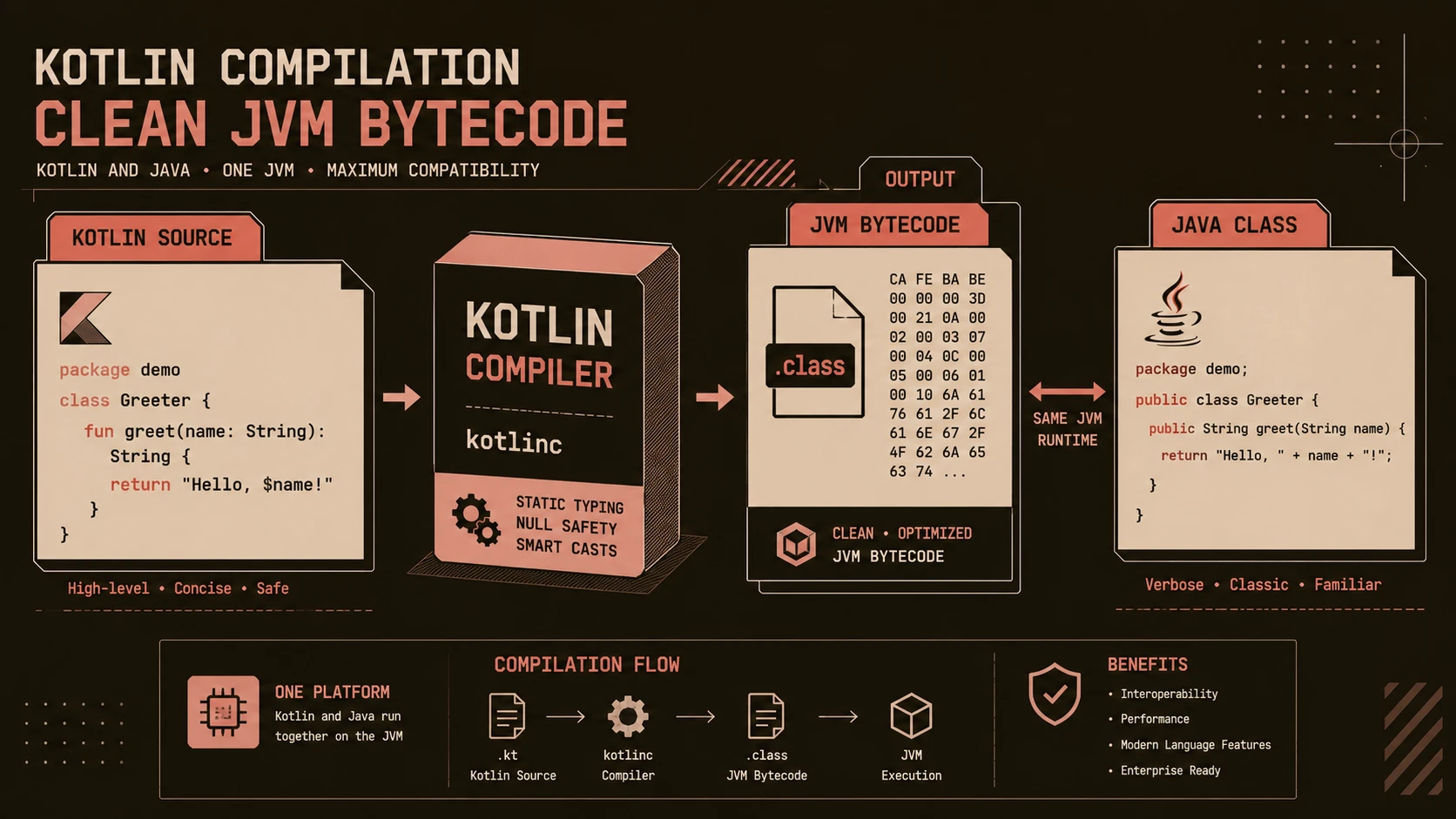
- 1.Developers write Kotlin source files.
- 2.The Kotlin compiler performs syntax and type analysis.
- 3.JVM bytecode is generated.
- 4.Java and Kotlin classes are compiled together.
- 5.Applications execute on the standard JVM.
- 6.Existing Java libraries remain fully accessible.
This approach minimizes migration risk while preserving compatibility with enterprise build systems.
Key Features
Java Interoperability
One of Kotlin's defining advantages is seamless interoperability with Java.
Developers can:
- ◆Call Java classes directly.
- ◆Extend existing Java libraries.
- ◆Reuse enterprise frameworks.
- ◆Gradually migrate applications.
Organizations can modernize projects incrementally rather than rewriting complete systems.
Null Safety
Null pointer exceptions remain one of the most common sources of application failures.
Kotlin introduces a type system that distinguishes nullable and non-nullable references.
Benefits include:
- ◆Earlier error detection
- ◆Safer APIs
- ◆Reduced runtime failures
- ◆Clearer application design
Compile-time validation encourages developers to handle nullable values explicitly.
Concise Syntax
Kotlin reduces repetitive boilerplate commonly found in Java.
Developers benefit from:
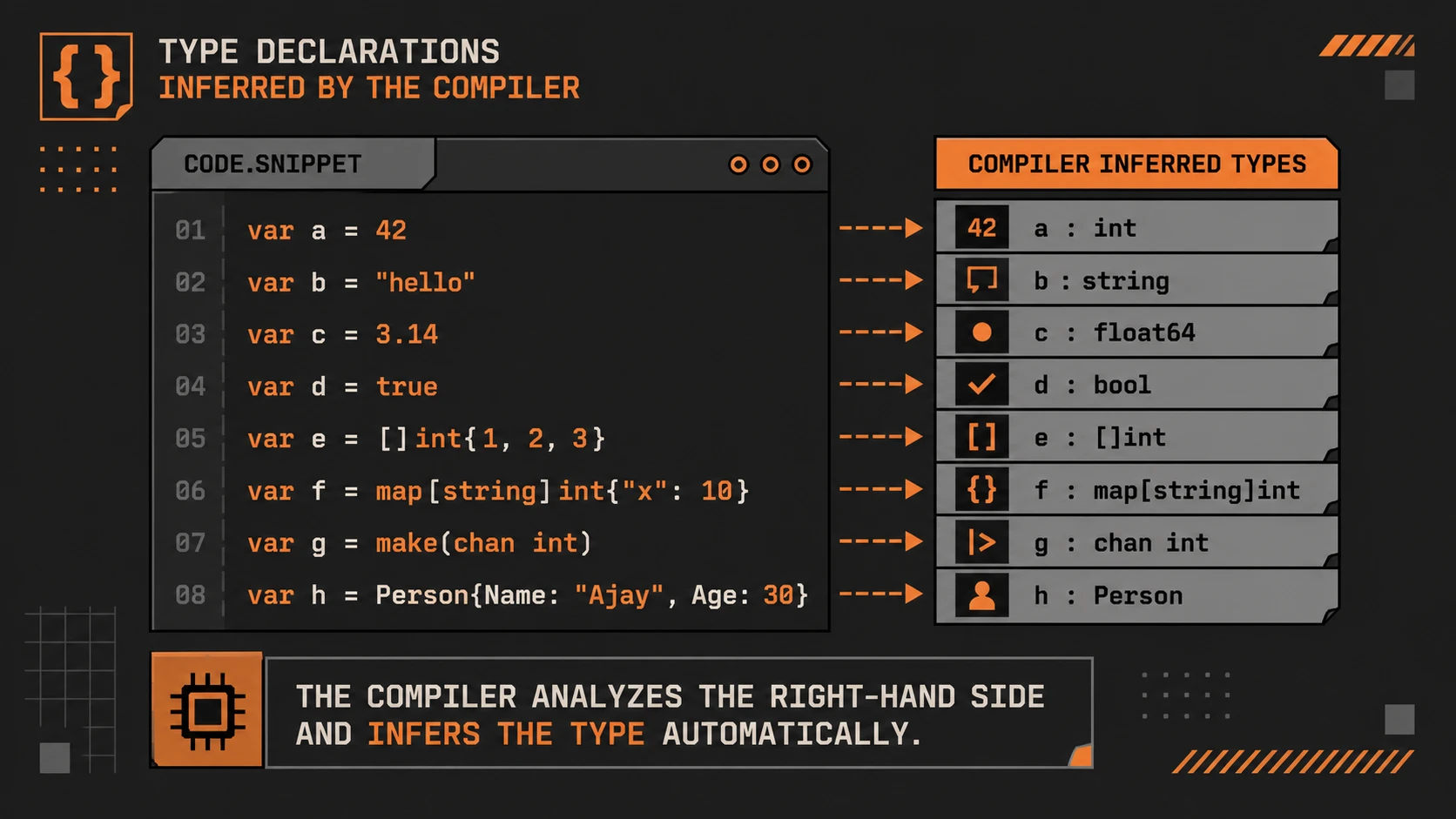
- ◆Type inference
- ◆Properties
- ◆Data classes
- ◆Expression-based syntax
- ◆Reduced accessor methods
Smaller codebases often become easier to maintain and review.
Functional Programming Features
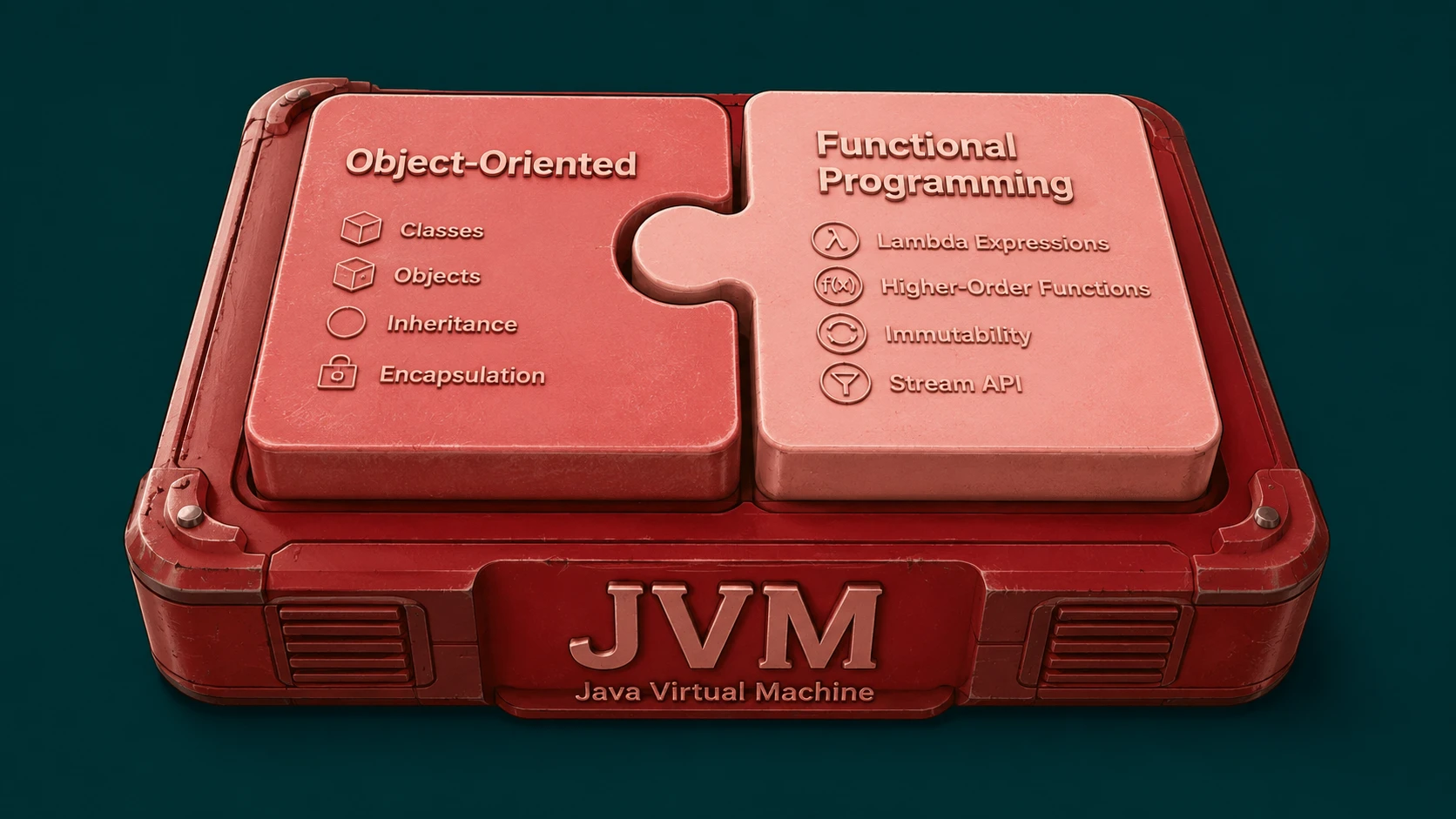
Kotlin incorporates several functional programming concepts including:
- ◆Higher-order functions
- ◆Lambda expressions
- ◆Extension functions
- ◆Immutable collections where appropriate
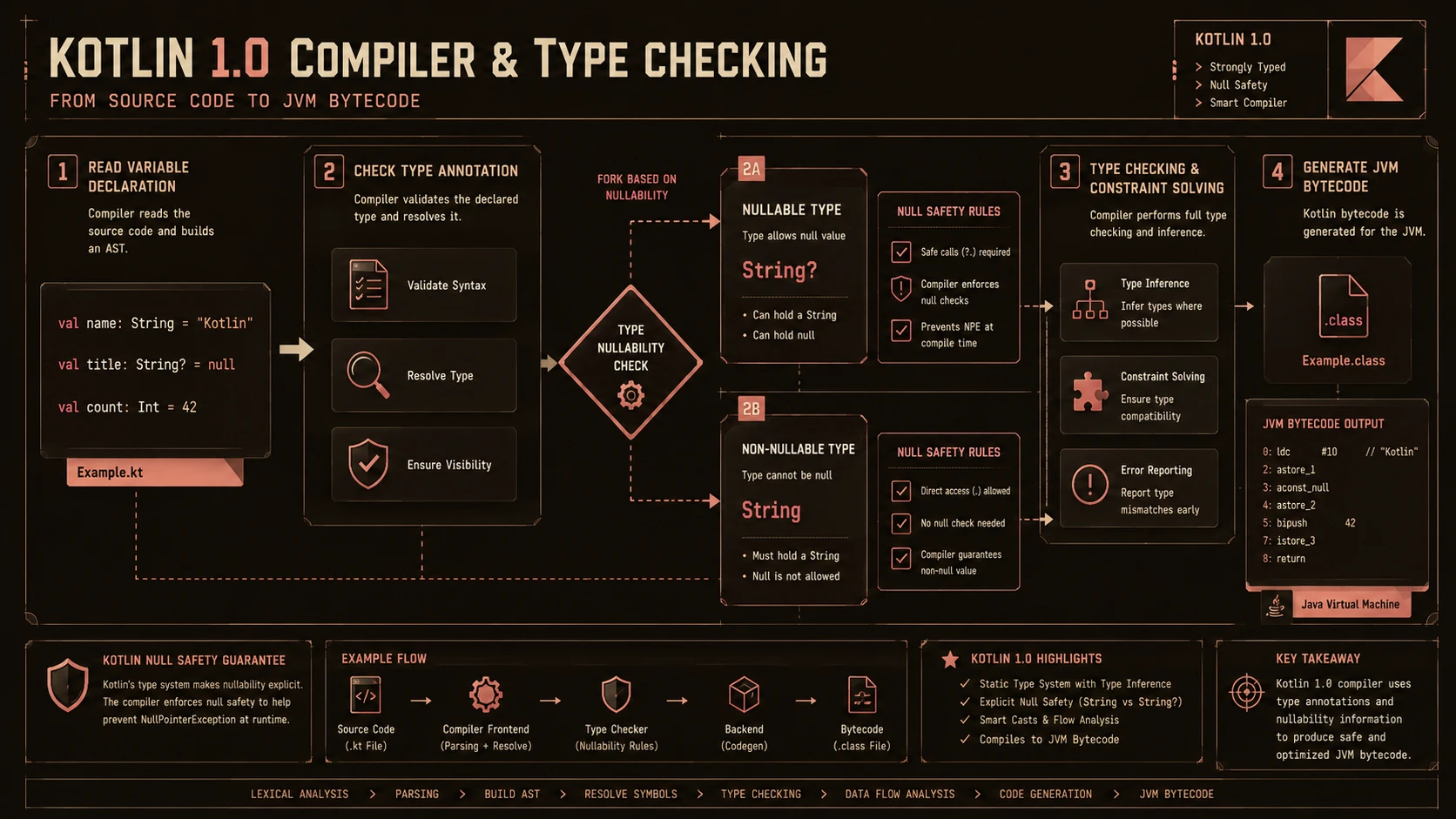
System architecture diagram and conceptual workflow layout for Kotlin 1.0 Release.
These capabilities simplify many common programming tasks while complementing object-oriented design.
JVM Compilation
Applications compile into standard JVM bytecode.
Enterprise organizations continue benefiting from:
- ◆Mature JVM optimization
- ◆Existing deployment infrastructure
- ◆Proven garbage collection
- ◆Established monitoring tools
- ◆Broad operating system support
Enterprise Use Cases
Enterprise Web Applications
Existing Java-based business systems can introduce Kotlin gradually without replacing application servers.
Android Development
Kotlin provides a modern language option for Android application development while remaining compatible with the Android platform.
REST APIs
Backend services benefit from concise syntax and strong type safety.
Financial Applications
Null safety and compile-time validation improve software reliability.
Internal Business Platforms
Organizations maintaining large Java codebases can improve productivity while preserving existing investments.
Performance Considerations
Because Kotlin compiles into JVM bytecode, runtime performance remains comparable to equivalent Java applications.
Performance characteristics include:
- ◆Native JVM execution
- ◆Efficient garbage collection
- ◆Mature JIT compilation
- ◆Optimized bytecode generation
- ◆Low interoperability overhead
Application performance continues depending primarily on architecture rather than language syntax.
Security Considerations
Kotlin improves code quality but does not replace secure software engineering practices.
Enterprise applications should continue implementing:
- ◆Authentication
- ◆Authorization
- ◆Input validation
- ◆Secure communication
- ◆Dependency management
- ◆Secure coding standards
Null safety reduces certain programming errors but should not be viewed as a complete security solution.
Scalability
Kotlin supports enterprise scalability through:
- ◆Modular application design
- ◆Strong type system
- ◆JVM compatibility
- ◆Reusable libraries
- ◆Simplified maintenance
- ◆Incremental migration
These capabilities make Kotlin particularly attractive for long-lived enterprise applications.
Best Practices
Organizations adopting Kotlin should consider the following recommendations.
- ◆Introduce Kotlin gradually into existing projects.
- ◆Reuse established Java libraries.
- ◆Minimize unnecessary platform-specific abstractions.
- ◆Use nullable types intentionally.
- ◆Favor immutable data where practical.
- ◆Maintain consistent coding standards.
- ◆Automate testing throughout migration.
- ◆Train development teams on Kotlin language features.
Common Mistakes
| Mistake | Enterprise Impact |
|---|---|
| Attempting immediate full migration | Increased project risk |
| Overusing nullable types | Reduced benefits of null safety |
| Ignoring Java interoperability | Missed migration advantages |
| Mixing inconsistent coding styles | Lower maintainability |
| Underestimating developer training | Reduced productivity |
| Treating Kotlin as a replacement for JVM knowledge | Architectural misunderstanding |
Organizations should adopt Kotlin as a language enhancement rather than a complete platform replacement.
Technology Comparison
| Capability | Java | Kotlin 1.0 |
|---|---|---|
| JVM Compatibility | Native | Native |
| Java Interoperability | Not Applicable | Complete |
| Null Safety | Limited | Built-In |
| Boilerplate Reduction | Moderate | Significant |
| Type Inference | Limited | Extensive |
| Functional Features | Partial | Modern Language Support |
Kotlin builds upon the JVM ecosystem while addressing several long-standing Java development concerns.
Adoption Strategy
Organizations planning Kotlin adoption should:
- 1.Identify suitable pilot projects.
- 2.Introduce Kotlin into non-critical modules.
- 3.Continue leveraging existing Java frameworks.
- 4.Train development teams.
- 5.Standardize coding conventions.
- 6.Integrate Kotlin into existing build pipelines.
- 7.Measure productivity improvements.
- 8.Expand adoption gradually across enterprise applications.
An incremental migration strategy minimizes operational risk while maximizing compatibility.
Limitations
Although Kotlin 1.0 provides numerous language improvements, organizations should recognize several considerations.
- ◆Development teams require training.
- ◆Existing coding standards require updates.
- ◆Some third-party tooling continues evolving.
- ◆Mixed Java and Kotlin projects require consistent architectural governance.
- ◆Long-term adoption depends upon organizational commitment and ecosystem maturity.
Looking Ahead
From the perspective of March 2016, Kotlin 1.0 represents one of the most significant advancements for JVM-based software development in recent years. By combining seamless Java interoperability, strong null safety, concise syntax, and modern language features with the proven reliability of the JVM, JetBrains has delivered a production-ready language well suited for enterprise software engineering. Organizations seeking to modernize Java development without abandoning existing infrastructure now have a practical path toward improved productivity, maintainability, and long-term application evolution.