Introduction
For more than two decades, APIs have been the backbone of digital transformation. RESTful services, GraphQL endpoints, gRPC communication, and event-driven APIs have enabled applications to exchange data reliably across distributed systems. However, these interfaces traditionally required structured inputs, predefined schemas, and deterministic responses.
The rapid advancement of Large Language Models (LLMs) during 2023 has fundamentally changed expectations around software interaction. Rather than requiring users to understand application-specific workflows, AI assistants can interpret natural language, generate structured outputs, summarize information, automate repetitive tasks, and coordinate multiple systems through conversational interfaces.
This shift is driving a new architectural pattern where APIs no longer expose only business operations. Instead, they become intelligent orchestration layers capable of combining enterprise systems, knowledge repositories, external services, and AI reasoning into unified digital experiences.
By mid-2023, organizations across finance, healthcare, retail, education, manufacturing, and software development are actively exploring AI-assisted APIs to improve productivity while maintaining governance and security.
Industry Background
Enterprise digital platforms increasingly rely on:
- ◆REST APIs
- ◆GraphQL services
- ◆Event-driven architectures
- ◆Cloud-native microservices
- ◆AI foundation models
- ◆Vector search systems
- ◆Knowledge bases
- ◆Workflow automation
The combination of APIs and generative AI enables applications to become significantly more adaptive and user-centric.
The Business Problem
Traditional APIs often require:
- ◆Structured requests
- ◆Multiple service integrations
- ◆Manual workflow orchestration
- ◆Technical client implementations
- ◆Complex business logic
- ◆Repetitive user interactions
Organizations increasingly seek interfaces capable of understanding user intent while automating complex processes.
Understanding Intelligent APIs
An Intelligent API combines conventional application programming interfaces with AI-powered reasoning, natural language understanding, and workflow orchestration.
Primary objectives include:
- ◆Natural language interaction
- ◆Intelligent automation
- ◆Context-aware responses
- ◆Multi-system orchestration
- ◆Knowledge retrieval
- ◆Enhanced developer productivity
Rather than replacing traditional APIs, AI assistants augment existing enterprise services.
Core Architecture
| Component | Responsibility |
|---|---|
| Client Application | User interaction |
| API Gateway | Authentication and routing |
| AI Assistant | Natural language understanding |
| Large Language Model | Reasoning and response generation |
| Business APIs | Enterprise operations |
| Knowledge Base | Organizational information |
| Vector Search | Semantic retrieval |
| Monitoring Platform | Logging and observability |
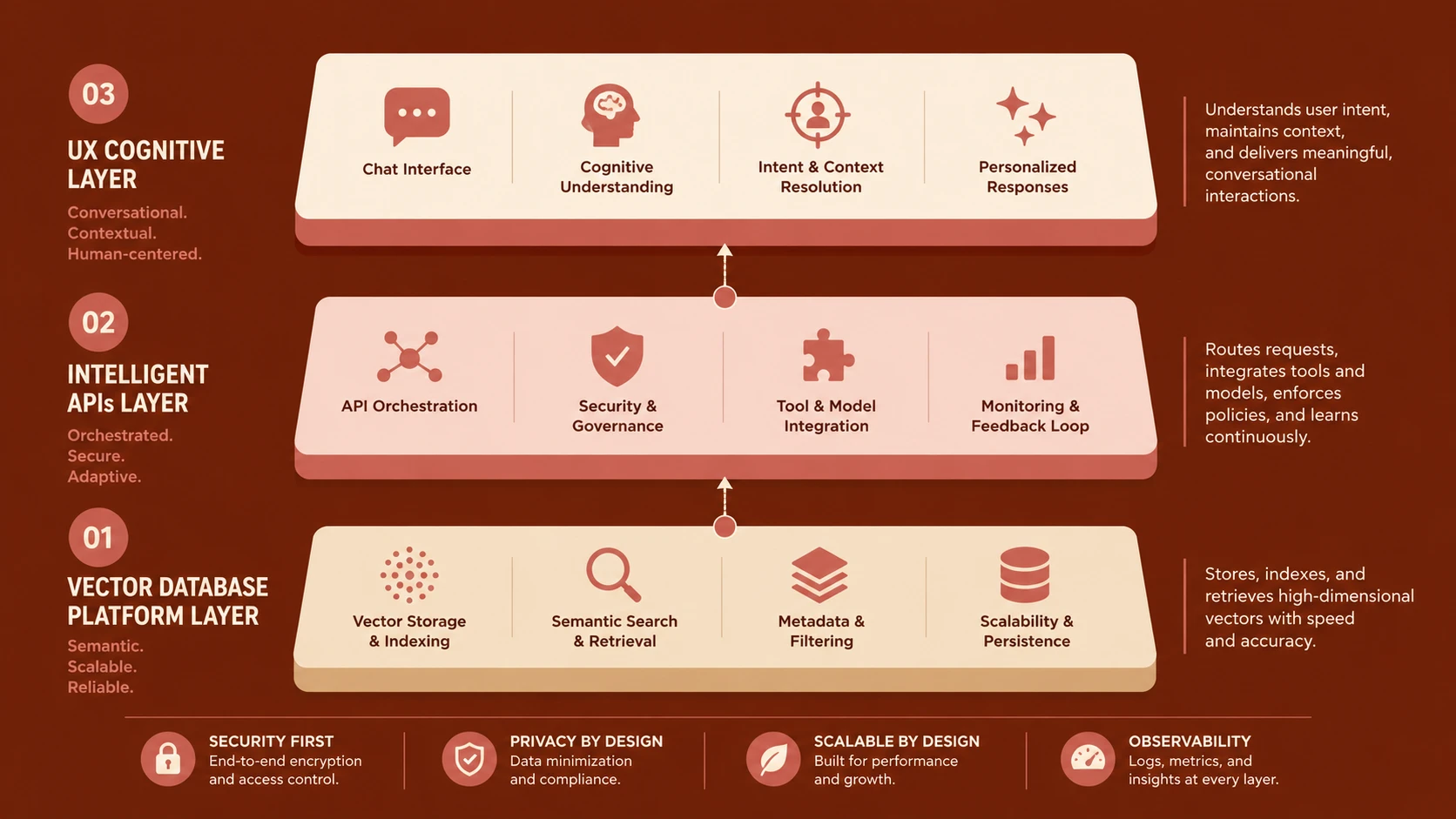
Together these components provide an intelligent application platform capable of combining structured enterprise services with conversational experiences.
How Intelligent APIs Work
- 1.Users submit requests using natural language or structured inputs.
- 2.The API gateway authenticates incoming requests.
- 3.The AI assistant analyzes user intent.
- 4.Relevant enterprise knowledge is retrieved where appropriate.
- 5.Business APIs perform required operations.
- 6.The language model generates contextual responses using retrieved information.
- 7.The application returns structured results, summaries, recommendations, or follow-up actions.
This architecture combines deterministic enterprise systems with AI-powered interaction.
Natural Language Interfaces
AI assistants allow users to communicate using conversational language instead of predefined commands.
Examples include:
- ◆Customer support
- ◆Employee self-service portals
- ◆Internal knowledge assistants
- ◆Business analytics queries
- ◆IT operations automation
Natural language interfaces reduce the learning curve while improving accessibility.
Retrieval-Augmented Responses
# Python FastAPI endpoint performing semantic vector search using pgvector
from fastapi import FastAPI
from sentence_transformers import SentenceTransformer
import psycopg2

app = FastAPI()
model = SentenceTransformer('all-MiniLM-L6-v2')

@app.get("/api/v1/search")
def semantic_search(query: str):
    # Generate embedding vector
    embedding = model.encode(query).tolist()

    conn = psycopg2.connect("dbname=shivam_db user=admin password=secret")
    cur = conn.cursor()

    # Query using pgvector cosine distance operator
    cur.execute("SELECT id, text FROM document_sections ORDER BY embedding <=> %s::vector LIMIT 3", (embedding,))
    results = cur.fetchall()
    return {"results": [{"id": r[0], "content": r[1]} for r in results]}
Enterprise AI systems increasingly separate reasoning from factual business information.
Instead of relying exclusively on model knowledge, AI assistants retrieve relevant organizational content before generating responses.
Benefits include:
- ◆More accurate responses
- ◆Better enterprise knowledge utilization
- ◆Reduced hallucination risk
- ◆Improved information freshness
- ◆Greater explainability
This pattern enables AI assistants to work effectively with rapidly changing enterprise information.
Workflow Orchestration
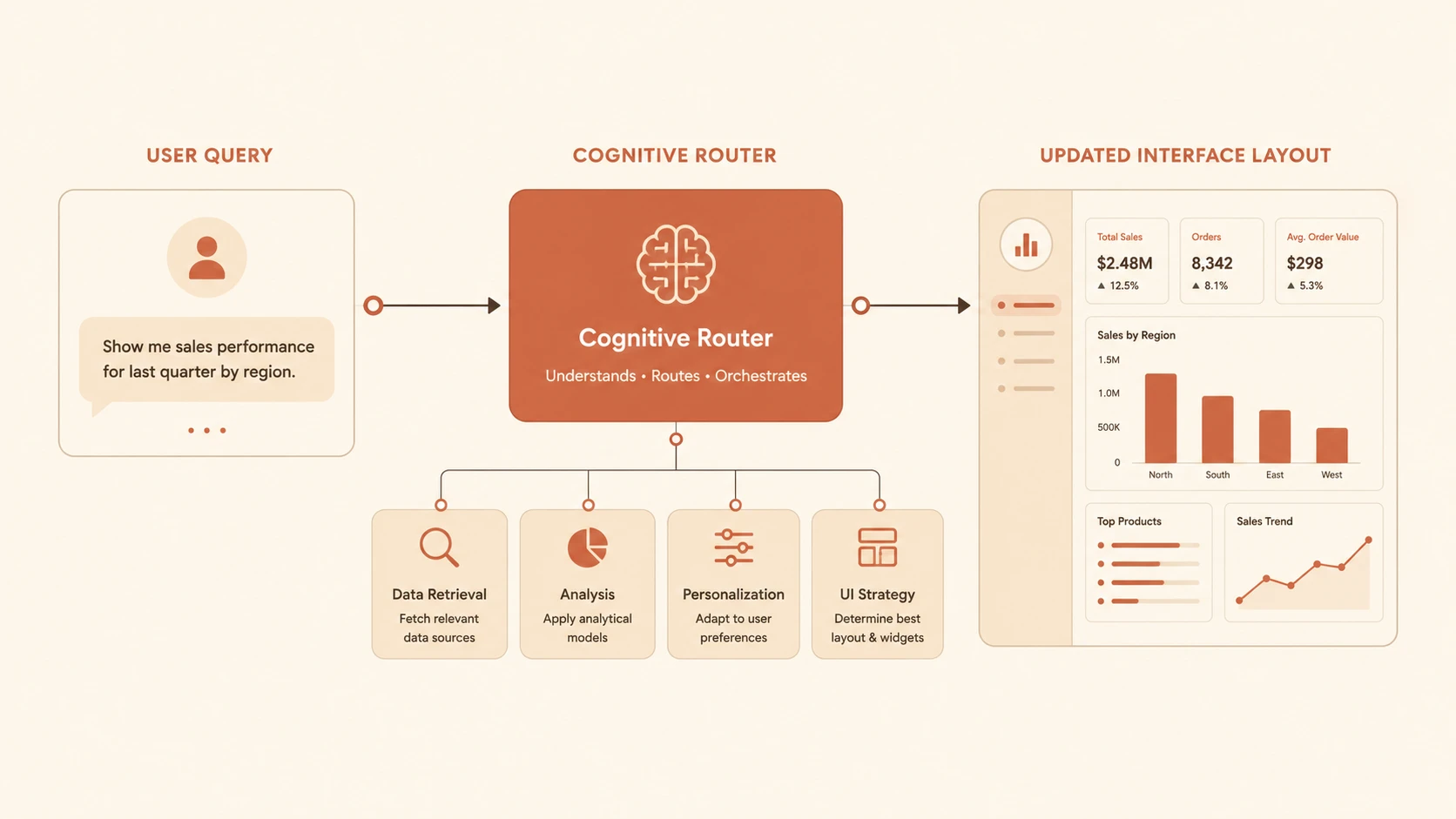
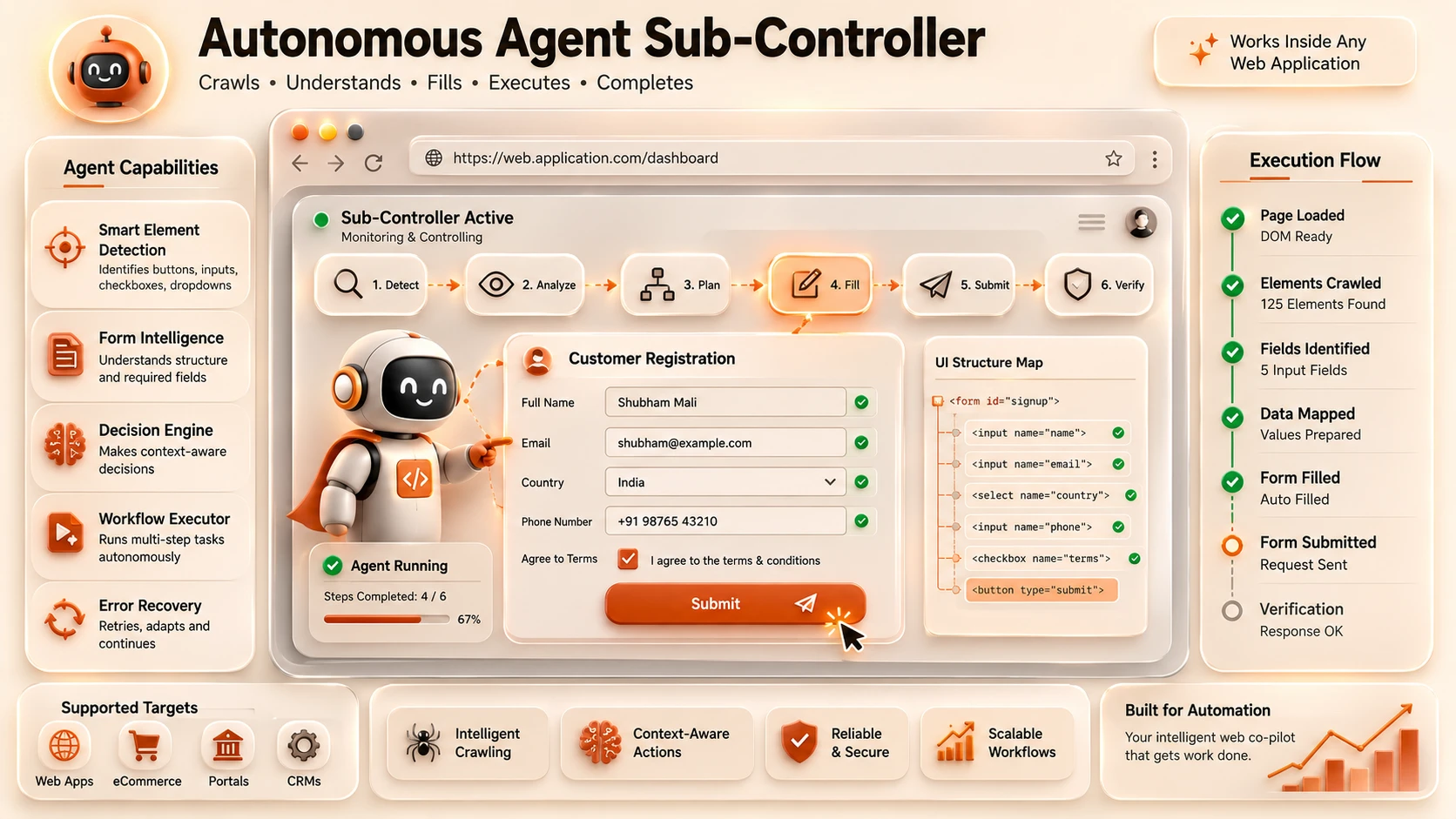
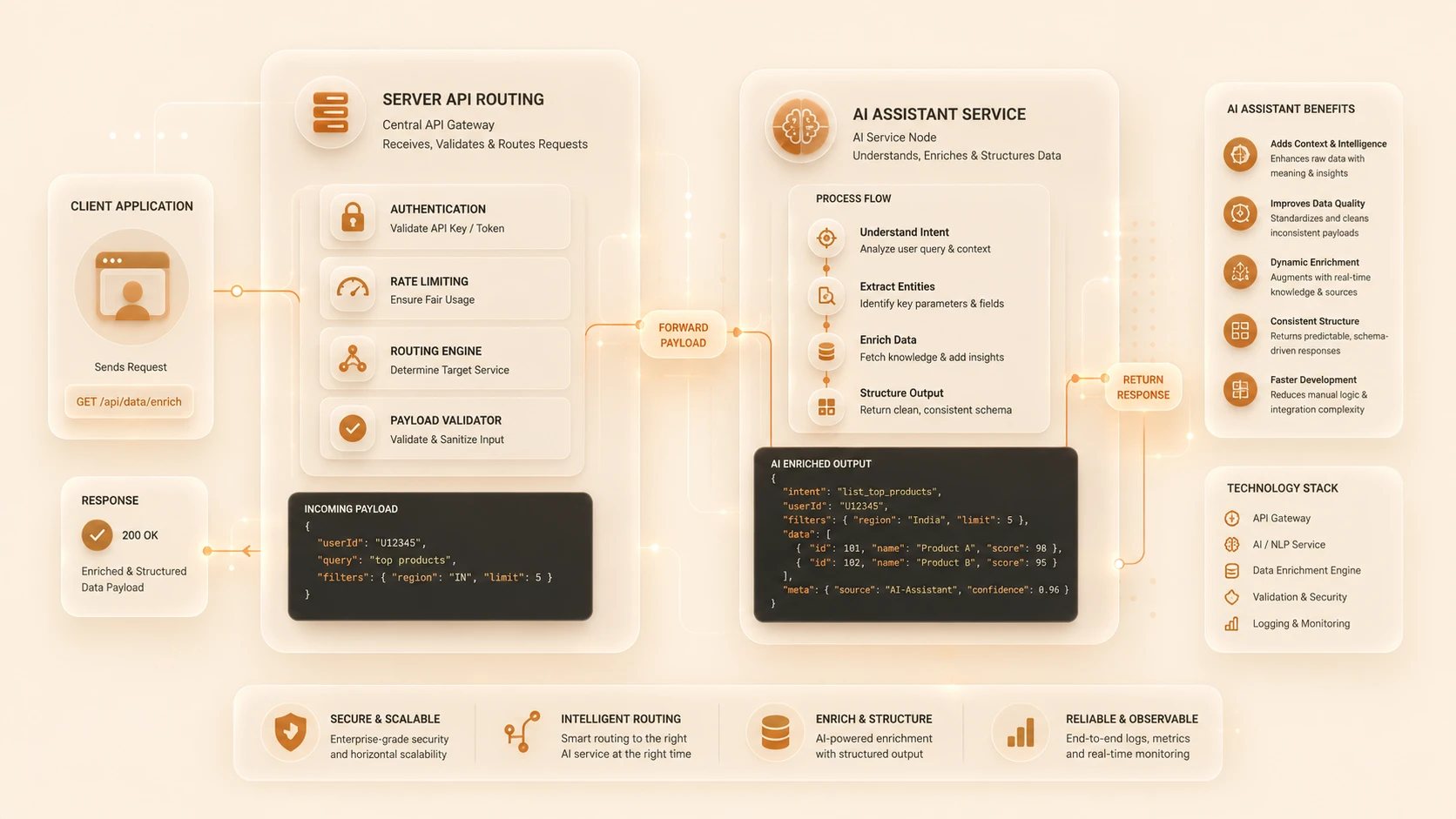
AI-powered APIs increasingly coordinate multiple enterprise services.
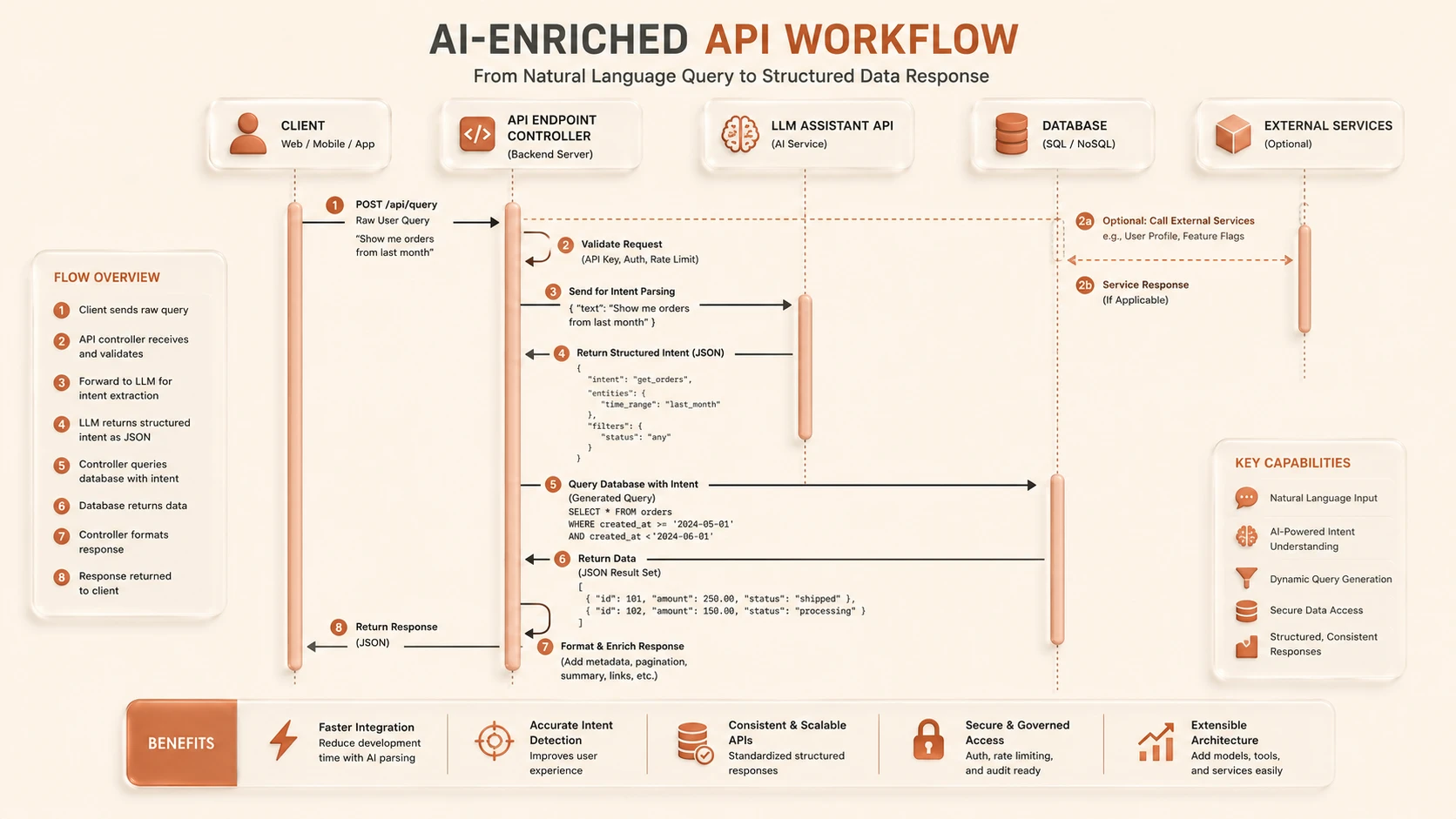
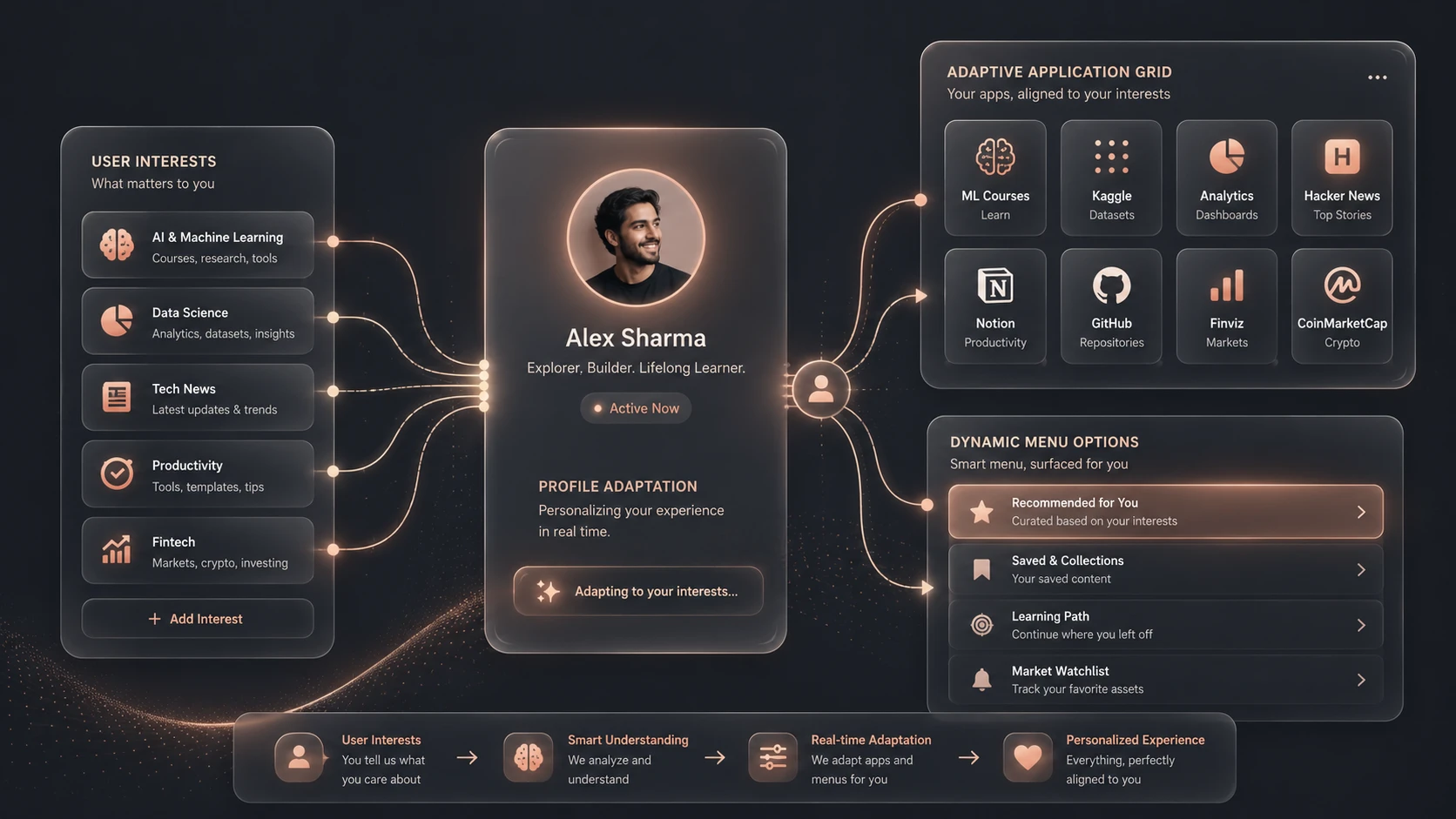
System architecture diagram and conceptual workflow layout for Intelligent APIs with AI Assistants.
Typical workflows include:
- ◆Creating support tickets
- ◆Searching internal documentation
- ◆Scheduling meetings
- ◆Querying CRM platforms
- ◆Generating reports
- ◆Triggering business processes
The assistant determines which services should be invoked based on user intent while preserving application governance.
Enterprise Use Cases
Customer Support
AI assistants answer customer questions while integrating with existing CRM and ticketing platforms.
Software Development
Engineering teams use AI-assisted APIs for documentation lookup, code generation, and development automation.
Business Intelligence
Natural language interfaces simplify access to analytics dashboards and operational reports.
Healthcare
Assist clinical staff by retrieving approved documentation and workflow information.
Enterprise Knowledge Management
Employees quickly locate policies, technical documentation, and organizational procedures.
Performance Considerations
Organizations should evaluate:
- ◆Model response latency
- ◆API throughput
- ◆Retrieval performance
- ◆Token utilization
- ◆Caching effectiveness
- ◆Workflow execution time
Balancing intelligence with responsiveness remains an important architectural consideration.
Security Considerations
AI-assisted APIs introduce additional governance requirements.
Organizations should implement:
- ◆Strong authentication
- ◆Authorization for enterprise data
- ◆API rate limiting
- ◆Prompt validation
- ◆Sensitive data protection
- ◆Audit logging
- ◆Human oversight for critical workflows
- ◆Responsible AI governance
AI systems should operate within the same security boundaries as traditional enterprise applications.
Scalability
Intelligent APIs improve scalability through:
- ◆Reusable AI services
- ◆Modular workflow orchestration
- ◆Stateless API design
- ◆Cloud-native deployment
- ◆Managed inference services
- ◆Distributed knowledge retrieval
These capabilities support growing enterprise adoption while maintaining operational efficiency.
Best Practices
- ◆Keep business logic inside enterprise services rather than language models.
- ◆Use retrieval mechanisms for organization-specific information.
- ◆Validate AI-generated outputs before executing sensitive operations.
- ◆Log AI interactions for auditing and continuous improvement.
- ◆Establish clear governance policies for AI usage.
- ◆Design APIs that remain functional without AI enhancements.
- ◆Continuously evaluate model quality and response accuracy.
- ◆Monitor operational costs alongside performance metrics.
Common Mistakes
| Mistake | Enterprise Impact |
|---|---|
| Treating language models as authoritative data sources | Inaccurate business responses |
| Giving AI unrestricted system access | Security risks |
| Ignoring prompt validation | Increased operational vulnerabilities |
| Combining business logic directly into prompts | Reduced maintainability |
| Missing audit trails | Compliance challenges |
| Deploying AI without governance | Operational and regulatory risk |
Technology Comparison
| Capability | Traditional APIs | Intelligent APIs |
|---|---|---|
| User Input | Structured Requests | Natural Language and Structured Data |
| Decision Making | Rule-Based | AI-Assisted Reasoning |
| Workflow Coordination | Client Driven | AI Orchestrated |
| Knowledge Access | Explicit API Calls | Semantic Retrieval |
| Automation | Static | Context-Aware |
| User Experience | Technical | Conversational |
Adoption Strategy
- 1.Identify business processes that benefit from conversational interfaces.
- 2.Preserve existing enterprise APIs as the system of record.
- 3.Introduce AI assistants as orchestration layers.
- 4.Implement retrieval mechanisms for enterprise knowledge.
- 5.Establish security and governance policies.
- 6.Pilot AI-assisted workflows with limited scope.
- 7.Monitor response quality and operational metrics.
- 8.Expand adoption incrementally based on measurable business value.
Limitations
As of June 2023, AI assistants continue evolving rapidly. While language models demonstrate impressive reasoning and language capabilities, enterprise organizations should recognize that responses may occasionally be inaccurate or incomplete. Critical business decisions should continue relying on authoritative enterprise systems, with AI serving as an intelligent interface rather than the primary source of truth. Strong governance, retrieval mechanisms, and human oversight remain essential for production deployments.
Looking Ahead
From the perspective of June 2023, intelligent APIs represent one of the most significant architectural shifts since the widespread adoption of RESTful services. By combining traditional enterprise APIs with AI assistants, semantic search, and workflow orchestration, organizations can create more intuitive and productive digital experiences without replacing their existing systems. As foundation models continue improving and enterprise governance matures, AI-assisted APIs are expected to become a standard layer within modern software architecture.