Why Features Are No Longer Enough
For years, software products were built around features. Teams delivered dashboards, reports, search pages, approval workflows, and notification systems as isolated functionality inside individual applications. While this accelerated product delivery, it also created duplicated logic, fragmented user experiences, and tightly coupled systems that became difficult to evolve.
Modern AI-led products take a different approach. Instead of building features repeatedly, organizations build reusable business capabilities powered by AI that can be composed into multiple products, channels, and customer journeys.
Architecture Principle: Build capabilities once, compose experiences everywhere.
---
What Are Composable AI-led Products?
Composable AI-led products organize software around reusable business capabilities instead of application-specific features.
Each capability is independently deployable, discoverable, and consumable by multiple products.
Typical capabilities include:
- ◆Knowledge Retrieval
- ◆Recommendation Engine
- ◆Intelligent Search
- ◆Document Intelligence
- ◆Workflow Automation
- ◆AI Decision Engine
- ◆Customer Profile Service
- ◆Notification Service
- ◆Payment Processing
- ◆Analytics
Rather than recreating these capabilities in every application, they become shared enterprise building blocks.
---
Evolution of Product Engineering
Enterprise software architecture has evolved through several generations:
- 1.Monolithic Applications
- 2.Service-Oriented Architecture
- 3.Microservices
- 4.API-First Platforms
- 5.Composable Business Architecture
- 6.Composable AI-led Products
The latest generation combines reusable business capabilities with AI orchestration, enabling software to evolve much faster while reducing engineering effort.
---
Enterprise Reference Architecture
Customer Channels
        │
Experience Layer
        │
AI Orchestration Platform
        │
Capability Registry
        │
────────────────────────────────────────────
Knowledge │ Search │ Workflow │ AI │ Payments
Analytics │ Documents │ Identity │ Notifications
────────────────────────────────────────────
        │
Enterprise Systems
        │
Analytics & Continuous Learning
Instead of depending on tightly coupled applications, every product is assembled from reusable capabilities.
---
Capability-Driven Design
Capabilities represent stable business functions that can be reused across products.
Examples include:
- ◆Identity Verification
- ◆Product Recommendations
- ◆Fraud Detection
- ◆Semantic Search
- ◆Knowledge Retrieval
- ◆Customer Communication
- ◆Document Processing
- ◆Pricing Engine
Each capability exposes well-defined APIs and can evolve independently without impacting the entire platform.
---
AI as a Core Capability

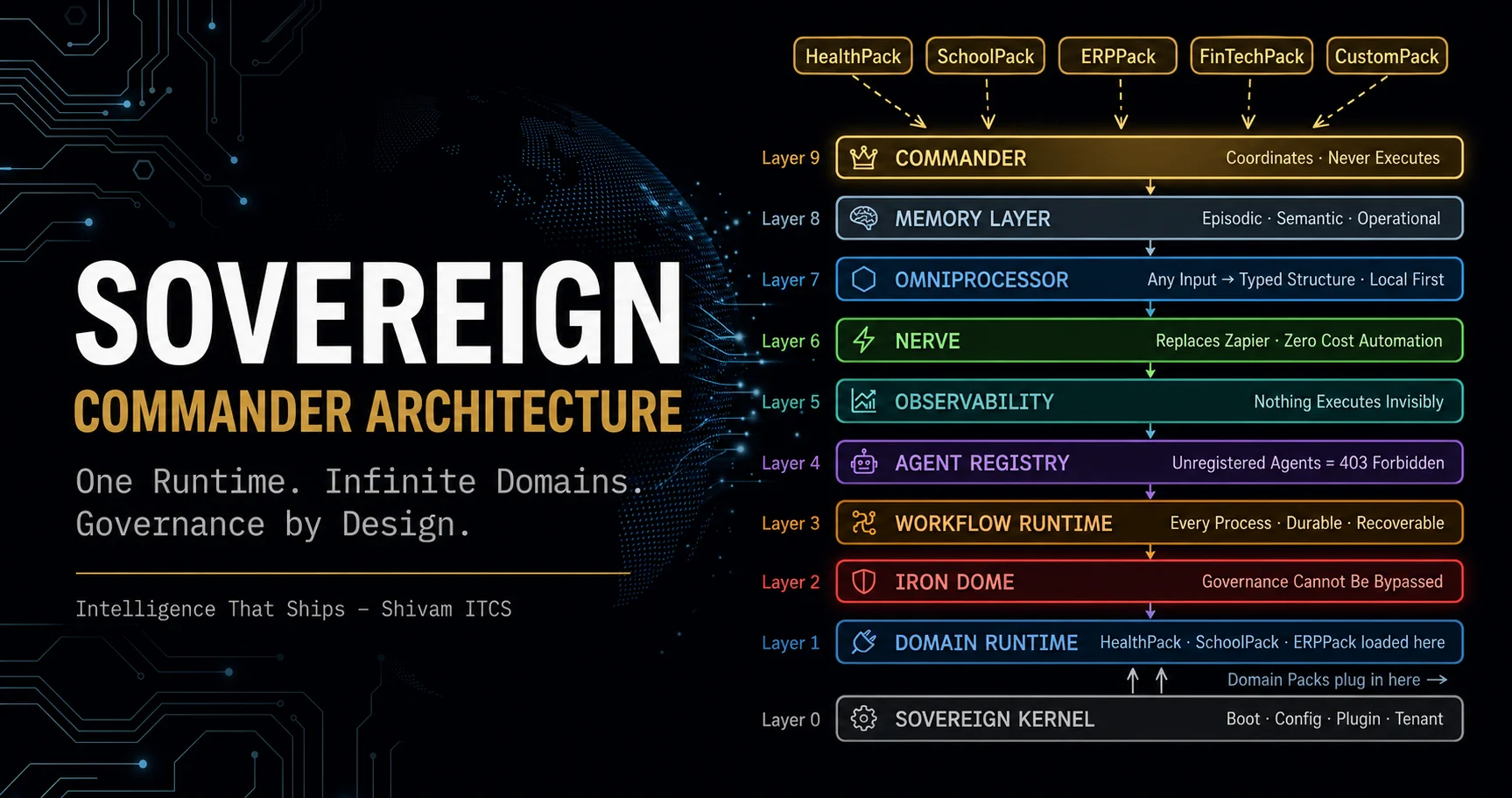
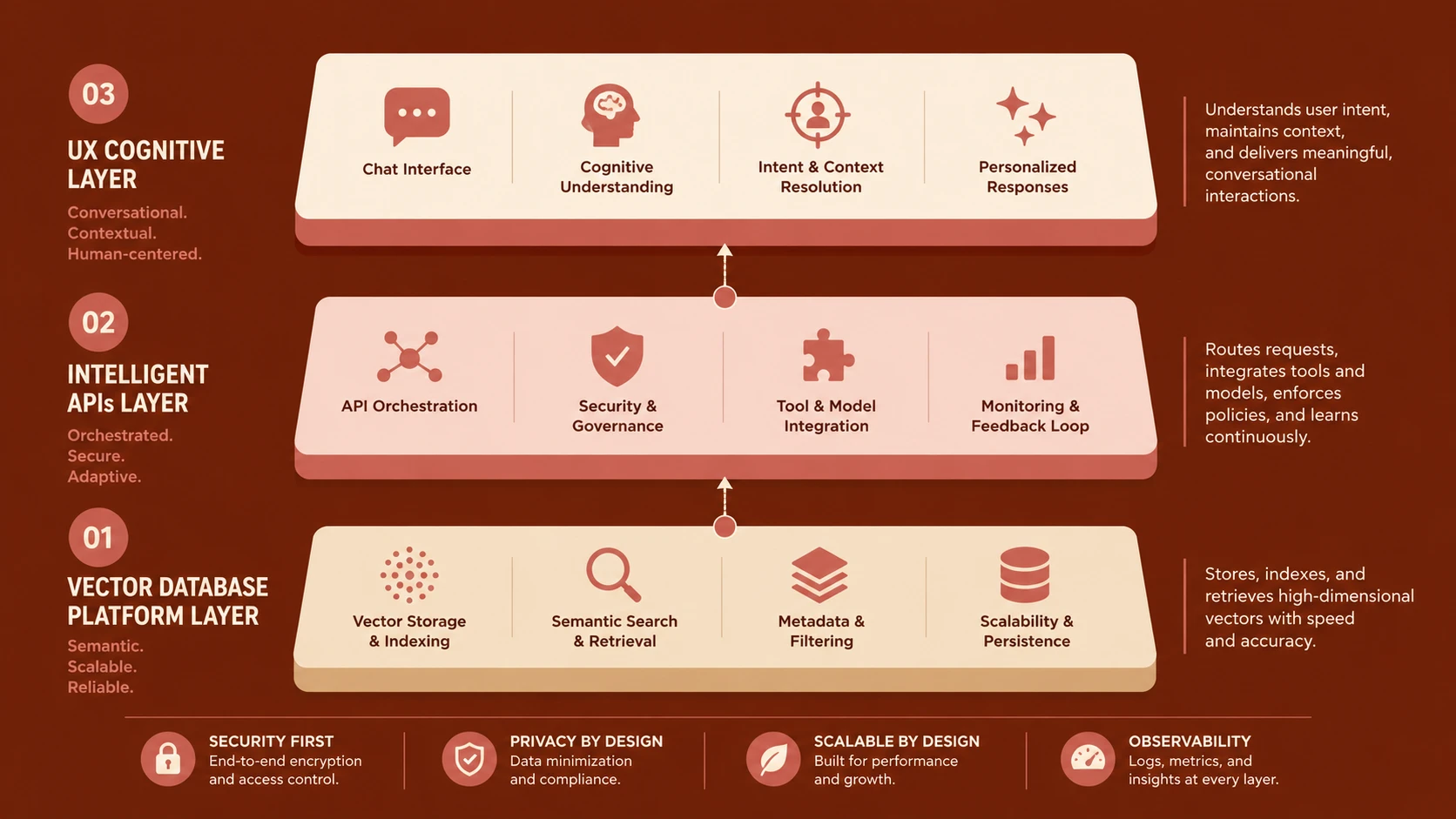
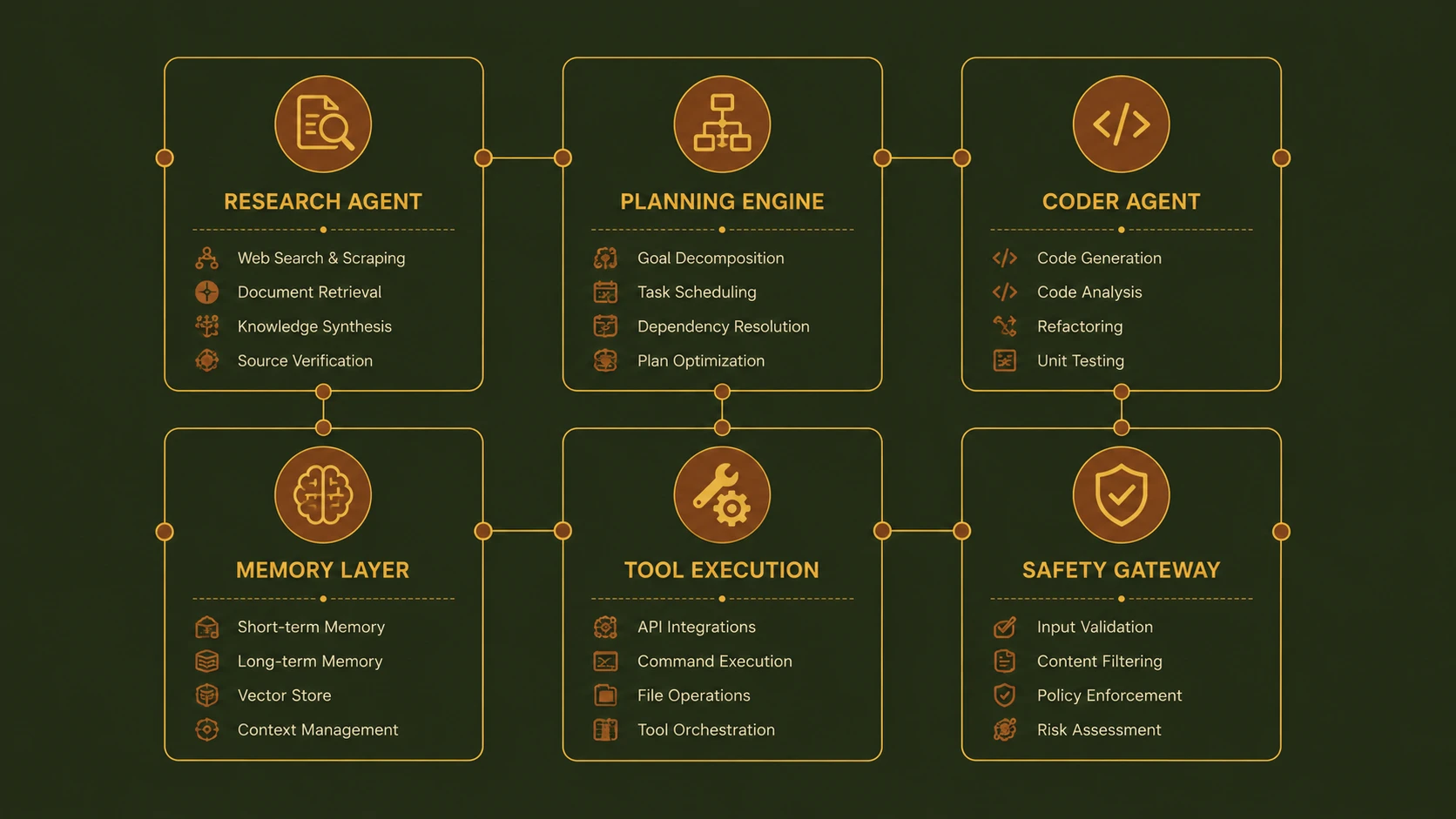
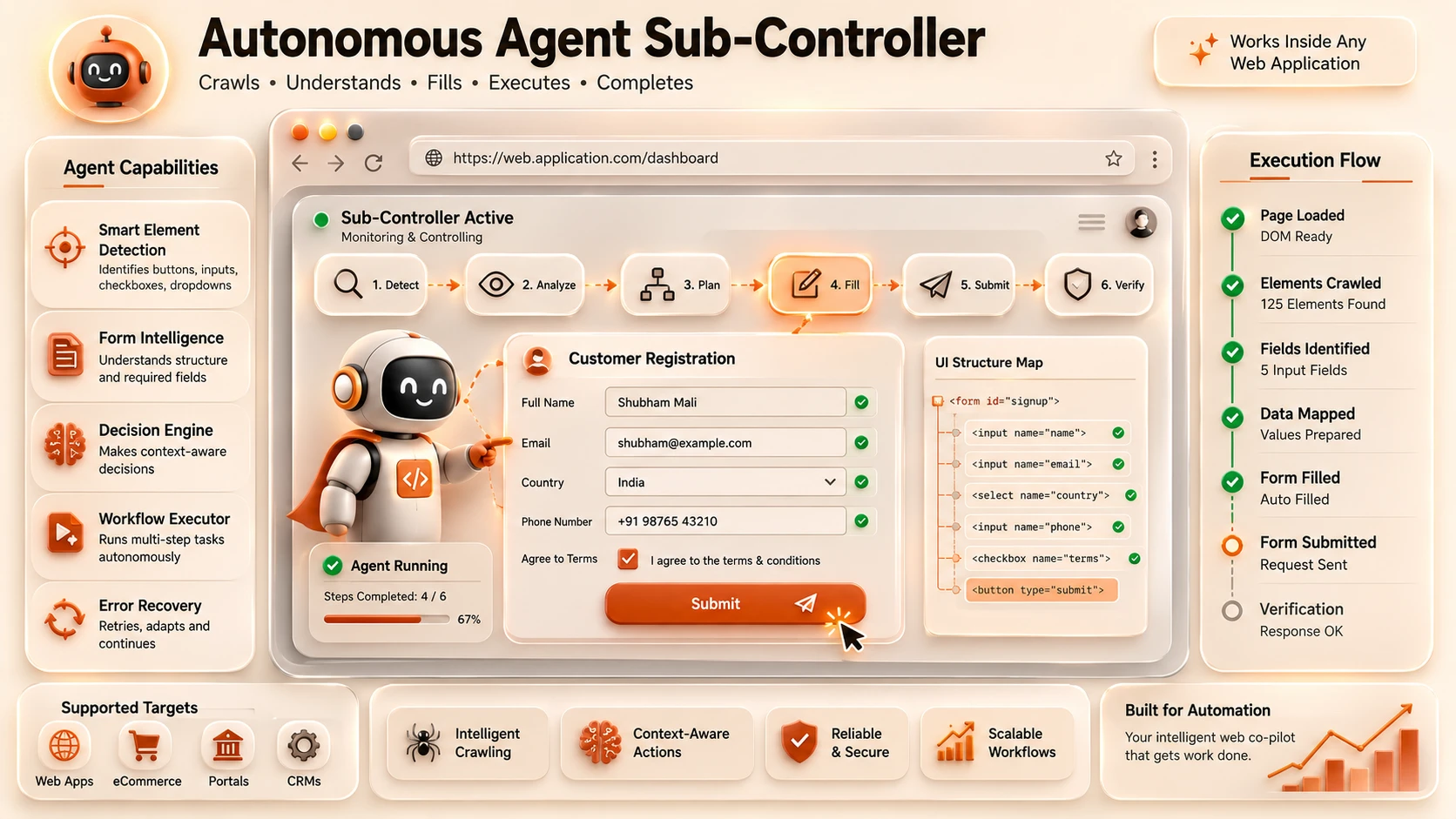
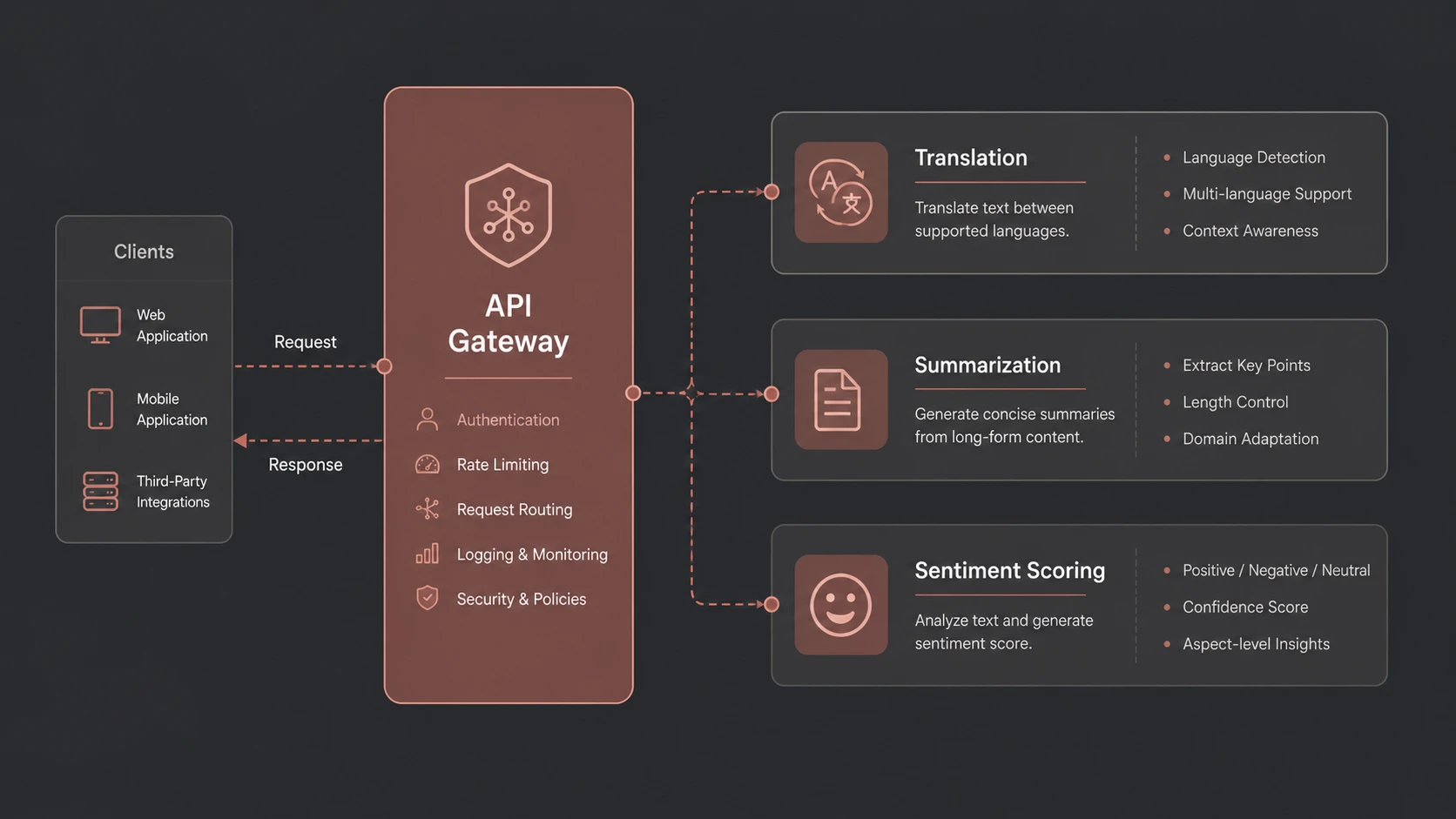
System architecture diagram and conceptual workflow layout for Composable AI-led Products.
Artificial intelligence is no longer an isolated feature—it becomes a reusable platform capability.
Common AI capabilities include:
- ◆LLM-powered assistants
- ◆Retrieval-Augmented Generation (RAG)
- ◆Semantic search
- ◆Intelligent routing
- ◆Decision intelligence
- ◆Predictive analytics
- ◆Computer vision
- ◆Workflow copilots
These AI services can be shared across customer portals, internal applications, mobile apps, and partner ecosystems.
---
Composable Experiences
The same capabilities can power multiple digital experiences.
For example:
- ◆A customer portal uses search, recommendations, and payments.
- ◆A mobile app reuses the same identity and AI services.
- ◆An internal dashboard consumes workflow automation and analytics.
- ◆Partner APIs expose selected capabilities securely.
This dramatically reduces duplicated engineering work.
---
Governance and Orchestration
As capability ecosystems grow, orchestration becomes essential.
Modern platforms provide:
- ◆Capability registry
- ◆API gateway
- ◆Policy engine
- ◆Identity federation
- ◆Event orchestration
- ◆Version management
- ◆AI governance
- ◆Observability
These services ensure that capabilities remain reusable, secure, and easy to discover.
---
Enterprise Benefits
Organizations adopting composable AI-led products typically achieve:
- ◆Faster product delivery
- ◆Reduced development costs
- ◆Higher capability reuse
- ◆Consistent customer experiences
- ◆Easier AI integration
- ◆Better scalability
- ◆Simplified maintenance
- ◆Greater business agility
Engineering teams focus on building valuable capabilities rather than duplicating application features.
---
Best Practices
| Area | Best Practice |
|---|---|
| Architecture | Capability-First Design |
| AI | Shared AI Services |
| Integration | API-First & Event-Driven |
| Governance | Capability Registry |
| Security | Zero Trust APIs |
| Orchestration | AI Workflow Engine |
| Delivery | Independent Capability Deployment |
| Evolution | Continuous Capability Improvement |
---
The Future of AI-led Products
The next generation of enterprise software will be assembled rather than built from scratch. Intelligent business capabilities, AI services, and reusable workflows will become the foundation of every digital product. New applications will emerge by composing existing capabilities instead of implementing features repeatedly.
Organizations that embrace capability-focused product engineering will innovate faster, reduce operational complexity, and create adaptive AI-powered platforms capable of supporting future business models with minimal redevelopment.