Introduction
Enterprise digital experiences have entered a new era. Traditional personalization strategies—such as greeting users by name, recommending recently viewed products, or segmenting audiences into broad demographic groups—are no longer sufficient to meet modern customer expectations. Users increasingly expect applications to understand their intent, remember previous interactions, anticipate future needs, and provide contextual assistance in real time.
The rapid advancement of Generative AI, Large Language Models (LLMs), Customer Data Platforms (CDPs), vector databases, recommendation engines, and real-time analytics has transformed personalization from a marketing capability into an enterprise-wide architectural concern. Today, personalization extends beyond e-commerce recommendations into healthcare, financial services, education, manufacturing, SaaS platforms, and enterprise productivity applications.
By June 2024, organizations are designing AI-native experiences where interfaces dynamically adapt to user behavior, workflows evolve based on historical interactions, and intelligent assistants proactively guide users through complex business processes.
This evolution represents the next generation of user experience, where software becomes increasingly adaptive, predictive, and context-aware.
Industry Background
Modern digital platforms increasingly leverage:
- ◆Generative AI
- ◆Large Language Models
- ◆Customer Data Platforms (CDPs)
- ◆Real-time Event Streaming
- ◆Recommendation Engines
- ◆Vector Search
- ◆Feature Stores
- ◆Cloud-native Analytics
These technologies collectively enable highly personalized digital experiences across multiple channels.
The Business Problem
Traditional personalization approaches often suffer from:
- ◆Static customer segmentation
- ◆Delayed behavioral analysis
- ◆Generic user journeys
- ◆Fragmented customer data
- ◆Limited contextual awareness
- ◆Inconsistent cross-channel experiences
Organizations require intelligent systems capable of continuously learning from user interactions while respecting privacy and governance requirements.
Understanding AI-Driven Personalization
AI-driven personalization combines machine learning, real-time analytics, enterprise data, and intelligent decision engines to dynamically tailor digital experiences.
Its primary objectives include:
- ◆Context-aware interactions
- ◆Predictive recommendations
- ◆Adaptive interfaces
- ◆Personalized workflows
- ◆Intelligent content delivery
- ◆Continuous learning
Rather than applying predefined rules, AI systems continuously refine user experiences using behavioral insights and operational data.
Core Architecture
| Component | Responsibility |
|---|---|
| Digital Channels | User interactions across web, mobile, and AI interfaces |
| API Gateway | Secure request routing |
| Customer Data Platform | Unified customer profile |
| Event Streaming Platform | Real-time behavioral events |
| AI Recommendation Engine | Personalized recommendations |
| Large Language Model | Conversational intelligence and content generation |
| Feature Store | Machine learning feature management |
| Analytics Platform | Monitoring, experimentation, and optimization |
These components work together to create adaptive enterprise experiences.
How AI Personalization Works
- 1.Users interact with digital applications.
- 2.Events are captured in real time.
- 3.Customer profiles are continuously updated.
- 4.AI models analyze historical and current behavior.
- 5.Recommendation engines generate personalized decisions.
- 6.Large Language Models adapt responses and content dynamically.
- 7.Analytics platforms evaluate outcomes and continuously improve personalization models.
This feedback loop enables experiences to become increasingly relevant over time.
Unified Customer Profiles
Modern personalization depends upon unified customer data.
Enterprise customer profiles typically include:
- ◆User preferences
- ◆Purchase history
- ◆Navigation behavior
- ◆Device information
- ◆Geographic context
- ◆Support interactions
- ◆Engagement history
Combining these signals enables AI systems to better understand user intent.
Real-Time Decision Intelligence
Unlike traditional batch processing, modern personalization operates in real time.
Decision engines evaluate:
- ◆Current session behavior
- ◆Historical interactions
- ◆Device context
- ◆Business rules
- ◆AI predictions
- ◆Operational constraints
Real-time decisioning enables applications to respond immediately as user behavior changes.
Generative AI for Personalized Experiences
Large Language Models significantly expand personalization capabilities.
Enterprise applications increasingly use AI to:
- ◆Generate personalized product descriptions
- ◆Summarize customer information
- ◆Recommend next actions
- ◆Personalize onboarding experiences
- ◆Produce contextual help
- ◆Adapt communication styles
Rather than presenting static interfaces, applications dynamically generate relevant content.
Recommendation Systems
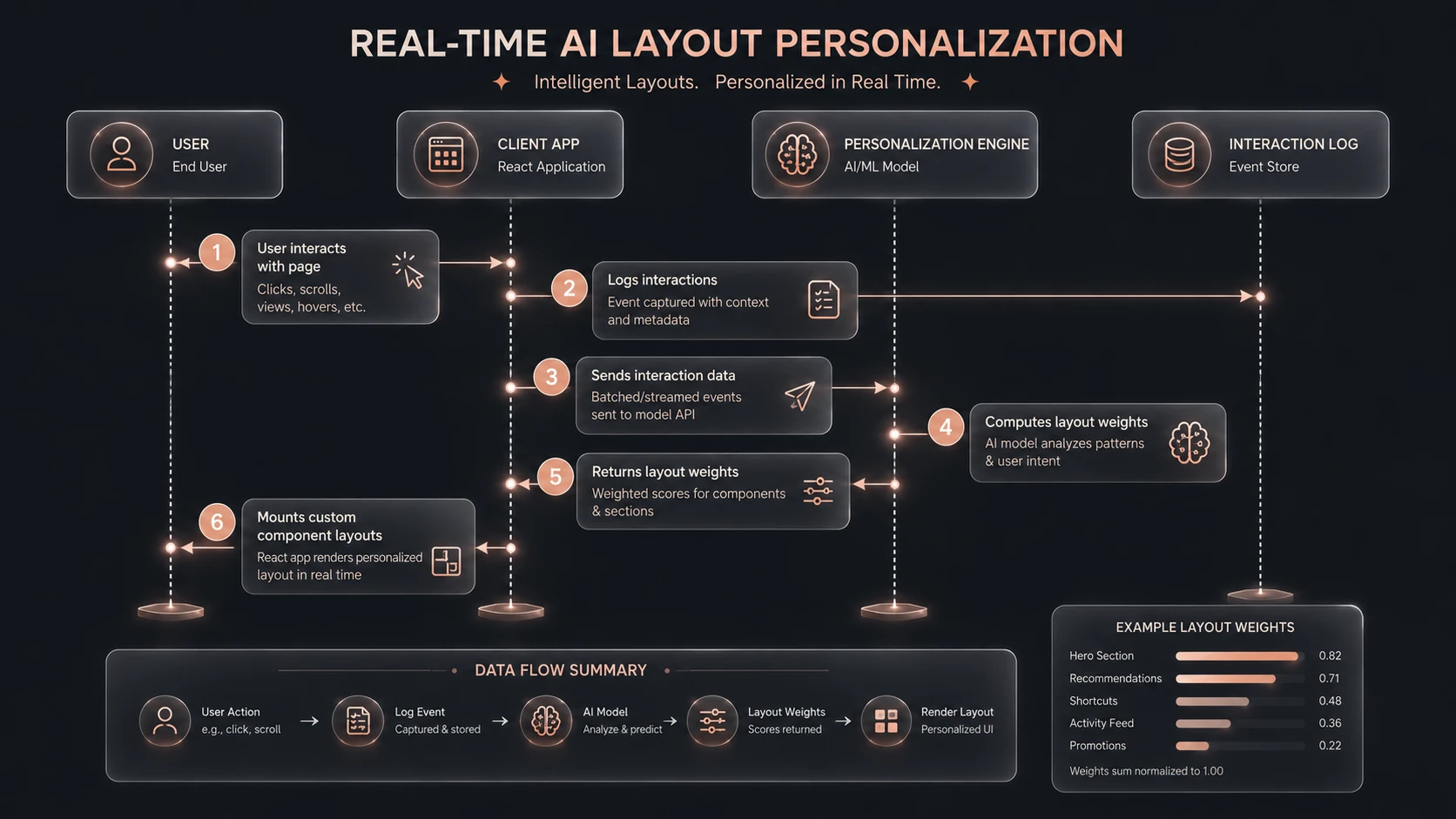
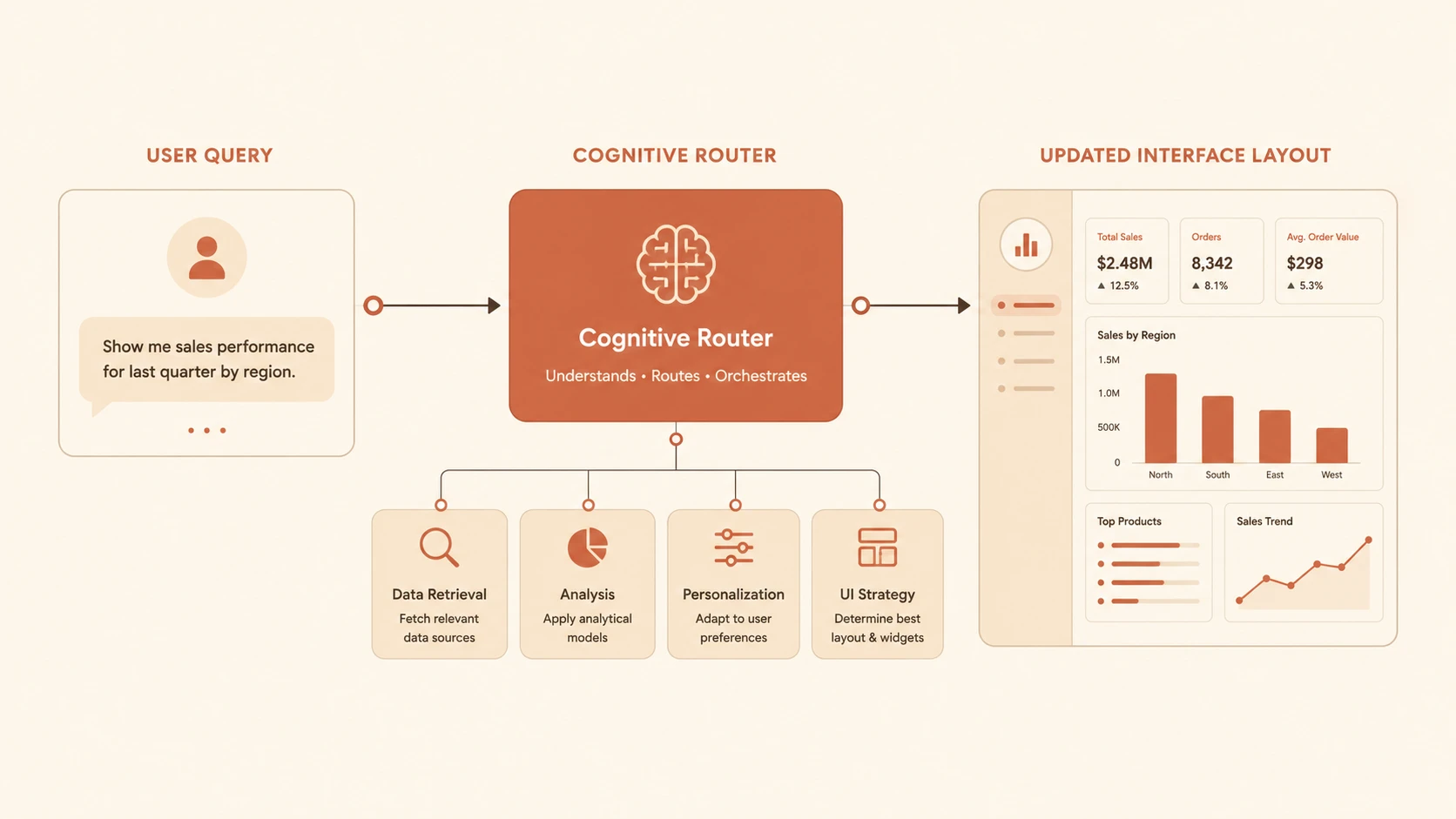
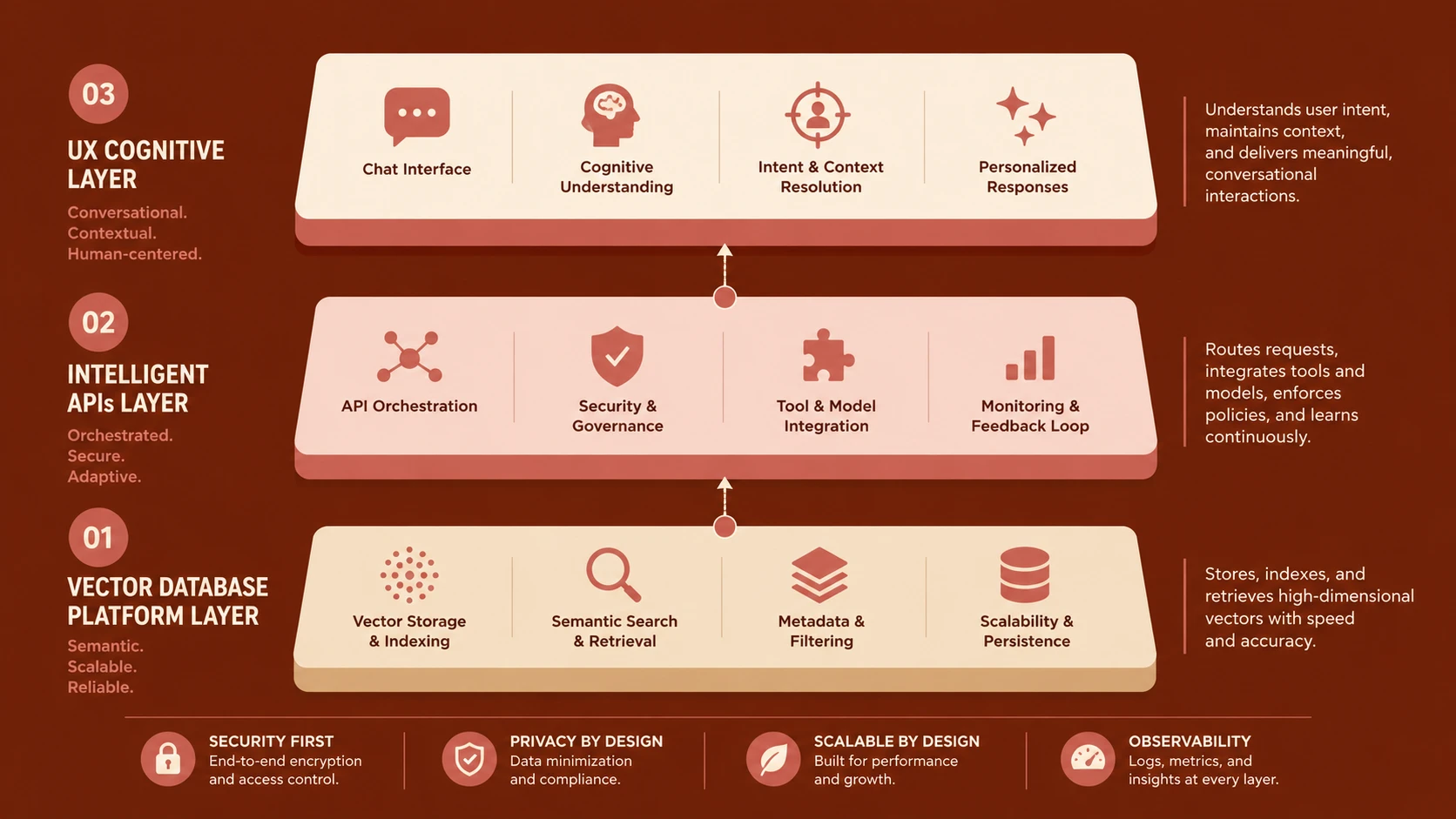
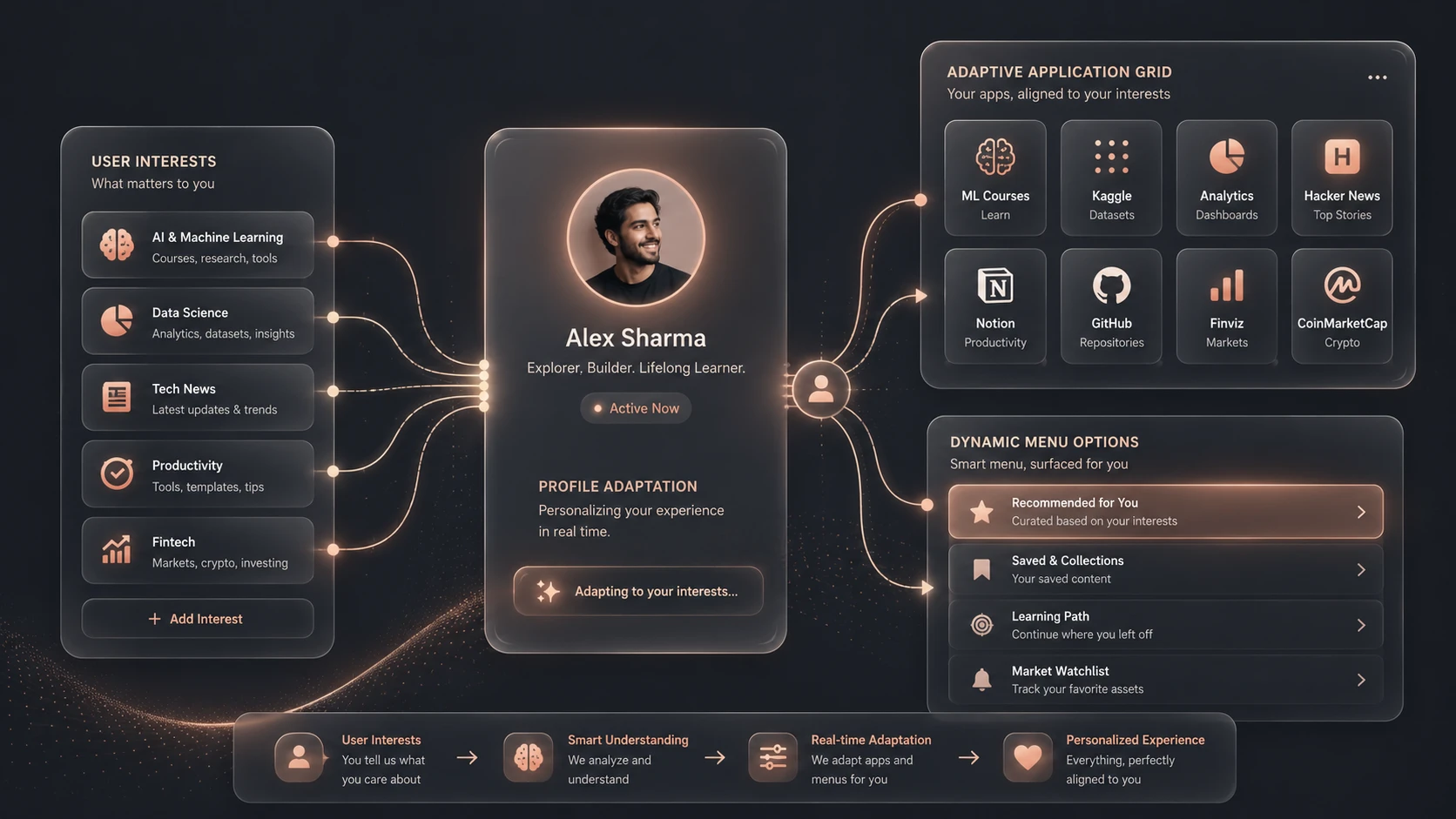
System architecture diagram and conceptual workflow layout for AI-Driven Personalization at Scale.
Recommendation engines remain one of the most valuable personalization technologies.
Modern AI systems combine:
- ◆Collaborative filtering
- ◆Content-based recommendations
- ◆Behavioral analysis
- ◆Contextual ranking
- ◆Semantic search
- ◆Real-time feedback
Together these techniques improve relevance while supporting diverse user journeys.
Enterprise Use Cases
E-Commerce
Deliver personalized product recommendations, promotions, and shopping experiences based on customer behavior and purchasing intent.
Financial Services
Provide customized financial insights, investment recommendations, fraud alerts, and personalized digital banking experiences.
Healthcare
Deliver individualized patient education, appointment reminders, wellness recommendations, and clinician support while maintaining regulatory compliance.
SaaS Platforms
Adapt dashboards, workflows, learning resources, and feature recommendations according to user roles and application usage.
Enterprise Productivity
AI assistants recommend documents, automate repetitive workflows, summarize meetings, and personalize employee experiences.
Performance Considerations
Organizations should monitor:
- ◆Recommendation latency
- ◆AI inference performance
- ◆Personalization accuracy
- ◆Event processing throughput
- ◆Feature freshness
- ◆User engagement metrics
Performance optimization should balance responsiveness with model sophistication.
Security Considerations
AI personalization requires strong governance and responsible data handling.
Organizations should implement:
- ◆Zero Trust access controls
- ◆Encryption at rest and in transit
- ◆Customer consent management
- ◆Data minimization principles
- ◆Responsible AI governance
- ◆Model monitoring
- ◆Audit logging
- ◆Privacy-by-design architecture
Maintaining customer trust is essential for successful personalization initiatives.
Scalability
AI-powered personalization supports enterprise scalability through:
- ◆Cloud-native infrastructure
- ◆Distributed inference services
- ◆Event-driven architecture
- ◆Elastic recommendation platforms
- ◆Centralized feature management
- ◆Automated model deployment
These capabilities enable millions of personalized interactions without compromising performance.
Best Practices
- ◆Build unified customer profiles rather than isolated datasets.
- ◆Combine deterministic business rules with AI recommendations.
- ◆Continuously validate model performance.
- ◆Use real-time event streaming for timely personalization.
- ◆Establish transparent AI governance policies.
- ◆Respect customer privacy and consent preferences.
- ◆Measure business outcomes rather than algorithm complexity.
- ◆Continuously retrain models using representative operational data.
Common Mistakes
| Mistake | Enterprise Impact |
|---|---|
| Relying solely on demographic segmentation | Generic customer experiences |
| Ignoring data quality | Poor recommendation accuracy |
| Personalizing without customer consent | Privacy and compliance risks |
| Treating AI recommendations as infallible | Reduced customer trust |
| Building isolated personalization systems | Fragmented user journeys |
| Measuring only click-through rates | Limited understanding of business value |
Technology Comparison
| Capability | Traditional Personalization | AI-Driven Personalization |
|---|---|---|
| User Segmentation | Static Rules | Dynamic Behavioral Intelligence |
| Recommendations | Rule-Based | Machine Learning and AI |
| Content | Predefined | AI-Generated and Context-Aware |
| Learning | Periodic Updates | Continuous Optimization |
| Customer Context | Limited | Unified Enterprise Profile |
| Decision Speed | Batch Processing | Real-Time |
Adoption Strategy
- 1.Establish a unified customer data platform.
- 2.Implement real-time event collection.
- 3.Deploy recommendation engines for high-value use cases.
- 4.Integrate Generative AI where contextual responses add measurable value.
- 5.Build governance policies for responsible AI.
- 6.Continuously measure personalization effectiveness.
- 7.Use experimentation and A/B testing to validate business impact.
- 8.Expand AI-powered personalization incrementally across customer journeys.
Limitations
As of June 2024, AI-driven personalization continues evolving rapidly. While modern AI systems significantly improve customer engagement and operational efficiency, successful implementations require high-quality data, transparent governance, continuous model monitoring, and strong privacy controls. Organizations should avoid over-personalization that feels intrusive or reduces user trust. Human oversight remains essential for sensitive recommendations and regulated industries.
Looking Ahead
From the perspective of June 2024, AI-driven personalization is becoming the foundation of next-generation user experience. By combining Generative AI, recommendation engines, unified customer data, real-time analytics, and intelligent decision platforms, enterprises can create adaptive digital experiences that continuously learn and evolve with every interaction. As AI models become increasingly multimodal, context-aware, and enterprise-ready, personalization will extend beyond content recommendations toward fully intelligent applications capable of anticipating user needs, simplifying workflows, and delivering deeply individualized experiences at global scale.