Introduction
As Go adoption continues expanding across cloud platforms, distributed systems, networking software, and backend services, developer productivity has become nearly as important as runtime performance. Large engineering organizations frequently rebuild applications hundreds of times each day through local development, continuous integration systems, automated testing pipelines, and production release processes.
Although Go has always been recognized for fast compilation compared with many compiled languages, growing enterprise codebases inevitably increase build duration. Recompiling unchanged packages, repeatedly executing identical test suites, and inefficient dependency rebuilding consume valuable developer time and infrastructure resources.
Go 1.10 addresses these practical concerns through one of the most significant improvements to the Go toolchain since the language stabilized. Automatic build caching and intelligent test result caching dramatically reduce unnecessary compilation while preserving Go's simplicity. Rather than introducing a new programming model, Go 1.10 focuses on making existing development workflows substantially faster.
For enterprise engineering teams, Go 1.10 represents an important milestone in improving software delivery efficiency without increasing operational complexity.
Industry Background
Go has become increasingly popular for:
- ◆Cloud infrastructure
- ◆REST APIs
- ◆Microservices
- ◆Networking software
- ◆Distributed systems
- ◆DevOps tooling
- ◆Container platforms
- ◆Command-line utilities
The language's fast compilation, straightforward concurrency model, and small runtime continue attracting organizations building highly scalable backend systems.
The Business Problem
Enterprise development teams commonly experience:
- ◆Repeated recompilation of unchanged packages
- ◆Long continuous integration cycles
- ◆Slow feedback during testing
- ◆Increased infrastructure costs
- ◆Developer productivity loss
- ◆Larger build pipelines
Improving build performance without sacrificing correctness becomes increasingly valuable as projects grow.
Understanding Go 1.10
Go 1.10 introduces improvements focused primarily on developer productivity.
Key objectives include:
- ◆Automatic build caching
- ◆Test result caching
- ◆Faster incremental compilation
- ◆Improved tooling
- ◆Better development workflow
- ◆Continued language stability
Rather than changing the language itself, Go 1.10 enhances the software development lifecycle.
Core Architecture
| Component | Responsibility |
|---|---|
| Go Compiler | Compiles source code |
| Build Cache | Stores compiled package artifacts |
| Test Cache | Reuses successful test results |
| go Tool | Coordinates builds and testing |
| Package Manager | Resolves dependencies |
| Linker | Produces executable binaries |
These components work together to minimize unnecessary work during development.
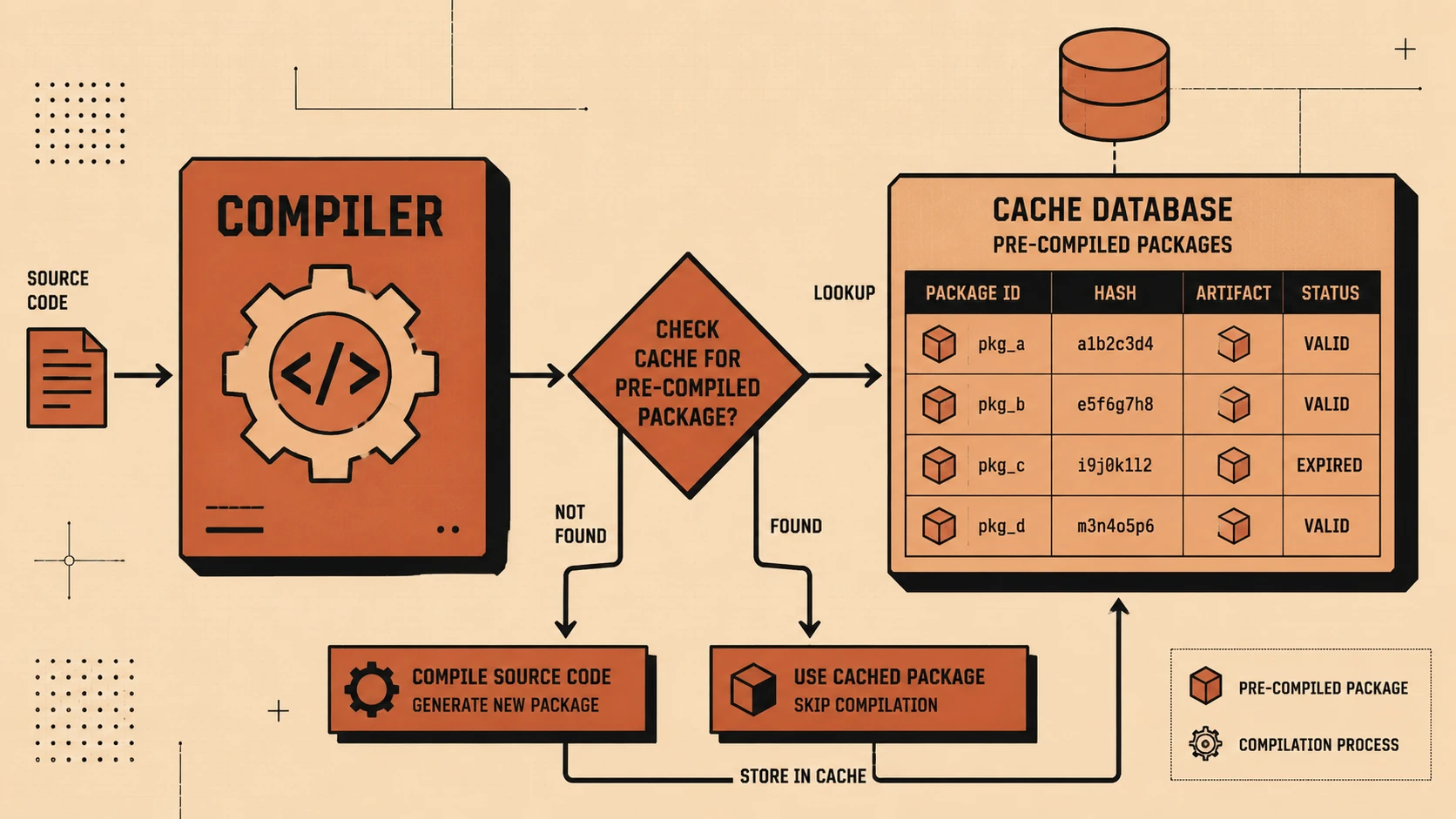
How Build Caching Works
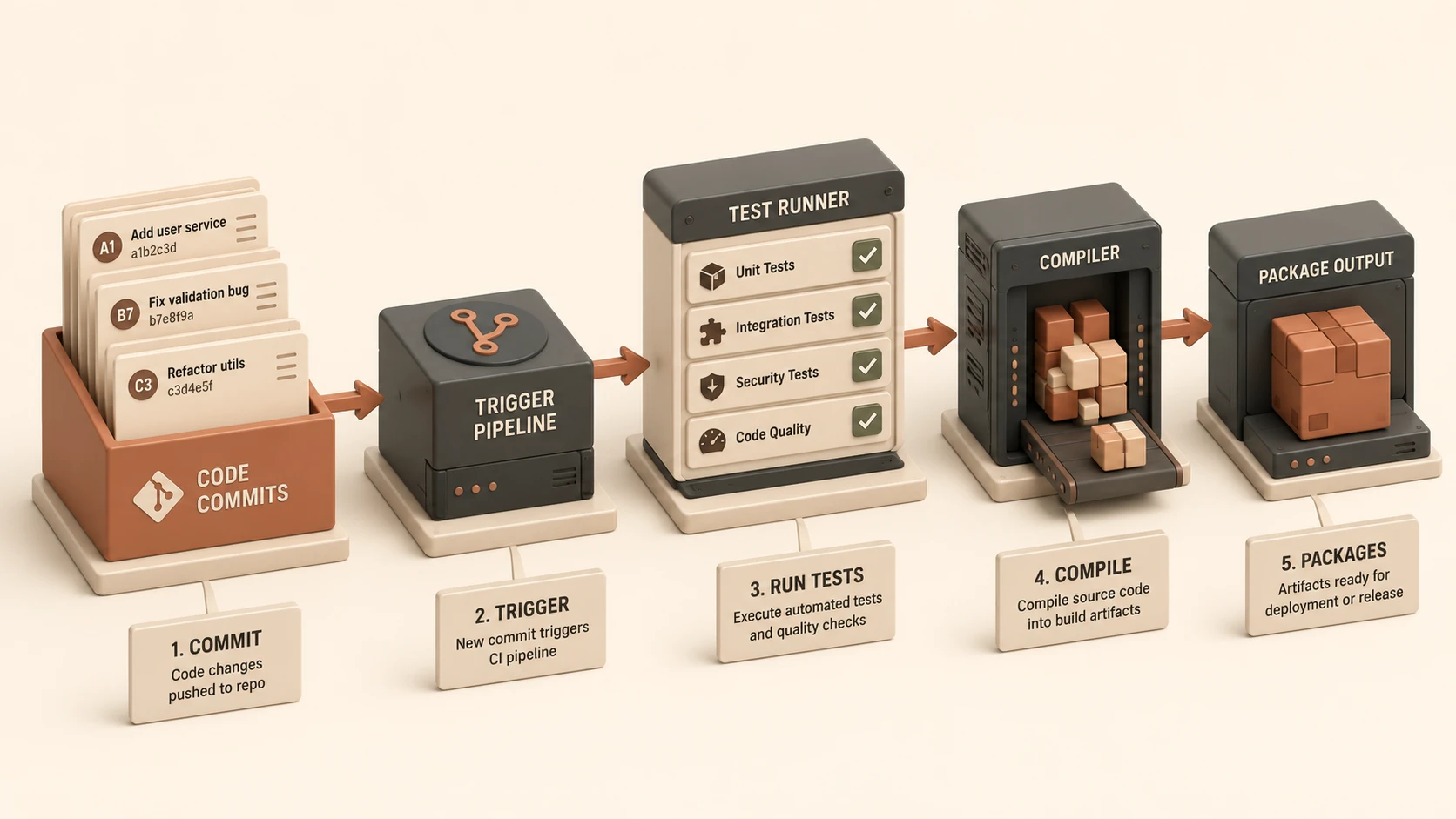
A simplified workflow includes:
- 1.Developer executes a build command.
- 2.The Go tool evaluates source files, compiler options, and dependencies.
- 3.Previously compiled packages are checked in the build cache.
- 4.Unchanged packages are reused.
- 5.Only modified packages are recompiled.
- 6.The linker generates the final executable.
This process significantly reduces build time for incremental changes.
Incremental Compiler Caching
One of the most important additions in Go 1.10 is automatic build caching.
Instead of recompiling every package during each build, the Go tool stores compiled package outputs and reuses them whenever inputs remain unchanged.
Benefits include:
- ◆Faster incremental builds
- ◆Reduced CPU utilization
- ◆Improved developer productivity
- ◆Better continuous integration performance
- ◆Efficient dependency reuse
Because cache management is automatic, developers benefit without maintaining complex build configurations.
Test Result Caching
# Running tests in Go 1.10 utilizing cached test results
go test ./...            # Runs tests and caches positive results

# Run tests again. Any package without changes will show "(cached)"
go test ./...

# Force bypass the test cache when needed
go test -count=1 ./...
Go 1.10 also introduces caching for successful test executions.
When package source code and relevant inputs remain unchanged, previously successful test results may be reused instead of rerunning the same test suite.
Enterprise advantages include:
- ◆Faster development cycles
- ◆Reduced continuous integration workload
- ◆Lower infrastructure costs
- ◆Quicker developer feedback
Tests continue executing normally whenever changes invalidate cached results.
Compiler and Toolchain Improvements
Go 1.10 includes additional enhancements across the development toolchain.
These improvements include:
- ◆Better compiler efficiency
- ◆Improved build consistency
- ◆Faster dependency handling
- ◆More efficient package processing
- ◆Refinements to existing developer tools
Collectively, these enhancements strengthen Go's reputation for rapid software development.
Key Features
Automatic Build Cache
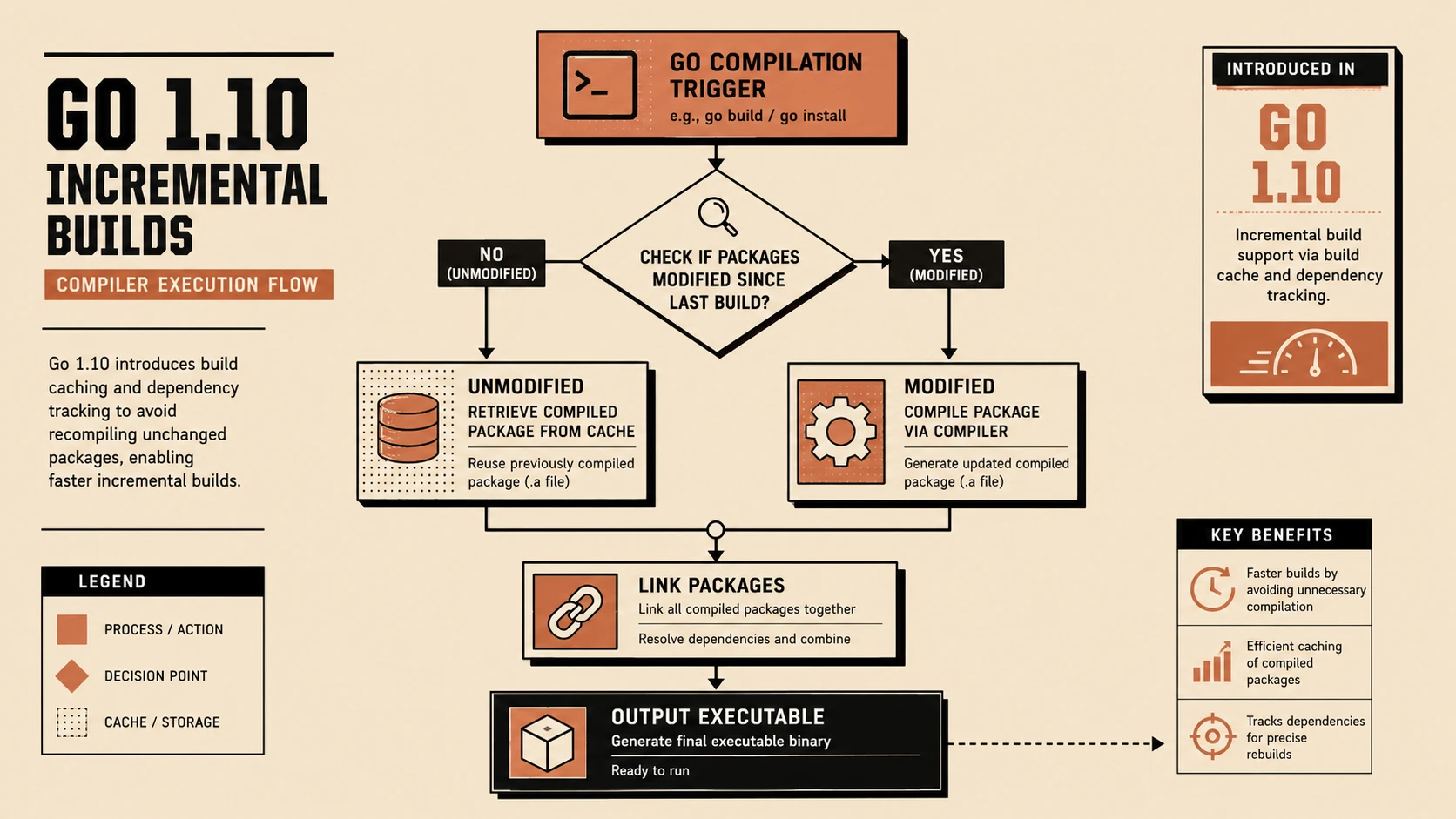
System architecture diagram and conceptual workflow layout for Go 1.10: Incremental Compiler Caching and Test Run Optimizations.
Compiled packages are stored and reused automatically.
Intelligent Test Cache
Previously successful test executions can be reused when inputs remain unchanged.
Faster Incremental Builds
Only modified packages require recompilation.
Improved Toolchain
Compiler and build tooling continue emphasizing simplicity and performance.
Enterprise Workflow Optimization
Large development teams benefit from reduced build latency throughout software delivery pipelines.
Enterprise Use Cases
Microservices
Frequent service updates benefit from shorter build times.
Continuous Integration
Automated pipelines complete more quickly when unnecessary recompilation is avoided.
Cloud Platforms
Infrastructure teams deploying multiple services benefit from improved build efficiency.
API Development
Developers receive faster feedback during iterative development.
Large Monorepositories
Incremental compilation reduces the cost of maintaining large shared codebases.
Performance Considerations
Go 1.10 primarily improves build performance rather than runtime execution.
Organizations should evaluate:
- ◆Incremental build duration
- ◆Continuous integration throughput
- ◆Cache effectiveness
- ◆Storage usage
- ◆Dependency organization
- ◆Test execution frequency
Projects with frequent incremental changes are expected to experience the greatest productivity gains.
Security Considerations
Build caching improves development efficiency but does not alter secure software engineering practices.
Organizations should continue implementing:
- ◆Secure dependency management
- ◆Code review
- ◆Automated security testing
- ◆Build verification
- ◆Access control for source repositories
- ◆Release validation
Scalability
Go 1.10 supports scalable engineering organizations through:
- ◆Faster incremental compilation
- ◆Reduced infrastructure usage
- ◆Efficient testing workflows
- ◆Simplified build management
- ◆Consistent developer experience
These improvements become increasingly valuable as project size and engineering teams grow.
Best Practices
- ◆Keep packages focused and modular.
- ◆Allow the Go tool to manage build caching automatically.
- ◆Structure projects to encourage incremental compilation.
- ◆Integrate automated testing into continuous integration.
- ◆Monitor build duration over time.
- ◆Keep dependencies current.
- ◆Standardize build environments across teams.
- ◆Benchmark pipeline improvements after upgrading.
Common Mistakes
| Mistake | Enterprise Impact |
|---|---|
| Assuming cache always applies regardless of source changes | Misunderstanding build behavior |
| Measuring only full builds | Missed productivity improvements |
| Poor package organization | Reduced cache effectiveness |
| Ignoring automated testing | Lower software quality |
| Inconsistent development environments | Variable build performance |
| Overlooking CI optimization opportunities | Higher infrastructure costs |
Technology Comparison
| Capability | Go 1.9 | Go 1.10 |
|---|---|---|
| Automatic Build Cache | No | Yes |
| Test Result Cache | No | Yes |
| Incremental Compilation Efficiency | Good | Improved |
| Toolchain Performance | Strong | Enhanced |
| Developer Productivity | High | Higher |
| CI Build Optimization | Limited | Improved |
Adoption Strategy
- 1.Upgrade development environments to Go 1.10.
- 2.Validate third-party dependency compatibility.
- 3.Benchmark build performance.
- 4.Measure continuous integration improvements.
- 5.Train engineering teams on build cache behavior.
- 6.Standardize Go versions across projects.
- 7.Monitor pipeline execution times.
- 8.Expand deployment after successful validation.
Limitations
Automatic caching provides the greatest benefit for incremental development workflows. Full clean builds continue compiling all packages, and cache effectiveness depends upon unchanged source files, compiler options, and build inputs. Organizations should understand cache invalidation behavior when evaluating performance improvements.
Looking Ahead
From the perspective of February 2018, Go 1.10 represents a practical and highly valuable release focused on improving developer productivity rather than introducing major language features. Automatic compiler caching, intelligent test result reuse, and ongoing toolchain refinements reduce build times across local development and continuous integration environments. As enterprise Go deployments continue expanding, these improvements position Go as an increasingly efficient platform for developing and maintaining large-scale backend services and cloud-native applications.