Introduction
Single Page Applications (SPAs) are becoming an increasingly popular architectural choice for enterprise web development. By shifting more application logic into the browser, organizations can build richer, more interactive user experiences while reducing full-page reloads and improving application responsiveness.
AngularJS has emerged as one of the leading JavaScript frameworks supporting this transition. Features such as declarative templates, dependency injection, two-way data binding, and modular application design significantly simplify front-end development.
Central to AngularJS is the $digest loop, the framework's change detection mechanism responsible for synchronizing application models with the user interface. While this design greatly improves developer productivity, applications with excessive watchers or inefficient data binding can experience noticeable performance degradation.
For enterprise development teams building increasingly complex browser applications, understanding the digest cycle has become essential for delivering scalable and responsive software.
Industry Background
Traditional web applications relied heavily on server-side rendering, with each user interaction typically generating a complete page refresh.
Modern JavaScript frameworks such as AngularJS instead execute substantial portions of application logic within the browser.
This architectural shift introduces several advantages:
- ◆Rich user interfaces
- ◆Reduced server rendering
- ◆Better responsiveness
- ◆Improved client-side navigation
- ◆Enhanced user productivity
However, maintaining synchronization between application data and the interface introduces new implementation challenges.
AngularJS addresses these challenges through automatic data binding driven by its digest cycle.
The Business Problem
Enterprise Single Page Applications often contain:
- ◆Hundreds of UI components
- ◆Large data collections
- ◆Complex forms
- ◆Real-time updates
- ◆Nested views
- ◆Numerous user interactions
Without efficient change detection, these applications can suffer from:
- ◆Slow rendering
- ◆Delayed user interaction
- ◆Excessive CPU utilization
- ◆Browser responsiveness issues
- ◆Difficult scalability
Optimizing AngularJS applications therefore requires understanding how the framework processes model changes.
Understanding the $digest Loop
AngularJS continuously maintains synchronization between application models and user interface elements.
This synchronization occurs through the $digest loop.
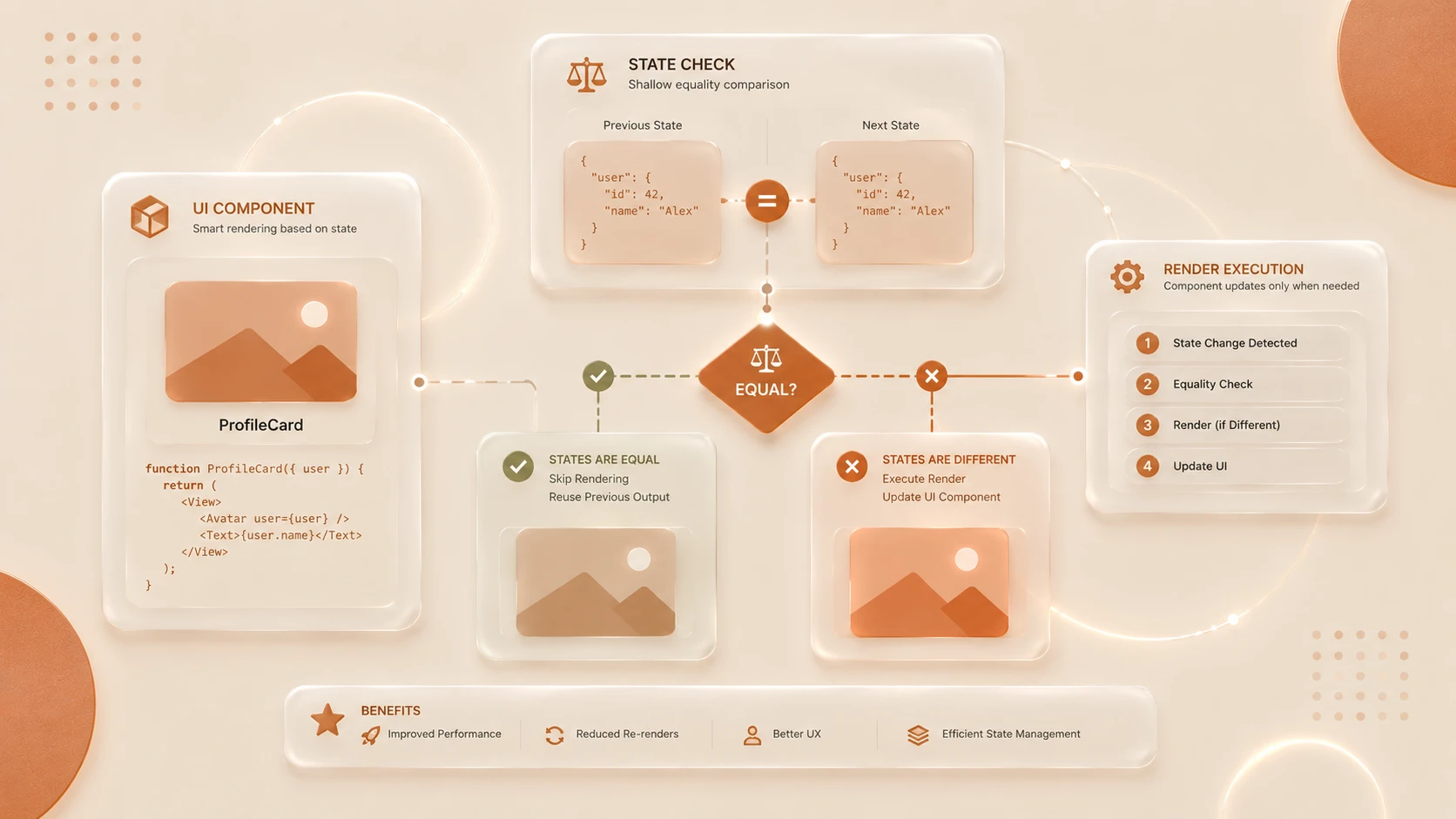
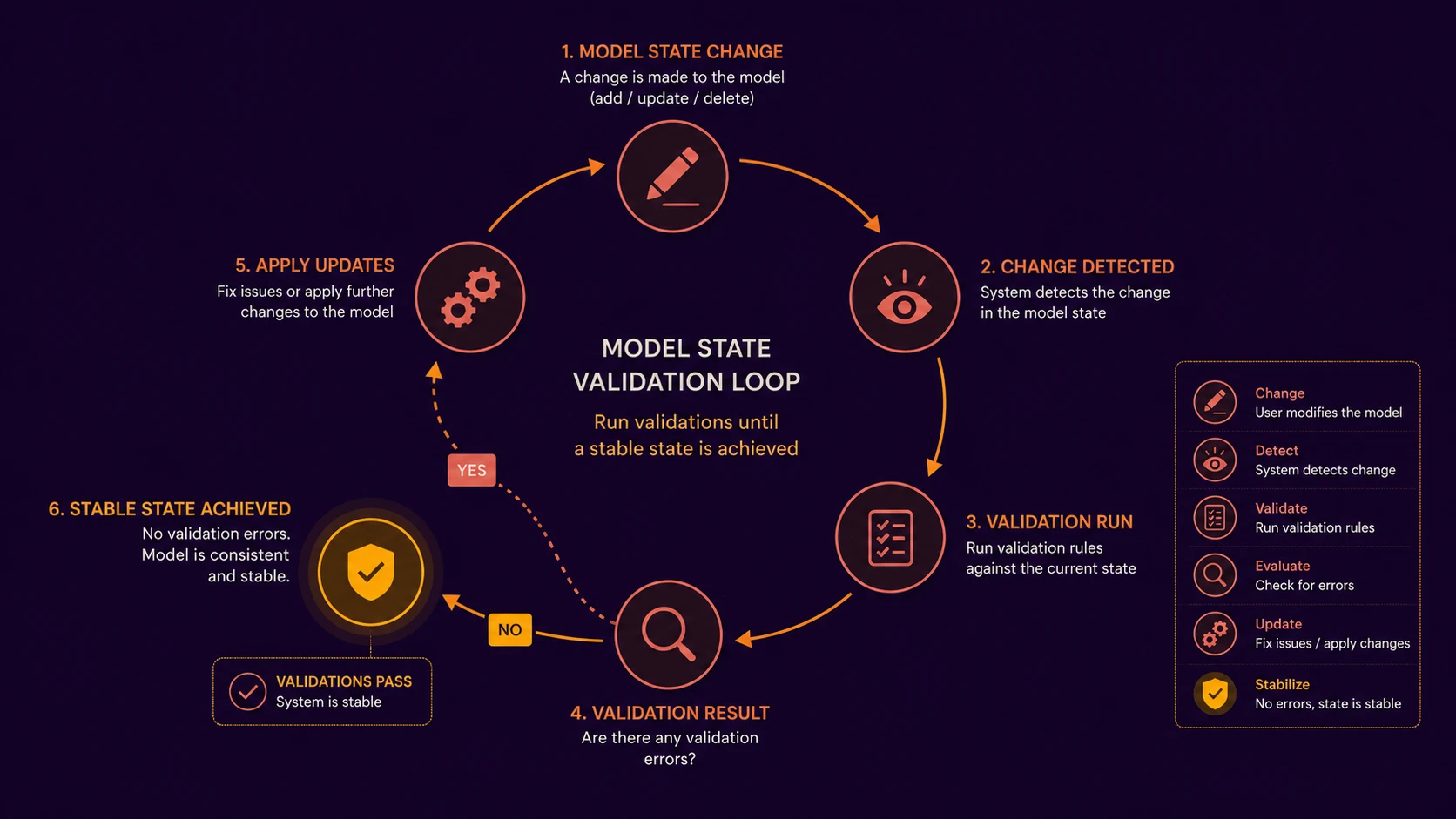
Whenever AngularJS detects that application state may have changed, it evaluates registered watchers.
Each watcher compares current and previous values.
If changes are detected:
- ◆Models are updated.
- ◆User interface bindings are refreshed.
- ◆Additional watchers may execute.
- ◆The digest continues until no further changes are detected.
This automatic synchronization significantly reduces manual DOM manipulation while simplifying application logic.
Core Architecture
AngularJS change detection consists of several cooperating components.
| Component | Responsibility |
|---|---|
| Scope | Stores application state |
| Watchers | Observe model changes |
| $digest Loop | Executes change detection |
| $apply | Starts framework-managed updates |
| Directives | Connect HTML with AngularJS behavior |
| Controllers | Manage presentation logic |
| Services | Provide reusable business functionality |
The interaction between scopes, watchers, and the digest loop forms the foundation of AngularJS's two-way data binding system.
How the Digest Cycle Works
A simplified execution flow includes:
- 1.User interaction or application logic modifies data.
- 2.AngularJS invokes the $apply process.
- 3.The digest loop begins.
- 4.Every registered watcher evaluates its expression.
- 5.Changed values update the view.
- 6.Additional changes trigger another digest iteration.
- 7.Processing completes when all watched values stabilize.
Rather than updating individual interface elements manually, AngularJS evaluates the entire change detection process automatically.
Key Features
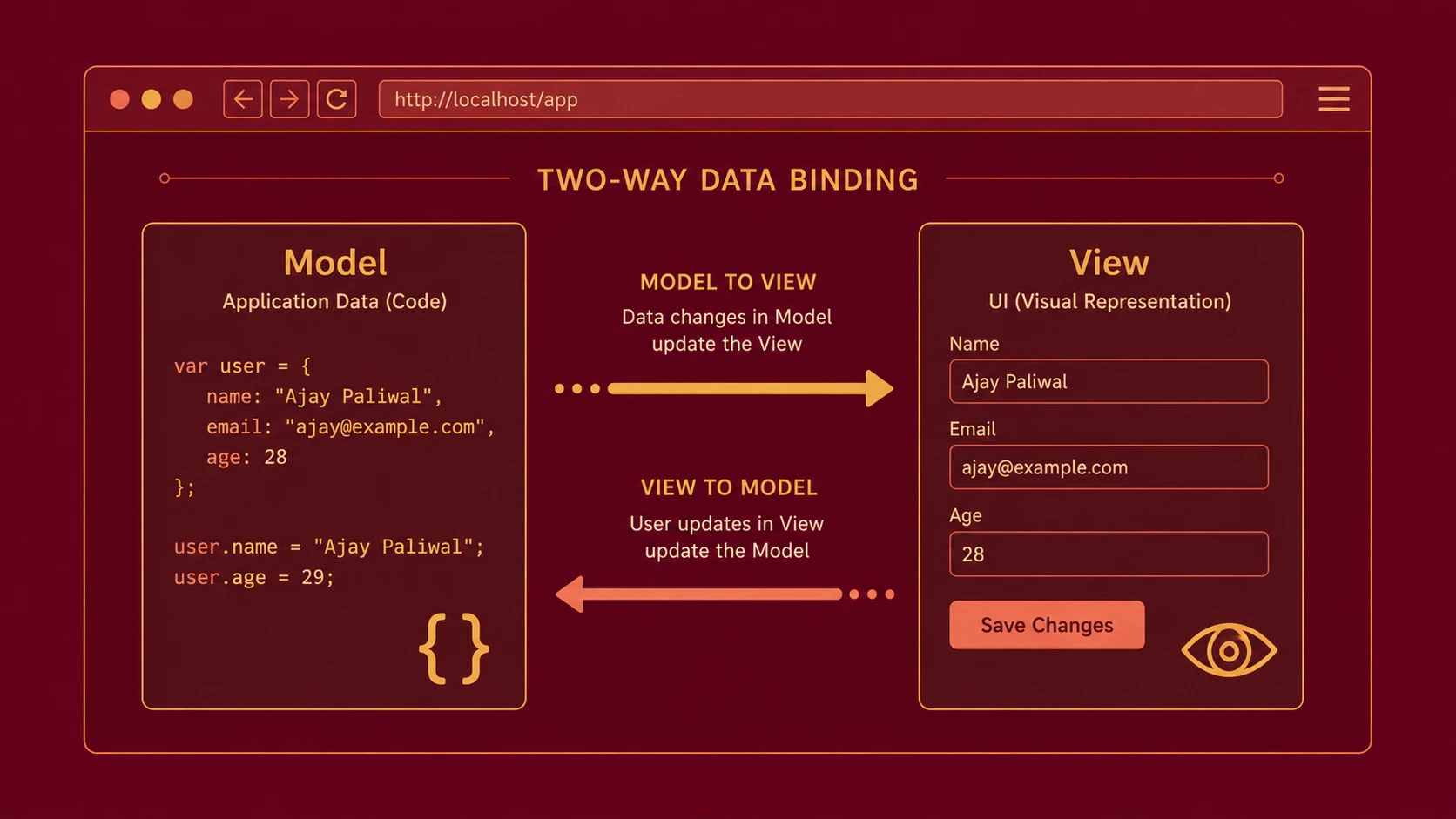
Two-Way Data Binding
Changes made within the user interface automatically update application models, while model changes immediately propagate back to the interface.
Automatic Change Detection
Developers rarely need to manually synchronize user interface state.
Watch Expressions
// Declaring watchers and triggering a digest loop manually in AngularJS 1.x
$scope.name = "Vijay Paliwal";

// Watch expression evaluating value changes
$scope.$watch('name', function(newValue, oldValue) {
  if (newValue !== oldValue) {
    console.log(`Name updated from ${oldValue} to ${newValue}`);
  }
});

// Force digest cycle when updates occur in async callbacks outside Angular context
setTimeout(() => {
  $scope.name = "Shivam Agent";
  $scope.$apply(); // Trigger digest loop manually
}, 1000);
AngularJS monitors application variables through registered watcher functions.
Scope Hierarchy
Nested scopes allow different interface components to maintain independent application state while supporting inheritance.
Declarative Templates
HTML templates remain closely connected to application models without requiring extensive imperative JavaScript.
Enterprise Use Cases
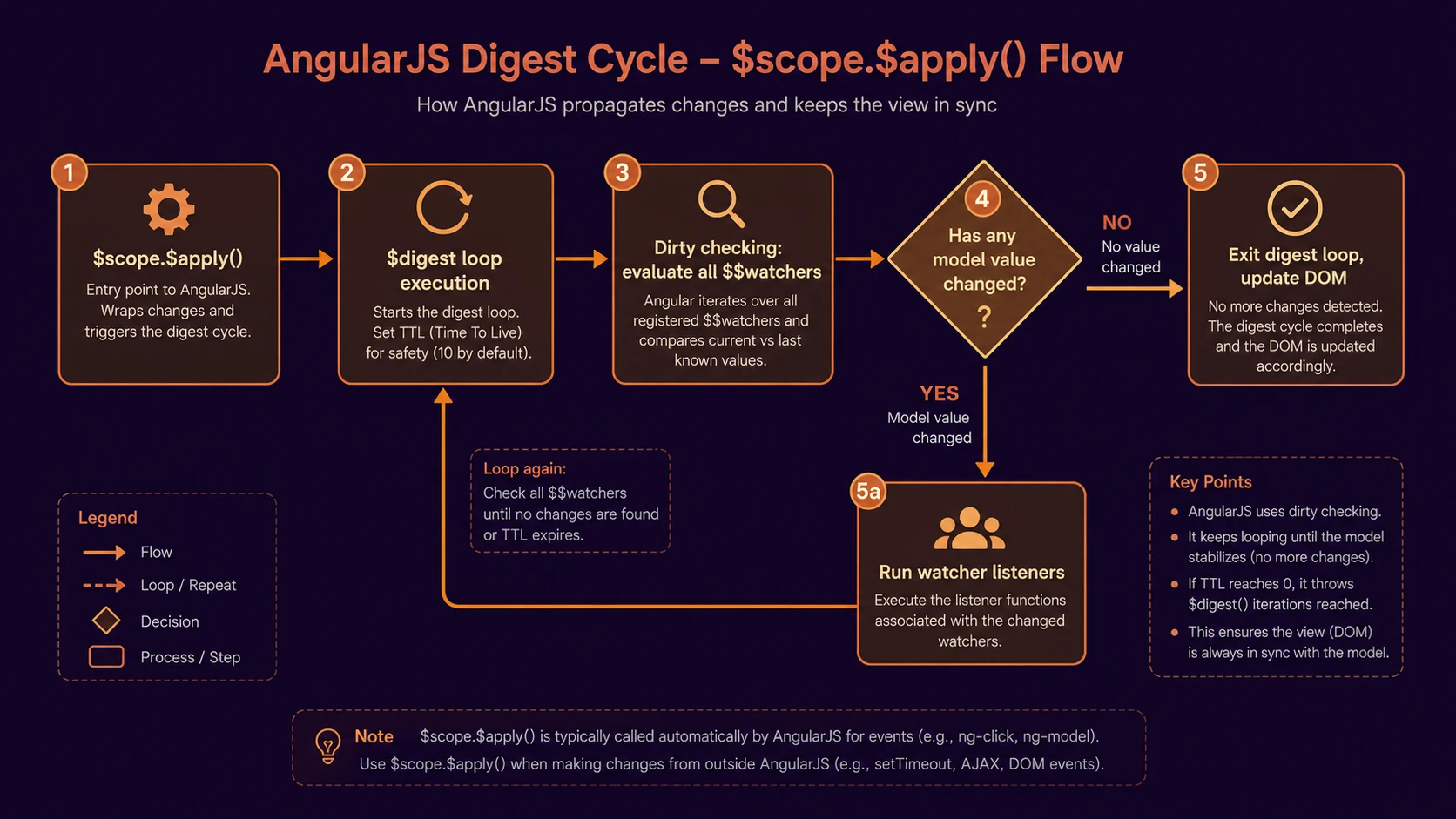
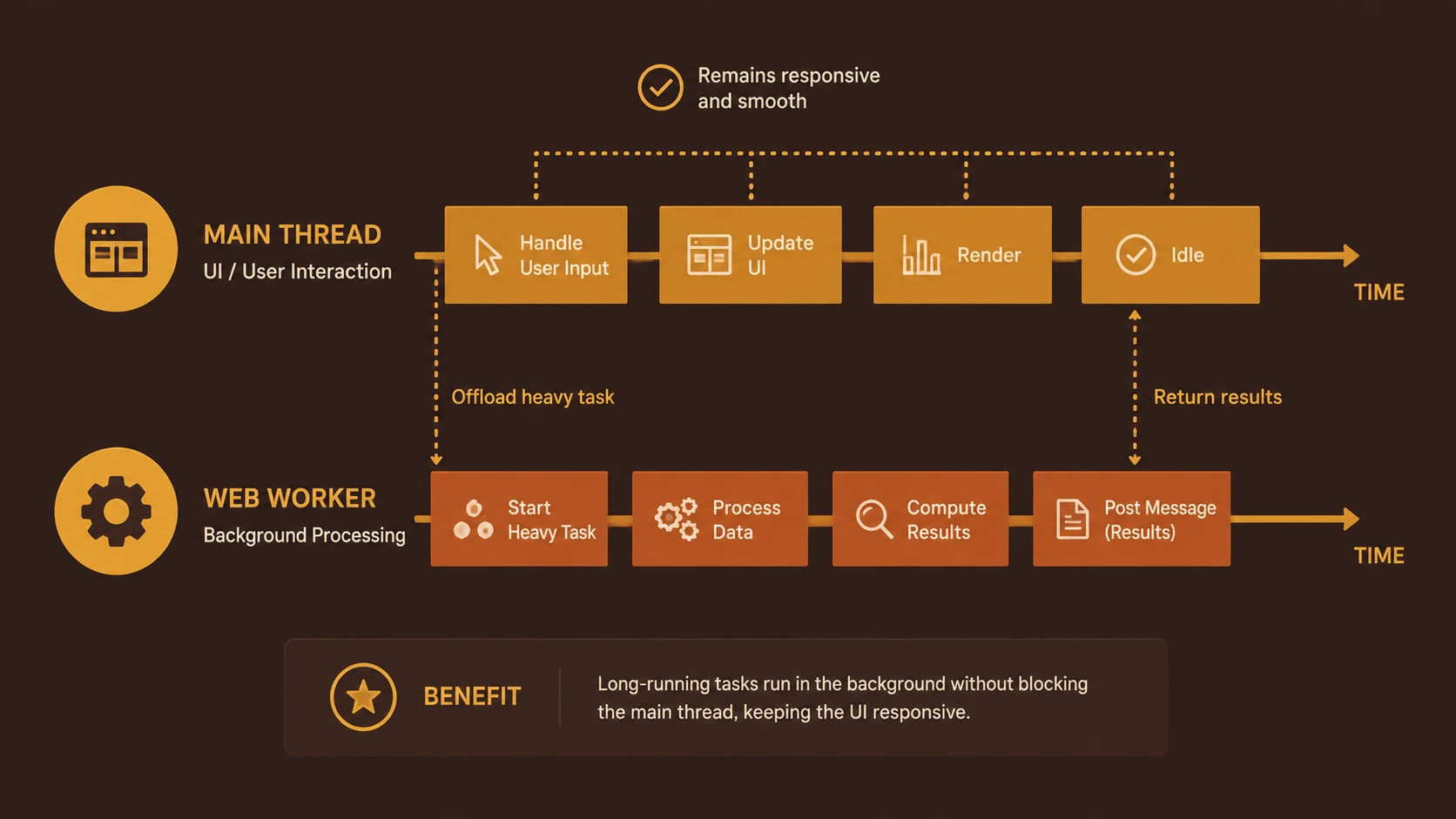
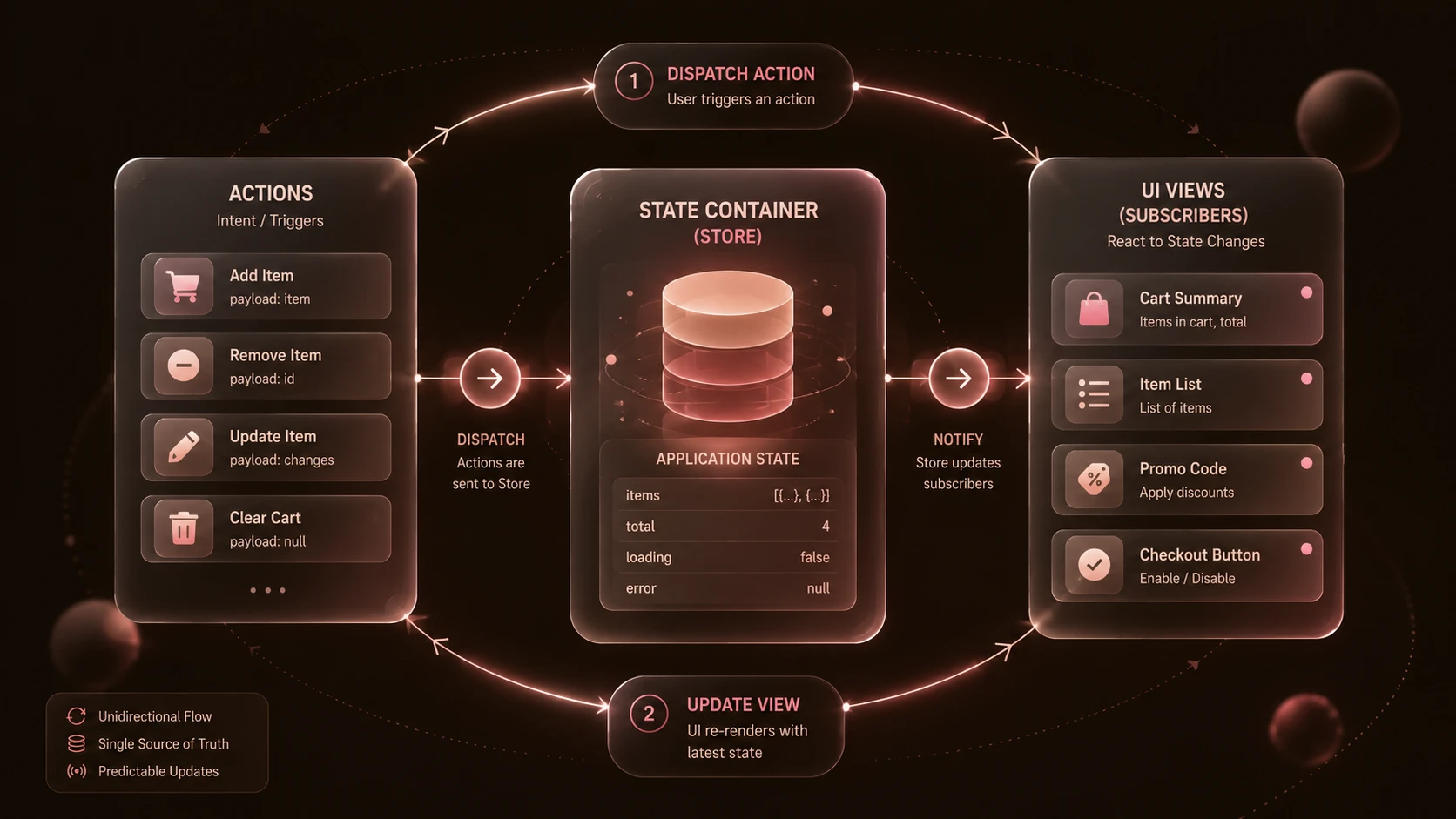
System architecture diagram and conceptual workflow layout for AngularJS $digest Loop.
AngularJS performs particularly well in several enterprise scenarios.
Business Dashboards
Interactive reporting applications benefit from automatic interface updates.
Customer Relationship Management
Large forms containing dynamic validation become easier to maintain.
Administrative Portals
Complex data management interfaces leverage two-way binding to reduce development effort.
Workflow Systems
Business processes involving multiple interactive screens benefit from AngularJS's client-side architecture.
Single Page Applications
Organizations seeking desktop-like browser experiences increasingly adopt AngularJS for internal enterprise software.
Performance Considerations
Application performance depends heavily upon watcher management.
Common performance factors include:
- ◆Number of watchers
- ◆Digest frequency
- ◆Scope hierarchy depth
- ◆DOM complexity
- ◆Collection size
- ◆Expression evaluation cost
Large enterprise applications containing thousands of watchers may experience slower digest execution if change detection is not carefully optimized.
Developers should monitor watcher growth throughout application development.
Security Considerations
AngularJS simplifies interface development but does not eliminate established security responsibilities.
Enterprise applications should continue implementing:
- ◆Server-side validation
- ◆Authentication
- ◆Authorization
- ◆Input sanitization
- ◆Secure communication
- ◆Protection against script injection
Client-side validation should complement rather than replace server-side security controls.
Scalability
AngularJS applications remain scalable when client-side complexity is managed appropriately.
Organizations should focus on:
- ◆Modular controllers
- ◆Reusable services
- ◆Efficient directives
- ◆Controlled watcher counts
- ◆Lazy loading where practical
- ◆Separation of presentation and business logic
Well-designed AngularJS applications can remain maintainable even as functionality expands.
Best Practices
Organizations building AngularJS applications should consider the following recommendations.
- ◆Minimize unnecessary watchers.
- ◆Avoid complex expressions inside templates.
- ◆Keep controllers focused on presentation logic.
- ◆Move reusable functionality into services.
- ◆Reduce DOM complexity.
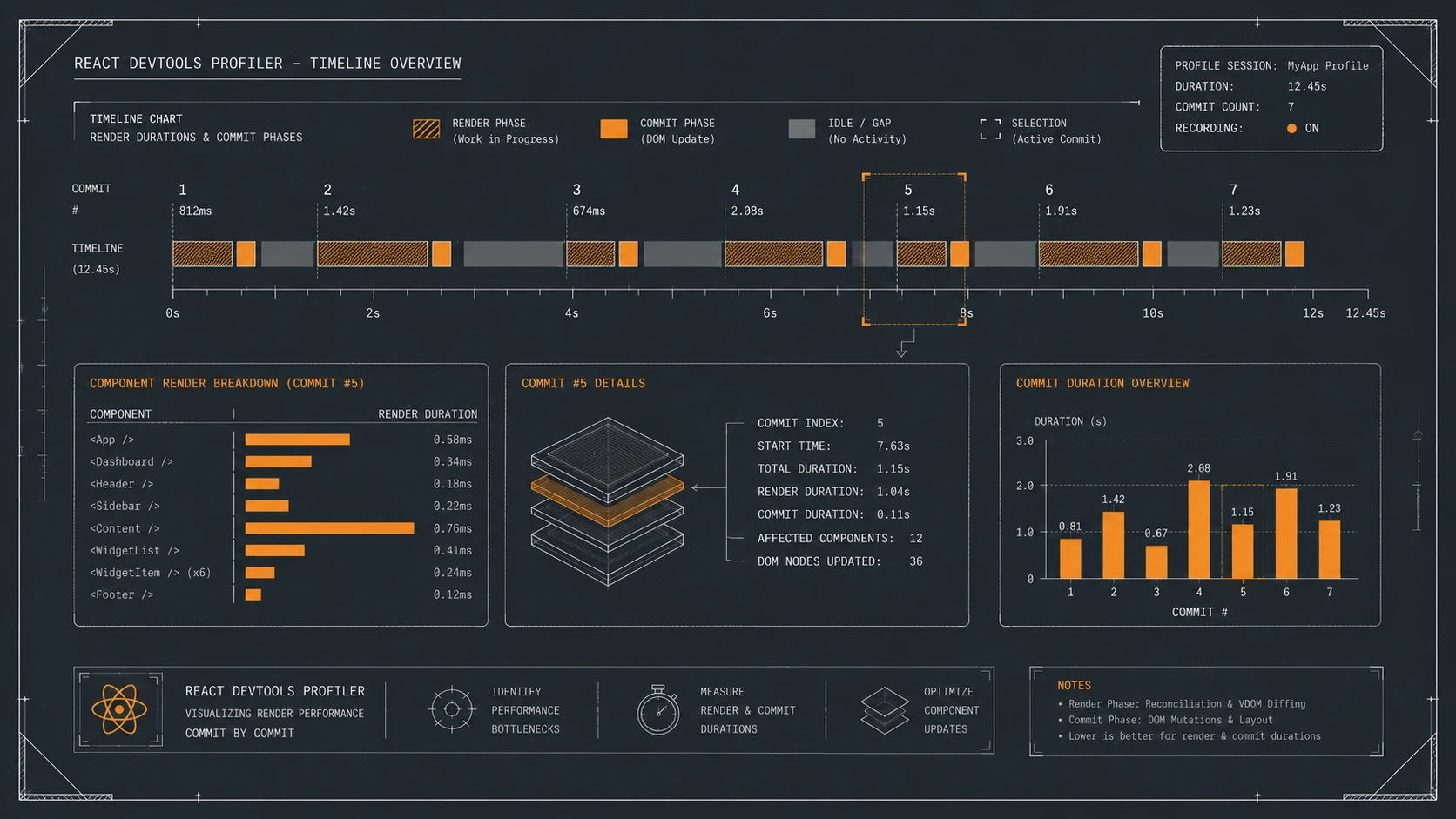
- ◆Monitor digest performance during development.
- ◆Profile browser performance regularly.
- ◆Organize applications into independent modules.
Common Mistakes
| Mistake | Enterprise Impact |
|---|---|
| Excessive watcher creation | Slower digest cycles |
| Business logic inside templates | Reduced maintainability |
| Large scope hierarchies | Increased processing overhead |
| Heavy DOM manipulation | Poor rendering performance |
| Duplicate watchers | Unnecessary CPU utilization |
| Ignoring browser profiling | Undetected scalability issues |
Most AngularJS performance problems originate from application design rather than limitations within the framework itself.
Technology Comparison
| Capability | Traditional jQuery Applications | AngularJS |
|---|---|---|
| DOM Updates | Manual | Automatic |
| Data Binding | Manual | Two-Way |
| Change Detection | Developer Managed | Digest Loop |
| Dependency Injection | No | Yes |
| Application Structure | Flexible | MVC-Oriented |
| Code Maintainability | Moderate | Improved |
AngularJS increases developer productivity while introducing additional responsibility for efficient watcher management.
Adoption Strategy
Organizations planning AngularJS adoption should proceed systematically.
Recommended steps include:
- 1.Train developers on AngularJS architecture.
- 2.Understand the digest cycle.
- 3.Design modular application structure.
- 4.Monitor watcher counts during development.
- 5.Benchmark realistic workloads.
- 6.Profile browser performance.
- 7.Optimize large data collections.
- 8.Establish coding standards for AngularJS projects.
Early attention to application architecture significantly reduces long-term maintenance costs.
Limitations
Although AngularJS greatly simplifies client-side application development, organizations should recognize several considerations.
- ◆Large watcher counts may reduce performance.
- ◆Two-way data binding introduces additional processing overhead.
- ◆Browser performance varies across devices.
- ◆Complex Single Page Applications require disciplined architecture.
- ◆Developers must understand AngularJS's internal execution model to optimize large applications effectively.
AngularJS remains highly productive, but enterprise success depends upon thoughtful application design.
Looking Ahead
From the perspective of October 2013, AngularJS has established itself as one of the most influential frameworks for building enterprise Single Page Applications. Its automatic data binding, dependency injection, and modular architecture significantly reduce development complexity while enabling highly interactive browser applications.
As enterprise software increasingly shifts toward client-side architectures, understanding the digest loop and optimizing watcher performance will become essential skills for AngularJS development teams. Organizations investing in AngularJS today should emphasize architectural discipline and performance profiling to ensure that growing applications remain responsive, maintainable, and scalable as business requirements continue to evolve.