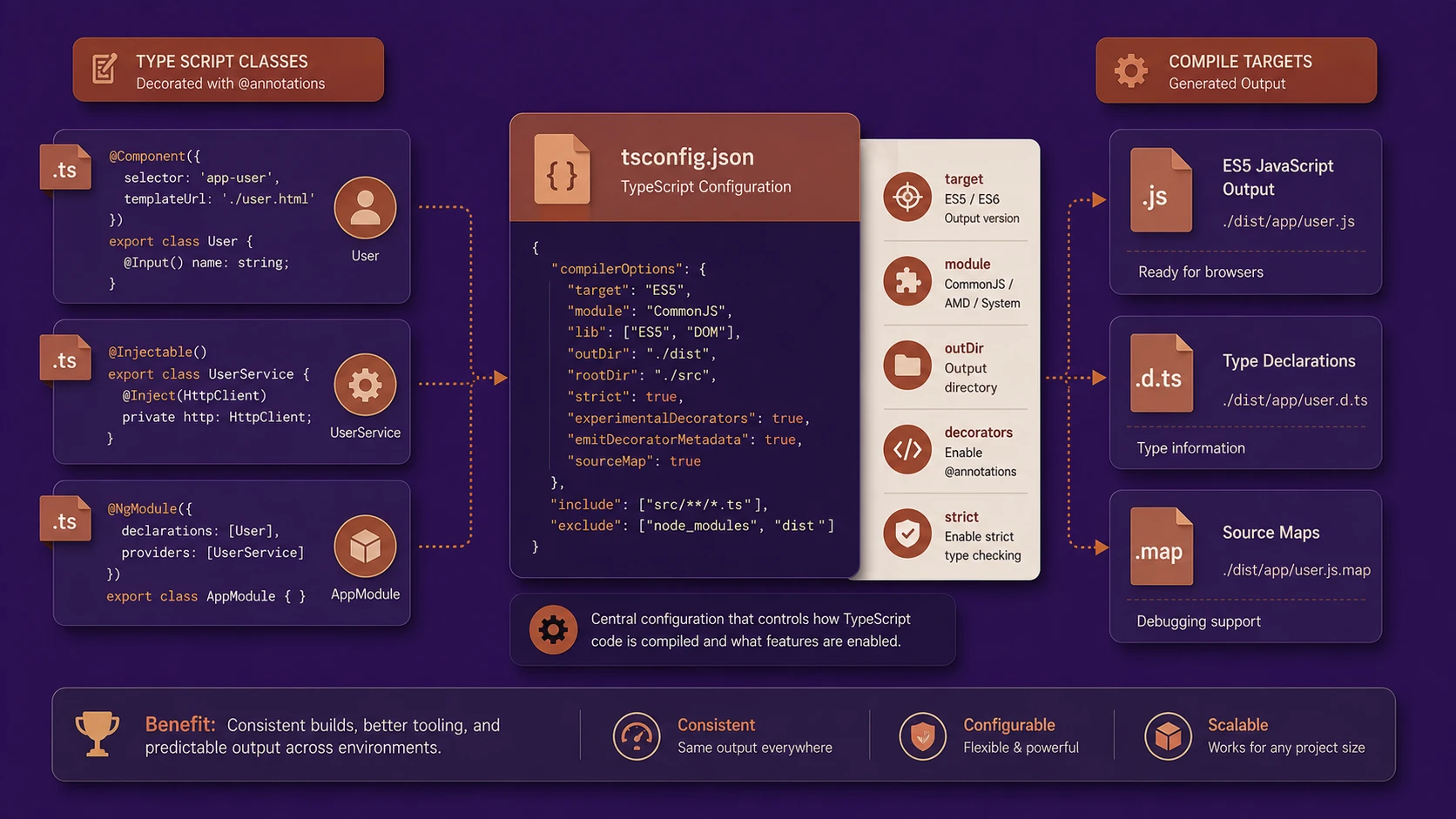
Introduction
Enterprise JavaScript development continues to evolve rapidly. Modern web applications now power customer relationship management systems, financial platforms, enterprise portals, Software as a Service (SaaS) products, and increasingly sophisticated Single Page Applications. As codebases grow, organizations require stronger tooling, better maintainability, and improved collaboration across development teams.
TypeScript has gained momentum by introducing optional static typing while remaining compatible with JavaScript. Rather than replacing JavaScript, TypeScript extends the language with compile-time analysis, richer tooling, and modern language constructs that compile into broadly supported JavaScript.
TypeScript 1.5 represents another important milestone in that evolution. The release improves alignment with emerging ECMAScript 6 features by introducing decorator support, enhanced module syntax, and a standardized project configuration file through tsconfig.json. Together, these additions simplify large-scale application development while improving consistency across enterprise projects.
For software architects and engineering managers, TypeScript 1.5 offers capabilities that help standardize development practices without requiring organizations to abandon their existing JavaScript investments.
Industry Background
JavaScript has become the dominant language for browser applications, while Node.js has expanded its role on the server. At the same time, ECMAScript 6 is introducing language improvements including modules, classes, promises, generators, and other modern programming constructs.
Many organizations, however, continue supporting browsers that do not yet implement every new language feature. This creates a need for tooling capable of allowing developers to write modern code while producing compatible JavaScript output.
TypeScript addresses this challenge by compiling advanced language features into JavaScript that can execute in current environments, while also improving developer productivity through static analysis and editor integration.
The Business Problem
Large JavaScript applications commonly experience:
- ◆Growing code complexity
- ◆Difficult project organization
- ◆Inconsistent build configuration
- ◆Limited compile-time validation
- ◆Challenging code navigation
- ◆Duplicate implementation patterns
- ◆Increased onboarding effort
As teams expand, maintaining consistency across projects becomes increasingly difficult.
TypeScript seeks to reduce these issues by introducing stronger language structure and standardized project configuration.
Understanding TypeScript 1.5
TypeScript remains a superset of JavaScript that adds optional type annotations and modern language capabilities.
Version 1.5 introduces several notable improvements including:
- ◆Decorators
- ◆ES6 module syntax support
- ◆tsconfig.json project configuration
- ◆Continued ECMAScript 6 alignment
- ◆Improved tooling for enterprise applications
These additions help simplify both application development and project management.
Core Architecture
| Component | Responsibility |
|---|---|
| TypeScript Compiler | Translates TypeScript into JavaScript |
| tsconfig.json | Defines project compilation settings |
| ES6 Modules | Organize application code |
| Decorators | Attach metadata to classes and members |
| Type System | Performs compile-time validation |
| JavaScript Runtime | Executes compiled output |
This architecture separates development-time tooling from runtime execution.
Decorators
// Basic class decorator implementation in TypeScript 1.5
function Component(config: { selector: string, template: string }) {
    return function (target: Function) {
        Object.defineProperty(target.prototype, 'selector', { value: config.selector });
        Object.defineProperty(target.prototype, 'template', { value: config.template });
    }
}

@Component({
    selector: 'app-root',
    template: '<h1>Welcome to TypeScript Decorators!</h1>'
})
class AppController {
    constructor() {}
}
One of the most discussed additions in TypeScript 1.5 is support for decorators.
Decorators provide a declarative mechanism for attaching metadata or modifying the behavior of classes and class members.
Potential applications include:
- ◆Dependency registration
- ◆Logging
- ◆Validation
- ◆Authorization
- ◆Metadata definition
- ◆Framework integration
By separating cross-cutting concerns from core business logic, decorators can improve code organization and readability.
Because decorator support builds upon emerging ECMAScript proposals, organizations should evaluate adoption carefully as standards continue evolving.
ES6 Module Targets
Application modularity has become increasingly important for enterprise development.
TypeScript 1.5 expands support for ECMAScript 6 module syntax while continuing to support existing module systems.
Benefits include:
- ◆Clear dependency management
- ◆Better code organization
- ◆Improved reuse
- ◆Easier maintenance
- ◆Stronger alignment with modern JavaScript
Modules encourage smaller, focused components that can evolve independently.
Project Configuration with tsconfig.json
Prior TypeScript projects often relied on lengthy command-line arguments during compilation.
TypeScript 1.5 introduces tsconfig.json, allowing project settings to be maintained within a dedicated configuration file.
Typical configuration includes:
- ◆Compiler options
- ◆Source file locations
- ◆Output settings
- ◆Module configuration
- ◆Project structure
This centralized approach improves build consistency across development teams.
Benefits of Standardized Configuration
A shared project configuration simplifies enterprise development by:
- ◆Reducing manual compiler commands
- ◆Standardizing build behavior
- ◆Improving onboarding
- ◆Supporting automated builds
- ◆Encouraging repeatable development environments
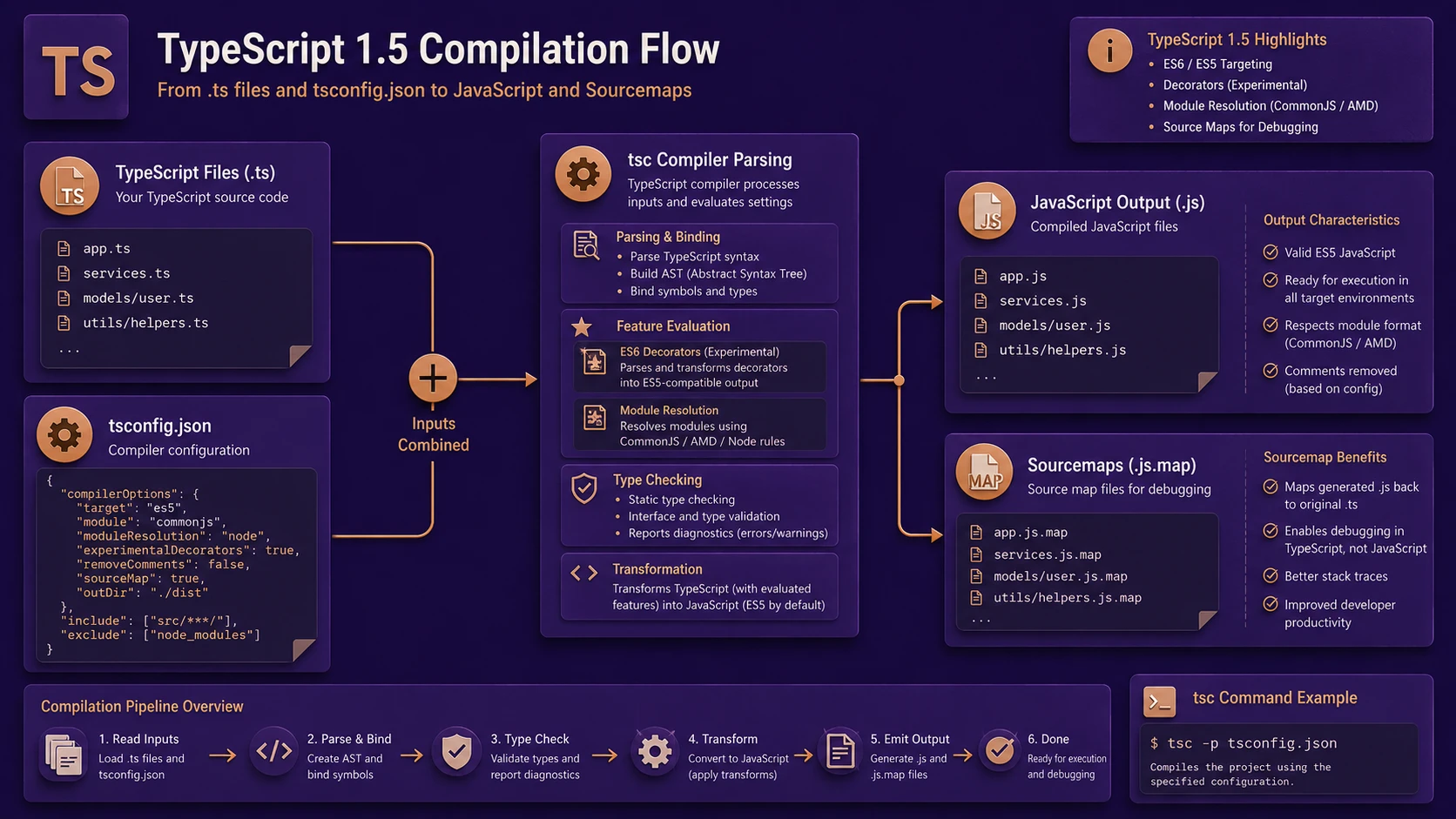
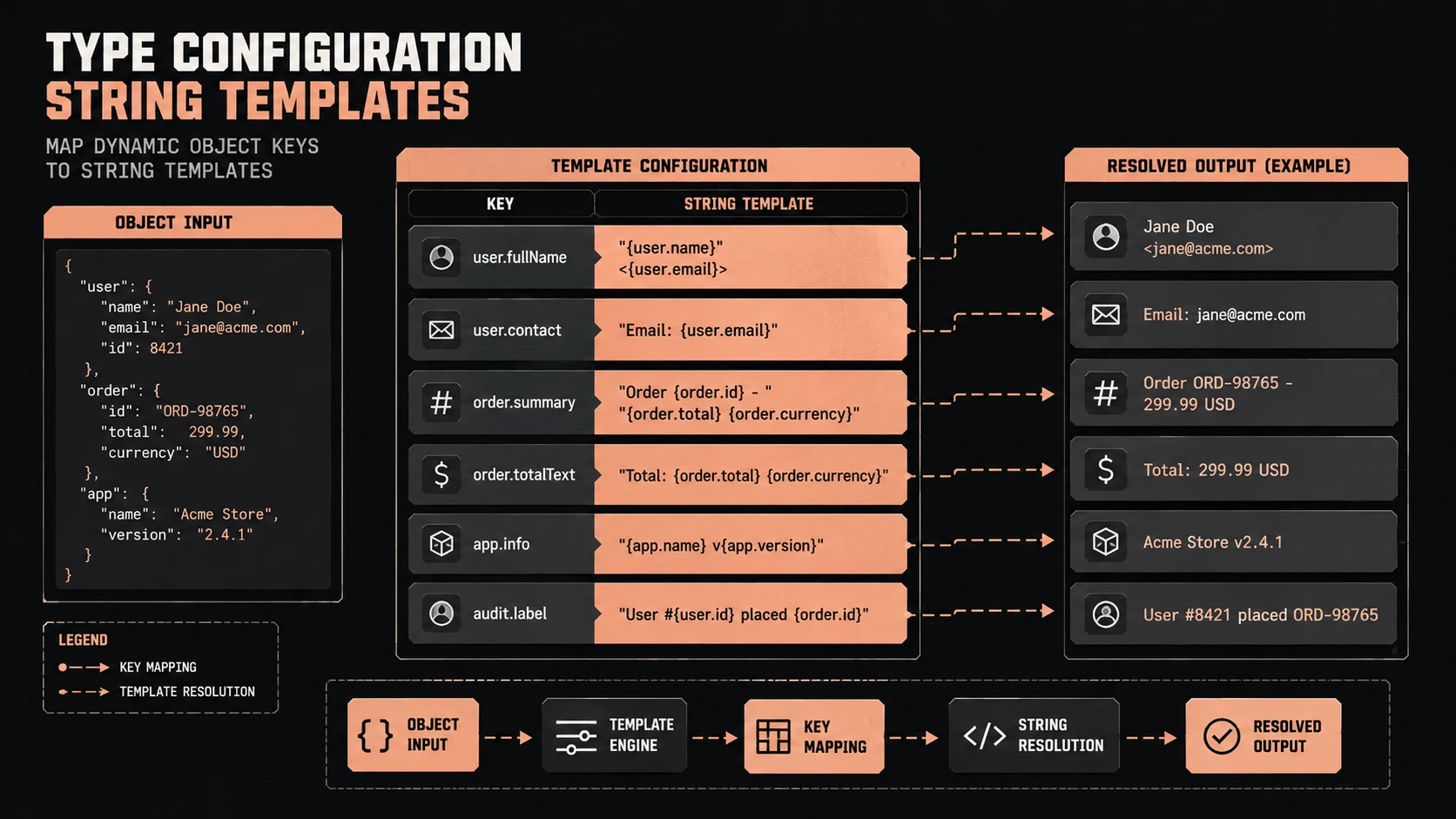
System architecture diagram and conceptual workflow layout for TypeScript 1.5: Decorators, ES6 Module Targets, and tsconfig.json Integration.
Configuration becomes part of the project rather than an individual developer's workflow.
Language Productivity
TypeScript continues providing productivity improvements through:
- ◆Static type checking
- ◆Intelligent code completion
- ◆Compile-time diagnostics
- ◆Navigation support
- ◆Refactoring assistance
These capabilities are particularly valuable for long-lived enterprise applications involving multiple development teams.
Enterprise Use Cases
| Scenario | Benefit |
|---|---|
| Enterprise Single Page Applications | Better project organization |
| SaaS Platforms | Standardized development practices |
| Large JavaScript Codebases | Improved maintainability |
| Internal Business Applications | Consistent compilation settings |
| Component Libraries | Modular architecture |
| Enterprise Framework Development | Reusable metadata through decorators |
Organizations building complex JavaScript systems benefit from stronger project structure and tooling.
Performance Considerations
TypeScript primarily affects development rather than runtime performance.
Organizations should evaluate:
- ◆Compilation time
- ◆Build automation
- ◆Bundle organization
- ◆Module loading strategy
- ◆Generated JavaScript output
Runtime behavior ultimately depends upon the compiled JavaScript and application architecture.
Security Considerations
TypeScript improves code quality but does not replace secure application design.
Development teams should continue implementing:
- ◆Authentication
- ◆Authorization
- ◆Input validation
- ◆HTTPS
- ◆Secure server-side processing
Language features complement but do not replace secure software engineering practices.
Scalability
TypeScript 1.5 supports application growth through:
- ◆Modular project organization
- ◆Centralized configuration
- ◆Strong typing
- ◆Reusable components
- ◆Improved development tooling
These capabilities help engineering teams manage increasingly large JavaScript codebases.
Best Practices
Organizations adopting TypeScript 1.5 should:
- ◆Standardize compiler settings with tsconfig.json.
- ◆Organize code into focused modules.
- ◆Introduce decorators only where they improve clarity.
- ◆Maintain consistent coding conventions.
- ◆Separate business logic from infrastructure concerns.
- ◆Validate generated JavaScript during builds.
- ◆Automate compilation within continuous integration.
- ◆Document project structure clearly.
Consistent engineering practices improve long-term maintainability.
Common Mistakes
Common implementation issues include:
- ◆Overusing decorators for simple logic.
- ◆Creating excessively large modules.
- ◆Maintaining inconsistent compiler settings across projects.
- ◆Ignoring generated JavaScript output.
- ◆Mixing multiple project structures within the same solution.
- ◆Treating TypeScript as a replacement for sound software architecture.
Successful adoption depends upon disciplined project organization rather than language features alone.
Technology Comparison
| Capability | Earlier TypeScript Releases | TypeScript 1.5 |
|---|---|---|
| Decorator Support | Not available | Introduced |
| ES6 Module Syntax | Limited | Improved |
| Project Configuration | Primarily command-line options | tsconfig.json |
| Enterprise Build Consistency | Moderate | Improved |
| Modern JavaScript Alignment | Strong | Further enhanced |
TypeScript 1.5 strengthens enterprise development by improving project organization and modern language integration.
Adoption Strategy
Organizations evaluating TypeScript 1.5 should proceed incrementally.
A practical approach includes:
- 1.Introduce tsconfig.json into existing projects.
- 2.Standardize compiler settings across development teams.
- 3.Adopt ES6 module syntax for new code.
- 4.Evaluate decorators within isolated components.
- 5.Integrate TypeScript compilation into automated builds.
- 6.Train development teams on updated language capabilities.
- 7.Expand adoption as project standards mature.
Incremental adoption minimizes migration risk while allowing teams to gain practical experience.
Limitations
As of April 2015, organizations should recognize several considerations.
Current observations include:
- ◆Decorators rely on evolving ECMAScript proposals.
- ◆Some development tooling continues to mature.
- ◆Existing JavaScript projects may require gradual migration.
- ◆Browser support depends upon the generated JavaScript rather than TypeScript itself.
Pilot projects provide a practical way to evaluate the new capabilities before broader adoption.
Looking Ahead
TypeScript 1.5 demonstrates Microsoft's continued investment in making JavaScript development more structured and maintainable for enterprise applications. By introducing decorators, improving support for ES6 modules, and standardizing project configuration through tsconfig.json, the language continues aligning itself with the direction of modern JavaScript while preserving compatibility with existing ecosystems.
As of April 2015, organizations building large web applications should evaluate TypeScript 1.5 as a practical evolution of their development workflow. Teams that adopt consistent project configuration, modular architecture, and disciplined coding standards are well positioned to improve maintainability and prepare for the continued evolution of the JavaScript language.