Introduction
Over the past several years, Ruby on Rails has established itself as one of the most influential web application frameworks available. Its emphasis on convention over configuration, rapid application development, and productive programming has enabled organizations to deliver web applications significantly faster than many traditional development platforms.
As applications mature, however, priorities evolve beyond rapid development. Enterprise teams increasingly focus on scalability, response times, maintainability, memory efficiency, and long-term operational stability. These concerns become especially important as Rails applications support larger user populations and more complex business requirements.
Ruby on Rails 4.0, currently approaching release, introduces a collection of architectural improvements aimed at addressing these enterprise concerns. Among the most notable enhancements are declarative caching and Turbolinks, two features designed to improve application performance while reducing development complexity.
Rather than changing the core Rails philosophy, Rails 4.0 builds upon established conventions while modernizing several aspects of the framework for contemporary web applications.
Industry Background
Modern web applications increasingly deliver richer user experiences through JavaScript, AJAX, HTML5, and responsive interfaces. At the same time, users continue to expect the simplicity and reliability traditionally associated with server-rendered applications.
Developers frequently face a choice between:
- ◆Fully server-rendered applications
- ◆JavaScript-heavy single-page applications
- ◆Hybrid architectures
Each approach introduces trade-offs involving development complexity, browser compatibility, maintainability, and performance.
Ruby on Rails has traditionally emphasized server-side rendering while progressively incorporating modern browser capabilities. Rails 4.0 continues this direction by introducing technologies that improve perceived application responsiveness without requiring developers to adopt entirely new architectural models.
The Business Problem
Enterprise Rails applications commonly encounter several operational challenges.
These include:
- ◆Increasing page rendering times
- ◆High database utilization
- ◆Excessive template rendering
- ◆Large application codebases
- ◆Slow navigation between pages
- ◆Growing infrastructure costs
- ◆Difficulty scaling high-traffic applications
Organizations frequently respond by expanding hardware capacity, introducing additional caching layers, or implementing extensive client-side JavaScript frameworks.
Rails 4.0 seeks to address several of these issues through framework-level enhancements.
Understanding Ruby on Rails 4.0
Rails 4.0 continues to emphasize developer productivity while introducing features that encourage cleaner architecture and improved runtime efficiency.
Notable improvements include:
- ◆Declarative caching
- ◆Turbolinks
- ◆Strong Parameters
- ◆Improved Active Record capabilities
- ◆Better modularization through concerns
- ◆Continued support for the Asset Pipeline
Together, these enhancements aim to simplify both development and long-term application maintenance.
Core Architecture
The overall Model-View-Controller architecture remains unchanged.
| Component | Responsibility |
|---|---|
| Action Controller | Request processing |
| Action View | HTML rendering |
| Active Record | Data persistence |
| Routing | URL mapping |
| Asset Pipeline | Static asset management |
| Turbolinks | Faster page navigation |
| Caching Framework | Render optimization |
Rather than replacing existing Rails components, the new capabilities integrate with the familiar application structure.
Declarative Caching
# Rails 4 controller using key-based declarative Russian Doll caching
class ProductsController < ApplicationController
  def index
    # Fetches all active products
    @products = Product.where(active: true)

    # Uses Declarative Action Caching or page fragment caching
    fresh_when(last_modified: @products.maximum(:updated_at))
  end
end
Caching has long been one of the most effective methods for improving application performance.
Previous Rails applications often required explicit cache management and repetitive implementation logic.
Rails 4.0 introduces declarative caching, allowing developers to express caching behavior more naturally within views.
Potential advantages include:
- ◆Reduced template rendering
- ◆Simplified cache management
- ◆Cleaner application code
- ◆Improved maintainability
- ◆Better performance consistency
By integrating caching more closely with the view layer, developers can optimize frequently rendered content while minimizing repetitive implementation details.
How Declarative Caching Works
Rather than manually managing cache invalidation throughout application code, developers identify content suitable for caching within views.
During request processing:
- 1.Rails evaluates cache availability.
- 2.Cached fragments are reused when appropriate.
- 3.Missing fragments are rendered.
- 4.Newly generated output is stored.
- 5.Subsequent requests reuse cached content.
This workflow reduces rendering overhead for frequently requested pages.
Turbolinks
Turbolinks is one of the most visible additions in Rails 4.0.
Traditional web navigation performs a complete page reload whenever a user follows a link.
This process typically involves:
- ◆Downloading HTML
- ◆Rebuilding the document
- ◆Reloading JavaScript
- ◆Reloading CSS
- ◆Reconstructing the browser environment
Turbolinks seeks to optimize navigation by requesting only the next page's HTML and replacing the document body while preserving much of the browser environment.
The objective is to provide noticeably faster page transitions while maintaining conventional server-rendered applications.
Enterprise Performance Benefits
Applications adopting Turbolinks may benefit from:
- ◆Faster page navigation
- ◆Reduced browser processing
- ◆Lower perceived latency
- ◆Improved user responsiveness
- ◆Better utilization of existing server-rendered applications
Organizations seeking improved user experience without adopting a full client-side JavaScript framework may find this approach attractive.
Strong Parameters
Rails 4.0 also introduces Strong Parameters as the preferred approach for controlling mass assignment.
Rather than relying solely on model-level protection, controllers explicitly specify which parameters are permitted.
Potential advantages include:

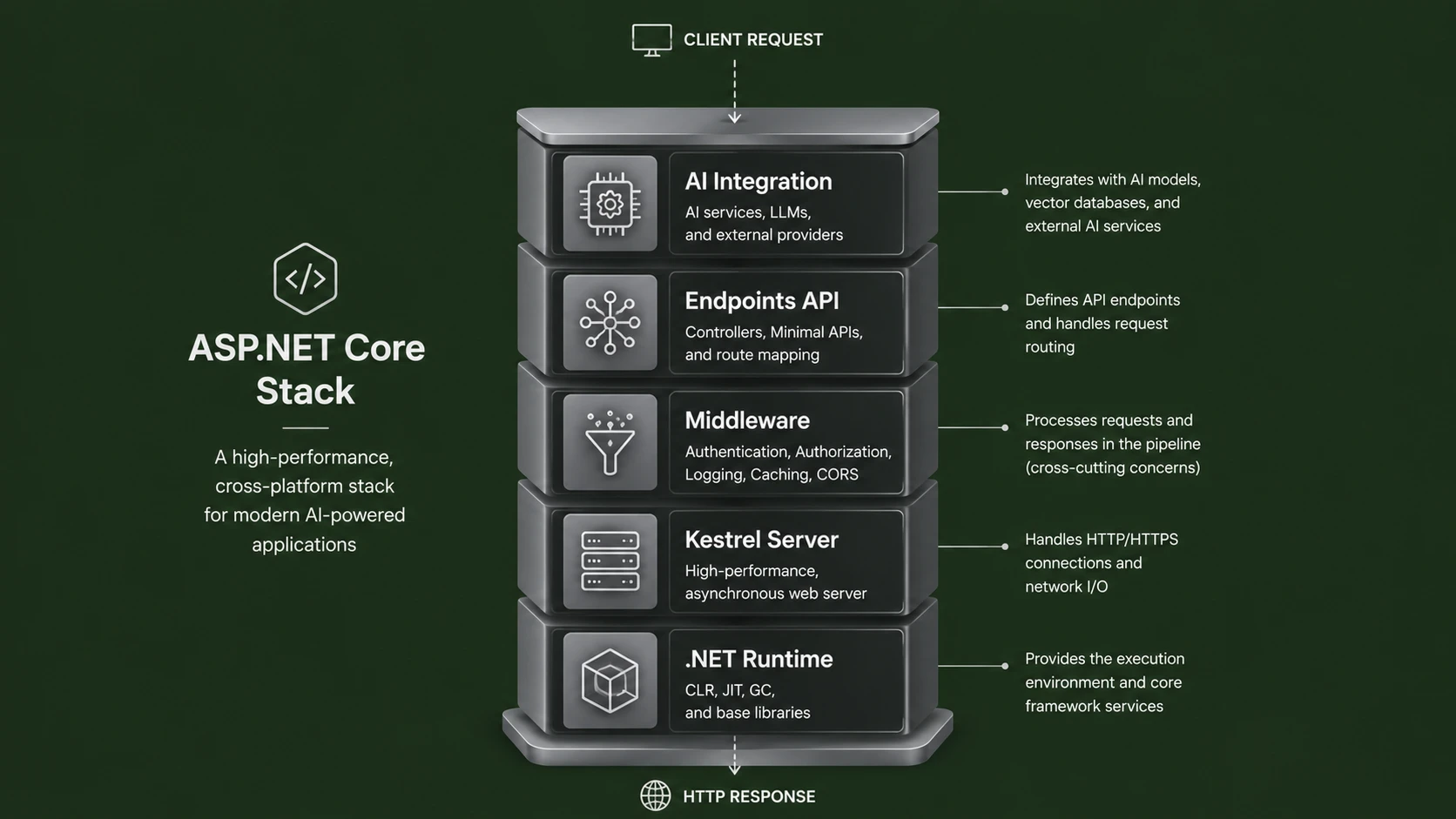
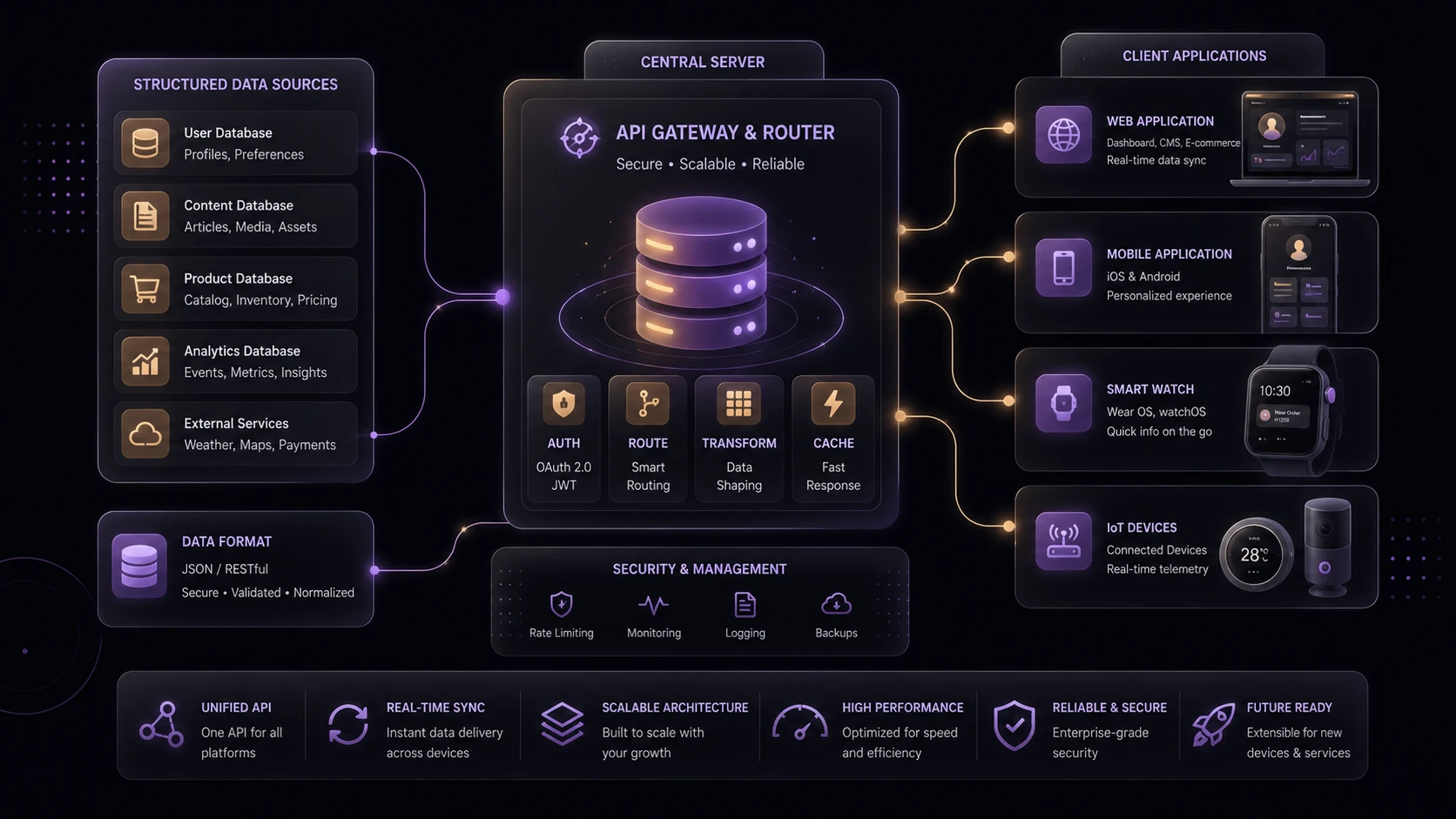
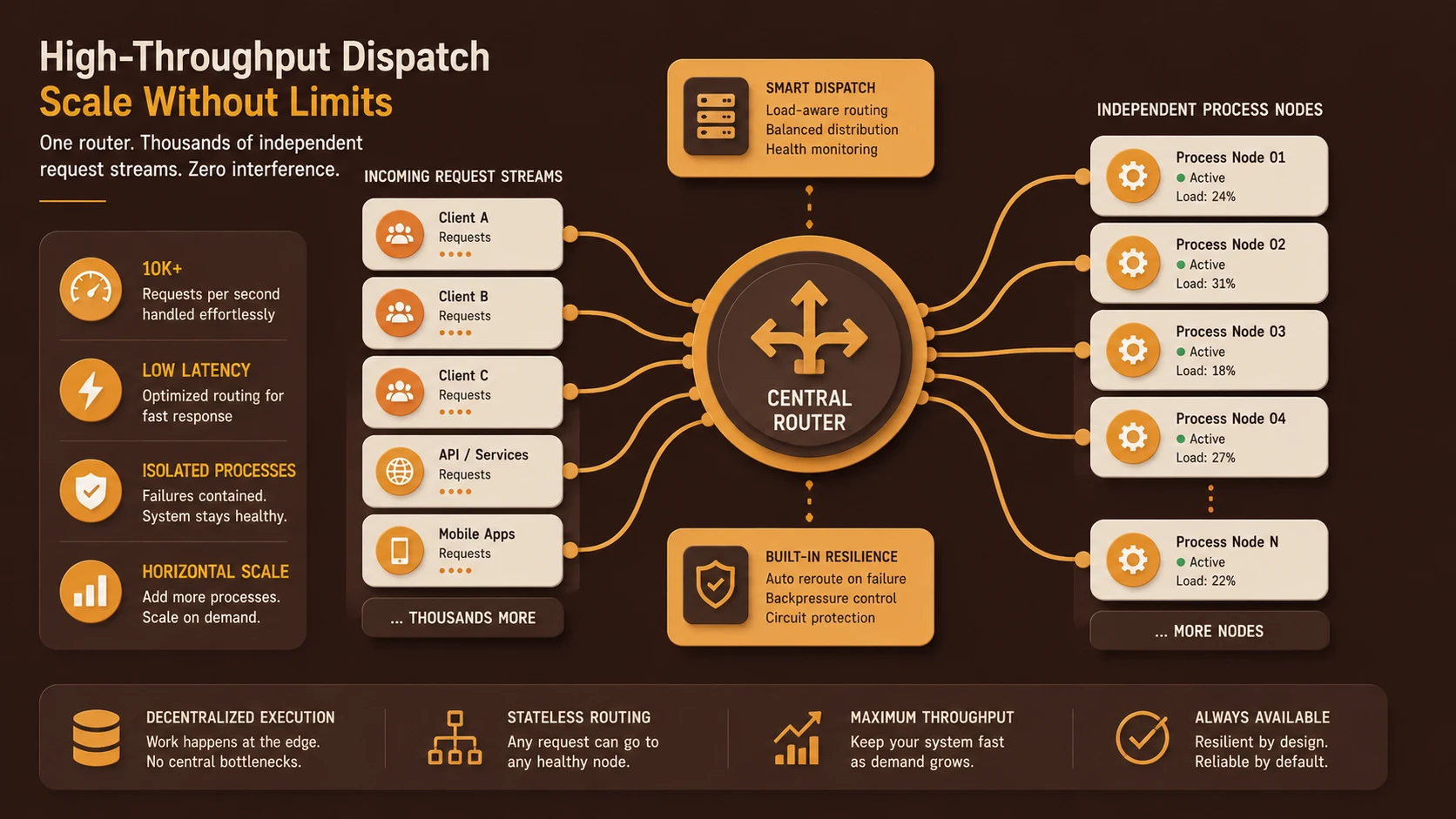
System architecture diagram and conceptual workflow layout for Ruby on Rails 4.0.
- ◆Improved request validation
- ◆Clearer controller logic
- ◆Better separation of responsibilities
- ◆Reduced accidental data modification
This approach encourages developers to define input expectations closer to request processing.
Modular Application Design
As Rails applications grow, controllers and models can become increasingly complex.
Rails 4.0 introduces support for concerns, encouraging developers to organize reusable functionality into modular components.
Benefits include:
- ◆Improved readability
- ◆Better code reuse
- ◆Reduced duplication
- ◆Easier maintenance
- ◆Cleaner object organization
Large enterprise applications may benefit particularly from more structured code organization.
Enterprise Use Cases
Rails 4.0 supports a wide range of enterprise scenarios.
| Scenario | Benefit |
|---|---|
| Customer portals | Faster navigation |
| Business dashboards | Reduced rendering overhead |
| E-commerce platforms | Improved response times |
| Content management systems | Better caching efficiency |
| Internal enterprise applications | Cleaner architecture |
| SaaS platforms | Improved scalability |
Organizations operating high-traffic web applications may realize meaningful operational improvements.
Performance Considerations
Performance improvements depend upon workload characteristics.
Declarative caching is particularly effective when:
- ◆Content changes infrequently.
- ◆Rendering is computationally expensive.
- ◆Pages share reusable components.
Turbolinks performs best when:
- ◆Navigation occurs primarily between server-rendered pages.
- ◆Applications avoid excessive client-side state.
- ◆JavaScript is designed with progressive enhancement in mind.
Performance testing should accompany production deployment.
Security Considerations
The introduction of new framework features does not eliminate existing security responsibilities.
Organizations should continue applying:
- ◆Input validation
- ◆Authentication
- ◆Authorization
- ◆HTTPS deployment
- ◆Cross-site scripting protection
- ◆Secure session management
Strong Parameters contribute to application security by providing more explicit control over accepted request data.
Scalability
Rails 4.0 includes several improvements that support scalable application architecture.
These include:
- ◆More efficient rendering
- ◆Improved caching support
- ◆Better modularization
- ◆Cleaner request processing
- ◆Reduced browser overhead through Turbolinks
Combined with appropriate infrastructure planning, these capabilities can improve application responsiveness under growing workloads.
Best Practices
Organizations evaluating Rails 4.0 should establish development guidelines.
Recommended practices include:
- ◆Use declarative caching for expensive view fragments.
- ◆Test cache invalidation thoroughly.
- ◆Adopt Strong Parameters consistently.
- ◆Organize reusable logic into concerns.
- ◆Benchmark Turbolinks in representative user workflows.
- ◆Continue optimizing database queries.
- ◆Monitor production performance after deployment.
- ◆Maintain comprehensive automated testing.
Framework features should complement sound software architecture rather than replace it.
Common Mistakes
Early adopters should avoid several implementation pitfalls.
Common mistakes include:
- ◆Caching highly dynamic content unnecessarily.
- ◆Assuming Turbolinks benefits every application equally.
- ◆Ignoring JavaScript compatibility.
- ◆Overlooking cache invalidation requirements.
- ◆Allowing controllers to become overly complex.
- ◆Treating framework features as substitutes for performance testing.
Careful evaluation remains essential before broad deployment.
Technology Comparison
| Capability | Rails 3.x | Rails 4.0 |
|---|---|---|
| Declarative Caching | Limited | Enhanced |
| Turbolinks | No | Yes |
| Strong Parameters | External approach | Integrated direction |
| Code Organization | Traditional modules | Concerns support |
| Performance Optimization | Good | Improved |
| Enterprise Maintainability | Good | Enhanced |
Rails 4.0 extends the existing framework while preserving its established development philosophy.
Adoption Strategy
Organizations should adopt Rails 4.0 through phased evaluation.
A practical approach includes:
- 1.Review application dependencies.
- 2.Upgrade development environments.
- 3.Validate automated test suites.
- 4.Introduce Strong Parameters.
- 5.Evaluate declarative caching opportunities.
- 6.Benchmark Turbolinks using representative user scenarios.
- 7.Expand deployment after successful pilot testing.
Incremental migration minimizes operational risk while allowing teams to evaluate new framework capabilities.
Limitations
Although Rails 4.0 introduces valuable enhancements, organizations should consider several factors.
Current considerations include:
- ◆Existing applications may require code changes during migration.
- ◆Cache management still requires thoughtful design.
- ◆Turbolinks may require JavaScript adjustments in some applications.
- ◆Comprehensive testing remains essential before production rollout.
Successful adoption depends upon disciplined engineering practices rather than framework upgrades alone.
Looking Ahead
Ruby on Rails 4.0 represents a thoughtful evolution of the framework rather than a fundamental redesign. By improving caching, encouraging cleaner application organization, strengthening request parameter handling, and introducing Turbolinks for faster navigation, Rails continues to address the needs of increasingly sophisticated web applications.
As of January 2013, these enhancements position Rails 4.0 as an attractive platform for organizations seeking to balance rapid development with enterprise performance and maintainability. Teams planning new Rails projects or preparing framework upgrades should closely evaluate these capabilities to determine how they align with their application architecture, scalability goals, and long-term maintenance strategy.