Introduction
For many years, HTTPS has primarily been associated with online banking, e-commerce transactions, and authentication systems. Most informational websites continued serving content over traditional HTTP, reserving encryption only for login forms or payment pages.
That model is rapidly changing. Browser vendors, security researchers, certificate authorities, and standards organizations are encouraging a transition toward encrypting all web traffic. Rather than treating HTTPS as an optional enhancement, the industry increasingly views encrypted communication as the expected baseline for modern web applications.
Throughout 2016, browser vendors have announced plans to begin identifying certain HTTP pages as insecure, particularly those handling passwords or sensitive user information. Combined with improvements in Transport Layer Security (TLS), broader certificate availability, and growing awareness of network security risks, these initiatives signal an important change in enterprise web architecture.
For organizations responsible for public websites, SaaS platforms, APIs, and customer portals, planning an HTTPS-first strategy is becoming an operational priority.
Industry Background
Modern enterprise web applications increasingly deliver:
- ◆Customer portals
- ◆SaaS platforms
- ◆REST APIs
- ◆Mobile backend services
- ◆Corporate websites
- ◆Administrative dashboards
- ◆E-commerce systems
- ◆Collaboration platforms
These applications routinely exchange authentication credentials, business data, and personally identifiable information across public networks.
As web traffic continues growing, protecting communication between browsers and servers has become a fundamental security requirement.
The Business Problem
Traditional HTTP transmits information without transport encryption.
This creates several enterprise concerns:
- ◆Credential interception
- ◆Session hijacking
- ◆Content modification in transit
- ◆Network surveillance
- ◆Loss of customer trust
- ◆Compliance challenges
Even applications that do not process payment information increasingly handle data that organizations consider sensitive.
Understanding HTTPS
HTTPS combines the Hypertext Transfer Protocol with Transport Layer Security (TLS) to provide encrypted communication between clients and servers.
Its primary objectives include:
- ◆Confidentiality
- ◆Data integrity
- ◆Server authentication
- ◆Protection against interception
- ◆Secure communication across public networks
Rather than changing application functionality, HTTPS secures the transport layer used by existing web applications.
Core Architecture
| Component | Responsibility |
|---|---|
| Browser | Initiates secure connection |
| TLS | Encrypts communication |
| Digital Certificate | Verifies server identity |
| Certificate Authority | Issues trusted certificates |
| Web Server | Hosts secured applications |
| HTTP Application | Delivers business functionality |
This layered architecture allows existing web applications to benefit from encrypted communication with minimal changes to application logic.
How HTTPS Works
A typical secure connection follows these steps:
- 1.The browser connects to the web server.
- 2.The server presents its digital certificate.
- 3.The browser validates the certificate.
- 4.TLS negotiation establishes encrypted session keys.
- 5.HTTP traffic is transmitted through the encrypted channel.
- 6.The browser verifies message integrity throughout the session.
Users continue interacting with applications normally while communication remains protected.
Why Browsers Are Changing Security Indicators
Historically, browsers emphasized HTTPS by displaying padlock icons while presenting HTTP pages without warnings.
Browser vendors are now beginning to reverse that model.
Instead of rewarding encrypted sites alone, browsers increasingly plan to identify unencrypted pages as insecure, particularly when they request:
- ◆Passwords
- ◆Login credentials
- ◆Sensitive personal information
This change encourages website operators to adopt HTTPS consistently rather than only for selected pages.
The HTTPS-Only Movement
# Nginx config redirecting all HTTP requests to secure HTTPS endpoints
server {
    listen 80;
    server_name shivamitcs.in;

    # Strict HTTP to HTTPS permanent redirection (301)
    return 301 https://$host$request_uri;
}

server {
    listen 443 ssl;
    server_name shivamitcs.in;

    ssl_certificate /etc/letsencrypt/live/shivamitcs.in/fullchain.pem;
    ssl_certificate_key /etc/letsencrypt/live/shivamitcs.in/privkey.pem;

    # Enforce HSTS (Strict-Transport-Security) for 1 year
    add_header Strict-Transport-Security "max-age=31536000; includeSubDomains" always;
}
Several industry trends are contributing to broader HTTPS adoption.
Improved Certificate Availability
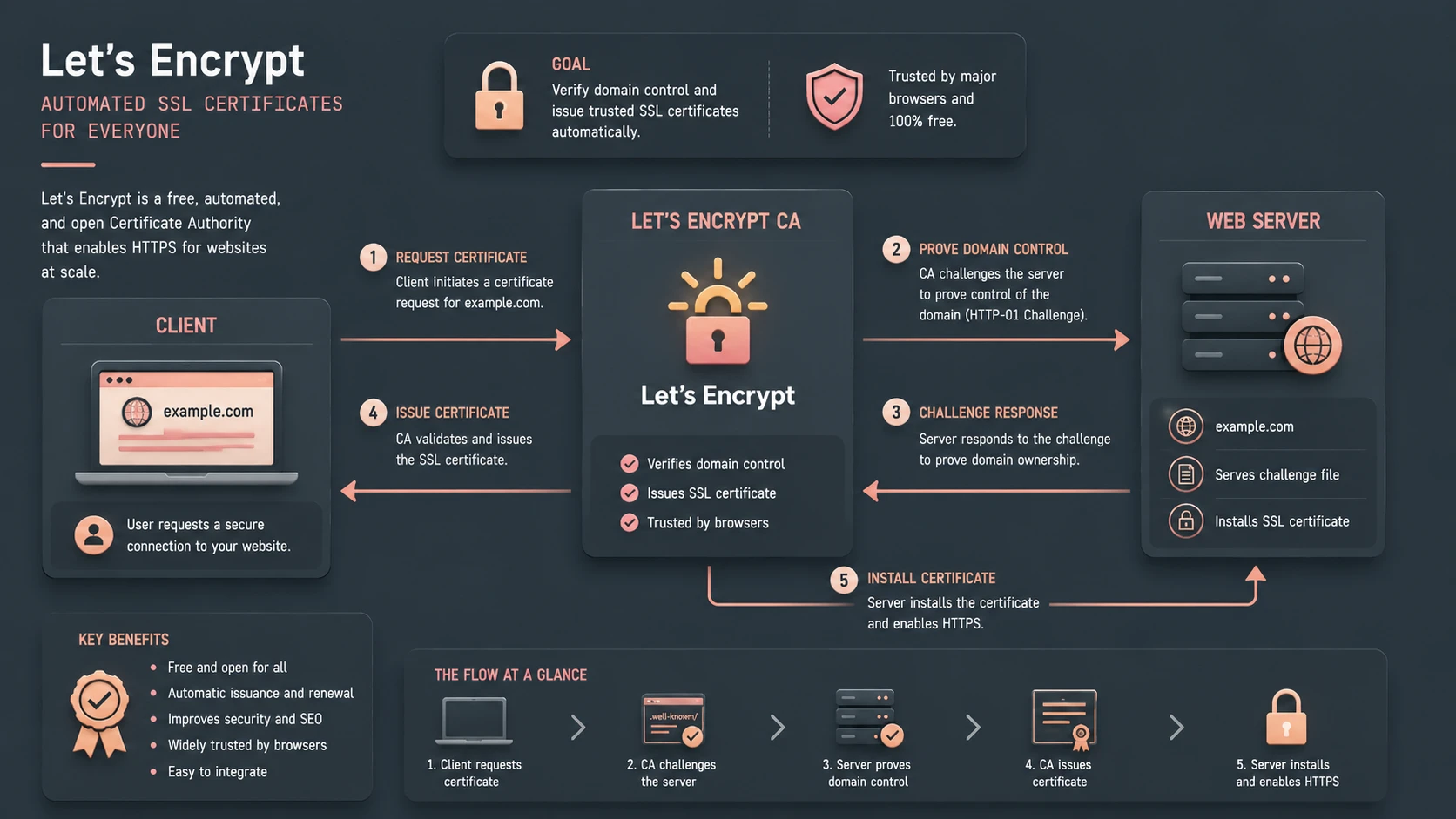
Obtaining trusted TLS certificates has become easier and less expensive than in previous years.
Better Browser Support
Modern browsers provide mature TLS implementations and continue strengthening default security.
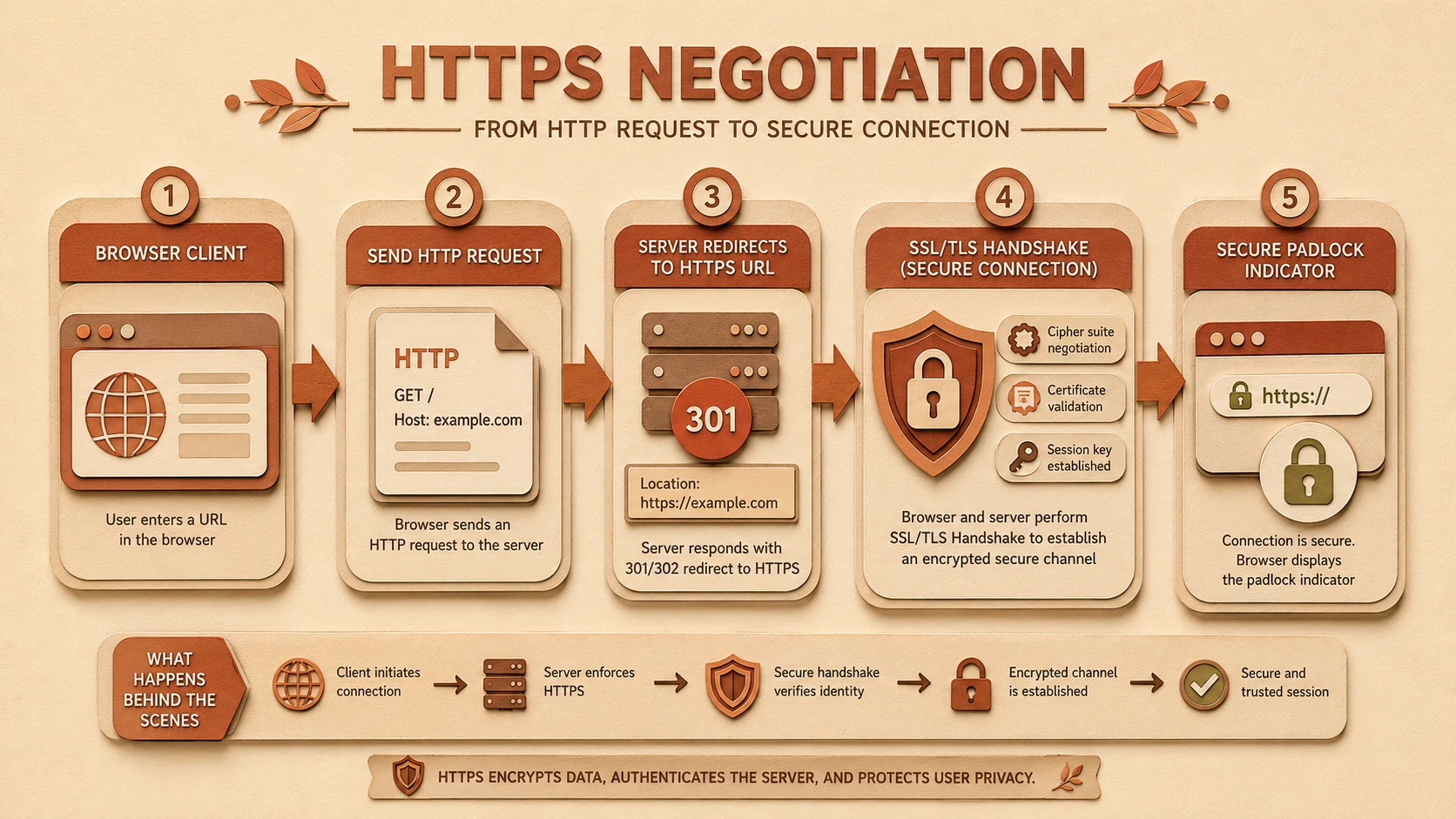
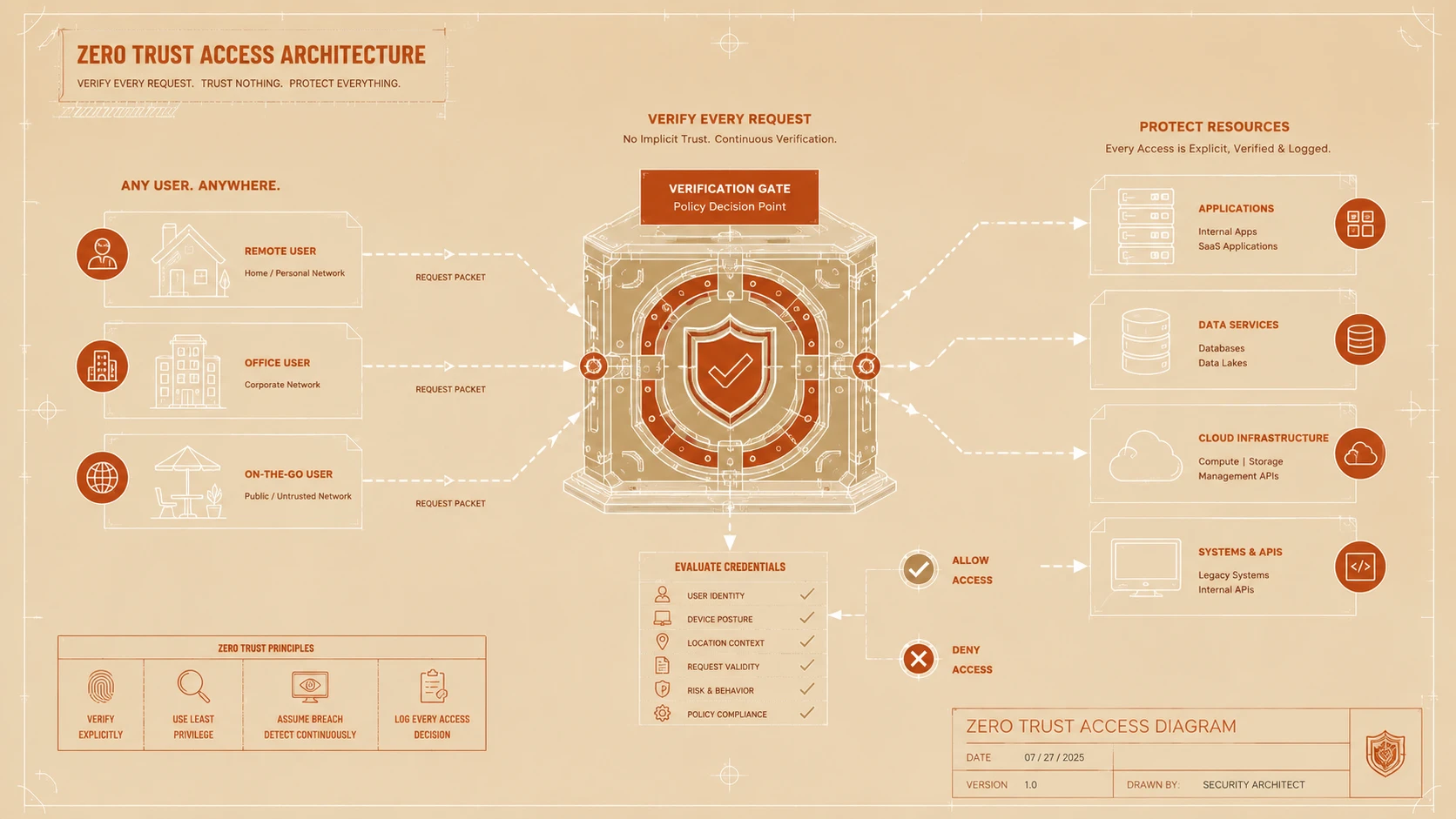
System architecture diagram and conceptual workflow layout for HTTPS-Only Web Movement.
Performance Improvements
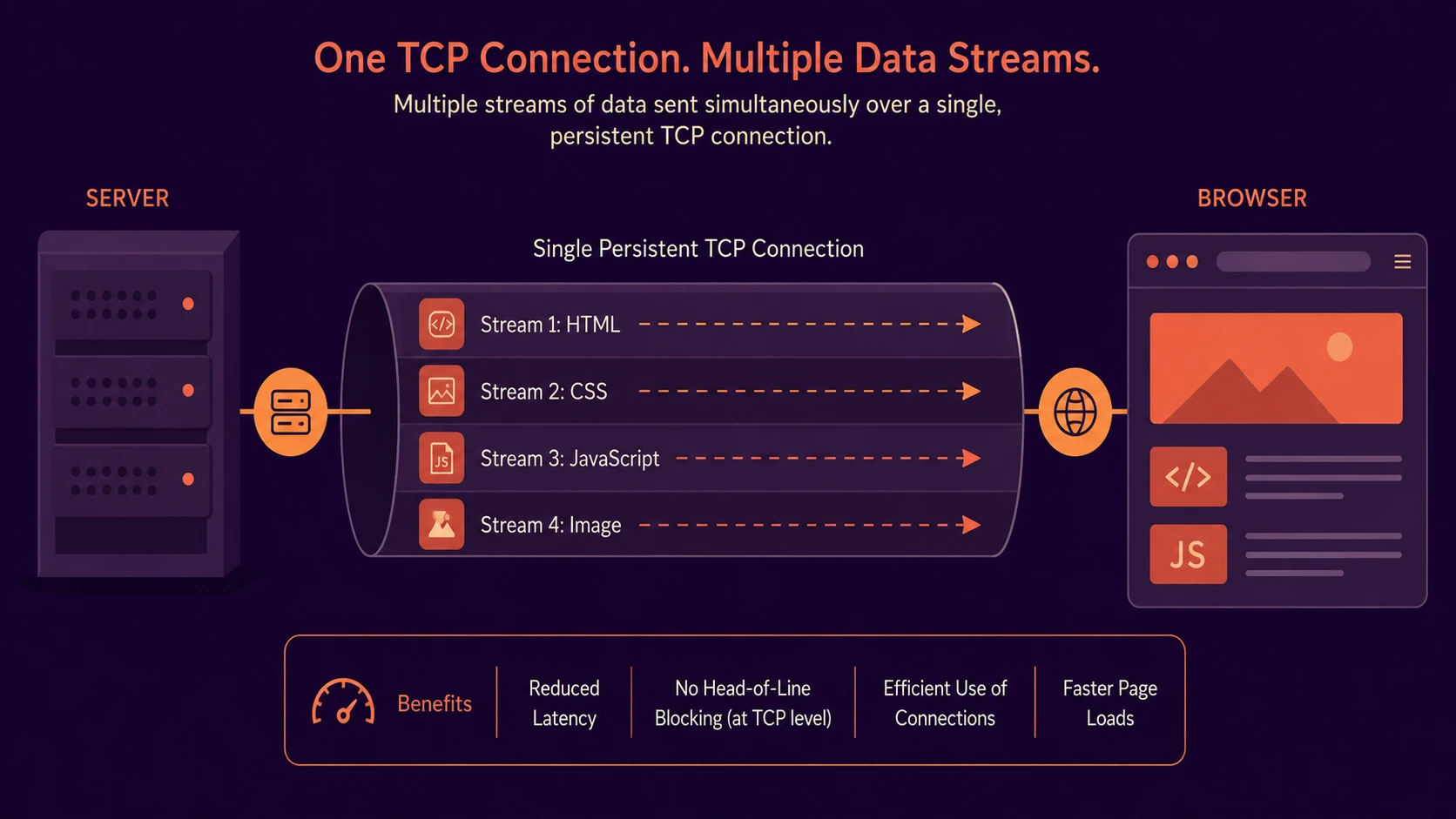
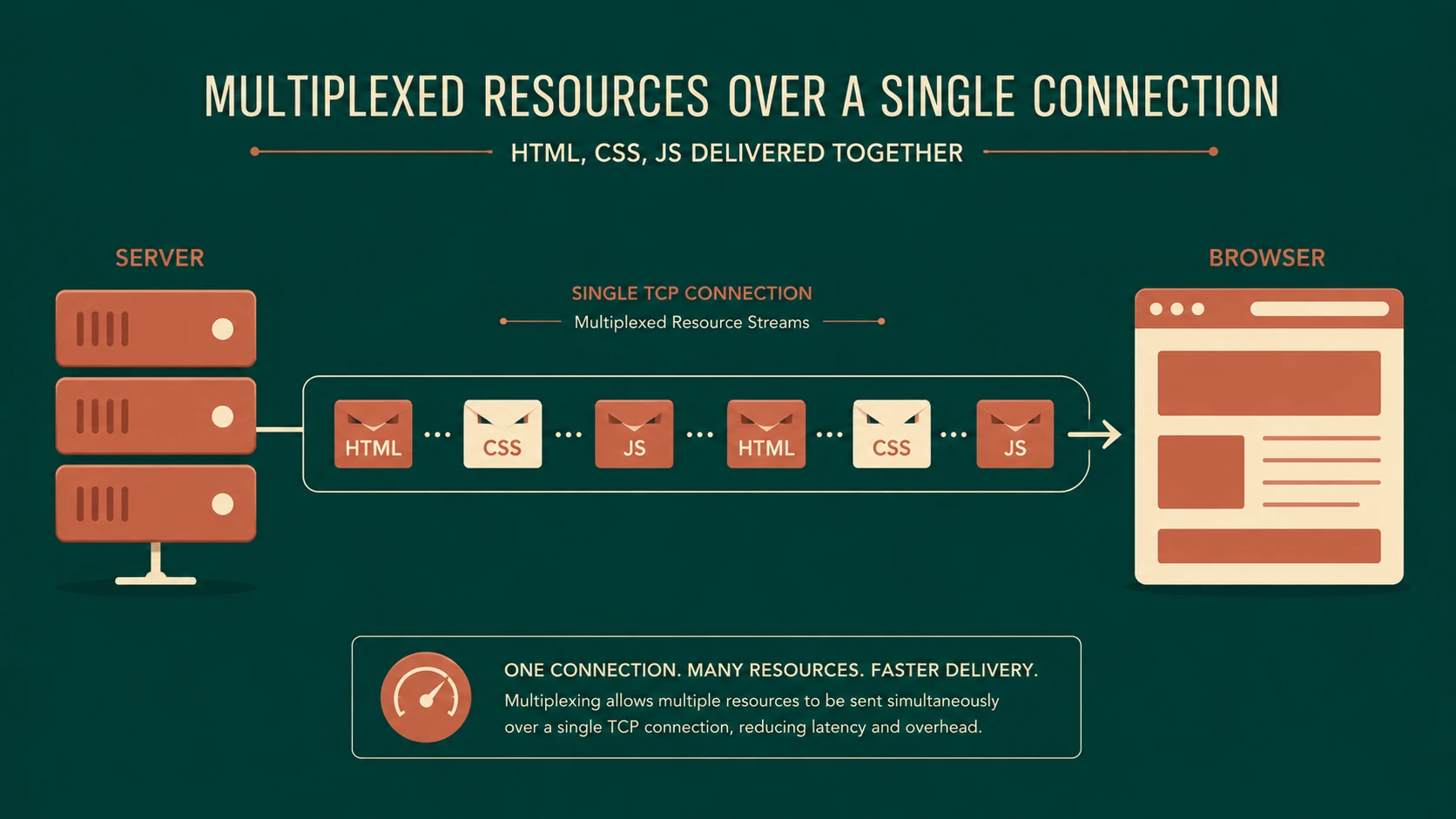
Advances in HTTP optimization and TLS implementation have reduced many historical performance concerns associated with encrypted communication.
Increased Security Expectations
Users increasingly expect secure communication regardless of whether an application processes financial transactions.
Enterprise Use Cases
Software as a Service
SaaS providers benefit from protecting customer sessions and application traffic.
REST APIs
HTTPS helps secure communication between client applications and backend services.
Corporate Portals
Employee authentication and internal business data remain protected during transmission.
E-Commerce Platforms
Consistent HTTPS deployment protects customer confidence throughout the browsing experience.
Mobile Applications
Native applications communicating with enterprise APIs benefit from encrypted transport.
Performance Considerations
Modern TLS implementations have significantly improved compared with earlier deployments.
Enterprise organizations should evaluate:
- ◆TLS configuration
- ◆Session reuse
- ◆Certificate management
- ◆HTTP caching
- ◆Content compression
- ◆Load balancer configuration
Proper infrastructure planning minimizes performance impact while improving communication security.
Security Considerations
HTTPS should be considered one component of a broader security strategy.
Organizations should continue implementing:
- ◆Strong authentication
- ◆Authorization controls
- ◆Secure cookie configuration
- ◆Input validation
- ◆Regular certificate renewal
- ◆Secure TLS configuration
Encryption protects data in transit but does not replace application-layer security controls.
Scalability
Enterprise HTTPS deployments should incorporate:
- ◆Centralized certificate management
- ◆Load-balanced TLS termination
- ◆Automated certificate renewal where practical
- ◆Monitoring for certificate expiration
- ◆Secure infrastructure configuration
These operational practices simplify long-term management across large application portfolios.
Best Practices
- ◆Deploy HTTPS across the entire application rather than selected pages.
- ◆Redirect HTTP traffic to HTTPS consistently.
- ◆Maintain valid certificates.
- ◆Disable outdated protocol configurations where appropriate.
- ◆Test certificate deployment across supported browsers.
- ◆Secure cookies appropriately.
- ◆Monitor certificate expiration.
- ◆Include HTTPS validation within deployment pipelines.
Common Mistakes
| Mistake | Enterprise Impact |
|---|---|
| Protecting only login pages | Remaining traffic exposed |
| Mixed HTTP and HTTPS resources | Browser security warnings |
| Expired certificates | Loss of user trust |
| Weak TLS configuration | Reduced security |
| Ignoring browser security announcements | Future compatibility concerns |
| Manual certificate management without monitoring | Operational risk |
Technology Comparison
| Capability | HTTP | HTTPS |
|---|---|---|
| Encryption | No | Yes |
| Server Authentication | No | Yes |
| Data Integrity | Limited | Yes |
| Credential Protection | No | Yes |
| Browser Trust Indicators | Increasingly Reduced | Positive Security Indicators |
| Enterprise Readiness | Declining | Recommended |
Adoption Strategy
- 1.Inventory all public-facing websites and APIs.
- 2.Obtain trusted TLS certificates.
- 3.Enable HTTPS across every environment.
- 4.Redirect HTTP traffic permanently.
- 5.Test browser compatibility.
- 6.Monitor certificate health.
- 7.Update deployment procedures.
- 8.Educate development and operations teams on secure deployment practices.
Limitations
As of November 2016, browser vendors are implementing HTTPS-related security changes gradually. Organizations should monitor browser release plans because warning behavior and security indicators continue evolving. Migrating large application portfolios may require coordinated infrastructure updates, certificate management processes, and application testing.
Looking Ahead
From the perspective of November 2016, the movement toward an HTTPS-first web is gaining clear momentum. Browser vendors are signaling that unencrypted communication will receive increasing scrutiny, while encrypted communication is becoming the expected standard for modern web applications. Enterprise organizations that begin planning comprehensive HTTPS adoption today will be better positioned to meet evolving browser expectations, strengthen customer trust, and improve the overall security of their web infrastructure.